DD
MM
YYYY

PAGES

DD
MM
YYYY

spot_img

PAGES

Home Blog Page 5100

Ndubuisi Ekekwe’s 45-20-20-15 Personal Finance Strategy

0

Career is more than making money. But money bribes people out of inconveniences of life. So, it remains very strange that you can attend a university, and graduate with no one making a concrete effort to educate you on how to manage personal finance. Yes, they do educate you on corporate finance and broad skills on how to make money for companies, by optimizing factors of production. For me, that is a big failure in the modern system of our education.

As a banker, I understood one thing: how much you make is a small part of your financial success and independence. Interestingly, getting that independence requires moving from a static phase to a dynamic phase (as in mechanics in physics). Simply, you need to take action – and that action means having a plan.

In my first month as a banker, I developed a 45-20-20-15 Strategy (explained in my Tekedia Mini-MBA portfolio allocation for new grads), allocating wages to different “catalysts for success”. Doing simple calculus and regression, I figured out that by putting 15% on dividend paying stocks and other investable assets, for every 5 years of work, I will get wages for two years free, keeping inflation and currency losses constant.

45-20-20-15 Strategy

  • 45 self and family (car, suits, family, etc)
  • 20 personal development (professional certifications, etc)
  • 20 others (anything)
  • 15 investment (stocks, etc)

My strategy has since changed since my needs have also evolved. But one thing is constant: there is always a plan, including how to get to the Forbes list. Why not? It would be breaking news news and Ovim village can even send me to the ikoro!

I invite you to read this piece by Ojukwu Emmanuel where he examines financial education and broad financial literacy. It has value.

The Importance Of Financial Education

The Importance Of Financial Education

3

Recently while carrying out research, I stumbled on an article that states that according to a study, two-thirds of young people believe that a lack of financial education was one of the major factors that led them to debt. The study further states that most adults believe that their lack of financial education as a child has caused problems in their later life.

The report was produced by Santander UK, a digital bank wholly owned by the Santander group of Spain, which sourced data from several academic research papers and surveys conducted over the last few years.

However, this report spurred me to write on the importance of financial education.

The Importance Of Financial Education

The importance of financial planning is inevitable in our daily endeavors. Individuals, families, firms, and governments all need it to be able to make proper financial decisions.

No doubt, proper financial education gives one clarity in life and also provides direction & meaning to one’s financial decisions. When inculcating the habit of financial planning, it enables one to be in control of their income, expenses, and investments which allows them to manage their money properly.

However, it is important to note that financial education is not only for individuals, but governments and organizations also need to equip themselves with financial literacy which offers a lot of advantages and most especially, saves them from running into debt.

This article wouldn’t be complete without talking about the benefits of financial education, below are four benefits of financial education;

Four Benefits Of Financial Education 

1.) Proper Management Of Income: When you have a proper financial education, it will help you manage your income better. Through proper financial planning, it becomes possible to manage income more effectively through a defined plan. By simply creating a budget, you do not have to panic about some spending, as it helps to regulate your spending. It also helps you prioritize your spending as well as identify wasteful expenditures to achieve your financial situation.

2.) Savings: With proper financial education, it helps you take note of your income and expenses which will no doubt help to save money. You make a budget, which makes it possible to assess whether you are within budget or overspending. It will help you understand your savings rate and how much you need to reach your goals. When you customize a plan to include your goals and at which moment you want it achieved, you can plan for finances accordingly, which helps you save better.

3.) Improved Standard Of Living: One beautiful thing about financial planning is that it not only helps you spend wisely and save efficiently, but it also improves your standard of living. The reason why financial education improves one standard of living is that when it is developed and executed properly, it helps to grow your money, thereby improving your standard of living. You also get to improve your money with the right investment tools. This income, however small, can be used to improve your living.

4.) Prepare For Emergencies: Life, no doubt is full of uncertainty, no one can predict or control what happens in the future. Some emergencies can affect you financially which can lead you into a serious financial crisis and debt. Therefore, one of the best ways to handle emergencies is to have an emergency fund set aside. This fund will provide you with enough money to cover your emergency expenses, without you falling into debt. One great thing that an emergency fund will do for you is that it will act as an insurance cover for you against unexpected expenses.

5.) Easier Access to Financial Tools and Resources: A strong financial education equips you with the knowledge to utilize various financial tools and resources effectively. For instance, understanding how to manage your finances online can streamline many processes, such as filing your business taxes. With the advent of technology, it has become incredibly convenient to handle these tasks via platforms that offer online UCC filing and other services for busy business owners. This ensures that financial management is done more quickly and efficiently.

Final Thoughts

Financial education is a basic life skill that has a direct impact on personal well-being. Basics like money management, savings, investing, and debt will lay a strong foundation for money habits if imparted from a young age.

Research reveals that vital money habits and skills start between the ages of 3 and 7, which is advisable for parents to teach their kids early. Since lack of financial education is what has led two-thirds of young people into debt, it is ideal that the curriculum in schools makes provisions for financial education, to equip these young ones to be able to make reasonable financial decisions when they become adults.

Egypt’s $8.7bn World’s Sixth Largest Highspeed Rail System and the Lesson for Nigeria

0

Egypt is on course to develop a new high-speed rail line that will link 60 cities across the country. The project, which will be handled by Siemens Mobility, will put Egypt ahead of other African countries, including Nigeria, the continent’s most populated nation, when it comes to transportation.

The rail-lines will be fully-electric and the trains will have a top speed of 230 kilometers per hour, traveling from the Red Sea to the Mediterranean, among other destinations.

Besides the speed and numerous destinations, the electric system is expected to reduce carbon emission to a large extent. CNBC reported Siemens Mobility — a separately managed company of industrial giant Siemens —  saying that the electrification of the network will reduce carbon emissions by 70% when compared to making trips by bus or car. It added that the project would result in the world’s “sixth largest high-speed rail system.”

The report said that Siemens Mobility signed the contract to develop the rail line with the Egyptian National Authority for Tunnels, as well as consortium partners The Arab Contractors and Orascom Construction.

In a statement Saturday, Siemens Mobility said its share of the combined contract would amount to 8.1 billion euros, or around $8.7 billion. This figure includes a 2.7 billion euro contract signed in Sept. 2021 for the project’s initial line.

The new network in Egypt will be made up of three parts: a previously announced 660-kilometer line linking Ain Sokhna, on the Red Sea, to Alexandria and Marsa Matrouh on Egypt’s Mediterranean coast; a roughly 1,100 kilometer line between Cairo and Abu Simbel, close to the border with Sudan; and a 225 kilometer stretch between Luxor and Hurghada on the Red Sea.

“Together with our partners, we will develop from scratch a complete and state of the art rail network that will offer a blueprint for the region on how to install an integrated, sustainable, and modern transportation system,” Michael Peter, the CEO of Siemens Mobility, said.

Compared to Nigeria with a population of more than 200 million people who rely mainly on road transportation, Egypt is creating a faster climate-friendly alternative for its over 102 million people.

CNBC quoted the International Energy Agency which described rail as being “one of the most energy-efficient transport modes.” It is responsible for 9% of worldwide motorized passenger movement and 7% of freight, the IEA says, but only accounts for 3% of transport energy use.

Fast and reliable rail transport has been touted as a panacea to Nigeria’s housing problems. Experts say the use of speed trains could cut the housing crisis in some Nigerian cities like Lagos, Abuja and Port Harcourt – as it would enable workers to travel outside the states where they work.

Unfortunately, railways in Nigeria consist of a 3,505 km Cape gauge national railway network and 669 km of standard gauge. The Cape gauge network is in poor condition due to lack of maintenance.

Although there is a huge market for rail transport service in Nigeria, the depilated infrastructure has stymied its growth and also curtailed its other benefits.

Experts have also advised the Nigerian government to tow the path of Egypt by establishing partnership with hydrogen train companies like Siemens Mobility, East Japan Railway and European railway manufacturer Alstom, to develop modern train systems that will solve its transport problems among others.

Australia’s Watchdog Sues Mastercard for Stifling Competition

0

Mastercard is facing an anti-competition probe in one of its biggest markets – Australia. The Australian Competition and Consumer Commission (ACCC) on Monday started legal proceedings in the Federal Court against the payment giant for allegedly stifling competition in the supply of debit card acceptance services.

Australia’s consumer watchdog is suing Mastercard over alleged anti-competitive conduct in deals with large retailers.

The ACCC said in a statement that it has instituted proceedings against Mastercard Asia/Pacific Pte Ltd and Mastercard Asia/Pacific (Australia) Pty Ltd, over alleged misconduct that started half a decade ago in the context of the Reserve Bank of Australia’s least cost routing initiative.

Mastercard’s alleged anti-competitive conduct commenced in late 2017 in the context of the Reserve Bank of Australia’s the ACCC said the “least cost routing” initiative was aimed to increase competition in the supply of debit card acceptance services and reduce payment costs for businesses by allowing them to choose the lowest cost network to process their transactions.

The aim is to increase competition in debit card acceptance services and reduce payment costs for businesses by allowing them to choose whether debit transactions were processed by Visa, Mastercard or eftpos, with eftpos often being the cheapest option.

“We allege that Mastercard had substantial power in the market for the supply of credit card acceptance services, and that a substantial purpose of Mastercard’s conduct was to hinder the competitive process by deterring businesses from using eftpos for processing debit transactions,” said ACCC Chair Gina Cass-Gottlieb.

In response to the “least cost routing” initiative, Mastercard allegedly entered into agreements with more than 20 major retail businesses, including supermarkets, fast food chains and clothing retailers.

The agreements gave these businesses discounted rates for Mastercard credit card transactions, provided they committed to processing all or most of their Mastercard-eftpos debit card transactions through Mastercard rather than the eftpos network, said the consumer watchdog.

This meant that these businesses would not process significant debit card volumes through the eftpos network even though eftpos was often the lowest cost provider.

“We are concerned that Mastercard’s alleged conduct meant that businesses did not receive the full benefit of the increased competition that was intended to flow from the least cost routing initiative,” said Cass-Gottlieb.

The ACCC investigated allegations that Mastercard engaged in anti-competitive conduct by offering certain large merchants cheaper interchange rates (known as ‘strategic merchant rates’), for processing credit card payments if they agreed to process Mastercard-eftpos debit card payments through the Mastercard network.

A Mastercard Australia spokesperson said it is disappointed that the ACCC has gone to litigation and is reviewing what it has filed.

“We have cooperated with the ACCC throughout its investigation and will continue to engage with the Commission, defending our actions to innovate and compete in Australia’s payments market,” the spokesperson said in a statement.

The ACCC is seeking declarations, penalties, costs and other orders.

“Reducing costs for businesses enables them to offer their customers better prices. Making sure the major card schemes, Mastercard, Visa and eftpos, compete vigorously is important for both those businesses and their customers,” Cass-Gottlieb said.

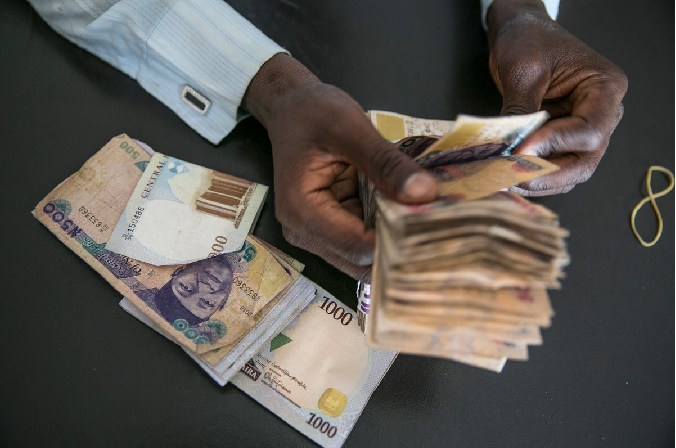
As Naira Falls, What Next for Nigeria?

0
Naira

Nigeria’s foreign reserves have dropped to $38.59 billion as the Central Bank of Nigeria (CBN) continued its currency float management that had seen the apex bank pumping $3.36 billion into the foreign exchange (forex) market over a two-month period.

The apex bank’s January monthly report on ‘Foreign Exchange Market Developments’ showed that $1.71 billion and $1.65 billion were injected in December 2021 and January 2022, respectively.

Latest figures from the mother bank indicated that the forex reserves depreciated $125.53 million to close, over the weekend, at $38.63 billion.

The latest decline in the foreign reserves could be attributed to the continuous intervention by the CBN in the forex market in order to ensure the stability of the local currency.

In spite of the interventions, the Naira has continued to depreciate closing, as at penultimate week, at N610 per Dollar at the parallel market, a decline of 0.7 per cent. At the official Investors and Exporters (I & E) Window, the naira fell by 0.1 per cent to N419.50 per dollar.

It’s noteworthy the naira had previously made marginal gains after the Monetary Policy Committee (MPC) raised interest rate by 150 basis points.

The local currency appreciated from N610/$ to N605/$, representing N5 gain after the MPC hiked Monetary Policy Rate (MPR) from 11.5 per cent to 13 per cent per annum.

The naira is, however, still trading weaker than pre MPC close of N600/$ at the parallel market but remains stable at N415.72/$ at the official market.

Forex Trader, AZA Finance, Ikenga Kalu said, “We expect the naira to appreciate further in the coming days back to N600/$. However, strains are likely to persist over the medium term given ongoing dollar supply constraints.”

The CBN said its policies – naira-for-dollar – incentives, stoppage of dollar sales to Bureaux De Change (BDC) and restriction of forex sales to 43 items that could be produced locally are meant to boost dollar liquidity and create currency convergence.

The CBN Governor, Godwin Emefiele explained that Nigeria, like other emerging market countries, reliant on oil exports, saying the retreat by foreign portfolio investors significantly affected the supply of foreign exchange.

“With the decline in our foreign exchange earnings and successive exchange rate adjustments, the CBN has continued to implement a demand management framework, which is designed to bolster the production of items that can be produced in Nigeria, and aid conservation of our external reserves.”

Emefiele further disclosed that the CBN had continued to favour a gradual liberalization of the foreign exchange market in order to smoothen exchange rate volatility and mitigate the impact which rapid changes in the exchange rate could have on key macroeconomic variables.

On his part, an economist and Managing Director of Financial Derivatives Company Limited, Bismarck Rewane, explained that CBN’s efforts at naira convergence would help reduce the official-parallel market spread which would in turn decrease the incidence of speculative trading at the parallel market.

“A reduced spread would decrease the incentive (arbitrage) for speculators to obtain forex at the official market and resell at the parallel market. This may result in panic dumping of dollars at the parallel market due to the concern of lower demand for forex and appreciation of the dollar at the parallel market.”

Rewane advised that closing the gap between the official and parallel market rates was likely to reduce the demand for forex at the parallel market, pushing investors and traders to the official market. This would lead to increased forex transactions at the official market.

He explained that the wide official-parallel market spread and the low forex supply at the official market had been the main factors driving investors and traders to source forex at an expensive rate from the parallel market.

For him, reducing this spread, coupled with an improved forex supply at the official market, would decrease uncertainty (volatility) at the forex market and bolster the ability of the official window to meet a higher demand for dollars.

The resulting impact of this is that a reduced exchange rate volatility and improved forex supply would make it easier for foreign investors to repatriate their funds.

It would equally ensure that traders and manufacturers access forex at a uniform rate from both the official and parallel markets.

“Reduced naira volatility and improved forex supply are positive for foreign direct investments and foreign portfolio investments as well as the country’s external trade. This is because of the increase in the volume of dollars available for foreign trade and investment.” he opined.

One might wonder why the BDC is still relevant, recognized and seemingly powerful in Nigeria’s money market, despite several calls for its eradication. The lingering occurrence of such uncalled and illicit practice has over the years made the country’s forex market look laughable and pitiable, at the expense of her economy.