DD
MM
YYYY

PAGES

DD
MM
YYYY

spot_img

PAGES

Home Blog Page 5102

Investors’ Interests In Nigeria Decline Amid Rising Insecurity

0
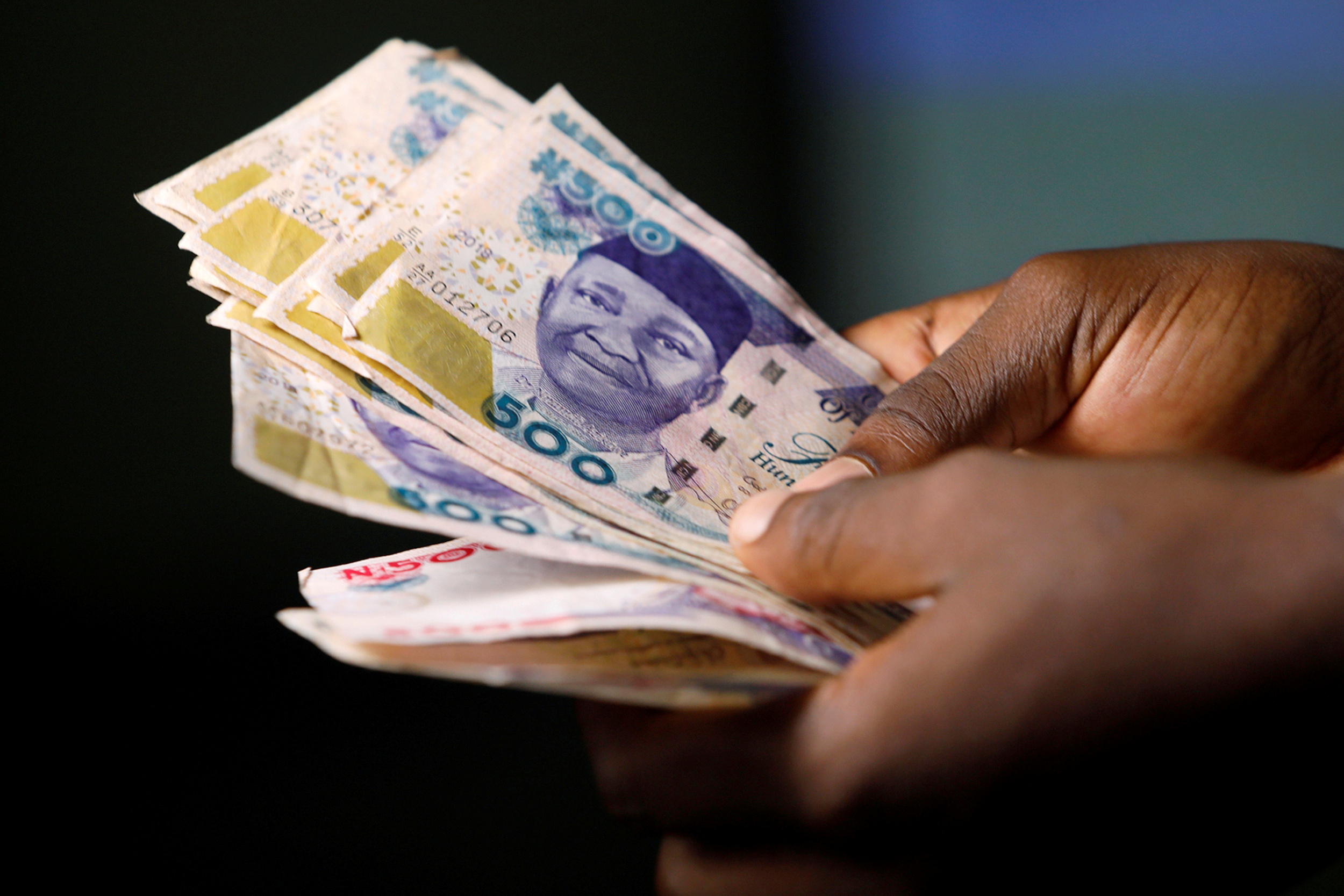
Nigerian naira banknotes are seen in this picture illustration, September 10, 2018. REUTERS/Afolabi Sotunde/File Photo

The Nigerian investment promotion commission (NIPC) has revealed that the value of investment announcements in the first three months of 2022 was $8.41 billion. This is a 69 percent or $2.58 billion lower than what was announced in the first quarter of 2021.

The rising effects of insecurity in Nigeria has also affected the ease of doing business in the country, as a 2019 world bank annual ratings on the ease of doing business ranked Nigeria 131 among 190 countries.

The challenge of insecurity keeps getting worse each passing day, which has no doubt constituted a threat to lives in the country. Such challenge has hindered business activities and has also discouraged local and foreign investors from investing in the country which has stifled and retarded the economic development of Nigeria’s economy.

A world bank report suggested that many Nigerians had fallen below the poverty line adding that the effect of the insecurity challenges took a toll on the country’s economy. The insecurity crisis greatly affected the cost of production which disrupted companies from planning for the future.

Such a security challenge has led to the emigration of companies and the shutting down of local manufacturing companies. This will no doubt pose a very big challenge to Nigeria’s economy because when companies leave the country, production is also taken away which will negatively affect the country’s GDP.

Domestic investment has also been affected, for example in the agricultural sector, farmers cannot cultivate on farmlands for fear of being killed which has disrupted agricultural activities leading to the reduction in the production output that is already harming the country’s economy as well as threatening food security.

In oil-producing states, the insecurity challenge has led to the exit of some oil companies. Oil theft, pipe vandalism, and illegal refinery has hindered Nigeria from contributing its quota to the Organization of Petroleum Exporting Countries (OPEC).

The insecurity challenge has also given a negative perception of the country to foreigners which have seen investors lose interest in wanting to do business in Nigeria as the risk involved is so enormous. The disheartening thing about insecurity is that it has a ripple effect on almost every sector in the country.

It has no doubt affected the creation of jobs and the generation of tax revenue. Unemployment rate has increased because some of these companies that left the country, had some Nigerian citizens who were working for them, and now due to their departure, these individuals are left jobless.

In the capital market, insecure investments with foreign investors pulled out about N1.64 trillion from the market in three years. There has been a huge outflow of capital that has led to concerns about their impact on the Nigerian economy.

Analysts have predicted that the precarious state of the stock market could worsen if the factors impeding the nation’s economic growth are not tackled immediately. It’s high time the government tackles the insecurity crisis that is ravaging the whole country, which is already affecting the country’s economy as well as preventing foreign and local investors from investing.

Unfortunately, till date, there has been no visible measures taken or put in place to abate the insecurity challenge across the four corners of Nigeria. For as long as the prevailing insecure environment subsists, the country will continue to reap its unpleasant consequences.

Nigerian Court jails Chinese for two years for Naira mutilation: The Ratio Decidendi.

0

It was reported in the news last week that on Tuesday, May 31, 2022, the Federal High Court sitting in Ikoyi sentenced a Chinese National to two years imprisonment for the offense of mutilation of the Nigerian currency.

Questions have been thrown by laymen and those interested in learning about the ratio decidendi behind the prosecution and sentencing in this case; can currency mutilation land anybody in jail? Is mutilating the Nigerian currency a jailable offense under any Nigerian law?

This is what the law says in this regard and hence what formed the legal backing behind the prosecution and conviction of the Chinese national.

The convict was arraigned on a four-count charge bordering on tampering with the Nigerian currency, an offense contrary to and punishable under Section 21(1) of the Central Bank of Nigeria Establishment) Act.

One of the counts reads: “That you, Li Lei Lei, on or about the 17th day of May 2022, at the Murtala Muhammed International Airport, Lagos, within the jurisdiction of this Honorable Court, tampered with One Thousand Naira (N1,000) Note, with serial number 947882 issued by the Central Bank of Nigeria and thereby committed an offense contrary to and punishable under Section 21(1) of the Central Bank of Nigeria Establishment) Act, Cap C4, Vol.1, Laws of the Federation of Nigeria, 2010.”

Section 21(1) of the CBN act provides thus: A person who tampers with a coin or note issued by the Bank is guilty of an offense and shall on notes and coins imprisonment for a term not less than six months or to a fine not less than N50,000 or to both such fine and imprisonment.

Subsection 2 of this section went further to explain what the previous subsection meant by the phrase “tampering with currency” and this is the explanation:

(2) A coin or note shall be deemed to have been tampered with if the coin or note has been impaired, diminished, or lightened otherwise than by fair wear and tear or has been defaced by stumping, engraving, mutilating, piercing, stapling, writing, tearing, soiling, squeezing or any other form of deliberate and willful abuse whether the coin or note has or has not been thereby diminished or lightened.

On this note, a person is guilty of tampering with the Nigerian currency when the person has treated the currency in a dishonorable manner or has disrespected or abused the currency in any way like squeezing it, writing on it, piercing it, defacing it, spraying it, stumping on it, etc. Any act whatsoever done to the Nigerian currency which is dishonorable or has subjected the currency to abuse is said to be tampering and that is an offense that carries a jail term of not less than six months as provided under S 21(1) of the CBN act.

The Nigerian currency is a symbol of identity and it is to be treated with utmost respect and honor, any disrespect or dishonor done to the Nigerian currency is said to have been done to Nigeria as a nation and this is highly frowned upon and punished by law.

Do This And Your Bank/Fintech Will Reduce Occurrence of Common Frauds

0

I just read this piece where the author lamented the increasing fraud in the digital payment ecosystem. First, Nigerian banking security  from the customer-facing side is one of the most intriguing banking structures in the world. It is only in Nigeria that you have to put your debit card number, expiration date, last 3 digits and then password to pay for most items. Nigeria’s banking system is more secure than even the US banking system. I mean, we all post our bank account numbers online in Nigeria! Our banks are really solid on security: companies do not post account numbers online in America.

Yet, Nigeria needs to do a really good job in the backend. And that means on the bankers and the systems they work on! If you do not clean that weak point, you expose the bank to vulnerability.

As a former bank’s system automation engineer with admin access to the bank’s general ledger, how you structure logs – no matter how benign – will help in hardening your system. This goes beyond spending more money on technology. 

The #1 rule is this: under no circumstance should you allow a “generic” user which many people can use to login into the bank’s architectures. (In the bank, my responsibility included deepening digital security from the software side.)

Banks and fintechs:  tell the IT unit to do one thing: deactivate all generic users in branches and HQs, and create the accounts with approved privileges for each user.  Branches are some of the weakest links in a bank’s operations. The server is kept in the branch system room and banks with poor security awareness create one user with admin rights. You need that user to do many things like backup, etc. The problem is that many people end up having access to that account (think of Head of Operations, Branch Internal Control, Branch Manager, Regional IT, etc).

Because anyone can login and do whatever he/she wants via that account, accountability post fraud becomes challenging. To deal with that, systems must apportion rights to users with privileges they need and delete generic users. Then have a solid logging structure which ensures you can trace what everyone is doing when logged in. 

If you execute Rule #1 with an all-log regime; those debit card frauds, etc will drop.

Banks Customers Lament Increasing Fintech/Banking Fraud

Banks Customers Lament Increasing Fintech/Banking Fraud

0

Customers of various banks have decried the increasing rate of Fintech banking-related fraud in the country. Since the Central Bank Of Nigeria (CBN) in 2014 accelerated its effort to deepen cashless transactions, electronic banking fraud has drastically increased.

As of 2018, it was disclosed that the banking system lost about N15.5 billion, and about 60 percent of fraud originated online due to banks growing investment in the internet-based and tech related banking services.

Some bank customers who are victims of fintech fraud disclosed to the News Agency of Nigeria (NAN) about the alarming fintech fraud that is becoming too rampant in the country. According to some of them, they alleged that most of these fraudulent acts were being done in connivance with bank staff.

A customer of a Nigerian bank disclosed to NAN how she received incessant unauthorized withdrawals from her account, and the bank is still yet to replace the money up till date. She added that each time she visited the bank, they told her they were working on it.

While narrating her experience, this was what she said, “I slotted my ATM card into a machine located somewhere in Abuja to withdraw. While I was at it, two men distracted me claiming to offer help which I refused but when I slotted my card again in the machine to continue my transaction, it showed me a “card reported lost, card retained”.

“When I went into the banking hall to complain, the person in charge went to check the machine and came to inform me that my card was not among the card that he saw, he advised me to block the card and also freeze the account.

“Immediately I authorized the freezing of my account on March 5, but to my amazement, when I re-opened the account on March 14, I was told that a POS was used to withdraw N123,400 from my account in two installments of N100,900 and N22,500. My contention is how a withdrawal can be made from an account that has been frozen and the ATM card blocked”.

Another customer of a Nigerian bank also disclosed how he transferred an amount to a client from a POS machine but he was surprised that his client did not receive the money till date. He disclosed that when he went to the bank to complain, he was told the money he sent went to another client’s account which the bank provided the name of the account.

He further went ahead to request for his bank statement, and discovered that the money he sent via a POS was not transferred into the account the bank was accused of. The money went into an account of someone he does not know who the owner is.

There have been incessant complains from different bank customers across the country about funds missing in their account. Most banks on the other hand have proven to be incompetent when it comes to tracing and recovering customers lost funds.

They always claim to be working on it, yet to no avail. There is now a growing fear among customers to entrust their resources to banks for fear of it being stolen or missing. There are no visible measures that these banks have put in place to protect their customers’ money from being stolen or missing. The complaints continue to pour in.

Banking fraud is gradually advancing to the vulnerability of customers. Due to these high rates of fraudulent activities going on in banks, most customers now prefer to keep their money at home which they feel is safer.

There have been wide speculations among customers that most banking fraud is perpetrated by insiders who are employees of these banks. They give bank details of customers to fraudsters who then carry out such illegal acts.

When NAN contacted some bank officials, they disclosed that unauthorized withdrawals were being done by hackers who penetrate their bank databases. It’s high time these banks improve their online security system to protect their bank database as well as customers details from getting into the hands of hackers. It’s becoming frustrating as customers continue to lose money on a regular basis.

Setting up an Online Travel/Visa Agency in Nigeria- What you need to know

1

With a population of at least 200 million people, and possibly up to half of this number having a reason to travel from economic migration to religious pilgrimages to educational and medical tourism to single or group vacations, Nigeria is undoubtedly a prime market for Travel and Visa support services.

The demand for these services is so high that traditional service delivery platforms from Brick and Mortar travel agencies to The Nigerian Immigration Service to Embassy offices have been known to be swamped severally, especially at certain peak holiday periods of the year. 

This has necessitated the emergence of fluid and Mobile Technology-supported solutions that can render at the click of a button everything from flight ticket bookings to hotel room bookings to Immigration and Visa consultancy services to even sports tourism support services in the form of live game ticket booking and travel plans.

Travel/Migration-Tech is not exactly new, there are international names like Expedia and the likes of Wakanow already setting the standard in this subsector of Tech, but information on starting in this field has been quite scarce, paving the way for all sorts of Travel and Visa- related scams. This article aims to bridge this information gap and provide some clarity for Techpreneurs and intending Travel agents seeking entry into this field.

A Travel Agency is a business engaged in rendering support services to facilitate their traveling needs that range from Airline bookings & purchases to tour and accommodation bookings as well as visa counseling services.

Entering into Travel Agency services as a business can be done by :-

a). Starting up as a Freelance Travel Agent (not very advisable).

b). Operating as an affiliate sales outlet to an IATA(International Air Transport Association) registered operator.

c). Directly registering as an IATA Licensed Travel Agent.

d). Directly registering as a NANTA (National Association of Nigerian Travel Agencies) licensed Travel agent.

Requirements For Acquiring IATA Travel Agency Licensing (www.iata.org).

Registration as an IATA agent opens a Travel agency to a wide range of International opportunities and full IATA licensing enables a Travel agent to sell international & Domestic flight tickets on behalf of IATA member airlines as well as allowing access to IATA’s Billing & Settlement plan as well as access to an IATA ID card. The requirements for this type of licensing are :-

a). Registering a company in Nigeria (Minimum Capital Requirement for IATA licensing is 30 million Naira).

b). A staff strength of 4-5 workers, at least 2 of them being able to show proof of working experience with a Licensed Travel Agency or Airline.

c). A physical office address.

d). Registration for a training program of at least 3 months made up of courses that will include Ticketing and Reservation practice at any IATA certified aviation school. Certification exams usually take place every March and September.

e). After IATA licensing, a subscription with a Global Distribution System (GDS) software such as Sabre or Galileo used by agents for all types of Travel-related bookings including Flight seat and Hotel room bookings.

Requirements For NANTA Licensing & Membership (www.Nanta.org.ng)

Full membership of this body is open to all IATA-licensed Travel Agencies in Nigeria while Associate Membership is open to Non-IATA travel agencies in Nigeria. The requirements for NANTA membership are :-

a). Company Registration in Nigeria (a minimum share capital requirement of 2 million Naira).

b). A NANTA membership application/Introduction letter on the applicant company’s Letterhead, preferably preferred by a lawyer.

c). The Company Registration (CAC) Certificate of the Company.

d). International Passport Data of the company’s directors.

Visa Consultants & Visa Agencies – What do they do?

Visa Consultants aid their clients in traveling between countries through rendering Professional advisory services on Legal and Statutory documentation requirements needed to efficiently complete a potentially successful Visa application whether for Travel, study, Medical tourism or Pilgrimage purposes. Visa Consultants do not get directly involved in facilitating a Visa application commencement or completion.

On the other hand, Visa Agencies engage in rendering direct support and management services such as required document submissions to Visa application procedures on behalf of their clients. All Online/Digital Visa Agencies MUST list their front pages the countries their Visa agency services cover.

It is also very important that all Online/Digital Travel Agencies & Visa Agencies retain Immigration Lawyers who are skilled in advising on how to apply for different types of Visas (conditional authorizations granted by a country through its embassy to foreigners allowing them to remain within the issuing country for a set time period), Green Card grants, Citizenship Applications and Applications for Adjustments of Status.

It is hoped that a proper understanding of this article would provide a better insight into how to enter into Travel-Tech as well enabling the making of better-informed decisions when seeking efficient and legitimate professional Travel and Migration support services.