DD
MM
YYYY

PAGES

DD
MM
YYYY

spot_img

PAGES

Home Blog Page 5104

Nigeria’s Peoples NoTurnout Party (PNP) Would Have Won All Elections!

1

If INEC allocates “votes” from those who registered but do not turn out on election day, to Peoples NoTurnout Party (PNP), the party would have won all elections in Nigeria since 1999! In 2019, registered voters were 82,344,107 but only 28,614,190 voted, implying that PNP would have won the presidency over Buhari.

In Anambra State gubernatorial election, only 10.3% of registered voters showed up; yes, close to 90% did not show up. If INEC keeps this fair and free, and security is improved, the people still hold the latent power.

In the Obama era, African Americans broke records with some precincts recording 95% turnout. But when it was Hillary Clinton time, some of those could not even hit 56% (had she kept at least 70% in some battleground states, she would have defeated Trump).

My point is this: we overrate political structures. The biggest issue is that people simply do not VOTE. I can assure you that in 2023, the party that will have the most votes will not be APC, PDP, Labour, etc; it will be PNP. But you have a chance to change that! Nigeria 2023 will be open

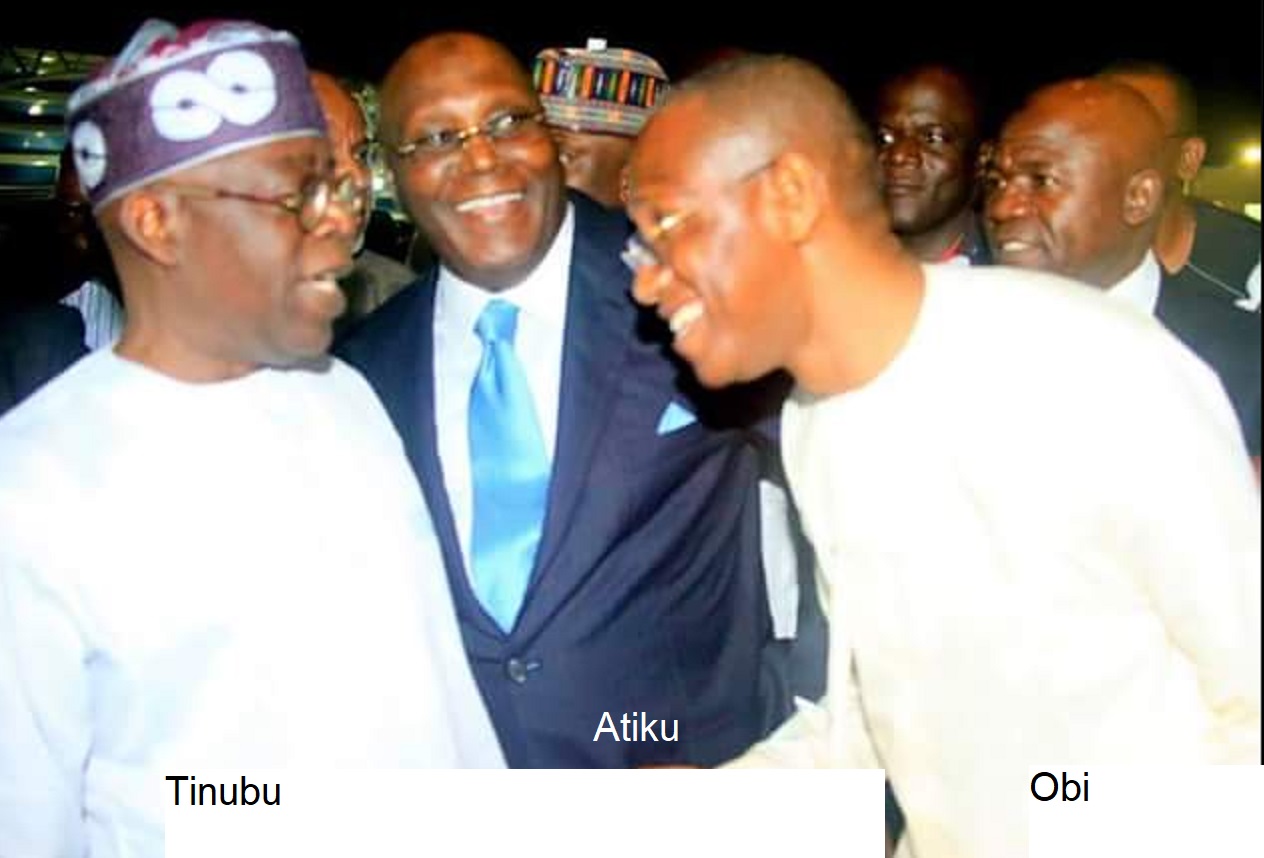
Atiku Gets PDP Flag for Presidency – And The Battle Ahead with Obi, Tinubu

Your business will change. Your career will change. Because satellites will unlock new vistas; Register.

0

Two Tekedia Institute Faculty and a Texas-based company with Starlink  license will teach this course. Do not miss it: it will open a new world on the possibilities of the future as the satellite-based broadband internet age begins in Nigeria and Africa. Your business will change. Your career will change. Because satellites will unlock new vistas across rural and urban economies at scale. Register today and learn at the the best school here 

The Dirty game of politics

1

When people say that politics is a dirty game, it is not a cliche because politics is really dirty and stinking, and for you to be a politician (a politician in the limelight and not some backyard honorable) you will need to get dirty or play dirty. 

The amount of money that gets wasted in the quest for political ambition and campaigns, the amount of betrayal and backstabbing that goes on in politics and political campaigns, the level of lies, dishonesty and fake promises that men who are expected to be upstanding and exhibit the highest level of integrity in the society tell just to grasp power and satisfy their political quest and ambition is ridiculous. 

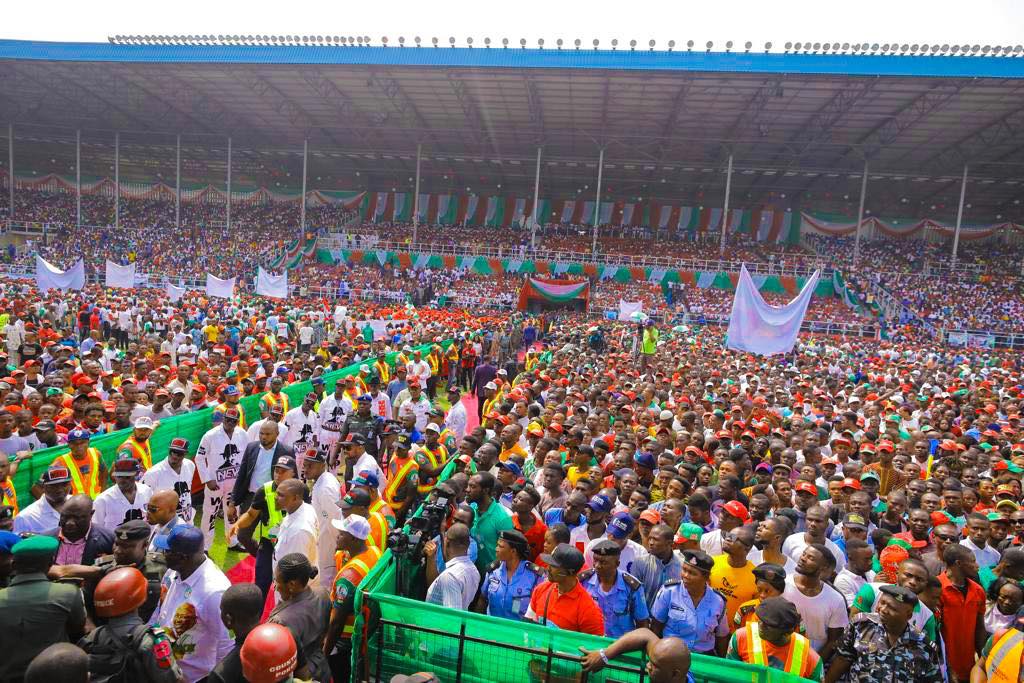
The amount of money that flowed in Abuja yesterday during the PDP presidential primaries makes one wonder if Nigeria is really suffering economically, sharing of money for the purchase of votes was done openly, and delegates are bought or paid for their votes. It is no longer the contest of who is the fit and right candidate based on ideologies, agendas, and track record but a contest of who is the highest paying candidate or the highest bidder.  Some candidates are said to have smiled home with an accumulative sum of 50k USD which was paid for the purchase of their votes.

A government that is built on corruption will definitely be corrupt. A government that is formed through electoral malpractice which is a form of corruption will be corrupt but we no longer want to accept the fact that vote-buying is a form of electoral malpractice and a form of corruption. It is now a norm in Nigerian politics. 

After all of these, every politician is expected to exhibit the spirit of sportsmanship and play fair to win, and if he loses he is to bury the hatchet and support whoever wins and be a nationalist and join in rebuilding the nation because politics is a democratic process used in selecting better and fit individuals to take the society from one level of glory to another or from grass to grace. 

On this note, if you are yet to get your PVC you have a few days left to do that, your vote counts and you can now apply to get a PVC online through https://cvr.inecnigeria.org

Western Powers Set To Give South Africa $8.5bn For Energy Transition

0

In a joint statement issued by the South African government and the African Development Bank (AfDB), it has been revealed that the countries of the United Kingdom (UK), the United States (US), France, and Germany, among others in the European Union (EU) have pledged an initial amount of $8.5 billion to South Africa.

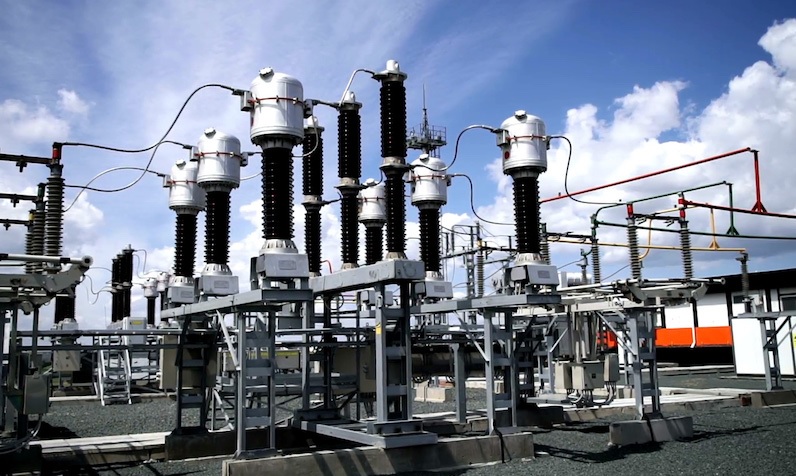
The said fund is targeted to finance the country’s long-term ‘just transition’ process to reduce the carbon intensity of her electricity system, while also developing new sectors such as green hydrogen and electric vehicles.

South Africa submitted an ambitious Nationally Determined Contribution (NDC) prior to COP 26. At COP26, the South African government also forged the Just Energy Transition Partnership (JETP) jointly with the aforementioned western powers.

The objective of the JETP is to ensure a just transition for workers and communities that had historically relied on South Africa’s coal-based value chains for their livelihoods.

The scale of the challenge means that partnerships, including with the private sector and development finance institutions, would be indispensable to achieving desired outcomes, according to both the AfDB and the country’s government.

As part of its commitment to the development of Africa’s energy sector in line with its New Deal on Energy for Africa (NDEA) strategy, the AfDB is playing a leading role in supporting African countries on their energy transition journeys with policy advice, technical assistance, and financing.

In this context, the Minister of Finance of the Republic of South Africa, Enoch Godongwana formally requested the AfDB to support South Africa with technical assistance on its Just Energy Transition process.

The AfDB had responded favourably to the request of South Africa and had agreed to provide the demanded support through the COP26 Energy Transition Council Rapid Response Facility, financed by the Bank’s Sustainable Energy Fund for Africa (SEFA).

The technical assistance would be targeted at enhancing the capacities of relevant institutions in South Africa – primarily the Asset and Liability Management (ALM) Division of the National Treasury and the Presidential Climate Finance Task Team (PCFTT) – to engage and negotiate with external and internal partners of the South African Just Energy Transition process.

This technical assistance is reportedly independent, separate and not in any way linked to any further financial support that the AfDB may contribute towards South Africa’s just transition in the future.

The broad scope of the technical assistance had been agreed upon between the ALM Division and the PCFTT, which allows them to draw on financial, technical and other skills that enable them to fulfil their respective mandates and responsibilities to develop recommendations for the financing package offered under the JETP.

According to the AfDB, the details of the implementation of the agreed-upon technical assistance were currently being finalized with a launch of the assistance expected in the coming weeks.

The government and the AfDB had also reached an in-principle understanding that this rapid assistance may be followed by a larger SEFA technical assistance programme, supporting the medium-to-longer term needs of South African institutions in the Just Energy Transition process, once such needs become more apparent.

“This technical cooperation builds on a long-term partnership between the AfDB and the South African government, that is based on the recognition of the important emphasis that energy security and just transition play in the country’s climate response as well as the need to meet economic, environmental and social development objectives.” the joint statement concludes.

This kind of cooperation is indeed commendable, hence deserves every needed support and encouragement. Other countries presently in need of such an energy transition are therefore enjoined to leverage the opportunities this rare platform provides.

Citibank Partners With Lagos-Based Babban Gona To Offer 50,000 Farmers A $10m Boost

0

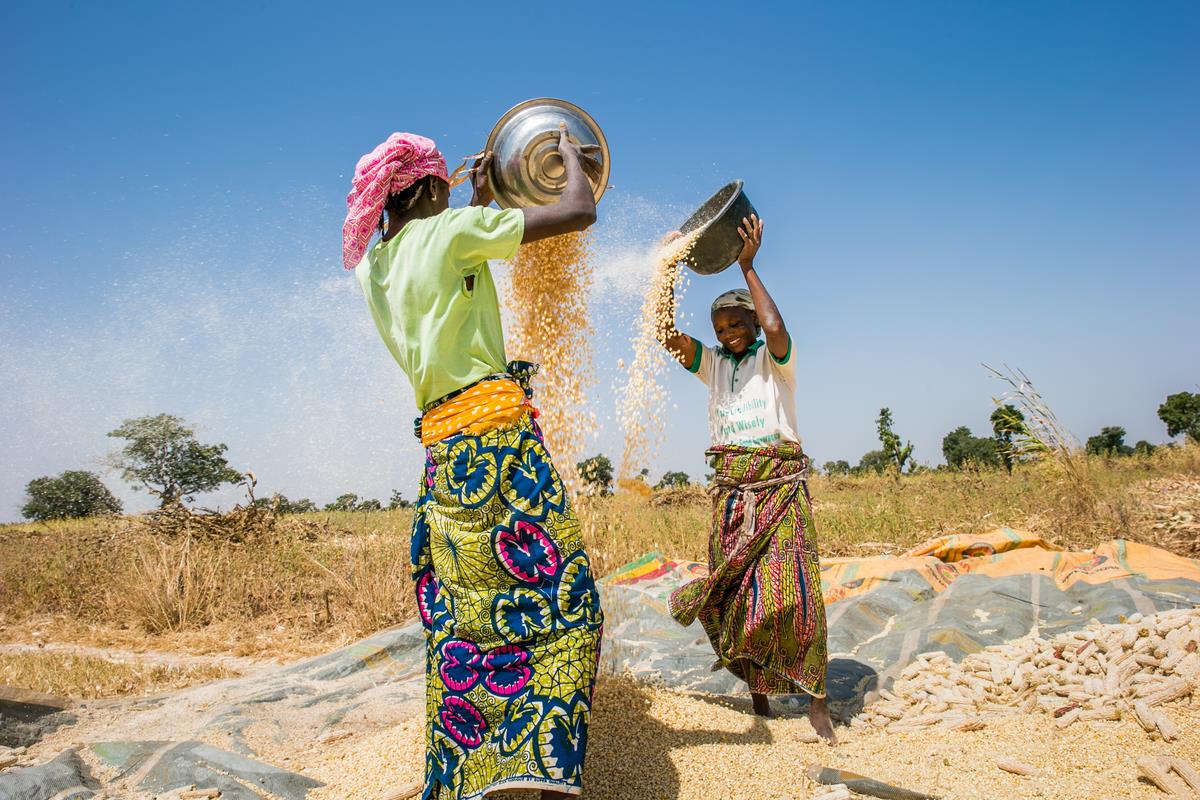
American multinational investment bank and financial services corporation, Citibank has entered into a partnership with Lagos-based social enterprise Babban Gona, a business model that helps Nigerian farmers in Nigeria to become more profitable. Such partnership will increase lending to local smallholder farmers in a bid to boost agricultural output in Africa’s most populous country.

Babban Gona will administer a $10million Citigroup financing to about 41,000 small farmers in the West African nation, which it stated in an emailed statement. According to Babban Gona, such financing to small-hold farmers will enable them to improve income by 350% per hectare.

The organization since its establishment in 2012 has already extended nearly $200 million in loans to over 280,000 smallholder farmers. As regards the funding by Citibank, it forms a part of Citigroup’s $1trillion global commitment to sustainable financing by 2030.

The Chief Executive Officer of Citibank Nigeria Ireti Ogbu disclosed that the bank will not hesitate to do more and partner with more organizations once its partnership project with Babban Gona is successful. She further disclosed that there is a pipeline of projects under consideration as Citigroup plans to use its worldwide network to help fintechs tap into the global financial market over the next few years.

Lately, I have been keeping tabs on the recent developments going on in the agricultural sector in Nigeria, and I must say that it has been a feeling of ecstasy, to see the funds and support the farmers in the sector have been receiving.

There have been efforts by the Nigerian government to make agriculture the mainstream of the Nigerian economy, meanwhile, there have been complaints from citizens that the government has refused to make the sector a priority which is why the sector has been underperforming.

On the other hand, to ensure that these farmers are able to access loans, the Central Bank Of Nigeria, CBN introduced the anchor borrowers program (ABP) in 2015, to achieve financial inclusion by helping farmers have easy access to credit loans.

Despite efforts from the Central Bank and the government, most farmers in Nigeria still lament the poor access to loans. Notwithstanding, it is interesting to note that some private firms and start-ups are beginning to step in to ensure that small-hold farmers have access to loans, without having to entirely depend on the government to do everything.

It is pertinent to note that the Agricultural sector in underdeveloped and developing countries in Africa, such as Nigeria, is a sustainable economic development of the agricultural sector. With proper access to loans to these small-hold farmers in Nigeria, it will no doubt improve the production output in the sector, because these farmers will be faced with little or no constraint, which will also ensure proper food security in the country.

Looking at the effect of the Russian-Ukraine war that has caused most countries in Africa to witness severe hunger and famine, due to the blockage of food supplies to these regions caused by the war, it should be a warning signal to Nigeria to improve its agricultural sector.

Smallholder farmers in Nigeria must get access to adequate loans to ensure that the country never witnesses famine or severe hunger. Once the agricultural sector in the country blossoms, it can also improve the country’s economy by boosting its revenue through the exportation of food products.