DD
MM
YYYY

PAGES

DD
MM
YYYY

spot_img

PAGES

Home Blog Page 5113

Nigeria’s Fiscal Instability, Escalating Cost Of Governance Remain Challenges

0

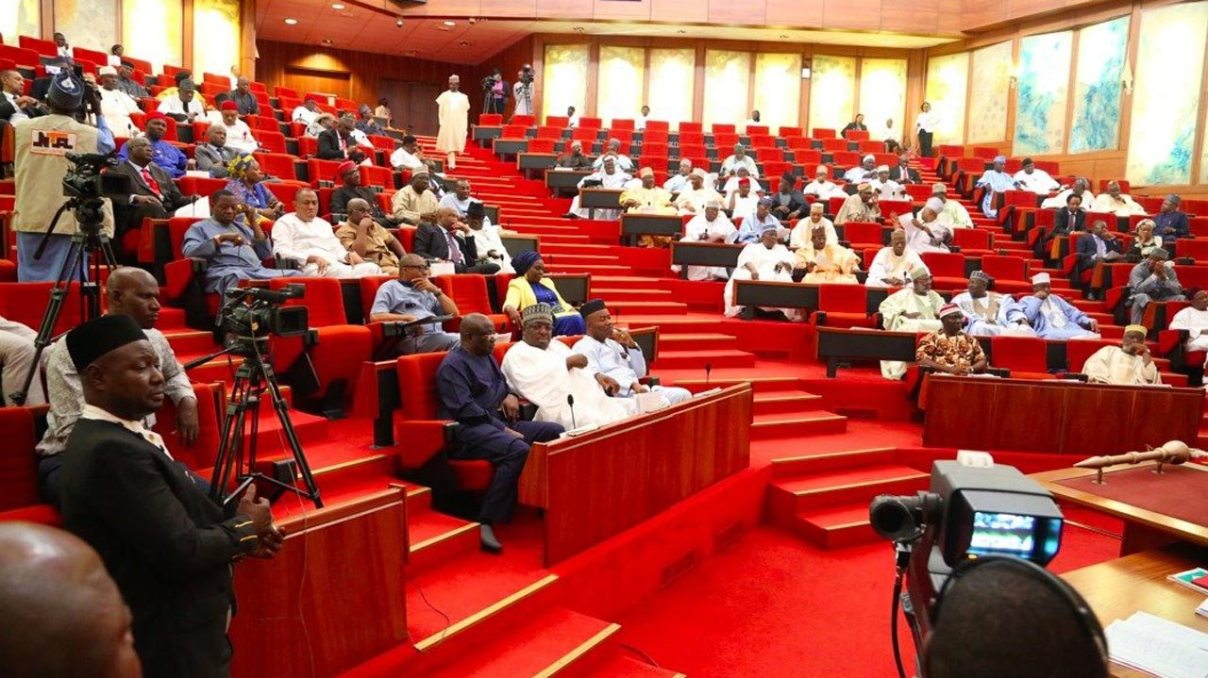
Amidst Nigeria’s rising public debt and its negative consequences for the economy, the Chief Executive Officer (CEO) of the Centre for the Promotion of Private Enterprise (CPPE) in the country, Dr. Muda Yusuf, has called on the Federal Government (FG) to scale down the cost of governance.

It’s noteworthy that, according to economic experts, Nigeria’s public debt is projected to hit N45 trillion by the end of 2022 with a plan by the Debt Management Office (DMO) to borrow an additional N6.39 trillion to finance the 2022 budget deficit.

Dr. Yusuf who publicly made his opinion known in a recent interview granted him, stated that the rising debt profile raises serious sustainability concerns.

He said, “When we take account of borrowings from the Central Bank of Nigeria (CBN) and the stock of AMCON debt, the debt profile would be over N50 trillion.”

Contrary to the government’s claim that the challenge is not debt but revenue, he opined, “The truth is that debt becomes a problem if the revenue base is not strong enough to service it sustainably. It therefore becomes a debt problem.

“Government’s actual revenue can hardly cover recurrent budgets, which implies that the entire capital budget is being funded with loans. This is surely not sustainable.

“What is needed is the political will to cut expenditure and undertake reforms that could scale down the size of government; reduce governance cost and ease the fiscal burden.”

He also counselled that even if the government must borrow, it is important to ensure that the money is used strictly to fund capital projects, especially infrastructure, that would strengthen the productive capacity of the economy.

The CPPE boss further advised that emphasis should be on concessionary financing as opposed to commercial debts, which are typically very costly.

“The unitary character of the country is making it difficult to unlock the economic potential of the sub-nationals. It is perpetuating the culture of dependence on the Federal Government.”

“It is necessary to scale down the size of government and cost of governance. Fiscal sustainability is driven by both cost and revenue. Therefore, managing the major drivers of cost and revenue is imperative. As far as possible, the government should push back in sectors or activity areas where the private sector can deliver desired outcomes.

“We should see more accessioning and privatisation at all levels of government. This would allow for the infusion of more private capital into the infrastructure space.” he opined.

It is only a dummy that’s yet to realize that one of Nigeria’s prime plights remains the high cost of governance. Bureaucracy has over the recent years endangered the country’s economic status, that only a severe measure is needed to salvage it.

A job that could possibly or easily be done by only one person, is being carried out by a hundred individuals, particularly in the political setting. Yet the work in question would not be adequately handled as expected. The bureaucratic system herein is gradually leading the country to a doomed state unwittingly to the ignorant citizenry.

In addition, governments at all levels have abruptly adopted borrowing as a necessary tradition, thereby causing unending fiscal instability in the country’s economy at large.

This crazy and deadly practice needs to be buried headlong. This can only be achieved by overhauling the entire existing economic system in Nigeria. 
Goodluck Jonathan Missing from APC Presidential Aspirants List

0

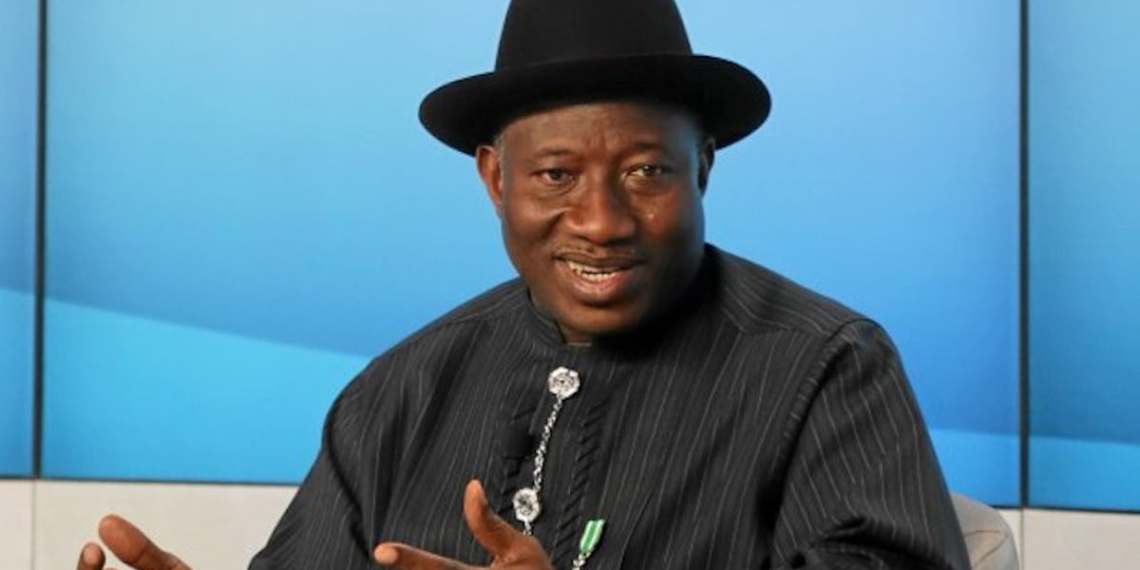
The All Progressive Congress (APC) has published a 23-man list of presidential aspirants scheduled for screening ahead of its presidential primary coming up on June 5 and 6, 2022. However, the list doesn’t have the name of former president Goodluck Jonathan, who has been touted as a possible flag bearer for the ruling party.

Jonathan, who became president under the Peoples Democratic Party (PDP), lost his reelection bid in 2015 to Muhammdu Buhari of the APC. Though Jonathan has stayed away from political activities since then, focusing more on international peace-keeping missions, rumors have been flying about him being adopted as a consensus candidate by the APC.

Creating suspense, he has failed to dismiss the rumors. He told a group of supporters weeks ago

“You are calling me to come and declare for the next election. I cannot tell you I’m declaring. The political process is ongoing.

Jonathan’s absence in PDP’s political events also fueled the speculation that he might have another run at the presidency under the APC. He was not at the PDP’s presidential primary held on Saturday in Abuja. There is also a report that he is now a card-carrying member of the APC.

A Northern coalition had early this month bought the APC’s presidential ticket for the former president, but he said it was purchased without his consent, describing it as an insult.  However, his response did not kill the suspense surrounding his 2023 presidential ambition. But with Jonathan’s name missing from the final APC’s list, it is believed that he has heeded the call of many who have asked him not to run.

Below are the names of the presidential hopefuls for screening as listed by APC.

  1. Chukwuemeja Uwaezuoke Nwajiuba
  2. Badaru Abubakar
  3. Robert A. Boroffice
  4. Uju Ken-Ohanenye
  5. Nicholas Felix
  6. Nweze David Umahi
  7. Ken Nnamani
  8. Gbolahan B. Bakare
  9. Ibikunle Amosun
  10. Ahmed B. Tinubu
  11. Ahmad Rufai Sani
  12. Chibuike Rotimi Amaechi
  13. Oladimeji Sabon Bankole
  14. John Kayode Fayemi
  15. Godswill Obot Akpabio
  16. Yemi Osinbajo
  17. Rochas Anayo Okorocha
  18. Yahaya Bello
  19. Tein Jack-Rich
  20. Christopher Onu
  21. Ahmad Lawan
  22. Ben Ayade
  23. Ikeobasi Mokelu

Nigeria Government Applauds Total Energies Over $30b Investment

0
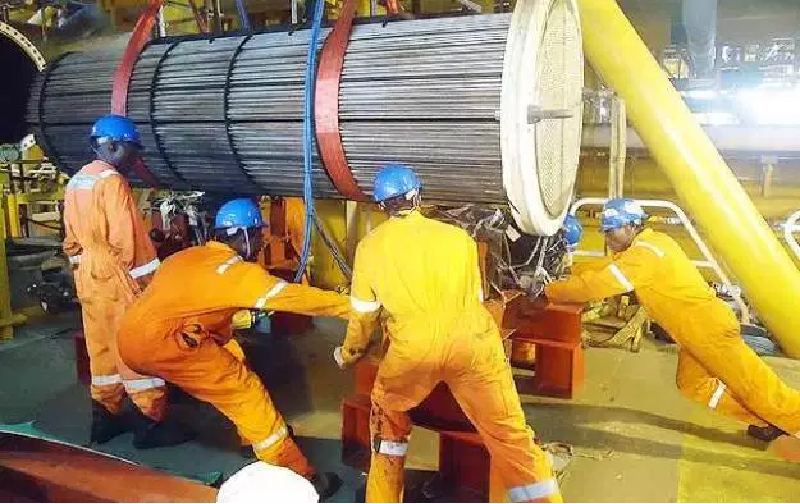
Oil workers

The Federal Government of Nigeria (FGN) has commended Total Energies EP for investing not less than $30 billion within the last eight years in the country’s economy.

Specifically, the Executive Secretary, Nigerian Content Development and Monitoring Board (NCDMB), Simbi Wabote charged International Oil Companies (IOCs) to take advantage of the investment opportunities that exist in the nation’s oil and gas sector.

According to him, the FGN was not unaware of the challenges bedeviling the sector but charged the IOCs to devise innovative solutions to turn these barriers to opportunities.

Wabote stated this during the Total Energies EP 60th anniversary gala in Lagos State on 19th May 2022.

He, however, commended Total Energies for its investment stride over the years, maintaining that the company had relentlessly continued to believe in Nigeria despite the harsh operating business environment for businesses.

In his words: “Over $30 billion has been invested in the space of eight years. This is by far more than what any other IOC has invested. There is no basis for comparison. I want to use this opportunity to challenge other IOCs to keep believing in Nigeria as the Federal Government will continue to provide the enabling environment for businesses to thrive.”

Earlier, the Country Chair, Total Energies Nigeria, Mike Sangster boasted that in the 60 years of exploration and production in the country, the company had grown from a modest beginning to be the second-largest oil and gas producing company in the country.

He added that the partnership between Nigeria and Total Energies had been a successful one, but lamented the current state of insecurity in the country, which he said was greatly reducing its onshore production.

“So, we have also had our own fair share of challenges to overcome but what I have seen personally over the past three years is that when our teams, all our teams, put their heads together, there is no problem that cannot be resolved.

“As we look to the future, Nigeria is not insulated from the global economy. As the world moves to combat climate change, we are taking a lot of steps to reduce our carbon footprint in Nigeria, and we are also very interested in developing our renewables business as well.”

“Indeed, this also emphasizes the need for Nigeria to remain globally competitive to continue to attract investment, especially in gas and LNG, to derive the much-needed revenue, and meet the developmental and economic needs of its people, while financing the energy transition.”

He said the company would continue to collaborate with the government, its partners and other stakeholders to help further develop the economy of the country while also meeting the socio-economic needs of its teeming citizens and play its leadership role on the African continent.

On her part, the Managing Director of the Deepwater Shell Nigeria, Mrs. Eloho Aiboni, disclosed that the oil and gas industry in Nigeria was begging for more investment, therefore called on local and foreign investors to take advantage of the investment space in the country.

Taking into cognizance the compelling need to revisit Nigeria’s oil and gas sector towards ensuring a better enabling environment for the country’s economic growth, the concerned authorities herein are enjoined to step up actions in a bid to do the needful.

This can only be possible by creating as well as maintaining wholesome policies in the said sector. So, as the government applauds the Total Energies, it should hesitate to live up to the expectations.

Robots Lead the Factory Floors As Companies Struggle To Hire Enough Workers

0

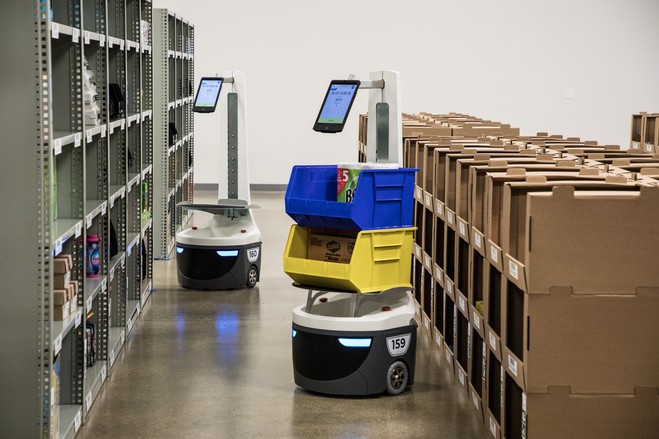
Lately, robots are turning up more on factory floors and assembly lines, as companies struggle to hire enough workers to fill the rising orders. Workplace robot orders jumped by 40% this year’s first quarter in the U.S. Robot orders priced at $1.6 billion, climbed by 20% in 2021 following years of stagnant declining order volumes.

The adoption of robots in companies was caused by certain challenges such as rising wages and employee shortages, compounded by the increase in covid-19 related absenteeism which is already altering some producers’ attitudes about robotics.

Some companies misplaced about 40% of their manufacturing days during the peak of the covid-19 pandemic which affected their workforce. Such disruption prompted a few companies to add extra robots to the workforce.

Despite the ease of the covid-19 virus, some companies have decided to stick with the use of robots which according to them has already brought about a  positive paradigm shift in the workplace and companies. In North America, the use of commercial robots has for years been concentrated within the automotive trade.

While automakers and producers of auto elements accounted for 71% of robotics in 2016, robots have also made inroads into different sectors, such as the manufacturing sector (manufacturing meals), the Health sector (prescription of drugs), and shopper merchandise. Executives of such companies revealed improved capabilities as they will therefore permit robots to be programmed for more complex duties.

Most executives have also revealed the positive impacts of the use of robots in their companies, where a task that usually takes a worker about three hours to finish, takes a robot about half an hour which has no doubt saved time and improved production outputs.

According to analysis firm Oxford Economics, it disclosed that up to 20 million manufacturing jobs around the world would be replaced by robots in 2030. Each new industrial robot wipes out about 1.6 manufacturing jobs.

It has been estimated that regions where people have lower skills, which tend to have weaker economics and higher unemployment rates, are more vulnerable to the loss of jobs. Some workers in the manufacturing companies, out of fear of displacement, have left their jobs with so many others considering leaving.

Some of these workers move to sectors like transport, construction, administrative offices, etc. Unfortunately, what they fail to understand is that in this 21st century where everything is rapidly evolving, a lot of jobs are vulnerable to automation. What these workers need is to arm themselves with on-demand skills to ensure that they are not jobless in case they are replaced with robots. Jumping from one job to another is unreasonable and it doesn’t guarantee job security.

The world is evolving and a vast majority of people, even those with jobs are beginning to see the importance of having necessary on-demand skills.  There have been plenty of productions that robots are going to displace, a lot of jobs ranging from factory workers to white-collar jobs which are vulnerable to automation are going to be replaced with robots.

With the rise of robotics, it is expected that the job market will change significantly. Much of the administrative work in the workplace will be automated, which will therefore change the scope of administrative employees.

With nearly 3 in 4 global companies investing in automated tech, the trend is already frightening for many employees. In this 21st century where a lot of advancements are already taking place, the ideal thing for anyone to do, even those with jobs, is to properly arm themselves with necessary skills, because the change from employees to robots is very imminent and would definitely displace a lot of workers.

Deepening Nigeria’s Cultural Diversity

0

On the 21st of May each year, the global community celebrates the World Day for Cultural Diversity. Hence, the 2022 edition of the laudable commemoration was marked two weeks back.

In 2001, the United Nations Educational, Scientific and Cultural Organization (UNESCO) adopted the Universal Declaration on Cultural Diversity; hence in December 2002, the United Nations (UN) General Assembly in its unanimous resolution, declared May 21 annually to be the World Day for Cultural Diversity for Dialogue and Development. The Day provides us with an opportunity to deepen our understanding of the values of cultural diversity and to learn to live together better.

Heritage is described as the inheritance such as buildings, monuments, or any property of an individual or a society. Whilst cultural heritage, are the inherited qualities, traditions, ideas, or style of living of an individual or a given society, which have continued over many years, especially when they are considered to be of historical importance.

On the other hand, cultural diversity is defined as the situation whereby the cultural heritage of a person, group or society varies or consists of different conditions, qualities, or types. In other words, the diversity of a given culture is the state at which it comprises or is made up of varieties.

Undoubtedly, cultures such as dancing, masquerading, dressing, sewing, hunting, fishing, singing, wrestling, molding of sculptures, painting, and so on, are essential developmental tools in any country. Culture is strongly connected with identity; and identity expressed through culture is a necessity for all human developments. It creates the fundamental building blocks in our respective personalities and in the ties that link us to various communities as well as any nation we find ourselves in.

Culture plays a unique and crucial role in a development policy especially issues relating to human rights. A free and staunch cultural heritage has the tendency of promoting other rights and values to include freedom of expression, diversity and debate about needs in a society. In the same vein, culture is a key player in the link between freedom of expression and democratization.

Culture can also encourage the economic growth of either a nation or an individual. For instance, a country that’s tremendously gifted with swimming, which is a globally recognized lucrative sporting activity, can substantially boost its Gross Domestic Product (GDP) if a meaningful attention is given to such heritage.

Creative areas including music, paintings, drawings and sewing, can equally serve as revenue sources. In fact, the encounter between culture, creativity, technology and economy embodies a great potential in creating work places and increasing exports, and also contributes to social inclusion.

Culture can equally assist in checking socio-political crises or differences. It ensures unity during crisis, and influences identity, debate and dialogue; thus, it is needed for nation building, and for peace and reconciliation. Needless to say, it inspires change, which we all anticipate. Survey indicates that cultural cooperation is one of the most equality-oriented forms of co-operations in existence.

The entertainment industry cannot be left out while discussing the impact of cultural heritage in nation building. Similarly, the tourism of any country cannot be discussed without mentioning the country’s cultural diversity.

It is obvious that the cultural heritage of any society contributes over sixty-five percent (65%) of its tourist sector, which remains one of the paramount Internally Generated Revenue (IGR) sources of any developed society.

Surely, tourism is one of the backbones or engine rooms of any developed country in the world, and this cannot be possible without the impact of cultural diversity of the country in question.

This implies that Nigeria, which is made of over two hundred and fifty (250) ethnic groups in which each of the groups is endowed with different cultural resources, can as well consider harnessing her tourist sector as she is currently thinking of economic diversification or beyond oil and gas.

There is a compelling need for us to acknowledge that our cultural diversity is a stimulator of creativity, and investing in creativity can transform societies. Hence, it is our civic responsibility to develop education and intercultural skills in our young ones as well as learn to live together in the diversity of our cultures, languages and religions in order to bring the desired change.

So, at such a time like this, the Nigerian government needn’t be reminded that it’s a moment to look inwards toward rejuvenating the country’s cultural heritage in its entirety with a view to boosting her tourism industry that’s currently seemingly moribund.

In view of this, there is no gain reiterating the fact that it is high time the Nigeria’s cultural heritage is reviewed by the appropriate quarters or authorities, so that, credible ones would be sustained or harnessed via institution of cultural carnivals by both federal and state governments, promotion of the various existing communal cultural festivals, establishment of museums, and other related practices.

By doing so, the unacceptable ones would either be addressed or completely abolished, with a sole motive of boosting the country’s tourism industry as well as encouraging human empowerment.