DD
MM
YYYY

PAGES

DD
MM
YYYY

spot_img

PAGES

Home Blog Page 5119

U.S. Supreme Court Halts Controversial Texas’ Social Media Law

0

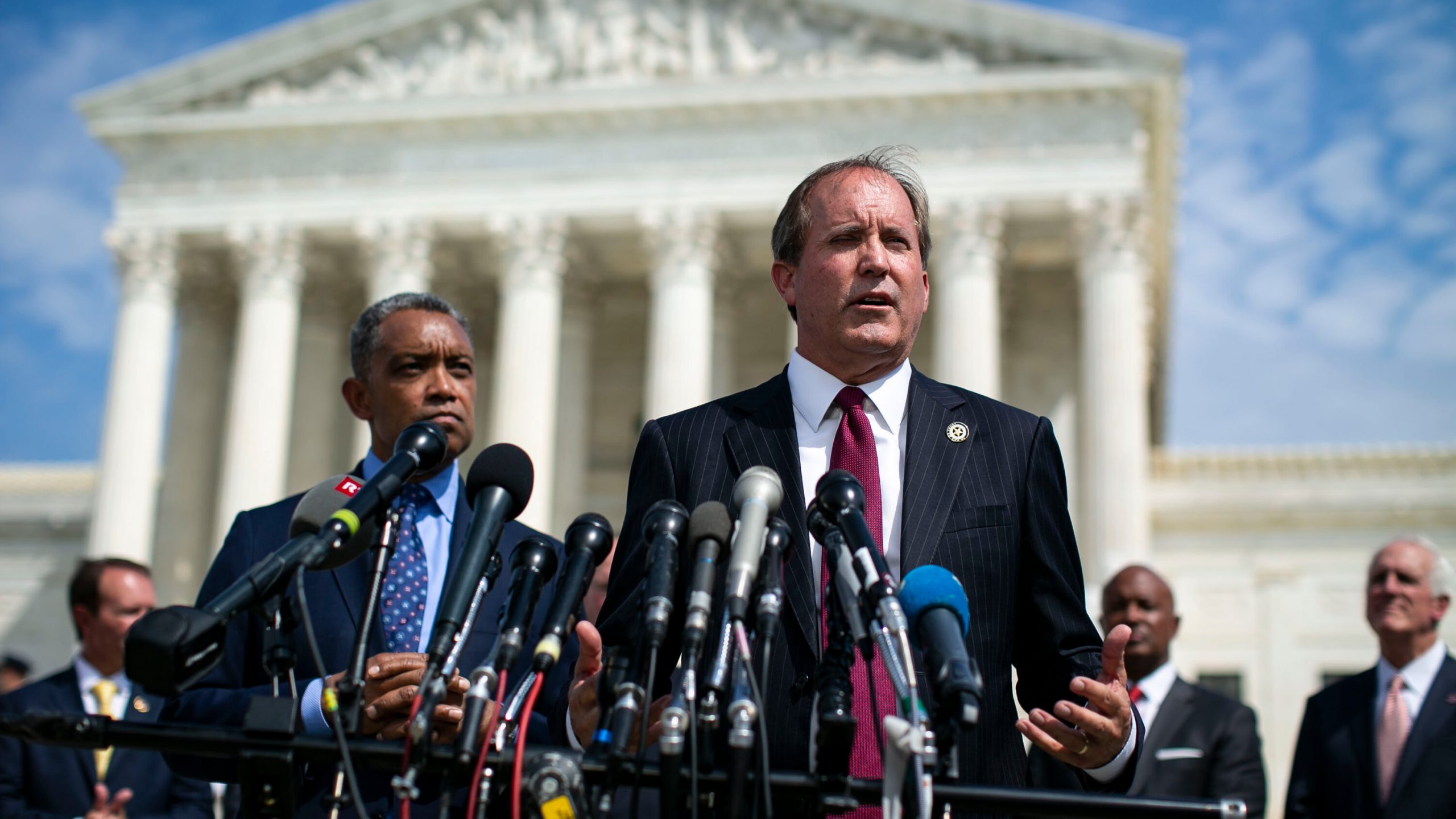
A Supreme Court jury has voted to halt controversial Texas’ social media law dubbed HB20, which was introduced early last year, but has faced unrelenting legal battles amidst backlash from activists since it was enacted in September.

Two tech industry groups, the Computer and Communications Industry Association (CCIA) and NetChoice, representing major social media platforms, had challenged the law in court. The HB20 was designed to stop social media platforms from blocking users over what they post, and empowers the Attorney General and account holders to sue social media platforms when their rights to post contents are violated.

The HB20 was triggered by the ban of former president Donald Trump and other top members of the Republican Party from major social media platforms post 2020 election. But it has faced a rocky ride through the courts.

Texas, a Republican state, was at the forefront of conservative claims of tech’s liberal ideological bias. The push behind the HB20 is to prevent social media platforms from blocking conservatives over their viewpoints considered unhealthy.

But in May, in a surprise ruling, the Fifth Circuit Court of Appeals had unblocked the law, overturning the earlier judgment of the trial court which prohibited Texas and its Attorney General from enforcing the HB20. But the Supreme Court voted 5-4 in favor of the applicants.

“Applicants now ask this Court to vacate that stay while the Fifth Circuit resolves the appeal of the underlying preliminary injunction, and the Court grants that extraordinary relief,” Justice Samuel Alito said in the ruling.

“The May 11, 2022 order of the United States Court of Appeals for the Fifth Circuit staying the district court’s preliminary injunction is vacated.”

However, the Supreme Court ruling isn’t the final word on HB20. The CCIA and NetChoice are contending that “the law is facially unconstitutional under the First Amendment,” which protects freedom of speech, the press, assembly, and the right to petition the Government for a redress of grievances.

The argument which is yet to be settled is based on the First Amendment and the state’s sovereignty. Alito, who was among the justices who voted in favor of the state, said in his dissent that Texas has the right to make and enforce its own laws.

“While I can understand the Court’s apparent desire to delay enforcement of HB20 while the appeal is pending, the preliminary injunction entered by the District Court was itself a significant intrusion on state sovereignty, and Texas should not be required to seek preclearance from the federal courts before its laws go into effect.

“The Court of Appeals, after briefing and oral argument, concluded that the District Court’s order should be stayed, and a decision on the merits can be expected in the near future. I would not disturb the Court of Appeals’ informed judgment about applicants’ entitlement to a stay,” he said.

The 2022 Is Here – The Dawn of Immersive Connectivity in Nigeria

0

If you received that document on investing in Starlink, do not fall for it. There is nothing like Starlink as an asset class. What Elon Musk has is SpaceX; Starlink is just a product and he would certainly not issue equity on a product. Some guys in Luxembourg are trying to deceive people in Africa, tapping the exuberance on Starlink satellite. If you like Starlink, just wait for SpaceX to go public and you can invest. That document is targeting HNIs in Africa; stay away!

Meanwhile, watch this video I made in June 2017, predicting that satellite broadband will come at scale in 2022. My postulation remains that Nigeria is moving into a new dawn of immersive connectivity. That will unlock massive opportunities.

Starlink recently announced that it would be arriving in Nigeria.


Have You Taken This Procurement Management Course at Tekedia Institute?

0

“World-class”, “Peerless”. “The Best procurement management course”, – these are feedbacks from our Learners on this course. And I ask you: have you taken it?

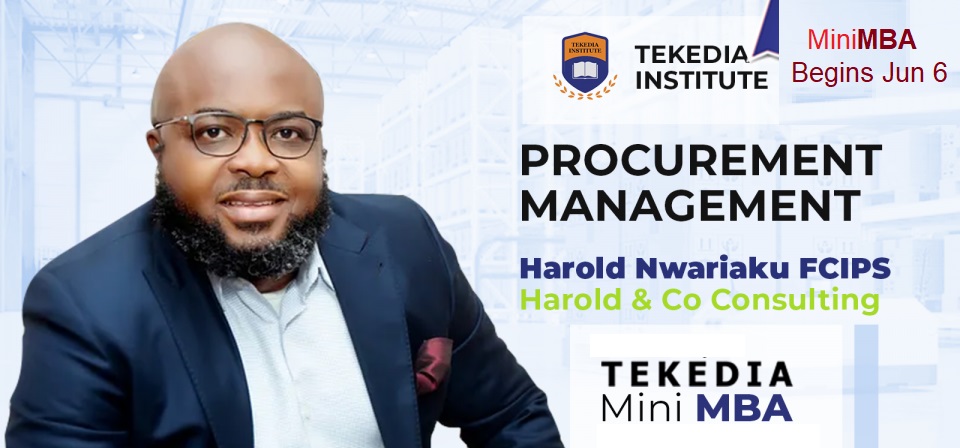
Our Faculty is the dean and the zen-master of procurement management in Africa. From Procter & Gamble to Diageo (Guinness Nigeria) to MTN, etc, to running one of the most important procurement management consulting firms in Africa, Harold & Co Procurement/Supply Chain Consulting, Harold Nwariaku is a supply chain and procurement management leader.

He developed this  world-class course for Tekedia Institute.  It is a masterpiece flavoured with the nuances of the African market. Join us and improve your procurement playbook  and WIN. The academic excursion begins on June 6.

After taking this course, we have changed our own procurement playbook and the results are superb. Learn from the legend; improve how you procure, and make it a competitive advantage in that firm.  Join us here.

New Course At Tekedia Mini-MBA: “Broadband service delivery – A Business Case”

0

It is the season of broadband delivery service. To deepen our course on “Satellite Internet in Nigeria: Business and Career Opportunities” where we will explore how Elon Musk’s SpaceX Starlink could reshape Nigeria/Africa,  in the next edition of Tekedia Mini-MBA which begins on Monday, we’re extending that module with an additional course, developed by telecom veteran Olatunde Olafimihan. His section is titled “Broadband service delivery – A Business Case”.

Mr Olafimihan spent 18.5 years in MTN. Today, he is the Director of Technology at RGL. He is one of the leading technology leaders in this domain.

It is going to be amazing – the experts are here and we will learn to advance. Tekedia Mini-MBA: practical business education to all nations.

To register for the next edition of Tekedia Mini-MBA, click here

Nigeria Approves Elon Musk’s Starlink for Satellite-Based Internet Services

The Perils of Nigeria’s Comedy Skit Market as It Expands

0

In the last two years, Africa has seen a rise in comedic skits, with the youth serving as both creators and consumers. Because of their high level of innovation, the youth are the producers. They are also customers due to a number of circumstances, including a higher unemployment rate and greater Internet access than older individuals or digital migrants.

Skit is a form of commenting on or criticising objects, issues, or individuals that dates back to the early 1800s. Skit has numerous names in different parts of continental Africa, from north to east and west to south. Our research reveals that the names are derived from African traditional knowledge and cultural expressions. From a literary standpoint, our analyst discovered that skit is “a short performance in which the players imitate persons, events, and forms of literature in order to make fun of them.”

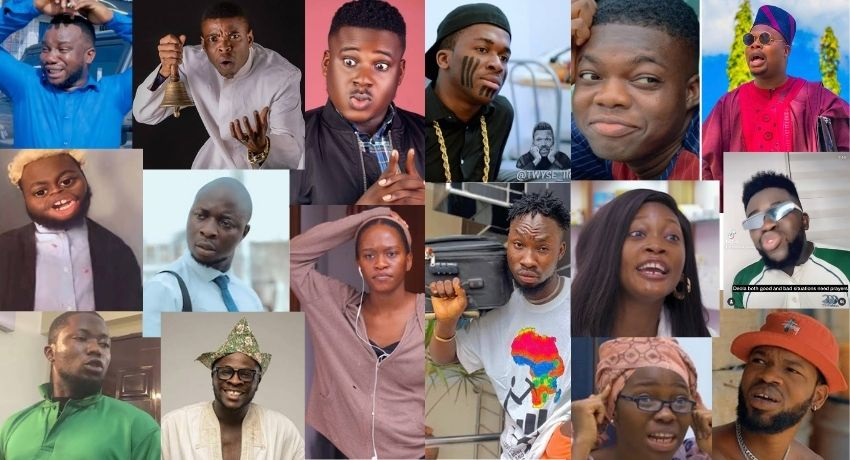
As previously said, Nigeria’s comedy skit market is quickly expanding. Skit makers range from Mark Angel to Taaooma and Maraji to Real Warri and a slew of others. The factors mentioned previously are significantly responsible for the growth. One of the factors, unemployment, has recently been reaffirmed by a nationwide study done by the Africa Polling Institute. The study found that over 60% of Nigerians watch skits amid the rise in youth unemployment.

There are also several personal perspectives and market data that define market growth in billions of dollars and naira. The sector has been discovered to be both a source of employment and a remedy for societal problems. The Nigerian government has praised the players, particularly the manufacturers, for this and other contributions. According to certain stakeholders, the sector is suitable for investment based on all indicators. Stakeholders expect the comedy skit business to be funded in the same way that angel and venture capital investors have funded other sectors and industries over the last decade.

Aside from the industry’s economic benefits, there are various signs that comedic skits can help people manage mental illness. According to the World Health Organization, one out of every four Nigerians has a mental health problem. Nigeria, however, lacks a strong mental health illness management system as well as resources (human and materials).

This, according to our analyst, explains why many Nigerians watch skits on their mobile gadgets. The most frequent mental health conditions in Nigeria include depression, anxiety disorders, schizophrenia, eating disorders, and addictive behaviors. Over 70% of the skits focused on aiding people with these disorders, according to an analysis of 100 skits. To put it another way, skit writers act as mental health therapists.

Based on these insights, Nigeria’s digital comedy skit is undeniably interesting. However, following our analyst’s observational studies over the last three weeks, it has become clear that players must pay attention to how skits are made in Nigeria, given different uncertainties such as the level of insecurity and people’s ‘unexpected mood swings.’

It is self-evident that the goal of the skit is to make people happy. Meanwhile, observing and analyzing 100 skits reveals that creating skits with people who are not part of the production crew and have no prior knowledge of the skits’ content is risky. It has a proclivity for inciting mob activity. Skits aimed at preventing individuals from engaging in money rituals, ritual killings, and other similar activities without the consent of those approached by the skit makers have the potential to escalate to mob actions.

The examination of the skits reveals that the majority of the makers postpone expressing that the interaction they are having with non-members of the production crew is purely comedic. This is particularly dangerous when the individuals’ emotions are rapidly and intensely shifting. Makers must rethink their production technique in order to preserve the benefits of skits. It is also important to obtain a security authorization and protection, in addition to telling individuals of their intentions. According to our analysis, this will provide the best security against mob actions.