DD
MM
YYYY

PAGES

DD
MM
YYYY

spot_img

PAGES

Home Blog Page 5127

Tekedia Unveils “Tekedia Corporate Town Hall and Consultancy”; CollegeBoost Graduation, Economy Webinar

0

Tekedia Institute unveils a new program: “Tekedia Town Hall and Consultancy with Prof Ndubuisi Ekekwe“. It is a live program which takes place on Zoom. It focuses on business strategies, mechanisms, models, frameworks, etc, which companies of all sizes can deploy to win new markets and territories.

Like the ancestral town halls, it is designed to be unit-, department- or company-wide with Prof Ekekwe as a guest. The overriding objective is to provide a platform where companies can get insights from an external thought-leader, helping them to refine, upgrade and execute their missions better.

Indeed, as the global economy is being rattled and redesigned due to many factors, this program will help your organization deepen capabilities to survive and thrive, despite any economic upheaval. We have developed playbooks and protocols which your team will find useful in your operations.

The program will run for three hours on Zoom. Prof Ekekwe will make a presentation for 60 minutes with specific focus on the client’s sector. The subsequent minutes will be for Questions/Answers and interactive engagements with the participants. We expect the conversations to focus on the frictions and wins the company is experiencing. Tekedia Institute will provide perspectives, drawing from our practical industry and academic experiences.

To learn more and register your company, go here and pay N450,000 naira (or US$1,000). Once done, our team will send you a calendar to pick a time for the session.

Events: Tekedia has the following events scheduled:

Topic: Business and Personal Economy Scenario Mapping During Economic Upheaval

ASUU Strike Batch Tekedia CollegeBoost Graduation

  • Tekedia CollegeBoost Batch Graduation
  • Tuesday, May 31 2022 at 7pm WAT
  • Zoom link in the CollegeBoost board

OSUN 2022: As parties continue to communicate possible physical attack-driven messages, PAN calls for hands-on media literacy training

0

As the electorate in Osun State elect a governor in less than two months, the Positive Agenda Nigeria (PAN) had called on political parties, especially the APC and the PDP, to sensitise their supporters and social media handlers on media literacy skills so as to manage the rate of online personality attacks and potential physical attacks.

This admonition was premised on the new findings (week three) the organisation made as part of her ongoing Osun 2022 Election Campaign Monitoring.

“The online and offline trajectories of the campaign activities of the two leading political parties in the governorship election raise some concerns which should be addressed by the parties, the electoral umpire, and other stakeholders. That over 63% of 119 traces of attacks as a strategy discovered for the three weeks were found on pages of political parties’ supporters and groups is an indication that the political parties need to work with their members and supporters to prevent further escalation of online attacks into the physical space. That campaign buses and posters were destroyed also shows lack of tolerance which can degenerate into more dangerous attacks if not controlled,” PAN emphasised.

PAN also reiterated the need for political parties in the state to use the opportunities provided by different communication platforms, both online and offline, to strengthen their parties’ programmes and policies as well as market the candidacy of their standard bearers instead of expending greater energy in disparaging their opponents’ personalities. The non-partisan organisation stated:

“Political campaigns should be opportunities for presenting manifestoes and convincing the electorate about parties’ programmes and projects, and not for discussing the competencies and maligning personal attributes of political opponents. This report shows that beyond their political differences, the two leading political parties united to condemn the physical attacks that occurred during the ruling party’s campaign activities in a town in the state. This is an act that should be reinforced for parties involved in the election to successfully achieve their campaign objectives.”

The organisation equally called on parties and their candidates to desist from vote buying in whatever forms, and ensure that their campaign speeches are policy-engaged.

Because the campaign activities are getting hotter in the physical settings, Dr Oyedele Joseph Obasanjo, a member of the study team and lecturer at the Federal University of Oye-Ekiti in Ekiti State, reiterates that concerned stakeholders should examine practical lessons from the week three report. He was referring to the violent attacks that occurred in the state’s Ayedaade Local Government when one of the candidates held a campaign rally in Gbongan, one of the local government’s towns. “It’s clear from previous reports and this one that political parties need to train their social media handlers, particularly those in charge of Facebook and Twitter, on how to engage voters without bringing in personality issues, identify issues and needs in critical sectors and industries for robust policy engagement rather than personality disparagement,” Dr Oyedele stresses.

It would be recalled that PAN has 69 days to monitor the election campaign environment in Osun before the July 16th Governorship Election.

The eport is available here

Attorney-Client Privilege: The Rule of confidentiality

1

Attorney-client privilege: Whatever you tell your lawyer is completely confidential.

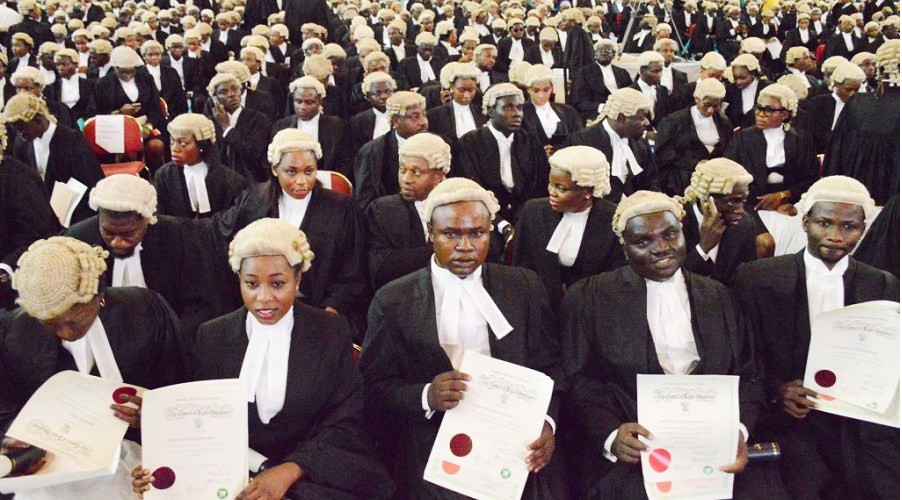
Do you know that your lawyer is under a strong obligation not to divulge or leak any confidential information or anything at all you told him as a client? This is called the Attorney-Client Privilege and it is also regarded as the rule of confidentiality under the Rules of professional conduct for legal practitioners.

The attorney-client privilege is a rule that protects the confidentiality of communications between lawyers and clients. Under this rule, an attorney or a lawyer (as we preferably called in Nigeria) cannot divulge his clients’ secrets or any confidential information confided in him by the client to a third party.

This rule was provided for in clause 19 of the Rules of Professional Conduct for Legal Practitioners in Nigeria and it states thus:

  1. —– (1) all oral or written communications made by a client to his lawyer in the normal course of professional employment are privileged.

19(1a) a lawyer shall not reveal a confidence or secret of his client.

This is not just a rule for legal practitioners in Nigeria, it is a global rule which any lawyer or legal practitioner in any legal jurisdiction of the world is expected to uphold.

This rule was made in order to protect clients’ secrets because, at the cause of a professional relationship between a lawyer and client, a client is expected to tell the lawyer everything or expose some confidential information to the lawyer. So assuring the confidentiality of that information, the privilege rule encourages clients to make “full and frank” disclosures to their attorney, who are then better armed and fully  able to provide candid advice and effective representation to the client.

Therefore, by the purport of the Attorney-client privilege or the rule of confidentiality, Whatever you tell your lawyer is completely and entirely confidential.

If by any means, what you told your lawyer or any information you confided with your lawyer leaked to the press or to the next person you can sue your lawyer for breach of confidentiality or the breach of attorney-client privilege.

Nigeria Set To Train Workers On E-Government Initiative

0

The Federal Government (FG) of Nigeria in partnership with the Korean government has disclosed its tech plan targeted to train over 200,000 civil servants on the e-Government initiative within the next five years to fast-track the migration to paperless government by 2030.

Already, about 1400 civil servants had reportedly been trained under the first phase of the project.

Speaking at the flag-off of the Project for Building Foundations towards Digital Governance in Nigeria (2021-2026), the Minister of Communications and Digital Economy, Isa Pantami observed that the Ministry in August 2021, signed the agreement with the Korean government through the Korean International Cooperation Agency (KOICA) for the implementation of Phase 2 of the e-Government development for Nigeria.

He stated that Phase 2 of the e-Government development project was developed to enhance capacity for the execution of the e-Government Master Plan with consulting services to the Presidential Council on e-Government.

The project also seeks to expand the delivery of government digital services through the enhancement of the services portal to create increased access to National Identification Number (NIN) enrolment.

Pantami, who was represented by the Permanent Secretary in the ministry, William Alo, would among others, create increased access to NIN enrolment for ordinary people across the Nigerian State.

He explained that the first phase of the project for the e-Government development in Nigeria commenced in 2013 with the support of KOICA as part of bilateral cooperation between Nigeria and the government of the Republic of Korea, during which the e-Government master plan that would guide the adoption and implementation of the e-Governance programme in the country, was approved by the Federal Executive Council (FEC) in August 2019.

Pantami noted that the Federal Ministry of Communications and Digital Economy, under the first phase, embarked on the process of developing policies, frameworks and strategies for robust implementation of e-Governance initiatives in federal government institutions and the country at large.

The minister further notified that in order to attain the goals of the project, the Ministry facilitated the President’s approval for the Presidential Council for Digital Economy and e-Government to serve as a high-level body towards the attainment of the Digital Economy Agenda and the implementation of the Government Digital Strategies.

According to him, the project, which would be funded by the KOICA’s grant, was expected to enhance capacity for the further execution of key initiatives of the National e-Government Master Plan, competencies for the e-Government service delivery, and the development of the Government Service Portal.

Speaking at the event, the Korean Ambassador to Nigeria, Kim YoungChae noted that the project signified the friendly and thriving bilateral relations between the Nigerian Government and the Korean Government which had existed for over 40 years.

He observed that Korea’s success in e-Government development was portrayed as one of the world’s best success stories, adding there were many aspects of unique Korean experiences that could be adapted to suit other partner countries.

The envoy noted the continued partnership in this field between Nigeria and Korea had provided an active platform for both countries to collaborate and make the most of the experiences Korea had thus far gone through.

On his part, the Programme Director of the KOICA, Nigeria Division, Hung Kook-Park, said Korea was hoping that by 2026 Nigeria should have moved from the 140th position in the e-government ranking to be among the first 100.

“Currently Nigeria is ranked 140 in the world’s e-Government index ranking but we want Nigeria to be below 100 by the year 2026.” The professor disclosed.

This kind of initiative, which deserves sustenance, ought to be given the actual support it requires to excel. Taking into cognizance that the world is gradually leaving the manual pattern behind, any country that truly needs to grow shouldn’t be informed or reminded of the compelling need to fully key into the digital pattern.

In view of this, the government is expected to expedite actions towards ensuring the lofty initiative isn’t only taken to the peak level, but becomes a thorough indigenous affair without involving collaboration of any foreign expertise.

Dissecting Lai Mohammed’s Claims On Creation Of Blue-Chip Firms In Nigeria

0

The Federal Government (FG) of Nigeria, on Thursday 26th May 2022, claimed that the ‘conducive business environment’ provided by the administration of President Muhammadu Buhari had led to the formation, and flourishing of indigenous blue-chip companies in the country.

This was made known by the Minister of Information and Culture, Alhaji Lai Mohammed, while on a media tour of the 5-million tonnes per annum (mtpa) BUA Cement Factory in Sokoto State, in the company of over 30 newsmen.

Mohammed listed the blue-chip businesses to include the BUA Cement Factory being inspected, the $2.5 billion Dangote Fertilizer Plant expected to produce 3 million tonnes of Urea every year and the Dangote 650,000 barrels per day oil refinery in Lagos State due to open later in the year.

Others were reportedly the Lekki Deep Sea Port, one of the most modern seaports in West Africa and the 5,000 barrels per day Modular Refinery in Ibigwe, Imo.

Mohammed pointed out that the aforementioned indigenous giant businesses, which were established and had grown during the tenure of Buhari, were stable, profitable, long-lasting and safe for investments.

He said, “All these projects are beneficiaries of the conducive business environment created by the administration of President Muhammadu Buhari, under the auspices of the Presidential Enabling Business Environment Council (PEBEC).

“PEBEC has implemented more than 150 reforms since 2016, as well as the Companies and Allied Matters Act, 2020 (CAMA 2020) – Nigeria’s most significant business legislation in three decades.’’

Specifically, the minister noted that the conditions that made BUA cement to flourish since 2015 when the Buhari administration assumed office included the pioneer status granted to the company, adding the ban on importation of cement, the government’s divestment from the cement industry as well as the backward integration policy, helped the company to flourish.

The Minister further stated, “Thanks to these conditions, BUA Cement has recorded a 300 per cent increase in production between 2015 and now.

“That’s from 3.5 million Tonnes per annum in 2015, to 11 million tonnes per annum presently. For its part, the Sokoto plant is operating at over 90 per cent of installed capacity.

“Because of its location, which is just 100 kilometres to Niger Republic, the plant exports to Niger and Burkina Faso, earning Nigeria much-needed forex.’’

Mohammed, however, clarified that only excess of the cement production was exported, especially during the rainy season while?the majority of the product was for local consumption

He hinted, “The three million tonnes per annum line (IV) of the BUA Cement facility that we have just visited was commissioned by Buhari in January this year. This is one of the most modern cement plants anywhere.

“The plant is the first cement plant in Nigeria to use Liquefied Natural Gas to generate 50MW of power, thereby replacing coal in its kiln. This has made the plant environmentally friendly to also curb climate change.’’

It’s noteworthy the Buhari-led administration had moved to improve the business environment in the country with the creation of the Presidential Enabling Business Environment Council (PEBEC).

PEBEC was set up in July 2016, barely a year after his emergence as President, to remove bureaucratic constraints to doing business in Nigeria and make the country a progressively easier place to start and grow a business.

The action plan of the initiative is targeted at ensuring that perishable agricultural produce earmarked for export is allowed to move freely through Nigeria’s ports.

In 2020, Nigeria reportedly ranked 131 on the global Ease of Doing Business index, up from 145, which was her rank as at 2019.

However, Mohammed obviously failed to intimate the newsmen during the tour the reason the country was still lagging behind as regards electricity supply in spite of all the efforts apparently put in place by the FG.

Or perhaps, he forgot that an environment cannot be classified as conducive or business friendly if power supply, and other factors such as adequate road networks, apt policies and what have you, are nothing to write home about.

More so, the Information Minister equally forgot, or intentionally decided not, to notify the newsmen that only the same set of individuals in Nigeria still had the privilege or ‘license’ to excel their business ideas in the country. Doesn’t it entail pranks?