DD
MM
YYYY

PAGES

DD
MM
YYYY

spot_img

PAGES

Home Blog Page 5170

On The Stolen Money At APC Secretariat In Abuja

0

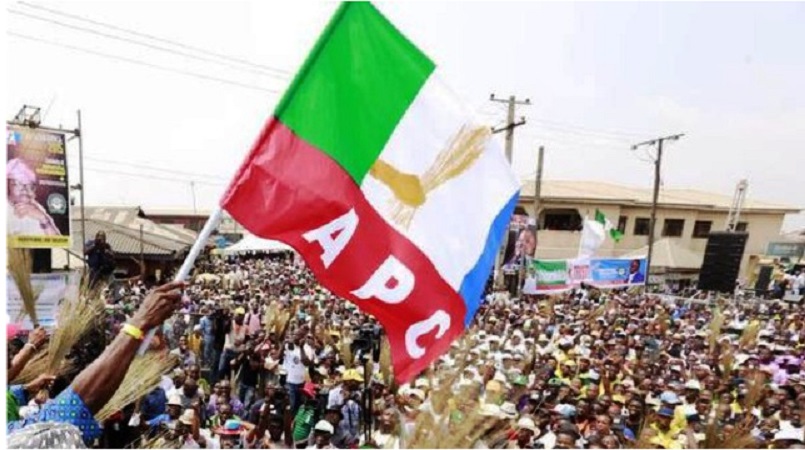
The All Progressives Congress (APC) has eventually confirmed that a parcel containing a sum of money in US dollars was stolen at its national secretariat in Abuja.

The National Publicity Secretary of the APC, Mr. Felix Morka, who gave the confirmation in a statement on Thursday, 28th April 2022, put the figure of the missing money at $50,000.

He however clarified that the money did not belong to the party nor was it connected with the proceeds from the sale of nomination and expression of interest forms.

It would be recalled that there was a serious melodrama on Wednesday, 27th April 2022 at the National Headquarters of the APC in Abuja, after the parcel containing the cash was reportedly stolen.

According to reports, the cash was stolen while members of the party were struggling to gain access to the secretariat of the party for the purchase of their Nomination and Expression of Interest forms.

Reacting to the development, Mr. Morka in a statement issued on the said date, titled “Re: Lost money at APC national secretariat” disclosed that the missing money had no connection with the party.

He explained that all money meant for the forms were paid directly to designated bank accounts, adding that the money in question was reported lost by an individual at the entrance to the party secretariat.

“On Wednesday, April 27, 2022, a sum of $50,000 was reported lost by an individual around the entrance gate of the National Secretariat of the party,” the statement reads.

“To be clear, the lost money does not belong to the Party. In any event, the fee for the said forms is set and denominated in Naira not US Dollars.

“The loss is neither connected with proceeds of sale of forms nor with relocation of the venue for the collection of Expression of Interest and Nomination Forms, from the secretariat grounds to the International Conference Centre.”

It’s noteworthy that the APC recently relocated the party’s venue for the onward collection of the forms obtained by the aspirants, after filling them as required, to the International Conference Centre (ICC), Abuja.

“As widely advertised and reported in major news outlets, all purchases of forms are payable to designated bank accounts of the party.” the statement added.

On why the party also shifted the venue for the collection of forms to the ICC, Mr. Morka explained that it was to ease the heavy human and vehicular traffic around the secretariat being caused by those who had thronged the place for their forms.

The Nigerian politicians are really amusing and dramatic in their actions as well as the way and manner they respond to trending issues concerning their activities.

How could a spokesman of an organization issue a press statement targeted to aptly inform the members of the public, but ended up confusing them? The released statement rather caused confusion in the head of the observers.

Why didn’t Mr. Morka use the same avenue to notify interested Nigerians what the missing money was meant for, or whose belonging it was? Probably, he was of the view that such information wasn’t necessary.

But, how could someone ‘boldly and proudly’ steal a certain sum of money kept in a public domain, without minding the implications of his or her actions afterwards? Isn’t it intriguing?

Time has really come for Nigeria’s politicians to turn a new leaf, especially at this era when they are seriously seeking the people’s support and votes.
On Nigeria’s Senate Bill Criminalizing Ransom Payment to Kidnappers

0

On Wednesday, the Nigerian Senate amended and passed the Terrorism (Prevention) Act of 2013, which criminalizes paying ransom to kidnappers in Nigeria.

The bill was passed after the Senate Committee on the Judiciary, Human Rights, and Legal Matters adopted its report in plenary. Concern is growing around the country over the spate of kidnapping which has become a huge enterprise for criminals.

Sen. Opeyemi Bamidele, the Chairman of the Committee, said the aim of the bill is to prohibit the payment of ransom to abductors, kidnappers, and terrorists in exchange for the release of anyone who had been wrongly detained, imprisoned, or kidnapped.

In the plethora provided to the committee, a slew of issues connected to terrorism and terrorism financing, as well as worldwide best practices, were discussed.

Bamidele stated that the amendment bill will establish standards and a regulatory structure to prevent terrorist organizations from laundering money through banks and other financial networks.

He went further to explain that putting regulations in place to combat terrorism financing would certainly limit or destroy privacy and anonymity in financial and other activities involving the issue in society.

“The overall import of this bill is to discourage the rising spate of kidnapping and abduction for ransom In Nigeria, which is fast spreading across the country,” the lawmaker said.

He said besides the need to make kidnapping a less lucrative enterprise, it has become necessary to review the Terrorism Prevention Act to mitigate the unfavorable ratings of Financial Act Task Force (FATF) and implement recommendations of Nigeria’s Mutual Evaluation Report. It will also has a bearing on the consequent placement of Nigeria in FATF’S International Cooperation and Review Group Process with its impending sanctions on Nigeria’s economy.

In addition, Bamidele said that the National Task Force on improving Nigeria’s Anti-Money Laundering and Countering the Financing of Terrorism (AML/CFT) regime in Nigeria proposed improvement on the Act in order to address the deficiencies noted in its provisions so as to align with the required standard as obtainable in other jurisdictions.

“The passage of this Bill will save Nigeria from being included among countries in the Financial Action Task Force (FATF) Grey List with its attendant negative consequences, which might ultimately result in international sanctions that would affect the image of the country in the comity of nations,” he said.

While the bill is seen so far as Nigeria’s toughest legislative measure against kidnapping, it has created a new dilemma for the Nigerian people. For years now, the Nigerian security architecture has failed to arrest the proliferation of insecurity. Only a few among many Nigerians kidnapped get rescued by security operatives, leaving the rest with the choice of paying ransom to the kidnappers.

Last year, a report by the United States Institute of Peace (USIP) revealed that the rate of kidnapping across Nigeria increased by 169 per cent in two years. The report attributed the rising spate of kidnapping to poor performance by Nigerian securities.

“Our research finds a correlation between those who have had difficulty in getting police assistance and perceptions of police presence being associated with insecurity, even if their interaction with the police was unrelated to insecurity. Of respondents indicating that they had requested assistance from the police in the past 12 months, 64 per cent of those who rated their experience of getting police assistance as “difficult” or “very difficult” felt that the visible presence of the police meant that there was insecurity, versus only 21 per cent of such respondents who felt security was good when the police were visible. This echoes earlier survey research that showed that victims of insecurity were less trusting of state institutions,” the report said.

The Nigerian government has failed to change the current security status quo, indicating helplessness. Earlier this month, President Muhammadu Buhari said he had given service chiefs everything they asked for to tackle insecurity – meaning they have no excuses as banditry and terrorism ravage the country.

In the face of this vulnerability, the question that everyone is rightly asking is; will the Terrorism Prevention Act protect Nigerians from being kidnapped?

The Senate President, Ahmad Lawan, said the bill would complement the federal government’s efforts in the fight against insecurity when signed into law by the President.

“It is our belief here in the Senate, that this bill, by the time signed into an Act by Mr. President, will enhance the efforts of this government in the fight against terrorism, kidnapping, and other associated and related vices.

“This is one piece of legislation that can turn around not only the security situation in Nigeria but even the economic fortunes of our country,” he said. But it is an assertion the majority of Nigerians are finding hard to believe.

In March, terrorists attacked a passenger train in Kaduna, killing scores and kidnapping many who are still being held captive. In response to government pleas for the release of the kidnapped victims, the terrorists have said that the Nigerian government knows what they want and their demand must be met before the victims could be freed. And this has been the situation in many other cases of kidnapping – ransom must be paid or victims get killed.

Against this backdrop, the bill has eliminated the last lifeline Nigerians use to save themselves from kidnappers. Although paying ransom means for many, selling their belongings, borrowing or crowd-funding, it offers a chance of survival to kidnapped victims.

From the notorious Chibok girls, which marks the first mass kidnapping incident in Nigerian history, to Hanifa, the 5-year old girl who was kidnapped and murdered by her school teacher in Kano, Nigerians have always been left to the mercy of kidnappers. Thus, the bill, which prescribes up to 15 years jail term for anyone who pays ransom to kidnappers, is seen as nothing but further pain on already helpless people – forcing them to choose between the devil and deep blue sea.

OnePort 365 Secures $5m in Seed Funding to Digitize Freight Management in Africa

0

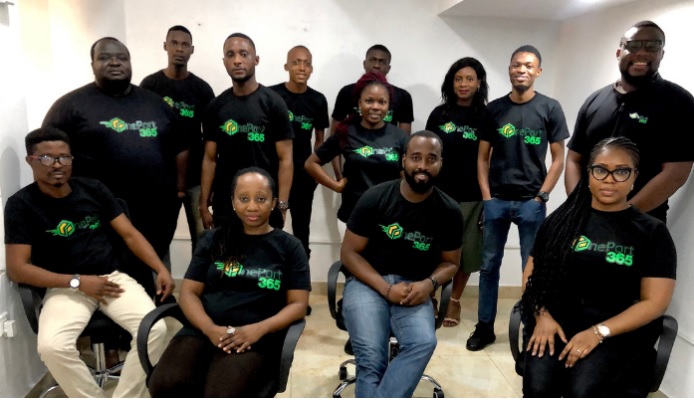
OnePort 365, a digital freight forwarding company that makes it easier to move cargo to, from, and within Africa, has raised $5 million in seed funding to drive the end-to-end digitization of freight management in Africa and support its expansion into new markets across the continent.

The seed funding round was led by Mobility 54 (the Venture Capital arm of Toyota Tsusho and CFAO Group), with participation from SBI Investment, Flexport, ODX, a Singaporean syndicate fund, and other strategic angel investors. Samurai Incubate also re-invested after participating in the previous round.

“We are super excited to have these investors onboard to support our mission to optimize cross-border trading across the continent. With new regulations like the Africa Continental Free Trade Agreement creating the potential for a new era of trade on the continent, we want to make it easier for traders to maximize the opportunity. We believe managing freights should be as easy as booking a flight or ordering a ride-hailing service and we are building the operating system to make this possible,” Hio Sola-Usidame, CEO and founder of OnePort 365 said.

With active operations in Nigeria and Ghana and ongoing explorations in other markets, OnePort 365 is building an operating system for cross-border trade in Africa, helping traders to manage their freight processes through a digital platform that enables seamless freight forwarding and other value-added services.

With this new funding, OnePort 365 is positioned to further improve efficiency and lower overheads in cross-border trading across the continent, as well as deliver a wide range of new services that will increase profitability across the board.

“We are delighted to support Hio and the OnePort 365 team as they embark on the journey of digitizing the end-to-end freight management process in Africa. There is great potential to unlock significant commercial opportunities across the continent by addressing the longstanding challenges that have made it difficult to move freights into and around the continent, and we are confident that OnePort 365 has what it takes to succeed,”  Takeshi Watanabe, CEO of Mobility 54 Investment SAS said.

Africa contributes an increasingly significant amount to global maritime trade, with a reported 12 percent of the 811 million containers handled at ports worldwide. Africa’s clearing and forwarding market is also growing, with the latest figures suggesting a market size of $4.2 billion and a projected 12.5 percent growth with new services emerging. However, a wide range of challenges including congestion at ports, difficulty with accessing effective service providers, and complex payment systems have resulted in increased costs, inefficiencies and many missed opportunities for traders.

With OnePort 365, traders no longer have to wait up to two weeks to compare the best rates from different service providers. With pre-negotiated rates, they can explore competitive offers on the platform and book freights in 30 seconds or less. Traders can also connect with shipping and inland transportation vendors and manage the entire process (from booking to payment) on one single platform.

Traders also get GPS-enabled, real-time visibility of their shipments and they can view all documents relating to the shipment via the platform, eliminating the laborious process of physically retrieving these documents from offices or shipping line centers. The platform also leverages advancements in payment technology and the Pan-African Payment and Settlement System (PAPSS) to power instant payments.

The platform covers air freight, ocean freight, inland haulage (trucking, barge, and rail), as well as Pay-As-You-Go warehousing, marine insurance, customs brokerage, and more. Since OnePort 365 started operations in 2019, it has increased the number of twenty-foot equivalent unit containers (TEUs) by 140 percent and grown its revenue by more than 420 percent.

HE SHOULD RUN for President in 2023: Existence Precedes Essence

0

Nigeria, like other countries around the world, has been around for over 3,000 years. However, no one actually knows what the country’s first name is. According to some sources, the Royal Niger Company surrendered the lands it inhabited after the scramble and partitioning of Africa by European countries to the British government for £865,000. In 1914, Lord Lugard had the opportunity to merge the two protectorates, and his wife coined the name “Nigeria” from “Niger Area.” From archives to oral histories from the people who witnessed various socioeconomic and political growth stages of the country since 1914, seeking and occupying political positions with the intention of governing others have always been approached using a variety principles and strategies.

Nigeria have had four republics. Between 1963 and 1966, the first republic existed. It had a second republic from 1979 to 1983, and a third republic from 1993 to 1993, which dissolved that year. Nigerians saw various political tactics from politicians in all of these republics, while civil society organizations, public affairs experts, and social commentators campaigned for better ways to institutionalize governance and democratic ideals. Political parties, politicians, and their followers have all used a variety of political tricks since the fourth republic began in 1999. The production of artificial moral panics has been engulfed in engagement with people and stakeholders, increasing political tension in the hopes of deceiving the public or influencing their decision-making process ahead of general elections.

As soon as a general election is completed, politicians who participated in and are currently engaged in the fourth republic begin to express interest in contesting for seats. No politician, according to our analyst, waits until the last minute to implement his or her strategy and methods. Nigerian politicians, according to our analysis, participate in unrelated activities such as forming foundations, associations, and groups with the goal of ensuring their party’s and public approval, as well as emergence as candidates for their political parties.

“I am consulting…”, “I have been told to run,” “He or she should run,” and “I am eminently qualified for the position” were not part of the pre-election or campaign political gimmick phrases during the last republics (1963-1993), according to our analysis. Our analyst concludes that the current crop of politicians or aspirants for the presidential and governorship positions are uttering phrases based on the proposition that human beings always want their existence to be known in terms of showing that they are responsible and understand the meaning of life, after several days of deconstructing the phrases in the context of various political propositions and assumptions by great political scientists and philosophers.

In the history of pre-general election elections, 2022 is the year in which Nigerians and international communities witness sporadic explorations of free will, self-determination, and the search for relevance by politicians from various political parties for expressing interest in the presidency ahead of the 2023 general elections. This, according to our expert, could be linked to the major political parties’ proposed zoning policy. Members of the All Progressives Congress and the People’s Democratic Party have expressed interest in the job, both those who have a political structure that cuts across regions and those who do not.

Politicians who have expressed interest include Bola Ahmed Tinubu, Atiku Abubakar, Nyesom Wike, Rotimi Chibuike Amaechi, Kayode Fayemi, Bukola Saraki, Godwin Emefiele, Dele Momodu, Yahaya Bello, Aminu Tambuwal, Kingsley Moghalu, Sam Ohuabunwa, Ibikunle Amosun, Rabiu Musa Kwankwaso Some have held positions of power at the local, state, and national levels, while others continue to rule states or represent their constituents.

Having so many candidates before primary election indicates a favourable electoral climate for the presidential election. At the very least, it would allow voters to select the best candidate. However, expressing interest solely because I was advised to run and he or she should run is not in the best interests of the country. It implies that the aspirants are unaware of what it takes to emerge from the standpoint of essence, enlightening citizens and foreign communities about why the country should elect them as its next presidents. They chose to indicate interest because they were told to run or because some groups thought they were qualified for the role. “Existence precedes essence” for them, according to Sartre.

Tekedia Capital invests in AjoMoney to digitize centuries-old ROSCA

0

Tekedia Capital invests in AjoMoney. AjoMoney is building an operating system  that will make it possible for people to do rotating savings and credit seamlessly: “AjoMoney, a financial technology company digitizing ROSCA (rotating savings and credit association) to build a neo-banking platform for consumers and neo-banking SaaS platform for cooperatives and thrift contribution agents has raised an undisclosed funding from Tekedia Capital.” Tekedia Capital welcomes Chineye Ochem and  Ibrahim Adepoju to the family.

A digital cooperative bank that digitizes the centuries-aged ROSCA (ajo/esusu/adashe) to help you save money, make early investments and access credit to buy now pay later, simply at no-interest.

You call it ajo, esusu, etc; with AjoMoney, you have a formalized platform to contribute with your co-workers, friends, associates, making sure that everyone wins as the contribution rotates. Create an account here and invite your network https://ajo.money/

— From Press Release —

AjoMoney, a financial technology company digitizing ROSCA (rotating savings and credit association) to build a neo-banking platform for consumers and neo-banking SaaS platform for cooperatives and thrift contribution agents has raised an undisclosed funding from Tekedia Capital. The fresh funding will be used for strengthening the products, team and also growing the business beyond the initial organic reach through accelerated sales and marketing efforts.

Participating in this round alongside Tekedia Capital is Tayo Oviosu, the CEO of Paga and Co-founder of Kairos Angels.

Founded in 2021 by Ibrahim Adepoju (CEO/CTO) and Chineye Ochem (COO/CFO), AjoMoney started by building a rotating group savings platform for consumers (a.k.a ajo, esusu, and adashe), where group of people saves agreed sum of money together and collect lump in turn, this feature was used to evaluate the market potential and upon public-beta release in October 2021, the company has processed about $300,000 in transactions and onboarded about 8000 organic users on the mobile app platforms (android and ios) with no-cost on marketing and promotions.

With effective patterns and deductions made from the rotating group savings in the early release, AjoMoney will be extending the solution through SaaS model and developer API for cooperatives and mobile agents thrift companies. This will make it possible for credit unions to easily setup a rotating savings and credit system at no technical cost. The features on the AjoMoney system includes rotating group savings (ajo or esusu), personal savings, thrift contribution (daily, weekly and monthly savings with access to interest-free loan), buy now pay later, and multi-cooperative societies management.

AjoMoney core objective is to build a platform and an infrastructure that enables people to collectively come together like a community to save money, make investment even before they can save up for it and also gain access to interest-free credit. To achieve this objective, the team will be exploring the centuries-aged ROSCA system by leveraging on modern technologies.