DD
MM
YYYY

PAGES

DD
MM
YYYY

spot_img

PAGES

Home Blog Page 5177

Building Investment Portfolios in Nigeria, Africa

0

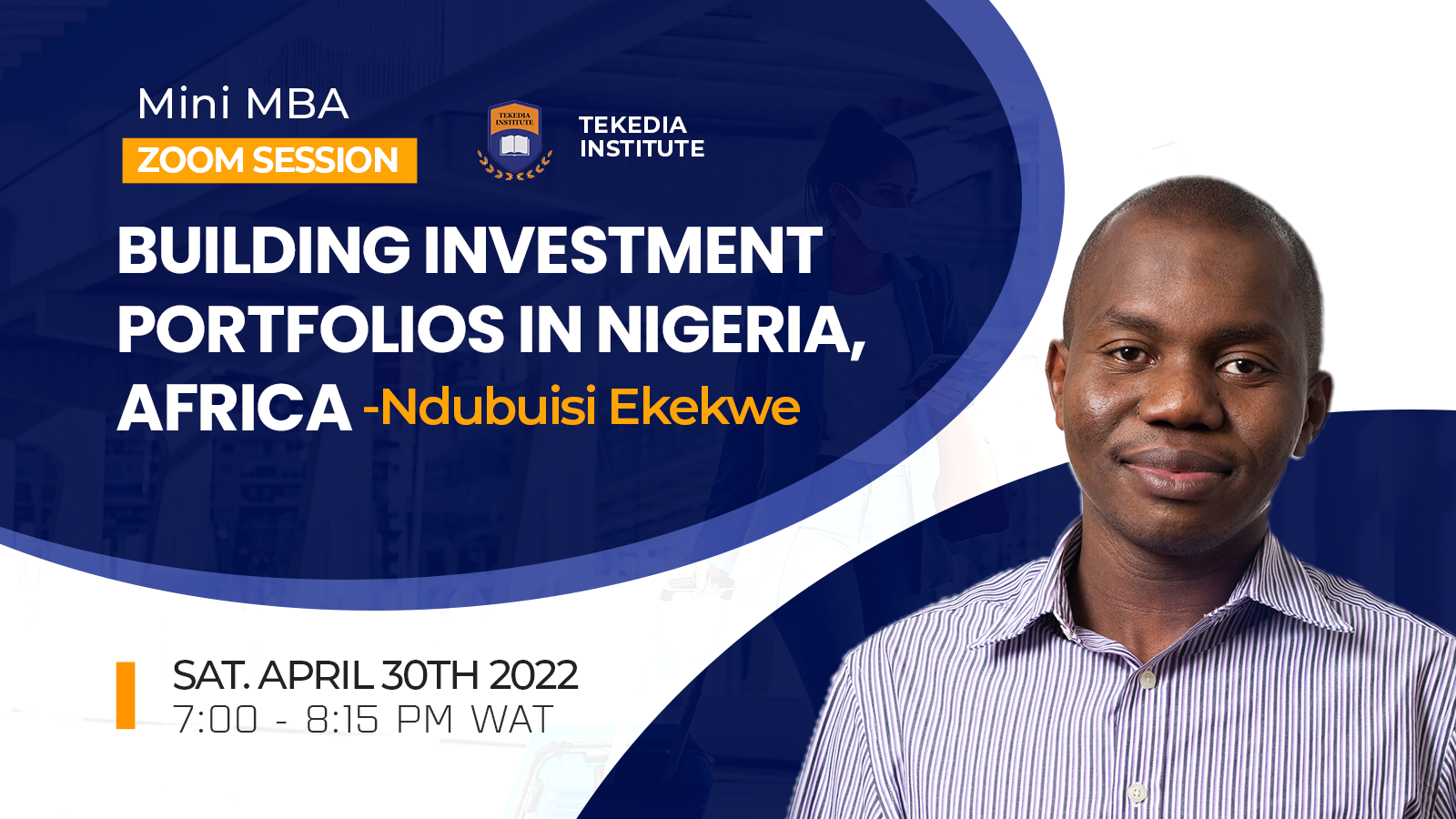
Inflation everywhere? Where can we find safety in markets? Within the bounds of academic learning, Tekedia Mini-MBA Live will discuss how to build  investment portfolios in Nigeria and Africa. In Diamond Bank as a young graduate, I developed a 45-20-20-15 Strategy, tracked  my unit head, George Akpovbovbo, a fellow of ICAN, and bought all equities he marked in his daily newspaper stock table. Later on, I realized there was a reason he chose those companies: 100% of them pay dividends.

My strategy has since evolved with startup investing and US equities. But the core principle remains.

Join us at Tekedia Mini-MBA tomorrow as we discuss, co-learn and advance our knowledge within an academic tradition on the best ways to make that future predictable by creating it. Yes, invest and invest, not just for money but for your career. Those professional certifications are GREAT investments. And of course, a PhD (in technical area) is the godzilla: I have called it the best career insurance in Africa because there is always a school to teach!

I will share my 5 pillars and those have worked really well for me.

Come to the class; we want to understand your strategy. This is a modern school. Tekedia Mini-MBA; register for the June edition today here 

Tekedia Capital Visits Edekee Office in Lagos

0

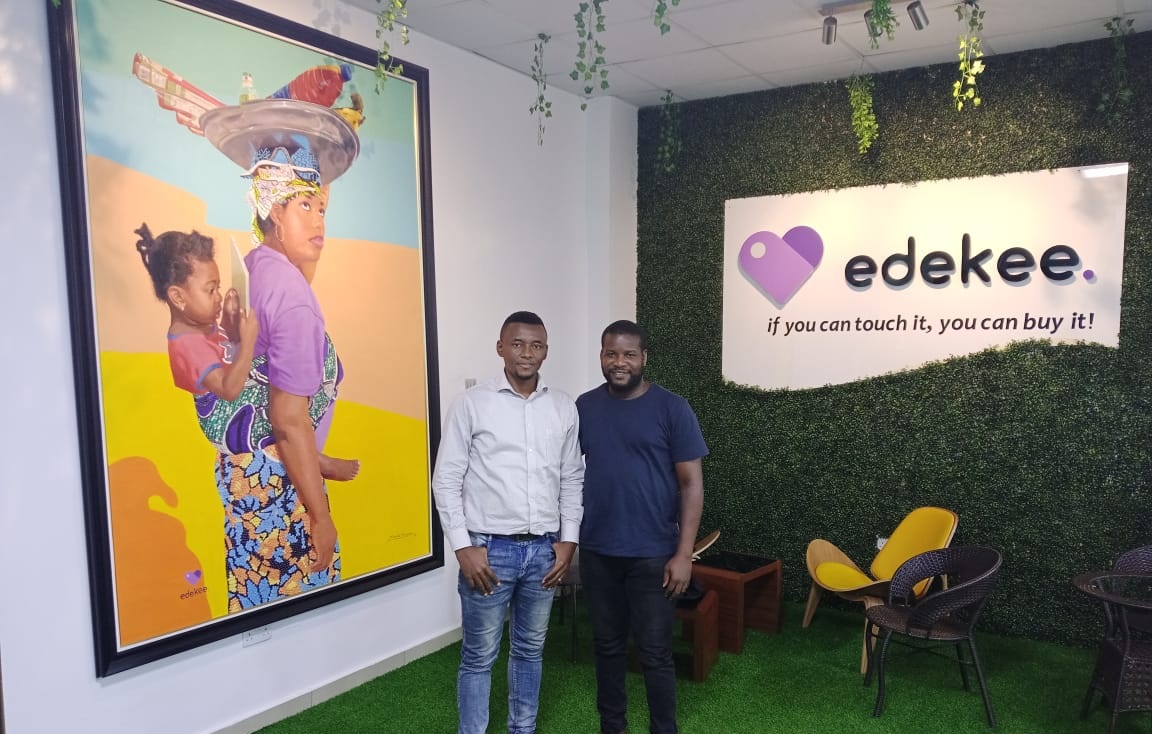
Tekedia’s Nnamdi Odumody visited Edekee’s Victoria Island (Lagos) office – the very place where they’re cooking the machine learning systems that will bring a new order on how people buy things on videos and more. Edekee’s US-patent pending technology will make it possible that anything you see on video, you can pause, and buy it, without leaving that video.

They have unified computer vision and AI systems, hiding “purchase frictions” from customers. Edekee is a Tekedia Capital portfolio startup.

2023 Elections: Nigeria’s Political Landscape Is On A Downward Trajectory

0

These are very familiar scenes: a vice president suddenly realises blueprints to resurrect a crumbling nation after hiding it from his boss of seven years who recorded massive failure; a kingmaker wants the throne; ministers and governors are rallying for support; some people are pushing a failed ex-leader to declare for the presidency; obscure politicians are now finding voices, and promises too realistic to be fulfilled are being made. It’s 2022 but the theatrics for the general elections come 2023 are in play. The didactics from these scenes reiterate that Nigeria sadly will fall to yet another selfish leader. But what could be done to avert the looming catastrophe? 

Nigeria and Nigerians are tired of jamboree political leaders. This time, the country and its people are so divided so much that the slightest event can cause a much-foreseen catastrophe yet this is not a cause of concern for those who are expected to change the narratives. It’s either their selfish interests, party interests, ethnic jingoism, or nothing. Since 1999 when the country returned to democratic dispensation, the course of administration has not changed quite much from how it was left by the kleptocratic military rulers. Successive democratic governments have not got it right; with political leaders amassing wealth from one corruption scandal to another and jumping from one ruling party to another “for their sins to be washed away”. And Nigerians ask, “what has happened to our dividends of democracy?” 

No doubt, the country is in its worst state. The security architecture is eroding as seen in recurrent insurgents’ attacks, kidnappings, and others. The economy is in crumbles. Government critics are getting arrested one after the other illegally and unjustly. The stakes are dangerously high, but what is the focus? Politicians are preparing to get recycled into power. All these indicators of poor governance and a failed democracy do not grasp their attention one bit. Perhaps, to them, the country is for them to milk and milk until it dries up.

Analysts and other concerned stakeholders have been vocal about why the country needs urgent intervention. Religious bodies have appealed for restructuring. Non-governmental organisations (NGOs) have pleaded similarly too. All of these efforts have proved abortive. A close observation of the country’s political affairs notes that the citizens are absent from the governance.

It is their right to be equally involved but what has happened? Where did something go wrong? Citizen demonstrations against inept governance are seen as treason. This claim is obvious from the massacres of protesters at Lekki Toll Gate as well as other massacres that didn’t get the media attention that much. The citizens are in the shackles of their own government! 

Owing to the uncertainty of where this country is headed, there have been calls for the general elections not to hold next year. Some Nigerians are saying calamity is bound to be suffered if the elections go on. This would not be the first doom prophecy and certainly not the last if the same situation persists. Elections in Nigeria are marred by violence that includes massive rigging and many killings. Despite this, the Independent National Electoral Commission (INEC) would still announce the winners of the elections. There would be demonstrations; security operatives would take the streets to quell demonstrations; calm will be forcibly restored; nothing will change; hence, the dangerous course recycles. 

As Nigerians watch with perplexed interest the fate of their country, politicians declaring for the presidency have consistently courted President Mohammadu Buhari for victories. Perhaps the worst leader Nigeria has ever had, Buhari often takes pleasure in observing reticence in the event of crisis and treating its citizens with high-handedness. The intentions and messages (of these politicians) passed across are very clear: they don’t need the masses to assume leadership. Adebayo AbdulRahman, a freelance journalist brilliantly captures this trend in his article titled “2023: 10 Paragraphs On Osinbajo, Tinubu And The Rest Of Us”.

He said for instance of Osinbajo: “So when Osinbajo described Buhari as a “patriot” and expressed his intention to “continue the good works” of the current administration, he was not appealing to the Nigerian populace. Not even you. Yes, you. He was appealing to the more important political structure of his principal, the President. Osinbajo understands that at the moment, he needs the President’s support more than that of outraged Nigerians. Sad, right?” 

With the country in the firm grip of selfish leaders, the citizens are increasingly finding it difficult to get it right. The only alternative is to get a candidate successfully weaned away from the two big Peoples Democratic Party (PDP) and the All Progressives Congress (APC), but this looks like a wild dream. On Twitter, political discussions have often portrayed the dire need of Nigerians to look beyond the two parties but the reality outside the Twitter discussions shows it takes more than online talks to drive change. The huge crowd that accompanies political aspirants often reveals that “getting it right politically” in Nigeria is more than a fundamental problem. Even grassroots sensitisation has not changed the story either. 

It is even more worrisome that despite all these odds, democracy remains the only option for the country’s political progress as any return to military administration will be far more catastrophic. It has been said that the key to unlocking Nigeria’s potential lies with the youth who are nowhere to be found in governance and even those who are there are figureheads. The country needs a resilient population to change the country’s structure. Countries that are now enjoying relative peace after years-long turbulence are thankful to dogged citizens for charting a new history. However, divisions along ethnic lines and other personal vendettas have continually hampered the citizens’ collective voice in the calls for unity.

The moments of desperation, frustrations, and demonstrations did not prove a better way forward either, not forgetting that many Nigerians believe that the country is not worth dying for. To be candid, even past national leaders who still have their reputations intact did not think dying for the country is an enthralling idea. It will take a great enthusiasm for the citizens to do away with their sentiments in their drives to restructure the country and chart a new course in the nation’s political history before the beloved country grows into extinction. This time more than ever to take over the country from political hawks is now. Will this mean a revolution? 

Nigeria 2023: Oba Of Benin’s View On Osinbajo’s Credentials

1

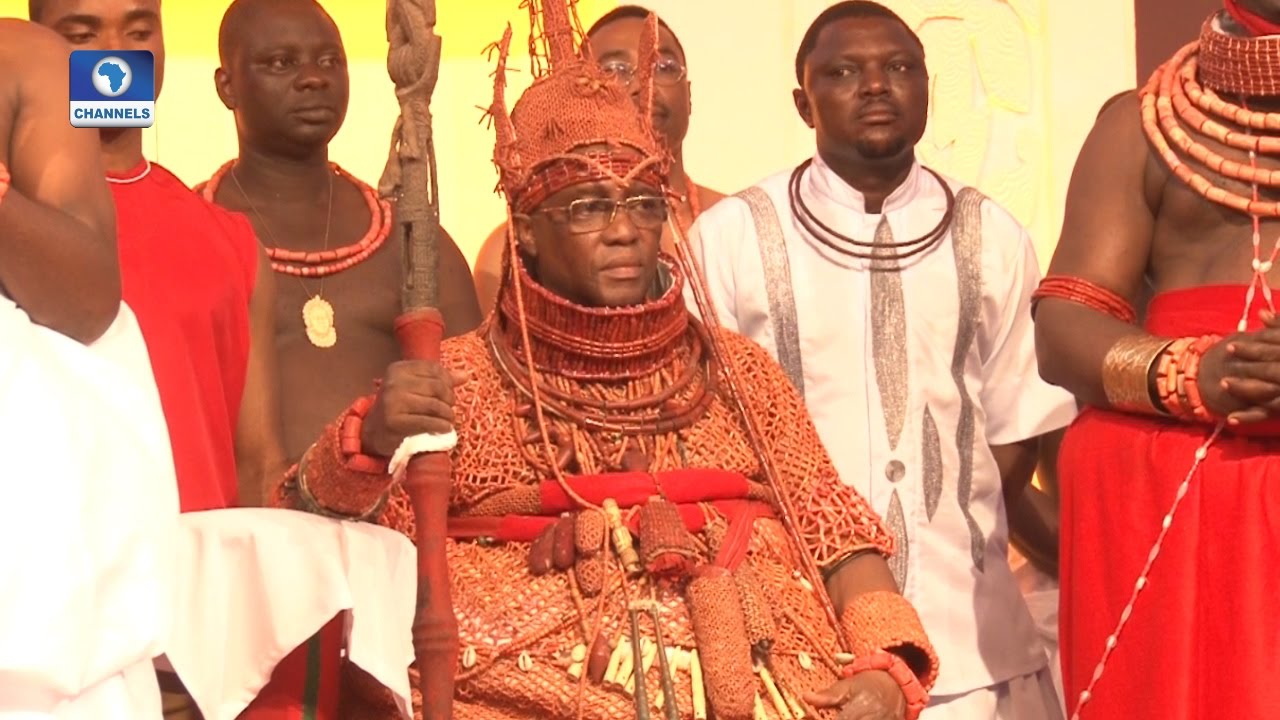
The Oba of Benin, Oba Ewuare II, has stated that the credentials of incumbent Vice President (VP) of Nigeria, Prof. Yemi Osinbajo ‘speak for themselves’.

The renowned monarch made this known on Thursday, 28th April 2022 when Prof. Osinbajo visited him in his Palace in Benin, the Edo State capital, as part of consultations for the VP’s 2023 Presidential ambition.

It’s no longer news that Prof. Osinbajo is currently aspiring to succeed President Muhammadu Buhari come 2023 when his second term tenure would elapse.

The royal father appreciated Prof. Osinbajo for the visit to his palace, stating that he was scheduled to be in Abuja for some official engagements but had to stay back to receive the VP.

Oba of Benin said, “We got a letter from your office just the day before yesterday (Tuesday) that the Vice President is coming. We had to put the trip on hold.

“We have heard the reasons why you are here. We don’t need to over flog your credentials, they speak for themselves. Because of your credentials, humility, calmness, there is no gainsaying that your contestants are shivering where they are.”

It’s noteworthy that Prof. Osinbajo is one of the ruling All Progressives Congress (APC) aspirants. Others include former Lagos State governor, Bola Tinubu; Minister of Transportation, Rotimi Amaechi; Minister of State for Education, Emeka Nwajiuba; Minister of Labour and Employment, Chris Ngige; Ebonyi State Governor, Dave Umahi; Kogi State Governor, Yahaya Bello; former Imo State Governor, Rochas Okorocha; and former Abia State Governor, Orji Kalu; amongst others.

The APC presidential primary to decide the party’s flag-bearer is scheduled to hold at the end of May 2022.

It’s imperative to let the teeming Nigerians understand that, in leadership, it is not credentials that do the work but the expertise of the leader at the helm of affairs.

Hence, leadership has nothing to do with credentials, rather, the ability of the leader to apply the needed skills towards ensuring that the required positive transformation is achieved. Leadership is about being creative, innovative and proactive. These factors have nothing to do with one’s credentials.

It’s disheartening to observe that in this part of the world, particularly Nigeria, much and inconsequential emphasis is being laid on credentials and academic qualifications whenever leadership is discussed.

Nigeria’s electorate must go beyond this mentality. In view of this, they must be prepared to listen to the campaign manifesto of any one who intends to lead Nigeria as President.

Yes, it is indisputably good and worthwhile for a leader, or prospective leader, to be very educated. But it’s pertinent to note that such possession shouldn’t override the person’s skill to bring transformation.

Secondly, I’m equally using this medium to advise Nigeria’s traditional rulers to distance themselves from political matters while they discharge their lawful duties. They ought to participate in governance, not politics.

They are therefore only expected to conscientize their subjects to pick their Voter’s Card as well as vote wisely and maturely at the polls, not to canvass votes for any aspirant.  

The Shame of a Nation

3
Nigeria leaders

From Guardian UK (2014), “South Korea’s prime minister has resigned over the government’s handling of a ferry sinking that has left more than 300 people dead or missing and resulted in widespread shame, fury and finger-pointing, blaming “deep-rooted evils” in society for the tragedy.”

In Nigeria (2022), a government train was attacked by terrorists with dozens kidnapped and killed, the university system is on life-support, crude oil theft is a new culture, bandits collect taxes, [add more], and yet the same actors, instead of resigning in shame, are running biographies to be promoted to become a president.

We reward biographies even when the people have done nothing of value. Yes, because he/she has held one “big” office, that person has experience. But no one will ask, in that office what was his/her impact?

But do not blame politicians: blame the Nigerian citizens. We actually HATE ourselves. All common sense departs when tribe and religion enter the matrix. See it, Nigeria Labour Congress (NLC)  wants to start a strike. A woman just delivered a baby in captivity. And no single human has resigned from this shame of a nation!

It is disheartening to note that a large number of tertiary institution students are currently out of school due to the unending strike action embarked upon by ASUU. According to ASUU, they previously disclosed that they will extend the strike by another two months as a result of their unmet demands by the federal government.

Disappointed with how the government is handling their demands, the Nigerian Labour Congress, NLC in a show of solidarity, has vowed to embark on a nationwide protest at the expiration of the 21-day ultimatum issued to them by ASUU to address their demands. The congress further disclosed that it would declare a three-day strike action if the federal government fails to resolve the issue.

The NLC which is known to defend and promote the rights of workers and other unions In the country, disclosed that its proposed solidarity protests was mainly to draw the attention of the government to the prolonged shut down of universities in the country. Did the congress just disclose that they want to draw the attention of the government? The government is fully aware of the shutdown of universities, but they chose to treat it with disdain.