DD
MM
YYYY

PAGES

DD
MM
YYYY

spot_img

PAGES

Home Blog Page 5179

As APC Defends Its N100m Presidential Ticket Price, Nigerians See Loopholes

0

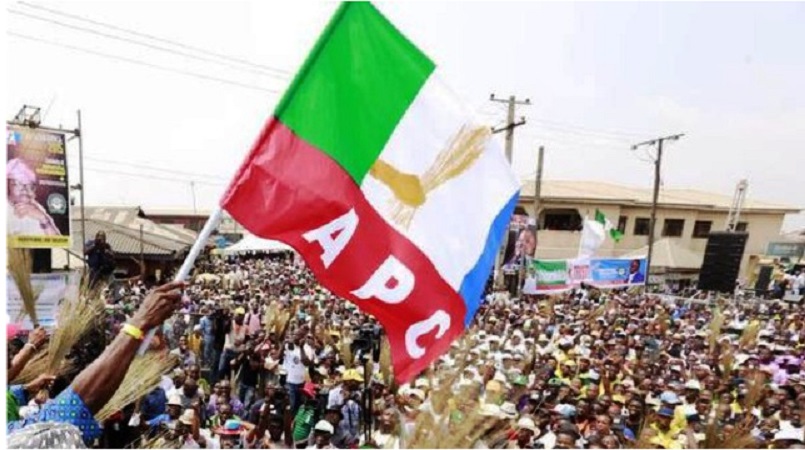
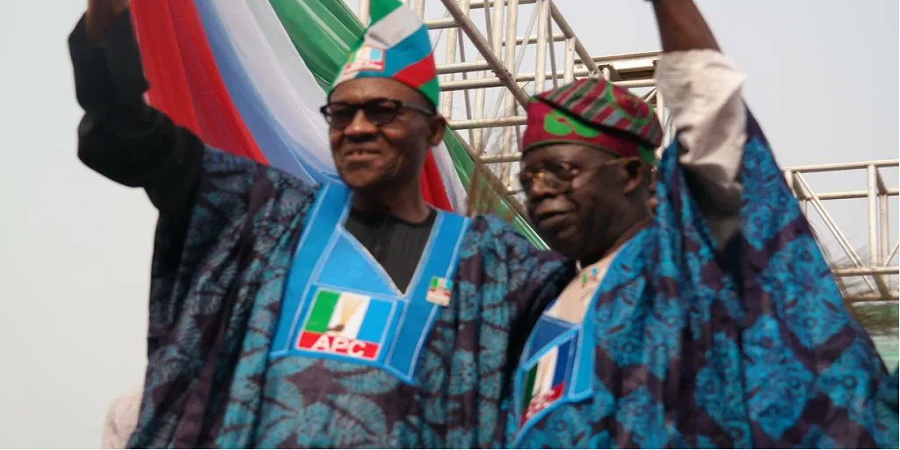
Nigeria’s ruling party, the All Progressive Congress (APC), recently announced that it has tagged the price of presidential ticket for the 2023 elections $100 million, the most expensive in Nigeria’s history and the highest among the political parties.

The decision, which has generated a lot of criticism from members of the public, has put the Party in a spotlight. The criticism has been largely based on the concern that the office of the president is being commercialized.

However, the APC has defended the decision. The party has said that the price isn’t much for anyone vying for the office of the president. The APC national publicity secretary, Felix Morka, said on Monday during an interview with SIlverbird Television, that anyone who does not have the “sufficient base” to raise N100 million has no business being in the race for Nigeria’s presidency.

“I hate to use the US as an example. The ability to raise funds is a clear criterion whether or not you are eligible to participate at the primaries and the debate especially.

“You aspire to run for the highest office in the land, you should have some appeal, some reach to members of the party. Sell your ideas, sell your vision.

“Forty-five million people giving you N1, do the math and see what it comes to. That is a lot of money. We do have that possibility,” he said.

He added that although, within the Nigerian context, N100 million is a lot of money, the party has commitments and “we do not have any statutory funding as you know.”

“Within the context of Nigeria, N100 million is a lot of money. Those who seek the office around the country are expected to have a sufficient base, otherwise why would you aspire to be president, if you are that obscure or unsupportable by your party members and the electorate?” he said.

Where Nigerians’ issues lie.

Nigeria has been bedeviled by poor leadership exacerbated by corruption since its independence in 1960. A parcel of that ordeal is the high cost of governance amid scarce resources. Against this backdrop, the idea of selling a presidential ticket N100 million is not only seen as cynical, it’s also seen as fuel for corruption.

Nigeria’s president annual salary is N14 million, according to the information on the website of the Revenue Mobilization Allocation and Fiscal Commission (RMAFC), an office statutorily empowered by Section 32 (d) of Part 1 of the Third Schedule of the Constitution to determine the remuneration appropriate for political office holders. This means that for the four-year term a presidential candidate will lead the country if he eventually wins, he could only earn N56 million, just a little above half of what he spent to purchase his form alone.

It is thus believed that a presidential aspirant who has no intention of embezzling public fund, will not spend N100 million purchasing the form.

The APC, in its defense of the price, had said that the money could be crowd-funded, taking the burden off the contestant’s shoulders – thus eliminating the tendency of corruption. But critics said that the Nigerian political ecosystem does not have the crowd-funding culture for elections, and in addition, the presidential ticket is just the first money move before the campaigns that will eventually gulp billions of naira.

The campaign, which is seen as spreading as much money as you can to buy votes, is usually funded by a circle of supporters who are expected to be replenished from the government’s coffers if their candidate wins. This political culture has fueled the criticism trailing the ruling party’s decision to hike their ticket fees for aspirants.

The call to reduce the cost of governance in Nigeria, which is said to be among the most exorbitant in the world, weighing the country’s economy down, has been on for long. Nigerians believe that the message the APC is sending by its decision is that the government is not ready to reduce the cost of governance or fight corruption.

ASUU Faults Federal Government Negotiation, Says Strike May Continue

0

It is not a new occurrence for a typical Nigerian to notice that the Academic Staff Union of Nigeria, ASUU, and the federal government of Nigeria are always at loggerheads. They seem to have an unending rift which usually occurs at different points in time.

Recently the academic staff union of Universities, ASUU has condemned the federal government regarding the way it handled their negotiation. They disclosed that the FG has been nonchalant on their demands regarding the strike.

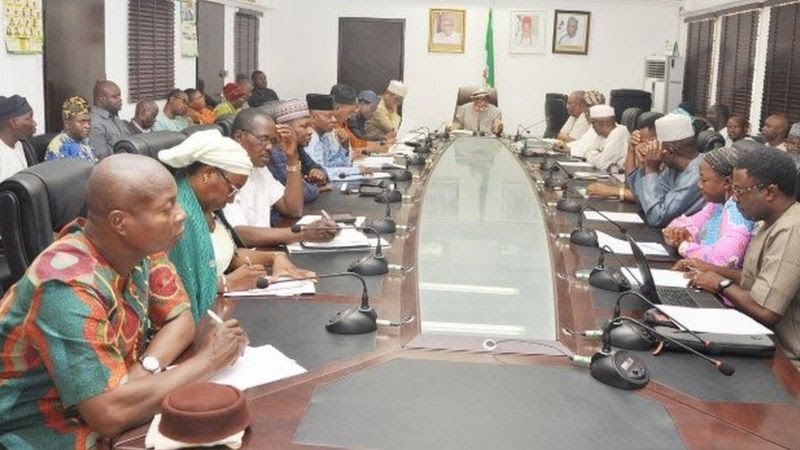
Last week, the minister of Labour and employment, Dr. Chris Ngige, who was featured as a guest on Channels Television’s “Politics Today”, disclosed that he told the union to meet with the Benimi Briggs committee stating that the decision to suspend the industrial strike action embarked upon by ASUU could only be taken by the union. He was asked when the issue will be resolved, and he disclosed that it depends on ASUU.

He stated that the ball is in their court and they should go and meet the Benimi Briggs committee and observe closely what the committee is doing to make further inputs so that the work can be accelerated. Displeased with the remarks made by the Minister, the President of ASUU Prof. Emmanuel Osideke while in an interview disclosed that it was indeed shameful for Chris Ngige to tell the union to go and liaise with another party other than the government.

He further added that the union might have no choice but to roll over the strike after its expiration. It is disheartening that the federal government continues to toil with the future of young Nigerians. Their nonchalant nature reeks of incompetence, which shows that they are not bothered about the strike action embarked upon by ASUU.

The government continues to disclose that it cannot meet up with ASUU’s demand due to a lack of funds, yet at the beginning of the year, it was disclosed that President Muhammadu Buhari donated a whopping $1 million to Afghanistan, yet the educational sector in Nigeria is poorly funded. Such a crass display is nothing but a misplaced priority.

One thing the government fails to understand is that education plays a very big role in nation-building. The fundamental value of education extends beyond individuals, as it is also for the good of the nation. A nation cannot be built without quality education, because if you observe closely developing and developed countries, you will notice that their educational sector is properly funded.

When citizens are properly groomed in schools with adequate resources, they will in turn contribute what they have learned/acquired towards the growth of the nation. Rather than develop the educational sector in Nigeria, the leaders will choose to send their children overseas to get a quality education.

The past and ruling government’s overbearing negligence to fund the educational sector has led to the continued poor standard of education in the country. These incessant strike action has made some passionate Nigerian students who had a great passion for learning to lose interest in their education which has taken an adverse effect on their grades.

I am still perplexed as to why the government has relegated the educational sector to the back, with the sector receiving a very low amount of allocation. Recall that in 2019, for the election, the federal government doled out a whopping 143 billion naira with ease to INEC for an exercise that lasted only a few days. But when it comes to education, they find it hard to find the sector that would enlighten its citizens which will in turn bring about development in the society.

Nigerian Politicians And Their Usual Gimmicks Whenever Election Is Around The Corner

1

One common thing a typical Nigerian has observed that is synonymous with Nigerian politicians whenever an election is around the corner is their usual display of shenanigans. It has already become a norm for most of them to display deceitful ploys just to gain the interest of voters. They bring up different gimmicks in the buildup to elections, yet their trick has no relevance as it has failed to bridge the inequality gap or solve the country’s plethora of problems.

They seem to have lost touch with reality in the country, to understand that most Nigerians have wised up and seem to no longer fall for such gimmicks. Some of the common things these politicians put up with, shows that they have no regard for the citizens, not minding whose ox is gored. Whenever there is an incoming election in the country, most of them are usually spotted at the roadside to buy either roasted corn or plantain. Some visit local canteens where they get to sit with ordinary citizens while they devour any of the Nigerian delicacies, most especially “Amala”.

You also get to see them visit primary and secondary schools where they get to sit in the classroom with students to show that they have the interest of the people at heart. Only a fool will fall for such an absurd childless display. If Nigerians are to evaluate carefully these politicians who have displayed such appalling acts, they will come to the understanding that all these charades don’t equate to good governance as most of them fail to fulfill their campaign promises.

Such theatrics by these politicians which most Nigerians have described as a pretentious act has already become a permanent feature during electioneering in Nigeria. Rather than these politicians to use the election period to actively engage the citizens to know the areas in the country or state where there are deficiencies so that they can proffer solutions.

Instead they shamefully display useless acts which indirectly means that they do not rate the citizens at all. A lot of Nigerians are already aware of their Shenanigans that whenever there is an election around the corner, they post different pictures of Nigerian politicians online, where they are seen either eating corn or helping a woman to carry her baby. Some of these pictures are posted with captions such as “It’s about that time of the year again”.

The surprising thing is that these politicians never fail to disappoint as they put up such displays to the view of the public. Probably they feel that doing some of these things will entice the electorate to see that they share the concerns of the masses. These political odd campaign strategies no doubt reflect the use of empathy to influence and persuade voters. These displays can be annoying and at the same time amusing. Annoying in the sense that, most of them have to stoop low to put up with some childless charade, which clearly shows that they do not rate the citizens at all. On the other hand it can be amusing in the sense that you will only need a restraint not to laugh whenever you see these men play out these scripts.

From eating corn to frying Akara, to dancing with school children, all of these are just funny dramatic campaign strategies. It is also interesting to note that symbolically, corn has become a unifying food exploited for political gains. However, any of these displays put up by these politicians in a bid to persuade voters remains essentially the same. These “stand-up” comedy campaign techniques are already stale, as most Nigerians have realized that these acts are just put up for deceit and selfish gains.

Promoting Awareness On The Malaise Of Malaria On World Malaria Day

0

April 25 annually, the global community commemorates World Malaria Day. Due to the widespread malaria infection and its deadly consequences, the World Health Organization (WHO) thought it wise to proclaim the day.

In view of this, in May 2007 during the 60th session of the World Health Assembly, April 25 of every year was unanimously adopted as the World Malaria Day. The day was established to provide education and thorough understanding of malaria disease across the globe, especially in countries where the disease seems to be endemic.

Malaria remains a mosquito-borne infectious disease of humans and other animals caused by a group of single-celled parasitic microorganisms known as protozoa, belonging to the genus plasmodium. The disease is mainly transmitted by mosquito bites, and the symptoms often commence a few days after the bite.

Malaria is transmitted most commonly by an infected female Anopheles mosquito. The mosquito bite introduces the parasite called plasmodium from the mosquito’s saliva into a person’s bloodstream. The parasites then travel to the liver where they mature and reproduce.

The signs and symptoms of malaria typically begin eight to twenty-five days following infection; however, symptoms may occur later in those who have taken anti-malarial medications in the past as prevention. Initial manifestations of the disease, which is common to all malaria species, are similar to flu-like symptoms and can resemble other conditions such as septicemia, gastroenteritis and viral diseases.

The presentation may include headache, fever, shivering, joint pain, vomiting, haemolytic anemia, jaundice, hemoglobin in the urine, retinal damage, and convulsions. The classic symptom of malaria is paroxysm – a cyclical occurrence of sudden coldness followed by shivering and then fever and sweating; occurring every two days in P. Vivax and P. Malariae infection.

Severe malaria, which might lead to death, is usually caused by P. Falciparum – often referred to as ‘Falciparum Malaria’. Its symptoms arise nine to thirty days after contracting the infection. Individuals with cerebral malaria frequently exhibit neurological symptoms including abnormal posturing, nystagmus, conjugate gaze palsy i.e. failure of the eyes to turn together in the same direction, opisthotonus, seizure, or coma.

There are several serious complications of malaria. Among these is the development of respiratory distress, which occurs in up to twenty-five percent (25%) of adults and forty percent (40%) of children with severe P. Falciparum malaria. Possible causes include respiratory compensation of metabolic acidosis, non-cardiogenic pulmonary oedema, concomitant pneumonia and severe anemia.

It’s worthy to note that, concurrent infection of HIV with malaria increases mortality rate; malaria in pregnant women is the major cause of stillbirths, infant mortality, abortion and low birth weight, particularly in P. Falciparum infection.

Symptoms of malaria can recur after varying symptom-free periods. Depending upon the cause, recurrence can be classified as either recrudescence or relapse. Recrudescence is when symptoms return after a symptom-free period; it is caused by parasites living in the blood as a result of inadequate or ineffective treatment.

Whilst, relapse is when symptoms reappear after the parasites have been eliminated from blood but persist as dormant hypnozoites in liver cells. It commonly occurs between eight to twenty-four weeks and is common among P. Vivax and P. Ovale infections.

Malaria infection develops via two major phases namely: one involving the liver known as exoerythrocytic phase, and one that involves the red blood cells referred to as erythrocytic phase.

When an infected mosquito pierces a person’s skin to take a blood meal, sporozoites in the mosquito’s saliva enter the bloodstream and migrate to the liver where they infect hepatocytes, multiplying asexually and asymptomatically for a period of eight to thirty days.

After a potential dormant period in the liver, these organisms differentiate to yield thousands of merozoites, which following rupture of their host cells, escape into the blood and infect the red blood cells to begin the erythrocytic stage of their life cycle.

The primary sources of mosquitoes include sewage, refuse, dirty stagnant water, and untidy environment. In most cases, mosquitoes are peculiar to damp and dirty environments or substances such as gutter, pool, feces, urine, among other solid and liquid waste materials. This is why residents of untidy localities are at a high risk of contracting malaria.

Methods used to prevent malaria include medications, mosquito elimination through fumigation coupled with regular environmental sanitation, as well as prevention of mosquito bites via regular cum proper use of the mosquito nets, among others. Prevention of malaria, which is yet to have a vaccine, may be more cost-effective than treatment of the disease in the long run; though the initial costs required are out of reach of many of the world’s poorest people.

Owing to the non-specific nature of presentation of symptoms, diagnosis of malaria in non-endemic areas requires a high degree of suspicion. Malaria is invariably confirmed by the microscopic examination of blood films or by antigen-based Rapid Diagnostic Tests (RDT).

Microscopy is the most commonly used method to detect the malaria parasite in the body. In spite of its widespread usage, diagnosis by microscopy suffers from two main drawbacks: many settings, especially rural are not equipped to perform the test, and the accuracy of the results depends on both the skill of the lab technician and the levels of the parasite in the blood.

Malaria is widely treated with anti-malarial medications; the ones to be used solely depend on the type and severity of the disease. While medications against fever are commonly used, their effects on outcomes are not clear.

Uncomplicated malaria may be treated with oral medications. The most effective treatment for P. Falciparum infection is the use of artemisinins in combination with other antimalarial drugs known as Artemisinin-Combination Therapy (ACT), which decreases resistance to any single drug component.

It is obvious that malaria is a killer disease. The WHO estimates that in 2010 alone, there were about 219 million cases of malaria outbreak resulting in 660,000 deaths. The majority of cases, about 65%, occur in children under fifteen years.

Survey also indicates that about 125 million pregnant women are at risk of infection each year. In Sub-Saharan Africa, such as Nigeria, Angola, Chad, Congo, Benin, Ghana and several others, maternal malaria is associated with up to 200,000 estimated infant deaths yearly. In a nutshell, globally, about 3.3 billion individuals in 106 countries are at risk of malaria, mostly among African children.

As Nigeria joins the rest of the world to commemorate the annual World Malaria Day, I urge every individual in the country regardless of age or status, to be extremely conscious of the outlook of his/her surroundings or immediate environment since malaria is mainly attributed to unhealthy surroundings.

Thus, we should always endeavour to properly dispose of any form of waste found within our place of residence as well as thoroughly sanitize our gutters and toilets at all times. In addition, we ought to ensure that our beds are always covered with treated mosquito nets whenever we lie in it.

Among all, we ought to endeavour to see our physician from time-to-time or whenever we notice any abnormality in our body system, for onward review of our health status. In the same vein, the various health workers/personnel across the country are expected to contribute meaningfully and immensely in creation of awareness regarding the causes and possible effects of malaria disease as well as its epidemic.

Most importantly, we, in our individual or collective capacities, must always bear in mind that prevention is invariably better than cure. 

Musk Breaks Through on Twitter

0

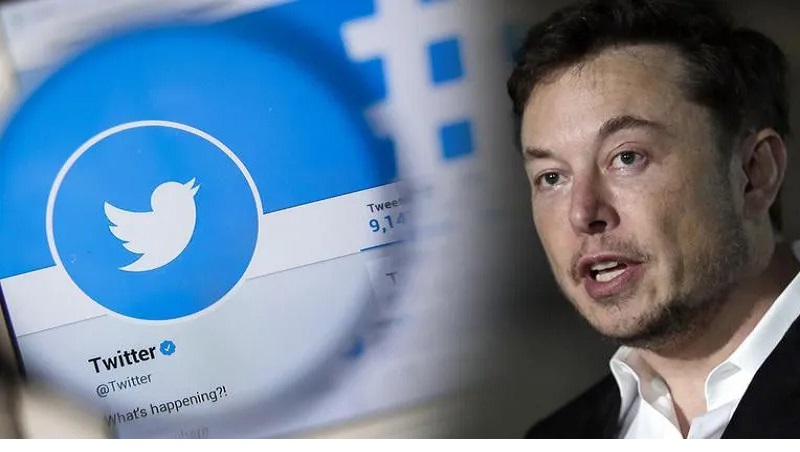
Elon Musk’s push to purchase Twitter appears to have seen a green light following mounting pressure on the company’s board by shareholders to consider his bid, Reuters reported on Sunday citing people with knowledge of the matter.

Musk made a $43 billion takeover bid for Twitter earlier this month after taking 9.2 percent stake in the company. But his bid has faced a hurdle as Twitter board adopted the ‘poison pill’ in an attempt to stop the acquisition.

Twitter co-founder and former CEO Jack Dorsey had joined Musk in criticizing the board for moving to stop the bid.

Musk had asked that Twitter shareholders be involved in the decision of whether to accept his bid or not. Now many shareholders are asking the company to consider the bid, even though they have varying views regarding what a “fair price” for a “deal would be.”

Musk had promised in a letter to Twitter’s board to turn the microblogging app’s fortune around, a message that apparently seems good to shareholders. Reuters reports that many reached out to the company after Musk outlined his acquisition financing plan on Thursday and urged it not to let the opportunity for a deal slip away.

According to the sources, Twitter’s board is expected to find that Musk’s all-cash $54.20 per share offer for the company is too low by the time it reports quarterly earnings on Thursday. Nonetheless, some shareholders who agree with that stance still want Twitter to seek a better offer from Musk.

But that would be challenging because Musk’s $43 billion bid outweighs Twitter’s current $37 billion market capitalization by $6 billion, and he made it clear that it’s his “best and final offer.” However, there is hope that he could be cajoled to add more to the figures, particularly to appease shareholders who had complained that his bid is not enough.

One option available to Twitter’s board is to open its books to Musk to try to coax him to sweeten his bid. Another would be to solicit offers from other potential bidders. While it is not yet clear which path Twitter will take, it is increasingly likely that its board will attempt to solicit a better offer from Musk even as it rebuffs the current one, the sources said.

“I wouldn’t be surprised to wake up next week and see Musk raise what he called his best and final offer to possibly $64.20 per share,” one of the fund managers who is invested in Twitter said on condition of anonymity to discuss private conversations with the company.

The possibility that Musk could win over shareholders with a tender offer had threatened whatever confidence the ‘poison pill’ had brought to the board. The sources cited by Reuters said that the board is concerned many shareholders could back Musk in a tender offer if it doesn’t negotiate with him. While the poison pill would prevent Twitter shareholders from tendering their shares, the company is worried that its negotiating hand would weaken considerably if it was shown to be going against the will of many of its investors, the sources said.

But there is another challenge. Shareholders are divided on what will be the ideal price per share. Earlier this month, Saudi Arabia’s Prince Alwaleed bin Talal, a Twitter shareholder, had tweeted: “I don’t believe that the proposed offer by Elon Musk ($54.20 per share) comes close to the intrinsic value of Twitter given its growth prospects,” in response to Musk tweets on his Twitter bid.

The sources who spoke to Reuters said the price expectations among Twitter shareholders for the deal diverge largely based on their investment strategy. Active long-term shareholders, who together with index funds hold the biggest chunk of Twitter shares, have higher price expectations, some in the $60s-per-share, the sources said. They are also more inclined to give Parag Agrawal, who became Twitter’s chief executive in November, more time to boost the value of the company’s stock, the sources added.

The disparity would be one of the most challenging issues of the deal, if the shareholders don’t quickly reach a consensus on what would be the right price.

Reuters’ sources said ‘short term-minded investors such as hedge funds want Twitter to accept Musk’s offer or ask for only a small increase’. Some of these are fretting that a recent plunge in the value of technology stocks amid concerns over inflation and an economic slowdown makes it unlikely Twitter will be able to deliver more value for itself anytime soon, the sources added.

“I would say, take the $54.20 a share and be done with it,” said Sahm Adrangi, portfolio manager at Kerrisdale Capital Management, a hedge fund that owns 1.13 million shares in Twitter, or 0.15% of the company, and has been an investor since early 2020.

But most of the issues appear to have been sorted out as new information emerges from the negotiation table.

Bloomberg reports Monday morning, citing sources, that Musk is close to sealing a deal. and if talks continue smoothly, a deal could be announced today. It is not clear yet if Musk elevated his price. Musk was reportedly ready to finance his Twitter bid with as much $15 billion of his personal fortune, and has managed to rally the support of some investors who are willing to finance the deal.

Twitter shares moved up 3.5 percent Monday, following the news that a deal could be reached soon.