DD
MM
YYYY

PAGES

DD
MM
YYYY

spot_img

PAGES

Home Blog Page 5183

On The Explosion Of Illegal Refinery In Imo State

2

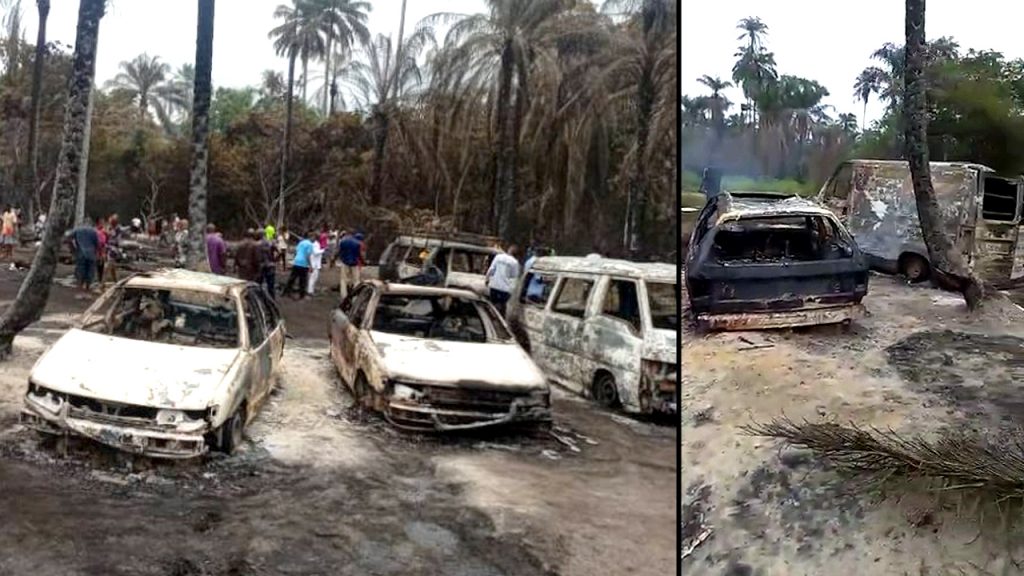
On the night of Friday, 22nd April 2022, an illegal crude-oil refinery (bunkering) situated in Abaezi forest, Ohaji-Egbema Local Government Area (LGA) of Imo State exploded unannounced, reportedly killing over 100 youths and razing about six vehicles.

In a similar development, reports also had it that countless individuals within the scene of the incident were seriously injured while many were maimed.

During his visit to the scene of the explosion, the following day being Saturday 23rd April 2022, the Imo State Commissioner for Petroleum Resources, Mr. Goodluck Opiah opined that the incident was very unfortunate, as he described illegal oil bunkering as a “suicidal business”.

Consequently, while the Commissioner was on his on-the-spot assessment visit, he stated that he could not confirm the actual casualty figure. He said, “At the moment, I can’t really confirm the number of the deceased because many family members have removed the corpses of so many others.”

Mr. Opiah went further to disclose that the State Government led by Sen. Hope Uzodinma had declared the owner of the illegal refinery, Mr. Okenze Onyenwaoke wanted, hence advised him to make himself available to the police immediately.

“Most of the people who are engaging in this act are from Rivers, Bayelsa and other neigbouring states and it is sabotage for our people to allow this illegal act to continue.

“Apart from this calamity, the act has destroyed the aquatic life in the community. Our people before now were predominantly farmers and fishermen.

“Look around, you will find smoke coming from this illegal act. If this is not enough for any person to stop, I think the community is heading for what I can’t describe,” said Mr. Opiah.

On his part, a resident of the area who identified himself as Daniel Opara, told newsmen that the majority of the victims in the incident were youth. He said the people were unable to escape because fire covered the whole forest. He said, “I rarely see old people involved in this illegal act. They are mainly youths.”

Mr, Opara, who added that “It is a popular business here. I think they make it there, that’s why they take such risks”, could not say if all the people involved in the illicit business hail from Imo or the neighbouring states.

A video clip taken from the scene of the explosion, which has gone viral on social media, revealed horrible images of the victims and vehicles burnt beyond recognition, littering the entire environment.

It’s noteworthy that oil theft, known as ‘bunkering’ in local parlance, which remains a means of livelihood to many notable Nigerians, has been a source of concern to many well-meaning stakeholders across the country.

The Nigerian government had been reportedly losing an estimated $4 billion annually, due to oil theft activities.

In Rivers State precisely, air pollution, especially the soot in its capital territory, Port Harcourt and its environs, has been attributed to the operation of illegal oil refineries.

Nigeria is indeed the cause of her own plight, to assert the least. The point I’m trying to portray here is that, if the leaders of the country truly intended to eradicate ‘oil bunkering’, it would take no effort to do so.

It’s even more saddening when realized that the various state governments affected by the uncalled and unfortunate practice generate most of their internal revenue from the illicit business via taxation.

For instance, the current Commissioner for Petroleum Resources in Imo State hails from the LGA where the explosion took place in the state. It suffices to assert that he possesses the capacity to identify or fish out the exact individuals involved in the illegal venture.

At this juncture, if your thought is as good as mine, then you would realize that Nigeria’s leaders are actually the problem to Nigerians. 

Europe’s Digital Services Act and Musk’s Quest for Social Media Free Speech

0

The European Union and its member states on Saturday reached an agreement on a new set of rules called the Digital Services Act (DSA), designed to hold the Big Tech accountable for contents posted on their platforms.

The DSA, which was proposed in 2020, came a month after the Commission approved the Digital Market Acts (DMA), designed to curtail monopolistic powers of tech giants. The Commission said the DSA will “provide better protection for internet users and their fundamental rights, as well as define a single set of rules in the internal market, helping smaller platforms to scale up.”

European Commission President Ursula von der Leyen called the agreement “historic,” saying it “will upgrade the ground-rules for all online services in the EU,” and “ensure that the online environment remains a safe space, safeguarding freedom of expression and opportunities for digital businesses.”

She added that the principle behind the DSA is that what is illegal offline should be illegal online, and that the platforms will be held accountable according their size. This means that larger tech companies like Google, Amazon and Facebook will face more penalties than others when they break the rules.

The bloc lists types of companies that will be affected by the new rules and their obligations under the DSA, which depends on their role, size, and impact on the online ecosystem. These online intermediary services include:

  • Intermediary services offering network infrastructure: Internet access providers, domain name registrars;
  • Hosting services such as cloud computing and webhosting services;
  • Very large online search engines with more than 10% of the 450 million consumers in the EU, and therefore, more responsibility in curbing illegal content online;
  • Online platforms bringing together sellers and consumers such as online marketplaces, app stores, collaborative economy platforms and social media platforms;
  • Very large online platforms, with a reach of more than 10% of the 450 million consumers in the EU, which could pose particular risks in the dissemination of illegal content and societal harms.

For some years now, the EU has been working on set of rules that will keep tech companies in check, with focus on their use of private data and anti-competition practices. It took its major step in 2018, with the General Data Protection Regulation, a set of privacy rules aimed at limiting companies’ access to consumers’ data. The bloc has kept widening the scope of the rules due to exigencies of the tech industry. There have been other rules though, like the proposed USB-C charging port for all devices, focused among other things, curbing e-waste addressing climate-related concerns brought about by device accessories such as chargers that are not easily recycled when they spoil.

But the DSA appears to be the deal breaker as it addresses what has become a global concern – the proliferation of immoral contents on tech platforms.

Below is the DSA’s framework:

  • Measures to counter illegal goods, services or content online, such as:
    • a mechanism for users to easily flag such content and for platforms to cooperate with so-called ‘trusted flaggers’;
    • new obligations on traceability of business users in online market places;
  • New measures to empower users and civil society, including:
    • the possibility to challenge platforms’ content moderation decisions and seek redress, either via an out-of-court dispute mechanism or judicial redress;
    • provision of access to vetted researchers to the key data of the largest platforms and provision of access to NGOs as regards access to public data, to provide more insight into how online risks evolve;
    • transparency measures for online platforms on a variety of issues, including on the algorithms used for recommending content or products to users;
  • Measures to assess and mitigate risks, such as:
    • obligations for very large platforms and very large online search engines to take risk-based action to prevent the misuse of their systems and undergo independent audits of their risk management systems;
    • Mechanisms to adapt swiftly and efficiently in reaction to crises affecting public security or public health;
    • New safeguards for the protection of minors and limits on the use of sensitive personal data for targeted advertising.
  • Enhanced supervision and enforcement by the Commission when it comes to very large online platforms. The supervisory and enforcement framework also confirms important role for the independent Digital Services Coordinators and Board for Digital Services.

According to Commissioner for the Internal Market Thierry Breton, with this framework, “the time of big online platforms behaving like they are “too big to care” is coming to an end.”

The DSA empowers the Commission to impose effective and dissuasive sanctions of up to 6% of global turnover or even a ban on operating in the EU single market in case of repeated serious breaches. This means, for a company like Meta, the parent company of Facebook, that could mean a penalty as high as $7 billion based on 2021 sales figures.

The agreement will need to be approved by the European Parliament and the Council. The Commission said once adopted, the DSA will be directly applicable across the EU and will apply fifteen months or from 1 January 2024.

But the rules will apply to the very large online platforms and very large online search engines on earlier date. The Commission said it will apply to companies like Google and Meta from four months after their designation.

A Google spokesperson said the company welcomes the DSA’s goals, but added it wants to work with EU policymakers to “get the remaining technical details right to ensure the law works for everyone.”

“We welcome the DSA’s goals of making the internet even more safe, transparent and accountable, while ensuring that European users, creators and businesses continue to benefit from the open web,” the spokesperson told CNBC. “As the law is finalized and implemented, the details will matter.”

The DSA and Elon Musk’s quest for free speech

A few weeks ago, Tesla CEO Elon Musk started advocating for a social media platform where free speech is paramount. The world’s richest man took a surprising step to actualize his aim by making a bid to buy Twitter, the microblogging app he had taken over 9 percent stake in earlier.

His quest, which has gathered a lot of support, resuscitated the conversation on the right of social media companies to censor contents on their platforms. It became a global topic after former US president Donald Trump was banned from all major social media platforms for using his accounts to stoke the Jan.6 Capitol riot.

The world has been increasingly divided on the right path to follow since then, with many asking social media companies to do more to limit hate and disinformation and others asking why they should act as arbiters of truth.

On Thursday, former President Barack Obama called for reforms to Section 230, a law that protects online platforms from liability for their users’ posts, in order to combat the spread of online disinformation.

While the US drags feet in enacting tighter laws that will keep big tech companies in check, Europe has been moving fast with sweeping sets of rules to tame the wildling giants. The DSA is the latest blow to the status quo and it will greatly undermine everything that Musk aims to achieve.

Though his bid has been turned down by Twitter board, Musk is still exploring ways, including financial backing, to actualize it. The call to reform Section 230 is likely going to get a major boost when the DSA is approved. And if the US follows the European steps, Musk’s dream of a social media platform free from censorship will never see the light.

Nigeria 2023: Jonathan’s Response Over Calls To Contest for Presidency

0

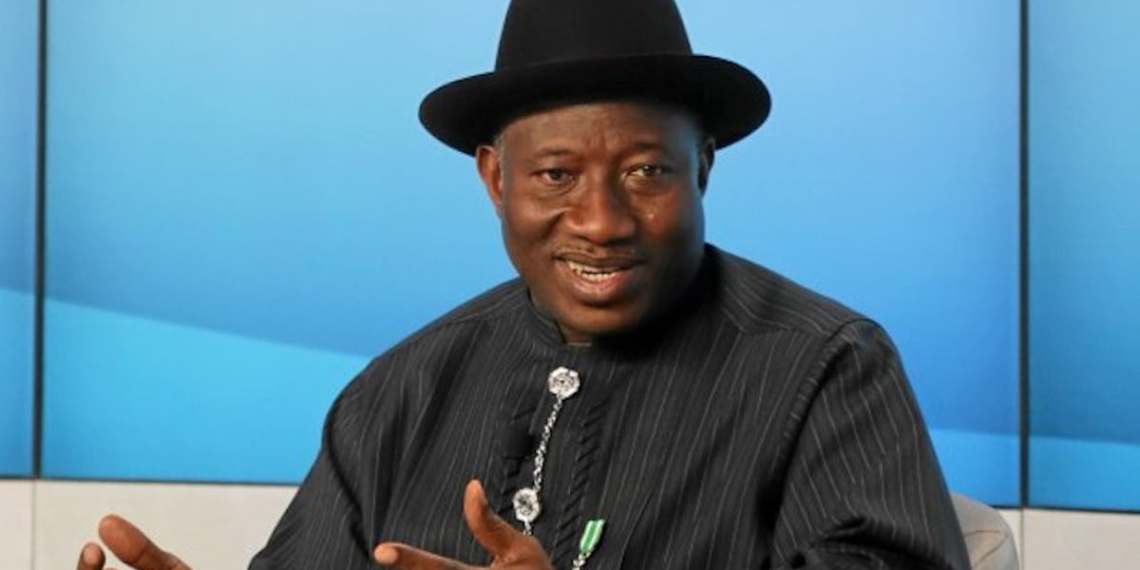
The former Nigeria’s President, Goodluck Jonathan, said he was yet to decide whether or not to yield to pressure from different groups urging him to contest the 2023 presidential election.

He disclosed this on Friday, 22nd April 2022 in Abuja when his committee of friends and some youths from across the country visited him at his Foundation Office in Maitama, Abuja.

Jonathan stated that the visits, especially by the youth, showed they were interested in the political affairs of the country. He therefore urged them to be interested and be key players in the country’s politics to enthrone good governance.

“As youths, we must get involved in the country’s political process and luckily the law of ‘Not too Young to Run’ bill, has made it clear that youths can contest almost every position in government.

“We will continue to encourage youths to get involved in the country’s political process. And as long as many youths get involved in the political process, we will be able to get the government we want.’’ he opined.

Jonathan expressed optimism that with youth involvement in politics, the enthronement of good government would effectively address the country’s current challenges as possible. He, however, said that though some of the country’s present challenges went way back but could be dealt with from a united front.

On whether he would declare for the 2023 presidential election, the erstwhile president responded that the political process was ongoing.

“Yes, you are calling me to come and declare for the 2023 presidency. I can’t tell you that I am declaring, but the political process is ongoing. Just watch out.

“But the key role you must play is to pray that Nigeria gets a president that will carry the young people along and work very hard to see that some of the country’s problems raised are dealt with. I believe that collectively, we can work together.’’ he added.

The leader of Youth Compatriots of Nigeria, Mayor Samuel while speaking with journalists at the event, said the youth were prepared to support Jonathan to ensure that he emerged as the country’s next president come 2023.

He decried the spate of insecurity in parts of the country and the dwindling economy, saying there was a need to address the situation.

According to him, the Nigeria Peoples Party is ready to give Jonathan its presidential ticket to contest the 2023 presidential election. He said the party though not registered yet, belonged to the downtrodden, adding any party that gave its presidential ticket to Jonathan would be supported by all Nigerians.

“The secret to good governance is what Nigeria requires at the moment. Jonathan had been tested and proven, and we are ready to follow him.’’ he said.

It’s noteworthy that the Coalition of Northern Youths and other youth bodies and women groups from across the federation were parts of the visit. The youths were seen chanting ‘run Goodluck, run’ and they were also seen holding placards that read ‘declare now, Goodluck, you must run’ you are wasting our time, declare now’ among other descriptions.

In view, one of the youth leaders, Jonathan Akumobi said they came to compel the past president to run, because they believed in his capabilities, given his experience.

Akumobi further stated that a lot of challenges being experienced in all sectors in Nigeria required an experienced hand like Goodluck Jonathan to tackle.

“We are tired of the killings, of the insecurity, our schools are closed because of the strike, the national grid has been collapsing, everything in Nigeria is challenged.

“The prices of food items have gone up. During Jonathan’s administration, we were buying a bag of rice for N7,000. Today, it is N35,000. We need Jonathan back to help us return to the good old days because we are tired of the excuses.’’

Another speaker, Ibrahim Saki said they were calling on Jonathan to run, so he could rescue the country. He said, “We need Jonathan to turn things around, we need him back to tackle all the things that have gone bad in the country.

“Please we need you back, Nigerians are tired. Please come back and continue your good luck, we are sorry for all the things we said and did then.’’ he landed.

It would be recalled that Jonathan was Nigeria’s President between 2010 and 2015 when he lost power to the incumbent president, Muhammadu Buhari, in that year’s presidential election.

There were speculations some months ago that Buhari’s party, the All Progressives Congress (APC) was wooing the former president to run for the position on its platform.

In the period under review, Jonathan won his elections and piloted the affairs of the country under the aegis of the People’ Democratic Party (PDP). He has not, however, been active in the party since he left power.

If I were in Jonathan’s shoes, I would quietly retire from active politics and return to my family. It’s therefore preposterous to advise him to honourably go home and rest, rather than contemplating succumbing to the myriad of calls from these Nigerians who are yet to face the realities.

The reality is that Jonathan can never do any magic towards reviving Nigeria’s epileptic economy. Hence, he is definitely not the answer to the ongoing economic quagmire in the country.

Nigeria as a country found herself in this mess, simply because the Buhari-led administration lacks the needed political will as well as being surrounded by a bunch of ineptitudes. Had it been the present government that did as promised, or expected, we would have realized that the immediate past administration led by Jonathan never did any wonders.

So, asking Jonathan to return to power, is just like taking Nigeria back to Egypt. What the country needs right now is fresh blood that’s loaded with the intent to overhaul the system. QED. 

Nigeria’s Big Own-Goal As President Buhari Opens 4 More Land Borders

0

Congratulations Nigeria: “Nigerian president Muhammadu Buhari has approved the reopening of four additional land borders, three years after they were closed. The approval was announced through a circular signed by El Edorhe, deputy comptroller-general of Nigerian Custom Service (NCS), on behalf of his principal.” I never supported that land border closure (if it is broken, fix it!) because the bad actors causing troubles in Nigeria NEVER have to use them. A vast domain of the national border is porous, meaning that closing the few legal borders could not have changed any trajectory on handling insecurity. 

But the land border closure was significantly impactful in many other ways. First, before the land border closure, banditry was not an issue. Of course, Boko Haram was there. But with the land border closure, we truncated decades, if not centuries, of trade routes, across the nation, distorting commerce at scale. The implication is massive: poverty rose.

From my non-scientific data, I posit that EVERY community in Nigeria was severely affected. How? Merchants lost their businesses and that affected trade in communities, and most rural areas. As that happened, poverty rose. Most small manufacturers who serve neighbouring markets folded. As those entities struggled, the ripple effect, created a monster that is called “banditry” now, which rose out of penchant for economic survival before it metamorphosed into pure criminality.

The borders are now open; it would be nice if the government can publish a white paper on what was achieved. Without one, I will say that it was a big OWN-GOAL to the Nigerian people.

Headline inflation as of March 2022 is at 15.92 percent year-on-year, according to data published by Nigerian Bureau of Statistics (NBS). Though there is a little decline compared to the 18.17 percent recorded in the same period last year, the inflation, which was compounded by covid-induced economic strains, means that the Nigerian hunger crisis is far from over.

Over 100 million Nigerians faced food insecurity as of the end of 2020. The United Nations Food and Agriculture Organization (FAO), in its 2021 report, put the number of moderately or severely food insecure people in Nigeria at 116 million people, a 75 percent increase from the 66.1 million people recorded in 2016. FAO said that about 19.4 million Nigerians will face food insecurity between June and August 2022.

Nigeria Reopens 4 Additional Borders – But What Did the Closure Achieve?

Nigeria Reopens 4 Additional Borders – But What Did the Closure Achieve?

1

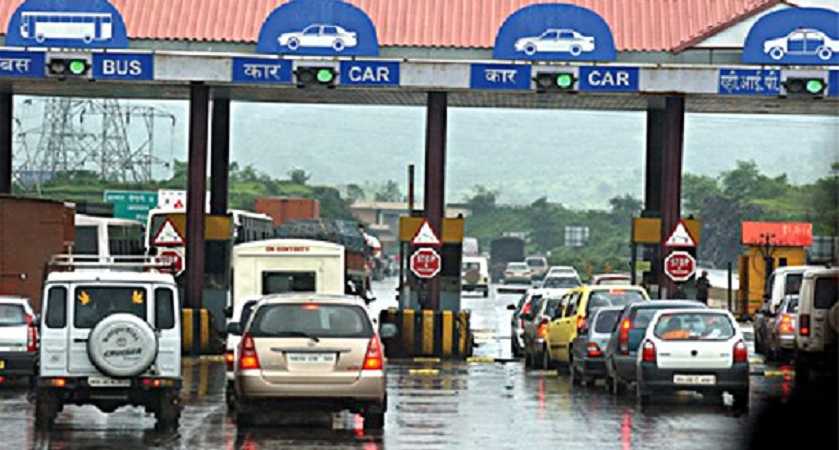
Nigerian president Muhammadu Buhari has approved the reopening of four additional land borders, three years after they were closed.

The approval was announced through a circular signed by El Edorhe, deputy comptroller-general of Nigerian Custom Service (NCS), on behalf of his principal.

The four borders approved to be reopened are scattered across four geo-political zones of the country.

“Sequel to the presidential directive dated 16 December, 2020, granting approval for phased reopening of land borders namely; Mfum, Seme, Illela and Maigatari borders across the country, I am directed to inform you that four additional borders listed below have been approved for re-opening: Idiroko border post, Ogun state (south-west zone); Jibiya border post, Katsina (north-west zone); Kamba border post, Kebbi state (north-west zone); and Ikom border post, Cross River state (south-south zone),” the circular reads.

“Consequently, all customs formations and JBPTs are to take note and ensure that proper manning takes place in compliance with extant operational guidelines,” it added.

The federal government of Nigeria had in 2019, closed its land borders. A decision it said was to curtail the inflow of illicit arms and contraband goods, especially rice, into the country. The federal government said it aimed to boost local rice production by stopping smugglers from saturating Nigerian markets with the already-banned foreign rice.

The border closure, which resulted in inflation and consequently massive hunger across the country, has failed to achieve its aim years after it was ordered. Terrorism and other forms of criminality have increased in the north and some southern parts of Nigeria. As of the first quarter of 2022 alone, a total of 1,884 deaths emanating from armed incidents across the country have been reported, according to SBM Intelligence. Compared to 1071 killed in the same quarter 2019, there is an uptick in armed violence spurred by the proliferation of illicit arms.

Headline inflation as of March 2022 is at 15.92 percent year-on-year, according to data published by Nigerian Bureau of Statistics (NBS). Though there is a little decline compared to the 18.17 percent recorded in the same period last year, the inflation, which was compounded by covid-induced economic strains, means that the Nigerian hunger crisis is far from over.

Over 100 million Nigerians faced food insecurity as of the end of 2020. The United Nations Food and Agriculture Organization (FAO), in its 2021 report, put the number of moderately or severely food insecure people in Nigeria at 116 million people, a 75 percent increase from the 66.1 million people recorded in 2016. FAO said that about 19.4 million Nigerians will face food insecurity between June and August 2022.

Last year, Nigeria’s Minister of Finance, Zainab Ahmed, acknowledged that the federal government’s decision to close the border contributed to the country’s inflation.

The escalation of armed violence, resulting in killings across Nigeria, has been largely attributed to Nigerian porous borders that significantly aided the smuggling of arms into the country. It has also significantly undermined efforts to produce food locally as farmers, particularly in the north, are living at the mercy of terrorists.

With the proliferation of insecurity and rising inflation, Nigerians have questioned the wisdom behind the government’s decision to close the borders. “It has only made a bad situation worse,” they said.