DD
MM
YYYY

PAGES

DD
MM
YYYY

spot_img

PAGES

Home Blog Page 5184

On Akinwumi Adesina’s View On Global Food Crisis

0

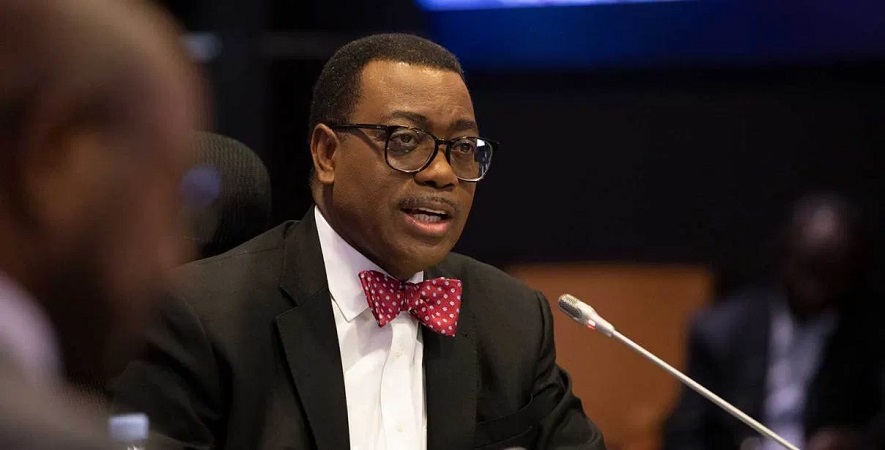
During his speech about Africa’s priorities as a guest at the Atlantic Council’s Africa Centre on 22nd April 2022, the incumbent President of the African Development Bank (AfDB), Mr. Akinwumi Adesina stated that Africa must be prepared for the inevitability of a global food crisis.

While responding to questions thrown to him from the hosts, the financial guru called for an increased sense of urgency amid what he described as a once-in-a-century convergence of global challenges for Africa.

According to Mr. Adesina, Africa’s most vulnerable countries had been hit hardest by conflict, climate change and the Covid-19 pandemic, which had upended economic and development progress on the continent, opining that Africa with the lowest GDP growth rates had lost as many as 30 million jobs on account of the said pandemic.

Speaking about the impact of the Russia-Ukraine war, Mr. Adesina expressed sympathy for the people of Ukraine, describing their suffering as unimaginable, saying the war’s ramifications spread far beyond Ukraine to other parts of the world, including Africa.

He also explained that Russia and Ukraine supply 30% of global wheat exports, the price of which has surged by almost 50% globally, reaching identical levels as during the 2008 global food crisis.

He added that fertilizer prices had tripled, and energy prices had increased, all fuelling inflation, therefore alerted that the rising costs or prices of food baskets could worsen in Africa in the coming months.

He noted that 90% of Russia’s $4 billion exports to Africa in 2020 was made up of wheat, and 48% of Ukraine’s near $3 billion exports to the continent was also made of wheat coupled with 31% of maize.

The AfDB boss cautioned that to fend off a food crisis, Africa must rapidly expand its food production, disclosing that “The African Development Bank is already active in mitigating the effects of a food crisis through the African Food Crisis Response and Emergency Facility – a dedicated facility being considered by the Bank to provide African countries with the resources needed to raise local food production and procure fertilizer.

Speaking further, he said “My basic principle is that Africa should not be begging. We must solve our own challenges ourselves without depending on others…”

The Bank chief spoke about early successes through the Bank’s innovative flagship initiative, Technologies for African Agricultural Transformation (TAAT) programme; a project operating across nine food commodities in more than 30 African countries.

Mr. Adesina informed that TAAT has helped to rapidly boost food production at high scale on the continent, including the production of wheat, rice and other cereal crops: “We are putting our money where our mouth is. We are producing more and more of our own food. Our Africa Emergency Food Production Plan will produce 38 million metric tons of food.”

He disclosed that TAAT had already delivered “heat-tolerant varieties of wheat to 1.8 million farmers in seven countries, increasing wheat production by over 1.4 million metric tons and a value of $291 million.”

According to Mr. Adesina, heat-tolerant varieties were now being planted across hundreds of thousands of hectares in Ethiopia and Sudan, with extraordinary results. In Ethiopia, where the government had put the TAAT programme to work in a 200,000-hectare lowland irrigated wheat programme, farmers are reporting yields of 4.5 to five times per hectare.

He equally notified that TAAT’s climate-smart seeds were also thriving in Sudan, which recorded its largest wheat harvest ever – 1.1 million tons of wheat – in the 2019-2020 season.

He added that TAAT came to the rescue during the drought in Southern Africa in 2018 and 2019, deploying heat-tolerant maize varieties which were cultivated by 5.2 million households on 841 thousand hectares.

As a result, he said, farmers survived the drought in Zimbabwe, Malawi and Zambia, allowing maize production to expand by 631,000 metric tons to a value of $107 million.

He also spoke about the urgent and timely need for a strong replenishment of the African Development Fund, the AfDB’s concessional lending arm that supports low-income African countries.

He disclosed that the Fund had connected 15.5 million people to electricity and supported 74 million people with improved agriculture; it had provided 50 million people with access to transport; built 8,700 kilometres of roads, and provided 42 million people with upgraded water and sanitation facilities.

The Bank Chief stated that there were three lessons to be learned for Africa from the challenges the continent is currently facing: first, that the continent could no longer leave the health security of its people to the benevolence of others; second, that it must look at health investments differently, and make the development of a health defence system a priority, investing in quality health infrastructure as a must; and third, that economies — which were already turning around — must create fiscal space to deal with debt challenges.

When asked about the outcomes for Africa of the Global Climate Summit (COP26) held in Glasgow in November 2021, Mr. Adesina strongly expressed optimism.

He however opined that it was important for developed countries to make good on their promises to provide Africa with the $100 billion annually required for climate adaptation.

“Our challenge is adaptation, because we didn’t cause the problem. In Africa, we are adapting to climate change”, disclosing that the AfDB together with its partner, the Global Centre for Adaptation, was mobilizing 25 billion dollars to support climate adaptation on the continent.

He further highlighted the importance of the technology sector as a driver for growth in Africa, and prospects for young people on the continent.

This ought to be an eye opener to countries like Nigeria that seem so docile in issues pertaining to research and innovations as regards agricultural development.

Nigeria should therefore borrow a leaf from countries within the continent and beyond that have already stepped up efforts in regard to tech-driven initiatives targeted to cushion the excruciating effects of the inevitable global food crisis as was pointed out by Mr. Adesina who has seen tomorrow owing to the current position he occupies.

Hence, concerned stakeholders must desist from sitting on the fence with a view to keying into the needed movement without further ado.

Welcome Anchor University to Tekedia Institute

0

Naidigital Ltd builds systems, services and support networks for human development in Africa. Led by Felix Oke, it recently structured a strategic partnership to send students, on scholarships, to spend time at Tekedia Institute where they will receive deeper training on entrepreneurial capitalism and understanding of market systems.

Anchor University is the first beneficiary. We want to welcome students from Anchor and thank Naidigita for choosing our Institute to co-execute its human development playbook.

Learn more about Tekedia CollegeBoost here.

African Parents are Physically Abusing Children in the Guise of Discipline

0

Every day we see on social media and read on the news blogs the stories of kids and house-helps crying out for help and complaining about their parents and guardians physically assaulting them in the name of discipline. Some folks always try to justify these actions of the parents and guardians by saying that the child must have done something grievous to have warranted that kind of beating from the parent or guardian. But truth be told, no matter what the offense of a child is, he should never be violently assaulted or treated like a hardened criminal. There are other numerous ways of disciplining a child other than beating and physical assaults which childcare professionals have proven to be more effective in correcting and reinforcing good behaviors in children than beating and physical assaults.

The way some parents and guardians beat up and physically assault their children and house-helps in the name of discipline should be considered domestic violence too. So when we talk about domestic violence, we should not only concentrate on partners physically assaulting each other, especially the man beating up the woman at the slightest provocation, we should also take into consideration the reality that the way some parents deal with the children and those under them can no longer be said to be discipline rather it will pass for domestic violence and child abuse. 

The Nigerian society really need to start having this conversation that there is a wide gap between discipline and physical assault and what some parents and guardians engage in while handling their folks is nothing other than domestic violence and child abuse. 

Parents and guardians physically assault and violently abuse their kids in the name of discipline but it seems we are not ready to talk about it due to the Nigerian society’s cultural foundation. People see this as a normal thing; Violently beating up a kid by a father is a normal thing in the Nigerian society. 

Some Parents and guardians beat up and violently assault their children to the extent of that child getting hospitalized. This kind of iron-fist discipline is nothing but domestic violence which the government ought to start looking into and make necessary legislation to criminalize it.

You don’t have to beat up a child till he is in a coma or on the verge of giving up the ghost before you will be satisfied that you have disciplined that child. Many kids have lost their lives, some have been disfigured by their parents and their guardians and some have been inflicted with perpetual pains, while some have gotten lifetime trauma from their parents and guardians in the name of discipline. 

Other developed countries like the USA and the UK have strict legislation that criminalizes this kind of act by the parents and guardians beating up or physically assaulting their kids in the guise of discipline. If you physically assault a child in those countries you will be arrested and prosecuted for child abuse and the kid will be taken away from you by the government. 

Violence is not discipline. We need to do away with those cultures that promote such notions. You are inflicting pains and Injuries on the child that he will live with for the rest of his life and that won’t score as a discipline rather such acts amount to domestic violence which is a crime.

The New Messenger at “Patmos” and revelation of a GREATER mission

0

John was taken to an island so that he could not speak before many in Rome. But right in that faraway island, he received a revelation, and was able to speak, not just to Rome, but the whole world, through the book of Revelation.

If they send you to that small branch. If they kick you out of the headquarters to that remote location.  Do not be frightened. Going to  “Patmos” has promoted many people. Yes, in that Patmos, you could see a bigger vision, that is even more than that company. Indeed, you could change your industry!

But the key is this: in that Patmos, open your mind because a fresh revelation can come with a bigger vision for you. And the messenger may be different. John was used to receiving messages from Roman emperor Domitian who persecuted him. But when a new messenger came, in Patmos, with a new message, he did not allow his state of mind to miss his moment.

A new messenger is coming to you in any  ‘Patmos’ you may be – and I ask you to open your mind to receive a revelation of a GREATER mission. Happy Sunday.

From Social Media Feeds

Comment 1: After listening to Pat Gelsinger speak on Bloomberg LP, John’s incident made the most meaning to me. I believe it God’s way of separating men after their first use, so they become matured, wise, have clearer insight and be more humbled to handle life issues. Also, I once heard Poju Oyemade say if God is going take you to level 7 from level 5, you fist go to back level 3.

David stayed in caves, Mandela insight of Globalization was sharpened in the prison- Read his biography, Jesus in the wilderness, Joseph in the prison. Demotion is a guise for Quantum leap.

The Vision from Patmos

On The Explosion Of Illegal Refinery In Imo State

2

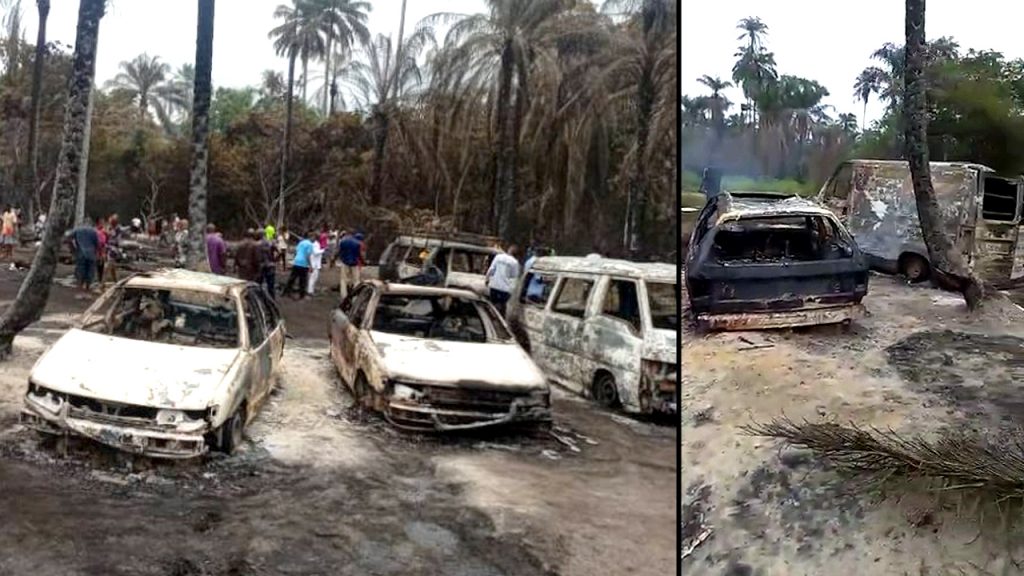
On the night of Friday, 22nd April 2022, an illegal crude-oil refinery (bunkering) situated in Abaezi forest, Ohaji-Egbema Local Government Area (LGA) of Imo State exploded unannounced, reportedly killing over 100 youths and razing about six vehicles.

In a similar development, reports also had it that countless individuals within the scene of the incident were seriously injured while many were maimed.

During his visit to the scene of the explosion, the following day being Saturday 23rd April 2022, the Imo State Commissioner for Petroleum Resources, Mr. Goodluck Opiah opined that the incident was very unfortunate, as he described illegal oil bunkering as a “suicidal business”.

Consequently, while the Commissioner was on his on-the-spot assessment visit, he stated that he could not confirm the actual casualty figure. He said, “At the moment, I can’t really confirm the number of the deceased because many family members have removed the corpses of so many others.”

Mr. Opiah went further to disclose that the State Government led by Sen. Hope Uzodinma had declared the owner of the illegal refinery, Mr. Okenze Onyenwaoke wanted, hence advised him to make himself available to the police immediately.

“Most of the people who are engaging in this act are from Rivers, Bayelsa and other neigbouring states and it is sabotage for our people to allow this illegal act to continue.

“Apart from this calamity, the act has destroyed the aquatic life in the community. Our people before now were predominantly farmers and fishermen.

“Look around, you will find smoke coming from this illegal act. If this is not enough for any person to stop, I think the community is heading for what I can’t describe,” said Mr. Opiah.

On his part, a resident of the area who identified himself as Daniel Opara, told newsmen that the majority of the victims in the incident were youth. He said the people were unable to escape because fire covered the whole forest. He said, “I rarely see old people involved in this illegal act. They are mainly youths.”

Mr, Opara, who added that “It is a popular business here. I think they make it there, that’s why they take such risks”, could not say if all the people involved in the illicit business hail from Imo or the neighbouring states.

A video clip taken from the scene of the explosion, which has gone viral on social media, revealed horrible images of the victims and vehicles burnt beyond recognition, littering the entire environment.

It’s noteworthy that oil theft, known as ‘bunkering’ in local parlance, which remains a means of livelihood to many notable Nigerians, has been a source of concern to many well-meaning stakeholders across the country.

The Nigerian government had been reportedly losing an estimated $4 billion annually, due to oil theft activities.

In Rivers State precisely, air pollution, especially the soot in its capital territory, Port Harcourt and its environs, has been attributed to the operation of illegal oil refineries.

Nigeria is indeed the cause of her own plight, to assert the least. The point I’m trying to portray here is that, if the leaders of the country truly intended to eradicate ‘oil bunkering’, it would take no effort to do so.

It’s even more saddening when realized that the various state governments affected by the uncalled and unfortunate practice generate most of their internal revenue from the illicit business via taxation.

For instance, the current Commissioner for Petroleum Resources in Imo State hails from the LGA where the explosion took place in the state. It suffices to assert that he possesses the capacity to identify or fish out the exact individuals involved in the illegal venture.

At this juncture, if your thought is as good as mine, then you would realize that Nigeria’s leaders are actually the problem to Nigerians.