DD
MM
YYYY

PAGES

DD
MM
YYYY

spot_img

PAGES

Home Blog Page 5189

HE SHOULD RUN for President in 2023: Existence Precedes Essence

0

Nigeria, like other countries around the world, has been around for over 3,000 years. However, no one actually knows what the country’s first name is. According to some sources, the Royal Niger Company surrendered the lands it inhabited after the scramble and partitioning of Africa by European countries to the British government for £865,000. In 1914, Lord Lugard had the opportunity to merge the two protectorates, and his wife coined the name “Nigeria” from “Niger Area.” From archives to oral histories from the people who witnessed various socioeconomic and political growth stages of the country since 1914, seeking and occupying political positions with the intention of governing others have always been approached using a variety principles and strategies.

Nigeria have had four republics. Between 1963 and 1966, the first republic existed. It had a second republic from 1979 to 1983, and a third republic from 1993 to 1993, which dissolved that year. Nigerians saw various political tactics from politicians in all of these republics, while civil society organizations, public affairs experts, and social commentators campaigned for better ways to institutionalize governance and democratic ideals. Political parties, politicians, and their followers have all used a variety of political tricks since the fourth republic began in 1999. The production of artificial moral panics has been engulfed in engagement with people and stakeholders, increasing political tension in the hopes of deceiving the public or influencing their decision-making process ahead of general elections.

As soon as a general election is completed, politicians who participated in and are currently engaged in the fourth republic begin to express interest in contesting for seats. No politician, according to our analyst, waits until the last minute to implement his or her strategy and methods. Nigerian politicians, according to our analysis, participate in unrelated activities such as forming foundations, associations, and groups with the goal of ensuring their party’s and public approval, as well as emergence as candidates for their political parties.

“I am consulting…”, “I have been told to run,” “He or she should run,” and “I am eminently qualified for the position” were not part of the pre-election or campaign political gimmick phrases during the last republics (1963-1993), according to our analysis. Our analyst concludes that the current crop of politicians or aspirants for the presidential and governorship positions are uttering phrases based on the proposition that human beings always want their existence to be known in terms of showing that they are responsible and understand the meaning of life, after several days of deconstructing the phrases in the context of various political propositions and assumptions by great political scientists and philosophers.

In the history of pre-general election elections, 2022 is the year in which Nigerians and international communities witness sporadic explorations of free will, self-determination, and the search for relevance by politicians from various political parties for expressing interest in the presidency ahead of the 2023 general elections. This, according to our expert, could be linked to the major political parties’ proposed zoning policy. Members of the All Progressives Congress and the People’s Democratic Party have expressed interest in the job, both those who have a political structure that cuts across regions and those who do not.

Politicians who have expressed interest include Bola Ahmed Tinubu, Atiku Abubakar, Nyesom Wike, Rotimi Chibuike Amaechi, Kayode Fayemi, Bukola Saraki, Godwin Emefiele, Dele Momodu, Yahaya Bello, Aminu Tambuwal, Kingsley Moghalu, Sam Ohuabunwa, Ibikunle Amosun, Rabiu Musa Kwankwaso Some have held positions of power at the local, state, and national levels, while others continue to rule states or represent their constituents.

Having so many candidates before primary election indicates a favourable electoral climate for the presidential election. At the very least, it would allow voters to select the best candidate. However, expressing interest solely because I was advised to run and he or she should run is not in the best interests of the country. It implies that the aspirants are unaware of what it takes to emerge from the standpoint of essence, enlightening citizens and foreign communities about why the country should elect them as its next presidents. They chose to indicate interest because they were told to run or because some groups thought they were qualified for the role. “Existence precedes essence” for them, according to Sartre.
Tekedia Capital invests in AjoMoney to digitize centuries-old ROSCA

0

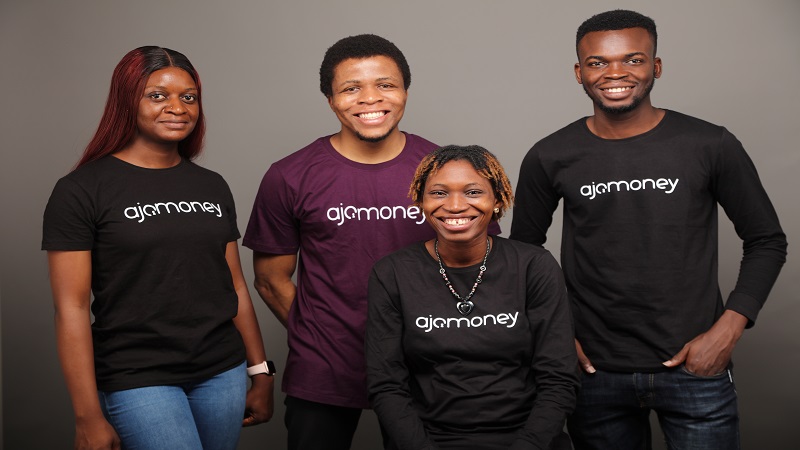
Tekedia Capital invests in AjoMoney. AjoMoney is building an operating system  that will make it possible for people to do rotating savings and credit seamlessly: “AjoMoney, a financial technology company digitizing ROSCA (rotating savings and credit association) to build a neo-banking platform for consumers and neo-banking SaaS platform for cooperatives and thrift contribution agents has raised an undisclosed funding from Tekedia Capital.” Tekedia Capital welcomes Chineye Ochem and  Ibrahim Adepoju to the family.

A digital cooperative bank that digitizes the centuries-aged ROSCA (ajo/esusu/adashe) to help you save money, make early investments and access credit to buy now pay later, simply at no-interest.

You call it ajo, esusu, etc; with AjoMoney, you have a formalized platform to contribute with your co-workers, friends, associates, making sure that everyone wins as the contribution rotates. Create an account here and invite your network https://ajo.money/

— From Press Release —

AjoMoney, a financial technology company digitizing ROSCA (rotating savings and credit association) to build a neo-banking platform for consumers and neo-banking SaaS platform for cooperatives and thrift contribution agents has raised an undisclosed funding from Tekedia Capital. The fresh funding will be used for strengthening the products, team and also growing the business beyond the initial organic reach through accelerated sales and marketing efforts.

Participating in this round alongside Tekedia Capital is Tayo Oviosu, the CEO of Paga and Co-founder of Kairos Angels.

Founded in 2021 by Ibrahim Adepoju (CEO/CTO) and Chineye Ochem (COO/CFO), AjoMoney started by building a rotating group savings platform for consumers (a.k.a ajo, esusu, and adashe), where group of people saves agreed sum of money together and collect lump in turn, this feature was used to evaluate the market potential and upon public-beta release in October 2021, the company has processed about $300,000 in transactions and onboarded about 8000 organic users on the mobile app platforms (android and ios) with no-cost on marketing and promotions.

With effective patterns and deductions made from the rotating group savings in the early release, AjoMoney will be extending the solution through SaaS model and developer API for cooperatives and mobile agents thrift companies. This will make it possible for credit unions to easily setup a rotating savings and credit system at no technical cost. The features on the AjoMoney system includes rotating group savings (ajo or esusu), personal savings, thrift contribution (daily, weekly and monthly savings with access to interest-free loan), buy now pay later, and multi-cooperative societies management.

AjoMoney core objective is to build a platform and an infrastructure that enables people to collectively come together like a community to save money, make investment even before they can save up for it and also gain access to interest-free credit. To achieve this objective, the team will be exploring the centuries-aged ROSCA system by leveraging on modern technologies.

Building Investment Portfolios in Nigeria, Africa

0

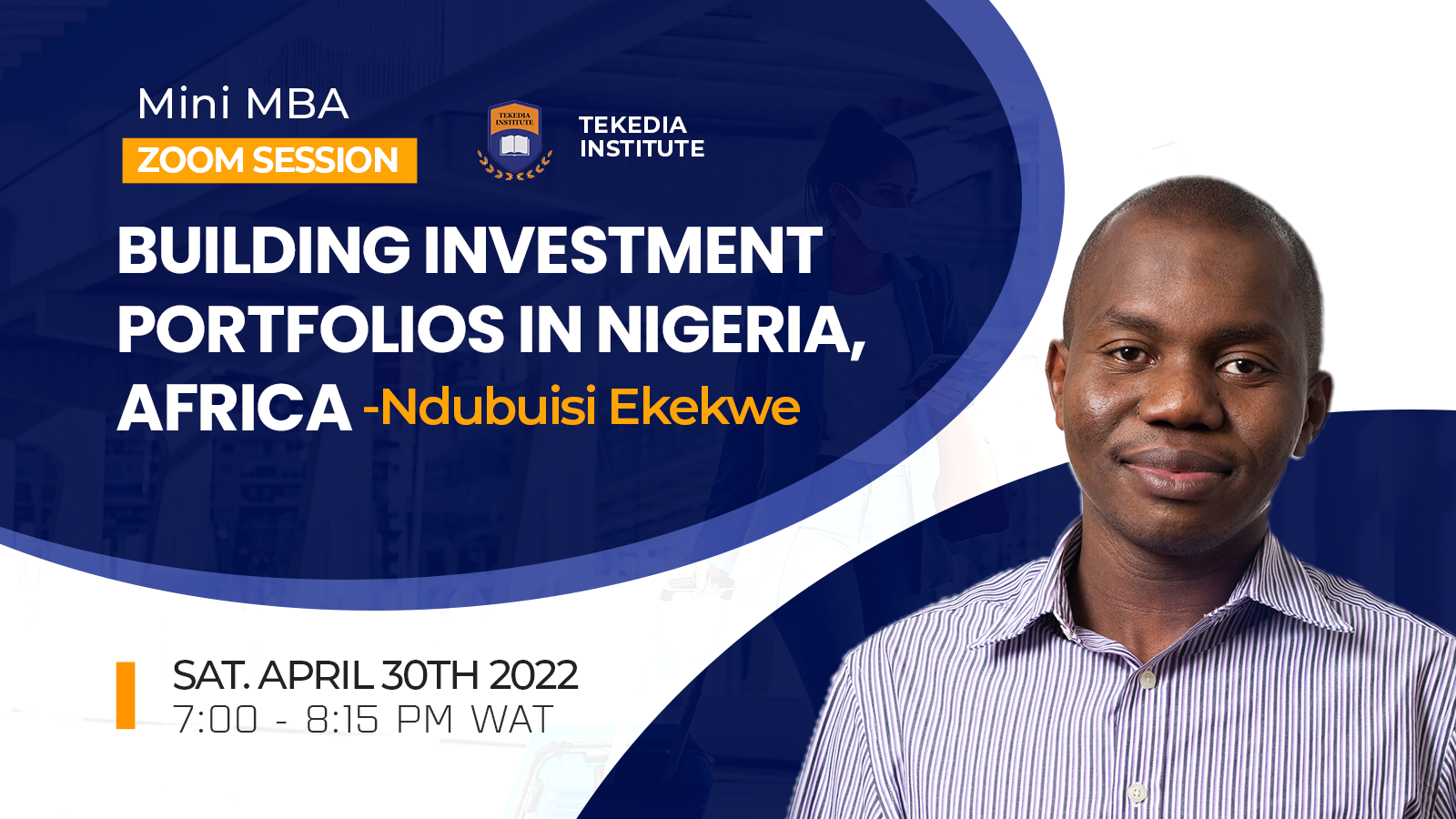
Inflation everywhere? Where can we find safety in markets? Within the bounds of academic learning, Tekedia Mini-MBA Live will discuss how to build  investment portfolios in Nigeria and Africa. In Diamond Bank as a young graduate, I developed a 45-20-20-15 Strategy, tracked  my unit head, George Akpovbovbo, a fellow of ICAN, and bought all equities he marked in his daily newspaper stock table. Later on, I realized there was a reason he chose those companies: 100% of them pay dividends.

My strategy has since evolved with startup investing and US equities. But the core principle remains.

Join us at Tekedia Mini-MBA tomorrow as we discuss, co-learn and advance our knowledge within an academic tradition on the best ways to make that future predictable by creating it. Yes, invest and invest, not just for money but for your career. Those professional certifications are GREAT investments. And of course, a PhD (in technical area) is the godzilla: I have called it the best career insurance in Africa because there is always a school to teach!

I will share my 5 pillars and those have worked really well for me.

Come to the class; we want to understand your strategy. This is a modern school. Tekedia Mini-MBA; register for the June edition today here 

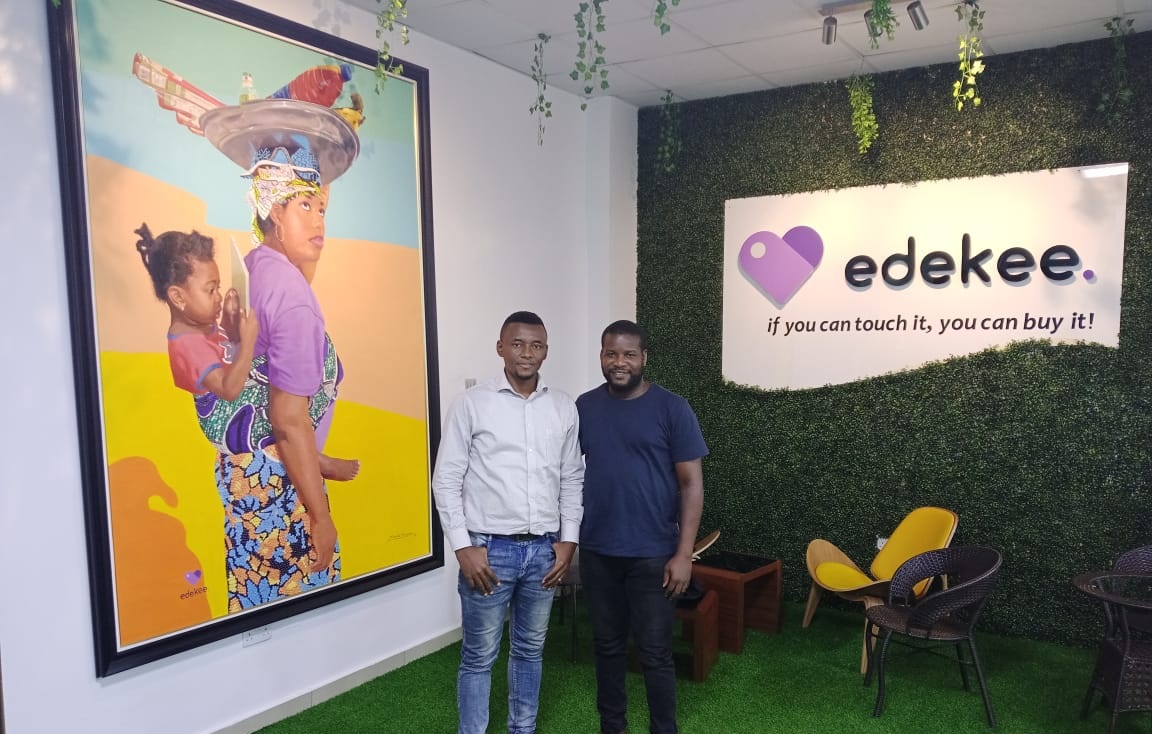
Tekedia Capital Visits Edekee Office in Lagos

0

Tekedia’s Nnamdi Odumody visited Edekee’s Victoria Island (Lagos) office – the very place where they’re cooking the machine learning systems that will bring a new order on how people buy things on videos and more. Edekee’s US-patent pending technology will make it possible that anything you see on video, you can pause, and buy it, without leaving that video.

They have unified computer vision and AI systems, hiding “purchase frictions” from customers. Edekee is a Tekedia Capital portfolio startup.

2023 Elections: Nigeria’s Political Landscape Is On A Downward Trajectory

0

These are very familiar scenes: a vice president suddenly realises blueprints to resurrect a crumbling nation after hiding it from his boss of seven years who recorded massive failure; a kingmaker wants the throne; ministers and governors are rallying for support; some people are pushing a failed ex-leader to declare for the presidency; obscure politicians are now finding voices, and promises too realistic to be fulfilled are being made. It’s 2022 but the theatrics for the general elections come 2023 are in play. The didactics from these scenes reiterate that Nigeria sadly will fall to yet another selfish leader. But what could be done to avert the looming catastrophe? 

Nigeria and Nigerians are tired of jamboree political leaders. This time, the country and its people are so divided so much that the slightest event can cause a much-foreseen catastrophe yet this is not a cause of concern for those who are expected to change the narratives. It’s either their selfish interests, party interests, ethnic jingoism, or nothing. Since 1999 when the country returned to democratic dispensation, the course of administration has not changed quite much from how it was left by the kleptocratic military rulers. Successive democratic governments have not got it right; with political leaders amassing wealth from one corruption scandal to another and jumping from one ruling party to another “for their sins to be washed away”. And Nigerians ask, “what has happened to our dividends of democracy?” 

No doubt, the country is in its worst state. The security architecture is eroding as seen in recurrent insurgents’ attacks, kidnappings, and others. The economy is in crumbles. Government critics are getting arrested one after the other illegally and unjustly. The stakes are dangerously high, but what is the focus? Politicians are preparing to get recycled into power. All these indicators of poor governance and a failed democracy do not grasp their attention one bit. Perhaps, to them, the country is for them to milk and milk until it dries up.

Analysts and other concerned stakeholders have been vocal about why the country needs urgent intervention. Religious bodies have appealed for restructuring. Non-governmental organisations (NGOs) have pleaded similarly too. All of these efforts have proved abortive. A close observation of the country’s political affairs notes that the citizens are absent from the governance.

It is their right to be equally involved but what has happened? Where did something go wrong? Citizen demonstrations against inept governance are seen as treason. This claim is obvious from the massacres of protesters at Lekki Toll Gate as well as other massacres that didn’t get the media attention that much. The citizens are in the shackles of their own government! 

Owing to the uncertainty of where this country is headed, there have been calls for the general elections not to hold next year. Some Nigerians are saying calamity is bound to be suffered if the elections go on. This would not be the first doom prophecy and certainly not the last if the same situation persists. Elections in Nigeria are marred by violence that includes massive rigging and many killings. Despite this, the Independent National Electoral Commission (INEC) would still announce the winners of the elections. There would be demonstrations; security operatives would take the streets to quell demonstrations; calm will be forcibly restored; nothing will change; hence, the dangerous course recycles. 

As Nigerians watch with perplexed interest the fate of their country, politicians declaring for the presidency have consistently courted President Mohammadu Buhari for victories. Perhaps the worst leader Nigeria has ever had, Buhari often takes pleasure in observing reticence in the event of crisis and treating its citizens with high-handedness. The intentions and messages (of these politicians) passed across are very clear: they don’t need the masses to assume leadership. Adebayo AbdulRahman, a freelance journalist brilliantly captures this trend in his article titled “2023: 10 Paragraphs On Osinbajo, Tinubu And The Rest Of Us”.

He said for instance of Osinbajo: “So when Osinbajo described Buhari as a “patriot” and expressed his intention to “continue the good works” of the current administration, he was not appealing to the Nigerian populace. Not even you. Yes, you. He was appealing to the more important political structure of his principal, the President. Osinbajo understands that at the moment, he needs the President’s support more than that of outraged Nigerians. Sad, right?” 

With the country in the firm grip of selfish leaders, the citizens are increasingly finding it difficult to get it right. The only alternative is to get a candidate successfully weaned away from the two big Peoples Democratic Party (PDP) and the All Progressives Congress (APC), but this looks like a wild dream. On Twitter, political discussions have often portrayed the dire need of Nigerians to look beyond the two parties but the reality outside the Twitter discussions shows it takes more than online talks to drive change. The huge crowd that accompanies political aspirants often reveals that “getting it right politically” in Nigeria is more than a fundamental problem. Even grassroots sensitisation has not changed the story either. 

It is even more worrisome that despite all these odds, democracy remains the only option for the country’s political progress as any return to military administration will be far more catastrophic. It has been said that the key to unlocking Nigeria’s potential lies with the youth who are nowhere to be found in governance and even those who are there are figureheads. The country needs a resilient population to change the country’s structure. Countries that are now enjoying relative peace after years-long turbulence are thankful to dogged citizens for charting a new history. However, divisions along ethnic lines and other personal vendettas have continually hampered the citizens’ collective voice in the calls for unity.

The moments of desperation, frustrations, and demonstrations did not prove a better way forward either, not forgetting that many Nigerians believe that the country is not worth dying for. To be candid, even past national leaders who still have their reputations intact did not think dying for the country is an enthralling idea. It will take a great enthusiasm for the citizens to do away with their sentiments in their drives to restructure the country and chart a new course in the nation’s political history before the beloved country grows into extinction. This time more than ever to take over the country from political hawks is now. Will this mean a revolution?