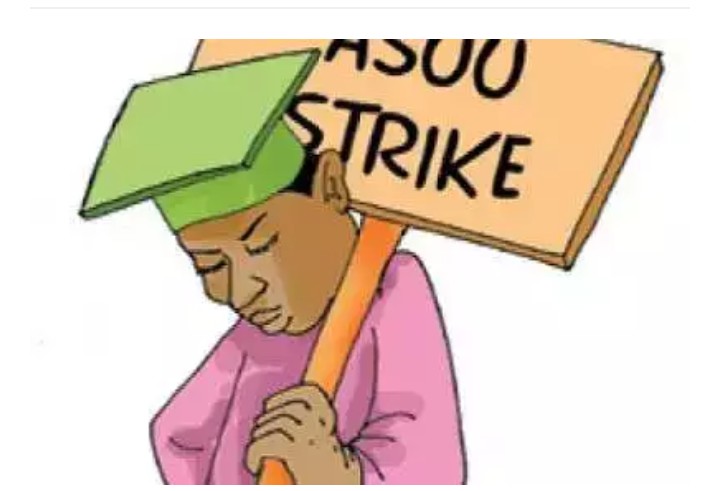
From the United States of America to India and Italy to Egypt, several famous industrial actions were recorded in the 18th century and of the recent centuries. Like Egypt, Nigeria also had some notable industrial actions. The country had its first general strike in 1945, lasted for 44 days in the capital city and 53 days in the regions. It was purposely led by nationalist leaders and supported by various socioeconomic groups such as women.
Several sources described the action as anti-colonial administration in readiness for the country’s independence in 1960. Nigeria has had and continues to have various industrial strikes by public employees many years after achieving independence. According to our analysis, the instrument has primarily been used by public employees in strategic agencies, departments, ministries, and educational institutions in recent years.
Strikes are not new to many stakeholders in educational institutions, particularly students, due to the widespread use of the instrument by academic and non-academic personnel. It is a strategic combination of activities aimed at forcing employers to give in to labour demands.
Increased salary, better working conditions, or reparation of rights violations could be among the requests. When you consider this term in the context of the Academic Staff Union of Universities’ recent actions, it’s clear that the union seeks better working conditions and pay for its members.
Political Economy of the Strike Strategy
Despite the union’s good intentions, our trace and observational analyses of strike actions since 1999 revealed that the union’s actions occurred mostly during key stages of the electoral cycle. According to public affairs analysts who spoke with our analyst, this suggests that the union goes on strike when it believes the government will suffer significant consequences if prior agreements are not implemented. Recent occurrences at several union-affiliated state universities, on the other hand, suggest that the union may soon lose its relevance as a voice for employees. This is based on the fact that local branches are now interpreting the instrument as a recurring decimal, implying that the technique isn’t working.
Unrealistic Strike Strategy
Every year that the union uses the tool, all parties involved suffer the repercussions. Lower-level academics and students, as well as small companies in cities and towns where universities are located, suffer the greatest severe consequences. Our analyst agrees that the instrument cannot deliver the desired effects, noting that the negotiators’ behaviour during prior strike actions has demonstrated that the playbook cannot yield major results.
The government’s representatives understand that the union can’t keep the strike going for long, knowing that younger academics won’t be able to endure it due to their limited financial means. This, according to our analysis, is one of the reasons why the union abruptly postponed several previous moves adopting a “conditionally” approach. When the union returns for another action, it uses the “violation of agreement” approach.
The union’s leadership has to evaluate the playbook after relying on these approaches since 1999 and failing to achieve the desired results. Based on Nigeria’s current crop of political leaders, our expert predicts that none of the leaders or political parties would strictly adhere to prior and future agreements with the union.
The union, along with others, should look ahead and choose the best strategic options and directions. For example, fixing the compensation issue necessitates a thorough examination of the costs of training students as well as internal businesses that produce revenue for universities.
Academics and other personnel would benefit from a higher salary and other remuneration system if this occurred. It is also critical that administrators pay close attention to how they distribute and use available financial resources. American author John Steuben writes in his book, Strike Strategy, that realistic strike strategy is the surest path to strike triumph. Steuben wrote against the backdrop of his interactions with government stakeholders during several industrial strikes across the United States of America, which demonstrated that a single approach cannot guarantee victory.