DD
MM
YYYY

PAGES

DD
MM
YYYY

spot_img

PAGES

Home Blog Page 5195

Techstars Accelerator Solidifies Lagos As Africa’s Most Attractive Tech Hub

0

Techstars, a global investment business that provides access to capital, customized programming for early-stage entrepreneurs/start-ups, one-on-one mentorship, in partnership with ARM labs, a Lagos-based innovation program focused on helping biotech start-ups, announced the launch of the ARM labs Lagos Techstars accelerator program.

The accelerator will be open to so many tech startups in Lagos, however disclosing that the city has been proven to be Africa’s fast-growing tech hub. With its high population, and so many businesses located in Lagos, the city surpassed Nairobi, Kenya to become the top African city on startup Blink’s 2021 global startup ecosystem index.

According to the general manager of Techstars Nancy Wolff, she disclosed that the city of Lagos has established a successful startup ecosystem. In her words, “Lagos has built a successful startup ecosystem that merits more global exposure, investment, and resources, and we can see extraordinary potential in the market”.

No doubt why a lot of Nigerians and even a few foreigners have described Lagos as a land of opportunities. According to statistics, it was disclosed that every hour, 77 people move to Lagos from other parts of Nigeria. Almost everything happens in Lagos. The city has become a hub for the country’s fastest-growing sector, the tech hub which is home to the African biggest startups.

Lagos has a beautiful atmosphere, which is also one of the biggest metropolitan areas in Africa. The city has made a name for itself as a tech hub, rapidly advancing towards a 24-hour economy, which generates 10% of Nigeria’s total GDP of $432.3 billion. The city has built a successful startup ecosystem that merits more global exposure/investment, making it attractive to investors.

The city just has a beautiful ambiance that draws everything into its orbit, no wonder it earned the slogan “Center for Excellence”. A lot of people have even compared the city to the great silicon valley, due to its friendly environment for technology and how it is home to so many tech start-ups and tech hubs in the country.

As regards leadership in the city, the present and past administrations have greatly contributed to making the city what it is today by providing the best business atmosphere, supported by good infrastructures. There is a quote that says, “if you can make it in Lagos, you can make it anywhere in the world”.

The city has been known to provide a first-hand experience of what might be compared to real-life experience because it offers a vast market for any business an entrepreneur desires to do. With the city’s GDP in 2014 at $90 million, Lagos is also home to over 65 percent of Nigeria’s business which houses over 2,000 manufacturing companies.

Looking at all these features embedded in the city, it is, therefore, pertinent to say that anyone who desires to build a tech startup or business, should not hesitate to relocate to Lagos as it remains a top destination. As someone who resides in Lagos, the city gives one the feel to succeed.

There is an atmosphere it has, coupled with the hustle and bustle that inspires one to get motivated into doing something. It is no surprise at all that the city remains a top destination for investors and businesses because it provides them the opportunity to succeed.
Shareholders Approve Microsoft’s $68.7bn Acquisition Bid for Activision Blizzard

0

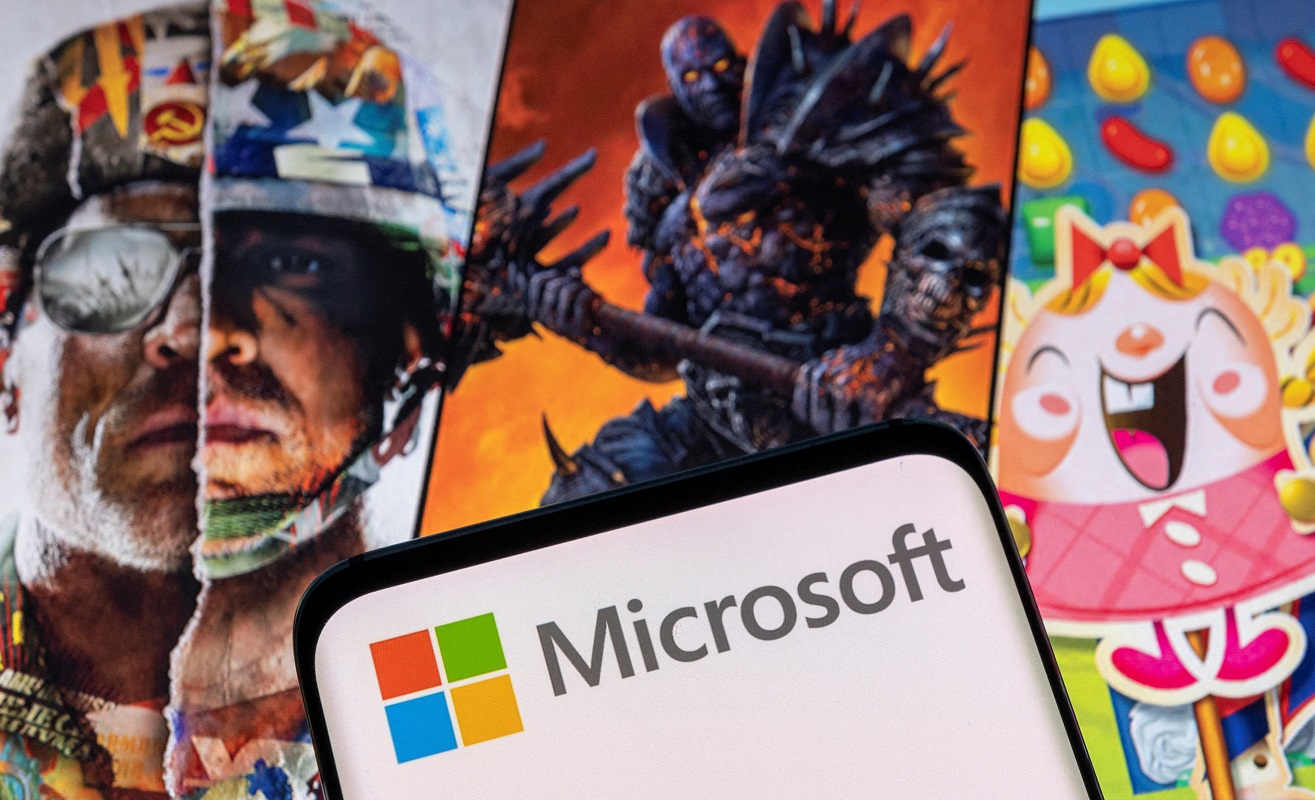
Shareholders of Activision Blizzard have approved Microsoft’s $68.7 billion bid to buy the “Candy Crush” maker, the company said on Thursday.

The all-cash transaction puts the value of the videogame maker at $95 per share. More than 98% of the shares voted were in favor of the proposed transaction, the Santa Monica, California-based company said.

The deal, which is the biggest in gaming industry history, was announced in January by Microsoft. Activision is one of the biggest players in the game industry with famous games like “Call of Duty,” and “World of Warcraft.” The proposed transaction is expected to close before July 2023, if it passes regulatory review.

“Today’s overwhelmingly supportive vote by our stockholders confirms our shared belief that, combined with Microsoft, we will be even better positioned to create great value for our players,” said Activision Blizzard CEO Bobby Kotick.

However, the deal is facing a regulatory review by the Federal Trade Commission (FTC), amid a mammoth of backlash facing the company over its response to allegations of discrimination and sexual harassment against female employees.

Acquisitions in the American tech industry have come under tighter scrutiny since trailblazing FTC chair, Lina Khan took office in June 2021. Under her leadership, companies in acquisition business have received pushbacks. For instance, the FTC has launched a probe on Nvidia’s attempt to purchase Arm and it has revived an antitrust case against Meta over its acquisition of Instagram.

Microsoft and Activision Blizzard will also need regulatory approval from the UK, the European Union, China and some other jurisdictions, according to an SEC filing.

Besides the regulatory concerns, Activision is facing a move by quality assurance employees at its Raven Software studio to unionize. When the acquisition was announced in January, quality assurance testers at Raven Software, a division of Activision, had been on strike for five weeks. They protested the layoffs of 12 contractors, which came after over a month of consistent overtime work.

“We realized in that moment that our day-to-day work and our crucial role in the games industry as QA was not being taken into consideration,” Onah Rongstad, a QA tester at Raven Software, told TechCrunch at the time.

Per TechCrunch, Raven Software concluded their strike by forming the historic first union at a major US gaming company, but Activision Blizzard did not voluntarily recognize their union, which meant that they had to file for a union election with the National Labor Relations Board.

Activision’s attempt to quash the union failed after NLRB ruled in favor of the employees, giving the permission to vote for union recognition. That vote is expected to take place via mail between April 29 and May 20. With these issues surrounding the company, the acquisition has become a way out, particularly for Kotick who has been at the receiving end of the backlash. He is expected to step down at the close of the deal.

Is Bestiality a Crime in Nigeria?

0

There is a wild trend of videos of girls having sexual intercourse with dogs in the Lekki area of Lagos state in exchange for money. The report (although unverified) stated that the girls are paid N1.5m to have sex with the dogs for the viewing pleasure of the dog owners.

Having sexual intercourse with animals is not a new thing in Nigeria, there have always been reported cases of some men caught making out with animals and previous cases of women making out with dogs and snakes.

Just Last year, a young boy was arrested by Oyo state’s security network agency (Amotekun) for having sexual intercourse with a calf.

A 25-old-man was also arrested by the police in Jigawa state in September of last year for making out with a goat in the Gwaram Local Government Area of the state.

Also, in 2014 An Upper Area Court in the Kuje area council of the Federal Capital Territory sentenced a 20-year-old tailor to one-year imprisonment for having sexual intercourse with a goat.

These and many other reported and unreported cases show that bestiality is not new in Nigerian society.

Is Bestiality a crime in Nigeria as of today?

Bestiality is the sexual intercourse between a person and an animal.

Section 214(2) of the criminal code provides:

“Any person who has carnal knowledge of an animal is guilty of a felony and is liable to imprisonment for fourteen years.”

On the other hand, Section 284 of the penal code also provides:

“Whoever has carnal intercourse against the order of nature with a man, woman, or any animal, shall be punished with imprisonment for a term of which may extend to fourteen years and shall also be liable to fine.”

This section seeks to punish all forms of penetrative sex generally between a man and a woman between human and animal. 

Therefore, while people enjoy different sexual fetishes and like to explore different sexual fantasies, readers should note that Bestiality is a crime in Nigeria, it is punishable by a jail term of up to 14 years, according to Section 214 of the Criminal Code Act which is applicable in Southern Nigeria and S.284 the Penal Code Act while is applicable in northern Nigeria.

On The Stolen Money At APC Secretariat In Abuja

0

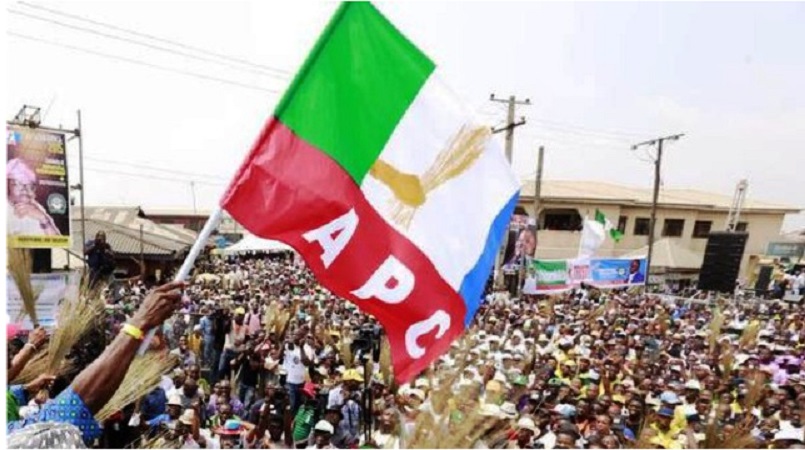
The All Progressives Congress (APC) has eventually confirmed that a parcel containing a sum of money in US dollars was stolen at its national secretariat in Abuja.

The National Publicity Secretary of the APC, Mr. Felix Morka, who gave the confirmation in a statement on Thursday, 28th April 2022, put the figure of the missing money at $50,000.

He however clarified that the money did not belong to the party nor was it connected with the proceeds from the sale of nomination and expression of interest forms.

It would be recalled that there was a serious melodrama on Wednesday, 27th April 2022 at the National Headquarters of the APC in Abuja, after the parcel containing the cash was reportedly stolen.

According to reports, the cash was stolen while members of the party were struggling to gain access to the secretariat of the party for the purchase of their Nomination and Expression of Interest forms.

Reacting to the development, Mr. Morka in a statement issued on the said date, titled “Re: Lost money at APC national secretariat” disclosed that the missing money had no connection with the party.

He explained that all money meant for the forms were paid directly to designated bank accounts, adding that the money in question was reported lost by an individual at the entrance to the party secretariat.

“On Wednesday, April 27, 2022, a sum of $50,000 was reported lost by an individual around the entrance gate of the National Secretariat of the party,” the statement reads.

“To be clear, the lost money does not belong to the Party. In any event, the fee for the said forms is set and denominated in Naira not US Dollars.

“The loss is neither connected with proceeds of sale of forms nor with relocation of the venue for the collection of Expression of Interest and Nomination Forms, from the secretariat grounds to the International Conference Centre.”

It’s noteworthy that the APC recently relocated the party’s venue for the onward collection of the forms obtained by the aspirants, after filling them as required, to the International Conference Centre (ICC), Abuja.

“As widely advertised and reported in major news outlets, all purchases of forms are payable to designated bank accounts of the party.” the statement added.

On why the party also shifted the venue for the collection of forms to the ICC, Mr. Morka explained that it was to ease the heavy human and vehicular traffic around the secretariat being caused by those who had thronged the place for their forms.

The Nigerian politicians are really amusing and dramatic in their actions as well as the way and manner they respond to trending issues concerning their activities.

How could a spokesman of an organization issue a press statement targeted to aptly inform the members of the public, but ended up confusing them? The released statement rather caused confusion in the head of the observers.

Why didn’t Mr. Morka use the same avenue to notify interested Nigerians what the missing money was meant for, or whose belonging it was? Probably, he was of the view that such information wasn’t necessary.

But, how could someone ‘boldly and proudly’ steal a certain sum of money kept in a public domain, without minding the implications of his or her actions afterwards? Isn’t it intriguing?

Time has really come for Nigeria’s politicians to turn a new leaf, especially at this era when they are seriously seeking the people’s support and votes.

On Nigeria’s Senate Bill Criminalizing Ransom Payment to Kidnappers

0

On Wednesday, the Nigerian Senate amended and passed the Terrorism (Prevention) Act of 2013, which criminalizes paying ransom to kidnappers in Nigeria.

The bill was passed after the Senate Committee on the Judiciary, Human Rights, and Legal Matters adopted its report in plenary. Concern is growing around the country over the spate of kidnapping which has become a huge enterprise for criminals.

Sen. Opeyemi Bamidele, the Chairman of the Committee, said the aim of the bill is to prohibit the payment of ransom to abductors, kidnappers, and terrorists in exchange for the release of anyone who had been wrongly detained, imprisoned, or kidnapped.

In the plethora provided to the committee, a slew of issues connected to terrorism and terrorism financing, as well as worldwide best practices, were discussed.

Bamidele stated that the amendment bill will establish standards and a regulatory structure to prevent terrorist organizations from laundering money through banks and other financial networks.

He went further to explain that putting regulations in place to combat terrorism financing would certainly limit or destroy privacy and anonymity in financial and other activities involving the issue in society.

“The overall import of this bill is to discourage the rising spate of kidnapping and abduction for ransom In Nigeria, which is fast spreading across the country,” the lawmaker said.

He said besides the need to make kidnapping a less lucrative enterprise, it has become necessary to review the Terrorism Prevention Act to mitigate the unfavorable ratings of Financial Act Task Force (FATF) and implement recommendations of Nigeria’s Mutual Evaluation Report. It will also has a bearing on the consequent placement of Nigeria in FATF’S International Cooperation and Review Group Process with its impending sanctions on Nigeria’s economy.

In addition, Bamidele said that the National Task Force on improving Nigeria’s Anti-Money Laundering and Countering the Financing of Terrorism (AML/CFT) regime in Nigeria proposed improvement on the Act in order to address the deficiencies noted in its provisions so as to align with the required standard as obtainable in other jurisdictions.

“The passage of this Bill will save Nigeria from being included among countries in the Financial Action Task Force (FATF) Grey List with its attendant negative consequences, which might ultimately result in international sanctions that would affect the image of the country in the comity of nations,” he said.

While the bill is seen so far as Nigeria’s toughest legislative measure against kidnapping, it has created a new dilemma for the Nigerian people. For years now, the Nigerian security architecture has failed to arrest the proliferation of insecurity. Only a few among many Nigerians kidnapped get rescued by security operatives, leaving the rest with the choice of paying ransom to the kidnappers.

Last year, a report by the United States Institute of Peace (USIP) revealed that the rate of kidnapping across Nigeria increased by 169 per cent in two years. The report attributed the rising spate of kidnapping to poor performance by Nigerian securities.

“Our research finds a correlation between those who have had difficulty in getting police assistance and perceptions of police presence being associated with insecurity, even if their interaction with the police was unrelated to insecurity. Of respondents indicating that they had requested assistance from the police in the past 12 months, 64 per cent of those who rated their experience of getting police assistance as “difficult” or “very difficult” felt that the visible presence of the police meant that there was insecurity, versus only 21 per cent of such respondents who felt security was good when the police were visible. This echoes earlier survey research that showed that victims of insecurity were less trusting of state institutions,” the report said.

The Nigerian government has failed to change the current security status quo, indicating helplessness. Earlier this month, President Muhammadu Buhari said he had given service chiefs everything they asked for to tackle insecurity – meaning they have no excuses as banditry and terrorism ravage the country.

In the face of this vulnerability, the question that everyone is rightly asking is; will the Terrorism Prevention Act protect Nigerians from being kidnapped?

The Senate President, Ahmad Lawan, said the bill would complement the federal government’s efforts in the fight against insecurity when signed into law by the President.

“It is our belief here in the Senate, that this bill, by the time signed into an Act by Mr. President, will enhance the efforts of this government in the fight against terrorism, kidnapping, and other associated and related vices.

“This is one piece of legislation that can turn around not only the security situation in Nigeria but even the economic fortunes of our country,” he said. But it is an assertion the majority of Nigerians are finding hard to believe.

In March, terrorists attacked a passenger train in Kaduna, killing scores and kidnapping many who are still being held captive. In response to government pleas for the release of the kidnapped victims, the terrorists have said that the Nigerian government knows what they want and their demand must be met before the victims could be freed. And this has been the situation in many other cases of kidnapping – ransom must be paid or victims get killed.

Against this backdrop, the bill has eliminated the last lifeline Nigerians use to save themselves from kidnappers. Although paying ransom means for many, selling their belongings, borrowing or crowd-funding, it offers a chance of survival to kidnapped victims.

From the notorious Chibok girls, which marks the first mass kidnapping incident in Nigerian history, to Hanifa, the 5-year old girl who was kidnapped and murdered by her school teacher in Kano, Nigerians have always been left to the mercy of kidnappers. Thus, the bill, which prescribes up to 15 years jail term for anyone who pays ransom to kidnappers, is seen as nothing but further pain on already helpless people – forcing them to choose between the devil and deep blue sea.