DD
MM
YYYY

PAGES

DD
MM
YYYY

spot_img

PAGES

Home Blog Page 52

U.S. Hints at Tariff Rollback for India After Sharp Drop in Russian Oil Imports

0

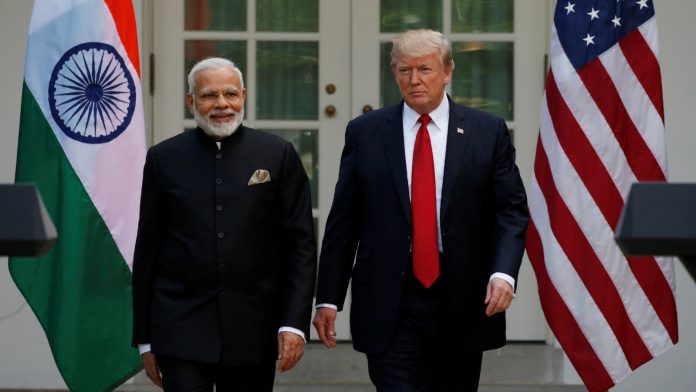
U.S. Treasury Secretary Scott Bessent on Friday indicated that Washington could roll back an additional 25% tariff imposed on Indian goods, pointing to a sharp fall in India’s purchases of Russian crude oil as evidence that U.S. pressure is having the intended effect.

Speaking in an interview with Politico at the World Economic Forum in Davos, Bessent said the collapse in Indian refinery purchases of Russian oil had validated the Trump administration’s strategy of using tariffs as leverage.

“Indian purchases by their refineries of Russian oil have collapsed. So that is a success,” he said.

While stressing that the additional 25% tariffs linked to Russian oil imports remain in place, Bessent added that he could “imagine there is a path to take them off,” a comment that markets and policymakers quickly read as an opening for tariff relief.

How trade tensions escalated

The dispute traces its roots to the geopolitical fallout from Russia’s invasion of Ukraine and the West’s subsequent effort to restrict Moscow’s energy revenues. While the U.S. and Europe moved to impose sweeping sanctions on Russian oil, India adopted a more pragmatic stance, sharply increasing its purchases of discounted Russian crude from 2022 onward. That strategy helped cushion India against global energy price shocks and inflation, but it also placed New Delhi at odds with Washington’s broader sanctions regime.

Tensions reached a new peak in August, when President Donald Trump doubled tariffs on Indian goods to 50%. The increase included a specific 25% levy explicitly tied to India’s continued imports of Russian oil. The White House framed the move as both an economic and strategic response, arguing that India’s purchases were indirectly helping to finance Russia’s war effort.

Trump warned at the time that tariffs could rise further if India failed to change course, underscoring his administration’s willingness to weaponize trade policy in pursuit of geopolitical goals. The tariffs hit a wide range of India’s exports and raised concerns about longer-term access to the U.S. market, one of its most important trading partners.

But recent data suggest India has begun recalibrating. Reuters reported on Friday that India’s imports of Russian oil in December fell to their lowest level in two years. As Russian volumes declined, supplies from OPEC producers rose, pushing OPEC’s share of India’s crude imports to an 11-month high.

That shift has been closely watched in Washington, where officials have argued that sustained pressure could eventually alter even large, price-sensitive energy markets. Bessent’s comments indicate the administration sees the December data as confirmation that tariffs and political pressure are influencing Indian refinery behavior.

Still, the reduction does not mean India has abandoned Russian oil entirely. Analysts note that refiners remain sensitive to price differentials and supply reliability, and future import patterns will depend on global oil prices, freight costs, and the availability of alternative supplies.

What tariff relief would mean

Any rollback of the additional 25% tariff would be significant for India’s exporters, who have faced higher costs and uncertainty since the August escalation. It would also mark a rare instance of the Trump administration signaling a willingness to ease tariffs in response to policy changes by a trading partner, reinforcing the idea that tariffs are being used as negotiating tools rather than permanent barriers.

Easing tariffs could help the U.S. stabilize relations with India at a time when Washington is seeking to deepen strategic and economic ties in the Indo-Pacific. India is a key partner in efforts to counterbalance China’s influence, and prolonged trade friction risks complicating that broader agenda.

But despite Bessent’s conciliatory tone, there is no immediate timeline for lifting the tariffs, and the final decision rests with President Trump. U.S. officials have repeatedly emphasized that trade measures tied to national security and foreign policy will be reviewed cautiously and incrementally.

However, Bessent’s statement indicates that Washington believes its pressure campaign has delivered results, and India’s recent oil import data have strengthened the case for at least partial relief. Analysts note that what will follow will depend on whether the administration is satisfied that India’s shift away from Russian crude is durable—and politically defensible at home.


Partnerships and Democratic Erosion in Nigeria?

0

Abstract
This article examines the evolution of Nigeria–China political and economic relations and situates them within Nigeria’s contemporary democratic trajectory. While Nigeria remains constitutionally a multiparty democracy, recent patterns, mass political defections, executive–legislative convergence, weakened opposition, and selective federal pressure on non-aligned states suggest a drift toward de facto one-party dominance. The paper argues that although there is no evidence of direct institutional exportation of China’s one-party system to Nigeria, there is a concerning convergence in governance behavior and elite incentives that mirrors dominant-party and authoritarian development models. This convergence raises critical questions about accountability, opposition viability, and democratic resilience in Nigeria.

Outline

  1. Introduction
  2. Conceptual Framework: Democracy, Party Competition, and Foreign Influence
  3. Nigeria’s Domestic Political Landscape: From Competitive Multipartyism to Party Convergence
  4. China’s Governance Model: Influence Without Formal Export
  5. Structural Abnormalities in Nigeria’s Political System
  6. Executive Power, Federal Pressure, and Punitive Federalism
  7. Correlation, Convergence, and Democratic Erosion
  8. Implications for Accountability and Democratic Choice
  9. Conclusion
  10. Recommendations for Further Research

1. Introduction

Nigeria, Africa’s most populous nation, formally transitioned to civilian democratic rule in 1999 with a constitutional commitment to multiparty competition, separation of powers, and federalism. Over the past two decades, Nigeria has also deepened its economic and diplomatic engagement with the People’s Republic of China, which is now one of its largest trading partners and a major financier of infrastructure and development projects.
Concurrently, Nigeria’s domestic political environment has undergone a significant transformation. Observers increasingly note the erosion of opposition strength, mass defections into the ruling All Progressives Congress (APC), and growing alignment across the executive, legislative, and judicial arms of government. This article interrogates whether these developments represent routine political realignment or a structural shift toward de facto one-party dominance, and whether international partnerships?-?particularly with China?-?interact with domestic incentives to reinforce this trajectory.

2. Conceptual Framework: Democracy, Party Competition, and Foreign Influence

2.1 Democratic Competition
A functional democracy is characterized not merely by elections, but by:
Competitive political parties
Credible opposition
Institutional checks and balances
Accountability through debate, oversight, and alternation of power

Opposition is not a threat to democracy; it is its operational core.

2.2 One-Party System vs. One-Party Dominance
A critical distinction must be made:
One-party system: Only one party is legally permitted to govern (e.g., China).
One-party dominance: Multiple parties exist legally, but one party controls power so comprehensively that opposition becomes ineffective.

Nigeria constitutionally rejects the former, but emerging political patterns increasingly resemble the latter.

3. Nigeria’s Domestic Political Landscape: From Competition to Convergence

3.1 APC Dominance Across Institutions
Since 2015, the APC has consolidated power through:
Control of the presidency
Legislative majorities
Influence over key judicial appointments

What distinguishes the current phase is not electoral victory alone, but systemic convergence, where institutional resistance diminishes rather than intensifies.

3.2 Mass Political Defections as a Structural Red Flag
In a healthy democracy:
Opposition gains ground when the ruling party underperforms
Politicians lose elections; they do not abandon parties en masse

Nigeria is experiencing the reverse:
Governors defect mid-term without an electoral mandate
Senators and Representatives abandon opposition platforms after elections
Opposition parties are hollowed out, not defeated

This is not ideological realignment. It is political survival behavior, driven by incentives tied to federal power and access to state resources.

4. China’s Governance Model: Influence Without Formal Export

China operates under a constitutional one-party system led by the Chinese Communist Party (CCP). There is no evidence that China is formally exporting this system to Nigeria, nor rewriting Nigeria’s constitution.
However, influence does not require direct transplantation.
China’s governance philosophy emphasizes:
Stability over pluralism
Development over accountability
Centralized authority over institutional contestation

These ideas become influential when political elites begin to normalize them as “efficient governance,” especially in environments where opposition is framed as obstruction rather than oversight.

5. Structural Abnormalities in Nigeria’s Political System

The scale and direction of Nigeria’s political convergence are not normal within a multiparty democracy:
Political actors defect toward power, never away from it
Opposition does not recover through elections
Legislative debate weakens rather than sharpens
Party loyalty becomes a prerequisite for political relevance

This pattern signals coercive consolidation, not democratic persuasion.

6. Executive Power, Federal Pressure, and Punitive Federalism

A further indicator of democratic erosion is the selective treatment of opposition-controlled states:
Reduced federal cooperation
Administrative bottlenecks
Politicized anti-corruption pressure
Fiscal and institutional isolation

This creates a system of punitive federalism, where governance stability is conditioned on party alignment. The implicit message is clear:
Join the ruling party or face destabilization.
Such mechanisms are common in centralized or dominant-party systems, where conformity is enforced administratively rather than electorally.

7. Correlation, Convergence, and Democratic Erosion

It is analytically incorrect to claim simple causation between China–Nigeria relations and Nigeria’s political trajectory. However, it is equally misleading to ignore convergence.
Foreign partnerships can:
Empower ruling elites economically
Reduce dependence on domestic accountability
Normalize governance models that deprioritize opposition

Nigeria’s democratic erosion is primarily domestically driven, but external partnerships may reinforce elite incentives that weaken democratic contestation.

8. Accountability Without Opposition Is an Illusion

With:
The executive, legislature, and judiciary are aligned
Minimal parliamentary resistance
Politically cautious courts
Economically pressured media

Nigeria risks becoming a consensus state, where decisions are negotiated within elite circles, and elections merely ratify outcomes.
In such systems:
Corruption becomes systemic
Debate is replaced by loyalty signaling
Elections persist, but choice disappears

Democracy without choice is not democracy.

9. Conclusion: A Silent Transition

Nigeria is not officially a one-party state. But de facto one-party dominance?-?driven by elite convergence, federal pressure, and weakened opposition?-?represents a silent democratic transition. China’s influence is not constitutional imitation; it is behavioral normalization. It shapes what political elites consider acceptable, efficient, and legitimate.
If current trends continue:
Opposition will exist largely in name
Accountability will erode in practice
Democracy will survive primarily as branding

By the time the transition is openly acknowledged, institutional closure may already be complete.

10. Recommendations for Further Research

Further study should include:
Longitudinal data on party defections across electoral cycles
Interviews with defecting politicians on incentive structures
Comparative analysis with other dominant-party states
Examination of foreign financing, elite networks, and governance norms

Bitcoin’s Price Has Been Largely Flat in the Short Term

0

According to reports from BeInCrypto, Bitcoin’s price has been largely flat in the short term hovering around levels like $89,000–$93,000 in some market updates and down roughly 6% over the past week.

While the surface looks calm, underlying metrics show a sharp 61% surge in selling pressure within a single day. This spike is part of broader concerns, with at least four aligned risk factors mentioned across sources.

Accelerated selling from long-term holders often called “old hands” or HODLers distributing coins faster than usual. Formation of a bearish chart pattern potentially signaling a reversal or consolidation breakdown.

Other stacking risks, such as potential ETF outflows, supply overhangs capping upside like resistance near $98,000+ per some analysts like Glassnode, or broader market sentiment shifts.

The article frames this as a “warning” for BTC, suggesting these combined signals could lead to increased volatility or further downside pressure if key support levels fail. However, Bitcoin remains in a relatively neutral/stuck position overall, with no immediate dramatic crash—but the alignment of these factors is raising caution among traders and analysts.

Crypto markets move quickly, and this reflects sentiment around late January 2026. Always cross-check current prices and on-chain data via Glassnode, CryptoQuant for the latest, as these are not financial advice.

The 61% spike in selling pressure primarily from long-term Bitcoin holders, often called “HODLers” or wallets holding BTC for over a year is a notable short-term warning signal, but its implications depend on broader context, market dynamics, and whether other supportive factors emerge.

Accelerated selling by long-term holders This is the core of the 61% daily jump, with reports of long-term holders dumping significant volume e.g., one source noted ~122K BTC worth ~$11B in a single day, though exact figures vary.

Long-term holders typically sell during euphoria or profit-taking phases. A sudden acceleration can signal waning conviction among diamond hands, potentially leading to cascading sales if short-term holders panic. In past cycles, heavy LTH distribution has preceded corrections.

If this persists, it adds downside momentum and could push BTC toward lower supports like $80K–$85K or even deeper if momentum builds. Analysts mention potential reversal patterns or breakdowns in consolidation ranges, with BTC stalling around $89K–$90K after failing higher resistances.

If BTC breaks key supports, it could trigger technical selling from algos, leveraged traders, and stop-loss cascades. This amplifies volatility and risks a deeper pullback, potentially testing 2025 cycle lows or worse in a worst-case “full-cycle washout” scenario some analysts fear echoing 2022 bear market signals.

ETFs recently logged their weakest weeks e.g., multi-day negative streaks totaling billions in outflows, with hedge funds retreating amid macro jitters. ETFs have been a major inflow driver post-2024 approvals. Reduced or negative flows remove a key buying cushion, leaving price more vulnerable to seller dominance.

This could prolong sideways-to-down action and delay any rebound until institutional demand returns via macro shifts like rate cuts or renewed risk-on sentiment. Influx of speculative / short-term buyers replacing sellers Newer or shorter-term holders are stepping in but often at higher risk of flipping if price dips.

This creates a weaker holder base—less committed capital that could sell quickly on any dip, turning potential support into resistance. It raises the odds of volatility spikes or choppy trading rather than a clean recovery.

Increased downside risk and volatility. BTC remains “stuck in neutral” around $89K (flat daily, -6% weekly in recent updates), but the alignment of these signals suggests a higher probability of a breakdown than a breakout. If supports hold and inflows rebound, this could prove a shakeout of weak hands before continuation.

If LTH selling eases and ETF flows turn positive again, the spike might be dismissed as temporary profit-taking in a still-bullish macro (post-halving cycle). But persistent stacking of risks could lead to a more meaningful correction— 10–30%+ drawdown common in crypto.

Some on-chain metrics show “sharks” (large accumulators) buying dips, and historical spikes in sell pressure have occasionally marked local bottoms/exhaustion. Broader sentiment isn’t fully bearish yet—no mass panic.

Echoes of 2022-style signals (e.g., full-cycle washouts) if macro headwinds (rates, regulation, risk-off) intensify. Crypto remains highly unpredictable—always verify latest on-chain data, ETF flows, and price action. This isn’t financial advice; markets can shift rapidly.

U.S Spot Bitcoin Recorded $1.42B in Net Inflows During the Week Ended January 16, 2026

0

US spot Bitcoin ETFs recorded $1.42 billion in net inflows during the week ended January 16, 2026. This marked their strongest weekly performance since early October 2025.

BlackRock’s iShares Bitcoin Trust (IBIT) led the pack with about $1.03 billion of those inflows. The total came amid a broader surge in digital asset investment products, which saw around $2.17 billion in net inflows overall including Bitcoin and others like Ethereum.

This occurred even as Bitcoin’s price showed signs of cooling or pullback in parts of January 2026, with reports of volatility, trade tensions, and BTC trading in ranges like the mid-to-high $90,000s e.g., approaching or hitting near $98,000 earlier in the month before some corrections.

The inflows reflect renewed institutional demand and bullish sentiment, contrasting with recent outflows in following days/weeks, significant redemptions reported mid-to-late January as markets de-risked. ETF flows can decouple somewhat from short-term price action due to factors like arbitrage, long-term positioning, or broader macro influences.

This week’s strong inflows highlight persistent interest in Bitcoin exposure via regulated vehicles despite any near-term price softness.

The $1.42 billion in net inflows into US spot Bitcoin ETFs during the week carries several key implications, especially in the context of recent market dynamics. This surge—led heavily by BlackRock’s IBIT which captured around $1.03 billion alone—signaled a strong rebound in investor appetite after earlier periods of outflows or softer flows.

It reflected optimism around Bitcoin as a macro asset, possibly driven by factors like post-election positioning, expectations around regulatory clarity, corporate adoption trends, or broader risk-on sentiment earlier in the month. The inflows helped push Bitcoin toward highs near $97,000–$98,000 in mid-January, showing that ETF vehicles remain a primary channel for large-scale capital entry into BTC.

A notable aspect is that these massive inflows occurred even as Bitcoin’s price showed signs of cooling or pullback in parts of January. ETF flows often reflect longer-term positioning like institutions building exposure via regulated products rather than purely reacting to daily price swings.

This can create temporary divergences: heavy buying through ETFs supports underlying demand and can absorb selling pressure, but doesn’t always translate to immediate parabolic price moves if broader macro factors like trade tensions, de-risking on Wall Street, or profit-taking dominate.

The bullish signal from that week has been overshadowed by a dramatic shift: since around January 20–21, spot Bitcoin ETFs have seen heavy outflows cumulative net outflows exceeding $1.3–$1.7 billion in just a few days by January 23–24, with no inflows on several trading days.

This contributed to Bitcoin trading in the $88,000–$90,000 range recently caround $89,500 as of January 24. The rapid flip highlights:Increased sensitivity to macro risks — Reports point to Wall Street de-risking ahead of potential trade wars, tariff concerns, or other uncertainties, leading hedge funds and institutions to reduce exposure quickly.

Profit-taking or rotation — After the mid-month rally fueled by inflows, some participants may have locked in gains, amplifying outflows. ETF data can swing sharply week-to-week, but persistent institutional interest via products like IBIT, FBTC, etc. remains a structural tailwind over multi-month horizons.

Historically, sustained or large ETF inflows have preceded periods of BTC accumulation and upward price momentum, especially when accompanied by on-chain strength or halving-cycle dynamics still in play post-2024 halving.

The quick reversal to outflows underscores that crypto remains highly correlated with risk assets and sensitive to traditional finance headlines. If macro conditions stabilize or improve, inflows could resume and support a rebound.

BlackRock dominance — IBIT’s outsized share of inflows reinforces its position as the go-to vehicle for traditional finance entry into Bitcoin, potentially accelerating mainstream adoption.

Overall, $1.42 billion week was a powerful display of demand and a reminder of Bitcoin’s growing institutional legitimacy through ETFs. However, the subsequent outflows illustrate the asset’s volatility and dependence on broader sentiment. The structural inflow trend over 2025–2026 remains strongly positive in aggregate.

Crypto Will Become Native Currency of AI Agents 

1

“Crypto Will Become the Native Currency of AI Agents” has gained significant traction recently, especially following comments from prominent figures in the crypto space at the World Economic Forum in Davos.

Changpeng Zhao (CZ), former CEO of Binance, stated during a panel: “The native currency of AI agents will be cryptocurrency. Blockchain will become the most natural technical interface for AI agents.”

This view was echoed by others, including industry leaders from Circle who emphasized stablecoins for AI bot payments, former PayPal executives predicting Bitcoin’s role, and Coinbase discussions on agentic commerce.

Why This Narrative Makes Sense

AI agents — autonomous systems that can plan, act, transact, and even earn/spend on behalf of users or themselves — face key challenges with traditional finance: Speed and scale — Human-centric systems like credit cards or bank transfers involve friction.

AI-driven economies could involve billions of micro-transactions per second like machine-to-machine payments for compute, data, or services. Agents need money that can be scripted, escrowed, or conditional— smart contracts handle this natively.

No weekends, no geography limits, no KYC per transaction for pure machine interactions. Agents can’t realistically hold credit cards or fiat bank accounts in traditional systems, but they can control wallets and private keys.

Crypto especially blockchains with low fees, fast settlement, and token standards fits as “digital-native” money. Stablecoins are frequently highlighted as the practical choice for value stability, while volatile assets like Bitcoin could serve as a store-of-value layer or reserve.

Projects and protocols are building exactly this: agent payment standard like x402 for AI-agent commerce, machine-to-machine micropayments on chains like Mintlayer or others, and autonomous agents already earning/spending tokens, examples in gaming, DeFi, or experimental bots.

Predictions date back earlier 2023–2025 forecasts from Bitwise, Animoca Brands, and others, but Davos 2026 amplified it into mainstream finance and crypto discourse. Some estimate this convergence could drive massive value — one report referenced a potential $20tn opportunity as AI transforms crypto use cases beyond speculation into real infrastructure.

Many including some responding to CZ argue stablecoins (USDC, USDT, etc.) will dominate for everyday agent transactions due to predictability, while Bitcoin/ETH serve as higher-level assets. Governments may impose rules on autonomous payments; traditional rails could compete.

Low-cost, high-throughput layers (Solana, Ethereum L2s, specialized chains) are better positioned than high-fee networks for micro-transactions. Not everyone agrees fiat rails will be fully displaced — hybrids might emerge.

The thesis is compelling and increasingly discussed in 2026: as AI agents become economic actors, crypto’s properties position it uniquely as their “native” medium of exchange. Whether it’s Bitcoin specifically, stablecoins, or broader crypto rails remains debated — but the direction feels directionally correct to many builders and investors in the space.

If you’re bullish on this intersection, projects focused on AI agents + payments, verifiable compute, or on-chain automation could be worth watching. Agents become autonomous economic actors with their own wallets, earning/spending independently.

This could democratize value creation but also concentrate power if a few platforms dominate agent orchestration. While CZ said “crypto,” many including Circle’s CEO predicting “billions of AI agents” using stablecoins in 3–5 years argue volatility makes assets like BTC/ETH unsuitable for routine payments.

Stablecoins offer predictability for agents negotiating fees or paying per-token usage, while native tokens e.g., on Solana or Ethereum L2s handle gas and incentives. Agents need permissionless identity (wallets via private keys), instant micropayments, and smart contract escrow/verification.

Projects building agent wallets, launchpads like Virtuals Protocol, or decentralized intelligence markets could see explosive growth. Conversely, high-cost networks risk being sidelined for agent-scale txns.

AI agents could interact with tokenized real-world assets autonomously, blurring lines between digital and physical economies.

Who is responsible if an agent makes a bad trade, spends funds erroneously, or causes harm? Regulatory uncertainty around autonomous payments is already noted — governments may demand oversight, KYC for agent creators, or rules on “machine money.”

Some worry this betrays crypto’s decentralization promise if centralized AI platforms control agents. Crypto’s pseudonymity suits agents, but regulators might push for traceable flows in an AI-driven economy to prevent illicit use.

This narrative reframes crypto beyond speculation: real utility as infrastructure for the next economic layer. It could drive sustained demand for base assets (BTC as reserve), stablecoins (USDC/USDT volume surges), and AI-crypto intersection tokens.

Crypto’s properties (programmability, borderlessness, 24/7 operation) make it uniquely suited, but success hinges on stable, scalable infrastructure, thoughtful regulation, and avoiding centralization pitfalls.