DD
MM
YYYY

PAGES

DD
MM
YYYY

spot_img

PAGES

Home Blog Page 5201

Nigeria 2023: Jonathan’s Response Over Calls To Contest for Presidency

0

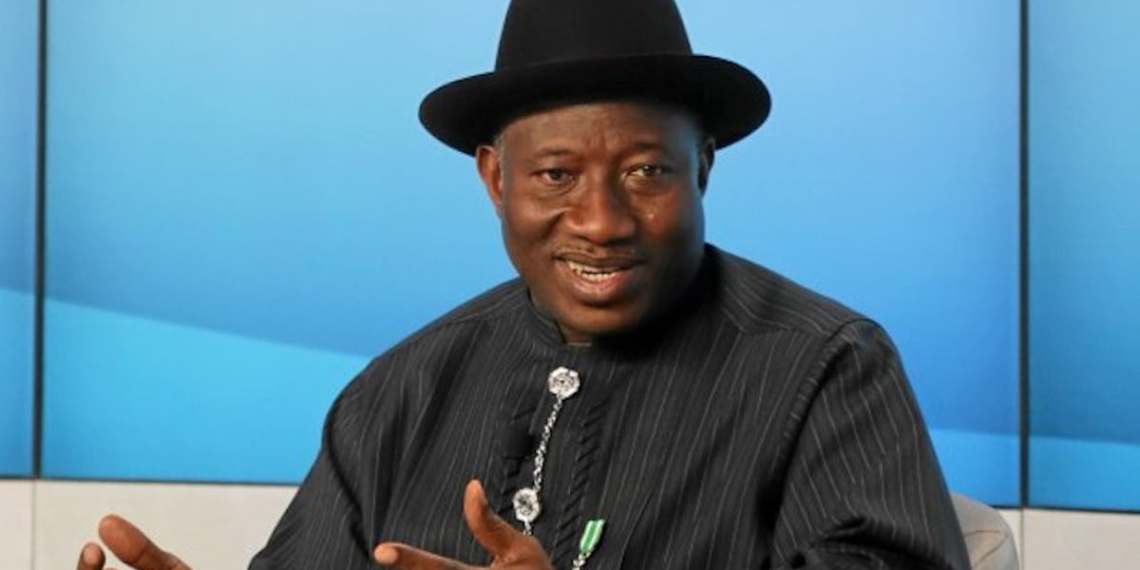
The former Nigeria’s President, Goodluck Jonathan, said he was yet to decide whether or not to yield to pressure from different groups urging him to contest the 2023 presidential election.

He disclosed this on Friday, 22nd April 2022 in Abuja when his committee of friends and some youths from across the country visited him at his Foundation Office in Maitama, Abuja.

Jonathan stated that the visits, especially by the youth, showed they were interested in the political affairs of the country. He therefore urged them to be interested and be key players in the country’s politics to enthrone good governance.

“As youths, we must get involved in the country’s political process and luckily the law of ‘Not too Young to Run’ bill, has made it clear that youths can contest almost every position in government.

“We will continue to encourage youths to get involved in the country’s political process. And as long as many youths get involved in the political process, we will be able to get the government we want.’’ he opined.

Jonathan expressed optimism that with youth involvement in politics, the enthronement of good government would effectively address the country’s current challenges as possible. He, however, said that though some of the country’s present challenges went way back but could be dealt with from a united front.

On whether he would declare for the 2023 presidential election, the erstwhile president responded that the political process was ongoing.

“Yes, you are calling me to come and declare for the 2023 presidency. I can’t tell you that I am declaring, but the political process is ongoing. Just watch out.

“But the key role you must play is to pray that Nigeria gets a president that will carry the young people along and work very hard to see that some of the country’s problems raised are dealt with. I believe that collectively, we can work together.’’ he added.

The leader of Youth Compatriots of Nigeria, Mayor Samuel while speaking with journalists at the event, said the youth were prepared to support Jonathan to ensure that he emerged as the country’s next president come 2023.

He decried the spate of insecurity in parts of the country and the dwindling economy, saying there was a need to address the situation.

According to him, the Nigeria Peoples Party is ready to give Jonathan its presidential ticket to contest the 2023 presidential election. He said the party though not registered yet, belonged to the downtrodden, adding any party that gave its presidential ticket to Jonathan would be supported by all Nigerians.

“The secret to good governance is what Nigeria requires at the moment. Jonathan had been tested and proven, and we are ready to follow him.’’ he said.

It’s noteworthy that the Coalition of Northern Youths and other youth bodies and women groups from across the federation were parts of the visit. The youths were seen chanting ‘run Goodluck, run’ and they were also seen holding placards that read ‘declare now, Goodluck, you must run’ you are wasting our time, declare now’ among other descriptions.

In view, one of the youth leaders, Jonathan Akumobi said they came to compel the past president to run, because they believed in his capabilities, given his experience.

Akumobi further stated that a lot of challenges being experienced in all sectors in Nigeria required an experienced hand like Goodluck Jonathan to tackle.

“We are tired of the killings, of the insecurity, our schools are closed because of the strike, the national grid has been collapsing, everything in Nigeria is challenged.

“The prices of food items have gone up. During Jonathan’s administration, we were buying a bag of rice for N7,000. Today, it is N35,000. We need Jonathan back to help us return to the good old days because we are tired of the excuses.’’

Another speaker, Ibrahim Saki said they were calling on Jonathan to run, so he could rescue the country. He said, “We need Jonathan to turn things around, we need him back to tackle all the things that have gone bad in the country.

“Please we need you back, Nigerians are tired. Please come back and continue your good luck, we are sorry for all the things we said and did then.’’ he landed.

It would be recalled that Jonathan was Nigeria’s President between 2010 and 2015 when he lost power to the incumbent president, Muhammadu Buhari, in that year’s presidential election.

There were speculations some months ago that Buhari’s party, the All Progressives Congress (APC) was wooing the former president to run for the position on its platform.

In the period under review, Jonathan won his elections and piloted the affairs of the country under the aegis of the People’ Democratic Party (PDP). He has not, however, been active in the party since he left power.

If I were in Jonathan’s shoes, I would quietly retire from active politics and return to my family. It’s therefore preposterous to advise him to honourably go home and rest, rather than contemplating succumbing to the myriad of calls from these Nigerians who are yet to face the realities.

The reality is that Jonathan can never do any magic towards reviving Nigeria’s epileptic economy. Hence, he is definitely not the answer to the ongoing economic quagmire in the country.

Nigeria as a country found herself in this mess, simply because the Buhari-led administration lacks the needed political will as well as being surrounded by a bunch of ineptitudes. Had it been the present government that did as promised, or expected, we would have realized that the immediate past administration led by Jonathan never did any wonders.

So, asking Jonathan to return to power, is just like taking Nigeria back to Egypt. What the country needs right now is fresh blood that’s loaded with the intent to overhaul the system. QED. 
Nigeria’s Big Own-Goal As President Buhari Opens 4 More Land Borders

0

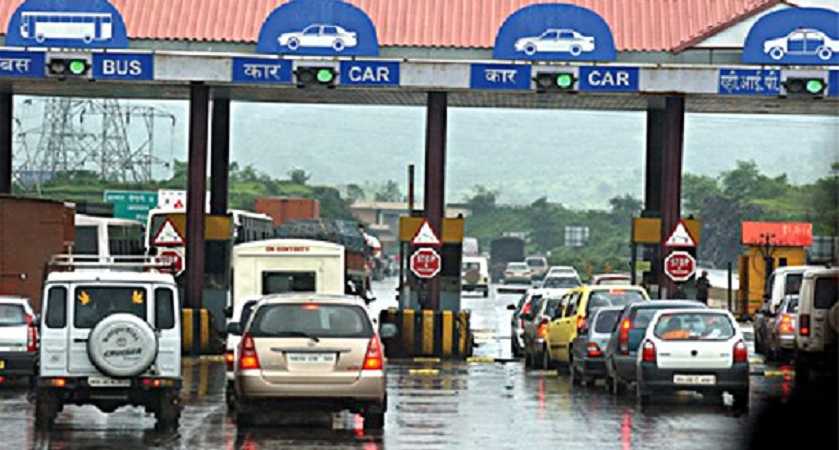
Congratulations Nigeria: “Nigerian president Muhammadu Buhari has approved the reopening of four additional land borders, three years after they were closed. The approval was announced through a circular signed by El Edorhe, deputy comptroller-general of Nigerian Custom Service (NCS), on behalf of his principal.” I never supported that land border closure (if it is broken, fix it!) because the bad actors causing troubles in Nigeria NEVER have to use them. A vast domain of the national border is porous, meaning that closing the few legal borders could not have changed any trajectory on handling insecurity. 

But the land border closure was significantly impactful in many other ways. First, before the land border closure, banditry was not an issue. Of course, Boko Haram was there. But with the land border closure, we truncated decades, if not centuries, of trade routes, across the nation, distorting commerce at scale. The implication is massive: poverty rose.

From my non-scientific data, I posit that EVERY community in Nigeria was severely affected. How? Merchants lost their businesses and that affected trade in communities, and most rural areas. As that happened, poverty rose. Most small manufacturers who serve neighbouring markets folded. As those entities struggled, the ripple effect, created a monster that is called “banditry” now, which rose out of penchant for economic survival before it metamorphosed into pure criminality.

The borders are now open; it would be nice if the government can publish a white paper on what was achieved. Without one, I will say that it was a big OWN-GOAL to the Nigerian people.

Headline inflation as of March 2022 is at 15.92 percent year-on-year, according to data published by Nigerian Bureau of Statistics (NBS). Though there is a little decline compared to the 18.17 percent recorded in the same period last year, the inflation, which was compounded by covid-induced economic strains, means that the Nigerian hunger crisis is far from over.

Over 100 million Nigerians faced food insecurity as of the end of 2020. The United Nations Food and Agriculture Organization (FAO), in its 2021 report, put the number of moderately or severely food insecure people in Nigeria at 116 million people, a 75 percent increase from the 66.1 million people recorded in 2016. FAO said that about 19.4 million Nigerians will face food insecurity between June and August 2022.

Nigeria Reopens 4 Additional Borders – But What Did the Closure Achieve?

Nigeria Reopens 4 Additional Borders – But What Did the Closure Achieve?

1

Nigerian president Muhammadu Buhari has approved the reopening of four additional land borders, three years after they were closed.

The approval was announced through a circular signed by El Edorhe, deputy comptroller-general of Nigerian Custom Service (NCS), on behalf of his principal.

The four borders approved to be reopened are scattered across four geo-political zones of the country.

“Sequel to the presidential directive dated 16 December, 2020, granting approval for phased reopening of land borders namely; Mfum, Seme, Illela and Maigatari borders across the country, I am directed to inform you that four additional borders listed below have been approved for re-opening: Idiroko border post, Ogun state (south-west zone); Jibiya border post, Katsina (north-west zone); Kamba border post, Kebbi state (north-west zone); and Ikom border post, Cross River state (south-south zone),” the circular reads.

“Consequently, all customs formations and JBPTs are to take note and ensure that proper manning takes place in compliance with extant operational guidelines,” it added.

The federal government of Nigeria had in 2019, closed its land borders. A decision it said was to curtail the inflow of illicit arms and contraband goods, especially rice, into the country. The federal government said it aimed to boost local rice production by stopping smugglers from saturating Nigerian markets with the already-banned foreign rice.

The border closure, which resulted in inflation and consequently massive hunger across the country, has failed to achieve its aim years after it was ordered. Terrorism and other forms of criminality have increased in the north and some southern parts of Nigeria. As of the first quarter of 2022 alone, a total of 1,884 deaths emanating from armed incidents across the country have been reported, according to SBM Intelligence. Compared to 1071 killed in the same quarter 2019, there is an uptick in armed violence spurred by the proliferation of illicit arms.

Headline inflation as of March 2022 is at 15.92 percent year-on-year, according to data published by Nigerian Bureau of Statistics (NBS). Though there is a little decline compared to the 18.17 percent recorded in the same period last year, the inflation, which was compounded by covid-induced economic strains, means that the Nigerian hunger crisis is far from over.

Over 100 million Nigerians faced food insecurity as of the end of 2020. The United Nations Food and Agriculture Organization (FAO), in its 2021 report, put the number of moderately or severely food insecure people in Nigeria at 116 million people, a 75 percent increase from the 66.1 million people recorded in 2016. FAO said that about 19.4 million Nigerians will face food insecurity between June and August 2022.

Last year, Nigeria’s Minister of Finance, Zainab Ahmed, acknowledged that the federal government’s decision to close the border contributed to the country’s inflation.

The escalation of armed violence, resulting in killings across Nigeria, has been largely attributed to Nigerian porous borders that significantly aided the smuggling of arms into the country. It has also significantly undermined efforts to produce food locally as farmers, particularly in the north, are living at the mercy of terrorists.

With the proliferation of insecurity and rising inflation, Nigerians have questioned the wisdom behind the government’s decision to close the borders. “It has only made a bad situation worse,” they said.

Yakubu Dogara’s Defection And The Court’s Verdict

0

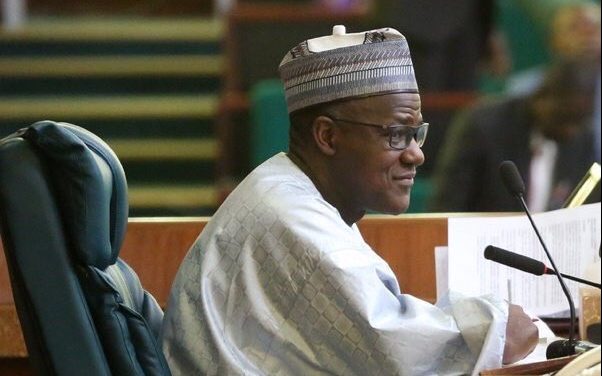
A Federal High Court in Abuja, Nigeria, on 22nd April 2022, sacked the immediate past Speaker of the country’s Federal House of Representatives, Mr. Yakubu Dogara from the National Assembly (NASS) and consequently declared his seat vacant.

It’s noteworthy that Mr. Dogara, who currently represents Bogoro/Dass Federal Constituency of Bauchi State, was the Speaker of the House of Reps between 2015 and 2019.

In his verdict, the Judge, D.U. Okorowo ruled that Mr. Dogara’s defection from the People’s Democratic Party (PDP) to the All Progressives Congress (APC) was wrong and meant he should vacate the legislative seat.

It could be recalled that Mr. Dogara defected to the APC after winning his re-election under the PDP in 2019.

His frosty relationship with his State Governor, Mr. Bala Mohammed, was one of the main reasons he abandoned the PDP, which he joined just recently. He dumped the PDP and returned to his former party, the APC on 24th July 2020.

The erstwhile speaker had earlier in 2018 dumped the ruling party for the main opposition platform due to the political confrontation that ensued for about two years between him and the then governor of Bauchi State, Mr. Mohammed Abubakar.

In a letter of resignation addressed to the Bogoro ‘C’ Ward Chairman of the PDP dated July 24, 2020, Mr, Dogara cited a breakdown of governance in his native State of Bauchi under the administration of of the present Governor, Bala Mohammed whom he said he helped installed as the State’s governor in 2019.

Mr. Dogara disclosed that he could not successfully ask questions about those issues regarding governance without being accused of disloyalty, if he were to remain in the PDP.

He argued that if he abdicated this responsibility of telling the truth to power in Bauchi State, having done the same under the administrations of former Governors Isa Yuguda and Mohammed Abubakar, respectively, he would be the most irresponsible and unprincipled politician in Bauchi State.

Mr. Dogara was elected speaker on the APC platform in 2015. He subsequently decamped, alongside dozens of other federal lawmakers, to the PDP in the build-up to the 2019 general election.

He won his re-election as a lawmaker on the PDP platform but did not contest the speaker’s position, because the APC won the majority seats in the parliament.

After his meeting with President Muhammadu Buhari on July 27, 2020, the then Head of the APC’s interim management committee, Mr. Mala Buni, who also attended the meeting, disclosed that the president was pleased with Mr. Dogara’s defection.

The ruling of the Federal High Court sitting in Abuja wasn’t the first of its kind; it has joined recent verdicts served on similar grounds, such as the one pertaining to the incumbent governor of Ebonyi State, among others.

This pertaining to judgement is indeed a win, win for Nigeria’s democracy, to assert the least. Hence, the apex court in Nigeria – otherwise known as the Supreme Court – is expected to uphold the rulings as regards defections when eventually brought to its jurisdiction.

Wave Secures BCEAO License to Offer Digital Financial Services

0

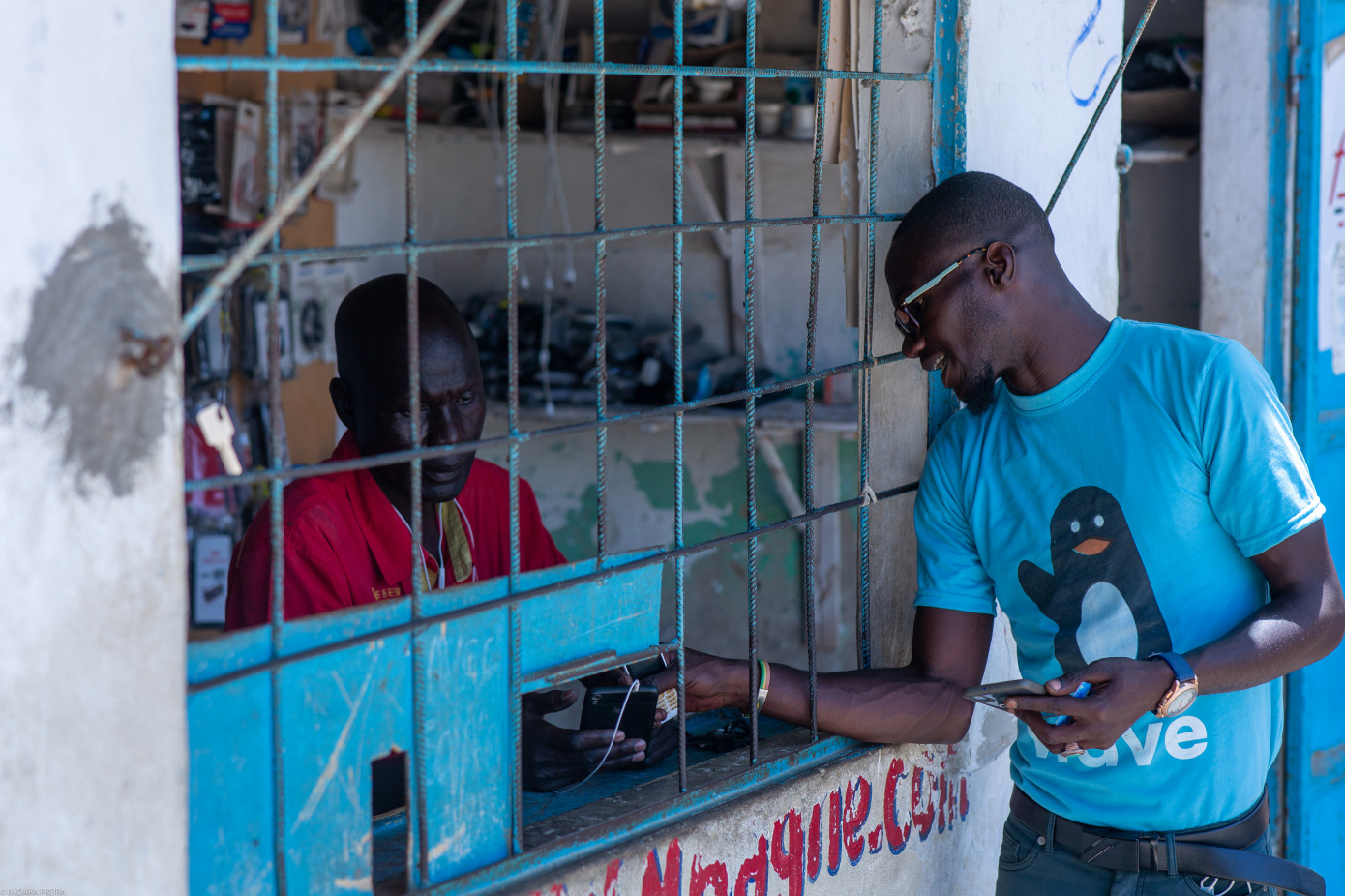
The push for financial inclusion in Francophone West Africa has got a major boost. Wave Digital Finance, a subsidiary of Wave Mobile Money Group (Wave), has been licensed by the Central Bank of West African States (BCEAO) to carry out digital financial services.

Wave’s services are available in eight West African Francophone countries – Benin, Guinea Bissau, Burkina Faso, Côte d’Ivoire, Mali, Niger, Senegal and Togo—that form the West African Economic and Monetary Union (WAEMU).

The company, which offers free bill payments, free cash-in and cash-out and charges only 1% transfer fee, has relied on third-party financial institutions like the United Bank for Africa (UBA) and Ecobank, to render services to its customers that have ballooned in four years because of the company’s service fees, which is roughly 70% cheaper than its competitors’.

“We are excited to receive our E-money issuer license. We are grateful to the BCEAO who has been supportive of our vision to offer radically inclusive and affordable financial services. They have witnessed us grow into the largest mobile money provider in Senegal with over 6 million active users in just 4 years, and that’s only the beginning of customer-first mobile money in WAEMU,” the CEO of Wave Drew Durbin said.

Wave has been a popular choice in WAEMU, and has disrupted the mobile money market in the bloc, forcing mobile-based financial services like Orange to slash its service charges by 50%.

The E-money license by the Central Bank signals a growing recognition of a new age of financial inclusion models led by Fintechs such as Wave.

In addition, it will allow Wave to diversify and offer more financial services like merchant payments, savings, credit, and remittances in collaboration with other partners in the WAEMU financial ecosystem.

Ms. Coura Carine Sene, General Manager for Wave in WAEMU, said, in addition to other benefits, the license will help the startup to compete with other mobile money providers.

“This is a momentous occasion for us. Despite being one of the largest mobile money providers in Senegal and other WAEMU countries, we were limited in what we could offer our customers. We will now be able to compete with other mobile money providers on an equal footing. The shift in the licensing structure will benefit both our customers and agent network in the long run. We expect new products to drive customer growth. Thus, benefiting our customers, while increasing the take-home income of our agents.

“In partnership with the national directions of BCEAO, we hope to extend this license very quickly to the other WAEMU countries so that our entire customer base in the region can benefit equally,” she said.

Securing license in the seven remaining countries of the bloc may be the magic wand that Wave needs to stay ahead of its competitors.