DD
MM
YYYY

PAGES

DD
MM
YYYY

spot_img

PAGES

Home Blog Page 5218

Attend Tekedia Growth Hour with Your Staff and Colleagues

0

During Tekedia Mini-MBA, we schedule Tekedia Growth Hour with groups and corporate participants attending our program. We use the opportunity to discuss, at more specific levels, how some of the frameworks and business models we have studied could be applied in the companies. We do batch this throughout the program. I personally coordinate that via Zoom.

Tekedia Mini-MBA has many group benefits. They include big bulk discounts, brand mentions on Tekedia and other channels, and Tekedia Growth Hour. We want to welcome your company.

 Go here and register your staff, and get them ready for the Growth ahead.

Law, culture, and tradition as the enablers of domestic violence in Nigeria

0

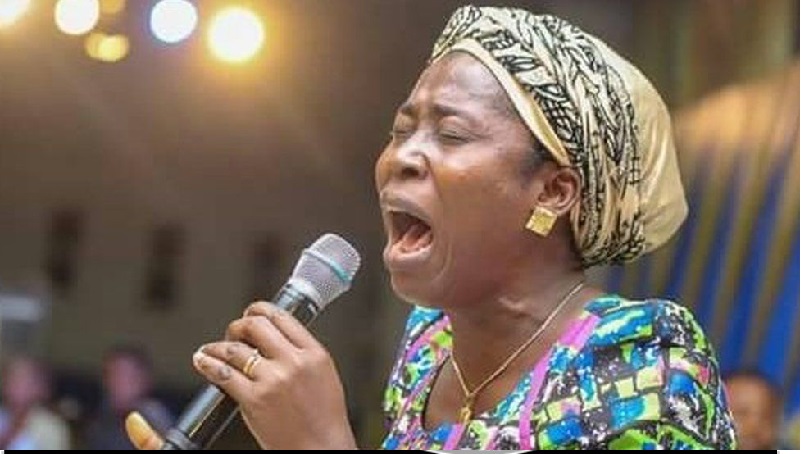
At a time like this where domestic violence is on a high scale, there’s no better time to let our readers know that domestic violence is legal and lawful in some jurisdictions in Nigeria and it is also culturally backed in most traditional societies.

For instance, in the northern part of Nigeria where the law there is the penal code, domestic violence was made lawful by s. 55 of the penal code act, not just in that region in Nigeria, in other regions where Islamic religion is practiced and they follow the Islamic rules, domestic violence is also permitted.

A husband is permitted to flog or beat up his wife for the purpose of correcting or cautioning her. So a man can lawfully beat his wife. It is lawful hence it cannot be tagged as domestic violence but correction.

So the issue with domestic violence is fundamental. Wives are not to be treated as equals or partners to the husband but subordinates who are to be beaten or brutally trained by the husbands.

Also, due to the traditional bride price that is expected to be paid by the husband in the exchange for the wife, then some men feel that they purchased the wife and the wife is their property to be treated however they like. You hear some men making some justification that women are their chattels and never their equal partner. 

For instance, in Igbo land, some women address their husbands as “onye nwem”, meaning “my owner”. This is to say that the wives acknowledge the fact that they are being purchased and owned by their husbands just like every other property.

There is really a great need for the adjustment and amendment of some laws, cultural and religious rudiments of the society for us to ameliorate and put an end to this domestic violence of a thing. Some men are naturally beasts who can beat up and physically assault their wives at the slightest provocation and these cultures and religions permit them to unleash their beast mode on their wives.

I will definitely write much on domestic violence in the coming days because after my last post on it I got a lot of feedback from women who have been suffering in silence; some of these women feel it’s okay for their husbands to beat them as a way of cautioning or correcting them, some of the women are too scared to leave the marriage, some are scared of starting all over, some are considering what people will say. Whatever your reason might be that you are still in that marriage/relationship, remember that it’s better to be alive than to be in that relationship.

Bola Tinubu And His Political Claims To Succeed Buhari As President

1

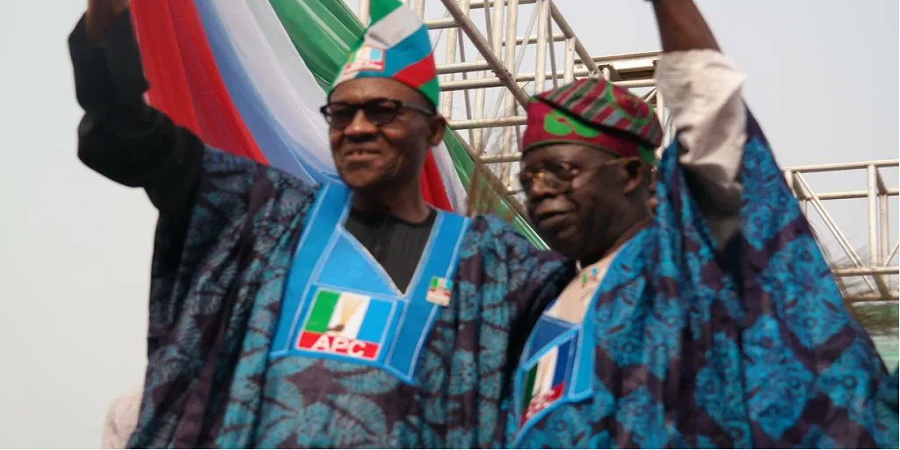
      The former Governor of Lagos State and National Leader of the All Progressives Congress (APC), Sen. Bola Tinubu, on Wednesday, 13th April 2022 gave reasons he was and remained the best candidate to succeed the incumbent President of Nigeria, Muhammadu Buhari come 2023.

     He said he was the ‘courageous person’ who could step in and bring about the needed change and desired development across the country.

     Tinubu, who spoke at a one-day parley between current Speakers and Deputy Speakers of all APC-led States across the country in Lagos State, used the avenue to disclose his presidential bid to the State legislators.

    The event, which had ‘The Legislature, Changing times and Nigeria’s Democratic Journey’ as its theme, saw the presence of countless dignitaries of Nigeria origin.

     He acknowledged the nation was endowed with great human capital to experience a true transformation, but said a premium must be placed on the leadership ability of individuals jostling to run for the position of president.

     Tinubu said, “It is a very challenging time for us in the country and we need to decide the next leadership right. We need to intellectually assess the current situation, and bring in a person with a clear vision and ability to deliver. Accelerated development of our country is all about thinking, doing, and being courageous. I am a thinker and a doer.

     “I was raised with courage and that is what is driving me to push on my vision to create a Nigeria that will work for all. We can build this nation and reverse the carnage. What we need is leadership, the visioner to drive the change we desire. That is why I have presented myself to canvas for your support.”

      The APC national leader said he was prepared to take over the mantle of national leadership legitimately through the ballot, and not make attempts to gain political power passing through the back door.

      He further hinted that he possessed the capacity to truly transform the country, noting his administration as Governor of Lagos initiated many unprecedented steps toward lifting the State’s economy.

     If given the chance to become the President, Tinubu said he would bring his new capability to bear and transform the potential of the country into a reality.

     “As I need Nigeria, the country needs my competence. I have been a good example with a shrewd, daring, and can-do attitude. And I have never lost a single election,” he landed.

     Having perused through these claims, I make bold to say that Tinubu might be quite ‘courageous’ and resourceful as he rightly claimed, but what Nigeria truly needs as a President goes beyond the aforementioned qualities.

     The country doesn’t just need a competent person, but a very sincere and genuine one. The acclaimed giant of Africa isn’t just in need of a dogged individual but someone who is and remains truthful in all ramifications.

     I’m not in any way saying that Tinubu is not trustworthy, but it’s pertinent for the electorate to acknowledge fully that only a truthful Nigerian can usher in the change the country yearns for. So, the teeming Nigerian voters need to go beyond competence and eligibility while seeking a person that can transform the country positively.

    Nigeria has unarguably gone through a lot in recent times, socio-politically and economically, hence she can’t afford to continue in this direction come 2023. The choice lies in the hands of the electorate. 

Tekedia Live – Risk Management

0

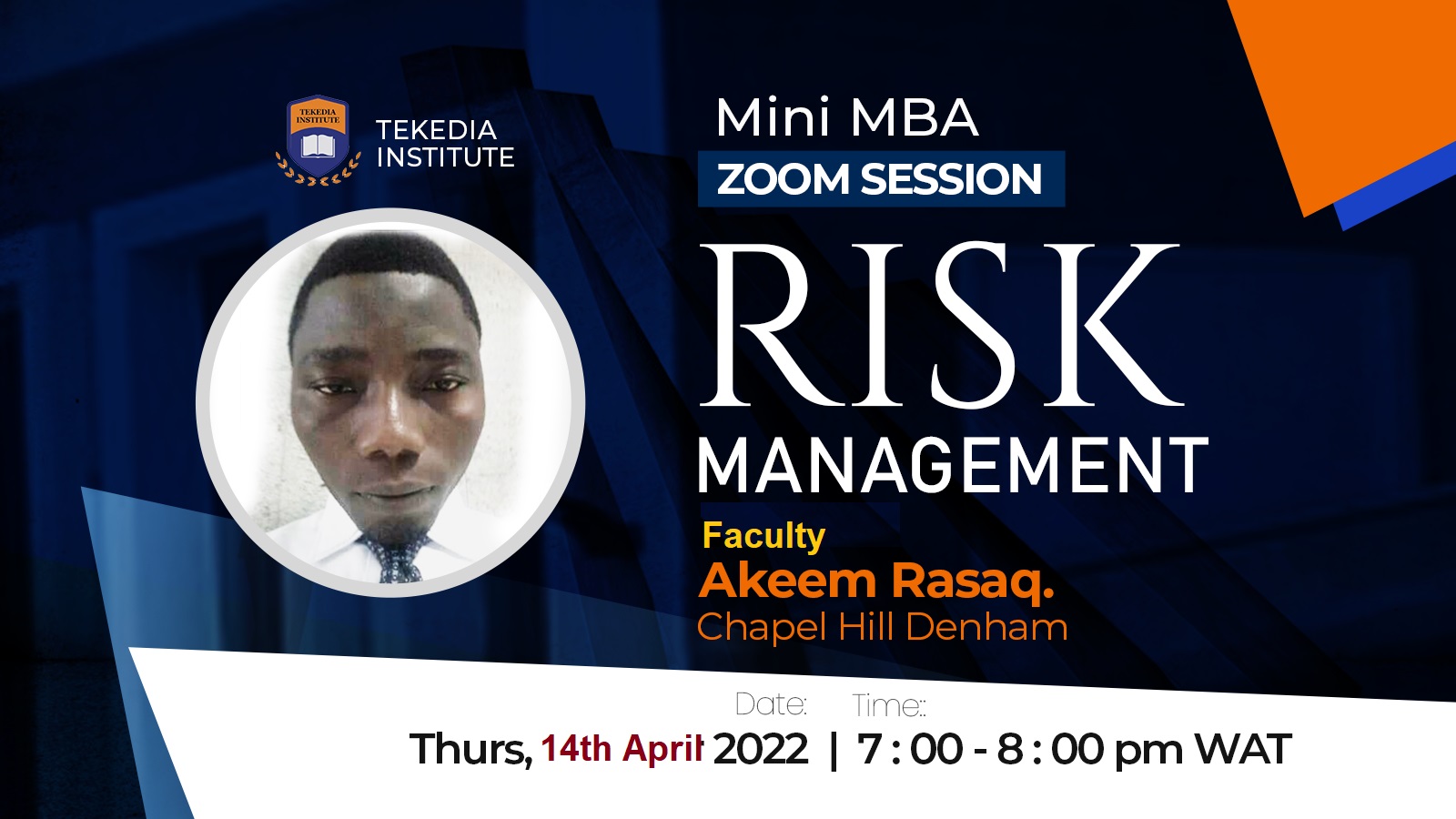
He brings a practical perspective on why risk management must be an integral part of any strategy. He communicates it down to the Onitsha Main market importer and Lagos banker. He worked in Risk Analytics in Ecobank, and served Fidelity Bank as a Risk Analyst and Strategist.

Then, he moved to Sterling Bank where he was a  Market & Liquidity Analyst before  becoming Head Of Risk Management at Chapel Hill Denham, one of Africa’s leading independent investment banking, securities trading and investment management firms.

Akeem Rasaq, BSc, MRM, MScFE, a Tekedia Institute Faculty, holds BSc (Actuarial Science) and Master of Risk Management from University of Lagos. He also holds a Master’s degree in Financial Engineering from WorldQuant University.

He will be live tomorrow at the Institute. Come and understand risk management from one of the zen-masters of risk management.

Tekedia Institute >> learn from the best

Nigeria Approves New Private Varsities As ASUU Strike Continues

0

Penultimate week, precisely on Wednesday, 6th April 2022, the Federal Executive Council (FEC) of Nigeria approved the issuance of provisional licences for the establishment of new 12 private universities across the country.

The Minister of Information and Culture, Mr. Lai Mohammed disclosed this to the State House correspondents at the end of the Council meeting, which was presided over by President Muhammadu Buhari.

According to the minister, the universities in question would be located in Kano, Niger, Gombe, Sokoto, Delta, Abia, and Anambra States as well as the Federal Capital Territory (FCT), Abuja.

He said: “Council approved the memo for the issuance of provisional licences for the establishment of twelve proposed private universities.

“The proposed private universities are Pen Resource University Gombe, Gombe State, Al-Ansar University, Maiduguri, Borno State, Margaret Lawrence I University, Delta State and Khalifa Ishaku Rabiu University Kano, Kano State.

“Sports University Idumuje Ugboko, Delta State, Bala Ahmed University Kano, Saisa University of Medical Sciences and Technology, Sokoto State, Nigerian-British University Hasa, Abia State and Peter University Acina-Onene, Anambra State as well as Newgate University, Minna, Niger State, European University of Nigeria in Duboyi, Abuja and the North-West University Sokoto. ”

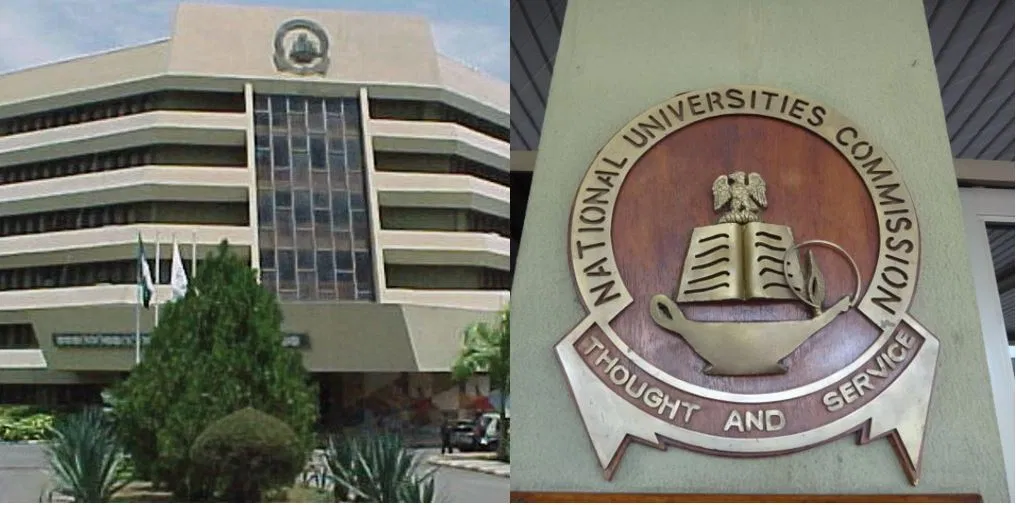
Mr. Mohammed stated that the Minister of State for Education, Mr. Chukwuemeka Nwajiuba presented the memo on behalf of the National Universities Commission (NUC) and it was conbsequently approved by the Cabinet.

The Information Minister further highlighted that each of the new universities would be mentored by the old ones situated nearer to them.

He went ahead to argue that establishment of additional universities for an over 200 million-populated country was necessary if the policy of educating a larger percentage of youngsters was to succeed, perhaps contrary to the insinuations among many Nigerians in various quarters.

It’s noteworthy that, in a related development, the FEC gave approval to the FCT to revise the estimated total cost of the contract for the extension of the Inner Southern Expressway, from the Outer Southern Expressway to the Southern Parkway, among sundry issues discussed therein.

It could be recalled that the members of the Academic Staff Union of Universities (ASUU) embarked on a one-month warning industrial action on 14th February 2022 to press home their demands as regards the lingered 2009 Agreement and the subsequent Memorandum of Action (MOA) entered between the Federal Government (FG) and the Union.

The strike was subsequently pronounced to be indefinite upon expiration of the initial warning part, reportedly owing to the FG’s inability to address the issues squarely as expected by all the concerned parties, particularly the Union members.

It’s worth noting that the other unions on the universities’ campuses, such as the National Association of Academic Technologists (NAAT) and the Senior Staff Association of Nigerian Universities (SSANU) eventually joined in the industrial action.

Hence, as I write, the loggerheads between the aforementioned stakeholders – which aren’t unusual – still linger to the utmost worry and bitterness of the citizenry and the affected parents/guardians who are currently of the view that the FG does not care about the country’s education sector.

Amidst the strike whose end is yet unknown, Nigerians were informed that twelve new private varsities would be established across the country.

This unequivocally ostensibly indicates that the government is gradually shifting responsibilities of the Nigeria’s education industry to mainly the private sector, which indeed does not augur well for the citizens and the country at large if painstakingly considered.

Thereafter, barely less than one week after, on 12th April 2022 to be precise, Nigerians were equally informed of the FG’s intention to establish three more polytechnics within the shores of Nigeria, precisely in Kano, Abia and Delta States.

At this juncture, any rational and right thinking Nigeria ought to be of the notion that the government is getting tired, if not already exhausted, of managing public varsities situated across the country.

When no tangible remedy has been found, or may not be considered, to resolve the ongoing impasse between the governments and the university teachers and technologists, the FG was more apparently concerned on how to establish new tertiary institutions. This indeed is enough reason to worry about Nigeria’s education sector.