DD
MM
YYYY

PAGES

DD
MM
YYYY

spot_img

PAGES

Home Blog Page 5222

Court Stops Multichoice (DStv, GOtv) from Implementing Tariff Hike

0

The faceoff between the Nigerian government, consumers and Multichoice Nigeria over hike in subscription tariffs, has continued to deepen. Nigerian consumers, backed by lawmakers, have been asking for a stable subscription price or pay-per-view billing.

Against this backdrop, the South African satellite TV provider, who is parent to DStv and Gotv, popular cable TV service providers in Nigeria, has been on and off the court and the chambers of Nigeria’s National Assembly.

The situation took a new turn after some Nigerians filed a fresh complaint following Multichoice’s recent move to once again increase tariff.

The Competition and Consumer Protection (CCP) Tribunal sitting in Abuja, ruling in the favor of the plaintiffs, restrained Multichoice Nigeria Limited from increasing its tariffs and cost of products and services scheduled to begin on April 1.

The three-member tribunal, presided over by Thomas Okosun, gave the order following an ex-parte motion moved by Festus Onifade, a legal practitioner, on behalf of himself and the Coalition of Nigeria Consumers.

Other members of the tribunal include Sola Salako Ajulo and Ibrahim EL-Yakubu.

The News Agency of Nigeria (NAN) reports that in the suit marked: CCPT/OP/1/2022, Multi-Choice Nigeria Limited and Federal Competition and Consumer Protection Commission (FCCPC) are 1st and 2nd respondents respectively.

The motion ex-parte filed by the applicants on March 29 was brought pursuant to Section 39 (1) & (2) of FCCPC Act 2018; Order 26, Rule 5 (2), (3) & 26 Rule 6 (1) & (2) Federal High Court (Civil Procedure) Rules 2019 and Section 47(a), (b), (c),(d), of Federal Competition and Consumer Protection Act 2018.

The applicants had prayed for “an order of interim injunction restraining the 1st defendants/respondents, either by itself, agents, representatives, officers or privies, howsoever described, from carrying out the impending increase in tariffs and cost of its products and services intended to take effect from 1st April, 2022, until the hearing and determination of the motion on notice already filed before this tribunal.

“An order of the Honourable Tribunal mandating the 1st defendant/respondents to maintain status quo pending the hearing and determination of the motion on notice.

“And for such further order or other orders as this Honourable Tribunal may deem fit to make in the circumstance.”

In the ruling, the tribunal ordered Multichoice Nigeria Limited to stop the planned hike in tariffs and cost of its products and services pending the hearing and determination of the motion.

“The 1st defendant/respondent is hereby restrained, either by itself, agents, representatives, officers or privies, howsoever described, from carrying out the impending increase in tariffs and cost of its products and services intended to take effect from 1st April, 2022 until the hearing and determination of the motion on notice already filed before this Honourable Tribunal.

“The 1st defendant/respondent is hereby mandated to maintain status quo pending the hearing and determination of the motion on notice,” the tribunal ruled.

The matter was adjourned until April 11 for the hearing and determination of the motion on notice.

“All parties in this suit are to appear before this Honourable Tribunal on the 11th day of April, 2022,” it ruled.

How long would this continue?

Multichoice services have been the most opposed in Nigeria when it comes to tariff increase, apart from petroleum products. While other companies have without confrontation, been increasing the cost of their products and services.

In 2020 when Multichoice attempted to increase tariff, it drew a national uproar that forced the Nigerian National Assembly to intervene, asking the South African company to suspend its plan or otherwise, provide pay-per-view billing for Nigerian consumers. Since then, every other company operating in Nigeria has nearly doubled the price of their products and services without opposition, even Nigerian-based companies.

Earlier this month, the Nigerian government quietly removed electricity tariff, and petroleum pump price has repeatedly been increased in recent times. The price of Dangote Cement is said to be higher in Nigeria than other countries across Africa where the product is available.

Inflation is at 16.87% as of January 2022, according to the Nigeria Bureau of Statistics (NBS), pumping the cost of everything in Nigeria. Experts are baffled that despite this reality, Nigerian consumers still want Multichoice’s bouquets tariffs stagnant, even though compared to other African countries where the cable network is operational, Nigeria still has the cheapest rates.

Experts said that the Nigerian government’s actions amount to forcing price control on a foreign company and it would likely spook investors – and for a country looking for foreign direct investments, it’s an own goal.

Nigerian Politicians And Their Blame Game Culture

0

One trait that is synonymous with Nigerian politicians, is their ability to shift the blame on persons, happenings, events, etc, instead of taking full responsibility for their failures. The blame game tactic is a strategy often used by them to perpetuate their intention in order to veil their political excuses. One thing they fail to note is that it Is the responsibility of anyone who calls his or herself a leader to accept full responsibilities as well as build preventive measures against a catastrophic event.

Politics in Nigeria is embellished in blame-game culture, where an incumbent government or party still blames the previous government for its failure. These shenanigans deployed by them are premised on excuses where they get to shift responsibilities away from themselves to save their head. A case study of President Muhammadu Buhari who got elected in 2015, despite his woeful performance, has continued to heap blame on the past government for his administration failure.

The country is experiencing economic problems because the previous administration failed to plan for the future. The exchange rate of the naira has been wobbling because of the poor financial policies of the previous government. Infrastructure is dilapidated because the previous government did not provide sufficient funds in the budget to take care of roads, water, and health care. Unemployment has worsened because the previous government did not care about the welfare of youths. Agriculture, the manufacturing sector, small-scale businesses, are in shambles because of negligence by the previous government. All these blames, are just to excuse their incompetence.

One of the qualities of a competent and proactive leader is the ability to accept mistakes and strategize in new ways that can improve the condition of the Present, better than the former. It is only incompetence that will make a leader blame the past leadership for his abysmal performance. Concerning the recent attack on the Abuja-Kaduna train, which saw 8 lives lost with several others injured and many more still held hostage, the governor of Kaduna State El-Rufai has come under heavy criticism as terrorists continue to attack residents of Kaduna state.

He has been accused of playing with the lives of the citizens in his state. Nigerians have for a long time demanded accountability and a solution to insecurity in Kaduna state, as armed bandits have been terrorizing them as well as killing innocent lives. It might interest you to know that Gov. El Rufai heavily criticized the previous government for the high rate of insecurity in the country and their failure to curb the insecurity menace. Meanwhile, when the recent Abuja-Kaduna train attack happened, Governor El Rufai disclosed that he told the minister of transportation Hon. Rotimi Amaechi, that they should stop operating at 5 pm.

He revealed that he pleaded with them to discontinue the evening train because he knew that armed bandits might likely attack at night. Meanwhile, the minister of transportation, Hon. Rotimi Amaechi after the attack with their usual blame-game culture, rather than accept full responsibility for the attack, shifted blame to the federal government. According to him, he disclosed that he had earlier warned his colleagues at the federal executive council about possible attacks on the Abuja-Kaduna rail line.

He further stated that nobody listened to him when he requested for necessary digital security and crime prevention equipment that could forestall such a disaster. In his words “we have lost tracks we have lost human beings and the equipment is just N3 Billion to fix all the things on that track now, will cost us more than N3 Billion. And now even the things we said give us the approval to buy at the time we asked for it, the dollar was N400 now it is N500. When you come with sincerity to the government and your colleagues and people are stopping you, it’s annoying”.

Indeed this blame game culture is synonymous with almost every politician in the country. They seem to have ready-made answers for every action in regards to their inability to achieve positive results. It’s high time they begin to accept responsibility for actions and happenings in the country because constantly shifting blame reeks of incompetence.

Impact of Constructive Criticism On Societal Growth

0

Criticism is the expression of disapproval of someone or something. In the same vein, a critic of a person, policy or system disapproves of them and expresses such a view publicly.

One who writes reviews and expresses opinions about books, films, music or any art work having considered it carefully can equally be referred to as a critic. Hence, it’s all about expressing a contrary view about something or someone in strong terms.

Criticism remains a matter of flushing out certain thoughts, policies and/or attitudes, or trying to change them. It is to show that things are not as self-evident as one believes.

Thus, criticism ensures that what is accepted as self-evident will no longer be accepted as such. It suffices to say that observance criticism in any society is a matter of making facile gestures or remarks difficult.

Criticisms are essential recipes in any area of human endeavour. For instance, in steward-client relationship, if the latter has a criticism to tender, it means he or she wants to give feedback on the services being rendered to him/her, thereby creating an opportunity for the former to learn more about the person he is working for and how to convert them into a satisfied client member. Same measure is applicable in a trader-customer relationship.

Similarly, in a business venture, working or partnering with someone who is patient and able to receive as well as act on criticism signifies that both parties involved can work towards a better or greater outcome. Furthermore, in movie production, criticism enables the producer to know what his audience actually wants.

If one always thinks he is right but doesn’t get feedback from anyone else, he wouldn’t know if he is really doing well. Whether you are selling, servicing, performing, or leading, listening and acting on those honest views or reactions will tell you precisely what is good and what could be done better. Perhaps, you can use the information to change your performance, exhibition or product, as the case may be.

In public service, criticism has the tendency of guiding the public servants away from bad practices, and towards good and acceptable ones. It would enable the said workers to take a step back or have a rethink with a view to making amends or adjustment where need be.

The socio-political arena is not left out while discussing the inevitable role of criticism in nation-building. Undoubtedly, a little constructive criticism from the members of the public such as the civil society groups, the electorate, the religious organizations, or what have you, channeled towards the political office holders can yield the anticipated change in the country or society in question.

Considering the positive impact of constructive criticism, there is no gain reiterating the fact that it is indeed a welcome gesture or required factor toward the socio-economic development of any nation, hence ought to be sustained. To this end, there is a need for us to acknowledge that the language we use in response to criticism is vitally important.

Whenever criticism is tendered by any concerned individual or group, the recipient is expected to try at all costs to avoid getting into an argument. Instead, they should turn the exchange into a discussion on how to resolve the predicament. Such an approach would keep the door open for the required change or correction.

Also, criticisms are not meant to be taken personally. Even if one feels he or she is being criticized unfairly, he shouldn’t retaliate with an extreme knee-jerk reaction. Such a response will worsen the situation and can even harm the person’s reputation as well. Therefore, it is important to always remember to not be offended by someone’s remarks even if you think it is a personal attack.

On the other hand, having noted the enormous significance of constructive criticism in nation-building, there is also a compelling need for the critics to be mindful at all times when tendering their criticisms. They ought to know when to tender the criticism and how it ought to be presented.

It’s worthy of note that some critics lack the orientation on when and how to present their criticism. This set of persons invariably tender their contrary opinions as a form of antagonism, thereby making the supposed/target recipient misunderstand the gesture.

More so, critics are meant to comprehend that criticism is expected to be accompanied by the presumed remedy to the anomaly that is being criticized. Most so-called critics usually end up raising a cloud of dust in the name of criticism.

Unequivocally, a criticism that is not tendered with a presumed solution to the problem being criticized is simply a mere noise that is intended to cause a pandemonium or controversy rather than addressing the situation at hand.

In view of these assertions, everyone at all levels including political leaders, followers, craftsmen, traders, businessmen, teachers and public servants, as might be the case, is expected to take criticism seriously regardless of the circumstance in order not to abuse the remarkable tool.

Criticism is arguably a veritable device, but it’s however required to be deployed reasonably and selflessly towards the needed societal growth. 

Meta Paid for A Smear Campaign Against TikTok To Scuttle Its Growth

0

TikTok, the high-flying short-video app, which in recent times, has become a go-to destination for young people and creators making millions of dollars off their contents, has obviously become a threat that Meta, Facebook’s parent company doesn’t know how to neutralize.

Meta’s helplessness as TikTok burgeons has been compounded by Facebook’s antitrust issues that have heightened recently, particularly in the US and Europe. Meta has a reputation of clowning or buying competitors in order to stay ahead in the market. A technique it deployed on Instagram and unsuccessfully attempted on Snapchat.

But TikTok is out of reach. Besides ByteDance, TikTok’s parent company being valued at more than $400 billion, Meta faced harsh regulatory scrutiny due to the acquisition of Instagram – all making any attempt to purchase TikTok impossible.

In January, Facebook recorded a loss of users for the first time. Most of the users who quit Facebook have been noted to have joined TikTok, making the situation more worrisome for the once unchallenged social media behemoth.

Every effort Meta is making to counter TikTok’s fiery growth, a shift to reeling, short-form videos etc., is apparently not working. Thus the Silicon giant resorted to a smear campaign. Washington Post reports that Meta hired a GOP firm, Targeted Victory, to stir both the government and the public against TikTok, in hope to scuttle its growth.

The firm, Targeted Victory, pushed local operatives across the country to boost messages calling TikTok a threat to American children. “Dream would be to get stories with headlines like ‘From dances to danger,’ ” one campaign director said.

The report below:

The campaign includes placing op-eds and letters to the editor in major regional news outlets, promoting dubious stories about alleged TikTok trends that actually originated on Facebook, and pushing to draw political reporters and local politicians into helping take down its biggest competitor. These bare-knuckle tactics, long commonplace in the world of politics, have become increasingly noticeable within a tech industry where companies vie for cultural relevance and come at a time when Facebook is under pressure to win back young users.

Employees with the firm, Targeted Victory, worked to undermine TikTok through a nationwide media and lobbying campaign portraying the fast-growing app, owned by the Beijing-based company ByteDance, as a danger to American children and society, according to internal emails shared with The Washington Post.

Targeted Victory needs to “get the message out that while Meta is the current punching bag, TikTok is the real threat especially as a foreign owned app that is #1 in sharing data that young teens are using,” a director for the firm wrote in a February email.

Campaign operatives were also encouraged to use TikTok’s prominence as a way to deflect from Meta’s own privacy and antitrust concerns.

“Bonus point if we can fit this into a broader message that the current bills/proposals aren’t where [state attorneys general] or members of Congress should be focused,” a Targeted Victory staffer wrote.

The emails, which have not been previously reported, show the extent to which Meta and its partners will use opposition-research tactics on the Chinese-owned, multibillion-dollar rival that has become one of the most downloaded apps in the world, often outranking even Meta’s popular Facebook and Instagram apps. In an internal report last year leaked by the whistleblower Frances Haugen, Facebook researchers said teens were spending “2-3X more time” on TikTok than Instagram, and that Facebook’s popularity among young people had plummeted.

Targeted Victory declined to respond to questions about the campaign, saying only that it has represented Meta for several years and is “proud of the work we have done.”

In one email, a Targeted Victory director asked for ideas on local political reporters who could serve as a “back channel” for anti-TikTok messages, saying the firm “would definitely want it to be hands off.”

In other emails, Targeted Victory urged partners to push stories to local media tying TikTok to dangerous teen trends in an effort to show the app’s purported harms. “Any local examples of bad TikTok trends/stories in your markets?” a Targeted Victory staffer asked.

“Dream would be to get stories with headlines like ‘From dances to danger: how TikTok has become the most harmful social media space for kids,’ ” the staffer wrote.

Meta spokesperson Andy Stone defended the campaign by saying, “We believe all platforms, including TikTok, should face a level of scrutiny consistent with their growing success.”

A TikTok spokesperson said the company is “deeply concerned” about “the stoking of local media reports on alleged trends that have not been found on the platform.”

Targeted Victory worked to amplify negative TikTok coverage through a Google document titled “Bad TikTok Clips,” which was shared internally and included links to dubious local news stories citing TikTok as the origin of dangerous teen trends. Local operatives working with the firm were encouraged to promote these alleged TikTok trends in their own markets to put pressure on lawmakers to act.

One trend Targeted Victory sought to enhance through its work was the “devious licks” challenge, which showed students vandalizing school property. Through the “Bad TikTok Clips” document, the firm pushed stories about the “devious licks” challenge in local media across Massachusetts, Michigan, Minnesota, Rhode Island and Washington, D.C.

That trend led Sen. Richard Blumenthal (D-Conn.) to write a letter in September calling on TikTok executives to testify in front of a Senate subcommittee, saying the app had been “repeatedly misused and abused to promote behavior and actions that encourage harmful and destructive acts.” But according to an investigation by Anna Foley at the podcast network Gimlet, rumors of the “devious licks” challenge initially spread on Facebook, not TikTok.

In October, Targeted Victory worked to spread rumors of the “Slap a Teacher TikTok challenge” in local news, touting a local news report on the alleged challenge in Hawaii. In reality, no such challenge existed on TikTok. Again, the rumor started on Facebook, according to a series of Facebook posts first documented by Insider.

The firm worked to use both genuine concerns and unfounded anxieties to cast doubt about the popular app. One email outlining recent negative TikTok stories mixed reasonable questions, largely about TikTok’s corporate ownership and practices, with more exaggerated stories about young users recording themselves behaving badly — the kinds of social media panics that have long bedeviled big social networks, including Facebook.

The agency was working at the same time to get “proactive coverage” about Facebook into local newspapers, radio segments and TV broadcasts, including submitting letters and opinion pieces speaking glowingly of Facebook’s role in, for instance, supporting Black-owned businesses. Those letters did not mention the Meta-funded firm’s involvement.

Targeted Victory has contracted with dozens of public relations firms across the United States to help sway public opinion against TikTok. In addition to planting local news stories, the firm has helped place op-eds targeting TikTok around the country, especially in key congressional districts.

On March 12, a letter to the editor that Targeted Victory officials helped orchestrate ran in the Denver Post. The letter, from a “concerned” “new parent,” claimed that TikTok was harmful to children’s mental health, raised concerns over its data privacy practices and said that “many people even suspect China is deliberately collecting behavioral data on our kids.” The letter also issued support for Colorado Attorney General Phil Weiser’s choice to join a coalition of state attorneys general investigating TikTok’s impact on American youths, putting political pressure on the company.

A very similar letter to the editor, drafted by Targeted Victory, ran that same day in the Des Moines Register. The piece linked to negative stories about TikTok that Targeted Victory had previously sought to amplify. The letter was signed by Mary McAdams, chair of the Ankeny Area Democrats. Targeted Victory touted McAdams’ credentials in an email on March 7.

“[McAdams’s] name on this [letter to the editor] will carry a lot of weight with legislators and stakeholders,” a Targeted Victory director wrote. The email then encouraged partners across other states to look for opportunities to add to the campaign, “especially if your state AG suddenly joins on.”

In an email sent last week to local contractors, Targeted Victory asked each team to “be prepared to share the op-ed they’re working on right now.” “Colorado and Iowa — Can you talk about the TikTok Op-eds you both got?” a Targeted Victory representative asked.

The emails show how the firm has effectively promoted its anti-TikTok messaging without revealing that it came from a firm working on Meta’s behalf. None of the op-eds or letters to the editor were published with any indication that the Meta-funded group had been involved.

Launched as a Republican digital consulting firm by Zac Moffatt, a digital director for Mitt Romney’s 2012 presidential campaign, Targeted Victory has routinely advised Facebook officials over the years, including during a high-profile congressional hearing after the 2016 election.

The Arlington, Va.-based firm advertises on its website that it brings “a right-of-center perspective to solve marketing challenges” and can deploy field teams “anywhere in the country within 48 hours.”

The firm is one of the biggest recipients of Republican campaign spending, earning more than $237 million in 2020, according to data compiled by OpenSecrets. Its biggest payments came from national GOP congressional committees and America First Action, a pro-Trump super PAC.

In 2020, the firm said it was expanding its “crisis practice and corporate affairs offerings” because of its clients’ growing need for “issues management and executive positioning,” adding that it would focus its efforts toward “authentic storytelling” with a “hyper-local approach.”

Some of the emails targeting TikTok were sent in February, shortly after Meta announced that Facebook had lost users for the first time in its 18-year history. Meta chief executive Mark Zuckerberg told investors then that TikTok was a major obstacle, saying, “People have a lot of choices for how they want to spend their time, and apps like TikTok are growing very quickly.” The company has unveiled a TikTok clone, a short-video feature called Reels, and promotes it heavily in its Instagram app.

In a 2019 speech at Georgetown University, during which he invoked the Rev. Martin Luther King Jr. and championed Facebook’s role in promoting free speech, Zuckerberg criticized TikTok for reports it had banned discussion of topics deemed subversive by the Chinese government, saying, “Is that the Internet that we want?” (The Washington Post and the Guardian had previously highlighted those content-moderation rules. TikTok has said those guidelines were outdated and that its U.S. business now operates under different rules than its Chinese counterpart.)

But Zuckerberg has also pointed at TikTok to counter concerns that Facebook holds a monopoly on social media. TikTok is the “fastest-growing app,” he said in his opening remarks at a hearing of the House antitrust subcommittee in 2020.

The anti-TikTok campaign follows in a long line of Facebook-funded advocacy groups working to boost its standing in the public eye.

In 2018, Facebook worked with Definers Public Affairs, another Washington consulting firm founded by Republican political veterans, to lash out at critics and other tech companies, including Apple and Google, during the Cambridge Analytica scandal that sparked global outrage over Facebook’s privacy rules.

And in 2019, as the company faced antitrust scrutiny over its gargantuan impact, Facebook drove the creation of a political advocacy group, American Edge, designed to persuade Washington lawmakers that Silicon Valley was critical to the U.S. economy — and that overt regulation could weaken the country’s competitiveness in a technology race against China.

Meta outspends all but six of the nation’s biggest companies and industry groups in federal lobbying, paying more than $20 million last year, according to data compiled by OpenSecrets.

Nigeria’s BNPL Startup, CredPal, Raises $15m to Expand Services Across Africa

0

Nigeria’s CredPal, a Buy Now Pay Later (BNPL) pushing to secure a share in emerging market, has announced that it has secured $15 million in equity and debt in a recent bridge funding round to scale its consumer credit offerings across Africa.

The debt was provided by some unnamed financial institutions while the equity was provided by an existing investor, Greenhouse Capital and new investors including Uncovered Fund, LongCommerce, First Circle Capital, and Adii Pienaar, co-founder and former CEO of WooCommerce.

This is coming two years after the startup raised $1.5 million from Y Combinator, Greenhouse Capital and other VCs.

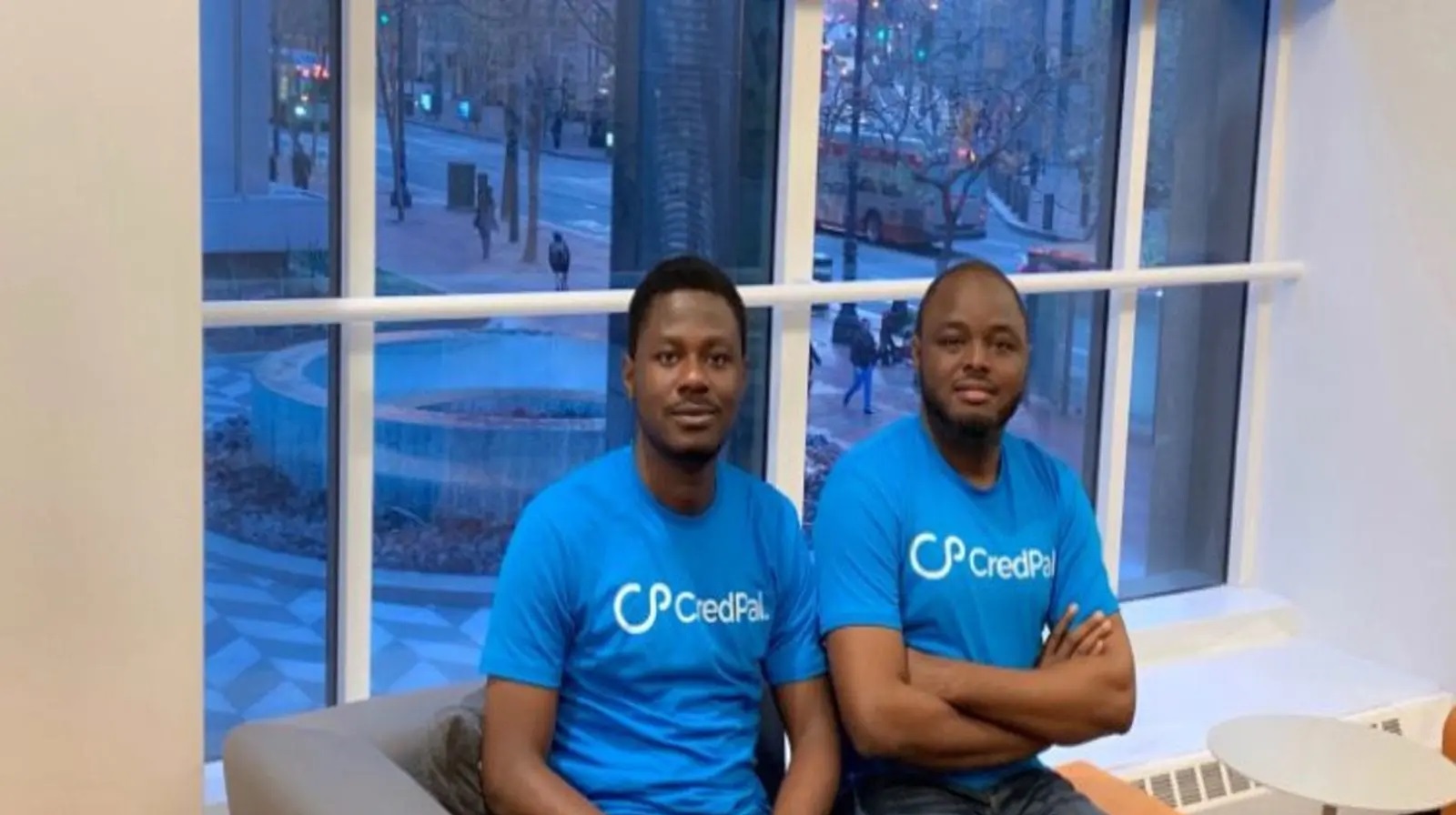
Founded by CEO Fehintolu Olaogun and Olorunfemi Jegede, CredPal is a revolutionary credit solution geared towards providing seamless credit access for businesses and individuals, with focus on developing economies.

CredPal is one of those companies that intends to ride on the BNPL wave which has risen to unprecedented heights in recent times. A recent report supports this trend projecting that BNPL Payments are expected to grow by 59.3% and BNPL payment adoption is expected to grow steadily over the forecast period, recording a CAGR of 20.4% during 2021-2028

Credpal says that part of the investment is for expansion into other African markets, mainly Kenya, Egypt, Ghana and Cameroon. It also intends to secure a partnership with Airtel Nigeria to allow customers to purchase smartphones and pay in installments.

CredPal currently provides consumer credit services via two options – a credit card and an app. Consumers can access credit from N5,000 (~$10.00) to N500,000 (~$1,000.00) and they are to repay between a 30-day to a 180-day period after making a down payment of 30%. Interest rates range from 4% to 9%.

CredPal claims it currently has 20,000 merchant sign ups; but it has only onboarded over 4,000 for now. Monthly active merchants is only 600 while monthly active customer base is 85,000.

Olorunfemi Jegede believes that in the face of rising competition, CredPal differentiates itself from the pack by providing an omnichannel approach to BNPL.

“We’ve built out a merchant suite to cater to those who have like full-fledged e-commerce websites to those with brick and mortar stores and social commerce merchants. We are merchants agnostic and also our tech allows consumers to be able to interface with CredPal across a wide range of channels,” he says.

Other competitors include Carbon Zero, PayLater, Lipa Later and even more recently ThankU Cash which recently got $5.3 million to partly invest in BNPL service.