DD
MM
YYYY

PAGES

DD
MM
YYYY

spot_img

PAGES

Home Blog Page 5222

Godfatherism In The Contemporary Nigerian Politics

0

It’s no longer news that every electioneering era across the world, particularly on the African continent, invariably begets a set of peculiar stories.

In regard to financing, Nigeria’s political system is presently characterized by nauseous happenings, thereby causing the innocent polity and its teeming watchers ceaseless nightmares.

This unabated and seemingly acceptable activity is cut across all elective posts, hence isn’t peculiar to when one is vying for a particular position. For example, someone who’s aspiring for the post of the executive chairman of a certain local government council may end up spending millions of naira in the process and might not even secure the anticipated position afterwards.

One may ask, what exactly are these aspirants really financing? Officially, they are expected to finance the purchase of their nomination and expression of interest forms. The forms as being sold by various political parties to their respective members are reportedly exorbitant that the prospective office holders or aspirants, in most cases, have to borrow to foot the bills.

Aside purchase of forms and other allied matters, the campaign process that usually succeeds the primary elections – thus preceding the main elections – is another avenue where the aspirants resort to indulging in money politics.

If you are well informed, then you wouldn’t hesitate to concur with the survey that indicates that in contemporary Nigerian society, for instance, the citizenry have been compelled to boldly and proudly sell their birthright for a mere pot of porridge yam. This show of shame cannot be unconnected with ignorance and/or poverty.

It’s noteworthy that whatever uncalled practice being showcased by the electorate is arguably attributable to the liberty granted to the teeming politicians to ‘mess around’ while canvassing for a given political office. It can’t be argued that every practicing politician in Nigeria that’s seeking for any position of authority has the ‘right’ to spend any sum of money in the process.

It’s worth noting that, in this case, not just the electorate are at the receiving side. The so-called political gladiators are equally lavished with bags of money by the aspirants in order to buy their consent. This very act often precedes the primary election of a given party.

These are the cogent reasons an aspirant who’s not financially buoyant would be left with no choice than to accept the lending hand of a godfather, a step that in the long run might bastardize his/her political career. Sometimes, it’s even the aspirants that go about seeking for who would sponsor their ambitions.

Since politics has regrettably been considered as an investment or business venture, rather than an avenue to render selfless service, what else would you expect from an average politician who eventually clinched victory at the polls? Such a person, if assumed duty, wouldn’t fail to please the desires of the political mafia.

In view of the above, most of the funds budgeted for various infrastructural/development projects in the concerned locality might be siphoned into the private purse of a godfather, thereby relegating governance to the background. This singular act has overtime crippled our god-sent nascent democracy. In a situation where the demands of the bigwig aren’t met, the society may be plunged into shambles.

Apart from the financial implications of godfatherism, a certain godfather might at any time decide to unseat his beneficiary. This kind of case was recently sighted in Lagos State.

What’s the way out of this quagmire? First, we must completely silence the ongoing high rate of nomination form introduced by the various parties. This can be made possible by specifying in the Electoral Act the maximum price any party should charge for each of the forms to be purchased by their members aspiring for different offices.

More so, any aspirant ought to be mandated by law to declare his/her assets. Hence, after the elections, the electoral umpire would be required to crosscheck the affected assets towards ascertaining how much the aspirant actually ‘invested’ in the campaign activity. The aspirants must be mandated not to exceed a certain threshold in regard to expenditure in accordance with the position he’s bidding for.

If he’s found culpable after the thorough investigations, he ought to be charged to court for onward prosecution. If found guilty, such a politician should not just pay a fine but be jailed. This would strongly help to eradicate godfatherism from the system.

The electorate must, on their part, be reasonable. It’s unequivocally the only insane person that could freely mortgage his or her future merely for peanut’s sake.

They must comprehend fully that their respective futures lie in their palms, hence are imbued with the power to decide how it would appear. 

Lawmaking is a serious business

0

Laws are made for man and not the other way round. So as society develops and societal goals and values develop too, laws are amended, repealed and even new laws made to accommodate those changes in societal values and that is why for a law to be properly so called it should never be static, rather it should be organic and flexible so to be able to adjust to the societal changes and to accommodate new societal values.

The cross-dressing bill which the house of representatives is considering passing into law intends to criminalize cross-dressing and bring about a dress code for the general public with the punishment of 6 months imprisonment for those that fail to comply with this public dress code is quite absurd. 

How will such law be enforced considering the ambiguity of the interpretation of what cross-dressing and dress code could be deemed to be? 

At a time when other countries are amending their laws and making new laws to accommodate citizens who want to change their sexual identity and wanting to identify with another sex that is not their biological sex and also explore their sexual fantasies, Nigeria lawmakers are seriously considering making laws for public dress code,  it shows how retrogressive the thinking faculties of the Nigerian lawmakers are. 

Will this law apply to ladies/girls too who put on clothes that are known or regarded to belong to the male gender or is this law only limited to males who have chosen to dress like ladies? 

What is good for the goose is good for the gander. So if this legislation pulls through while the law is prosecuting males dressing like women then women who put on trousers, shorts, polo, etc should be prosecuted too. 

Don’t you see how silly the whole thing will turn out to be? 

Legislation is a serious business and the legislative arm of government plays a very vital role in the development of any society.  it is saddening that the legislature can’t think of proper laws to make or amend for the betterment of society but rather consider criminalizing cross-dressing in 2022 of the 21st century. 

This is obviously just an afterthought of joblessness and boredom on the part of the house of representatives. 

It should never be heard of that a country like Nigeria which prides itself as a liberal and secular society should ever consider restricting and limiting the way an individual dresses or adorns himself or herself. 

Making recourse to the grundnorm, the Constitution, which other laws derive their validities from, let’s ask ourselves the pertinent question; “if this bill is passed into law can it stand the Constitutional test of validity? 

Section 39 of the Constitution of the Federal Republic of Nigeria, 1999 (as amended) provides the citizens with the fundamental right to freedom of expression. Freedom to express oneself is not limited to expressing your thoughts through spoken or written words. 

The way an individual can express himself through words, another individual can as well express himself or herself through dressing and painting, especially those in the creative and entertainment industry. 

Placing a ban on cross-dressing is tantamount to placing a ban on s.39 of the Constitution. Therefore, the lawmakers have no such power to make, repeal or amend any law which purports to limit or deny citizens’ fundamental rights as provided in the Constitution. 

Therefore, constitutionally speaking, this proposed law if passed into law will offend the provisions of the Constitution, particularly section 39 and according to S1(3) of the Constitution, any law which does not align with the constitution can not stand. 

Uber Plans to Add Flights, Trains to Booking in The UK

0

It’s worthy of note that the real wealth of any nation is calculated by its GDP per capita, and Nigeria currently ranks about 140 out of 186 in GDP per capita global ranking.

Per capita GDP is a financial metric that breaks down a country’s economic value (output) per person, and is calculated by dividing the whole GDP by the country’s overall population.

In Economics, it’s widely accepted that technology is the key driver of economic growth of countries, regions or cities. Technological progress allows more efficient production of goods and services, in which prosperity depends on.

Technology brings skills, knowledge, process, technique, and tools together, toward solving problems concerning human existence, thereby making their life secure and happy.

It’s very pertinent in today’s world, because it is driving the global community as well as making it appear better. In fact, it is gradually becoming inevitable in our various homes, offices, and workplaces.

Nigeria’s tech patent has grown to be an envy of all who understands its real content. In terms of human and material attributes, it has over the years remains significant in the global society and market.

Take a walk round the world, you would comprehend that, most recent tech inventions and innovations across the globe were mainly as a result of contributions from Nigerians. Similarly, Nigerians remain the reason several countries’ tech sectors have grown beyond limits.

Ironically, Nigeria’s tech sector is presently nothing to write home about. As the days unfold, the sector continues to decline in its value, hence taking the country’s name to a state of ridicule.

Each day, the governments at all levels come up with empty promises and policies as regards tech-driven activity and innovation. The politicians at the country’s helm of affairs have unequivocally, over the donkey’s years, failed us in this regard.

The good news is that, in spite of the lingering hurdles and challenges, the prospects of the country’s tech value remain obviously great, perhaps owing to the fathomless resources lying fallow.

It’s worth noting that countless factors are behind the ongoing impediments in Nigeria’s tech sector. For us to get it right as a people, these barriers continually posing a threat must be severely tackled by the concerned authorities at all cost.

A certain tech-driven contract might be awarded by the government. In the long run, we would be greeted with a myriad of untold stories attributed to paucity of funds. In such case, it could be either the fund made available for execution of the project had been squandered or that insufficient fund was approved ab initio.

The steady economic fluctuation is another glaring factor that cannot be swept under the carpet. This particular plight has left Nigerians tech experts with no choice than to becloud their reasoning with uncertainties and fear of the unknown.

More so, those who – amidst the tough times – insisted on putting something together, would not find the apt market to sell their products or patents. This could be as a result of infrastructural decay occasioned by lack of maintenance culture, or the required physical infrastructures have never been in existence from the onset. The cost of running a tech firm in Nigeria is too high, to say the least.

Poverty has also on its part really posed a great danger to Nigeria’s tech value. The individuals who have the zeal and ability to invest in their expertise might end up being frustrated, due to lack of capital. This is why the country’s GDP per capita has to be fixed or elevated if she actually wants her tech sector to excel headlong.

Nigerians do not trust made-in-Nigeria goods. The mentality of seeing foreign products as superior while branding domestically-made ones inferior, must be tackled. Aside from sensitization, apt policies can properly assist in eradicating the social menace, which could best be described as a cankerworm that has eaten deep into our collective bone marrow.

The governments must not necessarily invest in technology for their respective tech values to grow. In most countries where technology is seriously thriving, the individuals domiciled therein remain the key players, not the government. But such a phenomenon can never be witnessed if the enabling environment is conspicuously missing.

To fix this anomaly, we must be ready and determined to address the quagmire in the political system. The country’s political instability is so intense, and continues to skyrocket by the day, that one cannot possibly say what the nearest future entails for our indigenous tech patent.

The policies are so weak that they can’t even initiate a project, let alone accomplish it. To get things rightly done, we need to acknowledge that a country’s growth in any sector depends majorly, if not solely, on her extant policies.

To be on the same page with me, take a look at any nation that has grown in a certain sector, and then take time to painstakingly x-ray the policies guiding the area in question. Just a research and adequate analysis would make you understand where exactly I’m coming from.

Growth is not rocket science; it takes some processes. For such processes or procedures to occur, there must be existing principles. The moment the rules (principles) are thwarted, it marks the beginning of the end of the procedures. There are no two ways about it.

Lest I forget, we need to equally take into cognizance that the reason most of the needed policies cannot exist in countries like Nigeria is that our corrupt political leaders have realized that technology exposes corruption. Read my lips.

They are apparently of the view that if tech is deployed in any area, it would certainly expose their corrupt practices. Take for instance, a situation where technology is fully implemented in the country’s electoral system as well as using forensic audit patterns in the finance sector.

The above factors are the reason we ought to clamour for overhaul. The country is in damn need of total overhaul of the system. To achieve this, we need to realize the full benefits of investing in technology.

We are not here to reiterate the numerous merits of technology but to point out the goals and lapses in the said sector, in a bid to do the needful. If we spend time to highlight the outpouring merits, three editions of this column might not be sufficient.

Artificial intelligence is deeply gaining momentum on a daily basis, signifying it has come to stay. Ease of access to information cannot be overestimated. Ease of mobility is another overwhelming experience. Better communication means and improved banking have, beyond reasonable doubts, made the world seem not unlike a minute village.

Learning has been digitalized, thereby silencing any form of impediment, owing to the presence of technology. Cost efficiency and apt time management are being assured in all tech-driven activities. These are verifiable facts.

Countless innovations are springing up by the day in every facet of human endeavour. The ‘disabled’ are now abled, because of tech-driven tools, yet we seemingly await more prophets to tell us that technology has come to take us to the Promised Land.

Promoting Nigeria’s Tech Value And Allied Matters

0
Nigeria's minister of digital economy

It’s worthy of note that the real wealth of any nation is calculated by its GDP per capita, and Nigeria currently ranks about 140 out of 186 in GDP per capita global ranking.

Per capita GDP is a financial metric that breaks down a country’s economic value (output) per person, and is calculated by dividing the whole GDP by the country’s overall population.

In Economics, it’s widely accepted that technology is the key driver of economic growth of countries, regions or cities. Technological progress allows more efficient production of goods and services, in which prosperity depends on.

Technology brings skills, knowledge, process, technique, and tools together, toward solving problems concerning human existence, thereby making their life secure and happy.

It’s very pertinent in today’s world, because it is driving the global community as well as making it appear better. In fact, it is gradually becoming inevitable in our various homes, offices, and workplaces.

Nigeria’s tech patent has grown to be an envy of all who understands its real content. In terms of human and material attributes, it has over the years remains significant in the global society and market.

Take a walk round the world, you would comprehend that, most recent tech inventions and innovations across the globe were mainly as a result of contributions from Nigerians. Similarly, Nigerians remain the reason several countries’ tech sectors have grown beyond limits.

Ironically, Nigeria’s tech sector is presently nothing to write home about. As the days unfold, the sector continues to decline in its value, hence taking the country’s name to a state of ridicule.

Each day, the governments at all levels come up with empty promises and policies as regards tech-driven activity and innovation. The politicians at the country’s helm of affairs have unequivocally, over the donkey’s years, failed us in this regard.

The good news is that, in spite of the lingering hurdles and challenges, the prospects of the country’s tech value remain obviously great, perhaps owing to the fathomless resources lying fallow.

It’s worth noting that countless factors are behind the ongoing impediments in Nigeria’s tech sector. For us to get it right as a people, these barriers continually posing a threat must be severely tackled by the concerned authorities at all cost.

A certain tech-driven contract might be awarded by the government. In the long run, we would be greeted with a myriad of untold stories attributed to paucity of funds. In such case, it could be either the fund made available for execution of the project had been squandered or that insufficient fund was approved ab initio.

The steady economic fluctuation is another glaring factor that cannot be swept under the carpet. This particular plight has left Nigerians tech experts with no choice than to becloud their reasoning with uncertainties and fear of the unknown.

More so, those who – amidst the tough times – insisted on putting something together, would not find the apt market to sell their products or patents. This could be as a result of infrastructural decay occasioned by lack of maintenance culture, or the required physical infrastructures have never been in existence from the onset. The cost of running a tech firm in Nigeria is too high, to say the least.

Poverty has also on its part really posed a great danger to Nigeria’s tech value. The individuals who have the zeal and ability to invest in their expertise might end up being frustrated, due to lack of capital. This is why the country’s GDP per capita has to be fixed or elevated if she actually wants her tech sector to excel headlong.

Nigerians do not trust made-in-Nigeria goods. The mentality of seeing foreign products as superior while branding domestically-made ones inferior, must be tackled. Aside from sensitization, apt policies can properly assist in eradicating the social menace, which could best be described as a cankerworm that has eaten deep into our collective bone marrow.

The governments must not necessarily invest in technology for their respective tech values to grow. In most countries where technology is seriously thriving, the individuals domiciled therein remain the key players, not the government. But such a phenomenon can never be witnessed if the enabling environment is conspicuously missing.

To fix this anomaly, we must be ready and determined to address the quagmire in the political system. The country’s political instability is so intense, and continues to skyrocket by the day, that one cannot possibly say what the nearest future entails for our indigenous tech patent.

The policies are so weak that they can’t even initiate a project, let alone accomplish it. To get things rightly done, we need to acknowledge that a country’s growth in any sector depends majorly, if not solely, on her extant policies.

To be on the same page with me, take a look at any nation that has grown in a certain sector, and then take time to painstakingly x-ray the policies guiding the area in question. Just a research and adequate analysis would make you understand where exactly I’m coming from.

Growth is not rocket science; it takes some processes. For such processes or procedures to occur, there must be existing principles. The moment the rules (principles) are thwarted, it marks the beginning of the end of the procedures. There are no two ways about it.

Lest I forget, we need to equally take into cognizance that the reason most of the needed policies cannot exist in countries like Nigeria is that our corrupt political leaders have realized that technology exposes corruption. Read my lips.

They are apparently of the view that if tech is deployed in any area, it would certainly expose their corrupt practices. Take for instance, a situation where technology is fully implemented in the country’s electoral system as well as using forensic audit patterns in the finance sector.

The above factors are the reason we ought to clamour for overhaul. The country is in damn need of total overhaul of the system. To achieve this, we need to realize the full benefits of investing in technology.

We are not here to reiterate the numerous merits of technology but to point out the goals and lapses in the said sector, in a bid to do the needful. If we spend time to highlight the outpouring merits, three editions of this column might not be sufficient.

Artificial intelligence is deeply gaining momentum on a daily basis, signifying it has come to stay. Ease of access to information cannot be overestimated. Ease of mobility is another overwhelming experience. Better communication means and improved banking have, beyond reasonable doubts, made the world seem not unlike a minute village.

Learning has been digitalized, thereby silencing any form of impediment, owing to the presence of technology. Cost efficiency and apt time management are being assured in all tech-driven activities. These are verifiable facts.

Countless innovations are springing up by the day in every facet of human endeavour. The ‘disabled’ are now abled, because of tech-driven tools, yet we seemingly await more prophets to tell us that technology has come to take us to the Promised Land.

Rwanda Launches Africa’s First Centre Of The Fourth Industrial Revolution

0

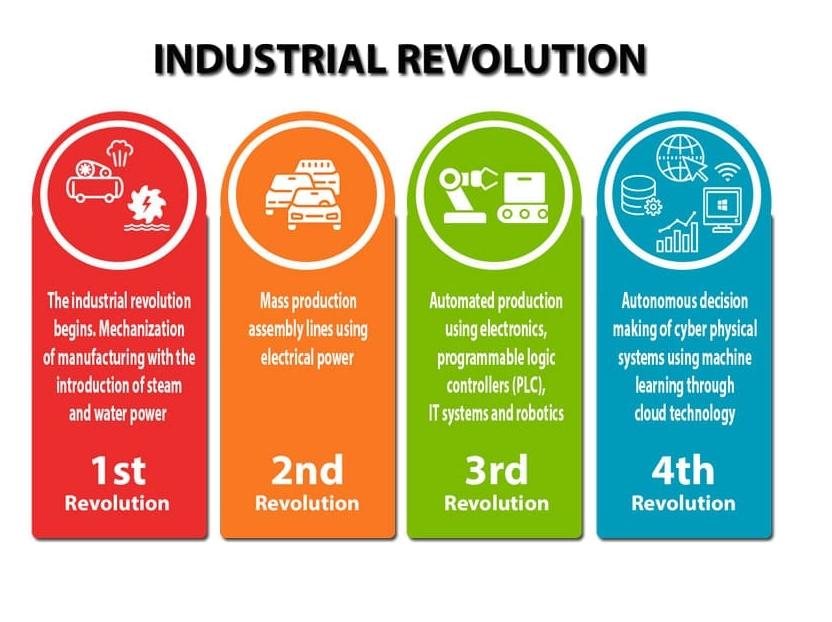
The government of Rwanda has announced the launch of the Centre of the Fourth Industrial Revolution (C4IR) which is said to be the first of its kind to be formally launched on the African continent. According to Rwanda’s Minister of information communication technology and innovation, Paula Ingabire, she disclosed that the launch was due to the rapid innovation witnessed in Africa during the peak of the covid-19 pandemic over the last two years, as well as the arrival of the Fourth Industrial Revolution.

In the words of Rwanda President Paul Kagame “The launch of this centre is enabled by investment that we as a country have been making in science and technology. I hope the center will build on this by making the Fourth industrial revolution an equalizing force, and contributing solutions to some of today’s most pressing challenges. We are very happy to have the World Economic Forum as a partner in this crucial and other endeavors”.

I strongly commend the government of Rwanda for this remarkable project and for being the first in Africa to launch a centre of the Fourth industrial revolution. I am ecstatic to see that the African continent is also ensuring not to be left behind in the implementation of technological advancements to improve the country’s economy as well as other sectors. As they say, ” necessity is the mother of invention”, I believe that the government of Rwanda saw the need to establish a center of the industrial revolution in its country, as it will play an important role in contributing solutions to some of the country’s challenges.

The launch of the center shows how visionary the leadership of Rwanda is as regards the implementation of technological advancements to solve problems in the country as well as improve the economy. In one of my articles, I wrote extensively on how the advancement of technological tools / the establishment of technological centers is boosting national economies. In the last few decades, there has been a drastic transformation as countries strive for economies driven by technology.

It is not far-fetched to say that countries that want to see their economy improve, must implement the use of technological tools/centers to achieve that. In the past years, Africa has been faced with the challenge of providing its youth with the right knowledge and skills needed for the emerging world. As the world constantly evolves into the stage of the industrial revolution of Artificial Intelligence, to harness the potential in the African region, the leaders of countries in the region must make rapid progress in seizing opportunities and overcoming challenges that the continent is often faced with by adopting this technological advancement.

As a region that has a great number of underdeveloped countries ravaged by so many problems, there is a need for countries in the African continent to adopt the system of the fourth industrial revolution, because it will greatly benefit them. The global labor market is increasingly adopting new technology, which poses a lot of advantages. It makes it easier for companies to automate routine tasks which shape time and efforts and the like.

In Labour markets across the globe, there is an evident change of transformation and disruptions already occurring. The fourth industrial revolution mainly involves the adoption of cyber-physical systems like the internet systems. Other African countries must take a cue from Rwanda, as the time has come for Africa to put itself at the very center of a new technological revolution. The undeniably strong entrepreneurial spirit of youths in the region, and the adoption of the fourth industrial revolution will give the continent a competitive advantage.