DD
MM
YYYY

PAGES

DD
MM
YYYY

spot_img

PAGES

Home Blog Page 5236

World Tuberculosis Day: Confronting The Scourge of Tuberculosis

0

March 24 annually, the global community commemorates World Tuberculosis Day. The annual World Tuberculosis Day, which was recommended by the World Health Organization (WHO) and duly adopted by the United Nations (UN), is one of the eight official global public health campaigns marked by the WHO.

The theme of this year’s commemoration is “Invest to End TB”, thereby encouraging every stakeholder in the health sector across the globe to invest meaningfully in a bid to ensure that the deadly TB scourge becomes a thing of the past in no distant time.

March 24 was chosen to commemorate the day in 1882 when Dr. Robert Koch astounded the scientific community by announcing to a small group of scientists at the University of Berlin’s Institute of Hygiene that he had discovered the cause of tuberculosis known as the TB bacillus.

Tuberculosis popularly known as TB is an infectious bacterial disease characterized by the growth of nodules or tubercles in the human respiratory organs, especially the lungs. It is a curable communicable infection that is transmitted by inhaling tiny droplets from the coughs or sneezes of a carrier or an infected person.

Tuberculosis (TB) mainly affects the lungs, though it can affect any other part of the body, including the glands, bones, and nervous system. Typical symptoms of TB include a persistent cough that lasts more than three weeks and usually brings up phlegm which may be bloody, loss of weight, high temperature or fever, night sweats, tiredness and fatigue, loss of appetite, overstayed swellings, among others.

TB is generally caused by a bacterium called Mycobacterium tuberculosis, which could be found in food, water or unsafe environments. The type that affects the lungs is the most contagious type, but it usually spreads after prolonged exposure to someone with the illness. Most times, it is transmitted within family members who live in the same house.

In most healthy people, the immune system, which is the body’s natural defense against infections or illnesses, kills the bacteria thereby making the patient free from any form of symptom.

Sometimes, the immune system cannot kill the bacteria, but manages to prevent it from spreading in the body of the carrier. This means the carrier in question would not have any symptoms but the bacteria will remain in his or her body. This mode of infection is known as Latent TB.

If the immune system fails to kill or contain the infection, it can spread within the lungs or other parts of the body, and symptoms will develop within a few weeks or months. This is known as Active TB. It’s noteworthy that Latent TB could develop into an active TB infection at a later date, particularly if the patient’s immune system becomes weakened.

It is estimated that about one-third of the world’s population is currently infected with latent TB. Among these carriers, up to ten percent (10%) is expected to become active at some point.

It is important to note that someone suffering from HIV/AIDS or any immune-deficiency disease is at a higher risk of contracting tuberculosis, especially when the person is not placed on a proper diet. Thus, a HIV patient is expected to go for a TB test from time to time.

Several tests are used to diagnose tuberculosis, depending on the type suspected. The most common types include, chest X-ray, Mantoux test, urine and blood tests, biopsy, Computerized Tomography (CT) scan, Magnetic Resonance Imaging (MRI) scan; and in some cases, lumbar puncture may be recommended.

Some of the diagnoses are implored in a case of Pulmonary TB, some are applied in cases of Extra-pulmonary TB, whilst lumbar puncture is specifically used to ascertain if the TB has infected the central nervous system i.e. the brain and spinal cord, of the patient.

Pulmonary tuberculosis is the type that affects mainly the lungs, while extra-pulmonary TB is used to describe the type that occurs outside the lungs. It’s worth noting that any of the above types has the tendency of affecting the brain or spinal cord of the carrier.

Bacilli Calmette-Guerin (BCG) is a vaccine for tuberculosis disease. Many foreign-born persons have been BCG-vaccinated. BCG is used in many countries with a high prevalence of TB to prevent childhood TB meningitis and others.

Though, the vaccine is meant only for select individuals who have met specific criteria and in consultation with a TB expert. For instance, BCG vaccination ought not to be administered to persons who are immuno-suppressed, such as HIV patients or persons who are likely to become immuno-compromised like someone who is a candidate for organ transplant.

In the same vein, BCG vaccination is not meant to be taken during pregnancy. Even though no harmful effects of BCG vaccination on the fetus have been observed or detected, further studies are needed to prove its safety in the body of a pregnant woman.

It’s worthy of note that tuberculosis can be cured. In some cases, the carriers would need a course of antibiotics, usually for six months. Several different antibiotics are used; this is because some forms of TB are resistant to certain antibiotics. If one is infected with a drug-resistant form of TB, treatment can last as long as two years or thereabouts.

Tuberculosis is a contagious air-borne disease. Someone suffering from the infection is not supposed to share household materials like spoons, fakes, cups, and what have you, with anyone until he is totally cured.

He or she is also required to always endeavour to cover his mouth with a handkerchief whenever he coughs, to avoid spreading the bacteria to his immediate environment or transmitting it to anyone around them.

If anyone is in close contact with a carrier of tuberculosis, it is recommendable to carry out tests on them to see if they have also been infected with the disease. These can include a chest x-ray, blood tests, as well as a skin test called the Mantoux screening test. This measure is often significant, so that if necessary, the person can receive treatment alongside the original carrier of the disease.

The World Tuberculosis Day is aimed toward building public awareness about the global epidemic of tuberculosis and efforts to eliminate the disease. According to the UN, a survey previously showed that in the year 2012, about 8.6 million people across the world fell ill with TB and 1.3 million of the said carriers died of the disease, mostly in the Third World countries or developing nations such as Nigeria.

As the global community marks World Tuberculosis Day, there is an urgent need for every Nigerian, both home and in the Diaspora, to acknowledge that the societal menace of tuberculosis cannot be overemphasized and that it is indeed a contagious and deadly disease.

On this note, we ought to continually ensure that whatever we eat or drink is thoroughly boiled or washed, as the case might be, and also endeavour to keep our nostrils away from unwanted environmental particles such as dust and what have you.

Also, we should bear in mind that intake of vaccines, if and when necessary, is a pathway towards embracing a TB-free society. Therefore, government and other health stakeholders ought to encourage the entire citizenry to ensure that they are vaccinated against TB by ensuring that the BCG vaccine is regularly made available within their reach in line with the Millennium Sustainable Goals (MSGs).

Above all, we should not forget that this ongoing crusade is a civic responsibility of every sane individual irrespective of their affiliations.

Egoras – Bundling Zero-Interest Financing with Engineering

0

Trade in is a great business model: you exchange a used asset in part payment for another. Example: he traded in his old Toyota car for a new Innoson Motors in Nigeria. Looking at the data, we figured out that many things could be traded in easily. At Egoras, a portfolio startup, the team designed a model, using zero-interest financing, to soup things up, capturing more value in used items.

But what do you do with the used items? You refurbish them – and that requires a new playbook, bringing and training technical brilliant minds to operate at another layer.

This young company will likely hit 2,000 staff by December. It is opening factories where electric fans, generators, smartphones, etc are refurbished at scale. You see the big billboards in PHC; it is on the way to Onitsha and Enugu.  When you buy an Egoras refurbished asset, you get a 6-month guarantee. And if you want a new asset, you can trade in your old asset via a zero-interest financing system.

Jobs. Jobs. Jobs – Nigeria needs them. And new business models will unlock many. CEO Ugoji Harry and the team have impressed. They will be hiring 60 people in Enugu next month.

Video: Egoras.com refurbishment unit in PHC. The packaging (not shown) is done at Aba. They have also engaged Awka blacksmiths to shape some metals. In other words, they work the clusters, finding most things needed within Nigeria.

Tekedia Capital Demo Day is March 26

0

On Saturday, March 26, seven startups will pitch before Tekedia Capital Syndicate members. We hope to support another class of great startups. In our last three cycles, we have incubated startups which ended up joining YCombinator or Techstars. In other words, we understand what works.

And to the Nigerian people, thank you. One of these startups received a $5 million deal as captured in the national budget. It built something so amazing that the Senators, House Members, and the Presidency came onboard. I see a category-king and a leader in markets.

To be a part of Tekedia Capital, visit our website here

Tomato Jos Launches First Fully Made In Nigeria Tomato Paste

0

Good news coming in from Nigeria, as a factory in the country can now boast of Manufacturing tomato paste, courtesy ‘Tomato Jos’ factory. The factory which is based in Kaduna state Nigeria is led by American-born entrepreneur Mira Mehta. The facility is said to be the third-largest of its kind in Nigeria. The idea to process tomatoes in tomato paste first came to Mehta as she was traveling for non-profit work in the northern part of Nigeria in 2008 where she saw first-hand the post-harvest loss of tomato crops.

She then proceeded to attend Harvard Business School in 2012, where she fine-tuned her business plan, and ever since then, her company tomato Jos has been perfecting its tomato farming process, increasing its yields and training local farmers.

Just recently, the company launched its much anticipated Tomato Jos paste variant into the Nigerian market, which is already in circulation in the Northern part of Nigeria. The new tomato paste is packaged in a 65-gram sachet, which comes in a superior flavor and color. According to information obtained, the tomato paste variant is said to be the company’s first consumer product since it began operation.

Speaking at the unveiling event of the “Tomato Jos Paste, the company’s CEO Mira Metha had something remarkable to say.

In her words, “It is a dream come true. Though entrepreneurship is full of ups and downs, I feel encouraged whenever I see my passion for this business ignite in one of my colleagues. I am incredibly proud of the Tomato Jos team for their hard work and belief that we could achieve something on this scale. The facility is the only one of its kind in Nigeria that can produce sachet tomato products directly from fresh tomatoes. The product is currently available throughout Kaduna State, and we intend to expand to more states by the end of 2022. Our company’s theme for 2021 was ‘Let’s Do This!’ and, well, we did it! The future looks bright for Tomato Jos. We will continue to grow until we become a household name across Nigeria”.

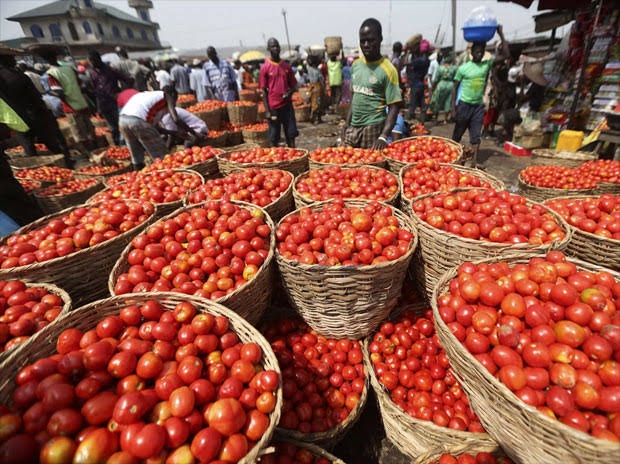
I am very ecstatic to see this good news come from Nigeria because the country has been depicted to be more of a consumer economy than a producer economy. According to statistics, Nigeria is the world’s 13th largest importer of tomato paste, even though the country is richly blessed with fresh tomato products. It is indeed a thing of joy that a company in the country can now manufacture tomato paste because facts have it that there are usually post-harvest losses of approximately 45% of tomatoes in the country because buyers cannot be found.

According to Metha, she disclosed that driving across Northern Nigeria, she would see piles of tomatoes that farmers couldn’t sell. Not anymore, as the company can now transform those leftovers into tomato paste. This is a perfect time for the government to partner with Tomato Jos company and invest properly into the company, as well as going to set up many more companies like that so that there can be massive production of tomato paste in the country, which will stop the country from the importation of tomato paste.

According to the CEO of Tomato Jos, Metha, she disclosed that her company plans to raise an additional $10 million in debt and equity to fund further growth and expand its reach across the country. The exportation of these products will greatly improve the country’s economy as many countries will seek to patronize these products. Permit me to say that Nigeria is on its path to becoming one of the highest manufacturers of tomato paste.

Are investors in African Startups biased towards foreign-educated CEOs?

1

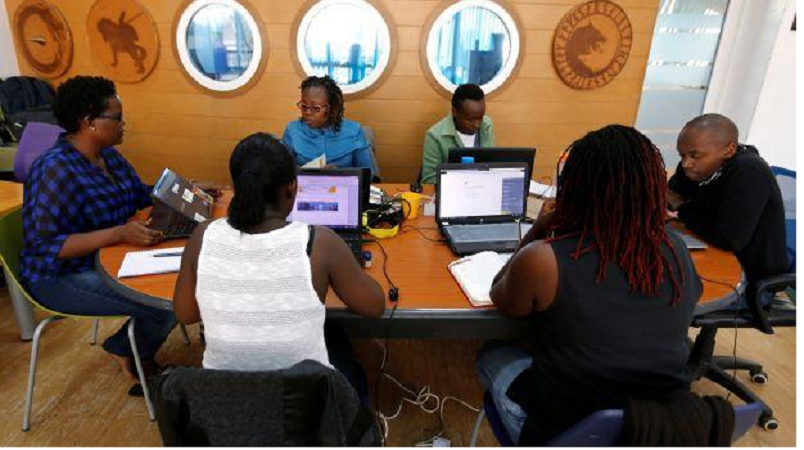
The Big Deal – a substack newsletter that covers startup deals in Africa – recently released data shows that in 2021, 73% of the over $4 billion raised by African startups was by CEOs whose latest degree was a Masters or MBA obtained from a university outside of Africa.

The data shows that both in terms of the number of deals and amount raised, “it is US-educated CEOs who lead the charge, followed by their UK-educated peers.” In the numbers, Startup CEOs who last studied in Africa signed 44% of the deals but raised only 28% of the over $4 billion raised by African startups. This was true for all African countries except Egypt and South Africa. For the two countries, more than 60% of the capital raised in 2021 was by CEOs who last studied in their home country.

The conversation around this has tried to suggest that there might be investor biases or existing prejudices that favor founders who have acquired a degree outside the continent, over the founders who only schooled at home. This may or may not be true, and the authors of the data have agreed that more research would be needed before any such claim can be made.

Let’s talk about it. As an entrepreneur, does where you go to school matter? Are there things you would be taught outside of the continent, that is not being taught in African higher institutions? Are all of this education and certificates even necessary?

The direct answer is a No. The school you attended will not matter in the real scheme of things, because education is continuous especially if you are an entrepreneur. Besides, there are now different ways you can educate yourself without going through the four walls of a higher institution, and some of them are just as effective as any formal education you can get. There are online courses and certifications if you consider all that to be necessary. What counts, and I speak for most entrepreneurs and investors, is your productivity and ability to provide the results that will solve people’s problems.

But how can we explain the lopsided investment pattern that the data reveals for African startup founders? I will attempt to look at it from two angles – perception and reality.

In terms of perception, when people (investors or not) come across someone who has traveled outside the shores of his country to get an education, the perception is that this could be a person who places a higher premium on education and exposure; and so he has traveled thousands of miles in search of it. This may not always be true. A local institution may be offering better quality education of the specific field of study he has, but the discomfort of traveling to school just gives the impression that he or she must have traveled in search of the best.

Now let’s consider reality.

What are investors on the lookout for when they invest? Irrespective of whatever biases or prejudices they have, investors generally want to put their money into a business that has a higher possibility of success. They want to back that CEO who looks like he has what it takes to carry the idea through. This is highly subjective of course, and that is why the same business one investor refuses to fund, can have several others who are willing to inject the needed funds.

Thankfully, data is only showing a slightly imbalanced pattern with foreign schooled CEOs getting 56% of the funding deals, while those who schooled locally signed 44% of the deals. The major difference comes when you begin to consider the funds secured in those deals.

Why are investors willing to throw more money behind CEOs who schooled outside the continent? Here is what I think.

Most times, startups founders in their pitch will talk about plans to expand into other countries and take their business beyond their current locality. Given this, an investor would naturally prefer a CEO who has some exposure outside their current country of operation. Schooling outside of your country or even continent means that the foreign schooled founder has more exposure and multicultural experience.

Most investors might consider it folly, to give you money to expand your business into a country you have never lived in. You may not be familiar with the system there, its market structure, regulatory issues, and the like. In such a terrain, your chances of failure may be higher than your chances of success. If however, you have someone on your team, a partner, or a co-founder who schooled or lives in that location, it could help your case.

On a radio show recently, the CEO of a software company in Nigeria mentioned that he had started his business in the UK even while he was servicing Nigerian clients. During this time, all his efforts at fundraising were futile because investors insisted that he needed to live in Nigeria to serve Nigerian clients or get a partner who had schooled or lived in Nigeria for decades. He had to relocate the business to Nigeria and get a fully Nigerian partner before the funds came in.

This, in my opinion, shows that there may not necessarily be a bias against founders and CEOs who schooled locally. Investors want to ensure that people have been exposed to that environment that they want to play in. If you are proposing a business that crosses a nation’s boundaries, it just helps to have multi-cultural experience, cross-border exposure, and an international network with ex-colleagues or ex-coursemates in other climes. It means you will have a better understanding of the culture, and the people.

Take all these away, and you may be seeing a lot of cultural clashes and knowledge gaps that could become a clog in the wheels of the business. Keep in mind that before any pitch, you should increase your chances of getting funds by getting a partner who has those qualities that you lack. Learning never ends, so there could be other opportunities for studying that could come your way.