DD
MM
YYYY

PAGES

DD
MM
YYYY

spot_img

PAGES

Home Blog Page 5246

Gas Flaring In Nigeria And The Way Forward

0

The use of gas by mankind over the years has hitherto remained unending and inevitable, but the numerous dangers inherent in its exploration remains a thing of tremendous worry to all concerned.

Gas flaring in Nigeria has over past decades remained an environmental phenomenon of great concern within the shores of the oil-producing areas in the country.

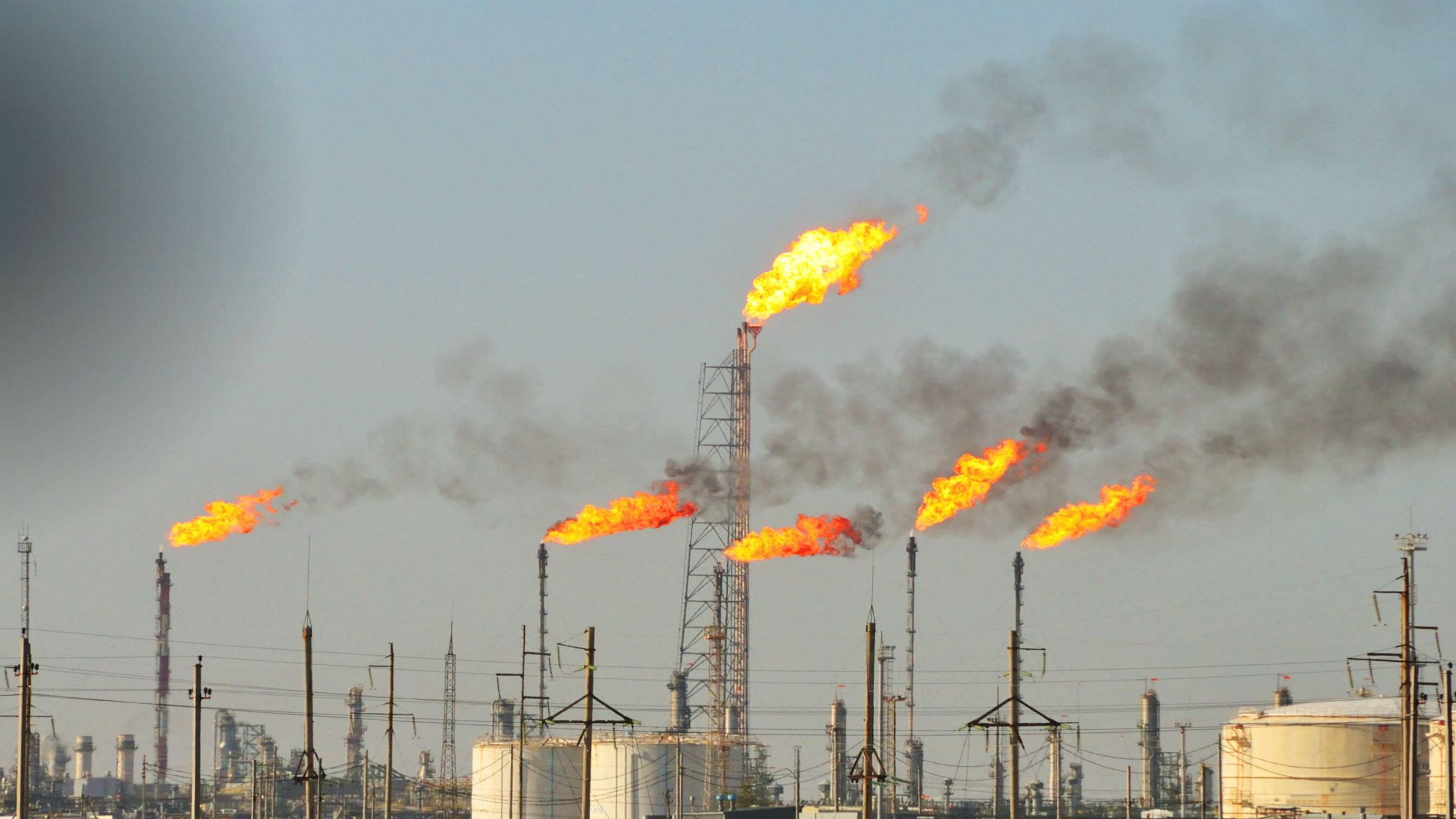
A gas flare, alternatively known as a flare stack, is a gas combustion device used in industrial plants such as petroleum refineries, chemical plants, natural gas processing plants as well as at oil/gas production.

 Gas flaring is the burning of natural gas that is associated with crude oil when it is pumped up from the ground. In petroleum-producing areas where insufficient investment was made in infrastructure to utilize natural gas, flaring is employed to dispose of this associated gas.

 Flares are important safety devices used in refineries and petrochemical facilities. They safely burn excess hydrocarbon gasses which cannot be recovered or recycled. During flaring, excess gasses are combined with steam and/or air, and burnt off in the flare system to produce water vapour and carbon dioxide.

A flare system comprises a flare stack and pipes that feed gas to the stack. Because natural gas is valuable, companies would rather capture than flare it. However, there are several reasons it may be necessary to flare gas during drilling, production or processing.

In industrial plants, flare stacks are primarily used for burning off flammable gas released by pressure relief valves unplanned over-pressuring of plant equipment. However, during plant or partial plant startups and shutdowns, flare stacks are equally utilized for the planned combustion of gases over relatively short periods.

The fact is that gas flaring at several oil and gas production sites protects against the dangers inherent in over-pressuring industrial plant equipment. This is the reason the practice has seemingly become inevitable to the various oil firms operating within the shores of countries like Nigeria.

A good example of the consequences of failure to flare escaping gas was evident in the Bhopal disaster on 3rd December 1984 in India when a flare tower was broken and couldn’t flare escaping Methyl isocyanate gas. The gas in question had reportedly been in an over-pressurized tank and released by a safety valve, which resulted in its release into the surrounding area.

When petroleum crude oil is extracted and produced from oil wells, raw natural gas associated with the oil is brought to the surface, especially in areas of the world that are lacking pipelines and other gas transportation infrastructure. Vast amounts of such associated gas are commonly flared as waste or unusable gas.

It’s noteworthy that the flaring of associated gas may occur at the top of a vertical flare stack or it might occur in a ground-level flare in an earthen pit. Preferably, associated gas is often re-injected into the reservoir, which saves it for future use while maintaining higher well pressure and crude oil production.

When industrial plant equipment items are over-pressured, the pressure relief valve is invariably an essential safety device that automatically releases gasses and sometimes liquids. These pressure relief valves are usually needed by industrial design codes and standards as well as by law.

The released gasses and liquids are then routed through large piping systems known as flare headers to a vertical elevated flare. They are thereby burned as they exit the flare stacks. The size and brightness of the resulting flame depends solely upon the flammable materials’ flow rate.

To keep the flare system functional, a small amount of gas is continuously burnt, like a pilot light, so that the system is ceaselessly ready for its basic purpose as an overpressure safety system.

It’s worth noting that flaring can affect wildlife – likewise other living creatures – by attracting them such as birds and insects, among others to the flare. Survey indicated that about 7,500 migrating songbirds were attracted to and killed by the flare at the liquefied natural gas terminal in Saint John, New Brunswick, Canada on September 13, 2013. Similar incidents have taken place at flares on offshore oil and gas installations in some other countries.

A few years back, two bodies were reportedly inaugurated, namely: the Nigerian Gas Flare Commercialization Programme (NGFCP) Ministerial Steering Committee and the Programme Management Office (PMO), were directed to activate the NGFCP Community, Awareness and Sensitization/Participation Plan (CASP) to ensure widespread awareness and full participation of key stakeholders in the Niger Delta areas.

Nigerians were equally notified that a Proposal Evaluation Committee (PEC) was also set up to receive applications and aptly consider applicants who are ably qualified to handle the contracts by painstakingly scrutinizing their respective qualifications.

It’s disheartening that over three years of initiating the said lofty policy, the Nigeria’s government is yet to make any tangible move towards considering the clauses enshrined therein, let alone implementing them.

The bitter truth is that the ongoing practice of gas flaring, in which the natural gas associated with petroleum extraction is burned off in the atmosphere rather than being removed by alternative means such as subterranean re-injection or confinement to storage tanks for eventual sale, is particularly controversial to assert the least.

Gas flaring immensely contributes to climate change by emitting carbon dioxide – the main greenhouse gas – which has serious implications for both Nigeria’s environment and the rest of the world.

More so, the unending industrial practice causes the surrounding communities to suffer from increased severe health risks to include respiratory illnesses and other related diseases, thereby leading to premature deaths.

Gas flares have potentially-harmful effects on the health and livelihood of the people in the affected areas, as they release poisonous chemicals. This is why it is high time the governments at all levels expedited action with a view to bringing the societal menace to a full stop.

Apart from the dwellers who died owing to hardship occasioned by gas flaring and allied matters like oil spillage, it’s worth noting that several environmental activists had lost their precious lives – or been reportedly killed – while fighting for a better life for the people of the Niger Delta. A good example of members of this group is the Late Ken Saro-Wiwa who fought doggedly till he was executed by the military regime.

In spite of all the countless bad omens and ordeals that transpired in the past as a result of gas flaring, the government is ostensibly yet to learn a lesson, or be moved by the untold sufferings of the Nigerian people whose lands have hitherto been the major – if not sole – surviving point of the entire country.

Aside from the health and environmental effects of gas flaring, reports show that Nigeria invariably loses about N197bn to the practice in just nine months. It was reliably revealed that oil and gas firms operating in the country flared approximately a total of 215.9 billion standard cubic feet of natural gas in the first nine months of 2018 alone, amounting to a potential loss of the aforementioned sum of money.

For Nigeria to get it right, a strict and genuine tech-driven measure is earnestly required from the concerned authorities. Hence, the constituted committees, which apparently went into moribund on arrival, must endeavour to embrace all the needed technicalities towards aptly delivering on the mandate given to them.

Most importantly, for all the regulations and extant laws forbidding gas flaring to be fully adhered to, the government is expected to wear the required political will like clothing. This is a step we must see as a priority and inevitable.

We can’t continue to dwell on a retrogressive approach at a time we are yearning for progressive one. 
Our condolences to victims of the Abuja-Kaduna train terrorist attack

0

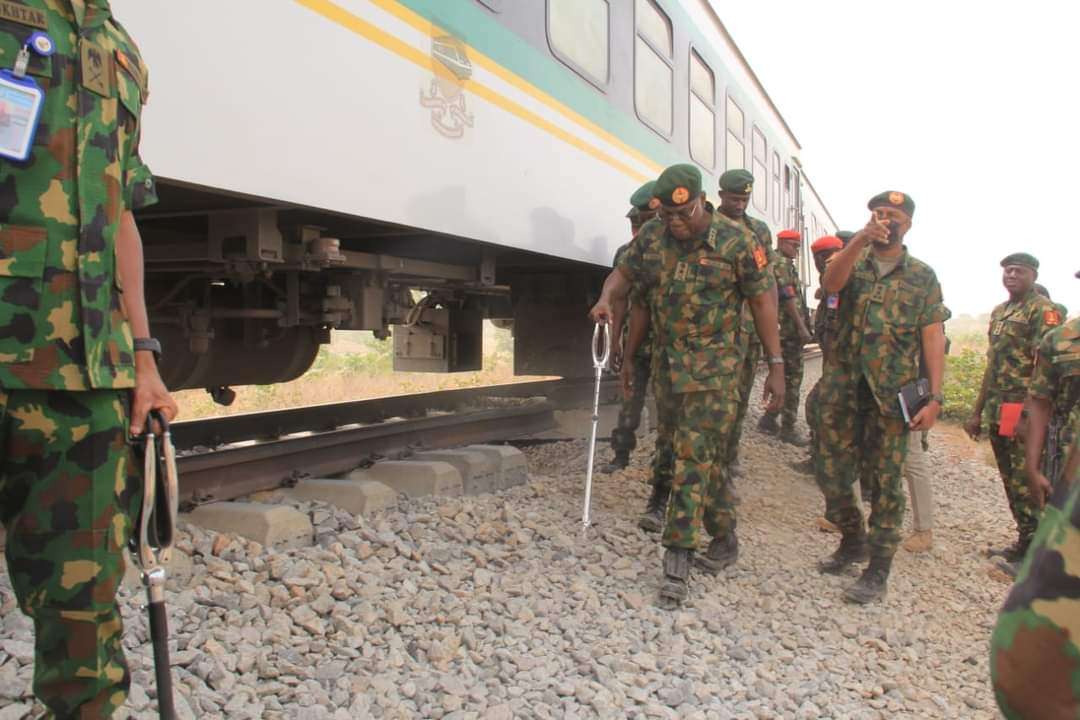
May I use this medium to send my condolences to victims of the Abuja-Kaduna train terrorist attack in Nigeria. I also send my prayers for quick full recovery of the  survivors. This attack is unfortunate. Many years ago, as a young graduate in the Diamond Bank IT department, I would be sent to travel to any part of Nigeria to get a new branch up and running. I worked in the Software Automation Unit which was the heart of the bank. 

I used to charter a taxi from Abuja to Makurdi  all by myself, get to the  new branch, do my work and within hours, call my boss in Lagos, informing him that  “the bank is live”. The next day, you pick a taxi with no fear of any risk back to Abuja to take the next flight back to Lagos! 

A week after, Abakaliki, etc will come. Then,  no one ever discussed security risks; it was always can you get this done when you get there so that the branch would open for customers. 

But today, everything has fallen apart. Nigeria needs peace, desperately. Attacking a moving train is pure wickedness. The other day they wanted to access the airport! I wish those affected STRENGTH and hope this will be the LAST incident.

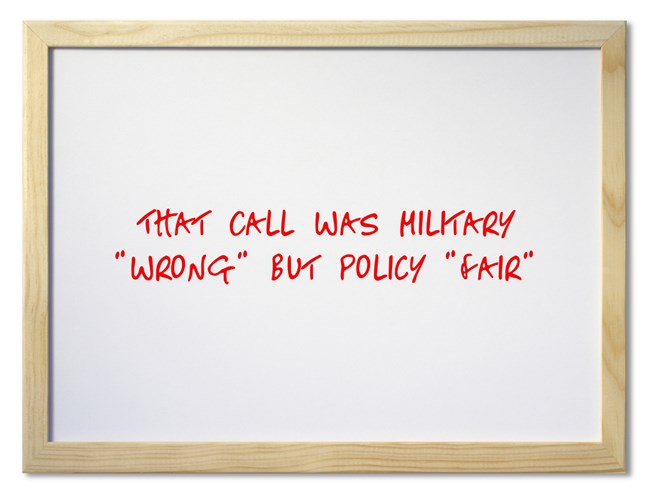
The Call On Ukraine Was Military “Wrong” but Policy “Fair”

0

On March 12, 2022, I wrote “It is very painful but I project that Ukraine’s capital, Kyiv, will likely fail by Thursday, March 17 2022, using the average miles per day Russia is capturing, unless something stops them”. I also added “I can change my opinion depending on what I see on reporting… I am simply using data to extrapolate, nothing more. This is not physics.”

For many who do not know that I get many things wrong, they keep reminding me that Kyiv is still standing. Thanks for even thinking that I would be right!  People, Ndubuisi is wrong – that should end it. I have already explained on March 22, 2022 on that piece; I archive all posts at Tekedia.

“In Kiev, physically I was wrong but policy-wise, Kiev actually “fell”. I have stopped writing about this war. Why? The war “ended” on the 15th when Ukrainian leader agreed that Ukraine would not join NATO. (A shift from we have the right to choose the direction of our future).

That acknowledgment would have  closed everything except that Russia moved the goalpost. Russia now wants to make Crimea annexation permanent and annex the Donbass region – and link both via Mariupol (the “hell” right now) ,(Read Putin’s phone call with Turkey  president). 

Today, President Z was even clearer: “It’s a compromise for everyone: for the West, which doesn’t know what to do with us with regard to NATO, for Ukraine, which wants security guarantees, and for Russia, which doesn’t want further NATO expansion… We have heard for years that the doors were open, but we also heard that we could not join. It’s a truth and it must be recognized,” Zelenskyy said.

Across all points which triggered the war and which Russia requested, Ukraine has agreed to nearly all. But the problem is that Russia has added more. So, Ukraine policy-wise fell before 17th even though militarily that is not the case. Putin is being wicked now for destroying when he has gotten nearly all!]” 

Let’s move on from it; Ndubuisi is wrong. Do not keep reminding me of that. It is not physics. It is a war; time will tell but as it stands, I do not know why they are still fighting after Ukraine has largely agreed to most things Russia originally demanded including a “neutral” state. But do not count out testing new weapons as part of R&D by Russia and NATO, on Ukraine.

How players can start out at a live casino

0

Casinos have been a popular entertainment choice for hundreds of years since the first one opened in Venice in 1638. Over the last hundred years, casinos have become a more mainstream choice, attracting a wide range of gamers as well as those who like to watch others play.

When the virtual world began to emerge, casino games were among some of the first to be digitised as companies wrote code that could simulate games of chance accurately. All the major games were represented as people played video versions of a variety of games, including:

  • Poker
  • Baccarat
  • Blackjack
  • Craps
  • Slots
  • Roulette

These games, including online casino uden rofus, soon became popular and many casinos included digital games alongside their traditional counterparts to give players a choice and broaden their offering. As the internet proliferated and the technology that supported the games became more and more advanced, online gaming took off and the online casino market became a hugely popular gaming sector.

Technology and casinos

The gaming industry has always been at the forefront of technology, with games embracing new innovations as soon as they come to market. By staying at the cutting edge, video games have been able to showcase their own originality, offering players a chance to play hundreds of versions of their favourite games.

With improvements in graphics and the speed at which content could be delivered, even the simplest games had to stay current to compete, so high-end graphics and user-friendly interfaces became the industry standard for casino games. Games designers were often ahead of their time, coming up with creative approaches to some of the most popular games that would not actually be possible until the technology to deliver them caught up.

This was the case with live online casino games, which were first conceived in the 1990s, but it wasn’t until streaming technology became more widely available that they offered the immersive experience that players wanted. As soon as gamers could dial in to a real casino game from wherever they were in the world, live casino games became a firm favourite among those who wanted to combine the excitement of a live game with the convenience of gaming from home.

The increasing popularity of live gaming was made even more accessible by the huge uptake in the use of mobile devices. Developers designed apps to be played on the go, simplifying the controls and making it even easier for players to enjoy the live casino experience from wherever they happen to be.

Getting started with live casino gaming

With so many players opting for casino games, there’s plenty of choice available for a new player that wants to take their first foray into the world of live casino gaming. If you want to experience the fun of online casino gaming, then the first thing to do is find a legitimate casino site to play on.

Online casinos have to be licensed by an official gaming authority that ensures that all gaming sites adhere to a strict code of conduct and guarantee fairness and excellent customer service for their players. There are plenty of established sites, such as Rainbow Riches, that offer players the chance to enjoy a variety of games with the security of knowing that they are fully protected. Other examples include 22bet casino.

It’s also important to check that your chosen site will allow you to deposit and withdraw cash using your preferred payment method. Although most sites accept all major credit and debit cards, some players prefer to use web-based finance services to cryptocurrencies to manage their casino game payments, so make sure your first choice is supported by your chosen site.

Seek out promotions

One of the things that appeals most to online casino gamers is the variety of promotions and bonuses available in the online realm. Many providers offer a choice of discounts, including:

  • Welcome /Sign-up bonus
  • First deposit bonus
  • Loyalty bonus
  • Free spins
  • Referral bonus
  • Cashback bonus
  • Weekly/monthly bonus

Players can check the terms and conditions to ascertain their eligibility for the various offers available, check which can be applied and whether they can be combined to create even more enticing discounts. New players can take advantage of bonuses that allow them to effectively play for free as a way to find their feet in the world of online casino gaming.

Choosing your game 

Experienced casino goers will usually have a favourite game, but if you’re new to the world of playing online, then it may take you a while to settle on one. There are games that rely purely on chance (and statistics) as well as games that require a degree of skill and experience, such as poker.

Whatever type of game you prefer, you can enjoy playing live online where the action is as close to a bricks-and-mortar casino as it is possible to get. With real dealers and croupiers offering an authentic playing experience, players can interact with the game in the same way that they would if they were there in person.

Live casinos have a universal appeal – from casino veterans that want to make the most of modern technology to recreate their favourite aspects of gaming in person, to complete newcomers that want to try their hand at casino games in a low-pressure way.

Enhancing The Nigeria’s Civil Service Payroll System

0

The Nigerian civil service system has in recent times been deeply characterized by a bunch of cankerworms known as ‘ghost workers’.

The syndrome, which isn’t peculiar to the federal level, is indeed ubiquitous that no certain level/unit of government is exempted whenever its scourge is being discussed. Funnily enough, the anomaly has lingered that anyone could insinuate that it’s a norm.

Three years ago, precisely on Thursday, 5th May 2016, during the meeting between federal ministries and Newspaper Proprietors Association of Nigeria (NPAN) in Lagos State as organized by the Minister of Information and Culture – Alhaji Lai Mohammed, the then Finance Minister, Mrs. Kemi Adeosun unequivocally disclosed that the then N165 billion monthly salaries cum allowances of federal civil servants was over-bloated, thus could no longer be sustained by the Federal Government (FG).

Mrs. Adeosun who was speaking on the economy reform agenda of the President Muhammadu Buhari-led administration, stated that the said fund represented about forty percent (40%) of the total spending made by the FG.

According to her, the figure was outrageous, hence the government was pursuing aggressive measures towards detecting as well as prosecuting ghost workers and other saboteurs in the system.

She landed with a mind-boggling revelation that the Nigerian Railway Corporation (NRC), which wasn’t fully functional, still had names of about ten thousand (10,000) workers on its payroll regularly serviced by the FG’s coffers.

In a related development, in the same 2016, over a huge sum of N4 billion fraud was reportedly discovered in Aso Rock, Nigeria’s Seat of Power. The discovery was made by President Buhari’s National Security Adviser (NSA), Major Gen. Babagana Monguno (rtd).

Aside from his alleged shocking discovery, which was made after a general security auditing and verification exercise ordered by Mr. President, the NSA further disclosed that  names of twenty-nine (29) ghost security personnel had been on security payroll in the Presidency over the years.

The various states and LGAs across the federation aren’t exceptional. On Thursday, 26th May 2016, the Bayelsa State government said it had uncovered payroll fraud in the State Universal Basic Education Board (SUBEB), with the discovery of over 765 illicitly employed teachers in the existing eight local government councils in the state.

According to the aforementioned report from Bayelsa, names of fifty (50) dead teachers were equally found on the payroll of Ogbia Local Government Education Authority (LGEA) alone in the State.

In spite of the thus far war against corrupt practices or graft invented by the Buhari-led government since inception, the payroll of most government MDAs, and even that of the pensioners, at various levels are still presently influenced by the enemies of the society. This very societal ill has hitherto been causing the country a colossal economic mayhem.

It’s also more worrisome to note that despite the invention and onward implementation of the Integrated Personnel Payroll Information System (IPPIS) by Nigeria’s government, the ugly trend still lingers. This simply implies that corruption remains the country’s prime plight as regards economic emancipation.

It’s so baffling that in this digital age, Nigeria is still lagging behind in regard to adequate utilization of the numerous gains of Information and Communications Technology (ICT). We can’t continue indulging ourselves in retrogressive issues in an era when ICT or Hi-Tech has succeeded in simplifying everything, or unraveling every mystery related to personnel information and management.

Nigeria’s problem ab initio, had been lack of orientation and corruption. The people she had had in positions of authority have seemingly remained deceitful and adamant concerning the lingering payroll palaver in the country, perhaps owing to lack of political will occasioned by corruption.

However, we ought to be immensely joyful that the current administration apparently detests graft profusely. But it does not stop at just having an interest in a certain cause, but ensuring the needful is aptly considered and done.

Hence, as the Buhari–led government is ostensibly interested in getting it right, it must acknowledge that obtaining a comprehensive database for all the federal workers is long overdue. Such measures can only be actualized via a forensic approach.

To this end, a special unit/department must be created by law under the Ministry of Finance. The proposed unit is subject to be manned by well qualified and reliable IT experts; and no one ought to have access to the department, except its staff and the director/HOD.

Additionally, an agency comprising thoroughly scrutinized individuals ought to be set up by law to monitor or oversee the day-to-day activity of the department. The agency would ascertain whenever a worker dies or retires, as the case may be, among other likely events, and thereafter ensure that the record is duly implemented by the unit.

Moreover, from time-to-time through their oversight functions, the federal legislators should invite the members, particularly the chairman, of the agency to keep them abreast of happenings. This must not be compromised for any reason whatsoever.

For the above unit to function tactically and properly, every federal MDA must equally boast of a competent and reliable IT unit that would regularly update that of the Finance Ministry being the umbrella body, on matters relating to employment, death, retirement, expulsion, retrenchment, or what have you.

The agency as mentioned above would assist in monitoring the genuineness and adequacy of the aforementioned cooperation. For efficiency’s sake, the unit must engage a viable and reliable software consulting firm toward ensuring holistic update of its software maintenance.

The measure ought to as well be replicated on the part of payment of pensions and gratuities. And, the various state governments should, on their part, endeavour to borrow a leaf from the overall proposed approach. It’s arguably time the governments at all levels fully embraced ICT towards enjoying forever.

Above all, the authorities must tackle the unbridled corruption with the last drop of their blood, acknowledging that nothing will work as planned if it is marred by graft.

This is an inevitable sacrifice the concerned authorities need to make towards salvaging the entire system of this monster that has already eaten deep into our bone marrow.