DD
MM
YYYY

PAGES

DD
MM
YYYY

spot_img

PAGES

Home Blog Page 5256

Manchester United Continues To Struggle with C Ronaldo 2.0

0

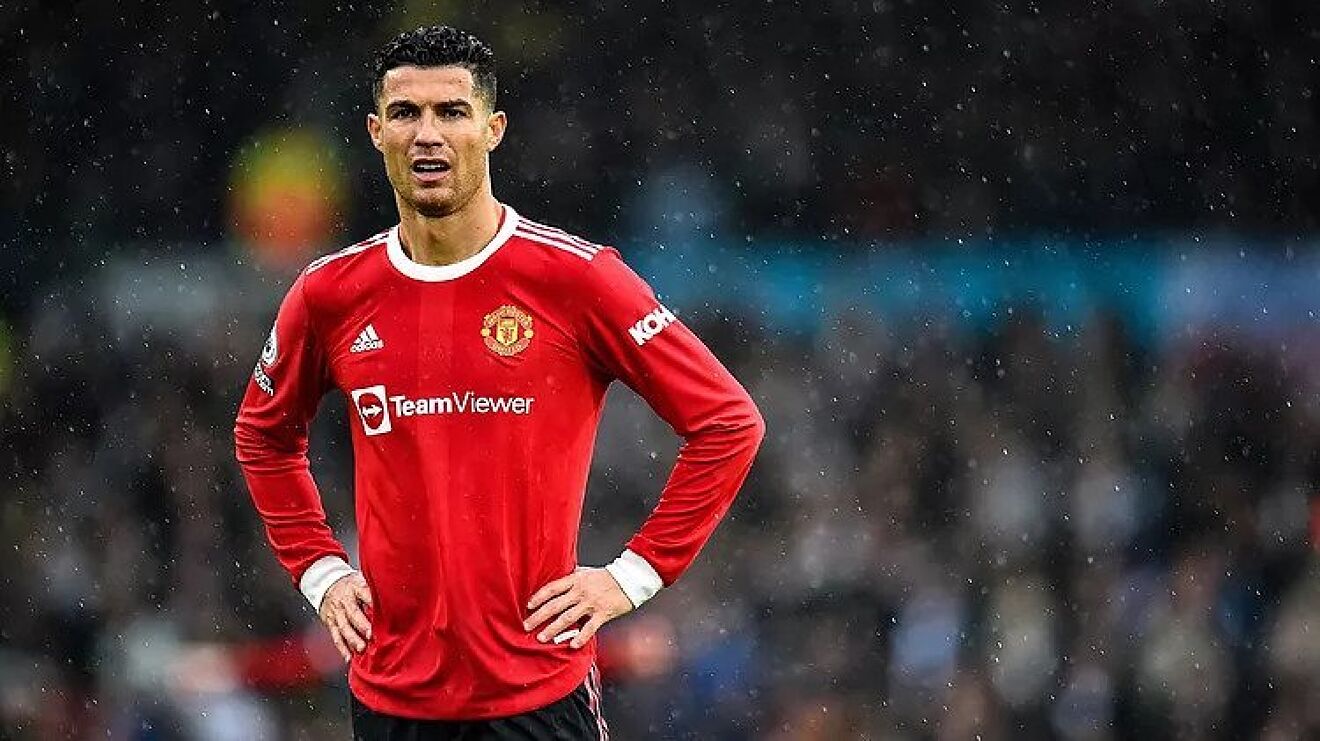
How is the C. Ronaldo deal with Manchester United coming out with the ManU fans in Nigeria? They were not happy when I noted that it was a bad trade.  I maintain that with CR, ManU will continue to underperform. Five more years trophyless, ManU becomes a tier-2 club in England.

Read my original call: “Manchester United needs to understand one thing: Cristiano Ronaldo is an accelerator who has a great skill on executing and finishing a playbook; but he is never an incubator. He outperforms in teams with great incubators (people who stimulate chances from midfield). He is one of the greatest, if not the GOAT, on accelerating and finishing chances.

“But outside the ball, he has relative inaction, now, when he is not with the ball. Also, his pressing coverage is relatively below average, now. What happens is this: if there is no Xabi- or Iniesta-like in his team, who incubates as great midfielders, team chemistry breaks because expectations crash. CR can still score goals (he is a genius on that) but in general his team underperforms.”

Those days in the village, we used to  put the small radio in the ear to listen to commentators on Edward Ansah, Abdullahi Alausa, etc, memorizing the starting lineups from Rangers to Sharks in the Nigerian football league.

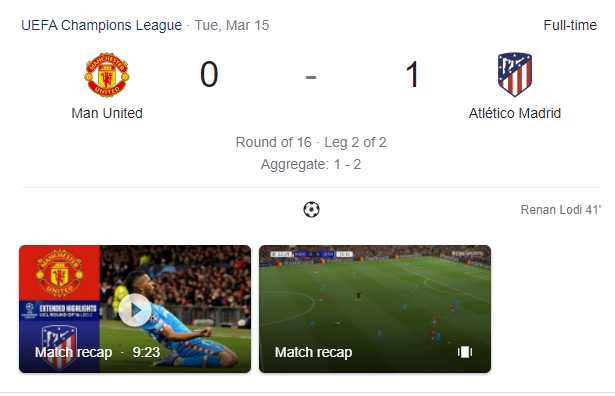
ManU was knocked out of the current Champions League by Atletico Madrid.

The Soludo’s N109 billion Debt Revelation And His Call to Serve

1

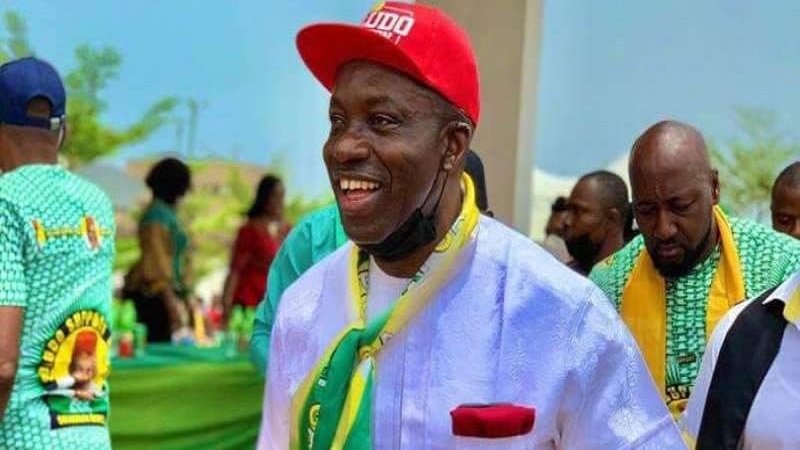
Governor Charles Soludo of Anambra State has said that he met about N350 million in the state treasury but inherited about N109 billion debt when he assumed office: “Everybody knows that the state finances are not quite robust, to put it mildly. The cash we met in various banks, if I remember correctly, I think N300 or N400 million, and then from the audited account as at (of) December, 2021, the debts (was) about N109 billion.”

I want to believe that Mr. Governor is not surprised. So, this must not punt his transformation agenda. The biggest challenge for Nigeria is that some federal loans will mature in 30, 50 years and no one has structured sinking funds (money you save or set aside, say monthly, to say help you pay debt when it matures) for them. The implication is massive because at state and federal levels, Nigeria has borrowed the futures of its young people.

But to reverse that tragedy, Governor Soludo was elected. He did not complain about this revelation,  and I commend him for that. Those who stole money must be prosecuted but the future must not be lived in the past. So, the execution of the agenda must go on because the Anambra people are ready.

I hope the same for Abia state; no excuses will be accepted, get the job done. And I hope we find our own Soludo.

Governor Charles Soludo of Anambra State has said he met “about N300 to N400 million” in the state treasury but inherited about N109 billion debt when he assumed office.

Mr Soludo disclosed this on Tuesday when he appeared on The Morning Show on Arise News Television.

The governor said the state’s finances were not robust, but that his administration would not be daunted by the situation.

“Everybody knows that the state finances are not quite robust, to put it mildly. The cash we met in various banks, if I remember correctly, I think N300 or N400 million, and then from the audited account as at (of) December, 2021, the debts (was) about N109 billion,” he said.

Mr Soludo said his administration would build a transparent public financial management in the state to monitor the state’s treasury.

Right to Protest is your fundamental human right

0
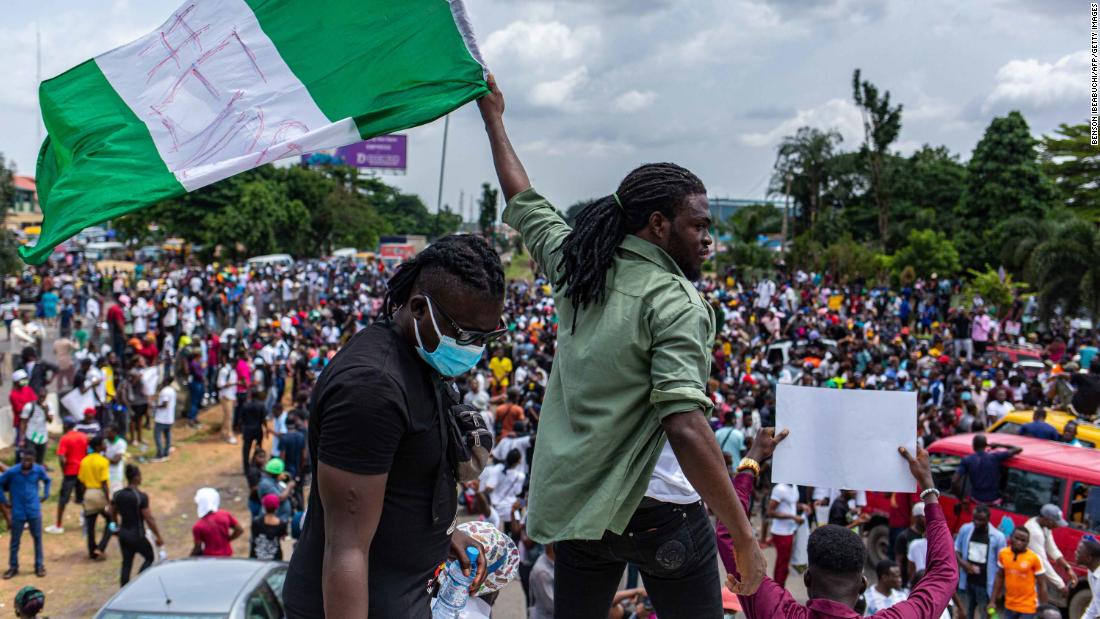
A Nigerian youth seen waving the Nigerian national flag in support of the ongoing protest against the unjust brutality of The Nigerian Police Force Unit named Special Anti-Robbery Squad (SARS) in Lagos on October 13, 2020. - Nigerians took to the streets once again on October 13, 2020, in several cities for fresh protests against police brutality, bringing key roads to a standstill in economic hub Lagos. Demonstrations organised on social media erupted earlier this month calling for the abolition of a notorious police unit accused of unlawful arrests, torture and extra-judicial killings. The government gave in to the demand on October 11, 2020, announcing that the federal Special Anti-Robbery Squad (SARS) was being disbanded in a rare concession to people power in Africa's most populous nation. (Photo by Benson Ibeabuchi / AFP) (Photo by BENSON IBEABUCHI/AFP via Getty Images)

The right to protest is embodied in different sections of the constitution and it cut across right to the right to freedom of thought and conscience and religion as provided in S 38, and also embodies the rights to freedom of expression and voicing of different opinions as provided in S 39 followed by the right to peaceful assembly and association as also provided in S 40 and it is finally crowned by S 41 which provides for the right to freedom of movement. 

These constitutional provisions were again clearly made and re-emphasized by the Federal High Court in Abuja yesterday having declared that the arrest of the renowned activist Mr. Omoyele Sowore during his 2019 “revolution now” protest was illegal and conflicts with his fundamental human right of freedom of association, freedom to join or organize a pressure group, freedom of movement, right to peaceful assembly as all provided for in Sections 38, 39, 40 and 41 of the constitution. 

The court at the course of the judgment also went ahead to rule that the clamp down on the 2019 “revolution now”  protest led by Omoyele Sowore by the Department of State Security and other security forces of the state was unlawful and unconstitutional. 

Every citizen of Nigeria has it as his or her inalienable right to publicly register his displeasure with the government using the pressure group as long as the activities do not breach any security apparatus of the state and this right should never be taken away from citizens.

The Department of State Services (DSS) had arrested Sowore with some of his comrades on August 2, 2019, after using tear gas and rubber bullets to disperse the group and abort their protest. Sowore was subsequently granted bail by the court but despite being granted bail by different courts, the agency refused to honor the court bail to release the activist from their detention until December 2019. 

In response, Mr. Sowore through his lawyer filed a suit praying the federal high court to award him the sum of N500 million as monetary damages against the DSS for the “violation of his fundamental human rights, unlawful arrest and detention by the security forces, illegal violation of his fundamental right to life, violation of his right to dignity of his person, violation of freedom of movement and violation of freedom of association as all provided and guaranteed by the Constitution. 

The Federal high court yesterday, ruled in the favour of the applicant and held that the actions of the law enforcement agencies against his person did amount to the breach and violation of the applicant’s fundamental human rights and 1 million naira was awarded as monetary damages in his favor against the DSS as a compensation.

Before this August judgment, earlier in December 2021, Justice Anwuli Chiekere, of the  federal high court sitting in Abuja, had ordered the DSS to pay the sum of N2 million as general damages to Sowore over the unlawful seizure of his phone in 2019 and tampering with his right to privacy and his property without not just cause

World Water Day: Encouraging Regular Intake Of Clean Water

0

March 22 each year, World Water Day is being commemorated. The international World Water Day is held annually across the globe as a means of focusing attention on the importance of freshwater and advocating for the sustainable management of freshwater resources.

The theme of World Water Day 2022 is “Groundwater: Making the Invisible Visible”. The theme aims to highlight how important groundwater is to our environment.

Water is a clear, colourless and transparent liquid that has no taste or smell, and that is required for the survival of all plant and animal lives. In the same vein, a large amount or area of either natural or manmade water such as lake, pond, pool, river, sea, ocean, and so on, can be referred to as water or waters.

Water, which is as old as the world, is consumed as food by both animals and humans, and it is also required in various fields of endeavour or human activities including, farming, cooking, manufacturing, sports, bath, hand washing, brushing of teeth, laundry, sanitation cum other forms of domestic and environmental activities, just to mention but a few.

The functions of water in the body ranging from cell life, to chemical and metabolic reactions, transport of nutrients, body temperature regulation, elimination of waste or toxic substances, among others, are numerous and innumerable.

Water is a carrier that distributes essential nutrients such as minerals, vitamins and glucose, to cells. Furthermore, it removes waste products including toxins rejected by the cells through urines, sweats and faeces. It also participates in the biochemical breakdown of whatever we consume.

Inter alia, water has a large heat capacity which helps to limit changes in body temperature in a warm or a cold environment. It allows the body to release heat when ambient temperature is higher than body temperature. Most importantly, water is an effective lubricant around joints; it also acts as a shock absorber for eyes, brain, spinal cord, and even for the fetus through amniotic fluid.

Water is indeed at the centre of life. This is why nobody can live more than three to five days without any water intake. It suffices to say that its role in the body is not just important, but inevitable. It has succeeded in proving to mankind that it is the most important form of food among the six classes of food in existence.

Considering the agricultural sector; the absence of water would simply cripple the entire activity in the aforementioned area thereby terminating the lives of crops or livestock, as the case may be. Same is obtainable in the manufacturing industry, like the pharmaceutical firms, bakery and breweries, that requires water as one of the basic raw-materials for its day-to-day activities.

The positive impact of water on cooking and other household cum industrial works, is another factor that cannot be taken for granted whenever the societal importance of water is discussed. It’s noteworthy that without water, most other forms of food or diet would not be prepared or provided.

On the other hand, swimming, which is one of the most lucrative kinds of sporting activities in recent times, wouldn’t have been founded if water was not obtainable.

As it is widely noted that the significance of water to mankind cannot be overemphasized, it is also worthy to note that intake of dirty or impure water remains one of the primary causes of several diseases or infections such as, typhoid, diarrhea, cholera, dysentery, staphylococcus and other sexually transmitted diseases, experienced across the globe.

Without mincing words, statistics show that over sixty percent (60%) of death rate recently is attributed to consumption of unclean water as well as residing in an unsafe environment. We shouldn’t forget that accommodating dirty stagnant water such as gutters, pools, et cetera, in our environments or vicinities attracts mosquitoes, which remains the sole cause of a killer disease known as malaria.

According to the United Nations (UN) findings, 768 million people worldwide lack access to improved water sources while 2.5 billion persons have no improved sanitation.

As the global community commemorates the 2022 World Water Day, all relevant stakeholders and the civil society are urged to pledge to develop the policies needed to ensure that sustainable water and energy are secured for the many and not just the few as it is presently the case in Nigeria and other developing nations. In this regard, they should ensure that their respective communities are provided with adequate and safe water sources.

On their part, the various ministries of Water Resources and their Environment counterparts across the federation, ought to ensure that adequate and reliable boreholes are sunk in every community that is related to them and also endeavour to sponsor series of radio/television jingles to sensitize the populace on the unavoidable role of clean water as well as safe environment. The various Water Corporations are also expected to live up to the expectations.

Similarly, there’s equally an urgent need to monitor borehole drilling by residents in various quarters with a view to avoiding any future manmade disaster such as earthquake or what have you. People must be made to understand that improper sinking of boreholes, among other related activities, poses environmental threat to the affected dwellers.

Among all, the National Agency for Food and Drug Administration and Control (NAFDAC) ought to, from time to time, endeavour to checkmate the activities of the various registered water companies. Also, it should not hesitate to sanction or close down any one that is set up illicitly.

Most importantly, in our individual capacities, we ought to endeavour to properly boil any water we intend to drink, and also adequately sanitize any stagnant pool of water within our surroundings as well as fumigate the said environments when necessary.

This action will guarantee purity and thorough sanitary, thereby boasting the safety and well-being of our bodies. To be forewarned is to be forearmed.

CBN Retains Interest Rate At 11.5%, Rues Alarming Rate of Crude Oil Theft in Nigeria

0

The Central Bank of Nigeria (CBN), during the Monetary Policy Committee (MPC) meeting held on Monday, in Abuja, resolved to retain the Monetary Policy Rate (MPR) at 11.5% with the asymmetric corridor of +100/-700 basis points around the MPR, ThisDay reports.

MPR is the rate at which the CBN lends to commercial banks and it often determines the cost of borrowing in the economy.

The MPC also voted to maintain CRR at 27.5 percent as well as the Liquidity Ratio at 30 per cent.

The CBN governor said six out of the 10 MPC members present voted to retain monetary parameters, adding that while loosening could trigger liquidity surfeit in the system, a tightening stance would impact the fragile recovery of the economy, reverse credit expansion and yet, fall short of taming inflation.

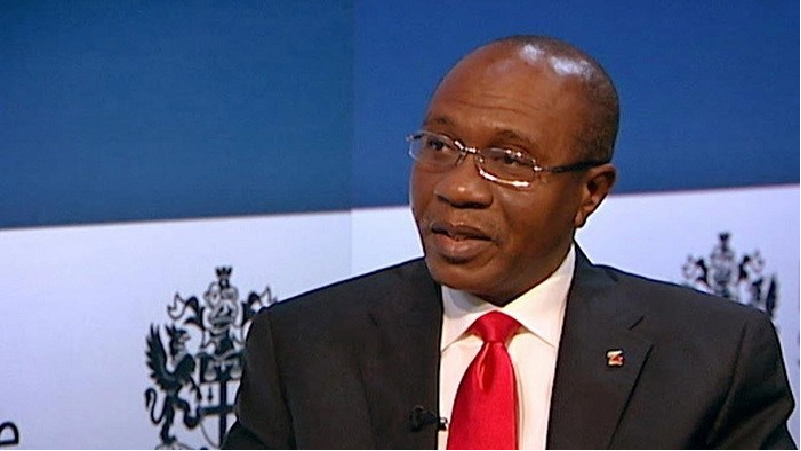
Emefiele, who read the committee’s communiqué, lamented about the impact of rising oil prices and the current fuel scarcity rocking the nation, which he acknowledged has compounded Nigeria’s economic struggle.

He said the unprecedented rate of oil theft recorded in recent times has debilitating effect on government revenue and accretion to reserves, echoing the lamentations of other notable Nigerians such as the co-founder and former Chief Executive Officer of Seplat Energy Plc, Mr. Austin Avuru, and Chairman Heirs Holdings, Mr. Tony Elumelu, who decried the alarming rate of oil theft in the country.

The CBN also expressed optimism that in the medium term, the proposed take-off of the Dangote refinery this year, would help to improve the supply of petroleum products in the country.

Emefiele said the CBN remained optimistic that food prices would trend downwards in 2022 as security agencies sustain efforts to subdue the activities of bandits so as to allow farmers back to their farmers.

“And now what we are saying is that if farmers are able to access their farms, do they have the wherewithal to procure the inputs, seeds, fertilizer and other inputs with which they can go back to the farm and farm? We are making all those available. And that is why we still remain reasonably optimistic that food prices would moderate in 2022,” he said.

He said the MPC further noted with concern the effect, which the global price increase in petroleum and other products was having on all economies. He pointed out that this had resulted in imported inflation on the Nigerian economy.

The committee believed that specific actions were required to ensure that the trend did not continue, given the adverse consequences and aggressive rising price level could have on the cost of living and purchasing power of Nigerians.

Emefiele noted that before the Russia-Ukraine war, the MPC was optimistic that the moderate decline in inflation was sustainable due to the positive impact of good harvest on price levels. But it expressed worry that, whereas global prices had gone up, this had been compounded by the shortage of supply of petroleum products.

He added that the rising price of diesel had been compounded by the inadequate electricity supply, which has adversely impacted domestic prices.

The MPC, however, advised the CBN and the fiscal authorities to take specific and urgent actions to avoid many power generating stations shutdown for turn-around maintenance, resulting in the current unwarranted shutdown of generating assets.

The CBN said the committee was, nonetheless, relieved that food inflation declined marginally due to good harvest.

“Although some scarcity is expected as we approach the planting season, the committee is optimistic that with the high level of strategic grain reserves of the CBN, it is relieved that food prices would remain relatively moderated,” Emefiele added.

The committee further advised the apex bank to redouble its development finance initiatives aimed at boosting domestic food output, which would help in moderating food inflation going forward, thereby moderating headline inflation.

On the global scene, the committee noted with concern the recent heightening of uncertainties confronting the recovery of the global economy as the Russia-Ukraine conflict and numerous sanctions against Russia, introduced a new dimension of risk to the tepid recovery of the global economy.

Among other things, the committee took into cognizance the lingering headwinds associated with the COVID-19 pandemic and global supply chain constraints, rising inflationary pressure, and more recently, the progression of an interest rate hike by the US Federal Reserve Bank and Bank of England (BOE).

Members noted that the on-going war and the resultant sanctions against Russia will continue to have a considerable impact on the global supply chain as both countries are major players in the global commodities market.

Emefiele said global financial conditions were thus expected to tighten in the short-term as the investment horizon gradually becomes clearer, adding that this is expected to impact capital flows to emerging market economies as risk-averse portfolio investors adopt a wait-and-see approach.

He said the risks to the overall recovery of the global economy remained heightened and called for cautious policy maneuvering to avoid a sharp downturn, such as experienced in 2020.