DD
MM
YYYY

PAGES

DD
MM
YYYY

spot_img

PAGES

Home Blog Page 5260

Breaking the bias in job roles

0

Since we are still in the international women’s day week, I am considering the reality of biases that exist in job roles. How we still get to find male-dominated sectors or companies, and some female-dominated careers as well.

The issue of biases with job roles does not start in the workplace. It starts right from the homefront and the society children are raised. Very early in life, children are exposed to biases in very subtle comments, and sometimes, blatant actions. Gradually, the minds are conditioned to phrases like “that is a man’s job”, “you are a girl, you can’t do this”, “it is only men that become this…” and the likes. Though subtle, these comments come with pressures of different kinds, so that the girl gets all kinds of discouragement if she even takes the first step into the male-dominated career.

This gradually creeps into the workplace, so that at some point, it subtly becomes the culture. New staff can be employed today, and in three days or less, she has heard comments like “we have never had a female MD in this company”, or “the head of technical operations always goes to a man” and so on. It may also extend to include the dominant belief in the society where that company or business is based.

All of these factors combine to first box the females up, and then gradually push some of them to a situation where they now box themselves up. Unconsciously, the environment and dominant beliefs around them seep through and begin to affect the way they think about themselves and their capabilities.

So, even though a lady has an interest in going for an MBA course, she allows herself to get discouraged. After all, females are never appointed MDs in this company. They end up restricting themselves to those roles they think they can do, those roles that society has told them they can excel in. They allow these biases to define the ceiling and wall of their achievements and remain within that confine.

This has to change. It is time females started stepping out and engaging in bigger challenges. Thankfully, we have lots of females who are breaking these biases and raising the bar higher for women with every new milestone they achieve. But this is nothing compared to the number of women who still stay within the safe box, limiting themselves to what they feel comfortable in.

Women are born natural leaders and managers, and this plays out in their homes. The woman manages her spouse, her children, and the limited resources. The issue is bringing this to bear in the workplace.

Women should become more competitive, enough to gun for higher positions even if there has never been any female in such a position before. Get the qualification needed and go compete on that level. Do not be afraid to be the first woman to walk that path. The world is becoming more liberal, and the workplace is becoming highly result-driven. So, if you are the most qualified person, if you are the one who can deliver the needed results, you will get it whether you are male or female. You only need to bring yourself out and show what you can do. Do it better, and show that you can do it better than anyone else.

The woman incorporates space, and in business will have to become more adventurous and more daring. Learn new things. Take on bigger challenges, and crush them or learn from them. A lot more will change when the woman expands her vision, with bigger dreams and bigger determination.

Interestingly, the average woman can juggle a lot more things than her male counterparts. You would be amazed to see the number of women who combine running a home, keeping a full-time job, a part-time job, and still find the time for some social work or volunteering. That gives you a clear picture of how much more is possible if the woman chooses to come out of the shadows that these biases keep her in.

I like the impact women are making in entrepreneurship too, especially in social entrepreneurship. More can be done. There is enough space for every woman to stretch out her wings and soar.

Senator Stella Oduah Lambasts Ebelechukwu Obiano For Gross Misconduct At Gov. Soludo’s Inauguration Ceremony

0

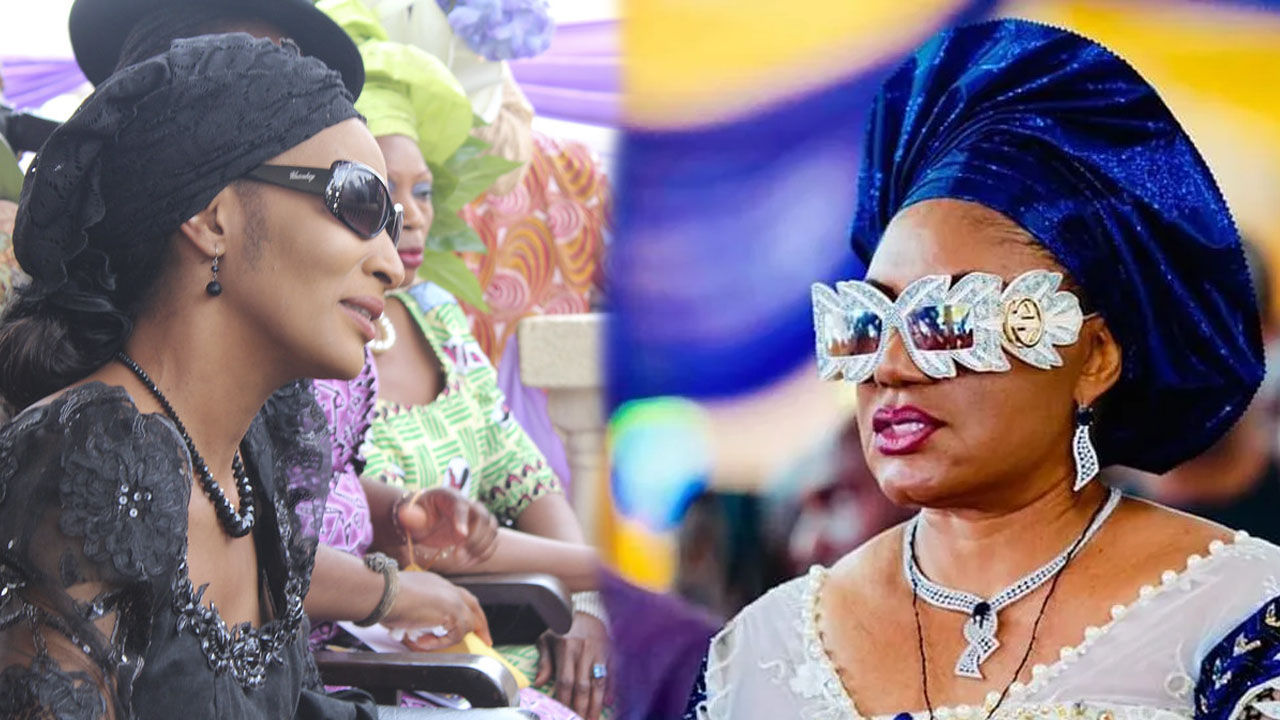
There was a drama that ensued at Governor Soludo’s Inaugural ceremony which happened to be the highlight of the day and has been on the lips of many. In a video that circulated the Internet, Ex. Governor Willie Obiano’s wife, Ebelechukwu Obiano was seen walking towards Bianca Ojukwu who was seated at the occasion. She got to where she was seated, and according to witnesses around, they disclosed that the ex-governor’s wife was heard hurling derogatory words at Bianca, after which they got into a heated argument.

According to information gathered, it was disclosed that Bianca was said to have warned Ebelechukwu Obiano to move away from her presence, but she refused. This got the Ex-beauty furious, and in a bid to defend herself, she landed a slap on the face of the Ex Governors’ wife. This action attracted the attention of many who went to separate both parties to prevent the issue from further escalating into something else.

After they were separated, as if that was not enough, Willie Obiano’s wife walked past Bianca only for her to utter a derogatory word, calling the former beauty queen an “ashawo” which means a sex worker. This shameful display by the Ex Governors wife got a lot of people angry who condemned her for acting classes despite her status and for throwing caution to the wind on a very special remarkable occasion.

Disgusted by her action, Senator representing Anambra North District, Stella Oduah did not fail to lambast the ex-governor’s wife for such shameful misconduct.

In her words, “My attention has been drawn to the shameful conduct of the wife of the ex-governor and former first lady of Anambra State, Mrs . Ebelechukwu Obiano, who threw decorum away and attacked Her Excellency, Ambassador Bianca Ojukwu at today’s inauguration ceremony and I hereby condemn in very strong terms, this unwarranted attack against the wife of an illustrious son and our very our own Ikemba.

I wish to add that the activity exhibited by the former first lady was indecorous and unbecoming of a woman who had acted as a mother of the state and even desirous of serving in other capacities.

More condemnable is even the gutter and vulgar language used by  Mrs . Obiano to describe her fellow woman, who is even a widow. I have always held the view that it is only weak minds that label hardworking women like Bianca with nasty names such as “ashawo” and it is more unfortunate when a woman, especially one that has been around the corridors of power, is the one hurling such baseless and regretful invectives against a fellow woman.

What the world witnessed today at the swearing-ceremony is utterly disgraceful, unfortunate, crude, and should never be emulated by the millions of our young girls and women who often look up to public figures concerning how they conduct themselves.

Only a few days ago, an innocent woman was publicly paraded naked in the same community our former first lady hails from and one would have thought that rather than showcase this brute nature of fighting and engaging in public fisticuffs with her guest, she should have exerted same energy and fighting spirit in ensuring that Justice is done for that widow.

It saddens me a great deal to see the wife of an illustrious Anambra son, the pride of Ndigbo and an achiever that was once an ambassador of the Federal Republic, being attacked unprovoked and I join all right-thinking persons in praying that we never record this type of travesty again in our history as a state”

In my opinion, the ex-governors’ wife displayed a very crass attitude. She had no regard for the occasion, knowing full well that the ceremony was a remarkable one being viewed by many within and outside the country. This is a lady who once held a very reputable position in the state whom many ladies looked up to as a mother and a role model. What message is she passing across by calling her fellow woman an “ashawo”? It’s totally disgusting and uncalled for.

I won’t condemn the action of Bianca who, according to her, slapped the woman in self-defense, because attacking someone unprovoked can push them to do the unthinkable. It is often said that “for every action, there is a reaction”.  It’s high time past and present office holders act right in the society because they occupy a very vital position that can influence the public, especially the young ones.

Nigeria’s Public Debt Stock Hits N41 Trillion

0

Nigeria’s public debt stock reached N39.556 trillion on December 31, 2021, the Debt Management Office (DMO) has said, pushing the country closer to the debt crisis.

This comes on the heels of a fresh Eurobond issued by Nigeria in the International Capital Market (ICM), which pushed the total debt to more than N40 trillion. Nigeria issued $1.250 billion (N520 billion) seven-year Eurobond in addition to about N950 billion the federal government borrowed from the domestic market.

The N950 billion was borrowed to fund the N6.39 trillion budget deficit in the 2022 budget, the DMO said. Adding the fresh Eurobond up to the N950 billion puts Nigeria’s total public debt at N41.026 trillion.

The new debt figures were made known to journalists in Abuja on Friday by the DMO’s Director General, Ms. Patience Oniha. According to her, the proceeds of the Eurobond would be used to finance critical capital projects in the 2022 Budget to bridge infrastructure deficit and strengthen Nigeria’s economic recovery.

Giving further details, the DMO said in a statement that the Eurobond offer was launched at an initial price of 8.75 per cent per annum, and on the back of strong investor demand, Nigeria was able to revise the price guidance to 8.5 per cent per annum.

The debt management office said the Order Book, which included many quality investors in the US, Europe and Asia, continued to grow, reaching a peak of $4 billion.

“With this strong investor interest, the price was tightened to 8.375 per cent per annum, the Order Book still remained high at 3.676 billion and retained the quality investors. Nigerian investors also participated in the Offer with a total subscription of $60 million.

“The proceeds of the Eurobond will be used to finance critical capital projects in the Budget to bridge the deficit in infrastructure and strengthen Nigeria’s economic recovery.

“Equally important, it would contribute directly and in full to the level of Nigeria’s external reserves,” the DMO said.

The new fuel subsidy regime, orchestrated by the rise in oil prices, created a N6.39 trillion deficit in the 2022 budget that the government has taken to borrowing from both international and domestic sources to fill.

The sum of N2.57 trillion is to be borrowed from domestic sources and another N2.57 trillion from foreign sources, while the government hopes to draw down N1.16 trillion from multilateral/bi-lateral loans and harvest N90.7 billion from privatization proceeds to fund the deficit.

Nigerian public debt stock has been bloating with unusual speed year over year since the past 5 years, as it becomes the means of funding the budget. Ms. Oniha noted that the comparable figure for December 2020 was N32.915 trillion or $86.392 billion. The N39.556 trillion debt recorded as of December 31, 2021, was N1.566 trillion higher than the N38 trillion recorded as of September 30, 2021, even as Debt-to-GDP stood at 22.47 per cent as of December 31, 2021.

Ms. Oniha explained that the public debt stock for December 31, 2021, included new borrowings by the Federal Government of Nigeria (FGN) and sub-nationals, adding that for the FGN, the 2021 Appropriation and Supplementary Acts included total borrowing from domestic and external sources of N5.489 trillion to part-finance the deficit.

“Borrowings for this purpose and disbursements by multilateral and bilateral creditors account for a significant portion of the increase in the debt stock. Increases were also recorded in the debt stock of the states and the FCT.

“The new borrowings were raised from diverse sources, primarily through the issuance of the Eurobonds, Sovereign Sukuk and FGN Bonds. These capital raising were utilized to finance capital projects and support economic recovery.

“With total public debt stock to Gross Domestic Product (GDP) as at December 31, 2021, of 22.47 per cent, the Debt-to-GDP ratio still remains within Nigeria’s self-imposed limit of 40 per cent.

“This ratio is prudent when compared with the 55 per cent limit advised by the World Bank and the International Monetary Fund ((IMF) for countries in Nigeria’s peer group, as well as the ECOWAS Convergence Ratio of 70 per cent,” she said.

Allaying fears about Nigeria’s growing debt, Ms. Oniha said the federal government was mindful of the relatively high debt-to-revenue ratio and had initiated various measures to increase revenues through the Strategic Revenue Growth Initiative and the introduction of the Finance Acts since 2019.

However, the major concern of the government currently is the rising oil prices that has been stoked by the Russia-Ukraine crisis, and will likely create further budget deficits as sanctions against Russia further increase oil prices.

Nigeria’s hope to end the importation of refined petroleum products in the near future is not certain and Africa’s largest economy has failed to meet its Organization of Petroleum Exporting Countries (OPEC)’s quota. This means that Nigeria will continue to borrow to fund its budget and infrastructural projects.

Deepening Nigeria’s Tech Ecosystem

0

Nigeria as a country could currently boast of over ninety tech hubs across the federation, reportedly the highest on the African continent.

In recent years, Nigeria has apparently become an incubator for some of the continent’s biggest start-ups, including online marketplace such as Jumia and Konga; and these digital outlets are unarguably driven by tech expertise.

It’s noteworthy that Nigeria reportedly has the largest economy in Africa with a Gross Domestic Product (GDP) of about $448.12 billion compared to its closest rival, South Africa whose present GDP is about $320 billion.

However, it’s worthy of note that the real wealth of any nation is calculated by its GDP per capita, and Nigeria ranks 140 out of 186 in GDP per capita global ranking.

Per capita GDP is a financial metric that breaks down a country’s economic value (output) per person, and is calculated by dividing the whole GDP by the country’s overall population.

In Economics, it’s widely accepted that technology is the key driver of economic growth of countries, regions or cities. Technological progress allows more efficient production of goods and services, in which prosperity depends on.

Technology brings skills, knowledge, process, technique, and tools together, toward solving problems concerning human existence, thereby making their life secure and happy.

It’s very pertinent in today’s world, because it is driving the global community as well as making it appear better. In fact, it is gradually becoming inevitable in our various homes, offices, and workplaces.

Nigeria’s tech patent has grown to be an envy of all who understands its real content. In terms of human and material attributes, it has over the years remains significant in the global society and market.

Take a walk round the world, you would comprehend that, most recent tech inventions and innovations across the globe were mainly as a result of contributions from Nigerians. Similarly, Nigerians remain the reason several countries’ tech sectors have grown beyond limits.

Ironically, Nigeria’s tech sector is presently nothing to write home about. As the days unfold, the sector continues to decline in its value, hence taking the country’s name to a state of ridicule.

Each day, the governments at all levels come up with empty promises and policies as regards tech-driven activity and innovation. The politicians at the country’s helm of affairs have unequivocally, over the donkey’s years, failed us in this regard.

The good news is that, in spite of the lingering hurdles and challenges, the prospects of the country’s tech value remain obviously great, perhaps owing to the fathomless resources lying fallow.

It’s worth noting that countless factors are behind the ongoing impediments in Nigeria’s tech sector. For us to get it right as a people, these barriers continually posing a threat must be severely tackled by the concerned authorities at all cost.

A certain tech-driven contract might be awarded by the government, in the long run, we would be greeted with a myriad of untold stories attributed to paucity of funds. In such case, it could be either the fund made available for execution of the project had been squandered or that insufficient fund was approved ab initio.

The steady economic fluctuation is another glaring factor that cannot be swept under the carpet. This particular plight has left Nigerians tech experts with no choice than to becloud their reasoning with uncertainties and fear of the unknown.

More so, those who – amidst the tough times – insisted on putting something together, would not find the apt market to sell their products or patents. This has continued unabated.

This could be as a result of infrastructural decay occasioned by lack of maintenance culture, or the required physical infrastructures have never been in existence from the onset. The cost of running a tech firm in Nigeria is too high, to say the least.

Poverty has also on its part really posed a great danger to Nigeria’s tech value. The individuals who have the zeal and ability to invest in their expertise might end up being frustrated, due to lack of capital.

This is why the country’s GDP per capita has to be fixed or elevated if she actually wants her tech sector to excel headlong. There are absolutely no two ways about it.

Nigerians do not trust made-in-Nigeria goods. The mentality of seeing foreign products as superior while branding domestically-made ones inferior, must be tackled. Aside from sensitization, apt policies can properly assist in eradicating the social menace, which could best be described as a cankerworm that has eaten deep into our collective bone marrow.

The governments must not necessarily invest in technology for their respective tech values to grow. In most countries where technology is seriously thriving, the individuals domiciled therein remain the key players, not the government. But such a phenomenon can never be witnessed if the enabling environment is conspicuously missing.

To fix this anomaly, we must be ready and determined to address the quagmire in the political system. The country’s political instability is so intense, and continues to skyrocket by the day, that one cannot possibly say what the nearest future entails for our indigenous tech patent.

The policies are so weak that they can’t even initiate a project, let alone accomplish it. To get things rightly done, we need to acknowledge that a country’s growth in any sector depends majorly, if not solely, on her extant policies.

To be on the same page with me, take a look at any nation that has grown in a certain sector, and then take time to painstakingly x-ray the policies guiding the area in question. Just a research and adequate analysis would make you understand where exactly I’m coming from.

Growth is not rocket science; it takes some processes. For such processes or procedures to occur, there must be existing principles. The moment the rules (principles) are thwarted, it marks the beginning of the end of the procedures. There are no two ways about it.

Lest I forget, we need to equally take into cognizance that the reason most of the needed policies cannot exist in countries like Nigeria is that our corrupt political leaders have realized that technology exposes corruption. Read my lips.

They are apparently of the view that if tech is deployed in any area, it would certainly expose their corrupt practices. Take for instance, a situation where technology is fully implemented in the country’s electoral system as well as using forensic audit patterns in the finance sector.

The above factors are the reason we ought to clamour for overhaul. The country is in damn need of total overhaul of the system. To achieve this, we need to realize the full benefits of investing in technology.

We are not here to reiterate the numerous merits of technology but to point out the goals and lapses in the said sector, in a bid to do the needful. If we spend time to highlight the outpouring merits, three editions of this column might not be sufficient.

Artificial intelligence is deeply gaining momentum on a daily basis, signifying it has come to stay. Ease of access to information cannot be overestimated. Ease of mobility is another overwhelming experience. Better communication means and improved banking have, beyond reasonable doubts, made the world seem not unlike a minute village.

Learning has been digitalized, thereby silencing any form of impediment, owing to the presence of technology. Cost efficiency and apt time management are being assured in all tech-driven activities. These are verifiable facts.

Countless innovations are springing up by the day in every facet of human endeavour. The ‘disabled’ are now abled, because of tech-driven tools, hence the urgent need for the Nigerian State to fast-track its efforts.

In a nutshell, Nigeria needs to rediscover her young talented ones, create an enabling environment as well as formulate and implement formidable policies to enhance the country’s tech system.

Is the electoral act really inconsistent with constitutional provisions?

0

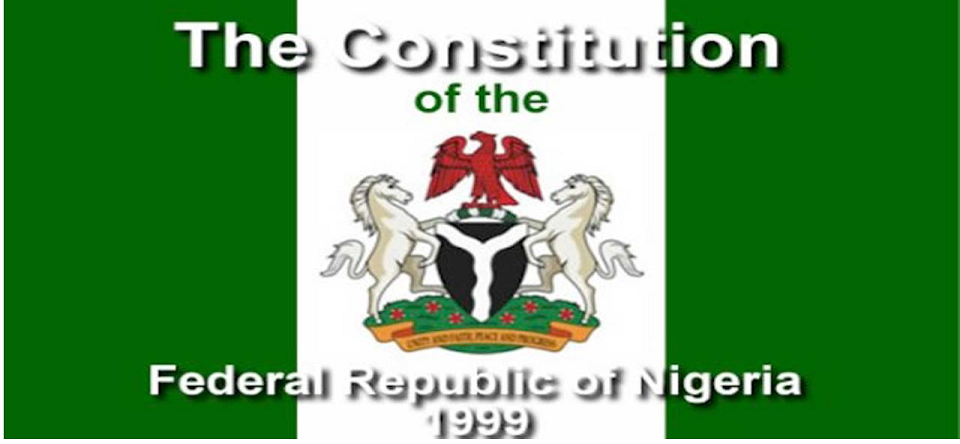
The electoral act was signed into law some weeks back after much back and forth between the legislators and the presidency but it seems the act was marred with a lot of inconsistencies with the constitution and in this regard, whenever a law is inconsistent with the constitution which is the ground norm; the fons et origo where other laws drive its validity and origin from, the law will be declared null and void to the extent of its inconsistency with the constitution. 

Section 1(3) of the constitution specifically provides for clause; If any other law is inconsistent with the provisions of this Constitution, this Constitution shall prevail, and that other law shall, to the extent of the inconsistency, be void.

This means that if a section of the law does not align with the constitution or a chapter or even a paragraph of law conflicts with a constitutional provision, that section, chapter or paragraph will be declared null and void for the reason of being in a clash with the constitution.

Is any section or clause in the electoral act inconsistent with the constitution? 

Analyzing the provisions of the constitution side by side with that of the electoral act of 2022 in this regard will be a herculean task since it is sub-judice. 

The Federal High Court sitting in Umuahia, Abia State in a judgment delivered on Friday has stated that the provision of S.84(12) of the electoral act is inconsistent with the constitutional provisions of Sections 66(1)(f), 107(1)(f), 137(1)(f) and 182(1)(f), to this effect, the court in its wisdom held that this section can not stand and asked the Attorney General of the Federation to delete this section by the reason of its inconsistency with the constitution. 

Her Lordship, Justice Evelyn Anyadike based her ratio decidendi on section 66(1)(f) which states that if a person is employed in the public service of the Federation or of any State, the person must resign or withdraw or retire from such employment 30 days before the date of the election. In other words, public service appointees seeking to contest elections are to resign at least 30 days to the date of the election. 

By this constitutional provision, my Lordship deemed it to conflict with the electoral act but my Lordship did not cast her learned mind to the cases of DADA v. ADEYEYE (2005) 6 NWLR (Pt. 920) 1 at 19 ASOGWA v. CHUKWU (2003) 4 NWLR (Pt. 811) 540 OJONYE V. ONU & ORS (2018) LPELR-44223) which may serve as a locus classicus in this regard where the appellate Courts have held that political appointees or political office holders are not public servants as provided for under the Constitution and therefore there are not the ones S.66(1)(f) is referring to. The people this section of the constitution is referring are public servants duly employed into the governmental civil services and can be called civil servants in every sense of it and they are not political appointees like Commissioners, Ministers, Special Assistants, Advisers and every other category of political appointees that falls into this caliber. 

To this extent, my Lordship May have been persuasively deceived by the initiators of this suit, having made my Lord believe that political appointees come under those s.66(1)(f) was referring to. 

Therefore, s.84(12) cannot be declared null and void as it is not in any way inconsistent with any constitutional provision and it can only be said to be the handiwork of political gladiators who just want to bend the law in broad daylight for it to suit their political ambitions.