DD
MM
YYYY

PAGES

DD
MM
YYYY

spot_img

PAGES

Home Blog Page 5280

CADAP Digital Economy Infrastructure Services for Africa

0

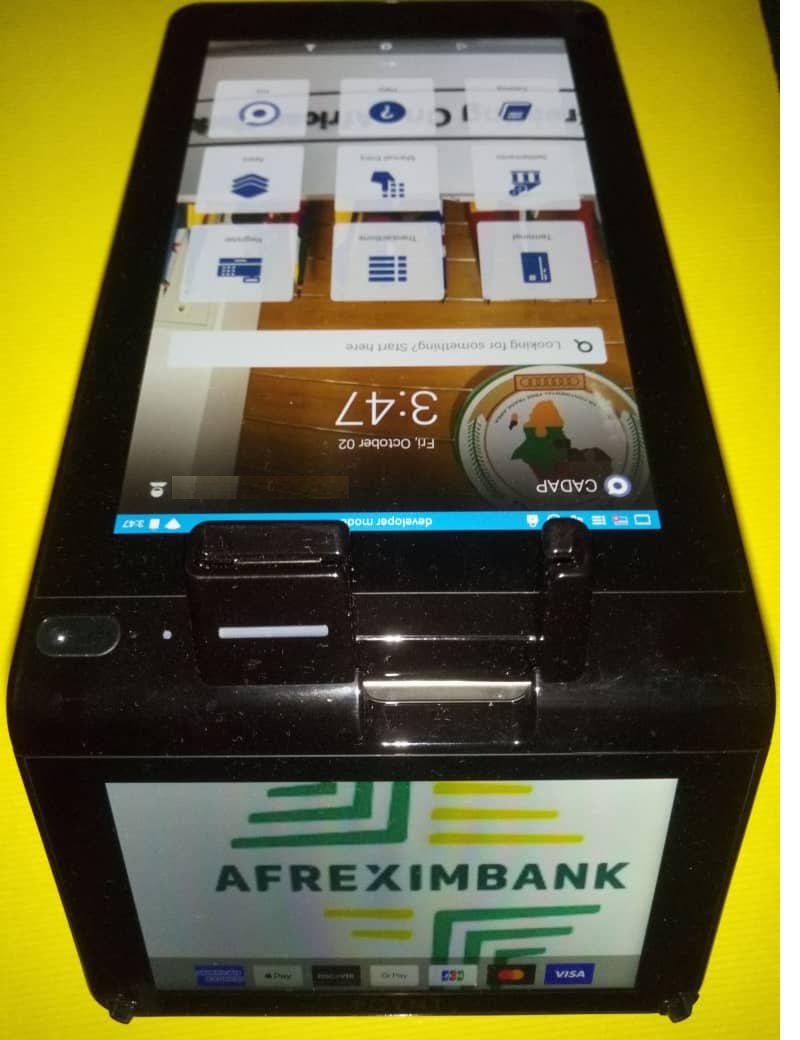
The destination:  a payment terminal that can process most African currencies with an internet node, making it possible that a merchant in Nairobi can be paid by a Naira card. A new order in payment where all you need in Africa is ONE BANK account because a technology layer will unify all nations, making it possible that your Accra bank-issued card can allow you to do everything you want to do in Lagos as though you are in Ghana!

Then, with that payment layer sorted, other elements of trade open up. At CADAP, our vision is to build a new layer in the African economy.  We’re already powering many ecosystems across Africa with the  CADAP Digital Economy Infrastructure which offers many services (some below).

  • Domestic revenue generation, mobilization, collection, and assurance.
  • Cross border trade, enabling and facilitation.
  • Aggregate demand data for central banks
  • Financial inclusion for all (e.g.: Financial inclusion in agriculture)
  • Connectivity for all
  • Power as a service
  • Human capital graph development
  • Satellite technology and satellite applications

You are possibly using most of these services in major universities across Africa. Today, we’re opening them up  to local governments, communities and more. More so, we’re already enrolling banks in our infrastructures in Sierra Leone, Senegal, and will be expanding to more countries. In Nigeria, we power many critical digital infrastructure projects (connect for projects).

  • Ndubuisi Ekekwe
  • Co-founder/Board Member, CADAP Americas


Tekedia Live – Foundation FX and Brokerage

0

Let’s go trading and master the fundamentals of FX and  brokerage. Tekedia Mini-MBA Faculty OBOH Victor Osemudiamen. MBA will take us on an excursion tomorrow. Oboh is the West African regional manager of CJC Markets Ltd, an authorized Finance company by Australia Security and Investment Commission (ASIC).

He sees trading well beyond the way they do it in Oriendu Market in my village of Ovim in Abia State, Nigeria. His market is unbounded, unconstrained, and men and women wager $billions daily.

Tekedia Institute Mini-MBA > > winner of Magic Velocity US$60,000 prize for education innovation. Zoom link in the Board

NASENI Laments The Dominance Of Foreigners In Nigeria’s Fintech Space

0

No doubt, Nigeria’s Fintech space has been booming and has become lucrative and competitive in the economy with around 250 companies present in the sub-sector. Although the Fintech space has recorded so many groundbreaking achievements, the National Agency For Science And Engineering Infrastructure (NASENI) has said that the lack of domestic capacity to produce modern technologies in Nigeria is fueling poverty, unemployment, and insecurity in the country.

The agency decried the dominance of foreigners in the nation’s integrated personnel payroll information system (IPPIS) government Integrated Financial Management Information System (GIFMIS), online banking service, and mobile telecommunication. It noted that the implications of this is that current and future generations of Nigerians would remain consumers of imported products. Speaking at the Nigerian Academy of Science (NAS) conference in Abuja, CEO of NASENI, Prof. Mohammed Haruna, stated that wealth creation, peace, progress, and stability are by-products of a knowledge-based economy and not commodities that are imported.

He also observed that development in frontier technologies has shown tendencies to widen the socio-economic gap between the advanced and developing countries. He lamented that Nigeria is not prepared to catch up with the technology wave, copying, imitating, adopting, and adapting to the ongoing industrial revolution. I strongly agree with the statement above-mentioned by the CEO of NASENI. The Nigerian Fintech ecosystem has been booming no doubt about that, albeit it has some shortcomings as regards its overreliance on Foreign expertise in the Fintech ecosystem.

There is a high dominance of foreigners in the Fintech space which has shown our over-reliance on imported products making us more consumers than producers. The country’s technological prowess is still abysmally low. Nigeria is still largely a consuming nation that has very little impact on the economy of the country. Currently, the yearly importation of IT solutions used in Nigeria is put at over $2 billion. The country’s hardware sub-sector is 80% foreign-dominated. Truth be told, only homegrown solutions rooted in massive soft and hard infrastructure can revive the country from its economic woes.

According to research, on the Global Innovation Index (GII), Nigeria has consistently in the last seven years ranked lowest, and had not fared better even before then. In 2019, GII Nigeria ranked 114 out of 129 economies. A year earlier, it ranked 118th. Nigeria was nowhere to be found among the innovative achievers in Africa, whereas five countries that emerged in terms of innovation relative to their level of development, from sub-Saharan Africa included Kenya, Rwanda, Mozambique, Malawi, and Madagascar.

In achieving technological advancements, the government needs to create an environment that enables ICT development and innovation, because it is very critical to the growth of the economy. For the past few decades, the economic viability of many developed nations has been traced to their ecosystem. The tech ecosystem is indeed a very strong sector to the development of a nation because it is an interconnected, interdependent network of various actors that combine to create innovative products and services in technology.

If we are to look at the tech ecosystem in Nigeria with a holistic approach, of course, we can’t dispute the significant exponential growth it has experienced, yet it is still in its infant stage. Nigeria needs to move from being over-reliant on imports, to creating our tech products. This feat is not rocket science as it is very achievable, with the right motive and actions, coupled with top key players coming together to actively play their part, this initiative will definitely transform the tech sector.

The greatest failure of humanity is that we are yet to discover how to live peacefully!

0
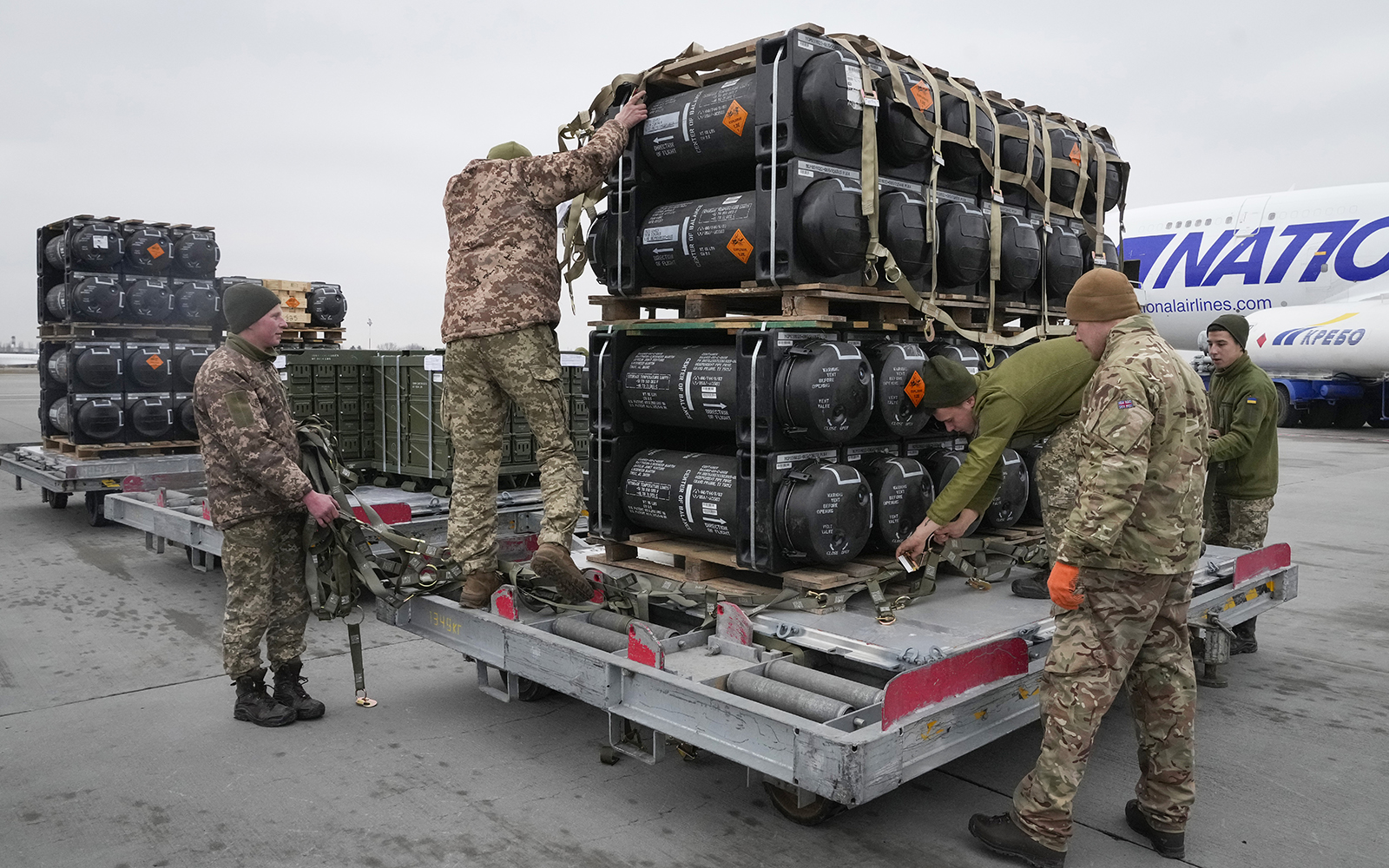
Ukrainian servicemen unpack Javelin anti-tank missiles, delivered as part of the United States of America's security assistance to Ukraine, at the Boryspil airport, outside Kyiv, Ukraine, Friday, Feb. 11, 2022. British Prime Minister Boris Johnson said Thursday the Ukraine crisis has grown into "the most dangerous moment" for Europe in decades, while his top diplomat held icy talks with her Moscow counterpart who said the Kremlin won't accept lectures from the West. (AP Photo/Efrem Lukatsky)

Looking at this photo, you see the minds of men and women. Unfortunately, across human history, battles and conquests – and losses, have defined the formation of nations. From when the British went across the world invading peaceful communities, colonizing them, to what we’re experiencing in Ukraine, the biggest failure of “history” is documenting human tragedies as triumphs.

Yes, we write of kingdoms, caliphates, empires, etc without making it clear that 100% of them came through wickedness and pains on humans. Sure, we never feel that way because we just read them on the pages of books, decades the theaters of wars have closed their gates.

Just see how everything is unfolding with families messed up. Why do people go to wars? Why has it become hard to find peaceful solutions to these problems? Ukraine is reshaping the consciousness of the world because it is the first major social media war in Europe. But war is a constant in our world: Yemen seems forgotten. Tigray (Ethiopia) seems forgotten. You can add more.

The greatest failure of humanity is that we are yet to discover how to live peacefully!

(photo: anti-tank missiles)

Comment on LinkedIn Feed

Comment 1: A common trait we share with many other creatures, violence.
The human ego is incomprehensible, and often times irrational in its operations.

Regardless. It’s complicated if you ask me. For instance it’s difficult to say if the Renaissance would have come if the Roman Empire did not fall to the Babarians leading to the dark ages. May be we will still be living in the bronze Age . If Alexander had not looked east in his conquest maybe Greek philosophy and science may not have spread to the rest of the world as much as it did with his wars. We know western civilization has got it’s roots buried in time changing events and wars .
Who knows it could be a necessary part of our progression or evolution towards modernity which is always somewhere in the horizon.

Comment 2: War and Peace are two-sided coin….I spent major part of my adult life in combat and truthfully, I have wrestled with the idea of peace and war and the same question ruminates in my mind daily can you achieve one without the other? Often times what we consider peaceful is sometimes an illusion because of imbed war and conflicts in the midst. The appearance of peace doesn’t mean absence of war. From the creation of man (Depending on the faith one subscribes to) till date, advancement of human is enhanced with war.

Comment 3: Human equality is an illusion, it doesn’t have basis in reality. Both treating equals as unequals and treating unequals as equals are injustice, but in our framings, we do not recognise this reality, thereby bringing disequilibrium to natural order of things.

Again, the concept of equity is an aberration, it neither recognises superiority nor inferiority, but sort of ‘level’ everyone up, a distortion to natural order of things.

To entertain the idea of peaceful coexistence of all peoples, justice is a prerequisite, unfortunately, the concept of justice is also distorted, because humans corrupted it, just to satisfy special interests.

Those who work harder and are stronger will naturally possess more resources, but when you do not allow them to possess that, they feel threatened, with that – the natural order of things has been distorted.

Only few rights are natural, but throughout human evolution, we have expanded what come under the basket of rights, partly because we felt that some people were at a disadvantage, and by doing so, we also distort the natural order of things.

All humans are not equal, because privileges vary, some were endowed with various excellence of body and soul, yet we claim that we are all equal…

Someone response to Comment 3: Interesting viewpoint [ ]. I was having similar conversation with a close friend this weekend on illusion of equity and equality in humanity and how we have been disingenuous to ourselves on some of the concepts we have believe in overtime. I always enjoy your open mindedness and deep thoughts on these life constructs. But holding that notion, how will you accept as a man that you are not equal to another man? But we have to believe that we are all equal,,, if not, oppression will not seized.

X-raying Nigeria-Britain Tie And Fate Of The Naira

0

Nigeria’s history won’t be concluded without mentioning the United Kingdom (UK). In view of this, the latter has hitherto remained a household name when discussing the former, particularly in the aspect of the country’s politics as well as economy.

It’s noteworthy that the UK comprises mainly Great Britain and Northern Ireland. If further split, the former consists of England, Scotland and Wales; among these three, the first two countries majorly constitute Britain. Owing to both the population and landmass’ percentage Britain occupies in the bloc, the UK is usually referred to as Britain.

Britain, which remains the prime sovereignty in the UK, has invariably been playing the role of a father in Nigeria’s polity as a whole. The obvious fact that Nigeria was a British colony from the 19th century till it became an independent nation in 1960 can never be swept under the carpet or be forgotten in a hurry. The unending appreciation of the two countries’ bilateral relation cannot be unconnected with the aforementioned record.

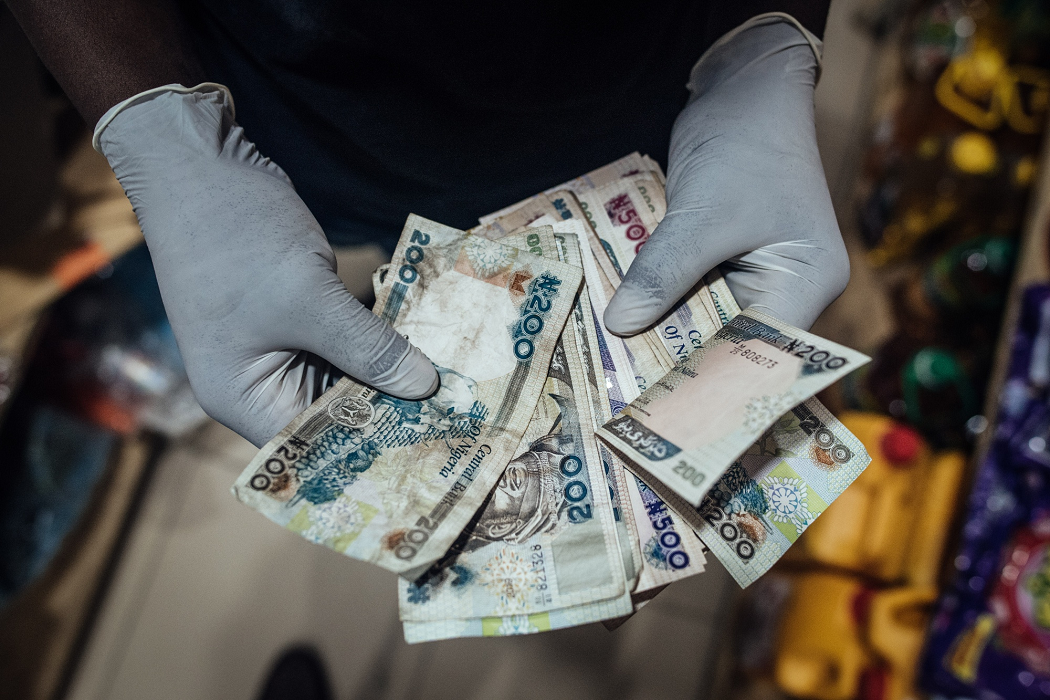
A few years back, the UK’s Export Finance agency disclosed its intention to add Nigeria’s legal tender, Naira to its list of ‘pre-approved currencies’, allowing it to provide financing for transactions with Nigerian businesses dominated in the local currency.

By doing so, the Naira would become one of the three West African legal tenders that the UK export finance has pre-approved for its means of funding transactions that promote trade with the UK.

It would be recalled that Britain voted in 2016 to leave the European Union (EU). The awaited exit has persuaded London, the capital territory of the UK, to embrace a rethink over its trade ties with the rest of the world.

It’s thus needless to state that the country was at the time under review, examining its existing trade and investment policies towards ushering in more suitable and beneficial ones.

It’s worth noting that in recent years, severe dollar shortage in Nigeria’s foreign exchange market caused by the emergence of lower oil prices, forced the Central Bank of Nigeria (CBN) to allow the Naira to float after it lost a third of its official value against the Dollar. This, therefore, was the reason the currency never ceased to stagger within the period in review, till date.

It is imperative to acknowledge that the pronouncement in question, if duly implemented, would go a long way in strengthening the Nigeria-UK bilateral cooperation, thereby easing the rate of importation of goods from the latter to the former.

Since the Naira would be accepted as a legal tender in the aforesaid foreign country, Nigeria importers can easily pay for goods and services over there with the use of the currency. This implies that the said set of traders wouldn’t need to queue at Nigeria’s foreign exchange market to change the Naira for Dollar or Pound Sterling, as the case may be.

But if critically viewed, it would be realized that such a policy can cause overflow of the Naira, which is presently in a pathetic mood. More so, the ongoing double-digit interest rate will equally soar the prices of the goods to be imported into the country from the UK, since it’s understandable that borrowing is synonymous with importers. This might rather result in further depreciation of the Naira.

Besides, the President Muhammadu Buhari–led government that is deeply concerned about boosting the country’s local market may not be favoured by the policy, which is likely to lead to another phase of over-dependence on imported commodities that has overtime bedeviled our economy.

It’s not anymore news that the present administration’s mantra is anchored on diversification of the country’s revenue base. So, for this to come at a time Nigerians are encouraged to think home is enough reason to say that anyone that really means well for Nigeria is still skeptical over the actual merit attached to the British policy.

This is to say, in the long run, the monetary policy might mainly boom individual pockets to the detriment of the national coffer. Such a resultant effect wouldn’t augur well for the country’s export base that’s seriously yearning for rescue, hence at the expense of her economy at large.

It’s noteworthy that any fiscal measure that’s liable to benefit just a few individuals, but impoverish the majority, isn’t worth celebrating by the supposed beneficiaries.

As much as the UK was apparently trying to boost the Nigeria’s pride in the international market by initiating suchlike policy, the Nigerian government mustn’t forget so fast that the former stands to be the key beneficiary of the initiative if fully implemented, hence the need not to be carried away by the euphoria that accompanies the fiscal initiative.

The good news was that such an approach would make the Naira to be more recognized and respected globally. On the other hand, it could also reduce the ongoing influx at the parallel market because most importers may have little or no business to transact over there, thereby returning the rightful status of the commercial banks.

However, that doesn’t change the fact that if critically examined, the Naira might not get its fair share of the deal; that the Naira might cry foul as the odyssey progresses; that it may end up causing the currency more harm than good.

We must note that in any business or relation, every partner involved is more concerned about what his personal benefit entails.