DD
MM
YYYY

PAGES

DD
MM
YYYY

spot_img

PAGES

Home Blog Page 5281

Jettisoning All Forms Of Discrimination As The World Marks Zero Discrimination Day

0

1st of March annually, the global community marks World Day of Zero Discrimination. This signifies that, today, the world is commemorating the 2022 edition of the laudable event.

The Zero Discrimination Day is an annual worldwide event that promotes diversity and recognizes that everyone counts. The first commemoration of the Day took place on March 1, 2014 by the effort as well as the mandate of the United Nations (UN).

The celebration came in consequence to the launch of Zero Discrimination Campaign on World AIDS Day in December 2013 by the UNAIDS – the UN arm on Human Immunodeficiency Virus (HIV) and Acquired Immune Deficiency Syndrome (AIDS).

Discrimination is simply the unjust or prejudicial treatment of different categories of people or things. It can also be referred to as the practice of treating one person/thing or group of persons/things less fairly or less well than other persons, things or groups, as the case may be.

This biased behaviour known as ‘discrimination’, which is an action that denies social participation or human rights, has in the recent times caused a severe harm or succeeded in placing millions of lives across the globe in a state of jeopardy or agony.

Indeed, it has made several mindsets to be preoccupied with skepticism when it calls for one seeking for what he/she deserves, especially when the bearer of the said mindset considers him/herself as a less-privileged.

Discrimination, which is widely recognized by the civil society as an inhuman behaviour/act, could be as a result of such various reasons or factors as gender, language, ethnicity, race, deformity, health condition, age, marital status, religion, retaliation/revenge, educational background, and social status, among others.

For instance, in a political terrain especially in a less-civilized country like Nigeria, someone might be discriminated against by others simply because the person is a woman or belongs to the womenfolk. On the other hand, someone may be denied a job or employment opportunity because he/she is too young or old for the job, or due to his/her ethnic or religious affiliation.

In the same vein, a person or group stands the chances of missing a certain opportunity as a result of their marital status, class or racial heritage.

More so, discrimination might be experienced by someone or a group of persons owing to their educational background even if they are mentally and intellectually qualified to fit in the cycle, or simply in order to punish them for what their predecessors or parents as the case may be, did to the potential benefactor sometime ago. This aspect, which is known as retaliation, is not just unreasonable but childish.

Recently, the most devastating form of discrimination experienced by people or some members of the public is in the case where the applicant or seeker is physically challenged or suffering from a certain illness such as HIV/AIDS, hypertension, diabetes, or even tuberculosis that is curable. This aspect of discrimination, which is globally addressed as ‘stigmatization’, has called for the concern of various international societies including the UN.

It’s no longer news that several prospective students, particularly of private-owned institutions, had been deprived of admission spaces because they are sufferers of any of the aforementioned diseases, or are suffering from one form of deformity or the other.

Most times, it doesn’t even have to do with when the carrier or the affected person is seeking for a favour, contract or job as the case may be; in some quarters, he may not be allowed to enroll for membership in any social group he is meant to belong to.

Such an intimidating or humiliating act, as outlined above, is liable to cause the death of the affected person, or it could even make him/her become violent or a monster in the society he/she belongs to.

To be realistic, the only reasonable or acceptable way someone could be discriminated or denied of his or her right, privilege or opportunity in any society, is in a situation where the person is affiliated to a certain vice or illicit social activity, to include robbery, cultism, rape, drug/human trafficking, prostitution, admission racketeering, examination malpractices, and what have you.

Other than these or any other related act, anyone in any given society or country has the right or privilege to be treated equally like others, since he/she is a bona-fide citizen of the said country or society.

In view of this obvious fact, there is a compelling need for every right thinking individual across the globe to ensure that his or her quota as regards fighting this scourge is immensely contributed. On this note, I call on all concerned bodies or authorities to intensify their awareness crusade regarding total elimination of this societal menace that has eaten deep in our bone marrow.

As the global community marks the annual World Day of Zero Discrimination, I enjoin the entire members of the Nigeria’s legislative arm to enact a strict and stiff law that would bring a holistic end to any form of discrimination taking place in the country at large.

The teeming members of the public are also expected to assist in the proper implementation of the proposed law by ensuring that anyone around them that indulges in the uncalled and nauseous act is brought to book without much ado.  
Rebranding: MTN Purchases 144 Plots of Virtual Land in Metaverse

0

Days after South African telecom giant, MTN changed its logo, stirring speculation, Africa’s largest telco has announced the purchase of a digital land in the Africarare metaverse dubbed Ubutuland.

The announcement released on the company’s website said it now owns 144 plots of virtual land with an overall area of 12x12m, becoming the first African company to venture into metaverse. The cost of the virtual property was not disclosed.

Africarare, which houses digital houses of African origin, is arguably the biggest African metaverse company. It was launched in October 2021, becoming the first African VR metaverse to launch. The platform uses UBU as its native token. Ubutuland is being developed by Africarare and Mann Made Media. The companies said it will be open to the public later this year to showcase some of the best of African art, fashion, entertainment, sports, tech and creativity. In addition, the company will serve as a platform for artists across the African continent looking to showcase their talent.

MTN’s Group Executive for Marketing, Bernice Samuels said the move is part of the telco’s digital tech-focused Ambition 2025.

“This is an exciting moment for us as we lead businesses on the continent to enter the metaverse marketplace. This is exactly what our Ambition 2025 strategy is premised on – leveraging trends that amplify consumer’s digital experiences and engagement. We have always been at the forefront of technological and digital changes and we remain alive to the exciting opportunities the metaverse presents for us and our customers,” she said.

MTN unveiled its rebranded logo last month, hinting at a plan to pivot fully to emerging technology, especially metaverse and fintech.

“MTN Group’s Ambition 2025, aimed at ‘Leading digital platforms for Africa’s progress’, has ushered in a new look that is aligned to our evolution from a telecommunications company to a technology company underpinned by one simple, consistent, yet striking brand. Our commitment and focus to accelerate Africa’s progress sees MTN revealing a refreshed brand identity and campaign from February 27,” the company’s teaser said last month.

Global metaverse market is expected to reach $758.6 billion by 2026, growing at Compound Annual Growth Rate (CAGR) of 37.% over the projected period, according to an analysis report by Report Linker. Similarly, the global fintech market is expected to reach a market value of approximately $324 billion by 2026, growing at a compound annual growth rate of about 25.18% over the forecast period, according to data from Market Data Forecast.

Compared with the African entertainment and telecom market, which is expected to register a CAGR of 11.2% by 2026, growth opportunities in both metaverse and fintech, where MTN is already grabbing a share with its MoMo payment product, seems irresistible.

Moreover, the traditional telecom industry is facing increasing threat from the Big Tech’s move to provide faster, affordable internet to consumers around the world. And there is also Elon Musk’s Starlink and Jeff Bezos’ Kuiper satellite internet services bracing rapidly to be rolled out globally. With the telecom industry’s future packed with fierce competition, MTN appears to see diversification as a way out.

Follow up on the Abba Kyari’s case: BAIL REFUSED

0

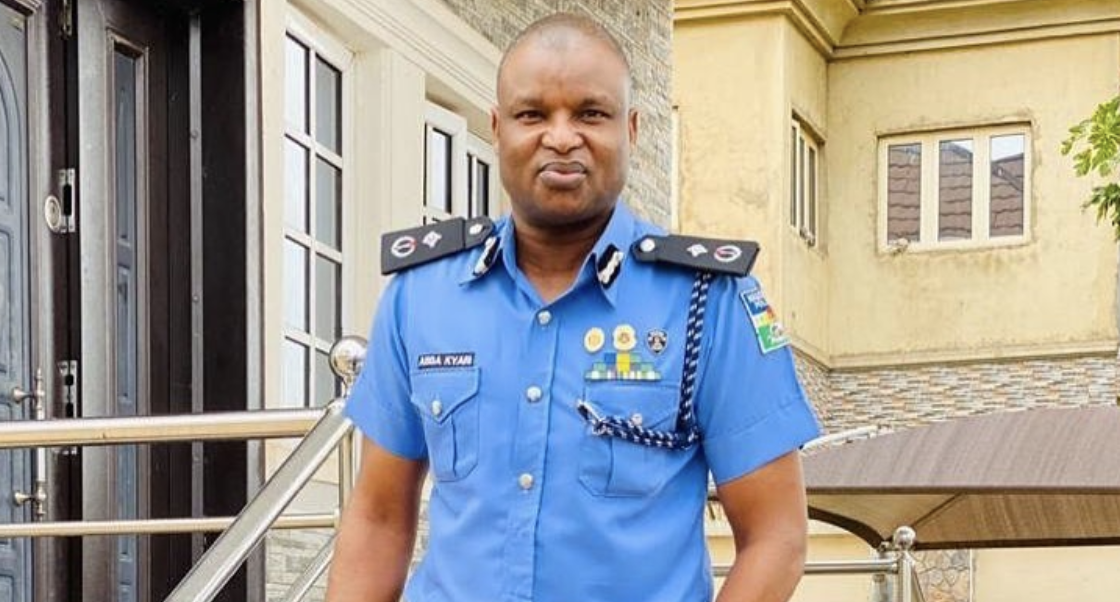
A Federal High Court sitting in Abuja, on Monday, the 28th of February, 2022 flung out the bail application made by the suspended Deputy Commissioner of Police (now demoted to the rank of  Assistant Commissioner of Police), ACP Abba Kyari, the controversial super cop of Nigeria through his lawyer.

His Lordship, Justice Inyang Ekwo, the presiding judge in his ruling on the bail application, said the application have been “overtaken by other events” following an order made by another court, granting the National Drug Law Enforcement Agency’s (NDLEA) prayers to further detain ACP Abba Kyari for another fourteen (14) days to enable the agency continue and conclude their ongoing investigation on the drug related case that the senior police officer was accused of.

Justice Ekwo held that the sister court which gave the order in favour of the NDLEA on 22nd of  February is a court of coordinate jurisdiction and a court cannot overrule, overturn or upturn an order granted or ruling given by another court of coordinate or concurrent jurisdiction. It is only on appeal that a higher court can overrule or overturn an order granted or a ruling given by a lower court on a matter.

Recall that the controversial famous super cop was declared wanted by the National Drug Law Enforcement Agency (NDLEA) two weeks ago for his alleged involvement in drug trafficking and drug distribution in Nigeria and attempting to bribe an NDLEA investigator in order to quench the ongoing investigation on him. He was later that day arrested by the police and handed over to the NDLEA for full investigation.

He has since been in the NDLEA detention facility and he applied to be granted bail through his lawyer on medical grounds; he claimed to be hypertensive and diabetic and needed an urgent medical treatment outside the walls of the detention facility before his health condition  got worse.

The bail application was heard today and my Lord refused to grant him bail; by this implication, he will continue to be in NDLEA detention for another 14 days and cooperate with the ongoing NDLEA investigation on him.

Mitigating Risk from Financial Contagion from Russia-Ukraine Conflict

2

Greetings. There is a high likelihood of a financial contagion if the Russia-Ukraine hostility does not end this month of March. As the European Union ships weapons to Ukraine, and Russia moves more arms towards Ukraine,  many bad things will happen.

“The European Union agreed Sunday to … spend hundreds of millions of euros on buying weapons for Ukraine … EU officials said.” Associated  Press reports.  They have started the African playbook in Ukraine instead of addressing the root cause of this problem. Before you know it, some smart men will model how much profit & loss statements will improve if the war continues for an extra hour. And just like that, the evil party continues. The war is seen from balance sheets and how much dead weapons to be sold.

But understand one thing: if Russia, the world’s second largest oil producer, decides to strike back, oil prices will hit the ceiling and that may put pressure on most economies. Russia is a very small country on its share of global GDP – about 3% – but its energy position is HUGE. So far, the sanctions have been muted on its oil and gas, but nothing stops it “sanctioning” the world.

Look at your market positions and take action. Do not rely on the promises of politicians and press releases; this is a really big matter because it is not happening in Ethiopia, Iraq, Mali and Afghanistan but EUROPE. Yes, there is panic because it is home!

In a webinar this morning evaluating the potential financial impact of this war, I made the point that economic sanctions on Russia will not be as devastating as the “military sanctions” in Ukraine which are ongoing across Ukraine. So, for any sanction on Russia, Ukraine is experiencing 100x more since they are not just experiencing infrastructural destruction, but the lives of their citizens. If anyone thinks that the impact will not hit markets, that model is faulty.

Do not underestimate fast-growing madness because I have even seen that CNN, BBC, Fox, etc are not reporting facts. Everyone has taken a patriotic position which is great but markets do not run on such. So, shine your eyes and do not be taken unawares. 

Tekedia Mini-MBA will run a session during our Live session on Saturday to discuss what we could do to protect our assets. We’re a living school and do change our program with real market moving events. During covid-19, we ran many sessions to help our members.

We pray for peace.  They need to stop this madness fast.

The Russian military said Tuesday it will carry out strikes against the facilities in Kyiv, warning civilians living near the areas to leave.

The Russians will target the Security Service of Ukraine (SBU) and the 72nd Main Center for Information and Psychological Operations (PSO) in Kyiv, the Russian defense ministry said in a statement Tuesday via Russian state news agency TASS.

“In order to suppress information attacks against Russia, the technological facilities of the SBU and the 72nd main PSO center in Kyiv will be hit with high-precision weapons,” the statement said, according to TASS. “We call on Ukrainian citizens attracted by Ukrainian nationalists to carry out provocations against Russia, as well as residents of Kyiv living near relay nodes leave their homes.”

Speaking about the “relay nodes,” CNN’s Clarissa Ward said, “we understand that to mean communications towers. So large antennas, things of that nature.”

President Zelenskyy of Ukraine, Call President Putin And Stop The Madness

M-KOPA Raises $75M, Validates Fintechnolization Construct, “Every Digital Platform Will Spin Out a Fintech Company”

0

Two years ago, I coined the word “fintechnolization” – a construct that every digital platform must have a maturity state of offering a fintech solution. I had watched all great digital platforms on how they ended up providing fintech solutions even when they began in an unrelated sector. It was also on that framework that I started Tekedia Capital since Tekedia itself is a platform. In that piece, I made a call that in 2021, I would start a financial services solution on Tekedia!

Later, one of the best in the world, Andreessen Horowitz,  put out a piece titled “Every Company Will Spin Out a Fintech Company”, confirming the the observation.

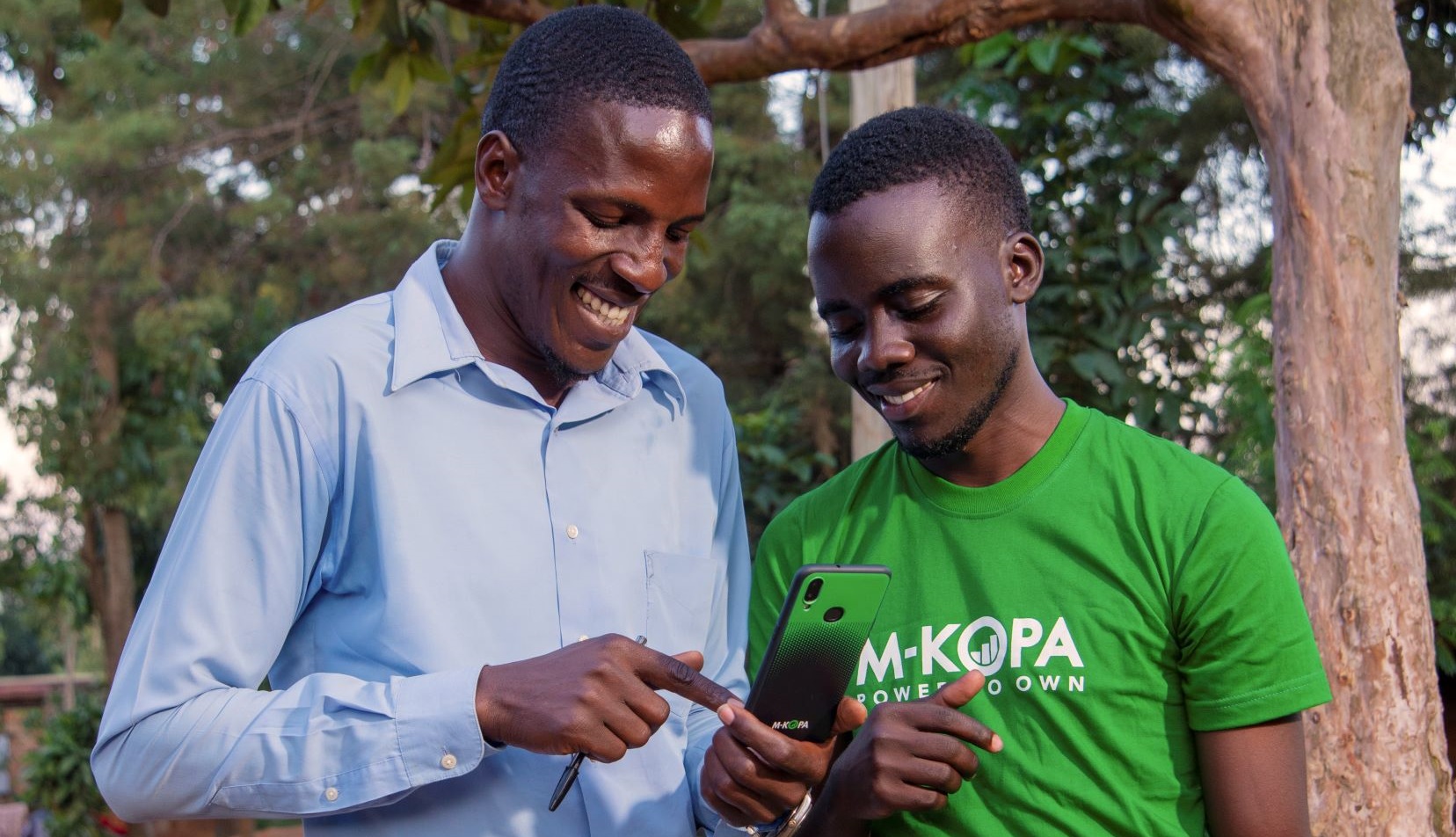
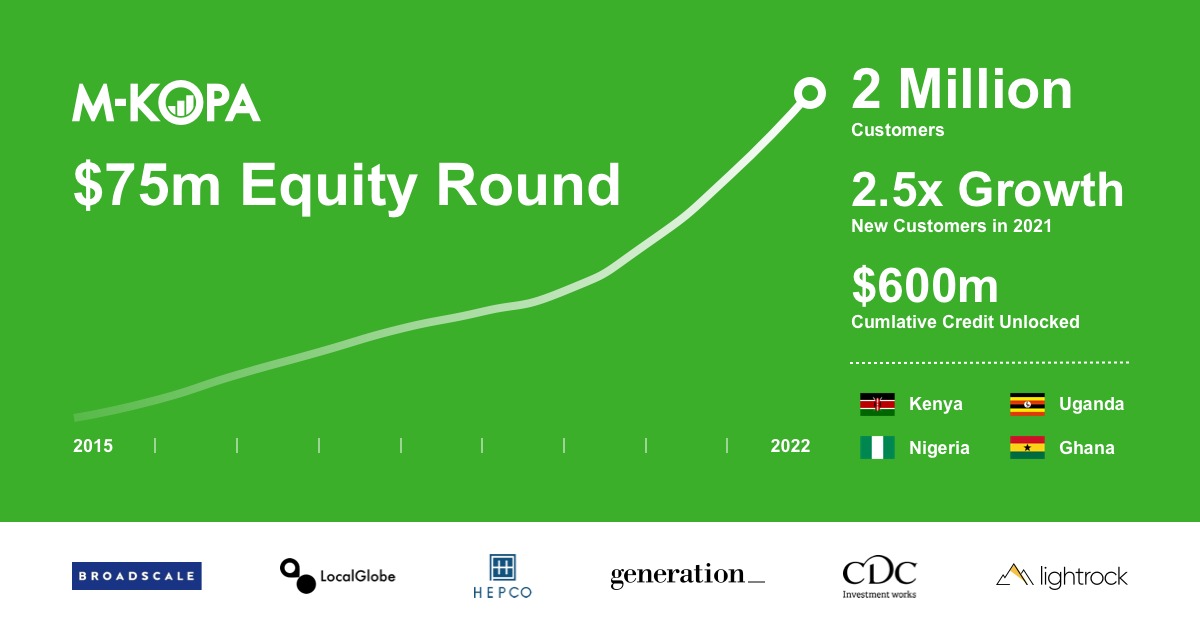
That validation continues across market domains and territories. M-KOPA which began as a solar startup is now a fintech company. In short, the company uses the word “fintech” to describe itself. It just raised $75 million: “To date, M-KOPA has unlocked over $600 million in financing and enabled 2 million customers to access a diverse set of products including smartphones, solar lighting, solar-powered appliances and digital financial services such as cash loans and health insurance. M-KOPA has recorded nearly 2.5X growth of new customers in 2021 and is projected to reach 3 million customers by the end of 2022.”:

Launched in 2011, M-KOPA combines the power of digital micropayments with the Internet-of-Things [IoT] technology to make financing more accessible to underbanked customers and enable them to build ownership of their assets as well as their credit histories. The company will use its raise to expand into additional countries, adding to its hubs in Kenya, Uganda, Nigeria and Ghana, as well as  scale its financial service products beyond asset financing, including health insurance, cash loans and BNPL merchant partnerships.

A solar company does not enjoy great multiples like fintech startups . M-KOPA is smart to make itself known as a fintech over just a solar firm. With that, its valuation will be seen from the lens of fintechs.

–Press release

M-KOPA, the fintech platform that provides connected financing and digital financial services to underbanked consumers across four markets in Africa, today announced its $75M Growth Equity round*. The round was led by Generation Investment Management and Broadscale Group, with participation from new investors including LocalGlobe’s Latitude Fund and HEPCO Capital Management. M-KOPA’s existing investors, CDC Group** and LGT Lightrock also participated in the round. This capital injection brings M-KOPA’s total equity funding to $190M. Today’s news also coincides with M-KOPA providing financing to two million customers.

With the funding, M-KOPA plans to expand into additional countries, adding to its hubs in Kenya, Uganda, Nigeria and recently launched Ghana, to further scale its footprint across the continent. The company will also continue expanding its flexible daily and weekly payments model to go beyond asset financing, by scaling its financial services products such as health insurance, cash loans and BNPL merchant partnerships that have proven to be popular with customers.

Launched in 2011, M-KOPA’s financing platform enables underbanked customers to access a broad range of products and services without collateral or a guarantor. By combining the power of digital micropayments with the Internet-of-Things [IoT] technology to make financing more accessible, customers are enabled to build ownership of their assets as well as build their credit histories over time through a flexible payment model. To date, M-KOPA has unlocked over $600 million in financing and enabled 2 million customers to access a diverse set of products including smartphones, solar lighting, solar-powered appliances and digital financial services such as cash loans and health insurance. M-KOPA has recorded nearly 2.5X growth of new customers in 2021 and is projected to reach 3 million customers by the end of 2022.

Speaking on the round, Jesse Moore, M-KOPA CEO and Co-founder said, “We’re thrilled to partner with leading global investors with deep experience supporting growth-stage companies as we expand our platform to serve more of our customers’ needs. Our innovative model means we have enabled financial empowerment for over two million people already through micro-payments, but there are still millions of people across the continent that are stuck with limited economic options. With this funding, we will expand to more markets across Africa and scale to over 10 million customers in the next few years.”

“M-KOPA’s unique technology-enabled approach to providing essential consumer goods and financial services is an inspiring engine of empowerment perfectly aligned with our mission of Disruption for Good,” said Broadscale’s Managing Partner, Andrew Shapiro. “The company’s rapid customer growth demonstrates the massive unmet demand in this sector, and we look forward to working with M-KOPA as they continue to scale their reach and impact across Africa”

“We believe M-KOPA is a critical part of the push to accelerate access to digital and financial tools that will empower millions of people across Africa whilst increasing access to clean energy, clean mobility and connectivity. We were early supporters of M-KOPA and continue to be impressed by the continued innovation of its product offerings and ability to accelerate at a significant scale. We are pleased to continue supporting M-KOPA as it scales further”, said Dave Easton, Partner in Generation Investment Management’s Growth Equity team.

In Sub-Saharan Africa, 85% of the population live on less than $5.50 per day per adult, and as a result, cannot afford to major purchases outright without credit. However, access to credit remains severely limited across the continent, as the majority of consumers are underbanked, offline and hard-to-reach. M-KOPA’s offering costs an average monthly interest rate of 3.1%, lower than the typical interest rates offered by alternative sources of credit their customer base can access. Through this, M-KOPA is powering financial and digital inclusion by making micropayments accessible and leveraging data to unlock credit solutions. The company was recently recognised as one of Fortune Magazine’s Impact 20, which highlights the top 20 global venture and private-equity backed companies tackling key social and environmental issues as part of their business model.

Mayur Patel, M-KOPA’s Chief Commercial Officer, added, “By leveraging our unique data and market knowledge in serving customers over the last decade at M-KOPA, we’ve seen extraordinary growth across our markets in East Africa and our recently launched operations in  Nigeria and Ghana. There is a massive opportunity in front of us to make everyday essentials more accessible by better matching fractional payment terms with customers’ daily or weekly earning and spending cycles.”

As a result of its rapid scaling, M-KOPA has created over 500 new full-time jobs across Africa since 2019 and is currently recruiting for commercial operations & engineering roles globally as part of its expansion plan.