DD
MM
YYYY

PAGES

DD
MM
YYYY

spot_img

PAGES

Home Blog Page 5282

Russia-Ukraine War: Job Loss On Increase As KPMG, Netflix, PWC, etc Exit Russia

0

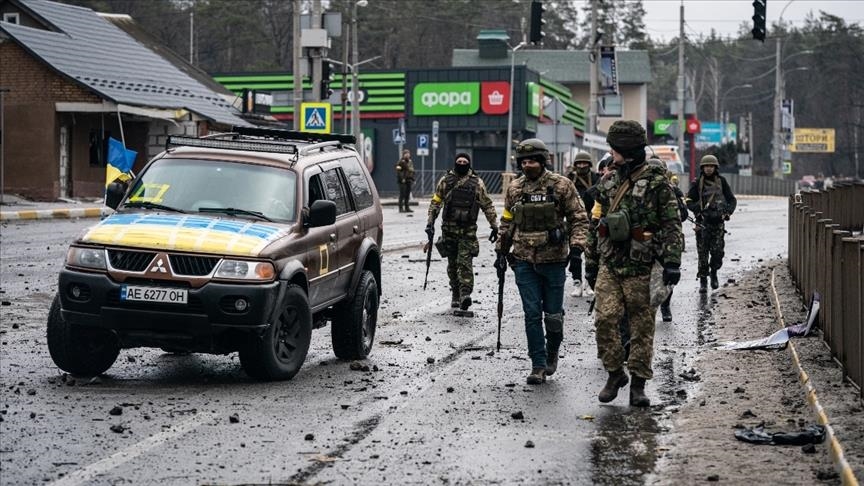
Undoubtedly, the invasion of Russia in Ukraine will negatively impact civilians in Russia no matter the nature of the eventual conflict. With so many sanctions pelted out on Russia, millions of Russians are beginning to feel the effect of Western economic sanctions designed to penalize the country for invading its neighbor, Ukraine. The sanctions now hitting Russia are being described as an economic war, with the sole aim to isolate the country and create a deep recession there.

The sanctions against some Russian banks include cutting them off from Visa, Mastercard, Apple Pay, and Google pay. Many Russians are predicted to lose their jobs as their economy reels from being cut off from financial markets in the west. It keeps getting worse for Russian citizens. Just recently, accountancy giants KPMG, Deloitte, EY, and PWC have announced that they are stopping operations in Russia amid the ongoing attacks on Ukraine. A lot of companies displeased with Russia’s invasion of Ukraine have been scrambling to cut ties with Russia.

Some companies have presently shut down their offices, closed stores, and ended online services or sales in Russia. According to one of the Big 4 KPMG, it issued a statement saying “We believe we have a responsibility, along with other global businesses, to respond to the Russian government’s ongoing military attack on Ukraine. As a result, our Russia and Belarus firms will leave the KPMG network”. They however disclosed that it was a hard decision to take, but this isn’t about them, it is a consequence of the actions of the Russian government.

Apart from the Big 4 accounting firms leaving Russia, subscription-based streaming service Netflix has also come out to state that it has suspended its service in Russia concerning the circumstances on ground. Also, PayPal has stopped working in Russia as well as Twitch, as they will no longer pay Russian streamers. The citizens are indeed facing it hard lately. While reading some tweets on my Twitter timeline, I came across a Russian tweet where she lamented that her only source of income has been cut off due to the stop of PayPal in their country.

In her words, “so PayPal has stopped working in Russia today and Twitch will no longer pay Russian streamers. Thank you very much for cutting my only source of income. I am sure this will solve all of the world’s problems.”  Funny thing is, all these sanctions hurt mostly the ordinary people and not those in power who are the main cause of it. It’s painful to watch innocent Russian civilians get punished for something they have zero control over.

According to Kremlin, they have earlier boasted that Russia expected these latest Sanctions and are ready for them, although it has not said whether businesses will be given extra help, as they were during the pandemic. But ordinary Russians, many of whom get their information from state-controlled television have already started noticing negative differences in their lives. Some Russian companies have started cutting hours of production with some others stopping production, this has however led to the increase of job loss in the country.
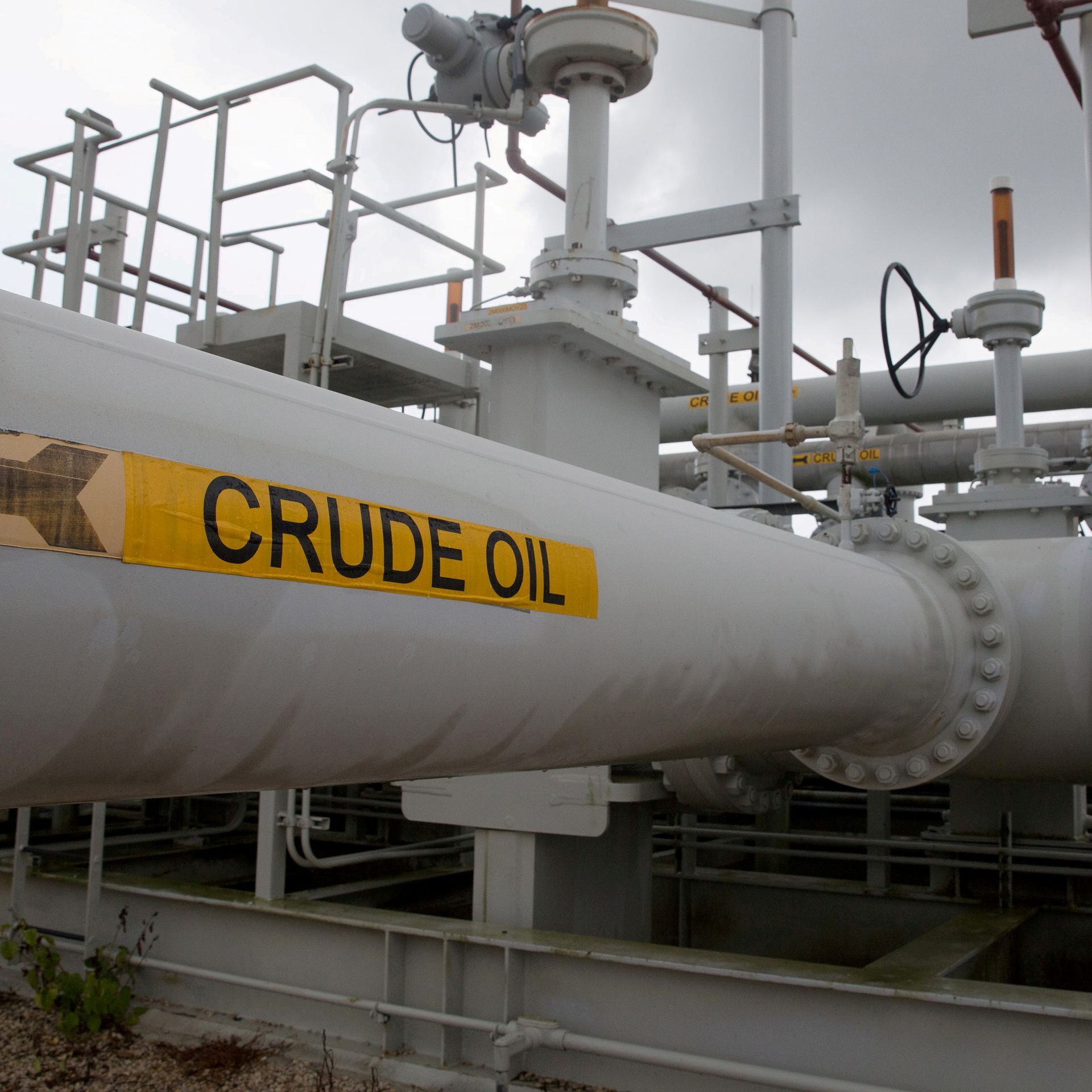
The Nigeria’s Big Irony As Crude Oil Rises

1

It is extremely unfortunate. One of the biggest problems in Nigeria right now is that the price of crude oil is rising. You would have expected everyone to be dancing Atilogwu, Owambe, etc. As oil prices hit $130, a BIG problem is breeding in the nation. In short, the budget is looking really bad right now.

“I’m hopeful the prices will move around, maybe $80, maybe $70. We are hoping that it will come down to somewhere around $70 or $80, which will be sustainable for us at the end of the year … I mean, with the kind of prices we are seeing, we are obviously not happy about it,” Minister of State for Petroleum Resources, Timipre Sylva, said last month.

Yes, Nigeria is hoping that oil price does not rise! Why? Subsidies and lack of refineries. If this Russia-Ukraine war continues and oil price continues to go up, many bad things will happen as the government cannot support those fuel subsidies and Labour will go on strike!

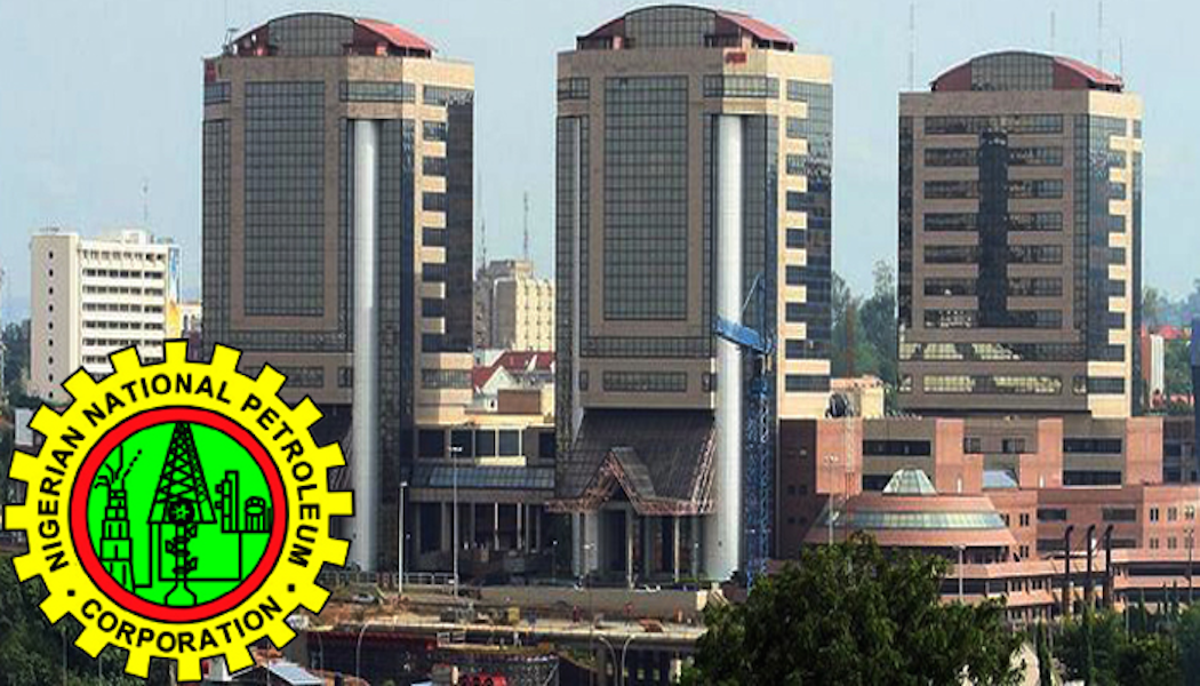
A permanent solution is said to be tied to a working refinery, which is far from reality. Dangote Refinery, which is expected to be launched in July, has become the beacon of hope as NNPC keeps faltering in its attempt to rehabilitate government-owned refineries. A report released by the NNPC in February shows that three national refineries in Warri, Port Harcourt and Kaduna, recorded a combined loss of N11.77 billion in the months of June, July and August 2021.

With no hope yet that the refineries will be rehabilitated soon, NNPC will keep importing petroleum products even as the prices go higher. This means also that the Federation Accounts Allocation Committee (FAAC) revenue will keep diminishing as most of the revenue derived from crude oil sales is used for subsidy and debt servicing. NNPC’s January report to FAAC shows that gross revenue from oil and gas sales was N438.42 billion but only N49.75 billion was remitted to the FAAC account due to deductions for petrol subsidy.

As Oil Price Hits $130, Nigeria Has A Fresh Problem


As Oil Price Hits $130, Nigeria Has A Fresh Problem

0

After touching $130 briefly, the Brent Crude oil is showing signs of heading to all time high, buoyed by Russia-Ukraine war that has stoked the prices of other commodities along as it escalates. It would have been a fortune for an oil economy like Nigeria, if not that the African largest economy is trapped by petroleum subsidies.

In January, the Nigerian National Petroleum Corporation (NNPC), presented a bill of N3 trillion to the federal executive council (FEC), as payment for petrol subsidy in 2022, backing down from the federal government’s earlier plan to totally remove the subsidy by June. The move was forced by opposition by organized labour who said amidst rise in crude oil price, removal of subsidy will exacerbate Nigeria’s economic hardship.

Nigeria’s budget oil benchmark was adjusted from $57 per barrel to $62 late last year to accommodate the likelihood of an increase in oil price in 2022. But it was not enough.

In her remark while presenting the supplementary budget in January, the minister of finance Zainab Ahmed noted that both the budget and the Petroleum Industry Act (PIA), had to be amended once again in view of the new subsidy regime.

“The PIA had required that all petroleum products should be deregulated within six months of signing the PIB into law. And the six months would have meant from August to February. But when we were doing the budget we stretched that to June. So it means technically that from September, there will be a new fuel subsidy.

“But having to step back and take into account the realities of today, what it means is we have to go back and amend the PIA, so the ministry of petroleum resources will be leading on that. They had indicated that they will be asking for an amendment to extend it to 18 months from six months. And then it means we can now also amend the budget. So the two processes will go side by side,” she said.

Oil price was at $80 then, but created a huge budget deficit of N2.557 trillion. The original appropriation had made provision of N443 billion for a subsidy for January to June.

At $130 and counting, Nigeria has a fresh problem with its 2022 Appropriation Act and the PIA. Acknowledging the situation, the Minister of State for Petroleum Resources, Timipre Sylva, said last month that Nigeria’s economy can only be sustainable with oil price around $70 to $80.

“I’m hopeful the prices will move around, maybe $80, maybe $70. We are hoping that it will come down to somewhere around $70 or $80, which will be sustainable for us at the end of the year … I mean, with the kind of prices we are seeing, we are obviously not happy about it,” he said.

The Minister touted an increase in output as a possible remedy to the challenge, but admitted that “we are really not able to meet our quota for now.”

The US, UK and EU are considering sanctioning Russia’s energy, which will mean further spike in oil prices and higher output for other OPEC members, including Nigeria. But it will only compound the situation due to Nigeria’s constrained production output and the subsidy.

A permanent solution is said to be tied to a working refinery, which is far from reality. Dangote Refinery, which is expected to be launched in July, has become the beacon of hope as NNPC keeps faltering in its attempt to rehabilitate government-owned refineries. A report released by the NNPC in February shows that three national refineries in Warri, Port Harcourt and Kaduna, recorded a combined loss of N11.77 billion in the months of June, July and August 2021.

With no hope yet that the refineries will be rehabilitated soon, NNPC will keep importing petroleum products even as the prices go higher. This means also that the Federation Accounts Allocation Committee (FAAC) revenue will keep diminishing as most of the revenue derived from crude oil sales is used for subsidy and debt servicing. NNPC’s January report to FAAC shows that gross revenue from oil and gas sales was N438.42 billion but only N49.75 billion was remitted to the FAAC account due to deductions for petrol subsidy.

With no solution in sight for the Russia-Ukraine crisis, Nigeria may be spending far more than its annual budget on subsidies unless it is removed or petroleum pump price is further reviewed upward. Bank of America analysts noted that if Russia’s oil is cut off, the market could face a 5 million barrel shortfall which could push oil prices to $200 per barrel.

Court Sacks Ebonyi State Governor Umahi

3

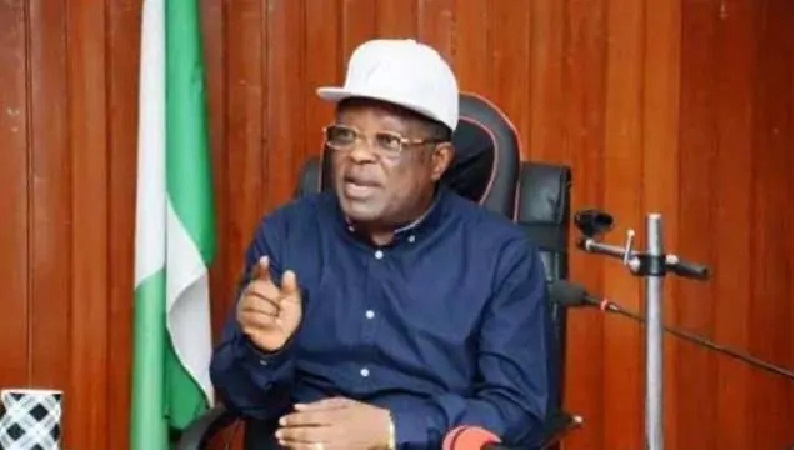
“A Federal High Court in Abuja has ordered the Ebonyi State Governor, Dave Umahi and his deputy, Eric Igwe, to vacate their seats as the sitting governor and deputy respectively, on grounds that the Peoples Democratic Party (PDP) won the election in March 2019 and not its candidate”, Channels reports.

In Nigeria, you do not vote for people; you vote for parties since you need a party to contest an election (before any amendment).  Of course, this does not hold water since from ward level to the Speaker of the House level, politicians have moved parties, and kept their jobs.

I think this is part of presidential politics. In Zamfara state, the governor changed parties. In Imo State, the same happened in the last regime. I mean moving from one party to the other is part of Nigerian political culture. But for this to be seen this way, Engr Umahi will understand why presidential politics in Nigeria is won with federal judges and justices!

Yet, he will appeal and this will be normalized. If the Supreme Court allows this to hold, many parliamentarians in state houses like Zamfara and Imo states will go home.  Recall that Aminu Tambuwal, the current governor of Sokoto, decamped from PDP to APC as House Speaker and kept his job. PDP filed papers but nothing came out of it. So, this new ruling seems to be out of order, looking at how the court has ruled in the past.

Having defected to the All Progressives Congress (APC), Governor Umahi and his deputy cannot transfer the mandate of the PDP to the APC.

Citing section 221 of the constitution, Justice Inyang Ekwo ordered the PDP immediately send names of replacements to INEC so that fresh elections can be conducted.

Justice Ekwo also ordered the Independent National Electoral Commission (INEC) to cease from recognising Umahi and Igwe as the governor and deputy governor of the Ebonyi State.

The Nigerian court continues to offer surprises!

Zamfara State Governor

The same Nigerian court ruled that the governor of Zamfara state did not violate any constitutional provision when he decamped from PDP to APC: “Federal High Court says Governor Bello Matawalle violated no aspect of the constitutions of Nigeria or of the PDP and APC by his defection”. Note that the Zamfara State case was even unique as the political positions were handed over to PDP when  APC was ruled to not have done any primaries. 

Yes, PDP lost in the general election but ended up picking the positions when APC was disqualified. Yet, the governor who inherited that position later left PDP to APC. A Nigerian court ruled that it was in order. But in Ebonyi state, the court ruled otherwise.

The Federal High Court in Gusau, Zamfara State capital, on Monday, struck out a suit filed by some members of the Peoples Democratic Party (PDP) in the state against Governor Bello Matawalle over his defection last year from the party to the All Progressives Congress (APC).

The court said although it has no jurisdiction to hear the case, since it is neither a pre-election nor post-election case, the 1999 Constitution of the Federal Republic of Nigeria does not prohibit a governor from defecting from a party.

The judge, Bappa Aliyu, said the constitutions of the APC and PDP also do not make it unlawful for a governor to decide and defect to any other constitutionally recognised political party operating within Nigeria.

Mr Aliyu said if it were a pre-election case, it should have been filed before an election petitions tribunal, as the Federal High Court lacks jurisdiction to handle it.

Time for CJN to Lead

The Chief Justice of Nigeria (CJN), Tanko Muhammad, has a big job to do as his courts are evidently lost. If CJN does not deal with these judges, they will destroy this nation called Nigeria

Comment on LinkedIn Feed

Comment: Sir, if you read the reason behind the judgement, you may change your mind. The basis for his conclusion seems to have credible substance especially when you follow the judgement of kogi state wherein Bello who did not contest the general election was credited with the votes of the dead man because it was seen as votes belonging to APC and not the departed contestant

My Response: I am not arguing. What we are asking is consistency. If Federal Court ruled that Zamfara defection is fine, you cannot argue that Ebony is not fine. At least in Ebony, the man won the election in PDP and moved to APC. But in Zamfara, the governor did not even win any election but was handed the power as being the PDP rep. But the court ruled that defection does not violate any law, only for it to rule in 3 weeks that it does.

Your point on Bello is what we have all accepted; it began with Amaechi in Rivers: you vote for PARTY, not person. But in Zamfara, it was paused only to be reinstated in Ebonyi; that is the issue.

Comment 2: Both courts (“judges”) are of co-ordinate (“equal”) jurisdiction. They have no supervisory or binding authority over the other. In the absence of a Court of Appeal or Suprene Court decision on the point, they may decide as they understand the law. Let the waters of the law be stirred and let the law be developed.

My Response: Your point would have been strong if not that in Kogi, Rivers, etc states, it has been settled that Nigeria votes for PARTY, not person. So, under that precedent, the Federal Courts (Ebonyi and Zamfara) would not have arrived at different conclusions as the Supreme Court has ruled on those. PDP lost when the former House Speaker (now Sokoto) changed party and kept his job. Those are constants which would have made it impossible for Federal Courts to arrive at different conclusions. My post is to tell CJN that no one cares about what the Supreme Court has set as settled law in Nigeria. And he needs to fix that

Nickel Trading Suspended, Recession Now Possible As US Goes to Ban Russia Oil & Gas

0

On Saturday at Tekedia Live, we looked at the economic implications of the Russia-Ukraine war. We already know that one giant West African food company is laying people off because it cannot get enough wheat to run the factory. So, expect the prices of bread, biscuits, etc to surge in the next coming weeks.

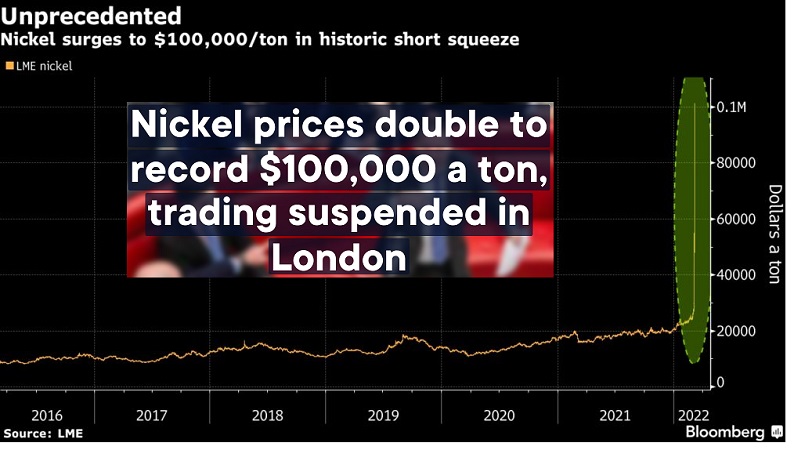
In London this morning, the trading of nickel has been suspended. Price has gone from $20,000 to $100,000 in the last two weeks; it doubled overnight.

Some of us who studied geography in secondary school and read Goh Cheng Leon’s Physical And Human Geography, we saw that plot on the distribution of special metals. Russia has a big representation for nickel. Nickel is used in making batteries and stainless steel (to reduce corrosion). So, if it becomes scarce, prices of electronics will ramp up. It is fear everywhere.

  • Three-month nickel on the London Metal Exchange briefly jumped to a record high above $100,000 a metric ton, before paring gains.
  • “It is a very dangerous market right now because this is a market that is not driven by supply and demand, it is driven by fear,” Saxo Bank’s Ole Hansen said Tuesday.

But the biggest moment will come when US bans Russia’s oil and gas. I expect that to happen this week. According to CNN, President Joe Biden “is expected to today ban Russian oil, natural gas and coal imports to the US, according to three sources familiar with the decision. The US will make the move unilaterally, without its European allies, due to disagreement among European nations about whether to ban Russian energy. EU countries have significantly more exposure to Russian energy than the US”.

The US can do the ban since it does not depend much on Russian oil and gas (about 3%; Europe depends on Russian energy up to 39% for natural gas. So, Europe cannot do this ban anyhow because of the economic risk.

Oil prices jumped to their highs of the session on a report that the U.S. would ban Russian oil imports.

WTI crude oil jumped about 4% to near $124 a barrel.

The U.S. was set to ban Russian oil, liquefied natural gas and coal without European participation as soon as Tuesday, according to the Bloomberg News report.

Americans are now paying the most at the pump on record as energy prices surge, contributing to rampant inflation that’s hitting all areas of the economy.

People, if you have a job, be extremely careful. If this war continues till April, expect global recession. High energy prices, high electronics prices, fear of supply chain and massive dislocations could be economically damaging as covid-19 in some economies.