If you are a resident or citizen of Nigeria but yet to realize that blackout has overtime been synonymous with the country, probably you have been outside minded.
There’s no day passed, you wouldn’t find a certain group in a given arena deeply discussing the excruciating effects of epileptic power supply endlessly faced by the teeming Nigerians in all corners of the country.
The acclaimed giant of Africa has thus far, to assert the least, suffered an untold hardship in the hands of electricity, yet no one can currently foresee when the affected populace would start singing a new song as regards the public utility in question.
In spite of the countless remedies proffered so far by various tech and policy analysts like myself, we are still beclouded by retrogressive mentality.
It sounds not unlike a paradox, but it’s real, that a country that has continually generated electricity for some of her neighbouring ones cannot presently boast of uninterruptible power supply. This is the sole reason many concerned individuals cum entities are sensing something fishy regarding the ordeal.
The unfortunate situation being discussed can’t be aptly and wholly x-rayed without mentioning some key stakeholders that are involved in the day-to-day management and sustenance of the limited resources.
There are three fundamental segments of electricity supply, which include generation, transmission and distribution. We have earlier on this platform scrutinized extensively the aforementioned segments. It’s noteworthy that ‘billing’ as inscribed on this topic, is not unrelated to the distribution section.
The above background signifies that only Distribution Companies (DisCos) in Nigeria are statutory charged with the responsibility to provide as well as issue electric bills to the electricity consumers within their respective jurisdictions.
It’s equally worth noting that the billing system could acceptably be of two major forms namely, the prepaid billing and the postpaid billing. A prepaid item or service is paid for in advance, whilst a postpaid one is paid after the item/service has been purchased or rendered, as might be the case.
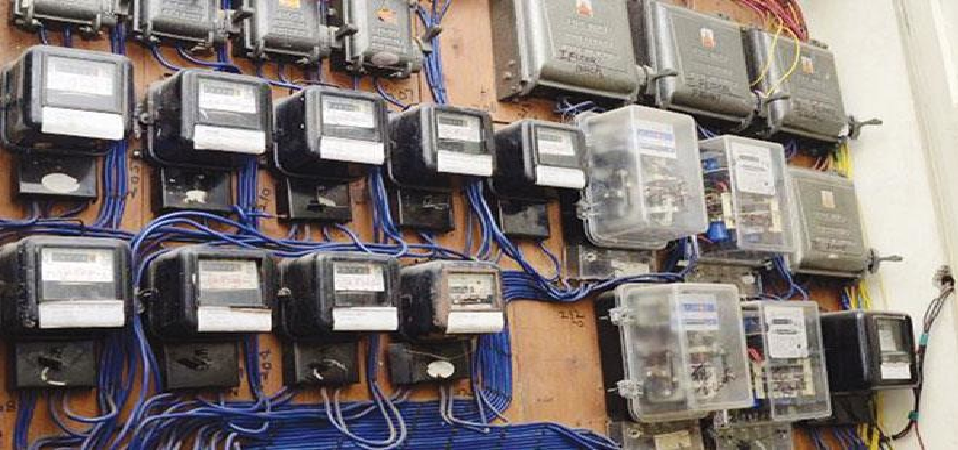
In Nigeria, over the years till date, electricity consumers have been used to the postpaid billing system whereby the bills of the services rendered or energy consumed are issued to them at the end of every month via the aid of the electric meter installed in each of their households, or business premises, by the concerned authority.
Through this methodology, the stipulated bill of the exact utility consumed is being provided for the consumer by the relevant distribution firm. It’s needless to enthuse that by the aid of the electronic device (meter) mentioned above, the apt bill would be worked out at the end of each month.
This has been the case even prior to the emergence of the defunct National Electric Power Authority (NEPA) that was formerly in charge of electricity distribution within the shores of Nigeria. The pattern was rightly inherited by the Power Holding Company of Nigeria (PHCN) till it was sent packing by the Federal Government (FG) under the watch of the immediate past administration led by Dr. Goodluck Jonathan, to pave the way for the private investors.
The practice continued unabated not until lately when the FG instructed the DisCos, whose services are currently ‘enjoyed’ in the distribution section, to provide and issue prepaid meters to the electricity consumers across the federation towards implementing the ‘Pay as you go’ policy presently witnessed in the telecommunication sector.
This recent directive has apparently fallen on deaf ears as it could be fully observed that only a few entities, not even individuals, could at the moment boast of the prepaid meters. Taking note of this derailment, a worried mind domiciled in the country may then want to know what the way forward entails.
It’s imperative to acknowledge that the prepaid pattern of billing enables a consumer to pay for only the amount/quantity of electricity he intends to use within a stipulated period by purchasing and consequently slotting a prepaid card into the installed prepaid meter. This method, therefore, is widely adjudged to be very accurate, concise and devoid of any form of imposition or pranks.
Aside from its merit to the consumers, the prepaid billing pattern is equally noted to be of high advantage to the DisCos as it’s meant to be labour effective. The measure would drastically reduce the degree of stress currently experienced by their employees as it’s foreseen that they wouldn’t longer need to go from house to house towards penalizing defaulters as regards bills’ payment.
Survey rightly indicates that over 97% of Nigerians are still facing the postpaid pattern of billing, perhaps owing to the inability of the DisCos to do the needful or pay heed to the directive of the government.
It’s appalling to realize that these consumers aren’t only faced with postpaid electric bills but estimated ones, whereby the DisCos do the billing without the aid of any meter. So, as the citizens decry the high level of blackout being experienced in the country, the random method of billing adds more salt to the injury already incurred.
This unspeakable condition could be what occasioned the Bill to Criminalize Estimated Electric Bills recently passed by the Green Chamber of the National Assembly (NASS). The document, which is targeted to amend the Electric Power Reform Act, is meant to prohibit and criminalize the ongoing estimated billing of consumers.
The bill, which had graciously scaled through third reading at the Lower Chamber, is in protest against the ‘crazy bills’ invariably issued by DisCos to their teeming subscribers and will hopefully put to an outright end any kind of estimated billing system when eventually passed into law.
The House Committee in charge of energy consumption reported on the bill, following a public hearing held on it precisely on June 5, 2018. The report was unanimously adopted by the lawmakers present at the plenary via voice votes, hence the document was approved overwhelmingly.
The bill, which will ensure that prepaid meters are installed in all houses – and what have you – upon the request of the consumers, has reportedly been transmitted to the Upper Chamber (Senate) for concurrence. If the Red Chamber passes the bill, it would be subsequently transmitted to the Presidency for assent as required by the Constitution.
Unfortunately, it is quite disheartening that till date, since after 2018 it was passed by the Lower Chamber, the Senate (Higher Chamber) is yet to do the needful as expected by the wailing Nigerians who are apparently getting fade up.
We must take into cognizance that any regulation that allows estimation of bills when the actual consumption rate could easily be ascertained is against natural justice and equity, hence completely unacceptable and should not stand.
It’s imperative to comprehend that there’s reportedly nowhere across the global community where consumers of electricity, or any form of energy, are billed arbitrarily as it is the case in Nigeria. This is to say that the country is obviously operating in isolation in terms of electricity billing.
We must understand that in a postpaid billing system, estimated billing can only be employed in situations where the installed meter of the consumer cannot be accessed by the service provider, perhaps due to technical hitch or whatever.
But around Nigeria, the concerned authorities can barely provide the consumers with the required meters let alone installing them. This implies that DisCos have, however, deemed estimated billing to be normal and acceptable; a belief that is highly condemnable by any right thinking individual.
The operators of this untold – though not unusual tradition – being harboured in Nigeria, unequivocally deserve to be holistically prosecuted for a criminal act, thus the compelling need for the aforementioned bill to be hastily passed by the senators headlong.
As we keep our fingers crossed, it’s ideal to remind all relevant authorities that this lingering norm is anti-human, therefore shouldn’t be allowed to continue showcasing its inhuman muscles.
Like this:
Like Loading...