DD
MM
YYYY

PAGES

DD
MM
YYYY

spot_img

PAGES

Home Blog Page 5284

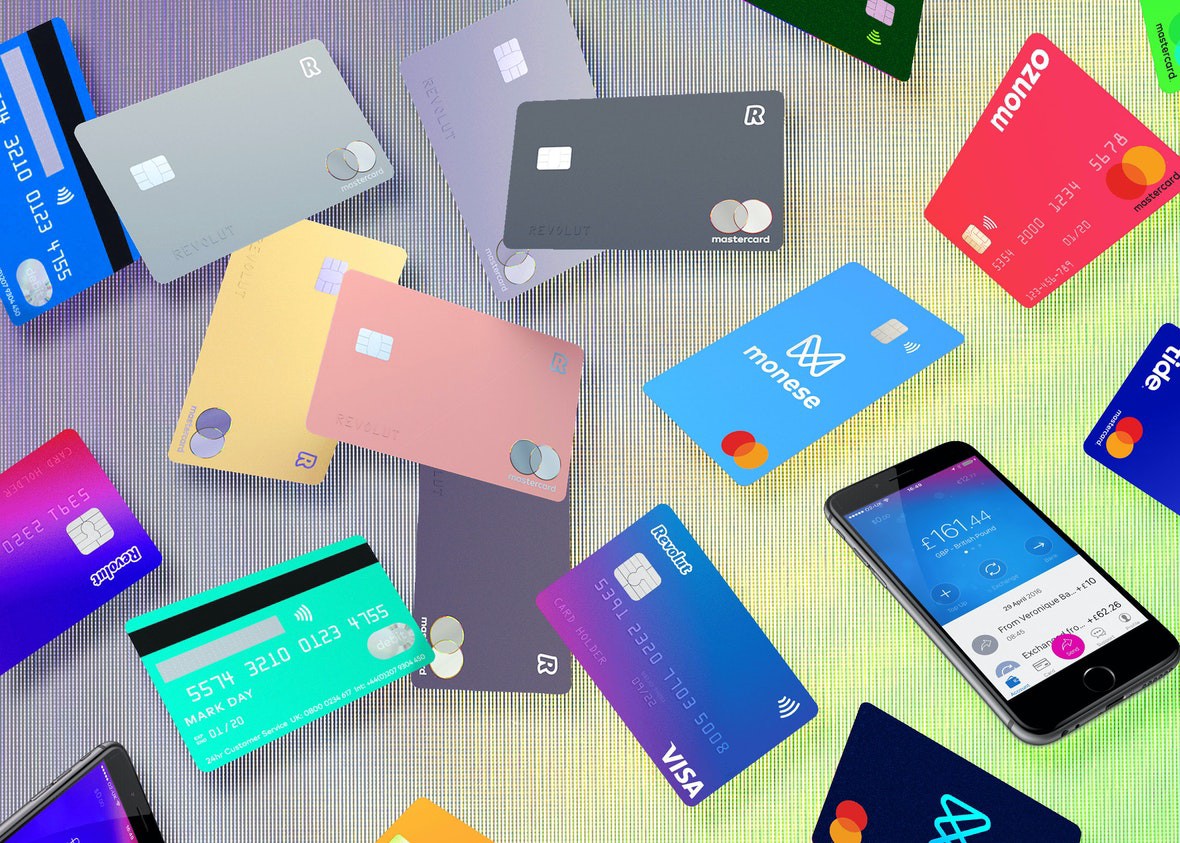
Why the Growth of Neobanks is Good for the African Retail Banking User

0

Innovation has two core consequences; one is it positions a specific company to create better solutions for customers and sets a standard for service delivery, which ultimately leads to the second consequence; everyone falling in line to meet up with the new standard to avoid getting disrupted.

Around 2014, certain payment gateways charged users an “integration fee” to use their products, newer business models emerged amongst upcoming fintech startups that rendered that model partly moribund. If you told a merchant today that he would need to pay an integration fee, along with the standard processing fees the gateway will likely collect to receive payments, he’d probably think you were nuts.

Although I clearly stated in a previous article that the growth and proliferation of fintechs may not be a lethal threat to traditional banks, I believe strongly that the growth, spread, and acceptance of digital banks has two core consequences for the banking industry; one is its ability to create a new standard for service delivery in retail banking, and the second is the mild disruption of Tier 1 and 2 banks offering retail digital banking solutions that refuse to move quickly. While it is largely wishful thinking to think that digital banks will disrupt the retail and mobile payments play of traditional banks, I believe strongly that they have the capacity to put the traditional banks on their toes and completely raise the standards of what a retail payments mobile banking app should offer its users, and what should be unacceptable.

Onboarding

While this will likely not happen very often during the entire banking cycle of a conventional retail user, the fact that a user still has to walk to a banking hall to fill out a manual physical form to open a bank account is one of the banes of traditional retail banking and one of the advantages neo-banks are capitalizing on. The majority of neo-banks allow you to onboard directly from a mobile device without the need for paperwork or to visit any banking hall for any purpose whatsoever.

Nothing stops the majority of banks from adopting this model (as I am personally not aware of any CBN regulation forbidding this), they will eventually do so when digital banks (Kuda, Fairmoney, VFD, etc.) become the prime banks of choice amongst users considering a secondary account as against traditional banks due to ease of onboarding.

This unique approach to onboarding will likely become the future of onboarding for bank customers, as people become less tolerant of the idea of visiting physical banking halls, and more banks decide to cut down on physical bank branches and locations to drive down cost.

While there are traditional banks that allow users do this (to some extent) already, except for Standard Chartered and ALAT by Wema, I am not aware of any other tier1/tier2 traditional bank that allows you onboard a fully functional bank account with no transaction limits completely digitally.

User Experience

Neo-Banks will punish erring traditional banks who are using their customers to play “Jangulova”. Just before writing this, my younger sister called me from a supermarket to help her execute a bank transfer to pay a merchant because for some unknown reason her mobile banking application refused to come up. The same bank that unwittingly deducts money from her account for no justifiable reason (and sometimes without debit alerts) for frivolous charges. Both her and my younger brother use the same “red” bank and are already making a concerted effort to switch fully to Kuda (waiting till they get their debit cards before completely making this switch).

Neo-Banks will gradually begin to absorb the retail customers of banks that have played down on the importance of offering their customers an exceptional customer experience and by the time the banks find out, it may be too late. Kuda Bank said it had grown to 2million customers as of 2021. Kuda Bank cannot issue BVNs, so these aren’t fresh users, these are traditional bank customers jumping ship and carrying their cheap retail deposits with them.

Lending

While some banks are coming to terms with this, a good number of them are not. I find it hard to understand why a traditional bank will have access to a user’s transaction inflow and outflow but cannot qualify the user’s creditworthiness and offer the user a meaningful loan. Neo-Banks adopting a credit led approach like Fairmoney, and more established neo-banks like Kuda Bank who are beginning to venture into this space have a unique opportunity and proposition for their customers – bank with us, and you can get access to loans based on our analysis of your creditworthiness as against taking credit from “somewhat deranged” online lenders who will call your father, mother, brother, pastor and even your ex for small 20k loan you didn’t pay back.

Kuda reportedly gave out US$180million in credit (overdraft) in 2021 alone, while Fairmoney reportedly gave out N117billion (US$234million) in the same year. With cheaper access to float, some of these lenders MAY decide to reduce their interest rates to become more competitive while playing in this space. More growth is expected in the coming months

Transfers

I personally believe that at some point, payments (transfers to be precise) will eventually become a utility (with value-added services becoming the game), and digital banks are making that proposition as real as ever. Kuda Bank, FairMoney, VFD, and a couple of other neo-banks now offer free bank transfers to their users. While all digital banks do not necessarily do this (Kuda and Fairmoney are both unique cases having raised US$55million and US$42million Series B rounds respectively), the market for this may begin to increase as free transfers become a compelling use case (a use case strong enough to drive sustained customer acquisition, adoption and retention). No traditional bank presently does this for transactions outside their ecosystem (i.e off their Core Banking Application), and it will likely take a strong retail user exodus to neo-banks for traditional banks to consider leaving money on the table and offering this to their users.

Holdbacks

The key idea here isn’t that digital banks will shut down the retail banking of traditional banks, the key idea here is that customers beginning to see digital bank offerings as the norm (the same way customers saw full-screen touch screen smartphones as the norm and RIMs BlackBerry with its keypad died a slow death) will push the majority of traditional banks to adopt these new offerings or risk losing their retail customers.

It really becomes an “Innovate or die” scenario. Most banks will not die (if stiff banking regulation has not killed them, is it neo-banks that will kill them?), they will innovate, and this will be good for the consumer. When fintechs like Sparkle and Brass begin to offer better-personalized services to SMEs with traditional bank accounts and these SMEs start switching primary allegiance, it will only become a matter of time before the traditional banks begin to offer more personalized services to SMEs.

However, digital banks still have certain issues. One of which is that their smartphone reliant business models coupled with a mobile internet user penetration rate of 48.12% in Nigeria means there is still a large proportion of retail customers (i.e feature phone USSD reliant users) at traditional banks which may still not be within their reach (considering this is their target audience since they can’t issue BVNs and go after first-time users).

Beyond that however is logistics, especially in regards to debit card distribution. More than one person(s) have told me how they’re still holding back and plan to go on full adoption and use of their digital bank accounts (in this case Kuda Bank) when they get their debit cards. I for one have made an order since December last year and haven’t received mine. If anyone from Kuda is reading this, please fast-track my card delivery biko!

This is not to say that digital banks are perfect; they also have network failures and suffer from service glitches, but in the end, they’re very concerned about creating an exceptional customer experience for their users and properly servicing their users, something the more traditional banks may not be too driven to do.

Growth

The neo-banking space is set to experience rapid growth in the coming years, the barrier to entry is also not significantly high as just an MFB Tier 1 Unit license (Cost: N200million deposit with the Central Bank of Nigeria) is enough to legally position you to run a digital bank. New entrants into the market like Bloomm, Mintyn, Stellas digital bank with unique value propositions may give more traditional banks a run for their money.

Conclusion

The growth of digital banks will likely cause erring traditional banks to lose some of their retail users, however, beyond that, it’ll place them in a position to be agile and innovative, to learn to be more customer-centric with their retail plays, and to offer solutions that have a net positive and material effect on the lives of their retail users, which will eventually culminate into higher standards and create an overall better experience for those users.

With more competitive pressure expected to mount up in the coming years, especially amongst Millennials and Gen Z users who may likely begin to see having certain digital bank accounts as status symbols (the way Zenith bank used to be in those days (Zenith Bank is still a great bank BTW)), more traditional banks may begin to morph their retail play offerings to look more like what their digital counterparts are offering to enable them effectively compete in the retail space. Interesting times ahead. /Inspired By The Holy Spirit

Nigerian Government Approves $8.5m for the Evacuation of Nigerians Caught in the Russia-Ukraine War

0

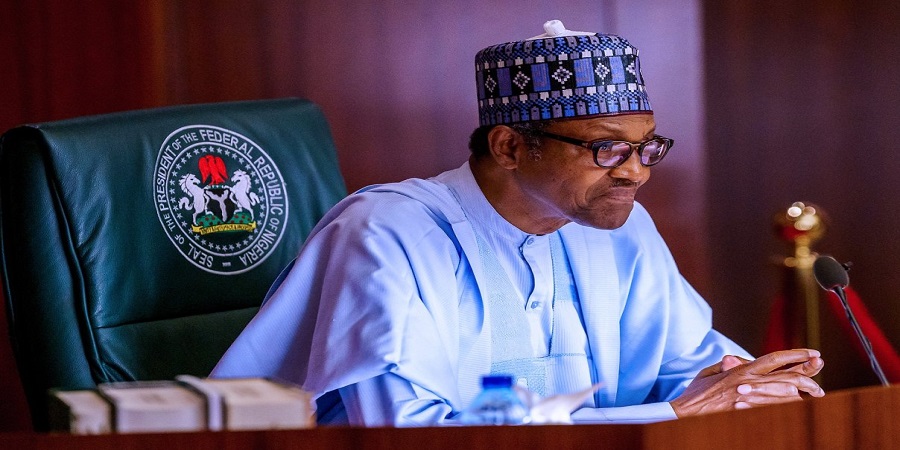
Days after the outcry of Nigerians caught in the ongoing Russia-Ukraine conflict went viral, the federal government of Nigeria has approved $8.5 million for their immediate evacuation.

About 5,000 Nigerians, mostly students, affected by the war have fled to neighboring Eastern European countries of Poland, Romania, Hungary and Slovakia, where they’re currently stranded.

The Nigerian government’s decision to embark on an evacuation mission was disclosed by the Minister of State for Foreign Affairs, Zubairu Dada, after the virtual Federal Executive Council, FEC, meeting presided over by Vice President Yemi Osinbajo at the Council Chamber, Presidential Villa, Abuja.

Dada said the evacuation approval came after a joint memo presented by both the ministries of Foreign Affairs, and Humanitarian Affairs, Disaster Management and Social Development at the council meeting.

The House of Representatives last week, had implored Nigeria’s airline Air Peace, to help with the evacuation. Dada said that Air Peace and Max Air airlines have been contracted to provide three aircraft and run as many shifts as possible to facilitate the evacuation.

“The Ministry of Humanitarian Affairs wrote a memo to the President, seeking for funding to enable us conduct this exercise. The memo was in the region of $8.5 million, which Mr. President has graciously approved. That provision entails an arrangement to evacuate not less than 5,000 Nigerians.

“Whatever happens you can be rest assured we are going to run any number of shifts that it will involve. Don’t forget it will also involve taking care of those Nigerians that may decide not to come back. It also includes some assistance for the feeding that may have been done by the missions under whatever arrangements.

“Even the missions themselves are also in dire situations. So it’s a whole gambit of activities that are involved,” Dada said, adding that the said fund has been released . That’s why the evacuation flights will begin today (Wednesday),” he said.

However, the Ministry of Foreign Affairs issued a statement on Wednesday, saying that only persons documented with the Nigerian Embassies will be eligible for evacuation. The Ministry urged those yet to register for the exercise to do so, as it is a mandatory requirement. It added that those without passports will be issued Emergency Travel Certificates (ETC) to enable them travel back home.

Nigerians in Russia have also been advised to leave the country as soon as possible due to increasing global sanctions targeting Russia’s economy.

Africans in Ukraine have complained of racial discrimination as they try to escape to neighboring countries. The African Union has expressed its concern over the development as it hinders the efforts of African countries to evacuate their citizens.

Some Ukrainian cities have been captured by Russia, trapping their inhabitants. Dada said he hopes the Russians will respect international law and ensure that no harm comes to Nigerians caught in the situation.

“We want to believe the Russian armed forces will obey the rules of engagement. They know the rules about civilians that are caught up in situations such as this. We want to assume they will respect international laws and ensure that no harm comes to them.

“Don’t forget that even our missions in Ukraine have had to be evacuated. So if for any reason any Nigerian is left behind, we are very very prayerful, we are very hopeful that no harm shall come to them once of course they are in some shelters or whatever place they are hiding.

“Don’t forget we had also summoned both the Russian and Ukrainian ambassadors to our ministry, and we did emphasize the need for their troops to ensure that they do not do anything that will harm the lives of innocent citizens.

“We have seen video clips making the rounds about the alleged treatment that had been meted out to black people who were on queues and in buses and all that.

“All these we have brought to the attention of the ambassadors and we have expressed our displeasure at this development and demanded that they do something about this,” he said.

However, some Nigerians caught in the war have said that they have no desire to return to Nigeria, despite the government’s evacuation plan.

Police Orderlies should never be reduced to domestic staff in Nigeria

0

A video of a police officer attached as a security detail to Dr Nimota Nihilola Akanbi who was recently appointed as the pioneer Chairman of the National Secondary School Education Commission (NSSEC) has sparked a lot of negative reactions and it is putting the name of the Nigerian police force to ridicule.

In the viral video, the police orderly in his full police regalia was seen carrying a tray of food for the “Oga Madam”, following the Madam behind while the “Oga madam” was just exchanging pleasantries in an event over the weekend in Ilorin, Kwara state.

This act of VIPs turning their police or security protocols to domestic staff, using them to do menial jobs and house chores other than providing security for them which is the primary  reason they were attached to the individual is a no, no and should be highly condemned. A police officer is a security officer representing the uniform he wears and the Nigeria police force and should never be seen in his police outfit engaging in chores other than providing securities for the VIP for the pleasure of the VIP.

In no where in s.4 of the police act which provided for the general duties of the police and by extension the general duties of a policeman was it provided that a police officer attached to any VIP as an security orderly should be turned into a house boy or a “boy boy”,  used for menial chores or used as the VIP pleases. 

For the sake of emphasis, s.4 of the police act will be represented here, thus:

S.4. General duties of the police

The police shall be employed for the prevention and detection of crime, the apprehen- sion of offenders, the preservation of law and order, the protection of life and property and the due enforcement of all laws and regulations with which they are directly charged, and shall perform such military duties within or outside Nigeria as may be required of them by, or under the authority of this or any other Act.

The Inspector General of Police (IGP) and the Police Service Commission (PSC) should start withdrawing the police officers attached to some VIPs that are subjected to this kind of slavery and abuse. Just because you are privileged to be a high ranking member of the society should not warrant you to subject a fellow human who is same age bracket with you who is just attached to you to carry out his statutory duties ( of providing security for you) to this form of slavery.

Everything is wrong with this act.

It is wrong from every angle. Your security details attached to you as a VIP is a privilege and not your right,  they are for your security and not to do menial jobs and domestic chores for you. When you subject them to do some chores for you other than providing security, it amounts to abuse and mental slavery. Some VIPs even asked their police orderlies to do their laundry and do house cleaning; God forbid!

If you as a VIP need a domestic staff please employ one and stop subjecting the security forces of the nation to such abysmal ridicule and abuse.

The good news is that it was reported later today that the Police commission has summoned the officer who was seen carrying the food tray for his madam in the viral video. The police authorities also issued a strict warning that its operatives attached to Very Important Persons (VIPs) all over the country to stop serving purposes other than providing security coverage for the individuals against security threats. 

Tech Startups: The Lesson from Chelsea FC; Invested £140M in 2003, now Worth £4.5B

3

The business of football. As the owner of Chelsea FC sells the club, we are seeing into the window what happens behind the round leather balls. Yes, Abramovich bought Chelsea in 2003 for £140 million. Today, that club is now worth £3 BILLION.

 (That possibly excludes £1.514 billion in loans Chelsea took from Fordstam Limited which Abramovich is saying does not need to be repaid. If you include that, it simply means the club is worth £4.5 BILLION. You can do the multiples generated in less than two decades).

In the game of modern football, there are two emerging elements: winning trophies and making profits (not high valuations) seem to be largely uncorrelated. Yes, as Chelsea was racking up trophies, it was losing tons of money. However, those trophies boosted its reputation and value, making the value move up.

So, it did not make profit, but it increased valuation. Is that not how technology startups work? The difference here is that the scaling which is typical in startups is here equivalent to winning trophies!

Contrast that with Arsenal under Arsene Wenger who was actually making profits (yes, keep selling the best players) but struggled to win trophies. So, as Arsenal fans waited for trophies, the owners were smiling to the bank.

People, see beyond the round leather, football is business. It is all about business models. Chelsea FC under Abramovich was managed as a fast-growing tech-startup which was losing money but scaling fast, with high valuation as the outcome!

Russia-Ukraine Conflict: Abramovich Puts Chelsea Up For Sale At £3bn

Russia-Ukraine Conflict: Abramovich Puts Chelsea Up For Sale At £3bn

0

The whirlwind of Russia-Ukraine conflict is fast-reaching Russian oligarchs and its rich found to be supporters of President Vladimir Putin. A flurry of sanctions targeting their assets have been announced by the US, UK, EU and their allies.

Caught in the web of this misfortune is Chelsea Football Club’s owner, Roman Abramovich, who has been identified as a friend and supporter of Putin, a discovery that is not sitting well with the UK. This means, Abramovich’s assets and businesses in foreign lands have come under immediate threat of seizure by governments – and that includes Chelsea FC.

Seeking a way out of the possibility of his assets being frozen by the British government, Abramovich, who has been banned from entering the UK, is putting Chelsea up for sale. The oil magnate issued a statement on Wednesday, confirming that the football club now has a price tag.

“I would like to address the speculation in the media over the past few days in relation to my ownership of Chelsea FC. As I have stated before, I have always taken decisions with the Club’s best interest at heart. In the current situation, I have therefore taken the decision to sell the Club, as I believe this is in the best interest of the Club, the fans, the employees, as well as the Club’s sponsors and partners,” Abramovich said in a statement published on Chelsea’s website.

ESPN had earlier reported Abramovich’s decision to sell Chelsea, citing sources. As the UK teamed up with the US and others to mete out heavy sanctions on Russia, the 55-year-old attempted to separate the club from a possible personal sanction from the U.K. government by passing “stewardship and care” of Chelsea on to its trustees on Saturday.

However, per ESPN, the trustees were seeking legal advice before responding to Abramovich’s instruction due to concerns that a charitable foundation is not a suitable entity to run a football club. This has forced his decision to sell the club.

Abramovich, who has always strenuously denied any ties to the Putin regime, was uncovered in the wake of Russia’s invasion of Ukraine, prompting the debate on Wednesday in the UK Parliament whether to sanction him.

The session had begun in the House of Commons, with Labour’s Sir Keir Starmer calling for sanctions against the Chelsea owner.

“Roman Abramovich is the owner of Chelsea Football Club and various other high-value assets in the United Kingdom,” Starmer said.

“He is a person of interest to the Home Office because of his links to the Russian state and his public association with corrupt activity and practices. Last week he [U.K. Prime Minister Boris Johnson] said Abramovich was facing sanctions. He later corrected the record to say he isn’t. Well, why on Earth isn’t he?”

A decision to sanction Abramovich will mean that Chelsea would be frozen because it’s one of his assets – and that would make it impossible for him to sell the club or inject any funds into it – which would have huge repercussions for the club.

Abramovich has been supporting Chelsea with his personal money since he bought the club nearly a decade ago. He said the decision to sell “has never been about business nor money for me, but about pure passion for the game and Club,” and that “the sale of the Club will not be fast-tracked but will follow due process.”

Abramovich bought Chelsea in 2003 for £140 million. According to ESPN, the club’s latest accounts show he is owed £1.514 billion in loans through parent company Fordstam Limited, which he controls.

“When Chelsea announced their latest accounts — a £145.6m loss after tax for the year ending June 30, 2021, despite winning the Champions League — the club admitted at the time they were ‘reliant on Fordstam Limited for its continued financial support’,” the report said.

Sources have told ESPN that Abramovich has told potential buyers in the past that he valued the club at around £3bn. The price tag was considered too much for potential buyers who were worried about loan repayment. Chelsea owes Abramovich nearly 2 billion pounds but he has said “I will not be asking for any loans to be repaid,” allaying the concern of buyers.

Abramovich said the proceeds of the sale will go to charity: “I have instructed my team to set up a charitable foundation where all net proceeds from the sale will be donated. The foundation will be for the benefit of all victims of the war in Ukraine. This includes providing critical funds towards the urgent and immediate needs of victims, as well as supporting the long-term work of recovery,” he said.