DD
MM
YYYY

PAGES

DD
MM
YYYY

spot_img

PAGES

Home Blog Page 5289

Why Investors Like Dangote Companies: N340.8 billion Dividend for 2021

1

If you are looking for the Aliko Dangote secret which he cooked and continues to cook for Nigeria, here is it: the man likes to take care of his investors, and because he has that business-style, he has made many friends in markets. 

For 2021, he is going to share N340.8 billion with his investors. That dividend is coming from the N1.4 trillion he unlocked in the market. Recall that he paid N272.6 billion in 2020. People, left and right, he is sharing good stuff – real money. People, he shares more money than most state budgets!

Dangote Cement Plc will pay shareholders a dividend of N20 per share translating to N340.8 billion after recording a revenue of N1.4 trillion for 2021, the company said in a note to the Nigerian Exchange Limited on Monday.

The company rewarded its shareholders with N272.6 billion as dividend the previous year, meaning the newly declared sum is 25 per cent higher than that payout.

The cement-maker said the dividend, “subject to the appropriate withholding tax and approval, will be paid to shareholders whose names appear in the register of members as at the close of business on May 30, 2022.”

On 31 May, 2022, the register of shareholders will be closed to allow the company’s registrar to prepare for payment on June 15, 2022.

As Dangote Cement drops that massive number. Lafarge is also on its own game; “Lafarge Africa Plc will pay shareholders a final dividend of 100 kobo per unit of its 50 Kobo ordinary share, translating to N1.610 billion, the manufacturing company said Tuesday. Lafarge Africa said the dividend will be paid to shareholders whose names are on its register of members as of close of business on April 1.” Simply, cement is a big business and that is why they are paying massive dividends.

But Aliko Dangote is on another level and that is possible because there is a great incentive here: only 15% of Dangote Cement is available for investors. And what that means is this:  the other 85% remains under his control. If dividends go high, Dangote will have a great Salah.  If you have that type of structure, the amazing becomes magical in the Forbes list of billionaires.

Can Russia Survive As A Pariah State?

0

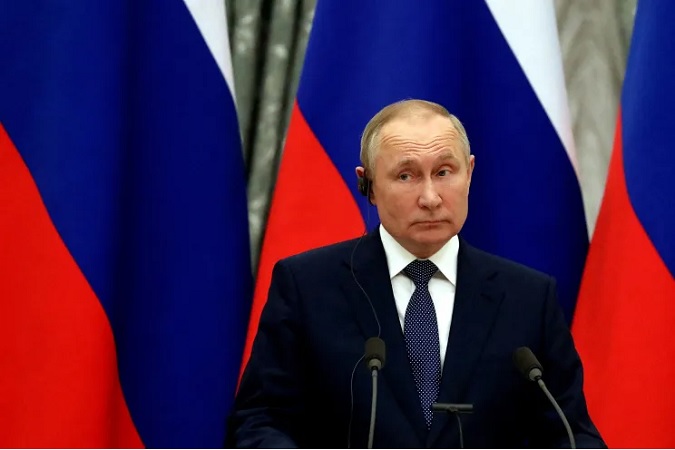
Nearly a week since Russian President Vladimir Putin invaded Ukraine, a global outrage accompanied by a series of sanctions designed to deter Russia from further escalating the conflict, have poured in.

Alas, as the United States and its allies announce the sanctions, Putin appears emboldened to advance his attack on Ukraine. A convoy of the Russian military that stretched over 40 miles is currently moving close to the capital Kyiv, in a defiant move to topple the government of Ukrainian president Volodymyr Zelensky.

As Russian ground forces, air force and Navy aim and fire at Ukraine, the Kremlin appears to be standing alone except for the unreserved support of its ally Belarus that has announced plans to deploy its army to Ukraine to support Russia. China, another country that is considered a friend of Moscow, has called for de-escalation of the conflict through negotiation.

“The situation in eastern Ukraine has undergone rapid changes … [and] China supports Russia and Ukraine to resolve the issue through negotiation,” Chinese President Xi Jinping said on Friday.

The escalation of the conflict is being buoyed by NATO-based national interests that neither Russia nor Ukraine is ready to compromise. And Putin’s Slavic ego is believed to be on the way, frustrating every effort at peace that no matter how many more sanctions are imposed on Russia, he would only double down not to appear weak.

Reeling at the mercy of the standoff are lives and means of livelihood. The ongoing destruction in Ukraine has triggered refugee crises across Europe, and there is on the other side, Russia’s economy spiraling downwards as the effects of the sanctions hit home. Russia is increasingly becoming isolated but definitely exposing its economy to avoidable turbulence.

The sanctions pile on

Russia’s Nord Stream, a system of offshore natural gas pipelines in Europe, running under the Baltic Sea from Russia to Germany, was among the first to get hit with sanctions. The certification of Nord Stream 2 was halted on February 22 following Putin’s recognition of the independence of Ukraine’s breakaway regions, Donetsk and Luhansk.

Thereafter came a flood of other sanctions as Russia invaded Ukraine. Each of the sanctions bears a weight of devastating impact on Russia’s economy. On February 25, the White House and the European Union announced the expulsion of Russian banks from the Society for Worldwide Interbank Financial Telecommunication (SWIFT), in an effort to collectively ensure that the war is a strategic failure for Putin.

“This will ensure that these banks are disconnected from the international financial system and harm their ability to operate globally,” they wrote in a joint statement.

This was accompanied by restrictive measures designed to prevent the Russian Central Bank from “deploying its international reserves in ways that undermine the impact of [the] sanctions.”

The US and its allies have embarked on a sanctions frenzy that touches many aspects of Russia’s economic well being.  The EU, the UK, Japan, France, Australia, New Zealand, Taiwan and even historically neutral Switzerland, have all announced different sanctions – from cutting ties with Russian businesses to banning its oligarchs, each sanction is aimed at scuttling Russia’s ability to lead a normal life while razing Ukraine.

To cap it, sports organizations are joining hands to ban athletes and clubs of Russian origin from sporting events. FIFA has announced the expulsion of Russia from the 2022 World Cup, while UEFA and the IOC have kicked the Russian football club side and the Russian national team respectively out of their sports tournament.

The consequences of the sanctions are trickling in.

Among other things, the Russian Ruble has dropped as much as 30% against the dollar, forcing the Russian Central Bank to hike interest rate 20%. Russia has built a fortress around its economy since 2014 when Putin annexed Crimea. Russia boasts of more than $630 billion in its external reserve and about $174 billion in the National Wealth Fund that appreciates as oil prices rise. These among other foreign-tied investments have kept Russia’s total external debt around $478 billion, a third of its GDP. Russia runs a budget surplus. But all these have come crumbling over the weekend.

But against this backdrop, Putin has remained adamant. New York Times columnist Peter Coy made reference to past sanctions to illustrate while they may not move Putin.

“There are two clashing arguments about whether the threat of economic sanctions can be effective now in deterring Russian aggression in Ukraine. One is that sanctions against Russia following the 2014 invasion of Ukraine didn’t prompt any movement in behavior, nor did sanctions promote good behavior when imposed against Cuba, Iran, Iraq, North Korea, and Venezuela. So it’s unrealistic to expect sterner sanctions to work against Russia this time. The contrary is that sanctions would be effective now because they could cause real economic pain,” writes Coy.

Can Russia survive as a pariah state?

China, Russia’s biggest ally that is among a few countries in the world yet to condemn its invasion of Ukraine, has proved to be Putin’s major lifeline. On Monday, Russia’s Gazprom said it has signed a contract to design a natural-gas pipeline from Russia to China that will deliver up to 1.8 trillion cubic feet of natural gas a year via Mongolia. The state-owned company said the contract is part of the construction of the Soyuz Vostok gas pipeline.

The move is geared toward mitigating the impact of EU’s decision to halt Nord Stream 2 certification and future energy-focused sanctions, although US President Joe Biden is not eager to impose sanctions on Russian energy. Germany’s E.ON, Europe’s largest operator of energy networks also rejected demands to shut down Nord Stream 1 gas pipeline, leaving a huge lifeline for Russia.

Russia wields a heavy influence in the global energy market and economies still emerging from downturns of covid-19 can’t afford the high cost of energy products a total sanction on Russian energy will bring.

Biden defended his decision to preserve access to Russian energy, saying it’s in order to “limit the pain the American people are feeling at the gas pump.”

Coal prices have hit $300 as demand surge in Europe, jeopardizing the fight against climate change. Oil price is up 9%, highest since 2014. Wheat, another commodity Russia leads, is up $990, highest since 2008. Last week, China relaxed its restrictions on import of Russian wheat, another move that is believed will ease the impact of the sanctions.

Russia is believed to be emboldened by all these even though they are the effects of its crippling economy. Analysts say that China alone can’t save Russia from the devastation the growing sanctions will bring upon its economy, the Asian country can only give Russia a lifeline. But it won’t be enough because the world needs Russia but Russia needs the world more.

Russia-Ukraine Conflict: Mitigating Risk from Financial Contagion

0

Tekedia Institute has a history of updating its curriculum on the fly as a result of global events. We added many courses during Covid-19, providing directions to our members on how to navigate and manage the paralyzes out of Covid-19.

As hostilities continue in Ukraine, Tekedia Mini-MBA will examine the implications in markets. How would a prolonged war affect asset classes? Would global supply chain be affected? ETC ETC.

But understand one thing: if Russia, the world’s second largest oil producer, decides to strike back, oil prices will hit the ceiling and that may put pressure on most economies. Russia is a very small country on its share of global GDP – about 3% – but its energy position is HUGE. So far, the sanctions have been muted on its oil and gas, but nothing stops it “sanctioning” the world.

Look at your market positions and take action. Do not rely on the promises of politicians and press releases; this is a really big matter because it is not happening in Ethiopia, Iraq, Mali and Afghanistan but EUROPE. Yes, there is panic because it is home!

Then, what can we do if there is a financial contagion? Let’s try to predict so that we can arrive into the future with confidence. Of course, we continue to ask global leaders to make peace and let all nations find hearts to cohabit. Peace is the best line in all balanced sheets and we want PEACE in this world.

Tekedia Institute Mini-MBA >> a business school for all markets. Zoom link in the Board.

President Zelenskyy of Ukraine, Call President Putin And Stop The Madness

Sustaining A Reliable Population Via ICT

0

Population is undoubtedly the one of the most essential parts of any society, because it’s one of the major factors that determine the society’s net worth.

As we take into cognizance the inevitable impact of population on societal uplift, it’s worth noting that it is only the human population that bears such idiosyncrasy as mentioned above.

It suffices to assert that the population of other forms of organisms is relatively inconsequential, economic wise, compared to that of humankind.

Two prime factors – natural and human resources – determine the Gross Domestic Product (GDP) of every nation. It’s pertinent to acknowledge that the aforementioned recipes are interwoven.

Natural resources obviously require human resources before it could be harnessed; thus, without the latter, the former would remain crude or useless. Similarly, mankind unavoidably requires the natural resources for life’s sustenance. Little wonder discerning leaders fiercely safeguard and sustain these resources.

A country’s resources can only be aptly managed by ensuring effective and efficient sustenance of its human population. Towards a holistic sustenance of a given population, it’s imperative to note the rudimentary factors that affect population growth, which are: birth rate, death rate, and migration. Having carried out the census of a country’s population, there’s a need to checkmate the above factors in order to subsequently boast of a robust and reliable database.

The factual point is that a reliable population record cannot be sustained without involving Information Technology (IT). Ranging from census to update, each of the exercises involved requires proper utilization of IT for laudable functionality. Hence, Nigeria as a country that’s yet to fully embrace IT must take advantage of these facts.

Owing to the overwhelming impact of IT on every activity pertaining to population management, it’s high time the National Population Commission (NPC) of Nigeria started deploying its use in the agency’s day-to-day obligations.

It’s appalling that the NPC cannot even boast of a reliable database as regards Nigeria’s population, let alone sustaining it. The authority needs to comprehend that the country requires a standard population record with a view to boosting its socio-economic status, and such can never be obtained without a substantive database. Among all, a database cannot currently be considered viable if IT isn’t utilized. In other words, the concerned quarters are expected to embrace IT wholeheartedly, considering that it is the only way forward.

In view of the above, our pattern of population census must be reviewed in earnest. Hence, as the country prepares for the next population census, I enjoin the NPC to strategize in order to ensure that IT is fully inculcated in the overall scheme so that at the end of the national exercise, we as a people can boast of a comprehensive IT-based population database.

Prior to the commencement of the said nationwide exercise, the NPC should endeavour to establish an independent IT-oriented department/unit. The unit ought to be entitled to a well-experienced indigenous director.

Independent, in the sense that the unit must have all the required resources to avoid intrusion. Well-experienced, meaning literally that the prospective personnel must possess a convincing IT expertise. And indigenous, in the sense that he/she must be a full-fledged Nigerian; being indigenous would enable him/her to regularly carry out the consignment diligently and patriotically.

The unit ought to equally constitute personnel that are knowledgeable enough in the field of ICT. Inter alia, there should be an agency that would oversee or monitor the day-to-day running of the unit toward ensuring efficiency.

After conducting the census, there would be a need for constant and consistent thorough update of the database, and such needs to be done by the IT unit. The records need to be updated by subsequently observing the earlier mentioned fundamental factors that affect population. A tactical approach ought to be employed toward ensuring that the overall birthrate and death-rate occurring within the country are regularly gathered regardless of the locality where the event took place.

Hence, every maternity and mortuary operating across the federation must be duly certified by the NPC whereby every child delivery or corpse deposition, as the case may be, would be instantly reported to the commission via the respective ICT departments of the said centres.

To this end, in the event of home child-delivery, such a case needs to be reported to any nearest maternity for onward documentation. Similarly, whenever one dies and his/her corpse isn’t taken to the mortuary, the bereaved family is expected to report such an incident to the closest mortuary.

This policy implies that, henceforth, any maternity or mortuary that isn’t recognized or approved by the NPC must be shut down indefinitely. Such a monitoring measure would equally require setting up of a mobile committee by the commission that would regularly oversee the existence cum activity of all maternity and mortuaries.

Regarding migration, the Nigerian Immigration Service (NIS) is meant to work hand-in-hand with the NPC. The cooperation would help to invariably update the latter on immigration cum emigration matters. The proposed relationship would be effective and easy by involving ICT.

Moreover, the NPC’s IT-department ought to invariably make use of world-class softwares. The softwares must be designed by the department’s staff for privacy sake. The unit is also required to continually possess such classic devices cum personnel as anti-hacking softwares, experts coupled with other sundry entitlements.

An all-inclusive statistics of Nigeria’s population can only be properly sustained via the effort of IT and viable policy. Since the country possesses all it takes to make the project feasible, let’s not hesitate in applying the resources.

Hence, all concerned authorities must henceforth be prepared to do the needful towards ensuring that the outlined proposals are duly implemented and sustained.

Nigeria’s Minister of Education, Adamu Adamu, storms out on NANS

0

The highlight of this week has been the act of the honorable minister of Education Mr. Adamu Adamu angrily walking out on National Association of Nigerian Students (NANS) delegates.

On Monday, Adamu Adamu, the honorable minister of education stormed out of a meeting with the students’ representatives under the auspices of the National Association of Nigerian Students (NANS) led by the union president, Mr. Sunday Asefon, over the ongoing and never ending strikes by Association of Academic Staff Union of Universities (ASUU) which has been distorting academic activities in universities and other higher institutions.

The Academic Staff Union of Universities (ASUU) had, on February 14, this year again embarked on a one-month warning strike (after which they threatened that they may  take it to  longer time) if the government don’t meet their demands; the government had in so many instances failed to honor the contract they have entered with the university staff union.

Students have been protesting and blocking major roads in different states and different  parts of the country. On Monday, the students decided to take the protest to the federal capital territory and blocked major roads in the city and stormed the Ministry of Education and also the National Assembly to register their displeasures to the ministry and the  law makers

In continuation of the protest, the students summoned the Honorable Minister of Education, Mr. Adamu Adamu to an impromptu press conference with the minister and other high ranking officers in the ministry of education.

The students delegate leader who is the president of NANS, Mr. Sunday Asefon, boldly spoke to the Honorable minister and made known the demands of the students union and called for immediate end of the ongoing strike of the university lecturers. The National president of the student body also accused the Minister of sending his son abroad to study while he let the Nigerian schools to fall out of shape.

These accusations by the National President that the Minster sends his children to foreign schools might have gotten the Honorable minister angry.

The minister while reacting to the statements of the National  president of NANS,  had chided the union that instead of coming protest at the ministry and the federal Capital Territory the students should have addressed their grievance with their lecturers in their respective institutions; The Minister said “instead of coming here to protest you should have address your grievances with your lecturers, Perhaps the only point that you made that is even worthy of attention is that you said students should be involved in this (discussion) and I think it’s probably a good thing, and that is only what I will take away from here”.

After making these comments, the honorable minister angrily stormed out of the meeting. It can only be assumed that the minister felt insulted over the tune the national president of NANS had used in addressing him and accusing him of sending his children abroad to study while he let Nigerian institutions of  learning to  collapse.

The minister feeling insulted that he was accused of sending his children to school abroad is quite funny because Nigerian leaders right from the president down to the least of them have their children schooling abroad, that is while it was widely celebrated when the governor of Kaduna state, Governor El-rufai  posted that he took his last son to enroll him in a public school in the state.

This act was deemed as just a publicity stunt by the Governor to score some cheap political goals as he quickly and secretly took the son out of the school after the publicity and claimed that kidnappers were targeting to abduct the son from the school.