DD
MM
YYYY

PAGES

DD
MM
YYYY

spot_img

PAGES

Home Blog Page 5293

M-KOPA Raises $75M, Validates Fintechnolization Construct, “Every Digital Platform Will Spin Out a Fintech Company”

0

Two years ago, I coined the word “fintechnolization” – a construct that every digital platform must have a maturity state of offering a fintech solution. I had watched all great digital platforms on how they ended up providing fintech solutions even when they began in an unrelated sector. It was also on that framework that I started Tekedia Capital since Tekedia itself is a platform. In that piece, I made a call that in 2021, I would start a financial services solution on Tekedia!

Later, one of the best in the world, Andreessen Horowitz,  put out a piece titled “Every Company Will Spin Out a Fintech Company”, confirming the the observation.

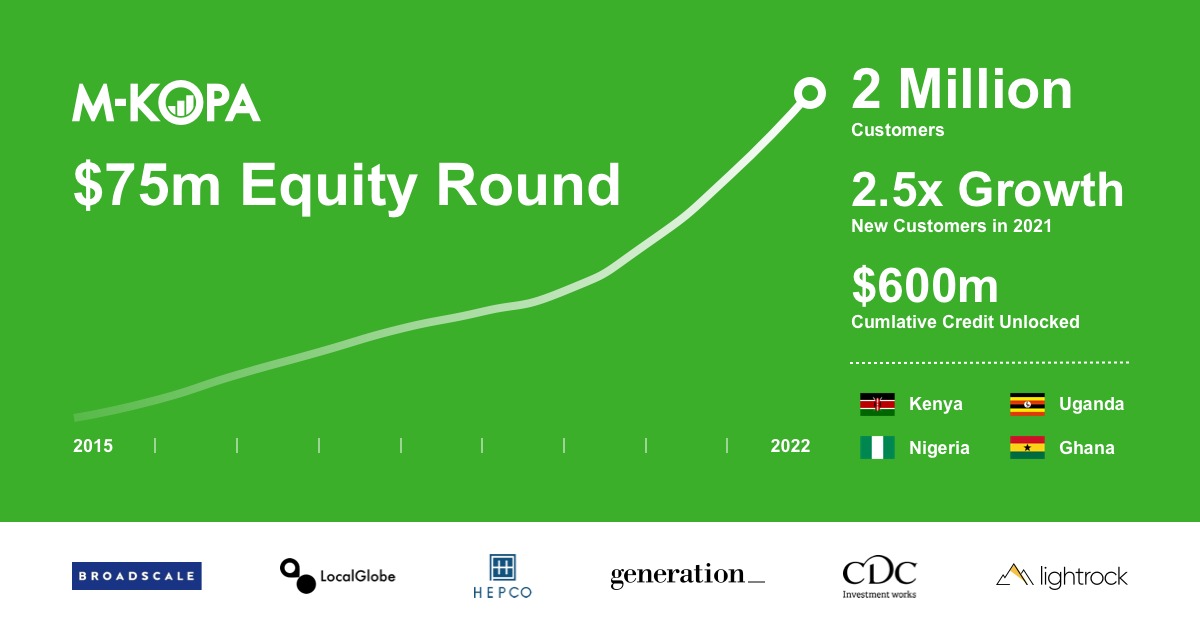
That validation continues across market domains and territories. M-KOPA which began as a solar startup is now a fintech company. In short, the company uses the word “fintech” to describe itself. It just raised $75 million: “To date, M-KOPA has unlocked over $600 million in financing and enabled 2 million customers to access a diverse set of products including smartphones, solar lighting, solar-powered appliances and digital financial services such as cash loans and health insurance. M-KOPA has recorded nearly 2.5X growth of new customers in 2021 and is projected to reach 3 million customers by the end of 2022.”:

Launched in 2011, M-KOPA combines the power of digital micropayments with the Internet-of-Things [IoT] technology to make financing more accessible to underbanked customers and enable them to build ownership of their assets as well as their credit histories. The company will use its raise to expand into additional countries, adding to its hubs in Kenya, Uganda, Nigeria and Ghana, as well as  scale its financial service products beyond asset financing, including health insurance, cash loans and BNPL merchant partnerships.

A solar company does not enjoy great multiples like fintech startups . M-KOPA is smart to make itself known as a fintech over just a solar firm. With that, its valuation will be seen from the lens of fintechs.

–Press release

M-KOPA, the fintech platform that provides connected financing and digital financial services to underbanked consumers across four markets in Africa, today announced its $75M Growth Equity round*. The round was led by Generation Investment Management and Broadscale Group, with participation from new investors including LocalGlobe’s Latitude Fund and HEPCO Capital Management. M-KOPA’s existing investors, CDC Group** and LGT Lightrock also participated in the round. This capital injection brings M-KOPA’s total equity funding to $190M. Today’s news also coincides with M-KOPA providing financing to two million customers.

With the funding, M-KOPA plans to expand into additional countries, adding to its hubs in Kenya, Uganda, Nigeria and recently launched Ghana, to further scale its footprint across the continent. The company will also continue expanding its flexible daily and weekly payments model to go beyond asset financing, by scaling its financial services products such as health insurance, cash loans and BNPL merchant partnerships that have proven to be popular with customers.

Launched in 2011, M-KOPA’s financing platform enables underbanked customers to access a broad range of products and services without collateral or a guarantor. By combining the power of digital micropayments with the Internet-of-Things [IoT] technology to make financing more accessible, customers are enabled to build ownership of their assets as well as build their credit histories over time through a flexible payment model. To date, M-KOPA has unlocked over $600 million in financing and enabled 2 million customers to access a diverse set of products including smartphones, solar lighting, solar-powered appliances and digital financial services such as cash loans and health insurance. M-KOPA has recorded nearly 2.5X growth of new customers in 2021 and is projected to reach 3 million customers by the end of 2022.

Speaking on the round, Jesse Moore, M-KOPA CEO and Co-founder said, “We’re thrilled to partner with leading global investors with deep experience supporting growth-stage companies as we expand our platform to serve more of our customers’ needs. Our innovative model means we have enabled financial empowerment for over two million people already through micro-payments, but there are still millions of people across the continent that are stuck with limited economic options. With this funding, we will expand to more markets across Africa and scale to over 10 million customers in the next few years.”

“M-KOPA’s unique technology-enabled approach to providing essential consumer goods and financial services is an inspiring engine of empowerment perfectly aligned with our mission of Disruption for Good,” said Broadscale’s Managing Partner, Andrew Shapiro. “The company’s rapid customer growth demonstrates the massive unmet demand in this sector, and we look forward to working with M-KOPA as they continue to scale their reach and impact across Africa”

“We believe M-KOPA is a critical part of the push to accelerate access to digital and financial tools that will empower millions of people across Africa whilst increasing access to clean energy, clean mobility and connectivity. We were early supporters of M-KOPA and continue to be impressed by the continued innovation of its product offerings and ability to accelerate at a significant scale. We are pleased to continue supporting M-KOPA as it scales further”, said Dave Easton, Partner in Generation Investment Management’s Growth Equity team.

In Sub-Saharan Africa, 85% of the population live on less than $5.50 per day per adult, and as a result, cannot afford to major purchases outright without credit. However, access to credit remains severely limited across the continent, as the majority of consumers are underbanked, offline and hard-to-reach. M-KOPA’s offering costs an average monthly interest rate of 3.1%, lower than the typical interest rates offered by alternative sources of credit their customer base can access. Through this, M-KOPA is powering financial and digital inclusion by making micropayments accessible and leveraging data to unlock credit solutions. The company was recently recognised as one of Fortune Magazine’s Impact 20, which highlights the top 20 global venture and private-equity backed companies tackling key social and environmental issues as part of their business model.
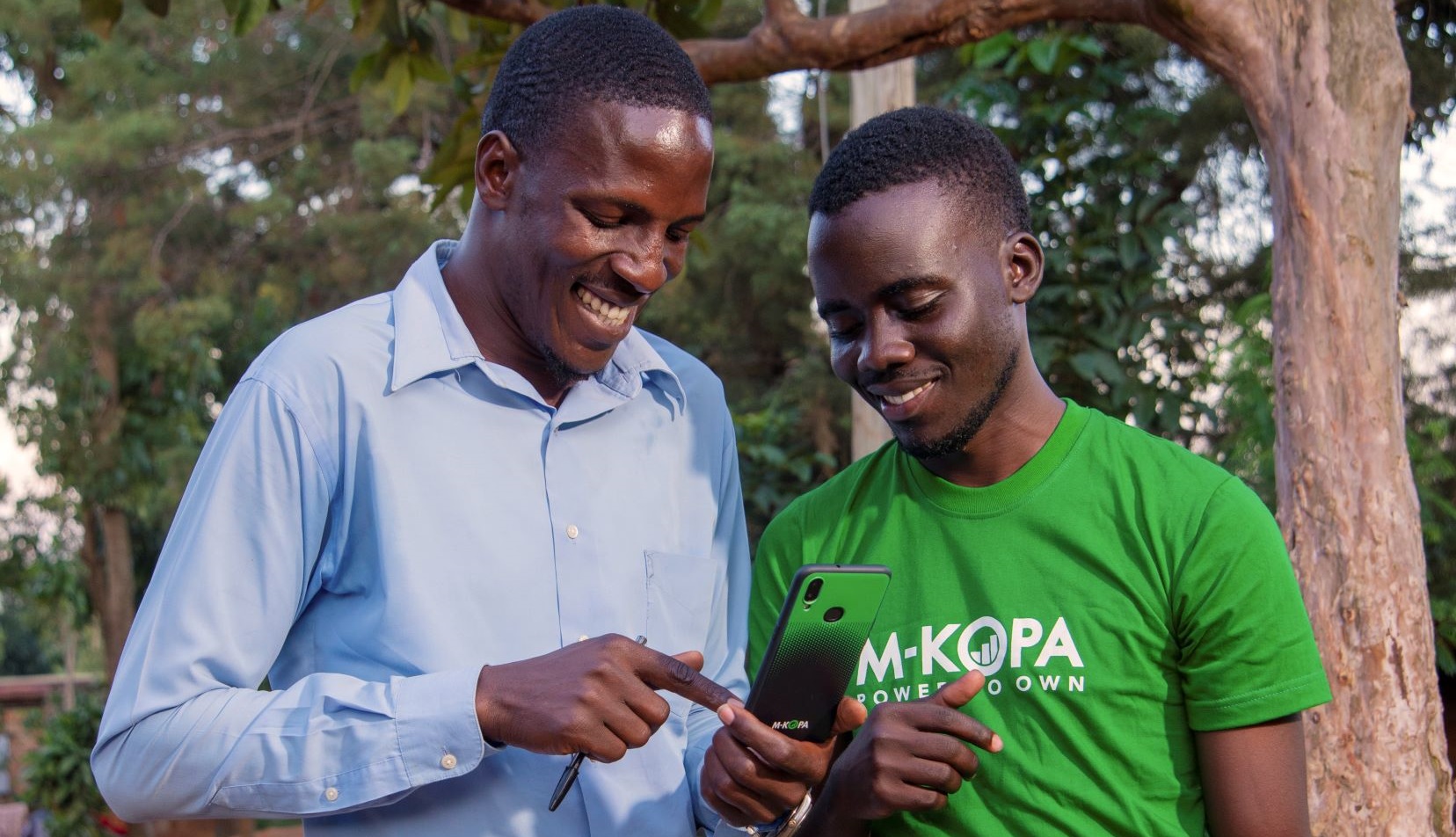
Mayur Patel, M-KOPA’s Chief Commercial Officer, added, “By leveraging our unique data and market knowledge in serving customers over the last decade at M-KOPA, we’ve seen extraordinary growth across our markets in East Africa and our recently launched operations in  Nigeria and Ghana. There is a massive opportunity in front of us to make everyday essentials more accessible by better matching fractional payment terms with customers’ daily or weekly earning and spending cycles.”

As a result of its rapid scaling, M-KOPA has created over 500 new full-time jobs across Africa since 2019 and is currently recruiting for commercial operations & engineering roles globally as part of its expansion plan.


Musk Beams Starlink Internet Down on Ukraine

0

On Saturday, Elon Musk announced that SpaceX’s satellite internet company, Starlink, is now providing internet service in Ukraine, following power outages caused by Russian invasion that disrupted services in the Eastern European country.

The development came after Ukraine’s vice prime minister asked Musk on Twitter to help provide his country with the internet as Russian attacks intensified.

“While you try to colonize Mars — Russia try to occupy Ukraine! While your rockets successfully land from space — Russian rockets attack Ukrainian civil people! We ask you to provide Ukraine with Starlink stations and to address sane Russians to stand,” Mykhailo Fedorov, who doubles as Ukraine’s minister of digital transformation, tweeted at Musk.

Within hours, the SpaceX CEO responded that “Starlink service is now active in Ukraine” he said in addition, “More terminals en route.”

Musk has been shooting hundreds of satellites to orbit with the aim off providing reliable internet to billions of people across the globe via Starlink’s high-speed broadband. SpaceX has launched nearly 2,000 satellites so far, as the idea requires swarms of satellites operating in low-Earth orbit – about 340 miles high, in SpaceX’s case – to provide continuous coverage.

Ukraine has greatly depended on the internet to keep its citizens and the rest of the world informed. Ukrainian ministers have been tweeting since the conflict began, and the government also uses Telegram to disseminate information to its people.

In another tweet, Fedrov thanked Ukrainian Ambassador to the US, Oksana Markarova for his help in facilitating the Starlink internet service. “Special thanks to … Markarova for swift decisions related to authorization and certification that allowed us to activate the Starlink in Ukraine,” he tweeted. This suggests that bureaucracy bottlenecks were bypassed to allow Musk to activate the satellite service. Information on Starlink’s website shows that Ukraine is slated for satellite internet in 2023.

This isn’t the first time Starlink is being used to provide emergency satellite service. Recently in Tonga, South Pacific Ocean, SpaceX’s Starlink was deployed to provide internet service to connect remote villages following underwater volcano eruption in the region in January, the company said.

Musk provided the satellite internet service as countries around the world rally around Ukraine amidst intense conflict with Russia that has claimed many lives. Outnumbered, Ukraine has been appealing for help from everyone who cares in its bid to resist the Russian aggression.

Russian president Vladimir Putin is baring it all loose on Ukraine, with cyberattacks as part of his war plan. Ukrainians have been reported to be switching to Signal, an encrypted instant messaging app, suggesting that the country is warily looking for internet service it can trust. In addition, internet towers are also targets of the Russians. Internet services are reportedly not available in cities hardest hit by the war.

However, the move will face yet another challenge. Musk said that more terminals are on the way. But to successfully activate internet service, end users will need to import satellite dishes for signal. Given that it’s a war time, it is not clear how Musk will provide the dishes.

However, the two incidents of emergency internet services powered by Starlink, has run a significant ad for SpaceX. Musk’s Starlink is competing with Amazon founder, Jeff Bezos’ Kuiper, the satellite internet arm of his Blue Origin space company.

Musk has been pushing to activate Starlink to offer global internet service, but the deadline for the launch previously slated for last year has passed. The company is yet to announce a new date for the launch, stoking the complaints of many subscribers who said they are yet to receive their satellite dishes long after they subscribed.

Tekedia Live – Driving Growth and Operational Excellence Using Lean Six Sigma

0

Come with your calculator because  you will understand the “Measure of Central Tendency” and how you can use six sigma to drive business growth and accelerate productivity. Join Dr Charles Igwe PH.D, EMBA, PMP as he teaches on the topic – “Driving Growth and Operational Excellence Using Lean Six Sigma” – at Tekedia Mini-MBA Live tomorrow. Zoom link in the Board.

Tekedia Institute Mini-MBA >> learn from the best.

For more about Tekedia Mini-MBA, click here.

EU Feeds The Swamp With Weapons Supplies to Ukraine

0

“The European Union agreed Sunday to … spend hundreds of millions of euros on buying weapons for Ukraine … EU officials said.” Associated  Press reports.  They have started the African playbook in Ukraine instead of addressing the root cause of this problem. Before you know it, some smart men will model how much profit & loss statements will improve if the war continues for an extra hour. And just like that, the evil party continues. The war is seen from balance sheets and how much dead weapons to be sold.

The European Union agreed Sunday to close its airspace to Russian airlines, spend hundreds of millions of euros on buying weapons for Ukraine and ban some pro-Kremlin media outlets in its latest response to Russia’s invasion, EU officials said.

That and Germany’s announcement earlier in the day that it would almost triple its defense budget this year underscored how Russia’s invasion of Ukraine was rewriting Europe’s post-World War II security and defense policy in ways that were unthinkable only a few weeks ago.

In what he described as “a defining moment for European history,” EU foreign policy chief Josep Borrell said that the bloc’s 27 foreign ministers had greenlighted the unprecedented support for Ukraine and that those actions would take effect within hours.

To the President of Ukraine, the EU may not be helping you because shipping arms to you, to convert ordinary citizens into soldiers will simply facilitate more destruction of your land.

It takes Russia capturing a dozen non-Ukranians to think that everyone is against them. And if that happens, no one can predict where this will end. 

No war has ever been ended by bullets; ONLY negotiations do. So, there needs to be more talks but sending arms will escalate this madness.

Why? If the EU supplies arms to Ukraine, and China ships to Russia, this can become a new normal! Even experts agree that Russia has complete supremacy around Black Sea. So, this game can change rapidly.

The move would only be symbolic, said Mustafa Aydin, president of the International Relations Council of Turkey.

“Russia has enough firepower in the Black Sea that it doesn’t make sense for NATO countries to [enter],” he said. “Russia has complete supremacy on the water.”

But if the war drags on, Moscow may feel the heat, since Russia had already completed its naval buildup in the Black Sea by shifting units from the Baltic Sea ahead of the start of hostilities, said Serhat Guvenc, professor of international relations at Istanbul’s Kadir Has University.

Earlier in February, six Russian warships and a submarine transited the Dardanelles and Bosphorus straits to the Black Sea for what Moscow called naval drills near Ukrainian waters.

“They [Russia] probably have enough resources to sustain their naval power in the Black Sea for about two to three months,” he said. “But if conflict drags on, it’ll be a different story.”

Nigeria And The Obsolete Electricity Billing System

0
electricity companies nigeria

If you are a resident or citizen of Nigeria but yet to realize that blackout has overtime been synonymous with the country, probably you have been outside minded.

There’s no day passed, you wouldn’t find a certain group in a given arena deeply discussing the excruciating effects of epileptic power supply endlessly faced by the teeming Nigerians in all corners of the country.

The acclaimed giant of Africa has thus far, to assert the least, suffered an untold hardship in the hands of electricity, yet no one can currently foresee when the affected populace would start singing a new song as regards the public utility in question.

In spite of the countless remedies proffered so far by various tech and policy analysts like myself, we are still beclouded by retrogressive mentality.

It sounds not unlike a paradox, but it’s real, that a country that has continually generated electricity for some of her neighbouring ones cannot presently boast of uninterruptible power supply. This is the sole reason many concerned individuals cum entities are sensing something fishy regarding the ordeal.

The unfortunate situation being discussed can’t be aptly and wholly x-rayed without mentioning some key stakeholders that are involved in the day-to-day management and sustenance of the limited resources.

There are three fundamental segments of electricity supply, which include generation, transmission and distribution. We have earlier on this platform scrutinized extensively the aforementioned segments. It’s noteworthy that ‘billing’ as inscribed on this topic, is not unrelated to the distribution section.

The above background signifies that only Distribution Companies (DisCos) in Nigeria are statutory charged with the responsibility to provide as well as issue electric bills to the electricity consumers within their respective jurisdictions.

It’s equally worth noting that the billing system could acceptably be of two major forms namely, the prepaid billing and the postpaid billing. A prepaid item or service is paid for in advance, whilst a postpaid one is paid after the item/service has been purchased or rendered, as might be the case.

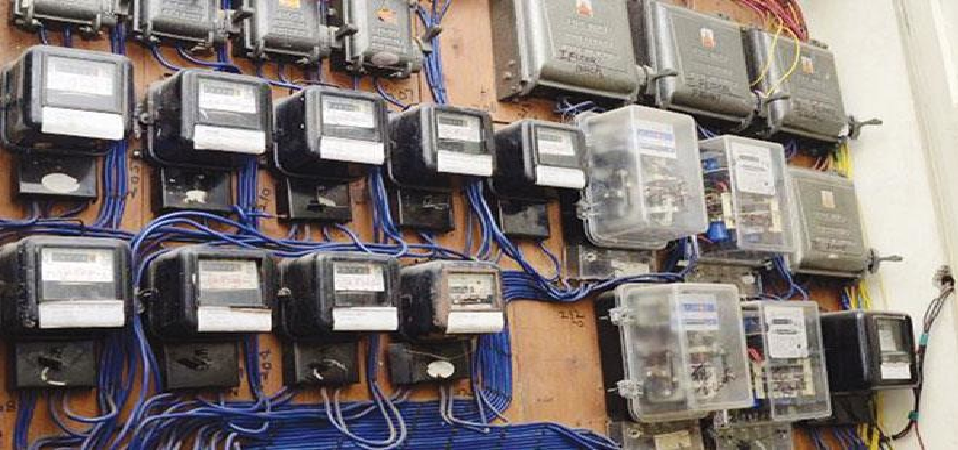
In Nigeria, over the years till date, electricity consumers have been used to the postpaid billing system whereby the bills of the services rendered or energy consumed are issued to them at the end of every month via the aid of the electric meter installed in each of their households,  or business premises, by the concerned authority.

Through this methodology, the stipulated bill of the exact utility consumed is being provided for the consumer by the relevant distribution firm. It’s needless to enthuse that by the aid of the electronic device (meter) mentioned above, the apt bill would be worked out at the end of each month.

This has been the case even prior to the emergence of the defunct National Electric Power Authority (NEPA) that was formerly in charge of electricity distribution within the shores of Nigeria. The pattern was rightly inherited by the Power Holding Company of Nigeria (PHCN) till it was sent packing by the Federal Government (FG) under the watch of the immediate past administration led by Dr. Goodluck Jonathan, to pave the way for the private investors.

The practice continued unabated not until lately when the FG instructed the DisCos, whose services are currently ‘enjoyed’ in the distribution section, to provide and issue prepaid meters to the electricity consumers across the federation towards implementing the ‘Pay as you go’ policy presently witnessed in the telecommunication sector.

This recent directive has apparently fallen on deaf ears as it could be fully observed that only a few entities, not even individuals, could at the moment boast of the prepaid meters. Taking note of this derailment, a worried mind domiciled in the country may then want to know what the way forward entails.

It’s imperative to acknowledge that the prepaid pattern of billing enables a consumer to pay for only the amount/quantity of electricity he intends to use within a stipulated period by purchasing and consequently slotting a prepaid card into the installed prepaid meter. This method, therefore, is widely adjudged to be very accurate, concise and devoid of any form of imposition or pranks.

Aside from its merit to the consumers, the prepaid billing pattern is equally noted to be of high advantage to the DisCos as it’s meant to be labour effective. The measure would drastically reduce the degree of stress currently experienced by their employees as it’s foreseen that they wouldn’t longer need to go from house to house towards penalizing defaulters as regards bills’ payment.

Survey rightly indicates that over 97% of Nigerians are still facing the postpaid pattern of billing, perhaps owing to the inability of the DisCos to do the needful or pay heed to the directive of the government.

It’s appalling to realize that these consumers aren’t only faced with postpaid electric bills but estimated ones, whereby the DisCos do the billing without the aid of any meter. So, as the citizens decry the high level of blackout being experienced in the country, the random method of billing adds more salt to the injury already incurred.

This unspeakable condition could be what occasioned the Bill to Criminalize Estimated Electric Bills recently passed by the Green Chamber of the National Assembly (NASS). The document, which is targeted to amend the Electric Power Reform Act, is meant to prohibit and criminalize the ongoing estimated billing of consumers.

The bill, which had graciously scaled through third reading at the Lower Chamber, is in protest against the ‘crazy bills’ invariably issued by DisCos to their teeming subscribers and will hopefully put to an outright end any kind of estimated billing system when eventually passed into law.

The House Committee in charge of energy consumption reported on the bill, following a public hearing held on it precisely on June 5, 2018. The report was unanimously adopted by the lawmakers present at the plenary via voice votes, hence the document was approved overwhelmingly.

The bill, which will ensure that prepaid meters are installed in all houses – and what have you – upon the request of the consumers, has reportedly been transmitted to the Upper Chamber (Senate) for concurrence. If the Red Chamber passes the bill, it would be subsequently transmitted to the Presidency for assent as required by the Constitution.

Unfortunately, it is quite disheartening that till date, since after 2018 it was passed by the Lower Chamber, the Senate (Higher Chamber) is yet to do the needful as expected by the wailing Nigerians who are apparently getting fade up.

We must take into cognizance that any regulation that allows estimation of bills when the actual consumption rate could easily be ascertained is against natural justice and equity, hence completely unacceptable and should not stand.

It’s imperative to comprehend that there’s reportedly nowhere across the global community where consumers of electricity, or any form of energy, are billed arbitrarily as it is the case in Nigeria. This is to say that the country is obviously operating in isolation in terms of electricity billing.

We must understand that in a postpaid billing system, estimated billing can only be employed in situations where the installed meter of the consumer cannot be accessed by the service provider, perhaps due to technical hitch or whatever.

But around Nigeria, the concerned authorities can barely provide the consumers with the required meters let alone installing them. This implies that DisCos have, however, deemed estimated billing to be normal and acceptable; a belief that is highly condemnable by any right thinking individual.

The operators of this untold – though not unusual tradition – being harboured in Nigeria, unequivocally deserve to be holistically prosecuted for a criminal act, thus the compelling need for the aforementioned bill to be hastily passed by the senators headlong.

As we keep our fingers crossed, it’s ideal to remind all relevant authorities that this lingering norm is anti-human, therefore shouldn’t be allowed to continue showcasing its inhuman muscles.