DD
MM
YYYY

PAGES

DD
MM
YYYY

spot_img

PAGES

Home Blog Page 5295

Nigeria And The Obsolete Electricity Billing System

0
electricity companies nigeria

If you are a resident or citizen of Nigeria but yet to realize that blackout has overtime been synonymous with the country, probably you have been outside minded.

There’s no day passed, you wouldn’t find a certain group in a given arena deeply discussing the excruciating effects of epileptic power supply endlessly faced by the teeming Nigerians in all corners of the country.

The acclaimed giant of Africa has thus far, to assert the least, suffered an untold hardship in the hands of electricity, yet no one can currently foresee when the affected populace would start singing a new song as regards the public utility in question.

In spite of the countless remedies proffered so far by various tech and policy analysts like myself, we are still beclouded by retrogressive mentality.

It sounds not unlike a paradox, but it’s real, that a country that has continually generated electricity for some of her neighbouring ones cannot presently boast of uninterruptible power supply. This is the sole reason many concerned individuals cum entities are sensing something fishy regarding the ordeal.

The unfortunate situation being discussed can’t be aptly and wholly x-rayed without mentioning some key stakeholders that are involved in the day-to-day management and sustenance of the limited resources.

There are three fundamental segments of electricity supply, which include generation, transmission and distribution. We have earlier on this platform scrutinized extensively the aforementioned segments. It’s noteworthy that ‘billing’ as inscribed on this topic, is not unrelated to the distribution section.

The above background signifies that only Distribution Companies (DisCos) in Nigeria are statutory charged with the responsibility to provide as well as issue electric bills to the electricity consumers within their respective jurisdictions.

It’s equally worth noting that the billing system could acceptably be of two major forms namely, the prepaid billing and the postpaid billing. A prepaid item or service is paid for in advance, whilst a postpaid one is paid after the item/service has been purchased or rendered, as might be the case.

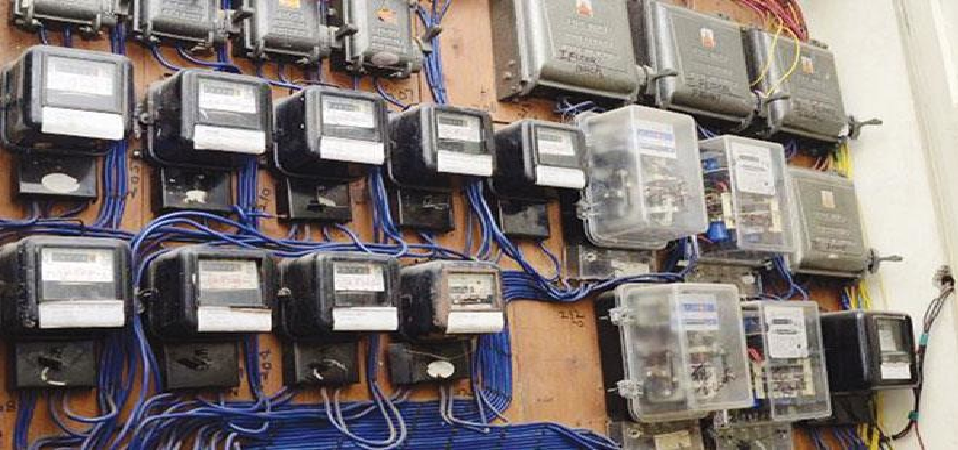
In Nigeria, over the years till date, electricity consumers have been used to the postpaid billing system whereby the bills of the services rendered or energy consumed are issued to them at the end of every month via the aid of the electric meter installed in each of their households,  or business premises, by the concerned authority.

Through this methodology, the stipulated bill of the exact utility consumed is being provided for the consumer by the relevant distribution firm. It’s needless to enthuse that by the aid of the electronic device (meter) mentioned above, the apt bill would be worked out at the end of each month.

This has been the case even prior to the emergence of the defunct National Electric Power Authority (NEPA) that was formerly in charge of electricity distribution within the shores of Nigeria. The pattern was rightly inherited by the Power Holding Company of Nigeria (PHCN) till it was sent packing by the Federal Government (FG) under the watch of the immediate past administration led by Dr. Goodluck Jonathan, to pave the way for the private investors.

The practice continued unabated not until lately when the FG instructed the DisCos, whose services are currently ‘enjoyed’ in the distribution section, to provide and issue prepaid meters to the electricity consumers across the federation towards implementing the ‘Pay as you go’ policy presently witnessed in the telecommunication sector.

This recent directive has apparently fallen on deaf ears as it could be fully observed that only a few entities, not even individuals, could at the moment boast of the prepaid meters. Taking note of this derailment, a worried mind domiciled in the country may then want to know what the way forward entails.

It’s imperative to acknowledge that the prepaid pattern of billing enables a consumer to pay for only the amount/quantity of electricity he intends to use within a stipulated period by purchasing and consequently slotting a prepaid card into the installed prepaid meter. This method, therefore, is widely adjudged to be very accurate, concise and devoid of any form of imposition or pranks.

Aside from its merit to the consumers, the prepaid billing pattern is equally noted to be of high advantage to the DisCos as it’s meant to be labour effective. The measure would drastically reduce the degree of stress currently experienced by their employees as it’s foreseen that they wouldn’t longer need to go from house to house towards penalizing defaulters as regards bills’ payment.

Survey rightly indicates that over 97% of Nigerians are still facing the postpaid pattern of billing, perhaps owing to the inability of the DisCos to do the needful or pay heed to the directive of the government.

It’s appalling to realize that these consumers aren’t only faced with postpaid electric bills but estimated ones, whereby the DisCos do the billing without the aid of any meter. So, as the citizens decry the high level of blackout being experienced in the country, the random method of billing adds more salt to the injury already incurred.

This unspeakable condition could be what occasioned the Bill to Criminalize Estimated Electric Bills recently passed by the Green Chamber of the National Assembly (NASS). The document, which is targeted to amend the Electric Power Reform Act, is meant to prohibit and criminalize the ongoing estimated billing of consumers.

The bill, which had graciously scaled through third reading at the Lower Chamber, is in protest against the ‘crazy bills’ invariably issued by DisCos to their teeming subscribers and will hopefully put to an outright end any kind of estimated billing system when eventually passed into law.

The House Committee in charge of energy consumption reported on the bill, following a public hearing held on it precisely on June 5, 2018. The report was unanimously adopted by the lawmakers present at the plenary via voice votes, hence the document was approved overwhelmingly.

The bill, which will ensure that prepaid meters are installed in all houses – and what have you – upon the request of the consumers, has reportedly been transmitted to the Upper Chamber (Senate) for concurrence. If the Red Chamber passes the bill, it would be subsequently transmitted to the Presidency for assent as required by the Constitution.

Unfortunately, it is quite disheartening that till date, since after 2018 it was passed by the Lower Chamber, the Senate (Higher Chamber) is yet to do the needful as expected by the wailing Nigerians who are apparently getting fade up.

We must take into cognizance that any regulation that allows estimation of bills when the actual consumption rate could easily be ascertained is against natural justice and equity, hence completely unacceptable and should not stand.

It’s imperative to comprehend that there’s reportedly nowhere across the global community where consumers of electricity, or any form of energy, are billed arbitrarily as it is the case in Nigeria. This is to say that the country is obviously operating in isolation in terms of electricity billing.

We must understand that in a postpaid billing system, estimated billing can only be employed in situations where the installed meter of the consumer cannot be accessed by the service provider, perhaps due to technical hitch or whatever.

But around Nigeria, the concerned authorities can barely provide the consumers with the required meters let alone installing them. This implies that DisCos have, however, deemed estimated billing to be normal and acceptable; a belief that is highly condemnable by any right thinking individual.

The operators of this untold – though not unusual tradition – being harboured in Nigeria, unequivocally deserve to be holistically prosecuted for a criminal act, thus the compelling need for the aforementioned bill to be hastily passed by the senators headlong.

As we keep our fingers crossed, it’s ideal to remind all relevant authorities that this lingering norm is anti-human, therefore shouldn’t be allowed to continue showcasing its inhuman muscles. 
Fintech Association Of Nigeria Launches “The Start-Up Marketplace” To Provide For Fintech Start-Ups

0

With the wave of innovation happening lately, Nigeria has observed lately a rapid emergence of Fintech start-ups and tech giants. Although the sector has experienced a massive boom, there are still some challenges that these start-ups are often faced with. Just recently playing its part to address challenges posed by start-ups and investors in Nigeria’s Fintech ecosystem, the Fintech Association of Nigeria (Fintech NGR) launched ‘The Start-Up Marketplace’.

This newly launched innovative platform was designed to provide Startups playing in the Fintech ecosystem with access to free and heavily discounted services in funding, legal, infrastructure, cybersecurity, data privacy, business development, and a variety of other areas to accelerate their growth. Despite Nigeria being one of the biggest and most predominant African Fintech hubs, and the country being home to two Fintech Unicorns, Opay and Interswitch. There seems to be no relenting for Fintech start-ups at the moment, as they continue to break new grounds.

This initiative launched by FintechNGR has indeed encouraged start-ups not to rest on their oars. The Fintech ecosystem is one sector in the country that is doing exceptionally well and putting the country’s name on a global stage in a positive light. The fact that FintechNGR is not carried away with the remarkable achievements of some Fintech companies by still going ahead to address its challenges is indeed laudable. They are hell-bent on blocking any loophole that will pose a challenge to Start-Ups in the country.

Citing the whooping $4.65bn in disclosed funding received by African start-ups, as shown from statistics, with over $1.37bn of that amount coming to Nigeria and Fintechs in the country taking up a huge 73%. The president of Fintech NGR Mr. Ade Bajomo has opined that there are indeed many opportunities to leverage and achieve unparalleled transformation in the Fintech landscape”. To FintechNGR, they strongly believe that Nigeria has only scratched the surface of the Fintech ecosystem, as there is still more to be achieved.

In a recent meeting held by the Fintech Association of Nigeria, which was themed Fintech outlook 2022. In a bid to ensure that Fintech start-ups leapfrog and maximize impact this year and beyond. They had to Pinpoint some challenges that have often affected the Fintech ecosystem;

  • Cybersecurity: They pointed out that this issue keeps occurring at an alarming rate, as well as its attention cost. They disclosed that companies need to move from just defense readiness to agile resilience in the light of the speed transformation the Fintech landscape and technology are seeing globally.
  • Savings And Investments: They stated that there is a strong share of millennials who do not seem interested in maintaining the status quo of traditional investment methods like pensions and states interest rates.

They also highlighted some major drivers for the growth in the Fintech space and beyond, some of which include; Open Banking, Contactless Payments, data aggregation, and embedded finance.

Once challenges posed by Startups are properly addressed, one can only imagine the extraordinary remarkable achievements to come out from the Fintech space in Nigeria. It can only get better. The role of the fintech Association of Nigeria in the Fintech ecosystem deserves due credit, as they have accelerated the growth of most Fintech companies in the country. They have actively been at the forefront, connecting stakeholders, accelerating Fintech growth and impact, also promoting and advocating for a conducive environment for Fintech companies to thrive and the adoption of emerging technologies.

Welcome Farm365 To Lagos; Digitization of Farm Produce Continues

0

Let me congratulate Abdulaziz Kabir and his team as they begin operations in Lagos. From his LinkedIn post: “It’s official; we are in Lagos. When your customers call, you answer without hesitation. This picture is about Farm365 first order in Lagos made by one of the largest restaurants with the highest number of outlets across the country. We are glad to serve, and it continues that way.”

Our Fund is very happy to have supported this business from Kano, to Abuja, to Lagos. Next destination: Enugu, as the digitization of farm produce continues in Nigeria.  Well done Bello Isyaku, Muhammad Zubairu Ahmad, Fareed Muhammad, Abdallah and Najib Yalli.

They’re opening their pre-seed; reach out to Kabir if interested.

See Tekedia Capital’s Next Startup Deal Flow

4

We now have more than 60 of them in the portfolio; great startups from around the world. Many are category-kings in their domains. In two weeks, I will open the next deal flow as the next investment cycle of Tekedia Capital Syndicate begins. If you are not co-investing with me, you are missing many things.

Yes, the empires of the future are being created – and I invite you to join us here. Register today and go into an excursion of building empires with us.

Tekedia Capital invests in technology-anchored early stage startups and companies. Our opportunity antenna and grassroot connections with innovators enable us to see patterns as they develop.  We invite you to partner with us as we nurture and build category-king companies in Africa and beyond, and in the process advance citizens, communities and nations. At Tekedia Capital, we fund the foundations of the NEXT African economy.

Customers are always right: The Air Peace and Emir of Kano saga

0

Prince Isa Bayero, cousin of the Emir of Kano, Alhaji Aminu Ado Bayero, has given Air Peace airline a 3 days ultimatum to offer an apology to the Emir of Kano and by extension the Kano Emirate for disrespecting the Emir by causing a delay to his flight.

Isa Bayero had earlier written a petition to the Nigerian Civil Aviation Authority (NCAA), praying the aviation authority to sanction Air Peace for being disrespectful to the Emir and his royal entourage.

Air Peace in their defense stated that they never disrespected the revered Emir and had no intention of doing that and that they only acted in good faith by not delaying the flight just to wait for the emir and his people and to save the emir’s majestic name from ridicule from other customers already on board.

In the words of Prince Isa Bayero who doubles as a cousin to the emir and the emir’s chief protocol office while issuing the 3 days ultimatum: 

“I wrote to the DG NCAA, to complain but if someone claimed my statement is inciting, well, they are entitled to their opinion. But come to think of it, inciting who? Kano people not to fly Air Peace anymore because the airline insulted their emir and refused to apologise? That I have no regret if anybody claims or interprets my complaint that way”. 

He said the airline delayed their Banjul to Lagos flight for over an hour and should as a compensation at least delay the Lagos to Kano flight for 30 mins for the emir and his entourage to be able to catch up with Lagos to Kano flight but the airline couldn’t wait for them.

***********************

Come to think of it, Air Peace delays, reschedules and sometimes outrightly cancels flights with no just cause, no remorse and apology to the customers or sometimes no explanation and when they do explain,  their reasons are always flimsy and does not  justify the action. 

If you are a constant flyer of the Nigerian airlines then you can fully appreciate the anger and the reason for the outburst of Prince Isa Bayero. Flights are delayed for hours for no just cause, remorse or apologies from the airline. Air Peace is the number one champion in delaying flights. Who knows how many times they have previously delayed the flight of the emir before this incident which made the prince feel the Emir is entitled for at least 30 mins for the emir for just once for the emir to catch up.

Flights are always delayed for incessant and unnecessary reasons, so delaying the flight for at least 30 mins for the revered first class emir and his entourage to catch up won’t cause any harm. 

Enough of the tribalistic twist, being a king  or a traditional ruler; one of the honors and privileges attached to it is that protocols are suspended for your sake; governmental protocols and societal protocols are bent for you, it’s an honor to your royal office and that’s how the African society have accepted it to be.

If a mere flight cannot be delayed for a king (after wasting the emir’s one hour in the prior flight which is the reason the emir is needing 30 mins to catch up) then Air Peace really owes the king apologies. I’m quite sure that if it’s a state Governor or a federal officer holder that demanded the delay, Air Peace will definitely delay the flight for the fear of governmental sanctions but since the king has no government power to sanction the airline they feel they could just zoom off.

Again, Air Peace is a business and in business, customers are always right so if Air Peace is really towing this line of media trial with the emir’s aide then Air Peace’s business principle really need to be questioned and this will only end badly for the airline as they will definitely lose customers and flyers for not just disrespecting the emir but also engaging in this kind of bad publicity.

The least the airline can do is to step down from their ego, treat the airline as a business with the business principle that customers’ are always right and tender an apology to the emir as a highly respected customer as the  emir’s aide is demanding.