DD
MM
YYYY

PAGES

DD
MM
YYYY

spot_img

PAGES

Home Blog Page 53

Inflation-Linked Bonds and Other Strategies for Preserving Wealth

0

Inflation is one of the quietest threats to long-term wealth. Unlike a market crash, it does not necessarily produce a dramatic decline in an investment account.

Instead, it gradually reduces what money can buy, meaning that a portfolio can increase in nominal value while losing purchasing power in real terms.

Protecting wealth from inflation therefore requires investors to look beyond returns and consider how assets perform after accounting for rising prices.

One of the most important defenses is diversification. Holding a mixture of equities, bonds, real assets and cash equivalents can reduce dependence on any single asset class.

Stocks, particularly companies with strong pricing power, can provide some protection because businesses may be able to raise prices as their costs increase. Companies with durable brands, essential products, strong balance sheets and recurring revenues may be better positioned to preserve margins during inflationary periods.

Real assets can provide another layer of protection. Property, infrastructure, commodities and certain natural-resource investments may benefit when replacement costs and underlying asset values rise.

Real estate, for example, can potentially generate higher rental income over time, although it remains vulnerable to higher interest rates, vacancies and weakening economic conditions.

Commodities such as gold are also commonly viewed as stores of value, but they can be volatile and do not produce income.

Inflation-linked bonds can play a particularly useful role. Instruments such as Treasury Inflation-Protected Securities, or TIPS, are designed to adjust their principal in response to inflation.

They can therefore help protect purchasing power while providing a relatively defensive component within a diversified portfolio. Investors outside the United States can consider comparable inflation-linked government securities available in their domestic markets.

The currency in which an investor holds wealth also matters. For investors in countries experiencing significant currency depreciation, concentrating all assets in local-currency cash can expose purchasing power to both domestic inflation and exchange-rate weakness.

International equities, foreign bonds and other globally diversified assets can provide some currency diversification. However, foreign investments introduce additional risks, including exchange-rate movements, taxation, political uncertainty and regulatory differences.

Cash still has a role, particularly for emergencies and near-term spending. The mistake is treating cash as a complete long-term inflation strategy. If the interest earned on savings consistently falls below inflation, the investor is effectively losing purchasing power despite seeing a positive account balance.

Cryptocurrencies present a more complicated case. Assets such as Bitcoin are sometimes described as inflation-resistant because of their limited supply, but their market history demonstrates substantial volatility.

Bitcoin and other digital assets should therefore be treated as high-risk portfolio components rather than guaranteed inflation hedges.

Perhaps the most effective strategy is regular portfolio review. Inflation changes the relative attractiveness of assets, while interest rates, economic growth, valuations and personal circumstances also evolve.

Rebalancing can help maintain the intended allocation rather than allowing one asset class to dominate after a major market move. Protecting a portfolio from inflation is not about finding one perfect hedge.

It is about constructing a portfolio whose assets have different relationships with prices, interest rates, currencies and economic growth. Investors should focus on preserving real purchasing power while maintaining appropriate liquidity, diversification and risk control.

Inflation cannot be eliminated from an investment strategy, but its impact can be managed through thoughtful asset allocation, disciplined rebalancing and a long-term perspective.

South Korean Stocks, Water and Luxury: Wealth Managers’ Top $10,000 Investment Ideas

0

With US stocks hovering near elevated levels and bond markets facing renewed turbulence, wealth managers are looking beyond the most obvious investment destinations for opportunities.

Their thinking around how to deploy $10,000 reflects a broader strategy: identify structural growth themes, diversify geographically and sectorally, and avoid assuming that yesterday’s market leaders will necessarily be tomorrow’s winners.

Among the ideas highlighted by wealth managers are South Korean stocks, water companies and luxury goods and experiences.

Each represents a different investment thesis, giving investors exposure to technology, essential infrastructure and affluent consumer spending.

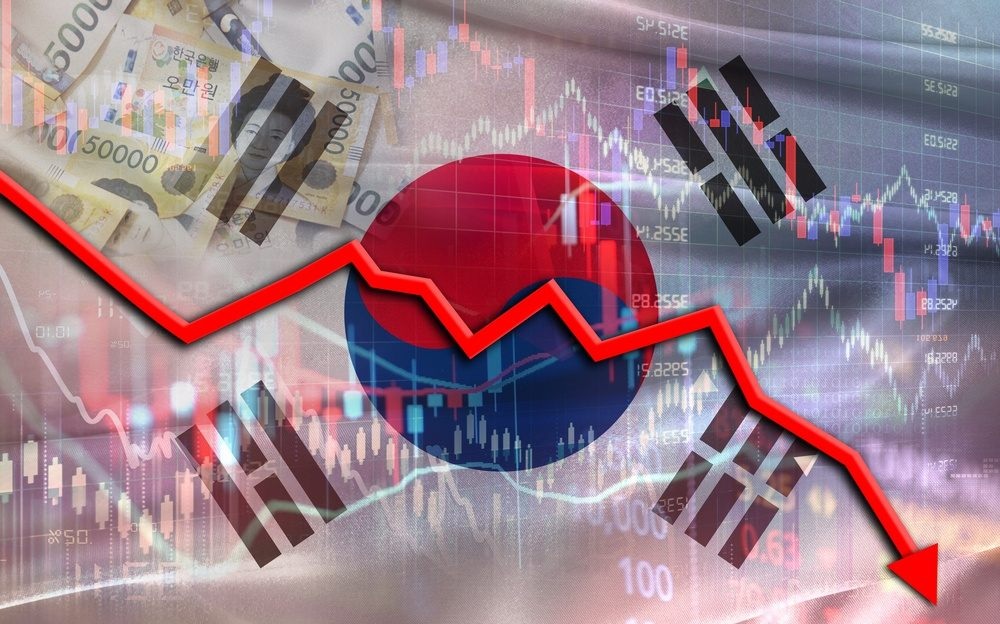
South Korean equities stand out because wealth managers see potential in the country’s position within the global technology supply chain.

South Korea is home to major semiconductor and electronics industries, giving investors exposure to artificial intelligence, computing and advanced manufacturing. For portfolios dominated by US equities, Korean stocks can also introduce geographic diversification.

But wealth managers would typically treat the opportunity as a satellite allocation rather than a reason to concentrate heavily in one market. South Korea remains exposed to global trade cycles, semiconductor volatility and geopolitical tensions.

Foreign investors must also account for currency fluctuations, while individual companies can experience substantial valuation swings. Water is another theme wealth managers find compelling because the investment case is rooted in a fundamental necessity.

Aging infrastructure, population growth, urbanization and climate-related pressures are increasing the need for water treatment, distribution and conservation. Companies providing infrastructure and technology could benefit from long-term spending requirements.

The risk is that a powerful structural narrative does not automatically translate into superior investment returns. Water companies can face regulation, high capital requirements, government-budget constraints and interest-rate sensitivity.

Investors must also be careful about paying excessive valuations for companies simply because the broader water-scarcity story appears attractive. Luxury goods and experiences offer a third avenue.

Wealth managers see continuing demand for premium brands, high-end travel, hospitality and exclusive experiences. Luxury companies can possess strong brand recognition and pricing power, potentially helping them withstand periods of higher costs.

However, luxury remains discretionary. Economic downturns can weaken consumer spending, while expensive valuations can amplify losses if growth expectations disappoint. Wealth managers therefore have to distinguish between a strong luxury brand and a luxury stock that has already priced in years of future growth.

Perhaps the most revealing part of the $10,000 exercise is that wealth managers did not view money exclusively through the lens of financial returns. When asked how they would spend $10,000 on a personal interest, active sailing vacations and an in-home Pilates studio received the nod.

That perspective introduces another dimension of wealth management: money can be allocated toward experiences and quality of life as well as assets. A sailing vacation may not generate a monetary return, but it can produce memories and personal fulfillment.

An in-home Pilates studio similarly represents an investment in convenience, fitness and lifestyle rather than portfolio appreciation. The broader message from wealth managers is therefore not simply to buy South Korean stocks, water companies or luxury businesses.

It is to think in terms of portfolio construction and personal priorities. A $10,000 allocation should account for an investor’s existing holdings, risk tolerance, liquidity requirements, investment horizon, taxes and financial obligations.

For some investors, the most appropriate decision may be to invest only part of the money and retain the remainder as cash or emergency reserves. Others may benefit from spreading the capital across several themes rather than making a concentrated bet.

The wealth-manager approach is about balancing opportunity with uncertainty. The next winning investment may come from an overlooked market or a long-term structural trend, but no theme is guaranteed.

The smartest $10,000 allocation is therefore one that seeks growth without ignoring risk—and recognizes that genuine wealth includes not only what money earns, but what it enables people to experience.

Where to Invest $10,000 as Markets Reach New Highs

0

With US stock markets hovering close to record levels while bond markets wrestle with volatility, investors face a familiar but increasingly complicated question: where should the next dollar go?

After a powerful run across major asset classes, simply buying what has already performed well may no longer be enough. Yet periods of market turbulence can also expose opportunities that are obscured when confidence is high.

For an investor with $10,000 available today, diversification may be more important than making a single dramatic bet.

The objective is not necessarily to predict the next market move, but to construct a portfolio capable of participating in further gains while remaining resilient if valuations contract.

US equities can still command a significant allocation. The strength of corporate earnings, artificial intelligence investment and productivity expectations continues to support parts of the market.

However, record valuations make selectivity crucial. Rather than concentrating the entire $10,000 in the largest technology companies, investors could consider a combination of broad-market exposure and companies or sectors that have yet to fully participate in the rally.

International equities offer another potential source of diversification. Markets outside the United States can trade at lower valuations while providing exposure to different economic cycles, currencies and industries.

Europe, Japan and selected emerging markets may therefore deserve consideration for investors willing to accept additional geopolitical and currency risks. Bonds present a more complicated opportunity.

Recent turbulence has reminded investors that fixed income is not automatically synonymous with stability. Changes in inflation expectations, government borrowing and interest-rate policy can cause bond prices to move sharply.

Nevertheless, high-quality short- and intermediate-duration bonds can provide income and portfolio ballast, particularly for investors who do not want all their capital exposed to equities.

Some investors may also reserve a portion of their capital for alternative assets. Gold, for example, can provide diversification when concerns about inflation, geopolitical instability or currency weakness intensify.

It does not generate earnings like a company, but its role in a portfolio is often connected to risk management rather than growth. The same principle applies to cash.

Keeping a portion of the $10,000 in money-market instruments or other highly liquid assets may appear unexciting when markets are climbing. But liquidity creates optionality.

If equities experience a sharp correction, an investor holding cash can deploy capital at lower prices rather than selling another investment to fund the opportunity.

A hypothetical allocation might therefore divide the $10,000 among US equities, international stocks, high-quality bonds, alternative assets and cash.

The exact proportions should depend on time horizon, risk tolerance, income needs and existing holdings rather than on a headline about where markets are moving next.

The central lesson is that market uncertainty does not necessarily mean investors should retreat. It means they should become more deliberate. Record highs do not automatically signal an imminent collapse, just as turbulent bonds do not guarantee a recession.

Markets can remain expensive for longer than expected, while apparently neglected assets can remain neglected. For the next investment dollar, diversification may ultimately prove more valuable than prediction.

A disciplined portfolio gives investors exposure to growth while preserving enough flexibility to respond when the market inevitably changes direction.

Wealthy Parents, Expensive Gap Years and the New Economics of College Admissions

0
A university

For some wealthy families, the traditional path from high school to college is no longer considered enough. Instead, parents are increasingly willing to spend extraordinary sums on structured gap years.

With some programs costing as much as $95,000, in the belief that a year away from conventional education can give their children an advantage in an increasingly competitive world.

The idea represents a significant evolution in the meaning of a gap year. Once associated primarily with backpacking, volunteering or taking time to reconsider academic goals, the premium gap year is becoming something closer to an educational investment portfolio.

Families can pay for international travel, internships, leadership programs, language immersion, entrepreneurship projects, outdoor expeditions and personalized academic coaching.

The objective is not simply to give young people a break. It is to make them more distinctive.

Elite university admissions have become intensely competitive, particularly for applicants targeting prestigious institutions. Academic excellence remains important, but families increasingly worry that high grades and standardized test scores alone may not differentiate their children.

A carefully designed gap year can therefore become an opportunity to build experiences that are difficult to replicate inside a classroom. A student might spend part of the year working with an international organization, developing a business project, conducting research or participating in a specialized program.

The experience can provide material for university applications while potentially developing independence, communication skills and a clearer understanding of future ambitions. But the $95,000 price tag raises an uncomfortable question: How much of an advantage can money actually buy?

There is no guarantee that an expensive gap year will translate into admission to an elite university or a successful career. Admissions officers do not necessarily value an experience simply because it was expensive.

In some circumstances, an impressive-looking itinerary may matter less than the initiative, intellectual curiosity and genuine achievement demonstrated by the student. There is also an equity problem.

Wealthier families can purchase experiences that may be inaccessible to ordinary households, potentially widening an already significant socioeconomic divide in education.

A student whose parents can finance international internships, private mentors and specialized programs enters the admissions process with resources that another equally talented student may not possess.

The best gap years can offer something money alone cannot manufacture: maturity. Leaving home, navigating unfamiliar environments, working with different communities and confronting responsibilities can force young people to become more independent.

That development can have value regardless of what happens during university admissions. The financial calculation deserves scrutiny. Spending $95,000 on one year represents a substantial opportunity cost.

That money could instead fund university tuition, professional training, a business venture or long-term investments. Families should therefore distinguish between an experience that genuinely develops a young person and an expensive résumé-building exercise.

The premium gap year reflects a broader transformation in how affluent families think about education. Learning is increasingly being treated not merely as something delivered by schools and universities, but as an ecosystem of experiences, networks and opportunities.

For parents with considerable financial resources, $95,000 may be viewed as the price of creating an unconventional path. Yet the real advantage may not come from the money spent. It may come from what the student actually does with the year.

A gap year can open doors, but it cannot walk through them. The lasting edge comes from curiosity, discipline, resilience and the ability to turn experience into meaningful achievement.

Nvidia’s Anthropic IPO Bet Could Complete AI’s Closed Capital Loop

0

Nvidia’s reported discussions to anchor Anthropic’s planned $100 billion initial public offering point to a new phase in the economics of artificial intelligence, where the companies supplying the infrastructure for the AI boom are increasingly financing the companies consuming it.

If the discussions materialize, Nvidia would effectively be helping fund the public-market exit of one of its largest AI customers while continuing to supply the computing power required to support Anthropic’s expansion.

The development has created an unusually tight capital loop. Nvidia sells the compute infrastructure that Anthropic needs to build and operate powerful AI models, invests in the company, and could now provide capital for its transition into public markets. The arrangement would blur the traditional distinction between infrastructure provider, financier and customer.

The talks are preliminary, and neither a $100 billion IPO nor Nvidia’s participation is guaranteed. But the scale of the reported ambitions illustrates how far AI valuations have moved and how deeply capital markets are becoming intertwined with the physical infrastructure powering the industry.

Anthropic is reportedly seeking as much as $100 billion at a valuation approaching $2 trillion. That would put the proposed offering in a category of its own. Saudi Aramco’s 2019 listing raised $29.4 billion. SpaceX raised $75 billion to $86 billion in June, making it the largest IPO on record. Anthropic’s proposed raise would be more than that amount.

The valuation trajectory is equally striking. Anthropic was valued at roughly $350 billion in November 2025 and about $965 billion by May 2026, according to the figures underpinning the reported IPO discussions. A potential $2 trillion valuation would therefore represent a dramatic escalation in less than two years.

Such numbers show how the AI market has moved beyond conventional technology-company valuation frameworks. Investors are increasingly pricing companies according to expected future control of AI workloads, rather than simply their current earnings or established revenue base.

For Anthropic, the bet is that its growth can continue at a pace capable of supporting that valuation.

The company’s reported revenue increased from about $9 billion at the end of 2025 to $47 billion by May 2026. Bankers are also reportedly applying enterprise-value-to-revenue multiples to forecasts for 2028, when Anthropic is projected to generate between $190 billion and $200 billion in revenue.

Those forecasts imply that investors are being asked to look several years ahead and assume that an extraordinary growth trajectory can be sustained at enormous scale.

That is where Nvidia becomes particularly important.

Nvidia Moves From Supplier to Capital Partner

Nvidia’s relationship with Anthropic has already extended well beyond a conventional chip-supplier arrangement. As of November 2025, Nvidia had committed up to $10 billion in investment alongside 1 gigawatt of computing capacity based on its Grace Blackwell and Vera Rubin architectures.

A potential role as an anchor investor in Anthropic’s IPO would take that relationship another step forward. The significance is not simply that Nvidia would be investing in a valuable AI company. It would be investing in a company whose expansion directly increases demand for the computing infrastructure Nvidia supplies.

That creates a feedback mechanism.

Anthropic needs more compute to train and operate its models. Nvidia provides much of that infrastructure. Nvidia invests capital in Anthropic. Anthropic uses that capital to expand its business and, in turn, requires more computing capacity. If Anthropic ultimately reaches the valuation being contemplated, Nvidia could benefit both from the growth of its customer and from the continued demand for its infrastructure.

The arrangement is therefore closer to an ecosystem financing model than a traditional supplier relationship. It also shows why the economics of AI cannot be assessed simply by looking at the revenues of model companies. A substantial portion of the money flowing into AI companies ultimately has to be spent on chips, data centers, networking, power, and other infrastructure.

The question for investors is how much of the industry’s apparent growth represents durable end-user demand and how much is capital circulating among companies within the same AI ecosystem.

The Valuation Depends On Enormous Future Growth

Anthropic’s reported $2 trillion valuation target rests heavily on expectations for future revenue.

A projection of $190 billion to $200 billion in 2028 revenue would represent an extraordinary expansion from the reported $47 billion level in May 2026. Maintaining that trajectory would require Anthropic to continue converting rapidly rising demand for AI services into actual recurring revenue while also securing enough computing capacity to serve those customers.

That second requirement is crucial.

AI model companies cannot scale revenue independently of infrastructure. Every additional customer, model deployment, and agentic workload ultimately consumes computing resources. The more aggressive the revenue projections become, the greater the infrastructure requirement becomes as well.

This creates an important tension in the valuation story. Rising demand for Anthropic’s models can support higher revenue, but satisfying that demand requires enormous capital expenditure.

Nvidia is positioned at the center of that equation.

The Hidden Cost of AI Scale

Anthropic’s recent disclosure involving 200 million exchanges has been presented as evidence of the scale of interaction underpinning its technology and intellectual property. But usage at that level also raises a less glamorous question: how expensive is it to generate, serve, and maintain that intelligence?

The AI industry’s valuation story has often focused on model capabilities and user growth while giving less attention to the cost of the compute required to deliver those capabilities. High revenue growth does not automatically translate into high free cash flow when every additional dollar of demand requires substantial infrastructure spending.

This is where the emerging separation between infrastructure companies and AI application or model companies becomes important.

Companies such as Nvidia can capture revenue from the capital expenditure required to build AI capacity, while companies such as Anthropic must demonstrate that the intelligence produced by that infrastructure can ultimately generate returns large enough to justify the cost.

The two businesses can therefore grow simultaneously, but their economics are not identical.

A New Template for AI Financing

Anthropic’s proposed IPO also comes as other major AI companies pursue enormous private-market funding rounds. OpenAI’s reported $122 billion raise provides a useful comparison. Nvidia contributed $30 billion to that financing, with the investment heavily tied to the company’s need for computing capacity.

Anthropic’s potential IPO would take the model into public markets. Rather than remaining entirely dependent on private capital to fund rapid expansion, Anthropic could use an IPO to establish a publicly traded valuation and access a much broader pool of investors. An Nvidia anchor investment would, at the same time, demonstrate that one of the industry’s most important infrastructure providers is willing to put substantial capital behind the model company.

That could become an important precedent for how frontier AI companies finance their enormous capital requirements. It would also raise questions for public-market investors about concentration and circularity. If chipmakers, cloud providers and AI laboratories increasingly invest in one another, headline valuations and revenue growth need to be examined alongside the source of the capital supporting that growth.

The issue is not necessarily that such investments are artificial or economically meaningless. Nvidia benefits when Anthropic grows because Anthropic requires compute. But the structure makes it harder to determine how much value is being created by final AI demand and how much is being amplified by investment and infrastructure commitments within the ecosystem.

What Investors Will Watch

The most revealing detail in any eventual Nvidia-Anthropic agreement may be the division between cash and computing commitments.

A large cash investment would represent a direct financial commitment to Anthropic’s valuation. A package dominated by compute capacity would tell a different story, reinforcing Nvidia’s role as an infrastructure supplier using capital commitments to secure future demand.

The terms would also matter for the broader AI financing market. A $100 billion IPO would test whether public investors are prepared to absorb valuations based on exceptionally aggressive long-term revenue forecasts and capital requirements.

Regulatory scrutiny could be another factor, particularly as the largest AI infrastructure providers become increasingly intertwined with the companies competing to build frontier models.

For Nvidia, however, the attraction is straightforward. The company does not have to choose between being an infrastructure supplier and an investor. It can potentially profit from both sides of the AI capital cycle. That may be the more important story behind the proposed Anthropic IPO.

The AI boom is creating an ecosystem in which the companies supplying the machines can finance the companies using them, which then spend more money on those machines as they grow. Anthropic’s potential public listing would make that relationship more visible to ordinary investors.