
DD
MM
YYYY

PAGES

DD
MM
YYYY

spot_img

PAGES

Home Blog Page 5301

Nigeria’s HR-tech Earnipay Raises $4M To Enable On Demand Salary Access To Employees

0

One of the most common factors that reduce staff productivity is usually the low payment of salary or lack of access to funds when in dire need of it. Having observed that staff low productivity will be a great challenge to achieving set organizational goals, Nigerian Fintech company Earnipay has raised a sum of $4M to increase employees’ productivity. With this initiative, they plan to enable on-demand salary access to employees in the country. Earnipay plans to use the funds raised to export the platform regionally and to target large enterprises.

The platform is catered to employees who seek to earn weekly or biweekly salaries. According to the founder and CEO of Earnipay Mr. Nonso Onwuzulike, he stated the reasons that triggered him to adopt this initiative. In his words, “I was paying my employees once a month, and it didn’t make sense to them, they ended up not being productive because they had money issues, it led to attrition and retention issues for me, because these were guys who are used to getting paid immediately”.

He also stated that the monthly payment cycle is a tough arrangement for people who earn less income. Before Earnipay came into existence, his prior experience as a founder of Removal, Ghana-based recycling revealed a different side of the employee’s needs and preferences, which is the weekly/biweekly salaries. He then sought out a solution to help eliminate low staff productivity, by shifting the payment from monthly to weekly/biweekly payment.

Earnipay is currently integrated with companies’ existing payroll or HRM system and employees can now withdraw their salaries daily with a limit set by companies depending on their monthly salaries. Earnipay charged employees #250 for withdrawals of #2,000($4) to #10,000($20) and #500($1) from #10,000 to #50,000($100). It offers two options for companies for reimbursement, they can be paid on behalf of Earnipay before the end of month reimbursement, or an automatic reimbursement schedule can be set from the reconciliation account on top of employees’ salary accounts.

With so many remarkable achievements by Fintech companies lately in Nigeria, permit me to say that Fintech companies in Nigeria are currently on steroids. Discovering this initiative by Earnipay, I feel very ecstatic because truth be told, having to wait till month-end before receiving payment is usually a tough one, especially for low-income earners. Considering the daily life cost demands, it has never been easy for most employees. According to a survey, 80% of employees in the formal sector preferred flexible access to their salaries. Life is full of uncertainty, anything can happen at any time, such as one having an emergency case that needs urgent money to handle.

Now imagine if such a person just got into a new month, this means that even though he or she is working they will have to wait till month end before such a case can be properly handled which might be too late, tragic! I will suggest that all companies both in the formal and non-formal sectors adopt a weekly/biweekly payment system. It not only increases employees’ productivity but also helps them solve urgent financial issues. There needs to be a change in employee payment structure. Flexible pay options help employees feel less financial stress because, without flexible pay, they are usually concerned about a lack of funds that could distract them from work.

Rather than lose employees completely to the world of freelance and gig opportunities where payment is flexible, a company can compete with the immediate gratification that employees get from working with them by offering the same payment options. Doing so may help to channel the employee’s skills and focus on their primary job rather than having diverted attention. Flexible payment can also drive greater retention by bolstering an employee’s sense of loyalty to their primary employer.

—Press Release —

Earnipay, a financial technology solution that provides flexible and on-demand salary access to income-earners, has closed a Seed round of $4million led by Canaan and with participation from XYZ Ventures, Village Global, Musha Ventures, Ventures Platform, Voltron Capital and Paystack CEO Shola Akinlade. Targeting employees across Africa, Earnipay officially launched its operations in January 2022, having been in development and beta testing since September 2021.

Founded by Nonso Onwuzulike to improve the financial well-being of employees, Earnipay uses its technology to offer employees the opportunity to access their earned salaries into their accounts flexibly, in real-time and interest-free. Earnipay partners with employers and seamlessly integrates with their payroll systems to offer its services to employees, who can then track and withdraw their accrued salaries via the app. Businesses are able to have complete oversight and set limits for the percentage of salaries employees can withdraw each month. Since operating in beta, Earnipay has served over 20 businesses, outsourcing firms and HR solution providers in Nigeria including Eden Life and Thrive Agric, whose employees have used the app to access their salary over 1,000 times, indicating a strong demand for the solution.

With the Seed funding, Earnipay will accelerate the development of its technology platform to serve large enterprise employers. By doing so, Earnipay will provide employees with the tools they need to make better financial decisions and improve their quality of life. The company plans to offer its on-demand salary solution to 200,000 employees by the end of 2022.

Speaking on the funding round and the recent launch of Earnipay, CEO Nonso Onwuzulike, says, “Financial worries are the leading cause of distractions in the workplace. The monthly pay cycle means employees are often unable to afford daily expenses, cover emergencies or take advantage of immediate financial opportunities. As a result, they become exposed to predatory payday loans and get stuck in unending debt cycles with unrealistic payback periods and expensive interest rates. Earnipay exists to address this problem and offer an ethical alternative to instant salary access while helping employers improve employee engagement and retention at zero cost to their business. The future of salary is on-demand, and we’re excited to be pioneering this amazing solution in Africa. I’m delighted to be collaborating with a group of highly respected investors who understand the need for a platform such as Earnipay to drive better access to salaries, and, importantly, to improve the financial well-being of income-earners in Africa.”

“We’ve seen earned wage access grow rapidly in many markets and believe it’s a natural fit in Africa,” said Brendan Dickinson, partner at Canaan. “Earnipay has quickly established itself with a product built specifically for the payroll behaviours of this region, and early employer uptake is very strong. Nonso has built one of the strongest teams that we’ve met on the entire continent, and we’re thrilled for the opportunity to partner with them.”

On-demand salary access is a huge opportunity in Africa, with over 70% of Africa’s workforce (500 million people) paid every 30 days and are living paycheck to paycheck. The 30-days pay cycle has led to 40% of the workforce living in an unending debt cycle as they struggle to match their income to their daily expenses, emergencies and opportunities. African businesses struggle to provide scalable solutions for employees to access their daily salaries as they work for it due to legacy payroll process, lack of available cash flow and internal salary advance that remains to be a tedious and manual affair.

Earnipay charges employees a small processing fee of NGN250 or NGN500 for this access. There is no payback and no interest charge because employees are accessing what they have worked for, It’s their money. With Earnipay, employers offer more financial well-being support to their employees, which in turn enables them to attract and retain top talent in an increasingly competitive employment market. In addition to on-demand salary, Earnipay provides financial education for employees to improve their financial literacy with a goal to enable them to make better financial decisions.

Onwuzulike concludes: “For five months, we have been working collaboratively with employers to deliver a workplace benefit that solves the biggest source of stress and distraction in the workplace: employee money issues. By doing so, employers are improving employee engagement and productivity, as well as positioning themselves as a better place to work. We are systematically addressing the inefficiencies in how the African workforce interacts with salaries and will continue to build products and services with both employers and employees in mind.”
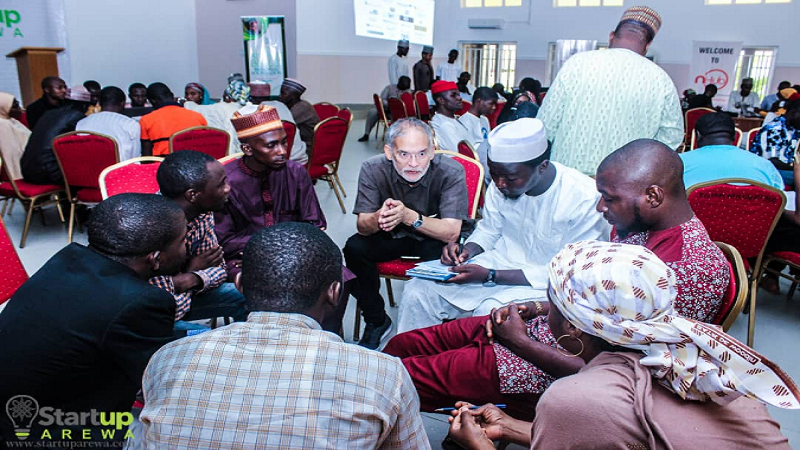

5 things investors look for in a founder/startup before investing

1

After all, said about doing proper valuation, and what else to put in place before fundraising, there are a few other things investors hope to see before putting their funds into a business. Startup investors are charity foundations looking to give out money without expecting it back. They are always looking out for one or two things to convince them that investing in your business will not be the same as pouring water into a basket.

Significant market size

Investors consider the market size available for the audience you want to target as well. If you watch the Dragons Den show, you may have heard the ‘Dragons’ tell a founder something like “I just don’t think there are enough people who want your product” or “this product is not something I see going all big. The market is too small”.

Nobody wants to back an excellent product that only 200 people need in the world. It is even worse if it is a one-off product, where consumers buy once and do not need to buy again for years. If you refer back to a previous post on reverse product development, you will see that this is one of the things you ought to have covered during your market research. Do you have a market large enough to sustain the business? The number of customers/potential customers and the frequency of purchase are going to be key factors that can work for or against you.

Passion

Remember what we said in the post about preparing your pitch. When you stand before investors to pitch your business idea, they look beyond what you are saying. Investors look at your passion and ambition and try to gauge how far it can go with the business. The potential investor wants to see signs that you as the founder are ready to make the commitments and sacrifices that the business will require through its growth stage.

You can have an excellent product, with a valid business model and impressive financial projections; but the investor perceives that you do not possess enough passion or will to push it through, they could refrain from investing. No business model, however perfect it seems, can run itself. It all comes down to the entrepreneur. In addition to your passion, your integrity, charisma, and character is consistent factor to be considered in deals like fundraising. You would hardly find an investor who is willing to put his money behind an entrepreneur who has demonstrated an erratic temperament.

Competitive advantage or product differentiator

It is highly unlikely that you are starting or running a business that no one has done in the past. And even if you are, the investor will want solid information on what your competitive advantage will be when you start having other businesses competing in the same market. There just has to be something that stands you out, and it should be valid enough to keep your customers loyal to you. Hard work is not going to be much of a USP when the competition storms the market. There should be some cultural, strategic, or product advantages you can play.

Team members with expertise

I explained this in an earlier post. An investor wants to be sure that you are not the only strong person on your team. Even if you have not established traction yet, the integrity and antecedents of the people that make up your team, say a lot about how far the business will go. It is not about having a team of 50 people. It is about their expertise and experience, and their relevance to the business. If you can, get a power team before looking for funds. But if you don’t have them yet, you can state in your pitch that these are the persons you are looking to bring on board once the funds are available.

Exit strategy

As a bonus point, the investor will also be considering the exit strategy you have mapped out for them. Don’t try to impress them with unrealistic timelines and empty assertions. Investors want to know – How much do I need to invest? How much will I get back, and when will I get it? Your potential investors can tell when your financial projections sound pragmatic and realistic, and when they are nothing but empty promises.

The Next Edition of Tekedia Capital Investment Cycle Begins Next Month; Join Today

0

Yesterday, we sent emails to some startups which we have pre-qualified for the next edition of Tekedia Capital Syndicate investment cycle. They cover AI, media, HR, retail, financial services, etc – all unified by technology. Once we receive the data we asked, our team will close on the ones which will be presented to our members.

Tekedia Capital Syndicate members come from more than 30 countries and through them, we seed the empires of the future, in Africa and beyond.

A case in point: we raised 3x what a startup originally wanted this month in less than 4 days. It was so popular that we had to reject new funds.

If you are not investing via Tekedia Capital Syndicate, I invite you to join us and co-own a piece of the finest companies in Africa. Click and join here 

Skill Acquisition Programs – Tools For Economic Growth

0
Boniface, a shoemaker, poses for a photograph with a set of finished women's shoes at a shoe factory in Araria market in Aba, Nigeria August 19, 2016. REUTERS/Afolabi Sotunde

With the high demand for skills lately, it is safe to say that skill is very important in the life of every human. It might interest you to know that many technicians who never saw the four walls of a university earn more than university graduates. Lately, both graduates and undergraduates now understand that not only is acquiring a certificate important, but also acquiring a skill. With the high rate of unemployment and other social vices that has ravaged the country, the government needs to organize skill acquisition programs.

Not only will it lead to the economic growth of the country, it will curb the rate of social vices in the country because a lot of youths will be actively engaged. One of the major Millennium Development Goals(MDGs) which Nigeria aimed to achieve in 2015 was the eradication of extreme poverty and hunger with the target of encouraging the proportion of people who earn less than a dollar a day to engage in skills acquisition. A lot of youths desire to learn one skill or the other but lack the resources to enroll in such programs. This is where the government comes in.

They should ensure to always organize skill acquisition programs where a lot of youths don’t have to worry about the fee for enrollment. The youths engage in such programs and learn any skill of their choice. These programs will help them to become self-dependent and earn a proper living which will make them shun any negative act in society.

The skill acquisition program is a very effective tool for eradicating extremes of poverty and hunger because it will pave the way for employment among unemployed youths and also create an avenue for wealth creation that would bring about self-sufficiency and reliance in contributing to the growth of the economy.

Industries are often constructed in different parts of the country and many of these industries require skilled and well-trained workers. With the empowerment of a lot of youths through skill acquisition programs, they will always be actively engaged. Any country that is hell-bent on development should ensure that the youths are well empowered. The youths are where the strength of a country lies because they are vibrant and energetic to take on any task. Asides from the creation of skill acquisition programs the government should ensure that there is an adequate establishment of skill acquisition centers in all states in Nigeria.

There is also the need to set up vocational centers where useful skills will be taught and practiced. Curriculum in schools should also include vocational courses where students get to learn not only how to read and write, but also how to engage themselves with the necessary skills in case jobs are not forthcoming. In nation-building, although the government actively has a role to play, but then, both non-governmental agencies and wealthy individuals can join hands on deck to ensure that the poverty level is drastically reduced by organizing skill acquisition programs.

Skill acquisition is very essential because it contributes to the development of the nation’s human capital. The productive capacity of any nation depends solely on the ability of that nation to recognize the ability of its manpower. Skills one acquires will aid in the development of the individual and the nation in particular. One of the goals of skills empowerment programs is the acquisition of appropriate skills and the development of mental, physical, and social abilities and competencies as tools for the individual to live and contribute to the development of his society. In Nigeria today, there is a need for skilled personnel who will be enterprising and self-reliant.

There is also the need for skilled people who can understand and adapt to changes in the increasing complexity of technology. People who can apply scientific knowledge to the improvement and as a solution to environmental challenges for the use and conveniences of man are also needed. Skill acquisition and empowerment programs act as catalysts to developing creativity and innovation in youth, hence, adding positive values to the economic condition of a country.

Promoting The Significance Of Mother Tongue As We Mark Int’l Mother Language Day

0

February 21 annually, the global community commemorates the International Mother Language Day. Hence, the 2022 edition is being marked today.

The day was proclaimed by the General Conference of the United Nations Educational, Scientific and Cultural Organization (UNESCO) in November 1999. The theme of this year’s commemoration is “Using technology for multilingual learning”.

The date – February 21 – represents the day in 1952 when the Pakistani students who demonstrated for recognition of their native language, Bangla, as one of the two national languages of then Pakistan, were shot and killed by the police in Dhaka, the capital of what is now Bangladesh.

On 16th May 2007, the United Nations General Assembly (UNGA) in its resolution called upon Member States to promote the preservation and protection of all languages used by peoples of the world.

By the same resolution, 2008 was proclaimed as the ‘International Year of Languages’, to promote unity in diversity and international understanding through multilingualism and multiculturalism.

A language can be defined as a system of sounds, written symbols, and/or signs used by the people of a particular country, geographical area, tribe, or status as the case may be, to communicate with each other. It can also be described as the human ability to acquire and use complex systems of communication.

There are several forms of languages in existence across the world, such as spoken language, sign language, computer language, and animal language.

Estimates of the number of languages in the world vary between five thousand (5,000) and seven thousand (7,000). However, any precise estimate depends on a partly arbitrary distinction between official languages and local/mother languages.

Mother language or Mother tongue, which is also widely known as dialect or native language, is the indigenous language of one’s parents which is usually the first language learnt by him/her.

In the same vein, it is also referred to as the language of one’s ethnic group. Suffice to say that, one’s Mother tongue is an apparent indication of where he or she hails from.

Mother language is often regarded as one’s ‘first language’. Therefore by contrast, a second language is any language that one speaks other than his or her first/native language.

The Mother language is noted as ‘first’, because it is regarded as the most important language spoken by anyone due to its hereditary value as well as its cultural impact on the individual in question.

No doubt, Mother language or first language contributes immensely in a child’s personal, social, cultural, intellectual, educational and economic life.

Personal, in the sense that, a child’s first (native) language is critical to his or her identity; Social, in the sense that, when the native language of a child is not maintained, important links to family and other community members may be lost. Culturally, in the sense that, sustaining a child’s Mother Tongue would help the child to value his or her culture and heritage, which contributes to a positive self-concept.

Furthermore, the intellectual aspect of it is that, when students who are not yet fluent in their second/official language such as English or French, but have switched to using only the said official language, would have the tendency of functioning at an intellectual level below their age, thereby resulting in academic failure.

Educational wise, students who learn a second language and continue to develop their native language would have chances of higher academic achievement in later years than those who learn their second language at the expense of their first language.

More so, economically, there are available better employment or job opportunities in Nigeria and in the diaspora for individuals who are conversant with their official language as well as another language, probably a native language.

As Nigeria joins the global community to celebrate the International Mother Language Day, I call on every Nigerian, both home and abroad, to join in the ongoing crusade of promoting the significance of Mother tongue by acknowledging that Mother languages are the most powerful instruments required to preserve and develop their respective tangible heritages.

To this end, I also call on the National Assembly (NASS) to enact a law that would ensure every citadel of learning in Nigeria, ranging from primary to tertiary level, offers at least one native language relevant to the area or community where the institution is situated.

In addition, the proposed law ought to also mandate the various existing examination boards in the country including the West African Examination Council (WAEC), the National Examination Council (NECO), and the Joint Admission and Matriculation Board (JAMB), among others, to ensure the students compulsorily enroll as well as sit for the said native language or subject as it concerns their respective schools or the institution where they are seeking admission.

Indeed, considering the singular fact that Mother Language helps to create full and thorough awareness on cultural traditions coupled with its role in promotion of solidarity among members of any given community thereby uplifting the level of moral, social and intellectual values of our young ones, it’s of no gain reiterating that the ongoing crusade regarding uplift of various Mother languages is a task that awaits all and sundry.

If an institution like Oxford University could include Igbo Language in their Special Curriculum, you would agree with me that Mother Tongues are gradually gaining momentum in our everyday lives.