
DD
MM
YYYY

PAGES

DD
MM
YYYY

spot_img

PAGES

Home Blog Page 5305

Promoting The Significance Of Mother Tongue As We Mark Int’l Mother Language Day

0

February 21 annually, the global community commemorates the International Mother Language Day. Hence, the 2022 edition is being marked today.

The day was proclaimed by the General Conference of the United Nations Educational, Scientific and Cultural Organization (UNESCO) in November 1999. The theme of this year’s commemoration is “Using technology for multilingual learning”.

The date – February 21 – represents the day in 1952 when the Pakistani students who demonstrated for recognition of their native language, Bangla, as one of the two national languages of then Pakistan, were shot and killed by the police in Dhaka, the capital of what is now Bangladesh.

On 16th May 2007, the United Nations General Assembly (UNGA) in its resolution called upon Member States to promote the preservation and protection of all languages used by peoples of the world.

By the same resolution, 2008 was proclaimed as the ‘International Year of Languages’, to promote unity in diversity and international understanding through multilingualism and multiculturalism.

A language can be defined as a system of sounds, written symbols, and/or signs used by the people of a particular country, geographical area, tribe, or status as the case may be, to communicate with each other. It can also be described as the human ability to acquire and use complex systems of communication.

There are several forms of languages in existence across the world, such as spoken language, sign language, computer language, and animal language.

Estimates of the number of languages in the world vary between five thousand (5,000) and seven thousand (7,000). However, any precise estimate depends on a partly arbitrary distinction between official languages and local/mother languages.

Mother language or Mother tongue, which is also widely known as dialect or native language, is the indigenous language of one’s parents which is usually the first language learnt by him/her.

In the same vein, it is also referred to as the language of one’s ethnic group. Suffice to say that, one’s Mother tongue is an apparent indication of where he or she hails from.

Mother language is often regarded as one’s ‘first language’. Therefore by contrast, a second language is any language that one speaks other than his or her first/native language.

The Mother language is noted as ‘first’, because it is regarded as the most important language spoken by anyone due to its hereditary value as well as its cultural impact on the individual in question.

No doubt, Mother language or first language contributes immensely in a child’s personal, social, cultural, intellectual, educational and economic life.

Personal, in the sense that, a child’s first (native) language is critical to his or her identity; Social, in the sense that, when the native language of a child is not maintained, important links to family and other community members may be lost. Culturally, in the sense that, sustaining a child’s Mother Tongue would help the child to value his or her culture and heritage, which contributes to a positive self-concept.

Furthermore, the intellectual aspect of it is that, when students who are not yet fluent in their second/official language such as English or French, but have switched to using only the said official language, would have the tendency of functioning at an intellectual level below their age, thereby resulting in academic failure.

Educational wise, students who learn a second language and continue to develop their native language would have chances of higher academic achievement in later years than those who learn their second language at the expense of their first language.

More so, economically, there are available better employment or job opportunities in Nigeria and in the diaspora for individuals who are conversant with their official language as well as another language, probably a native language.

As Nigeria joins the global community to celebrate the International Mother Language Day, I call on every Nigerian, both home and abroad, to join in the ongoing crusade of promoting the significance of Mother tongue by acknowledging that Mother languages are the most powerful instruments required to preserve and develop their respective tangible heritages.

To this end, I also call on the National Assembly (NASS) to enact a law that would ensure every citadel of learning in Nigeria, ranging from primary to tertiary level, offers at least one native language relevant to the area or community where the institution is situated.

In addition, the proposed law ought to also mandate the various existing examination boards in the country including the West African Examination Council (WAEC), the National Examination Council (NECO), and the Joint Admission and Matriculation Board (JAMB), among others, to ensure the students compulsorily enroll as well as sit for the said native language or subject as it concerns their respective schools or the institution where they are seeking admission.

Indeed, considering the singular fact that Mother Language helps to create full and thorough awareness on cultural traditions coupled with its role in promotion of solidarity among members of any given community thereby uplifting the level of moral, social and intellectual values of our young ones, it’s of no gain reiterating that the ongoing crusade regarding uplift of various Mother languages is a task that awaits all and sundry.

If an institution like Oxford University could include Igbo Language in their Special Curriculum, you would agree with me that Mother Tongues are gradually gaining momentum in our everyday lives. 
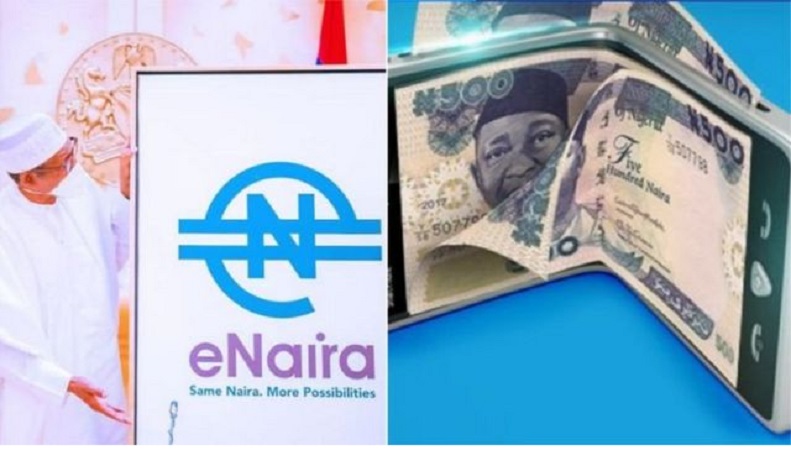
Like Cryptocurrency, the IMF Said eNaira Poses Terrorism Financing Risks

0

In October, the Central Bank of Nigeria (CBN) launched Nigeria’s digital currency eNaira, in an aim to counter the burgeoning influence of cryptocurrency that’s rapidly overshadowing the financial industry.

The CBN urged Nigerians to download and sign up to the eNaira as it’s designed to facilitate easy financial transactions, including cross-border transactions. The Central Bank Digital Currency (CBDC) has racked up more than 694,000 downloads since it was launched. But in a country of over 200 million people, the number of downloads is meager. But that’s not all.

The International Monetary Transfer (IMF), in its ‘Nigeria Staff Report for the 2021 Article IV Consultation’, said the expansion of the use of the eNaira to cross-border fund transfers and agency bank networks could lead to new money-laundering and terrorism financing risks.

“Prospective expansion of eNaira use to cross-border fund transfers and agency bank networks may cause new money-laundering/financing of terrorism risks,” the IMF said.

The Washington-based financial body also pointed at other possible risks facing the digital app, including cyberfraud.

“There are cyber security risks associated with the eNaira. Unforeseen legal issues, including for private law aspects of its operations (e.g., the exact nature of legal relationship between the wallet providers and CBDC holders), may subject eNaira to litigation and operational risks,” it added.

The CBN launched digital currency in the aftermath of its ban on cryptocurrency, providing a government-backed alternative to a large section of Nigerians, who by their adoption of cryptocurrency, showed willingness to embrace digital transactions.

It was swift, compared to how long other countries like China worked on their CBDCs. Many are still trialing even though they started much earlier than Nigeria. The CBN started work on eNaira about mid-last year, and the CBDC was launched in October, taking only a few months – and it was never trialed. Nigeria thus became the first country in the world to launch digital currency.

While there are aspects of the eNaira applauded by the IMF, such as bank funding, the risks it pointed out put the digital currency’s chances of adoption under question. The CBN said part of the reasons it banned regulated financial institutions from dealing with cryptocurrency is because it is used to finance terrorism and facilitate money laundering.

It is a concern the eNaira has failed to address since according to the IMF, the CBDC poses the same risks and some others not yet observed. The international lender said there is need for vigilance to various risks, including monetary policy implementation, bank funding, cyber security, operational resilience, and financial integrity and stability, through regular risk assessment and contingency planning.

The CBN has repeatedly assured users of the credibility of the eNaira, and has also denied that it poses any risk. However, the IMF suggested a line of actions the apex bank should follow to address the risks.

“While preventive measures and the planned AML/CFT regulations for eNaira intermediaries are welcome, a money laundering/terrorist financing risk assessment of domestic and cross-border uses of eNaira and the adoption and implementation of the regulation along with putting in place risk-sensitive mitigation measures should be a priority,” the IMF said.

The offense of Drug Importation: Abba Kyari’s offense (most) likely punishment by law

0

DCP Abba Kyari (now demoted to the rank of ACP), the erstwhile commander of the Intelligence Response Bureau (IRT) of the Force Intelligence Bureau (FIB) was declared wanted by the men of the National Drug Law Enforcement Agency  (NDLEA), last week Monday; the 14th of February, 2022 over his alleged involvement in the crime of drug importation, drug trafficking, tampering and selling of seized drugs. He was also pointed as the leading member of the Brazil- Ethiopia- Nigeria drug importation pipeline.

He has been in the NDLEA detention since last week Monday, after he was arrested by the police agency and duly handed over to the NDLEA for him to answer for the offenses he was accused of.

Having spent over a week in detention, Mr Abba Kyari through his lawyer, Cynthia Ikenna, Esq, today prayed the court In the suit marked FHC/ABJ/CS/182/22 before his Lordship, Justice Ekwo of the Federal High Court, FCT judicial division, to grant him an order of the court to immediately release him and admit him to bail on liberal condition due to his deteriorating health conditions. Mr. Kyari claimed that he is seriously sick; suffering from diabetes and hypertension and needs urgent medical attention before his health condition gets worse. 

(Un)fortunately, the court in her infinite wisdom refused to grant Abba Kyari’s request to be granted bail today.

Mr. Abba Kyari’s likely punishments as provided by law if found guilty of the offenses he’s been accused of:

Since Mr. Kyari  was accused of the crime of being an importer of drugs and a drug trafficker; in accordance with s.11 and s. 16 of the NDLEA act; if he is found guilty of those offenses, his punishment is life imprisonment; i.e jailed for life and never to see the world outside the prison facility for the rest of his life again. 

S.11 of the NDLEA act hereby provides: 

Importation, etc., of cocaine, heroine, or similar drugs etc. Any person who, without lawful authority:-

Imports, manufactures, produces, processes, plants or grows the drugs popularly known as cocaine. LSD, heroine or any other similar drugs shall be guilty of an offence and liable on conviction to be sentenced to imprisonment for life: or

Export, transport or otherwise traffic in the drugs popularly known as cocaine, LSD heroine or any other similar drugs shall be guilty of an offense and liable on conviction to be sentenced to imprisonment for life.

Sells, buys, exposes or offers for sale or otherwise deals in or with the drugs popularly known as cocaine. LSD heroine or any other similar drugs shall be guilty of an offense and liable on conviction to be sentenced to imprisonment for life: 

The corresponding section 16 of the NDLEA act which tackles illegal tampering with drugs provides as follows: 

  1. 16 Tampering with drugs

Any person who unlawfully remove, conceals, destroys or in any way tampers with the drug popularly known as cocaine, LSD, heroine or any other similar drug seized from any person or otherwise in the possession of the Agency or any authorized person shall be guilty of an offense under this Act and liable on conviction to be sentenced to imprisonment for a term not exceeding 25 years.

Therefore, Mr. Abba Kyari if found guilty of been a drug baron running the Brazil-Ethiopia-Nigeria drug pipeline (as he is accused of), he is to be jailed for life with his gangs, and if he luckily escapes that but he is found guilty of tampering with seized drugs, which include hiding seized drugs or selling some part of it (as he is also accused of), the law provides that he should be jailed for not less than 25 years.

While we thank the NDLEA for their swift action in catching up with Mr. Abba Kyari, we are still looking forward to the day Acp Abba Kyari will be paraded with placards for the offenses he’s accused of; NDLEA officers parade suspects with lesser offenses so it will be right and just to do same with Mr. Abba Kyari and his accomplices who are even accused of committing higher offenses, unless we are to believe that the law that applies to the rich and the influential men in the society  is different from the one that applies  to the poor and the commoners.

Tekedia Live – Business Growth and Lean Supply Chain – Feb 22 at 7pm WAT

0

The world of commerce is nothing but supply chain. If you improve your supply chain, you can have competitive advantages in the market. That improvement comes with deepening optimization, agility and lean management. Our faculty, Chibueze Noshiri,  on Tuesday will explain how to design, develop and execute a winning supply chain framework. The end result is business growth.

Mr Noshiri worked in DHL and UPS where he rose to Global Engineering EUD Manager – Global Logistics. Today, he sees supply in Barry Callebaut Group, Belgium which makes cocoa to become chocolates.

Zoom link in the Board school.tekedia.com


3 Networking Skills that Can Ease Fundraising

1

Fundraising may not be the most fun task, even for serial investors. Some directly say that they would rather have their co-founder do the fundraising round while they stick with running the business. But if you are a founder, it is something you will have to do at some point. One skill that can make this journey smoother for you is networking.

If you started a business, then retreated into your cocoon to run the business, in the hopes that someday, you’ll simply come out and look for someone to inject funds into your business, then you might need to prepare yourself for the rude brush with reality. Ahead of your fundraising venture, you should be interacting and networking with people in your space, as well as potential investors. If you are looking to attract investments from an angel group, for instance, it helps if you have some mutual connection or at least know someone within the group. Investors are aware that 50% of startups would have completely shut down within 5 years of raising funds, so they want to be double sure before investing.

Attending relevant events

Building a startup from scratch can be time-consuming and it can be draining, but if you cannot even find time to attend such events, then you need to reevaluate what you are doing. Yes, you want to build a solid startup right from the early stage. BUT, you also don’t want to go into fundraising to find that none of the names in your sector even knows you.

The persons you are building a connection with may not necessarily have the fund to invest. But you could approach an investor, who would call him to ask if he has ever heard about X person or X business. It would be a shame if your potential investor cannot even find one person who can vouch to know you and your business.

A captivating introduction to your business

Some people attend events and after introducing their name, they just introduce their business shoddily. “I am trying to start a small tech business” or “I have this small business I am trying to …”

This is wrong. No matter what stage your business is in, you should never be the one to describe it as small. You never know who could be listening. When you are in the company of others, introduce your business in the most captivating way possible. Have a 30-second pitch that covers what your business is about, what problem you are trying to solve, why you are passionate about it, and where you hope to take the business to. If you need to rehearse it after writing it down, do so and perfect it before using it.

Just 30 seconds of talking about your business should be sufficient to catch the interest of your listener in what you do. Always have your elevator pitch ready. Make it memorable. People hear a lot of introductions and semi-pitches. Yours should be one of the few they don’t forget. If handled right, you can find someone who would tell you to contact him or her anytime you are looking to expand or raise funds. It can sound something like “I know someone who loves investing in businesses like yours. Please inform me whenever you decide to raise funds or expand into other states”.

Be intentional with your business card

Do not be one of those who think a business card is just for giving out your contact details. Your business card can tell a lot about your business. That’s why it is a business card and not a contact card. One face of your business card should have bullet points about your business, just like an extension of what you have conveyed in your 30 seconds power pitch.

Include your contact details as expected. For the web address, you should have the link to an investor-oriented landing page, in addition to your general website. Such a landing page should be targeted at giving a deeper insight to intending investors, and do not refrain from crunching the numbers on this page. The person you give the card to, may not be an investor but could pass it on to one.