DD
MM
YYYY

PAGES

DD
MM
YYYY

spot_img

PAGES

Home Blog Page 5308

Oxford University,  i mere nke oma n’asusu Igbo

0

Poor UNN and Abia State University. Now the politicians have another reason to travel to the UK to study, and possibly leave both behind. Yes, have you studied Igbo in Oxford? Lol. Congratulations Oxford, all of us are coming to study Igbo.

Seriously, I congratulate Oxford even as I continue to thank Google. Google is driving most of the core developments in Igbo Language since Prof FC Ogbalu and co worked on the 1978 Igbo Convention, and pushed for Igbo Izugbe with the evolution of modern Igbo alphabets (Mkpuru Edemede Igbo) to 36. I was still in primary school when we added “ch”.

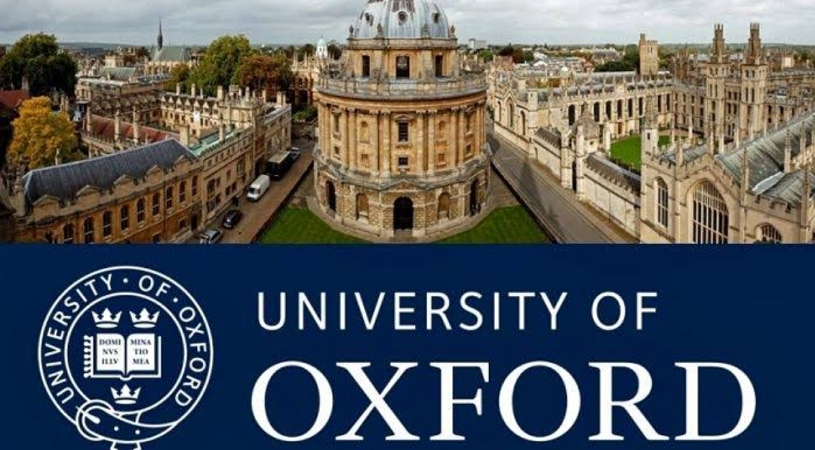
Just recently, the University of Oxford, England introduced the teaching of the Igbo language as a course in its institution. The University inducted Mr. Emmanuel Ikechukwu Umeonyirioha as the first official Igbo lecturer in the University. The University of Oxford is known to have offered modern languages since 1724 with the Igbo language as its latest entry. Feeling ecstatic, Mr. Emmanuel took to his Twitter page to disclose this groundbreaking achievement.

In his words, “It is official that I am the first official Igbo language lecturer at the number one university in the world, the University of Oxford. Our induction happened today by Mario Sadoux, head of modern language programs, University of Oxford language center. This became possible in the account of the James Currey society. This is the first time the Igbo Language will be taught at the University. History has been made. I am so happy and grateful for this opportunity. I promise to make the Igbo language and culture known to the world”.

Any “c” written in Igbo without “h” is not Igbo Nzugbe as “c” cannot exist in Igbo without “h”. So, you have “ch” like Chioma. My senior Igbo teacher in secondary school, Papa Iyke, was unforgivable for such a mistake; 

More so, they restructured the translation of English to Igbo and vice versa. For example, to translate “The man is a fox”, figuratively, to Igbo, you do not write that the man is “nk?ta ohia” which is a direct Igbo name for fox. Rather, you write that the man is a tortoise because while the English know fox as a cunning animal, the equivalent animal in Igbo is tortoise. So, you say the man is “mbe”, Igbo name for tortoise.

Oxford,  i mere nke oma. Adi m njikere ikuziri. Enyere m akara A n’asusu Igbo na WAEC (Oxford, you have done well. I am available to teach. I made A in Igbo in WAEC)

University of Oxford Adds Igbo Language to Special Curriculum


University of Oxford Adds Igbo Language to Special Curriculum

3

Just recently, the University of Oxford, England introduced the teaching of the Igbo language as a course in its institution. The University inducted Mr. Emmanuel Ikechukwu Umeonyirioha as the first official Igbo lecturer in the University. The University of Oxford is known to have offered modern languages since 1724 with the Igbo language as its latest entry. Feeling ecstatic, Mr. Emmanuel took to his Twitter page to disclose this groundbreaking achievement.

In his words, “It is official that I am the first official Igbo language lecturer at the number one university in the world, the University of Oxford. Our induction happened today by Mario Sadoux, head of modern language programs, University of Oxford language center. This became possible in the account of the James Currey society. This is the first time the Igbo Language will be taught at the University. History has been made. I am so happy and grateful for this opportunity. I promise to make the Igbo language and culture known to the world”.

Ever since the news broke out, congratulatory messages have been pouring in especially from Nigerians commending Dr. Emmanuel for such a great feat and also acknowledging Oxford University for deeming it fit to add the Igbo language to their special curriculum. The Igbo Language, culture, and tradition seem to be gaining massive recognition lately. A few years ago, BBC worldwide service and BBC Africa became the first international broadcaster to set up an Igbo language service. Also last year the Igbo community recorded a remarkable achievement as the Igbo Apprenticeship system ” Igba Boi” was approved by Harvard Business School London as proposed by erudite Professor Ndubisi Ekekwe. There seems to be no stopping for the Igbo community as some of its sons relentlessly continue to project their culture and tradition on the world map.

The feeling of knowing that the Igbo language is now being studied at Oxford University is unquantifiable. UNESCO in 2012 predicted that the Igbo Language might become extinct in the next 50 years. This achievement will not only preserve the proposed “dying language” but it will give rise to the Igbo language being spoken in Europe not just by Nigerians In Diaspora but Europeans inclusive. This is indeed a huge step to sustain the dying Igbo Language.

I would not fail to acknowledge the Late Professor Chinua Achebe who through his books projected the Igbo language to the world. He once stated that writing in English, the language of the imperialist conquerors of Nigeria didn’t really pass his message ideally. Achebe’s stated goal was to create a “new” and more African English. He integrated Igbo words and phrases, proverbs, folktales, and other elements of communal storytelling into the narrative to record and preserve African oral traditions and to subvert the colonialist language and culture.

Now that the Igbo Language has gained global recognition, this should be a wake-up call to schools in Nigeria especially those in the Southeast region. There should be proper advocacy to encourage the promotion and speaking of Igbo Language amongst school children. According to research, it states that an average child enters the classroom with about 6,000 vocabularies in their mother tongue. When the child has no background knowledge of the mother’s tongue, proper comprehension of the language can pose a challenge. It is important to note that when a language dies, future generations lose a vital part of the culture that is necessary to fully understand.

How To Make Yourself Valuable In The Workplace

0

No one is indeed indispensable, anyone can become unnecessary, sacked, or not needed. But then there are those who when they are not around, things won’t just go right. With the high rate of unemployment and how competitive the labor market is, one needs to note that making themselves indispensable at work is an ideal way to ensure job security and also be very much needed in the place of work. An employer would not hesitate to sack an employee who he finds incompetent in the place of work.

One must understand that being indispensable doesn’t necessarily mean that the employer must have a soft spot for you, it entails you putting in the required efforts and skills necessary to be valued in the workplace.

There are so many ways how you can make yourself indispensable in the workplace, but I will be focusing on four (4) of them

Go Beyond Your Expectations: Not everyone is willing to go beyond their expectations and this can be very risky in the workplace because it puts their position in jeopardy. Even though an employee has been assigned to perform a specific role in the workplace, they shouldn’t perform only the role required of them If they want to remain valuable. One secret to being indispensable in the workplace is to accept extra responsibilities. This will not only show that you are hardworking, but it will also show that you are dedicated to the company. Most of the time, it is not everything that the manager will dictate, as someone who is industrious and efficient, the manager expects you to go outside your way to ensure that you bring about progress in the workplace.

Keep Your Skills Up-To-Date: It is not enough that the skills that got you the job will be relevant in the next five years. The world is rapidly evolving, one needs to move with the pace so they won’t be stagnant. As technology evolves, so must professionals. Without even stating it, most bosses expect their employees to keep their professional skills up to date. Staying abreast of the latest developments in your industry can show continuous improvements and help you become a more efficient and effective employee. Asides from updating your skill, your educational degree is also not left out. Furthering higher such as getting a master’s degree can make you indispensable and also get you promoted in the workplace. I know a story of a young man who was frustrated that he never got promoted in his workplace while his colleagues were promoted to bigger positions. He later discovered that most of his colleagues furthered their studies that earned them promotions. Those who had just a bachelor’s degree went ahead to get a master’s degree. Some employers are not lenient to keeping employees who refuse to upgrade, they lay them off right away.

Proffer Solutions And Generate New Ideas: Most managers would not want to work with employees who are solely dependent on them for everything. Once something goes wrong in the workplace, rather than looking for a way to fix it, they would always run to the manager to complain. Such employees do not last in the place of work, because they are often seen as being incompetent. An employee who looks for ways to improve any area of their role or beyond in the workplace is usually indispensable. A manager values those who proffer solutions and bring ideas in the workplace which often lead to progress. One secret to note is this, to be indispensable in a workplace, always think of ideas and proffer solutions that can greatly improve your job role and the set goals of the organization. Not bringing any solution is often interpreted by the manager as being dormant.

Be Adaptable: Being adaptable is a very vital skill to survive in the labor market. Once you are adaptable to changes in the workplace, it gives the impression that you are committed to the job. Showing your adaptability can demonstrate that you are willing to take on new responsibilities or roles. For example, if your company introduces new software that all employees must use, show that you are enthusiastic about learning how to use it.

Final Thoughts

Being indispensable in a workplace is very possible although nothing is guaranteed. Becoming indispensable to your organization certainly won’t be easy. It takes hard work, commitment, and unflinching dedication. You need to acquire the right knowledge, develop critical skills, and form strong bonds with those you work with.

Nigeria’s GDP Grew 3.4% in 2021, Its Strongest in Seven Years

0
Nigeria leaders

The newly released GDP report by the National Bureau of Statistics (NBS) shows that Nigeria’s economy grew by 3.4% year-on-year in 2021 with an estimated value of N72.39 trillion in real terms, representing an uptick from the 1.92% contraction recorded in the previous year.

According to the report, Nigeria’s real GDP increased from an estimated N70.01 trillion recorded in 2020 to N72.39 trillion in 2021, representing a recovery from the recession recorded in the second and third quarters of 2020.

It is the first annual growth above 3 percent since 2015, and marks the strongest GDP growth rate recorded in Nigeria in 7 years. The last time Nigeria’s economy grew beyond 3.4% was in 2014, when the real GDP expanded by 6.22% year-on-year.

“Nigeria Gross Domestic Product (GDP) grew by 3.98%(year-on-year) in real terms in the fourth quarter of 2021, showing a sustained positive growth for the fifth quarter since the recession witnessed in 2020 when output contracted by -6.10% and -3.62% in Q2 and Q3 of 2020 under the Covid pandemic,” the report says, adding that the fourth quarter growth indicates a steady economic recovery accounting for annual growth of 3.40% in 2021.

It is also notable as the growth was mainly buoyed by the non-oil sector due to the drop in oil prices in the period under consideration. The oil sector contracted by 8.06 percent in the fourth quarter and an annual growth rate of -8.30 percent in 2021.

Meanwhile, in nominal terms Nigeria’s GDP grew by 13.92% year-on-year with an estimated value of N173.53 trillion compared to N152.32 trillion recorded in the previous year. The report showed that in Q4, aggregate GDP stood at N49.27 million in nominal terms.

“The 2021 annual nominal growth stood at 13.92%. For better clarity, the Nigerian economy has been classified broadly into the oil and non-oil sectors,” the report says.

In terms of contribution to GDP, Agricultural sector’s contribution dropped from 26.21% recorded in 2020 to 25.88% in 2021, while services accounted for 53.56% of the country’s GDP, representing an uptick compared to 52.44% recorded in 2020. Industrial sector accounted for 20.56% of the total GDP.

Non-oil sector grew by 4.73% in the quarter from a year earlier, bolstered by 3.58 percent growth in agriculture and 5 percent in services. The sector contributed 92.76% to the GDP, increasing from 91.84% recorded in 2020.

However, the non-oil sector growth was spurred by a combination of services like the transportation, storage sector and electricity.

For example, the transportation and storage sector recorded a 16.25% GDP growth in the review year as against the 22.26% contraction recorded in the previous year. Also, electricity, gas, steam, and air conditioning supply recorded a 27.57% growth in real terms, overturning the 2.9% decline recorded in 2020, while the financial and insurance sector grew by 10.07% in 2021 as opposed to 9.37% growth printed in the previous year.

Sadly, the telecommunication sector, which became Nigeria’s economy’s cash cow at the peak of the pandemic, lost its steam, recording a decline in its GDP growth rate at 6.55% in 2021, more than half of 13.18% it recorded in the previous year. The decline is as a result of the Nigerian Communications Commission (NCC) decision to halt purchase or registration of new SIM numbers for the integration of National Identity Numbers (NIN).

The 3.4% growth thus beats the projection of the International Monetary Fund (IMF) for 2021. The IMF had predicted that Nigeria’s economy will grow by 2.6%.

Accelerate That Product By Spotlighting It

0

The summary: make sure you dance where people can see you in the village square. Otherwise, nothing will happen. In ancestral Igbo, the young men who have come to find future wives will not discover you unless they can see you. So, dance where everyone will see you!

Take that to building products and making sure people know about them.  It is your obligation to make sure that everyone knows about your best product because doing so is executing a public good call. If you deny people of knowing your great product, you are not fair to them. Simply, you are not giving them the chance to use the best!

It is what it is:  make that product popular. Samuel Ajiboyede explains on the necessity of making sure products have their spotlights here.

Research tells us that 21.5 percent of startups fail in the first year, 30 percent in the second year, 50 percent in the fifth year, and 70 percent in their 10th year. Keep in mind that some of these startups have awesome solutions that solved a market need. Some had all the funding, as the founders had invested their time, energy, and life savings, expecting their perfect product to become a hit in the market. They expected that just like Google and other search engines, people would look for them to solve their needs every day.

Sorry to burst that bubble or maybe I should call it a myth. It is not the best product that wins. It is the best-known product that wins.

This might not sound real to you, but I want you to take a second look at the assertion. Contrary to what you think about the customer picking the best product available, the customer can only choose the best product he or she knows. Think of it this way. Your customers are like people in a dark room looking for a solution to their problem.

It is not the best product that wins… It is the best-known product that wins.