
DD
MM
YYYY

PAGES

DD
MM
YYYY

spot_img

PAGES

Home Blog Page 5309

It is not the best product that wins… It is the best-known product that wins.

0

The first reaction to the above statement is usually negative. Most first-time entrepreneurs argue with this statement, and it is the reason they make and repeat a lot of mistakes. They think they need to get the product perfect before launching. They want to tweak and fix every bug before the product ever gets launched.

They believe that in the competitive marketplace, it is the best product that wins the race. They think that if they build the best product, the market will come to them. “Customers know quality,” they say. If I bring the best, they will choose my product among others.

Research tells us that 21.5 percent of startups fail in the first year, 30 percent in the second year, 50 percent in the fifth year, and 70 percent in their 10th year. Keep in mind that some of these startups have awesome solutions that solved a market need. Some had all the funding, as the founders had invested their time, energy, and life savings, expecting their perfect product to become a hit in the market. They expected that just like Google and other search engines, people would look for them to solve their needs every day.

Sorry to burst that bubble or maybe I should call it a myth. It is not the best product that wins. It is the best-known product that wins.

This might not sound real to you, but I want you to take a second look at the assertion. Contrary to what you think about the customer picking the best product available, the customer can only choose the best product he or she knows. Think of it this way. Your customers are like people in a dark room looking for a solution to their problem.

What product do you think will first come to their attention? It is the product that enters the spotlight first. They would go for that product over and over again, and it doesn’t matter if you have a better product. They have no idea what other solutions are there in the darkroom, so they would not even know if the product they have settled for is the worst of the pack.

If you have a good product, one that you have invested so much time, energy, and resources building, I have one piece of advice for you. Get into the spotlight. The customers have to see you first so that they can compare you with other products that they know, and decide on the best. You should be ready to invest as much time and resources in spreading the word about your product. You have to become visible and stay that way.

Formerly, we would think of this as simply advertising. But now, there are other ways to get your brand and product into the spotlight. And in fact, there can’t be such a thing as too much spotlight. Keep putting your product and solution out there until the brand no longer needs an introduction. You want customers to see your logo and say this is ABC brand, even if the name is not written anywhere on it.

Ask yourself this question. If you took a random poll or market survey to find out how much your product has been exposed, what percentage of the market would admit to knowing your product?

Have you noticed that even Google runs ads? One would think that the brand is popular enough as it is, but no. They continue to launch new upgrades, and features and they follow it up with ads. Think of the most popular brands in your location (whether online or offline) and find out if they are still investing in staying in the spotlight. You will find that they are. Some are sponsoring reality TV shows, dance competitions, essay competitions, and the like. Some are partnering with one NGO or the other, driving a social cause. Some are hosting free educational webinars every now and then.

It takes different forms but the whole idea is to remain where your customers and clients can notice you.

As an entrepreneur and startup founder, most of your time needs to be invested in spreading the word about your idea.

The Success Story Of Prof Eze As 7th Substantive FUTO Vice Chancellor

0
FUTO is a top technical university in Nigeria

Prof. Francis Chukwuemeka (F.C.) Eze is the immediate past and 7th Substantive Vice-Chancellor (VC) of the revered Federal University of Technology Owerri (FUTO).

He relinquished the mantle of leadership to the incumbent and 8th Substantive VC, Professor Mrs. Nnenna N. Oti on 18th June 2021, having meritoriously served the University for five consecutive years in accordance with the extant law.

Prof. Oti, who is the first female to occupy the highly-exalted position, was announced the 8th Substantive VC by the 11th Governing Council of the University led by Prof. John Offem on Tuesday, 13th April, 2021 after concluding a series of rigorous and transparent processes.

It would interest us to note that the entire FUTO Community was agog precisely on Thursday, March 17, 2016, following the emergence of Prof. Eze as the Seventh Substantive VC of FUTO, as was announced by the 10th Governing Council led by Dr. Emmanuel Enemuo after a series of rigorous interviews conducted among the aspirants made up of various well-celebrated professors.

Consequently, in June 19, 2016, he was successively enthroned as the 7th Substantive VC of FUTO, a position he held till the aforementioned date. Upon his assumption to duty, he passionately initiated a mantra for his administration “Driving the Culture of Excellence” and vowed to uphold its content at all cost.

Owing to his outstanding performance as the FUTO VC during his five-year tenure, various notable fora both in the University and beyond, in their respective capacities, thought it wise to organize resounding receptions for the rare gem and academic Icon.

Prof. Eze, a native of Amanato in Ideato-South LGA of Imo State – who is a professor of Experimental Solid State Physics and Material Science – obtained his first, Master’s and doctorate degrees from the University of Nigeria, Nsukka (UNN), University of Dundee, Scotland and also UNN, respectively.

Down the memory lane, after his Bachelor of Science, he worked as a banker before joining the academia towards actualizing his dream of becoming a distinguished academic and researcher.

In his teaching career, he rose to become a veteran physicist. He has authored and co-authored numerous academic journals, text books and articles, among other countless publications in Industrial Physics. He is the former President of Nigerian Institute of Physics (NIP) Writers’ Series, and also a Fellow of the notable institute.

Prof. F. C. Eze served as a two-time Head of the Department (HOD) of Physics in FUTO, and subsequently became the Dean of the School of Sciences (SOSC), which was later split into two separate faculties namely: School of Physical Sciences (SOPS) and School of Biological Sciences (SOBS) by the University’s Management.

Thereafter, he was recognized as the Director of the Nuclear Energy and Research Centre of the University, a position in which he relentlessly and doggedly showcased the best in him to the envy of his colleagues, both far and near.

Due to his intimidating records and antecedents, in 2013, Prof. Eze was expectedly appointed as the Deputy Vice-Chancellor (DVC) on Administration under the leadership of Prof. C. C. Asiabaka, the Sixth Substantive VC of the University, a post he held till June 2016.

He is a renowned member of various local cum international professional and social societies, and a Christian to the core to the glory of God. As a devout Catholic and one who had distinguished himself in both humanity and science, he was inducted into the Knighthood of the Saint John International (KSJI) many years ago. The soft-spoken and humble professor, who believes in actions rather than words, is happily married with four children.

From the moment he assumed office as the Seventh Substantive VC of FUTO, the elegant and eloquent professor never relented in carrying out his duties passionately despite challenges and what have you. He overtime channeled his leadership prowess to only result-oriented initiatives.

He understood the essence of open-door administration and equally grants anyone a listening ear regardless of the circumstance. This attribute alone makes hundreds of thousands of people attracted to his person while in office.

As an administrator par excellence, he made frantic efforts to distance the FUTO Community from a political clime, by ensuring the required processes were deployed whenever administrative and academic issues/duties were carried out.

Prof. F. C. Eze is indisputably a well-experienced and passion-driven academic and leader. This is why, under his reign, he ensured academic matters were treated as priorities, hence always ready to grant the Student Union an audience each time they called on him with any concern.

His administration equally maintained a cordial relationship with the Alumni body. This is why, under his tenure, the FUTO Alumni Association was able to establish her presence in the University at all times.

The body initiated and completed various capital-intensive projects, ranging from prototype of staff quarters, Award of Scholarships, to the recent establishment of a 33KV Power-Line that ensures steady electricity supply within the shores of the University, among many others.

Continue reading here.

Begin to plan – what if Russia Invades Ukraine and Global VCs pause on Africa?

0

When two elephants fight, the grass suffers. If Russia enters Ukraine, and Europe/USA takes actions, markets will move. Check your portfolios because if indeed Russia moves in, the United States will re-adjust its priorities and that will have significant impacts on policies.

If rich people do not feel very “rich” because markets are tanking in America and Europe, family offices will be drained of cash – and if that happens, venture capital funds will not have money to invest at scale. When they do not have funds, the effervescence will go. This invasion or war can affect your next funding, even in Africa.

Begin to plan – what if? What is your burn rate and how will a pause from VCs affect you? Remember: the biggest modern wars are fought in stock exchanges because those ones get into the hearts of the money men, working families (retirements), and indeed EVERYONE.

The Ukraine-Russia crisis is at a pivotal moment. Ukraine accused pro-Russian separatists of attacking a village near the border. In the U.S., meanwhile, Secretary of State Antony Blinken, speaking at the United Nations, made an urgent appeal against an invasion.

For months, the U.S. and its Western allies have watched a steady buildup of Kremlin forces along Ukraine’s border with Russia and Belarus. The increased military presence mimics Russia’s playbook ahead of its 2014 illegal annexation of Crimea, a peninsula on the Black Sea, which sparked international uproar and triggered sanctions against Moscow.

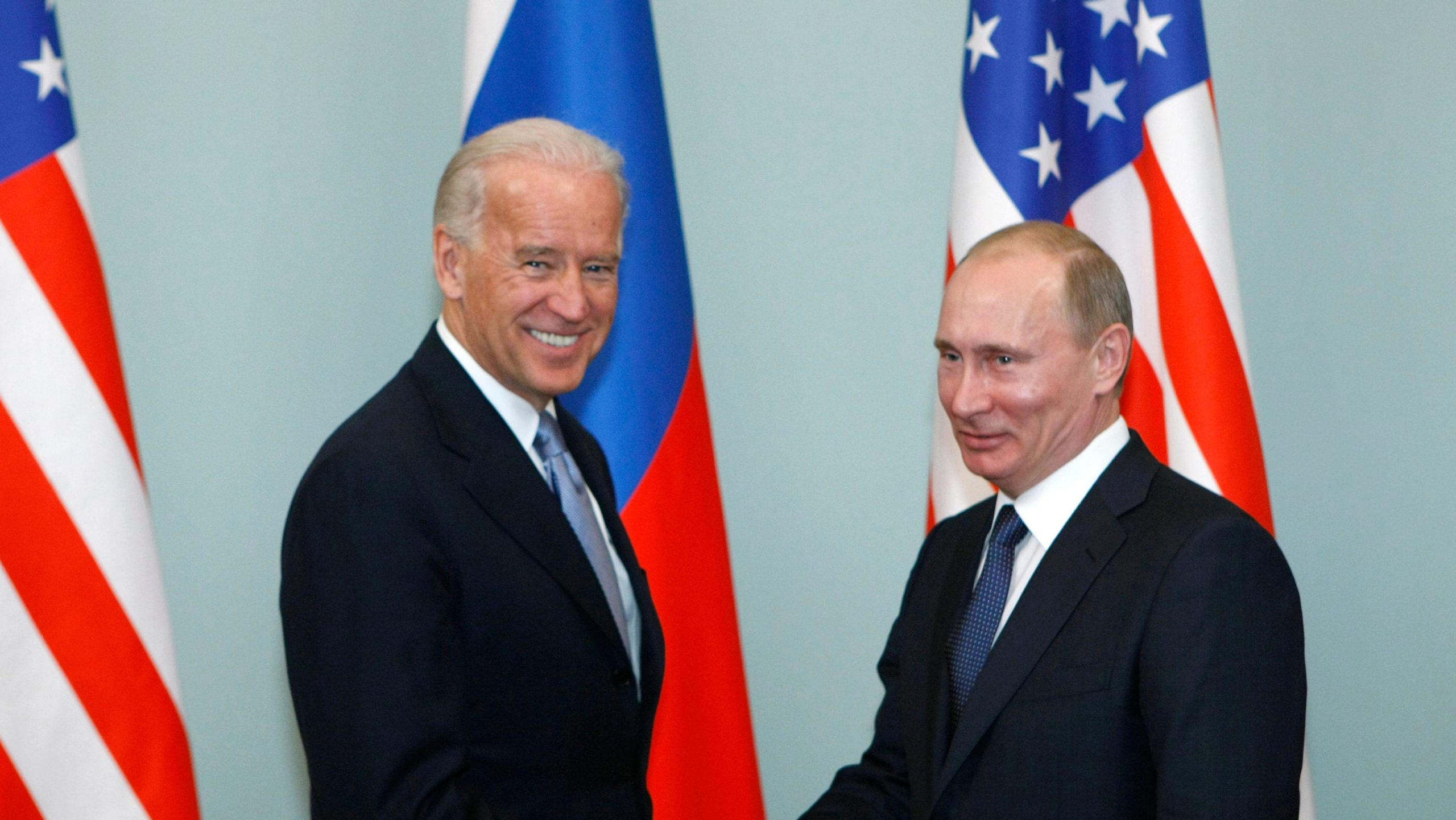
President Joe Biden has warned Russian leader Vladimir Putin of extraordinary and crippling economic sanctions if the Kremlin proceeds with an attack on Ukraine, Russia’s ex-Soviet neighbor.

Amazon, Visa Reconcile after Row Over Transaction Fees

0

Months after e-commerce giant Amazon made a move to cut ties with payment company Visa, over the cost of transaction processing fees, the two companies have reached an agreement to continue their partnership.

Visa has made many changes to its business to accommodate the changes in the global financial ecosystem. That includes onboarding crypto currency as means of payment through partnership with blockchain-powered cross-border payment facilitating companies.

The agreement means that the duo will continue to run their businesses without disruption. The cryptocurrency industry with its DeFi system has not only simplified payment, but also made it cheaper, especially cross-border payment. This, in addition to the burgeoning fintech industry, has created more competition, as Reuters noted among other factors in the report below, forcing traditional payment companies to reconsider the cost of their transaction processing fees.

Details of the deal were not disclosed but Visa and other payments cards have faced increased pressure about their fees as more shoppers have turned online during the pandemic. The spat had highlighted the growing clout of retailers in the fee battle.

Amazon had said in November it was considering dropping Visa as partner on its U.S. co-branded credit card, after earlier confirming it would stop accepting Visa credit cards in the UK because of high transaction fees.

The agreement announced on Thursday means Amazon customers can continue using Visa credit cards in its stores, the e-commerce group said in a statement.

Neither side said what fees would be levied in future – an issue which came to the fore particularly in Britain after an EU-enforced cap on card fees is no longer in place following Brexit.

The dispute between Amazon and Visa in the UK was seen as a bad sign for the card industry by some analysts, who argued it could presage a fight in the much bigger U.S. market.

British lawmakers said last month they planned to scrutinize increases in the fees Visa and Mastercard charge businesses after the country’s payments regulator found no evidence to justify the rises.

Last October, Visa began charging 1.5% of transaction value for credit card payments made online or over the phone between the UK and EU, and 1.15% for debit card transactions, up from 0.3% and 0.2%, respectively.

Average credit card processing fees across the industry range between 1.5% and 3.5%, according to analysts.

Retailers have in the past accepted credit card processing charges as an inevitable cost, but that could be changing because of innovations and increased consumer choice in the payments sector.

Credit cards accounted for a third of North American e-commerce spending in 2020, according to payments giant WorldPay, but mobile payment options like Venmo and “buy now, pay later” (BNPL) financing plans are gaining ground.

While alternative payments have been growing for years, the pandemic accelerated a downward trend in credit card applications and boosted the popularity of BNPL financing.

Credit cards’ share of North American e-commerce spending declined 7% last year, according to WorldPay, while BNPL’s share increased 78%.

Other big retailers have in the past settled fee disputes with Visa after announcing they were going to quit taking Visa credit cards in narrow segments of their businesses.

Walmart Inc’s (WMT.N) unit in Canada, for example, said in 2016 it would stop accepting Visa credit cards after being unable to reach agreement on fees. Seven months later the companies said they had settled the matter.

Visa said it was pleased to have reached a broad, global agreement with Amazon.

“This agreement includes the acceptance of Visa at all Amazon stores and sites today, as well as a joint commitment to collaboration on new product and technology initiatives,” a Visa spokesperson said in an email.

Dissecting JAMB’s Tech-Driven Policies And Innovations

0

I do not hesitate to tender an extensive and exclusive commentary each time I take note of any issue or policy pertaining to education. This feature of mine might not be unconnected with my explicit love for impaction of knowledge on mankind.

In various quarters, it is being opined and echoed that education is the key to any success room, hence ought to be regarded as an inevitable pathway towards attaining one’s anticipated height. But I see it as the success itself, because anyone who acquires it is already ostensibly inside the said room.

The above assertions are the reason in advanced societies, educational institutions are handled with absolute care, thus given every attention they deserve. In such part of the world, funding of the institution by the concerned authorities is never compromised. It suffices to say that such a gesture is invariably seen as a priority.

This is why developing countries like Nigeria that are apparently following the footsteps of these climes as mentioned above in regard to learning don’t seem to overlook establishments such as the Joint Admissions and Matriculation Board (JAMB).

JAMB, which remains a household name in the Nigerian polity as regards education, has in recent times been making great waves in terms of innovations and enhancement driven by technology. The rebranding mechanism has continued unabated till date.

Its introduction of the ongoing Computer-Based Test (CBT) four years ago under the watch of Prof. Dibu Ojerinde – the then Registrar – was not unlike a mere concept that would never be physically felt. It was to the onlookers’ utmost amazement when the initiative fully metamorphosed into obvious reality.

Initially, the CBT was meant to be optional or elective, whereby the prospective candidates were permitted to freely choose between it and the then usual Paper-Based Test (PBT). In other words, the CBT mode was being test-run or put to the test during that era, precisely in 2015.

At the time, having commended the tech-driven innovation without much ado, I critically and extensively recommended therein the possible ways the JAMB could advance in the initiative. Other concerned Nigerians who were equally keen to educational matters, also followed suit.

I was so impressed when I realized that the newly introduced mode of testing had eventually become non-elective or compulsory among the admission seekers. Every well-meaning education stakeholder welcomed the idea which was aimed at ushering in a zero-malpractice and marking-with-ease era.

Since the full emergence of the CBT, all forms of examination malpractice have seemingly been a thing of the past. Similarly, contrary to the manual pattern of marking formerly in vogue, the activity is now done with great ease thereby making it a labour effective scheme. Among all, results could at the moment be released by the board as soon as possible, even within a few hours after the exams.

Several improvements regarding the CBT have hitherto been recorded under the current leadership of Prof. Ishaq Oloyede. In spite of a few technical hitches observed in the process, the e-mode testing has thus far made significant impacts to the delight of most Nigerians.

In the same vein, it’s equally worthy of note that an electronic registration method has fully been implemented by the JAMB. By this routine, e-mode materials are issued to the prospective candidates having purchased the e-form (e-PIN) as well as successfully registered.

For instance, only digital devices such as Compact Disc (CD) containing e-Syllabus and e-Brochure are given to the applicants, not manual booklets as done in the past. And, the payments can be made via various channels including banks, the Point of Sale (POS) machine, Automated Teller Machine (ATM), JAMB’s online portal, or the mobile phones.

In the e-registration for the 2018/2019 exams, that lasted between 10th January and 21st February, 2019, all applicants were entitled to electronic Personal Identification Numbers simply known as e-PINs the moment they made their payments.

The pattern continues till date. Each e-PIN, which is sent to the person’s personal phone number and grants him/her access to the registration portal, is reportedly tied to individual profile, hence not transferable.

This implies that any e-PIN is to be delivered electronically to the applicant, and not to be handwritten. Before going for the e-PIN, the applicant must have obtained his/her profile code via the cell phone number used for the preliminary exercise.

Prospective candidates are, therefore, warned to keep their respective e-PINs secret and safe toward averting any form of hacking by unscrupulous and unpatriotic elements who do not mean well for the exercise and the country at large. They are in this regard advised to see the e-PINs as strictly personal.

It’s noteworthy that only JAMB approved CBT centres nationwide are eligible to carry out the e-registration process. Each applicant is consequently required to proceed to any of these accredited centres. They have to present the e-PIN for completion of their respective registrations.

The full name of the prospective candidate as entered/typed towards acquiring the profile code, or during the preliminary stage of the e-registration, would automatically be displayed on the input of the e-PIN by the CBT centre staff.

It’s equally worth noting that anyone can also register in any of the JAMB recognized foreign countries, which include Ivory Coast, Ghana, Ethiopia, Benin Republic, Saudi Arabia, South Africa, England, and Beau in the U.S.A.

The rigorous e-security processes currently being undergone by the applicants have thus far gone a long way in curtailing different kinds of frauds and malpractices that were ab initio in existence. It has ensured that only the persons who applied for the exams are granted the access to the e-mode question scripts.

The overall tech-driven innovations recently introduced by the JAMB will continue to guarantee a high level of credibility and transparency in respect of the conduct of the entrance examination in its entirety. The institution is therefore encouraged to sustain the enhancements.

The JAMB, however, needs to be mindful of some key technical factors. The board must employ a strict strategic approach with a view to ensuring that uninterrupted power supply is made available by the various approved CBT centres.

They should also be directed to contract reliable and well experienced Information Technology (IT) experts to ensure deployment of standard and tested softwares on their computers on a regular basis.

Inter alia, adequate human security must be put in place to safeguard the electronic gadgets in the centres. The JAMB needs to equally inculcate these strategic measures in its headquarters towards averting any challenge either during the e-registration or the CBT.

It’s invariably great to make any laudable policy and innovation but far greater to painstakingly consider its apt sustenance afterwards.