DD
MM
YYYY

PAGES

DD
MM
YYYY

spot_img

PAGES

Home Blog Page 531

Snorter Token Chases 1000x Price Prediction While BlockDAG’s Almost $405M, Highlight Market-Ready Strength

0

Speculators are swarming to the Snorter token presale, convinced it could be the next 1000x story. Whispers of a soaring Snorter token price have triggered a rush of early bets, pushing it into the spotlight almost overnight.

But as traders chase quick gains, another contender is quietly building unstoppable momentum. BlockDAG(BDAG) has already raised almost $405 million, sold 26.2 billion coins, and onboarded millions of miners worldwide through its X1 app, all before hitting exchanges.

The stakes are shifting fast. While Snorter leans on anticipation, BlockDAG is stacking undeniable metrics. As its next phase draws closer, investors are left wondering which project will truly define 2025 once the dust settles.

Will Snorter Token Presale Deliver on Its Lofty Price Hype?

The Snorter token presale has quickly attracted investors drawn to its promise of major upside. Analysts speculate on a sharp rise in the Snorter token price after launch, with some touting potential 1000x returns.

Such projections have made the Snorter token presale one of the most discussed entries in the current market cycle. Early-stage energy, branding, and community engagement are fueling its traction, giving it a strong launch narrative.

Still, questions remain about whether the Snorter token presale can sustain its appeal after the initial hype. Many presales enjoy early inflows only to stall post-launch without a solid ecosystem behind them. The Snorter token price forecasts may spark FOMO, but delivering on them requires more than speculation. This gap between expectation and proven delivery is where most presales face their greatest test, and where BlockDAG has already set itself apart.

Global Growth & Hard Numbers Cement BlockDAG’s Credibility

BlockDAG has achieved what most presales only aspire to, and that’s show verifiable traction before launch. It has raised almost $405 million to date, with $40 million of that arriving in just the past month alone, averaging over $1 million daily. Over 26.2 billion BDAG have been sold, and the project counts 312,000 unique coin holders, with more than 1,000 new holders joining every day. Beyond financials, its reach spans globally with 19,500 X-Series miners shipped to 130+ countries and production scaling toward 2,000 units per week.

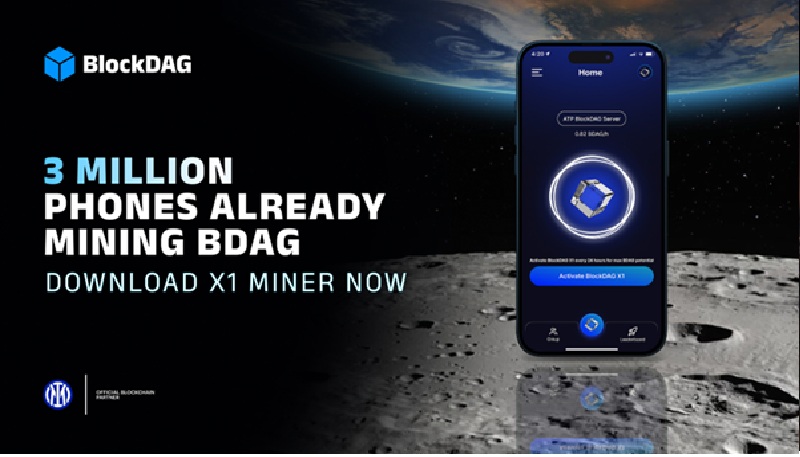
Meanwhile, its X1 mobile app has onboarded over 3 million active miners, and the community has grown to 325,000+ across social platforms, including 1,000+ daily readers on Medium. These are not hypothetical figures, they represent a network already alive with adoption, builders, and infrastructure. Over 4,500 developers are preparing 300+ Web3 projects to launch on the network, reinforcing its utility.

Analysts now project near-term BDAG targets at $1, with forecasts stretching to $5 and even $10 over time. Batch 30 sits at $0.03, already delivering a 2900% ROI to early backers, while a limited $0.0013 flat-rate entry window ahead of the Singapore Deployment Event offers a final opportunity. For investors, this isn’t just another entry point, the upcoming launch phase could turn today’s final entry window into one of 2025’s most rewarding positions.

Speculation vs. Execution: The Clear Divide for Investors

The Snorter token presale encapsulates the draw of speculation. Investors are captivated by dramatic Snorter token price projections, hoping to catch a breakout early. It’s a pattern the market has seen often: fast fundraising, soaring hype, and uncertain follow-through. While this strategy can deliver early wins, it also carries the risk of fading quickly after launch if real-world adoption fails to materialize.

BlockDAG offers a contrasting trajectory. It has combined financial momentum with tangible infrastructure and adoption, proving its model before even reaching exchanges. The presence of millions of active miners, global hardware shipments, and an expanding ecosystem underscores a project already operating at scale.
Where the Snorter token presale leans on promises, BlockDAG presents evidence, which is why many see it as better positioned to thrive in 2025. The choice is between speculative buzz and verified growth, and the market is noticing.

What Will Truly Last Beyond Presale Buzz

The Snorter token presale shows how rapidly interest can build, while discussion around the Snorter token price highlights the appetite for bold early-stage bets. But BlockDAG is proving that lasting market presence comes from execution, not speculation.

With almost $405 million raised, 26.2 billion coins sold, and millions actively mining BDAG, it’s already operating on a scale few presales reach. Analysts see BDAG hitting $1 soon, with longer-term forecasts at $5 and even $10, backed by measurable adoption.

With a limited $0.0013 flat-rate entry window ahead of its Singapore Deployment Event, BlockDAG is entering its next phase backed by infrastructure, community, and momentum. As presales come and go, BlockDAG stands out as a project built to endure beyond 2025.

Presale: https://purchase.blockdag.network

Website: https://blockdag.network

Telegram: https://t.me/blockDAGnetworkOfficial

Discord: https://discord.gg/Q7BxghMVyu

Bitcoin Climbs to $116,800 as Traders Bet on Fed Rate Cut

0

Crypto markets recorded upward price actions over the weekend as Bitcoin (BTC) extended its rally, tapping $116,800 on Saturday for the first time in nearly three weeks.

The world’s largest cryptocurrency has now gained 5% over the past four days, fueled by growing expectations that the Federal Reserve will cut interest rates this week.

BTC’s surge began on Thursday when the US CPI data was released, briefly triggering volatility before bulls regained control on Friday morning. The asset has now shot up to $116,400, marking its highest level since late August. After a brief pullback, the momentum continued, and Bitcoin set a fresh multi-week peak of $116,800 before easing back to around $116,000 at press time.

Bitcoin’s market capitalization has now reclaimed the $2.3 trillion mark, though its dominance over altcoins has slipped to 55.2%, according to CoinGecko, as traders flock to high-growth tokens.

While traditional markets are hitting all-time highs, Arthur Hayes reminds investors that Bitcoin has been the best-performing asset against currency debasement in history.

He pushed back on short-term thinking in crypto. “If you thought that you were going to buy Bitcoin and next day you were buying a Lamborghini, you’re probably getting liquidated because it’s just not the right way to think about things,” he said. “Anyone who bought it two, three, five, or ten years ago is laughing,” he added, noting that long-term holders aren’t stressing over sideways moves.

All Eyes on the Fed

The next big catalyst arrives Wednesday, when Fed Chair Jerome Powell will announce whether the central bank will lower interest rates. Many expect a 25 basis-point cut while some are even betting on a 50-point “jumbo cut.” Lower borrowing costs typically benefit risk assets like Bitcoin. Cheaper money tends to boost liquidity, encouraging investors to deploy cash into high-risk, high-reward plays. This same dynamic often lifts tech stocks and other growth sectors.

Altcoins Shine Brighter

While Bitcoin has led the charge, altcoins are stealing the spotlight with even bigger gains: Ethereum (ETH) is up 5% in the past 24 hours, now hovering near $4,800, with traders eyeing the $5,000 milestone. It has gained 10% over the week.

Solana (SOL) has surged 20% this week, climbing to $250, putting it just $40 shy of setting a new all-time high. Dogecoin (DOGE) has rocketed 40% in seven days, while XRP has jumped 13% over the same period.

Despite recent gains and market indicators that signal the altseason may soon begin, investors could be looking at a rather short-lived euphoria. Notably, these altcoins’ outperformances have drawn significant interest from derivative traders, leading to a corresponding rise in open interest  the total number of outstanding derivative contracts.

Renowned crypto analyst Ted Pillows states that general altcoin open interest (excluding Ethereum) is about to surpass Bitcoin open interest for the first time in nine months. While this development suggests an emerging altseason as capital and traders’ attention shift to the altcoin market, Pillows has highlighted a potential cause for concern.

In other news, Dutch crypto analyst Michaël Van De Poppe has admonished investors to prepare for the biggest altcoin run ever. Interestingly, Van de Poppe references an ongoing consolidation in the Gold market, which is expected to drive down interest rates.

Future Outlook

As the countdown to the Fed’s decision ticks away, traders are urged to stay cautious, set stop losses, and prepare for potential volatility. A surprise move from Powell could send crypto markets soaring or crashing in seconds.

Ex-Google Exec Mo Gawdat Says AI will Wipe Out Jobs – From Entry-level to C-suite

0

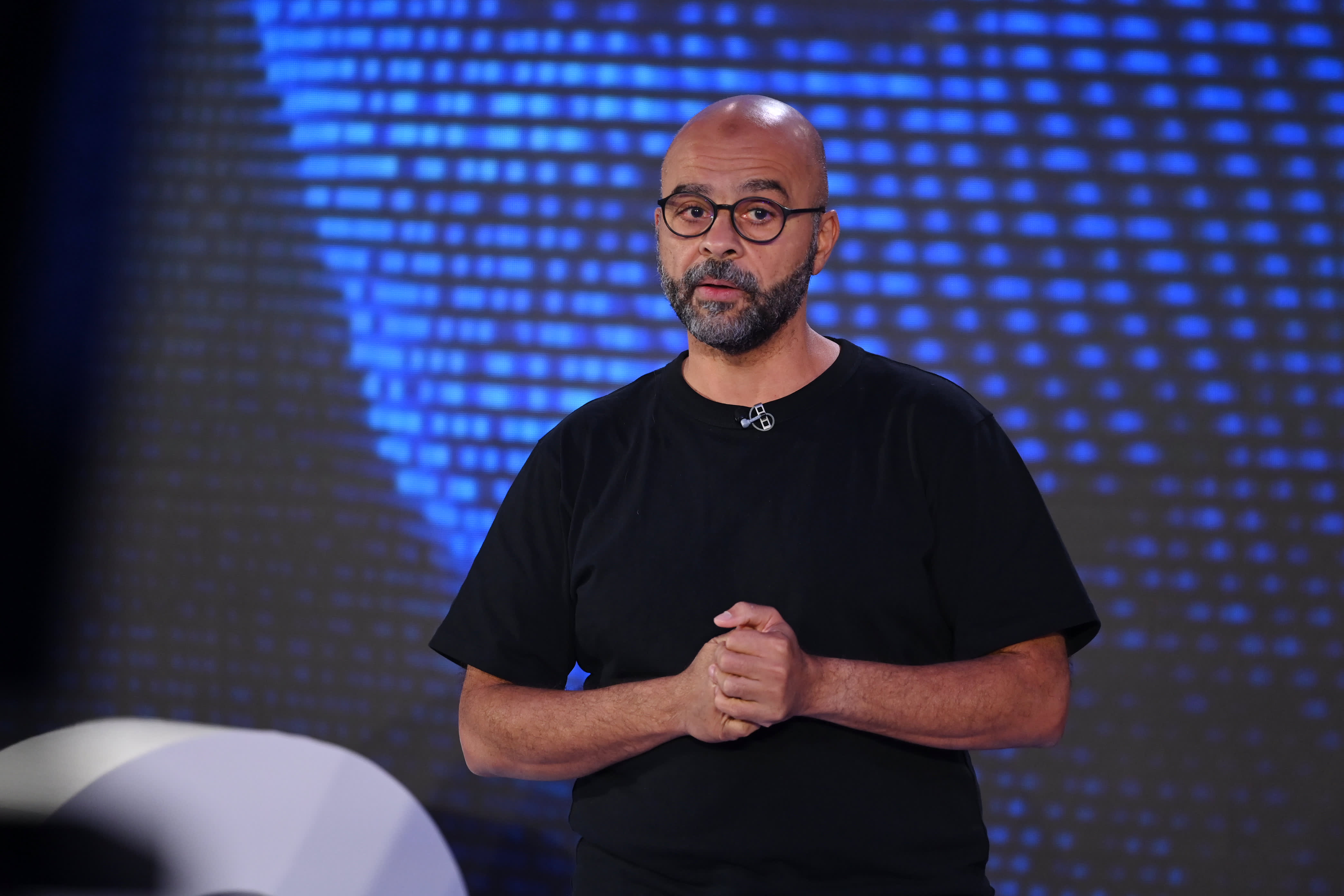
Artificial intelligence is no longer a futuristic abstraction but a force reshaping economies in real time — and opinions on where it will lead could not be more divided. Mo Gawdat, former chief business officer at Google X, believes that AI is poised to wipe out jobs across the spectrum, from entry-level to the C-suite.

But other tech figures, including Nvidia CEO Jensen Huang and entrepreneur Mark Cuban, insist that new opportunities will emerge for those willing to adapt.

Speaking on the Diary of a CEO podcast, Gawdat said bluntly: “The idea that artificial intelligence will create jobs is 100% crap.”

He used his own AI startup, Emma.love, as proof. He and two software experts built the app with AI assistance, a task he said would have required “350 developers in the past.”

Even positions once thought secure from automation are vulnerable, he argued — from video editors and podcasters to senior executives.

“Artificial general intelligence is going to be better than humans at everything, including being a CEO,” Gawdat said. “There will be a time where most incompetent CEOs will be replaced.”

Bill Gates has echoed similar forecasts, predicting that even doctors and teachers could eventually be supplanted by AI systems.

A Tale of Two Futures

The debate splits into sharply contrasting visions with potentially different outcomes.

Some believe that if AI evolves as fast as Gawdat suggests, the coming decade could see wholesale job displacement. Entire sectors may be hollowed out as companies turn to machines for not only technical work but also leadership roles. Governments, unable to rely on traditional employment as the main economic anchor, may be forced to adopt a universal basic income (UBI) to keep societies stable.

Gawdat warns that while this could free people to spend more time with families or pursue hobbies, it also risks chaos if “hunger for power, greed and ego” lead to reckless AI deployment under unqualified leaders.

By contrast, Mark Cuban and Jensen Huang see AI as a tool that will not erase work but reshape it. Cuban has launched a free AI boot camp for kids, signaling his belief in reskilling the next generation. Huang, whose company Nvidia powers much of the generative AI boom, argues that workers who combine technical AI skills with human-centered soft skills will become indispensable.

They envision a future where AI assists with tasks — drafting emails, preparing documents, even giving medical guidance — while humans move into more creative, strategic, and interpersonal roles.

Industries Already on the Frontline

Healthcare: AI diagnostic tools are already outperforming doctors in detecting certain cancers, raising fears of displacement. At the same time, hospitals are using AI to support — not replace — physicians, streamlining paperwork and patient scheduling so medical staff can focus on care.

Media: Journalists, podcasters, and video editors have seen AI generate articles, clips, and even deepfake broadcasts at a fraction of the cost. Yet publishers like the New York Times and Time magazine are experimenting with AI partnerships, integrating the technology to expand reach while retaining editorial oversight.

Finance: Algorithmic trading and AI-driven risk analysis have automated jobs once performed by teams of analysts. But banks are simultaneously recruiting specialists who can integrate AI into compliance, fraud detection, and customer experience, creating hybrid roles that didn’t exist five years ago.

Manufacturing: Robotics and AI-driven quality control systems are streamlining production lines. Apple, for instance, is pouring billions into U.S. semiconductor and glass manufacturing with AI-driven processes, while also training workers in “smart manufacturing” through its new Detroit academy.

These industries illustrate the core divide: some jobs are vanishing outright, while others are being reshaped into higher-value positions.

The World Economic Forum’s 2025 Future of Jobs report reflects the tension between these futures. Globally, 41% of employers expect to downsize due to AI, rising to 48% in the U.S. Yet at the same time, 77% say they will upskill workers to use AI effectively, and nearly half (47%) are planning to shift employees into new roles rather than eliminate them.

For now, companies are straddling both paths: cutting redundant roles while investing in retraining programs to capture productivity gains from AI.

Work and Identity in Question

Beyond economics, Gawdat says AI could force a cultural reckoning. “We were never made to wake up every morning and just occupy 20 hours of our day with work,” he said. “We defined our purpose as work. That’s a capitalist lie.”

He suggests an AI-powered society may push people to find meaning outside of their job titles — through family, creativity, or community.

But his warning is tempered with a caveat: unless ethical guardrails are established, the same technology could deepen inequality and concentrate power.

Whether the world ends up closer to Gawdat’s dystopian forecast or Cuban and Huang’s more optimistic vision, one reality is certain: artificial intelligence is rewriting the rules of work and society.

“This is real,” Gawdat said. “This is not science fiction.”

Entry level roles are being eliminated due to artificial intelligence automation, disproportionately impacting Gen Z workers and disrupting traditional career pipelines, Fortune reports, citing Pave data. The share of 21- to 25-year-olds employed at large public tech firms has been halved since 2023, dropping from 15% to 6.7%. Private tech companies are also experiencing the crunch, with Gen Z representation slipping from 9.3% to 6.8%. Meanwhile, the average employee age in public tech has creeped up five years, from 34.3 years to 39.4 years, with millennials dominating the sector.

Apple CEO Explains How Company Plans to Invest $600bn Pledge on U.S. Manufacturing

0

Apple’s sweeping pledge to invest $600 billion in U.S. manufacturing over the next four years is positioning the iPhone maker as one of the largest forces behind Washington’s campaign to onshore critical technology production.

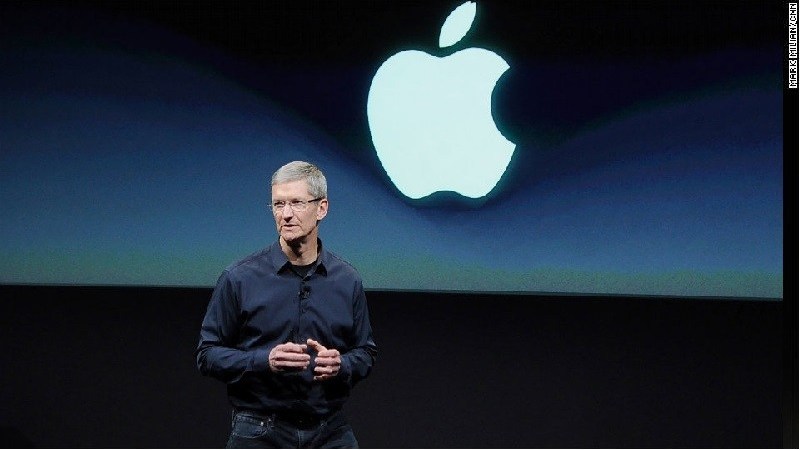
In an interview with CNBC’s Jim Cramer on Friday, CEO Tim Cook underscored that the centerpiece of Apple’s plan is semiconductors, saying the goal is to “stitch together the end-to-end supply chain” at home.

“You can add a lot by making it global and then stitching together the end-to-end supply chain in semiconductors,” Cook said. “I can’t stress how important this is and how much that will add to what we’re doing.”

The effort includes a $2.5 billion expansion of Apple’s long-standing partnership with Corning, whose Kentucky facility makes the glass used in iPhones and Apple Watches. Corning CEO Wendell Weeks told Cramer that Apple’s fresh injection of capital would allow the company to triple production, increase the factory’s workforce by 50%, and transform it into the “world-leading manufacturing site for highly-specialized glass.”

Cook, pointing to Corning’s durable “ceramic shield” technology — 50% stronger than earlier versions — said the investment reflects Apple’s confidence in Kentucky’s manufacturing base and Corning’s decades of innovation.

“This is the place to put it,” Cook said, praising Corning’s quality and track record. “I feel very confident in that, because when you look at innovation, when you look at the cost, when you look at the quality, these are all things that are factor into our decisions — this is a great place.”

Weeks added that the Kentucky plant represents a “social contract” with the community, noting that it has employed three generations of Corning workers since opening in 1952, though today’s work is far removed from what their grandparents once did.

Apple’s commitment already spans all 50 states, involving 9,000 partners and supporting around 450,000 jobs. The company recently launched a “Manufacturing Academy” in Detroit to train more workers and help small and medium-sized businesses adopt advanced manufacturing techniques, including artificial intelligence and smart automation.

Cook also acknowledged the political tailwinds bolstering Apple’s plan. President Donald Trump announced last month that his administration would impose a 100% tariff on imported semiconductors and chips — with exemptions for companies building inside the United States.

“The president has said that he wants more in the United States,” Cook said. “And we want more in the United States.”

How Apple Compares in the U.S. Chip Race

Apple’s vast spending commitment places it in rare company among global chipmakers reshaping their U.S. footprint. Taiwan Semiconductor Manufacturing Company (TSMC), Apple’s critical chip supplier, is building a $40 billion complex in Arizona, though delays and workforce shortages have slowed progress. Samsung is investing $17 billion in a Texas facility aimed at high-end chips. Intel, once America’s flagship chipmaker, has announced more than $100 billion in U.S. investments across Ohio, Arizona, and New Mexico, supported by Chips Act subsidies.

What sets Apple apart is its direct tie to consumer products. Whereas Intel and TSMC are chasing high-performance computing and server chips, Apple’s push is anchored to iPhones, iPads, and wearables — devices that require not only advanced semiconductors but also the specialized glass and materials that Corning provides. Apple is attempting to build a more insulated supply chain than its peers by integrating both upstream chip production and downstream component manufacturing in the U.S.

Impact on U.S. Chip Production

Apple’s $600 billion bet is expected to redefine U.S. advanced manufacturing. Analysts have predicted that Apple would catalyze an ecosystem where suppliers, from chipmakers to component specialists, scale up operations domestically. In that setting, Corning’s Kentucky facility could serve as a blueprint for regional hubs where factories create jobs, foster innovation, and sustain local economies.

However, protectionist tariffs, while boosting Apple’s near-term advantage, are expected to intensify trade disputes with Asia and strain relationships with critical partners like TSMC. In addition, workforce shortages in high-tech manufacturing remain a constraint, despite Apple’s new training initiatives. Analysts warn that heavy reliance on government incentives also ties Apple’s strategy to political cycles, leaving it vulnerable to policy reversals.

Still, Apple’s alignment with the Trump administration and its sheer financial scale distinguish its approach. Cook believes the effort is about more than products.

“Factories create hubs of economic activity,” he said, noting that manufacturing jobs ripple outward into local communities.

With Intel battling execution issues, TSMC navigating U.S. expansion hurdles, and Samsung working to prove its Texas project can deliver, Apple’s unprecedented $600 billion commitment may become the defining test of whether America can once again anchor the world’s most advanced supply chains.

Best Wallet Token Price Hype Builds While BlockDAG’s Almost $405M Raise, & Buyer Battles Dominate Market Attention

0

Crypto traders are crowding into the Best Wallet token presale, hoping to catch what some are calling the next 100x play. Excitement over the Best Wallet token price has surged across social channels as early buyers speculate on outsized post-launch returns. The idea of landing a breakout wallet-based token is fueling FOMO, with talk of massive upside if adoption takes hold.

Yet while other presales build on buzz, BlockDAG(BDAG) has ignited its presale through relentless engagement. It’s not just raising funds; it has made buying BDAG a competitive race through Buyer Battles, viral referrals, and 20 confirmed exchange listings. As traders chase the next big presale, BlockDAG is showing how to turn participation into an event rather than a gamble.

Best Wallet Token Presale Draws Heavy Speculation

The Best Wallet token presale has quickly become a focal point for speculation, with the Best Wallet token price trending in crypto circles as traders debate its long-term potential. The project has drawn attention for tying utility to wallet services, a narrative that’s resonated with users seeking functional tokens with strong upside.

Whales and retail buyers alike are buying in early, hoping to catch explosive growth when it hits exchanges. Many see it as a chance to replicate the early returns of other wallet-linked projects, betting on rapid network effects to drive adoption.

However, its traction is built largely on expectations rather than verifiable infrastructure. While the Best Wallet token price may rise fast post-launch, sustaining that growth will depend on turning speculation into actual user engagement. Something many hyped presales struggle to deliver once the initial frenzy fades.

BlockDAG’s Buyer Battles & Referral Rewards Are Driving Record Engagement

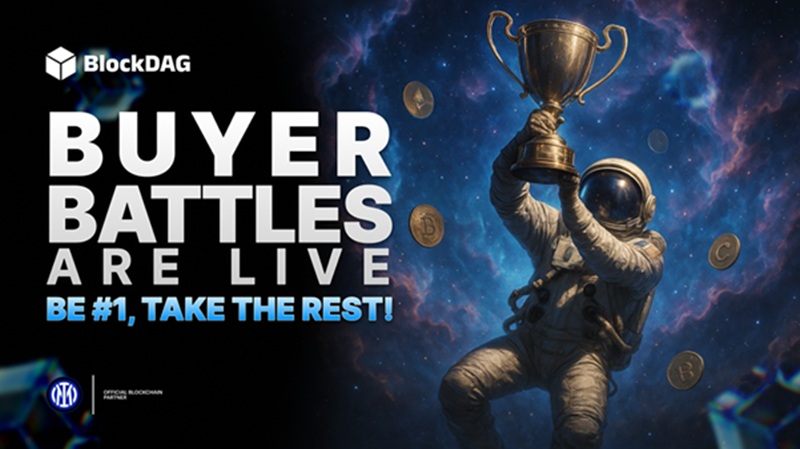
While traders speculate on the Best Wallet token price, BlockDAG has engineered a presale that rewards strategy and participation at scale. Its Buyer Battles feature resets every 24 hours, dropping 50 million BDAG coins for purchase each day. Any unsold portion is automatically awarded to the day’s largest buyer at no additional cost. This structure has turned buying into a competition, where timing and commitment can mean walking away with massive bonus allocations. It has made the BlockDAG presale a daily race and one of the most active in the market.

Layered on top of that, BlockDAG’s Referral Program fuels viral growth. Referrers earn 25% of every purchase made through their link in BDAG coins, while new buyers get a 5% bonus, creating a feedback loop that accelerates community expansion. This system has helped BlockDAG onboard 312,000 unique holders and 3 million miners through its X1 app.

And when the presale ends, BDAG won’t be waiting to find its market. BlockDAG has already locked listings on 20 major exchanges, including MEXC, BitMart, Coinstore, LBank, and XT.com, ensuring instant global liquidity at launch. With almost $405 million raised, 26.2 billion coins sold, and a limited $0.0013 entry window ahead of its Singapore Deployment Event, BlockDAG has transformed its presale into a competition, and the competition is heating up.

From Speculation to Scale: Which Presale Wins Out?

The Best Wallet token presale embodies the thrill of speculation. The Best Wallet token price is drawing buyers chasing fast profits, and that momentum could carry it through launch, if demand holds. Yet this is where many presales stumble. Buzz alone often fades once the token hits exchanges, leaving holders with stalled growth and slipping prices.

BlockDAG has approached its presale from the opposite angle. It hasn’t relied on hype; it has engineered engagement. Buyer Battles injects daily urgency, referrals are driving nonstop global reach, and 20 confirmed listings will give BDAG instant liquidity once it launches. With almost $405 million raised and 26.2 billion coins sold, BlockDAG has already achieved metrics most projects never hit even after launch.

While Best Wallet token rides market sentiment, BlockDAG is proving it can turn participation into sustained demand, before its token even goes live.

The Countdown Is On

The buzz around the Best Wallet token price shows how quickly sentiment can crown a trending presale. Traders see potential, and momentum is on its side, for now. But BlockDAG has already demonstrated that it can drive engagement, adoption, and liquidity before launch.

Buyer Battles make every day a race, its 25% referral rewards keep new holders flowing in, and 20 exchange listings stand ready to activate once the presale ends. With almost $405 million raised and 26.2 billion BDAG sold, BlockDAG isn’t just building hype; it’s setting records. A final $0.0013 entry window ahead of its Singapore Deployment Event is closing fast, and missing it could mean watching 2025’s biggest launch happen from the sidelines.

Presale: https://purchase.blockdag.network

Website: https://blockdag.network

Telegram: https://t.me/blockDAGnetworkOfficial

Discord: https://discord.gg/Q7BxghMVyu