DD
MM
YYYY

PAGES

DD
MM
YYYY

spot_img

PAGES

Home Blog Page 5312

Who Takes Responsibility for the Importation of the Contaminated Petroleum Products Causing Fuel Scarcity in Nigeria?

0

Nigeria, a country politically endowed with dramatic events that come now and then, has a fresh episode in the month of February. A sudden surge in fuel queues in petrol stations around the country forced a confession off the mouth of the Nigerian Midstream and Downstream Petroleum Regulatory Authority (NMDPRA), as consumers demanded answers.

“The Nigerian Midstream and Downstream Petroleum Regulatory Authority wishes to inform the general public that limited quantity of Premium Motor Spirit (PMS), commonly known as petrol, with methanol quantities above Nigeria’s specification was discovered in the supply chain.

“To ensure vehicular and equipment safety, the limited quantity of the impacted product has been isolated and withdrawn from the market, including the loaded trucks in transit,” the NMDPRA said in a statement.

While the bombshell statement provided an explanation to the ‘why is there surge in fuel queues?’ question, it also sparked another question that everyone is still eagerly waiting for its answer: who imported the adulterated PMS?

Nigerian president, Muhammadu Buhari has said those responsible for the importation of the off-spec products will be held accountable.

In its attempt to answer the above question, the Nigerian National Petroleum Company (NNPC) Limited, has in a statement issued on Thursday, pointed accusing fingers at five oil marketers: MRS, Emadeb, Brittania-U, Oando and Duke Oil, its subsidiary. The NNPC Group Managing Director, Mele Aba Kyari said that all defaulting suppliers have been put on notice for remedial actions, and that NMDPRA and the NNPC are going to take necessary actions in line with subsisting regulations.

The NNPC’s statement would have exonerated it from blame if not for the mention of Duke Oil and the subsequent response of the companies it has accused. Apart from Duke Oil, four other companies accused of being culpable by Kyari have each issued a statement denying involvement in the importation of the substandard fuel.

MRS was the first to issue a public notice to clear its name. In a newspaper advert on Wednesday last week, the company had said that it’s the sole responsibility of the NNPC to import fuel, making the claims linking it to the importation of adulterated fuel unrealistic.

“Due to the current subsidy regime, NNPC is the sole supplier of all PMS in Nigeria. Consequently, the NNPC through their trading arm, Duke Oil, supplied a cargo of PMS purchased from international trader Litasco and delivered it with Motor Tanker (MT) Nord Gainer. This vessel discharged in Apapa between the 24th and 30th of January, 2022,” the company said.

Other marketers who issued their statements after Kyari had made his claims, also denied having hands in importing the contaminated PMS – leaving only Duke Oil with the blame.

“Our imported products from our mother vessel, MT Torm Hilde, met all NNPC/NMDPRA product specifications, and we’re duly cleared by DPR (now NMDPRA) in line with Appendix 1 of the NNPC-DSDP Agreement.

“All the PMS from our mother vessel, MT Torm Hilde were discharged with all relevant certificate of quality after laboratory analysis as it was adjudged lead-free, ethanol-free, water-free, suspended matter-free and had a sulfur content of 0.0174 as against 0.05, which is within the acceptable content allowable by Nigerian Midstream and Downstream Authority…” Brittania-U said in a statement, adding that its consortium products had been discharged at retail outlets earlier in January.

NNPC and Duke Oil

At the mention of the name Duke Oil by both Kyari and MRS, Nigerians have been asking: “who is Duke Oil”? The answer to this question dates back to some decades ago. In 1989, the NNPC incorporated Duke Oil as a subsidiary but it was never registered as a Nigerian company. It was registered as an offshore company. According to findings made by investigative journalist David Hundeyin, Duke Oil has about 14 Nigerians headed by Kyari on its board. But that’s about its identity as the company is not quite known to Nigerians. So, when Kyari mentioned Duke Oil as the company responsible for importing the off-spec products, he’s indirectly saying that the NNPC, which by virtue of deregulation and FX management, has become the sole importer of refined crude oil products in Nigeria, was responsible for importing the adulterated products.

As Nigeria’s forex crisis deepened, the Central Bank of Nigeria (CBN) was looking to boost its foreign reserve by saving as much dollar as it could. The apex bank said the government spent N2.13 trillion from 2016 to 2019 subsidizing forex for oil marketers. To boost dollar liquidity in country and stop the naira from free-falling, the CBN needs to stop subsidizing forex for petroleum importers. Besides this, the federal government was pushing for the deregulation of the downstream sector. So came the decision to make the NNPC the sole importer of petroleum products in Nigeria.

However, the NNPC applies the Direct Sale-Direct Purchase (DSDP) arrangement, a swap method which allows a certain quantity of crude oil to be exchanged for its equivalent in refined petroleum products. This means that, even though marketers may be directly involved in bringing in refined petroleum products, the NNPC is still solely responsible for fuel importation while the NMDPRA ensures that the specifications and other requirements are met. Unfortunately, the NNPC said the procedural inspection does not include a test for methanol percentage.

“It is important to note that the usual quality inspection protocol employed in both the load port in Belgium & our discharge ports in Nigeria do not include the test for percent methanol content & therefore the additive was not detected by our quality inspectors,” the petroleum industry regulator said.

This statement is supposed to exonerate the NMDPRA from any wrongdoing if not that it has prompted another question: whose job is it to ensure that the specification of methanol for Nigerian-bound petroleum products is met?

As the drama unfolds, Nigerians are seeing more holes in every explanation given by the responsible agencies. Kyari is yet to issue a statement after the companies he accused earlier denied any wrongdoing, stoking the belief that he has been telling half-truth to shield Duke Oil from the responsibility. It is believed to be the usual ploy that the Nigerian government employs to avoid any responsibility when they make grave errors – and as usual, the Nigerian public will suffer the consequences.

Already, a large number of Nigerian consumers have been impacted by the contaminated petroleum products. Ardova Plc (formerly Forte Oil) an indigenous oil and gas marketing company said that it has had over 130 reported cases of car problems related to the adulterated fuel.

Over time the number is expected to rocket across the country, and the victims who will never get justice will bear the responsibility.

Your company valuation and how you pitch it to investors

0

Before booking that appointment where you pitch to investors, you should have sorted out everything about your valuation. There is absolutely no way you would pitch the idea to an investor and then ask for more time to go back for proper valuation. There is a previous post that talked about having a power pitch and how to go about that, but this post will focus on how you defend your valuation before investors.

Normally, when valuation is done, you should get a range figure of what your company is worth. But, like is normal in negotiations, the founder will choose to go with the figure at the top of the range, while the investor might be gunning for the figure at the bottom of the range. The goal should be how both parties can reach a mutually satisfying deal.

The debate is usually not about the funds to be raised, since it is assumed that the founder should have done his/her math and estimated the right sum needed to take the business to the next stage of growth. What both parties will have to settle for usually is what percentage of equity should be exchanged for the sum. If you have watched even one episode of the Dragon’s Den, you probably have a fair idea about how this works.

When you say your business is worth $100,000 or $1,000,000 what do you need to justify this claim to your investor?

Let me just state first that, as a startup founder, it is not wrong to go with the top figure in the valuation range. It shows potential investors that you have confidence in your business, what it is worth, and what it could become. This, however, does not mean that they would accept your figure just like that.

The previous post already gives out pointers to what a founder should be doing to get a proper valuation. This is not meant to be a repetition of that post. Rather, this post will show you how to justify the value that you have arrived at. After all, what would be the point of an excellent valuation done, if you cannot tell your investors why your business is worth that much and even more.

Make a good case for your business. If you have crunched your numbers right, then you can explain with ease how the revenue model works and how the growth potential for the business will be actualized. No investor wants a plan that stops in the paper or a juicy investment that never materializes.

If you currently have holes in your operations, or gaps in your management team, talk about it. You may think that by withholding such information, your company would be considered more valuable. In truth, it may not work out that way for you. Instead, talk about the gaps yourself and highlight how the lack of funds has limited you from building the team or the system that you want. Then go ahead to state how the funds will be used to secure the people needed to join the team, and close any gap.

Talk about the potential exit value for and from your company. For the most part, investors want to be part of your growth but only to a certain point and not forever. You should be able to clear any doubt or perceived obstacle for exit plans in the future. Also, explain the potential exit valuation, and give pointers as to how much returns investors could look forward to getting when they choose to exit the business, and how much returns they will get if they stay.

Ensure that you have done your homework. If there are similar businesses like yours that have recently raised funds and conceded more equity for less money, then try to find out what differences exist between both businesses. Who knows, it may fall on you to explain why you think your business is worth more than a similar business at a similar stage of growth.

Whatever it comes to, keep in mind that fundraising is not only about the money you bring in, but about the value. If you have to accept a lesser valuation from an investor(s) whom you think brings more to the table than just money, don’t be afraid to. If the investor has the network, experience, and wherewithal to take the business to the next stage, be ready to bend a little to accommodate that investor.

Like I said in an earlier post, getting partners or investors is just like getting married. You are generally better off with an investor who has more than money to bring to the startup.

Tekedia Capital Serves Innovators and Builders, More Support from Amazon AWS

0

Tekedia Capital makes friends with innovators and builders. If you become one of our portfolio companies, you will have access to more support systems, beyond just money. This week, Amazon AWS elevated us. 

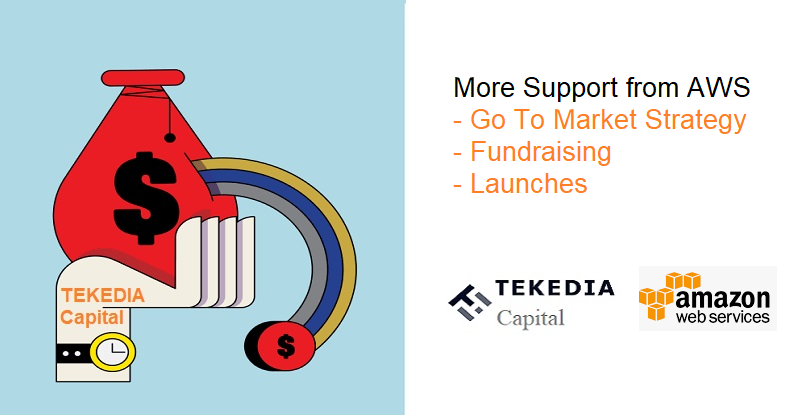
So, if you are in our community, we will make it possible for you to have a 1:1 meeting with the Amazon business team. In that meeting, you can discuss your near-term plans, explore more technical support, and Amazon will “provide business support including helping you with your Go To Market Strategy, product launches and  fundraising activities”. 

In other words, some of the best in the world will help you fine-tune your growth playbooks and also on fundraising, at no cost. We continue to offer $25,000 Amazon AWS. I want you to consider Tekedia Capital before any other fund as you begin your mission. 

Also, if you come along, your leadership team attends Tekedia Mini-MBA at zero cost.

Send your business pitch deck to us; we’re finalizing the funding list and those yet to get feedback will also receive feedback in coming days. Build with Tekedia Capital and go global.

Tekedia Capital invests in technology-anchored early stage startups and companies. Our opportunity antenna and grassroot connections with innovators enable us to see patterns as they develop.  We invite you to partner with us as we nurture and build category-king companies in Africa and beyond, and in the process advance citizens, communities and nations. At Tekedia Capital, we fund the foundations of the NEXT African economy. 

Quit The Politics, Concentrate On Governance

0

Last time I checked, it was the chapter three of the Ecclesiastes’s book in the Holy Bible that said “There’s time for everything under the Sun.”

It’s needless to reiterate that whatever one intends to do or embark on here on earth, he or she must acknowledge there is a specific time such intended action is meant to be taken.

The above assertion implies that every activity, either proposed or ongoing, is highly and strictly dependent on time. In other words, every thought, action or inaction abides by the supremacy of time.

Just as there’s an apt time for cultivation, propagation as well as harvest of a crop, so do we have time for birth, growth and death of a human being or any creator.

I have come to realize that the reason we often fail in so many projects we embark on is simply because we usually do the right thing at the wrong time; and that is the basis or rudiments of this piece.

Unequivocally, we invariably tend to fail in our various endeavours owing to the fact that we take the aforementioned biblical or divine assertion for granted.

It’s not anymore news that in several facets across the Nigerian federation, various politicians have already commenced politicking against the next interregnum in the country come 2023, thereby making the entire polity seem nauseous and unreasonable when it is meant to be loveable. How do you reconcile this?

Frankly, it’s really pathetic that most Nigerian politicians are still yet to contrast between politics and governance. It’s more baffling when realized that even those who are currently occupying various political positions are part and parcel of the said politicking.

In various states across Nigeria, in several quarters, people including government functionaries have started debating or agitating for who would emerge as the next governor.

It’s even more pitiable to observe that the electorate who are expected to be the main solicitors of governance happen to be the major actors in the said ongoing melodrama.

To say the least, we seriously need to reexamine ourselves, both mentally and otherwise. Undoubtedly, there’s an urgent need for proper diagnosis toward ascertaining our actual plight.

We need to ascertain what prompted the proclivity for such lifestyle; we need to find out if it is an inborn anomaly or self-indulgence, because we can’t continue like this. Honestly, failure to diagnose this lingering societal endemic might cause us as a people monumental self-inflicted injury.

Right now, rather than constituting uncalled political agitations, what’s required in every quarter, be it a state or national issue, is a viable and proactive opposition.

A viable opposition would strongly help to ensure that the ruling party maintains a participatory democracy in all ramifications irrespective of the circumstance. It’s only a participatory democratic setting that can yield a wholesome administration.

On the contrary, instead of working assiduously towards forming a formidable opposition, the politicians are only concerned with how and when to defect to the ruling party with a view to ensuring that the ‘national cake’ does not pass them by.

On a daily basis, what we hear among the political class remains nothing but outright defection. It’s no doubt an ignominy that an average Nigerian politician invariably wants to be a member of the ruling party.

A certain political party cannot rule at all times or forever; leadership is about ‘soldier go, soldier come’. Besides, if everyone rules, who would serve or stand in as the opposition?

We really need to note that without a sound and firm opposition trailing a certain leadership, the administration of the leaders in question would definitely be porous. There are no two ways about it. Indeed, we seriously need to learn more about leadership prospects, challenges and crises.

It’s the opposition and other concerned bodies that are meant to motivate the followers toward ushering in the desired change. Suffice it to say that good governance is a product of adequate cum reliable opposition and genuine followership.

The followers will continue to be docile or marred by apathy unless they are thoroughly informed, educated as well as duly activated; and such role is the function of the opposition, analysts, civil society, religious groups and what have you.

Due to lack of active participation by the citizenry, presently you would notice that implementation of good governance is usually a mirage. The citizens need to fully comprehend that the leaders are answerable to them; they must note that leadership and followership are inevitably interwoven.

We can’t sit on the fence and expect miracles or wonders to take place. The leaders are human, so there’s need for reminder, criticism, and so on, when necessary. Thus, we must be ready and willing to call them to order whenever they err or go astray.

The church or mosque, or as the case may be, isn’t supposed to participate in politics, but governance. It’s obvious that the former begets the latter; but we need to comprehend that both factors, which are conspicuously two needed societal recipes, are just like two parallel lines that have no meeting point.

Politics ends at the polls, whilst governance begins at the polls; hence, where politics ends, governance takes over. But it’s apparent that in contemporary Nigerian society, we tend to mix both tools, thus not unlike an aberration.

Nigerians must, therefore, understand that this is still time for governance, and not politics as it’s being observed in most quarters. Thus, everyone ought to live up to the expectations.

Residents In South-East Nigeria, Others Desert Homes Over Rise In Ritual Killings

1

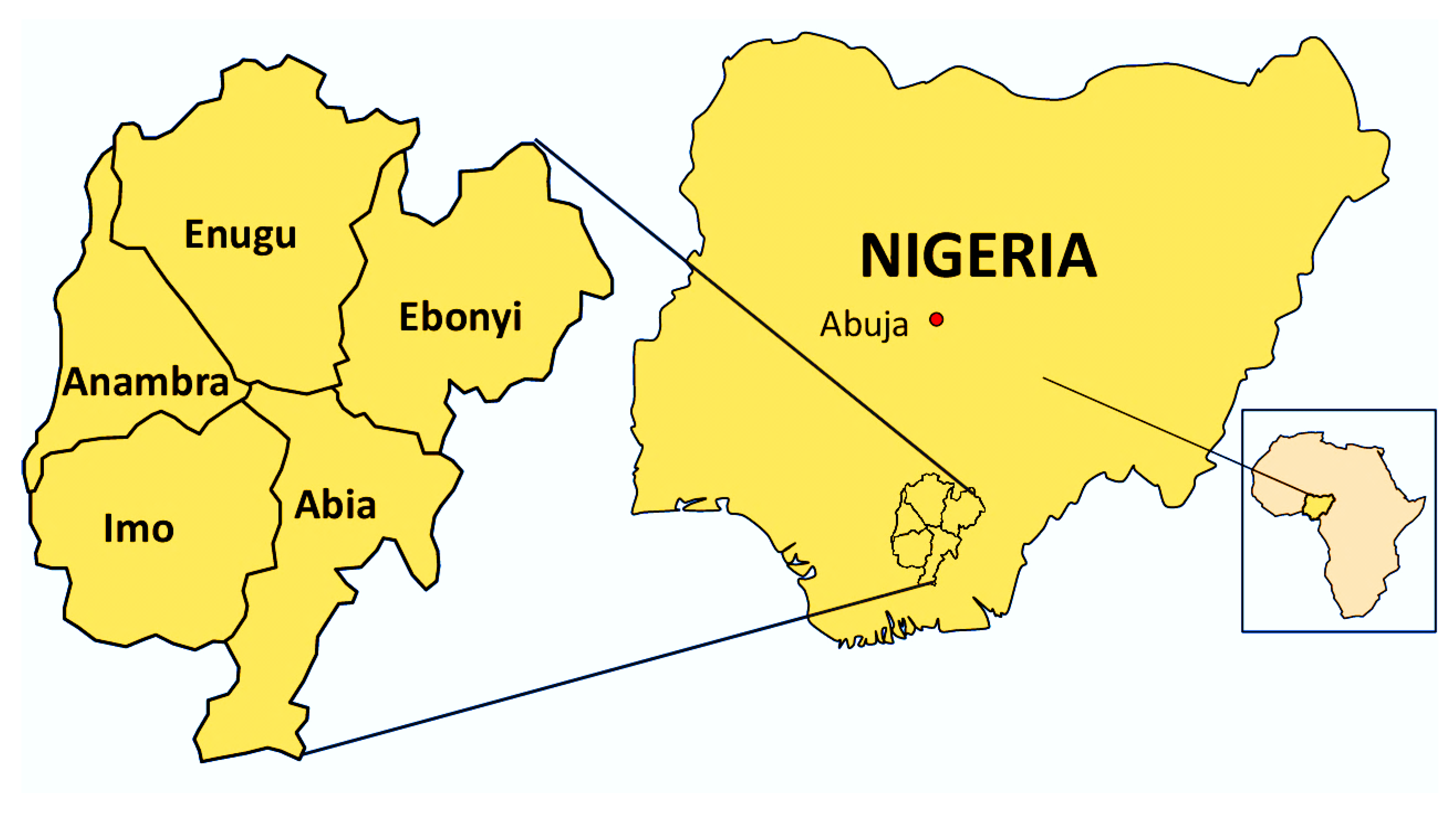
Recently, there have been reports of some residents of Isiala-Ngwa, Ihiala In Abia, and Anambra states fleeing their homes over the rising cases of ritual killings in these places. Information gathered from fleeing residents stated that people were being hacked to death and their bodies mutilated by unknown persons who go away with vital organs. One of the residents disclosed that there has been constant mysterious disappearance of persons with their mutilated bodies later found.

According to the resident, he stated that a total number of four persons have been killed in this manner in recent times with dismembered bodies later found. As a result of this dastardly act on the rise, out of fear, some residents have run for dear lives seeking safety out of the town to areas they consider safe. Recall recently that the house of reps declared an emergency over ritual killings in Nigeria. They urged the inspector general of police to bring to book and persecute all those involved in the act.

I want to believe that they have swung into immediate action to put a halt to these incessant killings. This is not a period to dilly-dally on this matter. The rising ritual cases have raised eyebrows and it should be treated with urgency. Truth be told, if this issue is still being handled with levity, it will suddenly degenerate into chaos. Ritualists now carry out their dastardly acts with full confidence void of fear. It has gotten to the extent where people, especially people in the South East no longer sleep with their two eyes closed.

According to reports, more residents in the South East are contemplating moving out of the area as a result of the situation. Lately, I have been writing continuously on the issue of ritual killings in Nigeria and the need for urgent solutions to stop it. The ritual killings is beginning to spread like wildfire. It is disheartening to know that residents in the Southeast are already fleeing their homes. Has it gotten to the point where residents now leave their homes seeking solace elsewhere for the fear of being killed by rituals? What happened to security personnel? This calls for an immediate manhunt for these ritualists. These ritual killers usually target ladies as their prime target, but currently, it has gotten to the stage where no one is safe irrespective of gender.

A look into most of these killings occurring in the country, it is disheartening to find out that most of those involved are mostly youths who are Internet fraudsters, popularly known as “Yahoo Boys”. Lately, they do not only defraud their victims, they now couple it with ritual practices which they believe will help them get more victims. I have said it countless times that although to curb this issue all hands must be on deck, but then, the government actively has a role to play. Most of these youths are idle due to unemployment. Once the government is intentional about creating jobs for the youths across the country, which will definitely keep them engaged, the issue of ritual practices will be drastically reduced.

It is very sad how we have gotten to this point where people just kill another human because they want to be rich. These killings have been thriving because the laws are weak and punishment is almost non-existent for serious crimes especially when the offender has money to bribe. But when those caught in the act are severely dealt with, it will serve as a deterrent to the rest.