DD
MM
YYYY

PAGES

DD
MM
YYYY

spot_img

PAGES

Home Blog Page 5312

Why the Growth and Proliferation of Fintechs May Not be a Lethal threat to Traditional Banks

0

This article likely veers away from the normal zeitgeist and common thinking of the moment; that fintechs are going to disrupt banks, that banks may not even exist in the next couple of years from now, and that fintechs may even begin to acquire banks.

While it is clear that fintechs are definitely disrupting our conventional payment and finance ecosystem and giving the banks a run for their money, understanding the value proposition of banks, what really matters to them and what makes them tick is key to understanding the role banks play in our emerging ecosystem.

The reports of my death have been greatly exaggerated – Mark Twain

Retail Banking

Let’s start by understanding who and what banks are really in the business of serving. The growth of digital banks has largely created some kind of seemingly assumed exodus of customers from everyday banks to digital banks (neobanks). While the value proposition and strategy of most digital banks is clear, it is important to note that traditional banks are not weak players that should be underestimated.

For starters, only DMBs can issue BVNs, therefore digital banks cannot necessarily go for the unbanked and will likely target those with some kind of bank account or the other. In other words, most digital banks are largely relying on a displacement strategy.

Digital Banks like Kuda Bank, Sparkle, etc hold certain promises; some promise to free you from the shackles of conventional banking, while others are focused on a kind of “Business banking for SMEs” proposition.

A key move some digital banks have decided to embrace is the idea of free transfers. Free transfers is a strategy designed to lure in a crop of users who are seemingly tired of paying transfer fees on transactions and would prefer to have that jettisoned. While conventional thinking postulates that a user who is drawn to the idea of free transfers is likely broke and may not be the ideal user a digital bank may be looking for, this may certainly not be the case. Kuda Bank which is one of the key promoters of the free transfers strategy is more than just a “free brand” it has leveraged a compelling brand strategy (coupled with the millions of US dollars it has raised in venture capital) to position itself among other things as some kind of bank for millennials and the “cool kids” bank. There are a good number of people who literally downloaded the Kuda Bank app primarily because of this.

Digital banks also allow users download, signup, and get a bank account without the need to visit a banking hall or make any physical interactions with any person. While, it is likely that the majority of banking in the future will take after this manner, and users definitely appreciate the convenience this brings, customers also desire the ability to walk into a banking hall, hold a teller/customer care rep by the shirt and cause a scene when they receive a strange debit alert on their bank account they can’t understand. How else will the bank know you’re serious without you displaying some degree of madness here and there right? The challenge with doing this with digital banks like Kuda Bank and the likes is that proper anger cannot be dissipated over a phone call or an email, and by the time you drive down from Lekki to Kuda’s office in Yaba, the anger would have likely dissipated.

The core purpose and value of retail banking to banks is access to cheap deposits for loan/credit purposes. Fees from card maintenance/usage, bank transfers, bill payments, and other services feed the bottom line no doubt, but the real business is corporate banking, that’s what the banks are focused on, and that’s where the money really flows.

If you have N200,000 (Two hundred thousand Naira) in your bank account, your bank may not care too much about you. N200 million and your bank has likely assigned a dedicated person to handle your account in case you need to reach someone. Add one or two more zeros to that and you can call your bank manager in the middle of the night because you don’t like the way your pet cat Milo is meowing and he’ll give you a listening ear. You’re a valuable customer (at least from the float perspective), and the bank doesn’t want to lose you.

The majority of other services (Insurance, credit, Investments, proper savings) fintechs offer bank customers are largely offerings banks could have offered their retail users to bolster ARPU (Average Revenue Per User) but decided not to because they felt it may not have been profitable to do so.

Banks and Innovation

One of the major reasons banks tend to be slower in adopting innovative offerings isn’t because they aren’t smart, it’s primarily because of the inherent culture in banking. Banks (DMBs and the likes) are heavily regulated entities (one of the reasons it would be somewhat foolhardy for a startup to think of acquiring one) and are therefore forced to adopt the “ask for permission” route to innovation as against the ‘”beg for forgiveness” route which the majority of startups choose to adopt.

While banks may not always appear in the media for their innovative solutions, they do have the ability to innovate. Those that can’t usually end up acquiring smaller startups that can give them the much-needed technical talent they may require to execute certain strategies.

The truth remains that banking in Nigeria is really some kind of copy and paste game, one bank starts it, the others follow, and it becomes the industry norm. Fidelity Bank and GTBank were the first to launch USSD channels in 2014, followed by FirstBank, then Stanbic IBTC, it has now become the industry standard today. Diamond bank first allowed users to deposit money in one bank branch, and withdraw it in another before the majority of banks followed suit, and the first bank to launch an Internet banking application was First Atlantic Bank (which got merged twice and is now a part of FCMB).

Banks will not disrupt themselves, and neither will fintechs. While savings apps (PiggyVest, CowryWise, etc) are poised to have a negative effect on bank floats as more users adopt their solutions, mental models and the pre-requisite confidence (not trust) users have in institutional banks may see less user attrition and a good number of people sticking with these more predictable ways of holding money as against fintechs for years.

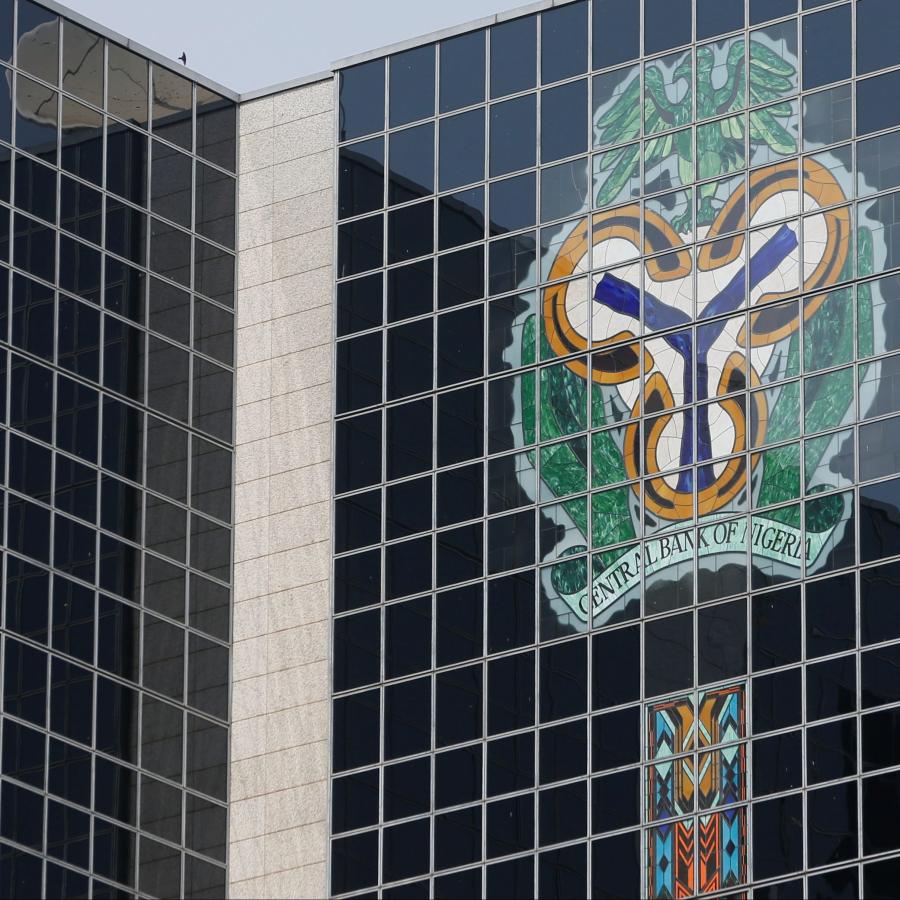
The truth is the only entity that can really disrupt the banks is the CBN. CBN did it in 2005 (Banking industry consolidation) and reduced the number of DMB (Deposit Money Banks) from 89  to 25, and then 23. CBN also did it in 2014 when they introduced the BVN as a means to curb money laundering and to promote transparency in the banking industry, the CBN is also largely responsible for banks morphing into holding companies to offer non-banking services and will continue to have an overarching effect on the banks till kingdom come. CBN has a protracted interest in seeing the banking system work, they’re not going to fold their hands and let upstarts destroy their crown jewels. If your claim as a fintech is the total and complete disruption of the banking system, be rest assured that the Central Bank (who also regulates you) is paying close attention to you. Be guided.

Subjective Valuations

The next key thing people have identified as a way fintechs disrupt banks is valuations. In 2021 alone, more than US$4.7 billion was raised by startups in the African space building for all kinds of problems. Fintech represented around 62% of that number. In Nigeria alone, the total disclosed funding for fintech startups in 2021 was more than US$400million. While these numbers are definitely impressive and signal the sporadic growth of the ecosystem, it is also clear that valuations are subjective and do not necessarily represent the value of a business.

Kuda Bank raised US$55million in August 2021 to secure a US$500 million valuation. Kuda’s Post-Money valuation of US$500 million makes it the third biggest bank in Nigeria by market capitalization. While on paper Kuda’s valuation is impressive, the idea that Kuda could be worth more in real terms than Sterling Bank and UBA combined sounds a little bit outlandish. NeoBanks tend to be unprofitable for a while, so while Kuda Bank may likely not be profitable, It’s unclear whether it generates up to seven-figure USD in revenues and if it does what its path to profitability (beyond lending) may look like. To be clear, I consider Kuda to be a great product (I am a Kuda user myself and a big advocate too), I however disagree with the idea that Kuda Bank is worth more than FBN Holdings (in real terms).

VC Valuations also do not speak to the true value of businesses. One clear indicator of this is the fact that both Flutterwave* and Interswitch are valued as US$1billion companies. While Flutterwave is a great company that offers payment infrastructure for businesses and has an international remittance solution, Interswitch Group has one of the most dominant transaction switch’s in Nigeria (responsible for switching almost 60 – 70% of all ATM transactions in Nigeria), the most dominant card scheme in Nigeria (Verve) and the second most visited Biller Aggregation Portal in Nigeria (second to Remita.net off course). Valuing these two businesses as the same may not necessarily speak to the true value of these businesses. Pegging the value of a fintech when compared to a bank based on its valuation alone may not necessarily speak to the true value of either entity being compared.

Banks As Infrastructure Providers

I wrote an article sometime last year on why companies fail at forward integration, you can read that here, Banks are largely required to integrate forward (become more consumer-facing) to be able to compete in this new era of fintechs, however, banks still have certain inherent advantages, one of which is their native ownership of millions of users who may (or may not) have more confidence in them than they do in third party solutions. Native ownership of millions of users creates a huge cross-sell opportunity for the banks and is one I expect them to take.

As an infrastructure provider, banks hold the APIs that allow for interoperability and promote financial inclusion and better credit access by allowing users “carry” their financial data from one player to another. The growth of the non-bank (alternative) lending market creates an opportunity for banks to profit off exposing APIs to fintechs building in this space and allowing them to spool their user’s transaction data while the bank gets a fee per API call for doing nothing more than providing APIs. Between the three major players in the OpenAPI space, more than 200million API calls have been made from 2020 to date. That goes to show you how much the banks are making on API calls for just providing APIs and doing nothing.

Banks are also key players and benefactors in the digital payments space. While the majority of banks don’t necessarily own payment gateways, banks are poised to profit off the growth of digital payments based on their static position as issuers, acquirers, and in some cases payment terminal providers in the digital transaction chain.

If you’re aware of how card payments work (web payment), you’re aware that your average card payment costs around 1.5% standard (cost usually carried on by the merchant). The value chain for card payments involves but isn’t limited to:

  • Issuer Bank (The Bank that issued you a card),
  • Payment Gateway/Processor
  • Card Network (VISA, MasterCard, etc.),
  • Transaction Switch
  • NIBSS (for settlement purposes)
  • Acquirer Bank (The bank that holds the funds for settlement at the stipulated time).

Banks are positioned to benefit from being issuer and acquirer banks, whether directly or indirectly, and will continue to generate revenue from card transactions and also charge the card-holder monthly/quarterly maintenance fees (for a card he keeps in his pocket and maintains himself)

Consolidation

The truth is that the fintech industry in Nigeria is gradually getting bloated with multiple companies offering similar solutions. Some reports stipulate an estimated 200 fintech startups in Nigeria alone, the endgame will eventually be market consolidation where bigger players (banks, telcos, institutional companies, other fintechs) thinking of playing or expanding their play in the fintech space begin acquiring players in the hopes of bolstering their positions and market capitalization. This is actually good for the market, acquisitions of this sort reduce market and data silos and also enrich founders and investors from successful acquisitions to build the next big thing (or at least buy new white Bentleys).

While banks are largely risk-averse and have cultures that don’t allow them take on too much risk in the name of innovation, I half expect the banks to begin to integrate forward by morphing certain aspects of their businesses to become more fintech oriented. Who are you more likely to take a loan from? Your bank at a 1.5% interest rate or an alternative lender? Banks naturally have the native advantage in this space if they decide to push it. And for the banks who may not embrace an organic growth strategy, they may just go ahead and acquire some fintech creating the kind of solutions they need to embed in their offerings to better serve their customers.

The truth is that banks are actually more likely to acquire fintechs than the other way around, and that’s a reality most people will need to learn to embrace. The market will eventually begin to consolidate, and nothing is stopping the banks from playing an active role in that consolidation.

Conclusion

While the growth of fintechs may look like a serious threat to the growth of banks in the long run (especially from a retail perspective), the banks are in no way sitting ducks or handicapped. They have a lot in their arsenals to position themselves to recapture and be not just formidable, but profitable players in the fintech ecosystem.

Inspired By The Holy Spirit


*Flutterwave announced its US$250million Series D today (16/02/22) valuing it at US$3billion, 3 times its previous US$1billion valuation. Part of Flutterwave’s Series D will be used to feed its inorganic growth strategy (M&A). We may see the fintech market consolidation we talked about happen earlier than we think.

A Message from a Legend: “bold in self-confidence”

0

I called my PhD advisor the “best man in America” because when I got to his lab, I did not know how to make a common integrated inverter. But by the time I was leaving, I was ready for the highest level. Thanks Ralph Etienne Cummings. The Ovim nation of Nigeria appreciates what you did for their son in this beautiful America at The Johns Hopkins University.

As I celebrate one of the finest professors in the world, I also want to thank gracious heaven for Prof James West, one of the five professors who sat in my PhD defense. Prof West just turned 91 years. He is the world’s finest acoustic engineer and co-inventor of the foil electret microphone which powers 90% of all microphones used today. So, without him, we may not have smartphones at scale. He sent me nice words after a small win, and in that email a line included “bold in self-confidence”.

Young people, I throw that back to all: “bold in self-confidence”. Boldness will advance Africa – and we can do great things. Happy 91 years Prof West. Legends – he is still working!

He is known worldwide as the co-inventor of the foil electret microphone. This is a type of condenser microphone upon which 90 percent of all microphones used today are based (such as telephones, sound and music recording equipment, and hearing aids). West developed the invention with his research partner Gerhard Sessler in 1962 while both were scientists at Bell Laboratories in Murray Hills, NJ.

West holds more than 60 U.S. patents and more than 200 foreign patents using polymer foil electrets in transducers during his 40-year career with Bell Laboratories, where he had worked as an acoustical scientist. He has also authored or contributed to more than 150 technical papers and several books on acoustics, solid-state physics, and materials science.

[…]

His research at Johns Hopkins includes efforts to improve teleconferencing technology by transmitting stereophonic sound over the Internet and new transducers. In addition, James has long been known for being a mentor to students, and for being active in initiating and participating in programs aimed at encouraging more minorities and women to enter the fields of science, technology, mathematics, and engineering (STEM).

The FUTO, ASUU and Pantami Fuss in summary

0
Nigeria's minister of digital economy

The honorable Minister of communications and Digital Economy, Sheik Isa Ali Ibrahim Patami who also doubles as a Muslim Cleric was a awarded the post of professor of cyber security in the Federal University of Technology Owerri  (FUTO) by the school management.

This academic appointment since it was made public  has been a very controversial one as many Nigerians, pressmen, writers, analysts, academicians, commentators etc have been clamoring that Sheik Isa Ali Pantami is not qualified to be appointed to occupy  the position of a professor in any Nigerian University and that the appointment is illegal as it offends the government’s rule that you cannot occupy double position in two federal government parastatals, you will  have to give up one; if the honorable minister wants a job of a lecturer in a federal university, he will have to first resign his current Ministerial job but he is only qualified to be appointed as a senior lecturer and not a professor; the award was a cause of money changing hands and his political influence.

The management of the awarding university in a series of press releases have defended the award of professorship to the honorable Minister, claiming that he  is very much qualified to take up the job as a professor of cyber security in the institution. 

The Academic Staff Union of Universities (ASUU) after executive council meeting held on Monday, the 14th of February, 2022 declared that the promotion of the Minister to the role of professorship is illegal and the the minister has no academic qualifications or certifications to be promoted to such a high cadre of academic position and cannot occupy different positions in two different federal government parastatals.

This position of ASUU was made known by the president of the body, Prof. Emmanuel Osodeke at the press conference on Monday. He is quoted to have said, “You cannot be a minister and a lecturer in a university. It is an encouragement of illegality. Pantami has to quit as a minister and be tried for doing double jobs within the same federal system. He is not qualified to be a professor in any Nigeria’s higher institution of learning. Isa Ali Pantami should never be treated as a professor.”

The body also resolved to place sanctions on the Vice Chancellor and the entire management of Federal University of Technology (FUTO) that awarded the job of a professor to a man that is fully unqualified to occupy such a role and that he was only appointed because of his political influence.

The Vice Chancellor of the University, Prof. Nnenna Oti, in response to the press release of the Academic Staff Union of University (ASUU)  on Monday, says the management has gone to court over the rejection of Sheik Isah Ali Ibrahim Pantami’s promotion to the rank as a professor of Cyber Security by the institution and that ASUU has no power and right to fault their appointment of any individual to occupy any position in the school. She claimed that the school is an independent body and has the power to appoint, fire or retire any individual in the institution.

Revisiting The Nigeria’s Bailout Fund And Its Intriguing Part

0

Be it an individual or a corporate body, no doubt, at some points in your existence, borrowing becomes a consequential and inevitable approach.

For the umpteenth time, I have categorically made it clear that borrowing becomes necessary if the funds to be assessed would be utilized judiciously; if the funds would be channeled only to the needful.

We must acknowledge that if a certain borrowed fund is utilized judiciously, it would enable the borrower to become financially independent in the nearest future, thereby making him/it to steer clear of borrowing in subsequent time.

The last time I checked, unequivocally, the best way a borrowed fund could be utilized is by investing it, or using it for capital expenditure. This implies that recurrent expenditure shouldn’t in any way warrant borrowing.

One of the basic examples of recurrent expenditure in any society or nation remains payment of salaries or pensions. You can’t borrow in order to pay others or to enable you service some debts; such a step is ridiculous and illogical. Read my lips!

If you borrow in order to settle a certain debt, how do you intend to refund? Obviously, indulging yourself in suchlike practice significantly means you will constantly continue to borrow, come rain come shine.

Aside from the economic implication of borrowing, the social implications are enormous. If you are reckoned to be a borrower, your colleagues or counterparts, as the case may be, would invariably stigmatize you; you might be treated like one who has leprosy. Of course, we are not unaware of the consequences that await someone who suffers from stigma.

Meanwhile, this critique was necessitated by the recent gesture displayed by the Federal Government of Nigeria (FGN) in respect of its apparent soft spot for the various state governments within the shores of the country.

Just a few years back, the President Muhammadu Buhari-led FGN graciously lent more funds to the states, in addition to the ones received in the previous years by the prospective beneficiaries.

According to the said benefactor, the kind move was targeted to salvage the state governments that have been colossally ravaged by the crisis occasioned by the economic turmoil the country was faced with.

It would be recalled that previously, the state governments received a total of #713.7 billion bailout funds from the FGN to enable them pay the backlog of salaries owed their respective workers. It’s noteworthy that the said fund was deducted from the nation’s Excess Crude Account (ECA) otherwise known as National Wealth Fund.

Unfortunately, merely a few months after, the various state governments were still grappling with the same challenges, perhaps owing to the poor monthly federal allocation they were receiving, which was informed by Nigeria’s dwindling oil revenue.

To this end, the FGN decided to release another #90 billion fund, which was believed would immensely assist the states in their bid to be less-dependent on the monthly handout from the federation account.

It’s worthy of note that the fund in question was given in form of a loan, hence fully repayable, although it had a secured tie against future dividends, revenues, or what have you the FG might have owed the states.

At that juncture, any rational being that meant well for Nigeria didn’t hesitate to inquire if these states would continue to receive bailout funds in order to pay their workers and pensioners, because such a step was not unlike robbing Peter to pay Paul.

However, the fascinating side of the FG’s gesture is that, apart from the fact that the loan was given over a period of one year, the states were meant to agree on a good number of conditions before they could assess it.

It might interest you to note that among the total of #90 billion of the second phase of the bailout, #50 billion was shared across the 36 states, coupled with FCT, for the first three months, and then #40 billion for the remaining nine months, which is an average of about #1.4 billion per state for the former and #1.1 billion for the latter. The then Finance Minister, Mrs. Kemi Adeosun disclosed that the idea was to tie states over for a year, so they could rebalance.

Most other uncompromising and laudable conditions meant to be reached by the state governments were, but not limited to, they are to individually: publish their audited annual financial statements within nine months of financial year end, comply with the International Public Sector Accounting Standards (IPSAS), and annually publish state budget alongside its implementation performance report online.

Others were: set realistic and achievable targets to improve independently generated revenue and ratio of capital to recurrent expenditure, implement a centralized Treasury Single Account (TSA), as well as establish a biometric capture of all the state’s civil servants to eliminate payroll fraud.

Additionally, the states were to comply with the existing Fiscal Responsibility Act (FRA) and reporting obligations of the country, to include: no commercial bank loans to be undertaken by them (the states) and routine submission of updated debt profile report to the Debt Management Office (DMO).

Hence, the FGN barred all the commercial banks in the country from giving loans to any state government regardless of the circumstance; the decision was taken in accordance to the Fiscal Sustainability Plan (FSP) of the former.

Undoubtedly, if the above guidelines were to be strictly upheld by the government via the effort of the Ministry of Finance, Nigeria would have been a better place. Suffice it to say that the additional bailout funds would have caused more good than harm in the long run contrary to the ongoing case or situation whereby it is observed the funds ended up constituting greater quagmire in the various states.

Ab initio, the plight with the Nigerian government has been the ability to proclaim a sound policy but failing to implement it as requested. Hence, this very measure was also expected to suffer same fate if the lingered political will the country had been known for wasn’t changed by the present administration.

If the above conditions were fiercely safeguarded, it must have deterred most of the states from assessing the bailout funds, thereby persuading them to concentrate on the needful.

In addition to the conditions, the various governors deserved to unequivocally be thoroughly investigated since it’s apparent the previous bailout funds received by them weren’t judiciously utilized. It’s not anymore news that workers and pensioners in most of these states are still owed till date for several months, if not years.

This is where the Economic and Financial Crimes Commission (EFCC) needs to come in toward ascertaining if the funds were truly used for what they were meant for. We can’t continue to live in the past amid an administration reckoned to be anti-graft.

The most appropriate step the states are individually required to take at this point is embarking on a massive Internally Generated Revenue (IGR) drive. In most of the states, the policies guiding the traffic sector that is meant to serve as a major revenue source are so porous for anyone’s liking.

Similarly, many of them are tourism-oriented, but the governments have refused to look inwards toward revamping the sector; rather, they chose to rely solely on the federal allocation, which is currently wearing a pitiable physiognomy.

So, rather than depending on bailout funds from the FG or keep seeking for loans from the banks, they are enjoined to generate the funds by themselves. They possess all it takes to do so, thus must learn to walk the talk.

We must always take into cognizance that it pays to be a creditor instead of the reverse. The truth is that, if the various governors concentrate only on the needful, they would in no distant time see the ongoing economic meltdown as a blessing in disguise.

MoneyHash Raises $3m in Pre-seed Fund to Integrate Payment Systems

0

Egypt and U.S.-based MoneyHash has raised $3 million in pre-seed funds to integrate payment systems. The company, which describes itself as the Middle East and Africa’s “first super-API for payment orchestration and revenue operations,” just emerged from beta to clinch the deal.

MoneyHash was founded in 2020 by Nader Abdelrazik, Mustafa Eid and Anisha Sekar to take on the gap created by unintegrated payment systems in industries, especially e-commerce.

The startup had previously in June, raised an undisclosed six-figure backed by investors such as Kepple Africa Ventures, LoftyInc Capital and lead COTU Ventures. The Middle Eastern early-stage fund also led this extension, with participation from previous backers in the initial pre-seed round and others like VentureSouq, VentureFriends, The Continent Venture Partners and First Check Africa. Angel investors include NerdWallet’s Tim Chen, Jake Gibson and Belvo’s Oriol Tintore.

MoneyHash said in a statement that it will use the funds to turbocharge its growth in the Middle East and Africa. The company’s plan includes expanding its team, currently 15 across the U.S., Egypt, the UAE, Nigeria and some parts of Europe, and hiring mid-level and senior software engineers.

The goal is to leverage its relationship with companies in providing a simpler payment method that will compress the multiple payment channels into one. Per TechCrunch, MoneyHash sits on top of payment providers and offers its infrastructure as an extension of companies’ product backend. This extension becomes their connection to the entire payment ecosystem in the markets they operate.

“The idea of the super-API is that you consolidate the different payment accounts and build all of these features on top of it. MoneyHash becomes this one-stop-shop product, or payments stack that you put in your product and manage all of these different integrations and checkout experience in each of the African and Middle Eastern countries and have all your information on one dashboard,” CEO Abdelrazik said on a call with TechCrunch.

While MoneyHash was founded in late 2020, the startup started operation in early 2021, in Egypt, when it began allowing 17 companies to use its sandbox environment to connect with its API and access payments gateways such as Fawry, Paymob and PayTabs.

Abdelrazik told TechCrunch that MoneyHash will plug into different payment gateways and processors active in the Middle East and North Africa post-beta. Some include Checkout, Stripe, Ayden, Amazon Pay, Tap and ValU. He said integration with payment providers in sub-Saharan Africa (mainly serving Nigeria, Kenya and South Africa) like Yoco, Paystack and Flutterwave will follow suit.

MoneyHash clients cut across different industries: e-commerce, travel and tourism, and remittances, among others. They can integrate payment providers with a few clicks, embed a unified checkout system, and access micro-services such as transaction routing, subscription management and invoicing on the platform.

Already the startup has five paying customers from the 17 companies testing its sandbox for free. MoneyHash generates revenue by charging companies between $150 and $1,000 per month, depending on the number of payment providers they connect to. The platform also takes transaction fees that start at 10 cents and go down as payments volume increases.

Abdelrazik said MoneyHash plans to become the AWS of payments in the Middle East and Africa. “What AWS did to the cloud, where it made it easy for companies to build as many services on top of the infrastructure, we think the payment industry, especially in emerging markets, is very fragmented and needs an AWS for money, which MoneyHash is doing when you connect with it and build as much as you need without needing to change anything,” he said.