DD
MM
YYYY

PAGES

DD
MM
YYYY

spot_img

PAGES

Home Blog Page 5316

The Benefits of Investing in Strategic Market Research for Businesses

0

After a succession of brainstorming sessions and scribbling, businesses emerge. It doesn’t end there, though. A data-driven decision-making structure is required for a business that will not fail in a short period of time. Only via strategic market research can this be accomplished. In today’s competitive corporate world, this is referred to as SMR. There’s no denying that having access to trustworthy, validated data is essential for effective decision-making at the strategic and tactical levels of any company model. The business-to-consumer approach is one of the most data-intensive. Adopters of the approach must often seek out information on current or potential customers.

This leads to the present trend of organizing structured data gathering, interpretation, and transformation into strategic insights for suitable decision making in line with the company’s already identified concerns at the corporate and operational levels. SMR functions similarly to a Google Map, indicating where transporters and passengers should or should not pass during peak traffic hours. It accomplishes much more in the commercial sector. SMR assists small and large enterprises in reaching the congestion point and examining demographic statistics, purchasing power, and behavioural patterns of important objects. There must be a clear goal for acquiring the data while doing so.

Identification of product or service types that potential customers would like to buy and that are profitable to the company that started it, determination of customer satisfaction level, and providing top managers with in-depth information about crucial factors that have an impact on the target market and current business climate are three major advantages of using SMR as a tool.

Despite the advantages, there are several misconceptions regarding how to use it. Many business owners assume that SMR is only useful when their companies are doing well, although it is necessary at all stages of development. Managers at the strategic level, on the other hand, frequently assume that providing entire knowledge about a situation is irrelevant. On the contrary, a lack of information has the potential to point concerned employees in the right direction.

What is the cost of performing a good one that will assist in making informed judgments if SMR has been well understood? Experts have suggested a variety of budget types. The most commonly used budgets are annual and project-based budgets. When you pick the annual option, you must set aside a specific amount of your money to undertake SMR when the situation occurs. The proportion fluctuates depending on the size of the organization and the industry sector.

The majority of businesses chose a percentage of their revenue between.02 and 1%. It’s also been suggested that allocating 50% or more of sales revenue to research isn’t a bad notion as long as the study is tailored to the company’s current demands without sacrificing the possibility of future ones. The project-based method, on the other hand, is a one-time action that determines how much money to spend on materials and people.


At Long Last, Senegal Wins African Cup of Nations

0

On Sunday, February 6, Senegal joined the list of other 15 African Cup of Nations (AfCON) winners, after defeating Egypt 4-2 on penalties in Olembe Stadium, Yaoundé Cameroon.

It was a moment the West African country has waited so long for, having got so close many times. It was Liverpool player, Sadio Mane, who kicked the winning ball from the penalty spot past Egyptian goalkeeper Mohamed Abou Gabal (Gabaski.)

Senegalese coach Aliou Cisse finally got a poetic justice. The former Teranga Lions player was the captain of the 2002 squad who lost to Cameroon in the final following a penalty shootout. Cisse missed his penalty. The loss was compounded in 2019 when Senegal lost to Algeria in the final.

Having lost in 2017 to Cameroun, Egypt was hoping to clinch its eighth title on Sunday, but was outplayed by Senegal who had 57% ball possession.

Mane, who was up against his Liverpool teammate, Mohammed Salah, missed a penalty that would have given Senegal the lead during regular time. It was a burden of guilt that could have hunted him for long had the penalty shootout ended in favor of Egypt.

“I won the Champions League and other trophies. But this is a special one for me. This is the most important,” Mane said.

Egypt was first to miss a penalty kick when Abdelmonem hit the post, giving Senegal a 2-1 lead. But the North Africans leveled up when Gabaski saved Bouna Saar’s kick. The game was left to be decided by Senegal when goalkeeper Edouard Mendy saved Egypt’s fourth kick by Lasheen. Salah didn’t get to take his kick after Mane sealed it for Senegal.

Senegal has been recently consistent in AfCON tournaments more than any other team, keeping the hope of fans high that someday the Teranga Lions will bring the trophy home. Cisse, who has been managing the team since 2015 was applauded for building a resilient national side, making a case for other African countries to give indigenous coaches a chance.

Though it took about eight years filled with waits and disappointed hopes, the result of Senegal’s last two-hour match has inspired overwhelming jubilation that has eclipsed the long wait and disappointments. The Senegalese president, Macky Sall, has declared Monday a public holiday, highlighting a vital lesson in resilience: once you win, it would no longer matter how many times you failed.

Tekedia Welcomes 41 Countries to Tekedia Mini-MBA, Tekedia CollegeBoost

0

Welcome to Tekedia Institute, I am truly honoured to welcome you. This is an academic festival which has shaped the perspectives of many, for good.. We graduated more people than any university in Africa last year. And we’re the most diverse academic community in Africa.

As you go through our courseware, you will see the African nativity of entrepreneurial capitalism and business systems. We’re a school from Africa and we’re proud of that heritage. We make that evident even as we deliver global viewports, driving that glocal playbook.

I welcome the world to the 7th edition of Tekedia Mini-MBA. Registration continues here

Welcome Tekedia CollegeBoost

Let me also welcome Tekedia CollegeBoost students from universities across Africa. I am yet to get one of those t-shirts though. Thank you all for believing in our mission to make those t-shirts. We welcome all students as you begin your journey at Tekedia Institute. This is Tekedia Institute, a home for schools, companies, students and professionals.

Schools, to get your students into Tekedia Institute, connect with Eyitayo Adeleke or email tekedia@fasmicro.com. He manages our campus programs across Africa. We designed a program for college students to introduce them to business education, taking into consideration that they’re students, and may be from different majors, outside business education. They like it.

We want your school here.

Thanks Tolu Alao for joining us at Tekedia Mini-MBA. And thanks for the kind words.

What to do before you start fundraising

0

You have achieved your milestone, decided how much funds you want to raise and what stage you want to hit next. What else do you need to do? Technically, nothing else. Most first-time founders will simply jump to the chase and start going after the investors, and probably spend long frustrating months getting refusals after refusals. Whatever else you have done, try to add these six things before you start the hunt.

Discuss with other startup founders who have recently raised funds. I have explained the importance of a good network system to fundraising. But your network should consist of other startup founders too with whom you can share experiences. Find out from them what their experience was like, what they learned from it, and what they would do differently now that they know better. You can also get some advice on determining what is the right sum to raise.

Speak to a legal expert. No matter how ready you think you are, a good way to set yourself up for success would be to get guidance from a legal expert (preferably one specialized in startups within your space). You need to know what to do from a legal standpoint. It is also necessary to know if you are required to apply for patents or get some form of Intellectual property (IP) protection before you go pitching to investors. Other startup founders might make a recommendation or two for you, based on the expert they worked with.

Research and pool sufficient data. This is something you would normally do before raising funds. Get the right metrics for presenting your company’s progress and growth potential. Know why you spend every money you spend, and why you need the injection of more funds.

Prepare your pitch. You know that you will need a compelling pitch deck that is both clear and concise. In as little time as possible, you should be able to explain who you are, what problem your company is solving, and why investors should care. If you want, you can refer to the earlier post on what a three-minute pitch should be.

Decide on the right investors and target them: Not all investors are interested in your kind of business, and even if they are, not all will align with your startup goals. To increase your chances for success, research the investors who have experience investing in your industry. Also, narrow it down to investors who have shown an interest in founders with similar backgrounds and missions as you.

Get experts to double-check your valuations. You may find your potential investors regarding you suspiciously if you get your valuation wrong. You need to be sure that you have neither undervalued nor overvalued your business. Another thing your investors will look at is the plan of how you want to spend the money you raise. Ensure to make the right projections for spending, operations, and the rest of them.

I will sue you!

0

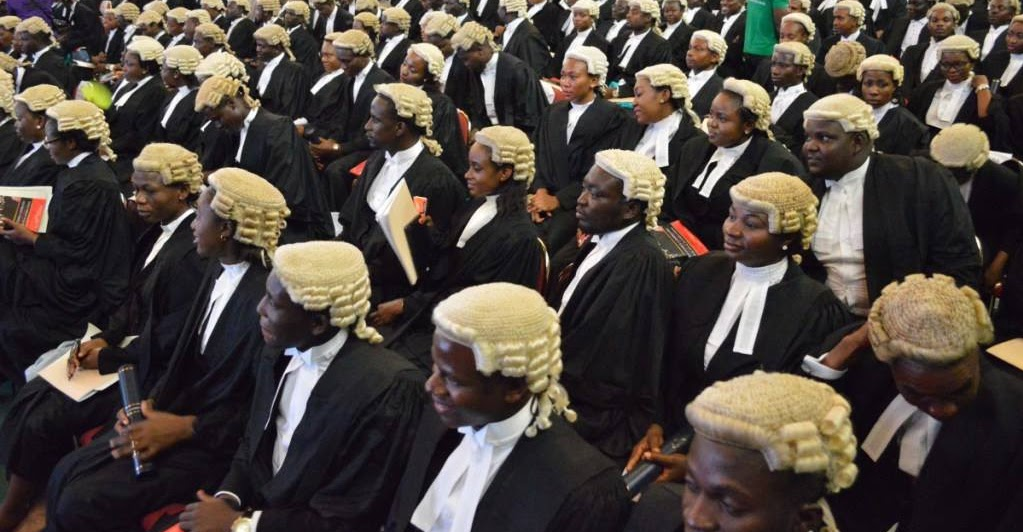
Andy Gilman, a renowned English crisis management consultant said in one of his classes; The secret of crisis management is not good vs bad, it is preventing the bad from getting worse. This is what the art of good lawyering stands for. 

The phrase “I will sue you” has been hackneyed. People think rushing to court or threatening to sue somebody is a status symbol, or shouting at the slightest grievance, “I will report you to my lawyer” will make colleagues or friends dread them. 

The paradox is that lawyers, even courts, always advise individuals to avoid court rooms as much as they can. They should always look for a way to settle disputes, especially civil cases out of court because court cases ruin friendships, it ruins relationships, it ruins families and the process of getting justices from courts in most cases takes a lot of time and it is highly expensive. 

This is the reason for the provision of alternative dispute resolutions (ADR) in most legal systems of the world. It is statutory mandated that before a lawyer approaches the court for a civil matter on behalf of a client he should first advise the client for alternative means of settling the dispute out of court. Lawyers are expected to first do all they can to settle disputes or come into negotiations with both parties, it is only when the negotiations fail that the lawyers can approach the court and file the proceedings. 

People do not know that the job of a lawyer is more of prevention of (legal) crisis on behalf of his client rather than management of crisis. Even some lawyers (especially litigation lawyers) really don’t grasp the concept that the art of lawyering is crisis prevention rather than managing crisis when the crisis has taken place. A good doctor will always advise a patient on what to do so not to fall sick rather than waiting for the patient to fall sick so he can treat him; hence the old saying “prevention is better than cure”. 

This is the reason you need to consult a lawyer before going into any transaction. What the lawyer is trained for is to make sure that the transaction is (legally) watertight in your favor so there will be no loopholes in the transactions that would create legal problems for you in the nearest future.This is the art of prevention of legal crisis for the client rather than managing the crisis when it has occurred.

It is actually insane and stupid for you to engage in a transaction that worth millions or that would worth a lot and you want to do it yourself without engaging the services of a lawyer because you don’t want to pay the lawyer the percentage fee or you want to keep the money you ought to have paid the lawyer for yourself  and you are thinking it’s a smart move. That’s penny wise, pound foolish because when legal issues arises out of that transaction you are going to spend more, much above what you should have paid a lawyer, hence the reason why the lawyer is there to prevent the legal crisis and it make sure it never occur because it is better than managing the crisis for you.