DD
MM
YYYY

PAGES

DD
MM
YYYY

spot_img

PAGES

Home Blog Page 5322

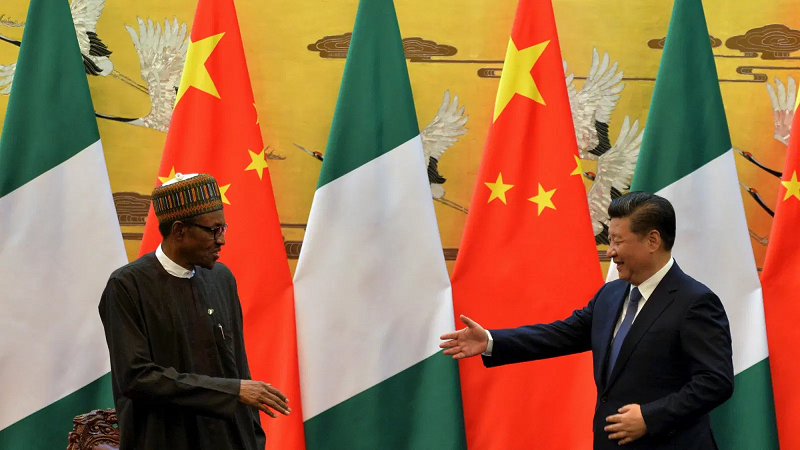
As China Pauses Lending to Nigeria, Risks of Project Abandonment Mount

1

“We are stuck with lots of our projects because we cannot get money. The Chinese are no longer funding. So, we are now pursuing money in Europe.” Nigeria’s minister of transportation, Rotimi Amaechi, as China pauses financing projects in Nigeria.

Let me add this: those who despised China should step forward now, and fast. It is only in Nigeria that people think that capital is free. Someone is giving you money, risking assets and yet you are making it look like you are doing him a favour.

China has seen a lot, and now wants to allow those activists to provide the capital. Sure, this is not to say that I support everything China does on lending. My point remains: China deserves respect for taking risks in nations where Americans and Europeans dare not venture into.

As they pause loans across Africa, expect a monumental abandonment of projects, from railway systems to airports to presidential villas. I have called it the Great Project Abandonment and it would be massive. 

Yet, the most unfortunate part: you have to keep servicing the current loans because the loans are always in phases. Not funding phase 3 does not mean that phase 2 which was funded would not be serviced. Unfortunately, without that phase 3, those shiny railway tracks may not have coaches to make use of them, as the coaches are expected to be funded in phase 3.

China wants to sleep and I hope the Western press which has waged wars on them in Africa can convince their countries to help in the continent. As the minister says, Nigeria needs money but China is not interested. The road to Europe….hope you can speak good English or French to be admitted?

China gives cash, Europe gives line of credit.

Nigeria’s railroad infrastructure projects and its push for trains as alternative means of transportation have suffered a major setback.

For months now, there has been delay in the execution of the railway construction projects as well as other infrastructural projects being financed by China.

The Minister of Transportation, Rotimi Amaechi, said the delay has been orchestrated by China’s inability to finance the projects. Amaechi said the federal government is now looking towards Europe as an alternate source of funds. He said if the loans are secured from Europe, the projects will be completed in no time.

“We are stuck with lots of our projects because we cannot get money. The Chinese are no longer funding. So, we are now pursuing money in Europe.

“And when I look at the money they are borrowing in other countries and compare it with the one we have borrowed, the kind of comments by Nigerians will put you off.”

Nigeria Looks to Europe for Loans to Finance Its Railway Projects As China Backs Out

1

Nigeria’s railroad infrastructure projects and its push for trains as alternative means of transportation have suffered a major setback.

For months now, there has been delay in the execution of the railway construction projects as well as other infrastructural projects being financed by China.

The Minister of Transportation, Rotimi Amaechi, said the delay has been orchestrated by China’s inability to finance the projects. Amaechi said the federal government is now looking towards Europe as an alternate source of funds. He said if the loans are secured from Europe, the projects will be completed in no time.

“We are stuck with lots of our projects because we cannot get money. The Chinese are no longer funding. So, we are now pursuing money in Europe.

“And when I look at the money they are borrowing in other countries and compare it with the one we have borrowed, the kind of comments by Nigerians will put you off.”

The news has opened a fresh debate on the profitability of infrastructural projects being financed by China in Nigeria. It is believed that the choice of the railway networks under construction has little economic value.

For instance, the choice of 284km Kano-Maradi railway lines, which span across three northern Nigerian states – including Jigawa and Katsina into Niger Republic, and will gulp $1.959 billion, is regarded as political not economic.

In November, members of the National Assembly Joint Committee on Land and Marine Transport summoned Amaechi, questioning the decision of the federal government to construct standard gauge rail lines from Kano to Maradi, while in the South-east, South-south and North-east, the plan is to construct narrow rail lines. The lawmakers described the choice of the rail line projects as “discriminatory.”

“We are now looking at the difference between ‘Project D’ which is the construction of 284 kilometers Nigeria-Maradi railway standard world class line against ‘Project C’ where you talked about the total rehabilitation and reconstruction of Port Harcourt to Maiduguri eastern rail network defined as narrow gauge.

“For a segment of this country that is known for trade and commerce, they need railway as they need air. If the ministry feels that doing a 287 kilometers of railway track from Kano to Maradi will be funded with borrowed money…to be paid by our children…

“I also know the economy of Niger Republic and I believe the economy of the Southeast is bigger than that of Maradi. I am not even talking of South-South.

“So what policy guide, what study of federal character integration would make the Ministry of Transportation to put 284 kilometres railway from the end of the north to Maradi and then constructing a Narrow Gauge in the South East and South South…?” Chairman of the House Committee on Transportation, Pat Asadu, remarked.

He also questioned the motive of the railway project that will benefit the people of Niger Republic more than Nigerians who have the economic needs.

“So if we approve this budget for you, you will go and do Kano Maradi standard rail line and do a narrow gauge rehabilitation for the South-east. My heart bleeds. Instead of doing the right thing, you are now giving us this one as what will enhance the economy of Niger and Nigeria, while the economy of Nigerians especially those who have the containers and who are always on the road are given a narrow gauge rehabilitation,” Asadu lamented.

With the questions underlining the economic viability of the railway projects, China’s decision to back out of financing them is believed to have been informed by the knowledge that the projects will not yield adequate profit.

This is supported by China’s decision to slash its lending spree in Africa. In his video speech to the triennial Discussion board of China-Africa Cooperation held in Senegal in November, Chinese President Xi Jinping resounded the warning that his country will reduce the headline amount of cash it provides to Africa by a 3rd to $40 billion.

According to Chatham Home, a UK think-tank, the decision is China’s strategy to move away from the high volume, high-risk paradigm into one where deals are struck on their own merit, at a smaller and more manageable scale than before.

In addition to the decision to limit its lending volume in Africa, China is currently grappling with a real estate sector-induced economic crisis that requires prudent spending – thus, no money to spend on low ROI-yielding projects in Africa for now. And that’s a major blow for countries like Nigeria that have ongoing Chinese-backed projects to execute.

The federal government’s decision to turn to Europe for loans to complete the affected projects has been faulted by experts for three major reasons: China offers cheaper loans at 2-3% interest rate per annum, Chinese loans are long term, having 10 to 20 years moratorium, and they can finance larger amounts.

A large section of Nigerians, who have touted Lagos-Abuja and East-West railways, believe that Europe, due to the poor economic value of the projects in question, will not lend a penny to Nigeria.

“Western loans are more commercial in nature. If China is not lending to you, you don’t go to Europe, you fix China’s concerns,” Kalu Ajah said.

Why start a business? Passion or market needs – market needs.

0

Are you one of those who think that when it comes to entrepreneurship, all you have to do is follow your passion? Here’s a shocker for you.

The market does not care about your passion. The customers do not care about your passion either. Competition does not care about your passion. Economic realities do not care about your passion as well.

Unfortunately, many people out there have started and are still planning to start a business because they are passionate about the business idea. This may be the most indicted reason why many businesses fail in their first year of operation. Because they get into the business and discover that the passion which drives them and their business idea is not enough to make sales, neither is it going to stimulate demand for a product which the market did not need in the first place.

There are a few times when you will be lucky enough to have your product or solution coincide with a market need, but there should be sufficient market research and data to back you before you venture into the business. You go into business to solve a problem in the market or to meet a market need, not necessarily to express and explore your passion. If you want the market to pay you for exploring your passion, then you have to be solving a market problem in the process, else no one would pay you for it.

I felt the need to touch on this topic because it is quite a touchy topic and one that many have misunderstood. It is okay to be passionate about something but you need to find a market need that your passion solves before you can make a business out of it. If you don’t, you will end up journeying on a frustrating route and wondering why everyone else is not as excited about your idea as you are.

Passion will fuel the efforts and enthusiasm you use to drive your business idea, but passion is not infectious enough to get people to pay for something they do not have a need for. Businesses live and thrive by meeting needs and solving problems that people need badly enough to pay for.

Towards a More Perfect Igba-Boi And Establishing Igba-Boi Commission

1

Very painful on the businessman side – and a great commendation from the young men who demanded action when a businessman settled his boy with $200 after serving him for 9 years. The man’s action is absolutely condemned in all dimensions – and he must be made to settle the boy!

Yet, you do not throw a baby away with dirty water, says our elders. The spirit of apprenticeship remains across communities and can only be strengthened. This individual does not demonstrate the decency, honor and values which have enshrined this heritage in Africa and especially in the Igbo Nation.

As Tekedia Institute unveils a new course on “Igba-Boi: The Igbo Apprenticeship System”, on Monday, we are pushing reforms and templates to help the boys and the masters. We call for establishing an Igba-Boi Commission to serve as a custodian of records, references and enforcements under Ohanaeze with academic coordination from  Abia State University, to ensure that the young people are protected.

This Commission does not need to get the government wholly involved before it becomes so formalized that the masters may see it as a pure business play, diminishing the incentives and spirit behind the whole construct. But we need to have a certain framework that will be catalytic to rekindle that spirit of “onye aghala nwanne ya” [do not leave your brethren behind].

Tekedia Institute hopes to use our course to inform and educate towards a more perfect Igba-Boi by co-learning with our communities. Udo diri unu [Peace to all].


Urgency of Reform As Man Settles His Apprentice With 100k ($200) After 9 Years

Urgency of Reform As Man Settles His Apprentice With 100k ($200) After 9 Years

0

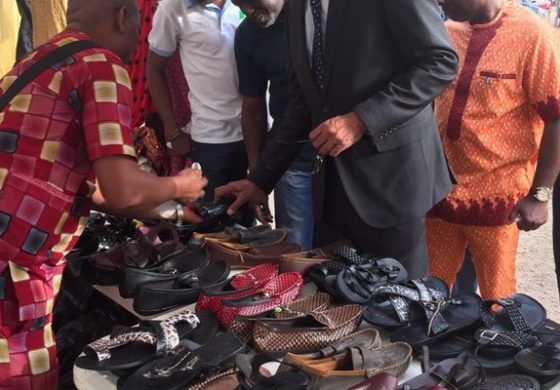
Just recently, there was a massive outrage on the street of Onitsha, Anambra state where some traders at the electrical International villa market staged a protest against a businessman who is also a colleague at the market over an amount of money he gave to his apprentice of so many years. The man is alleged to have given his apprentice a hundred thousand naira as appreciation after the apprentice served him for 9 years.

This system is the Igbo apprenticeship system which is very prevalent among the igbo’s which is known as “Igba-boi”. This system is whereby a well-established businessman goes to the village to pick up a young boy he would love to help who is idle. The normal duration for the service is usually 6 years, but lately, some have begun to extend it to 8-9 years. Although the Igbo apprenticeship system has helped in establishing so many young men to become established on their own.

But I will not fail to talk about some of the shortcomings of the Igbo apprenticeship system which is gradually becoming a norm. Lately, Some established Igbo businessmen are gradually becoming manipulative towards their apprentice. There are rising cases of Igbo businessmen refusing to settle their apprentice for a reasonable amount of money for the time of their service, just like the story above-mentioned. Some even go as far as not paying them anything, even to the extent of laying accusations on them in a bid to deny paying them for the years they served.

Although some apprentices are not genuine, during their years of service they steal money from the business, some even go as far as saving the stolen funds in a bank. Most times when their boss gets to find out about their illegal activities, during the time of settlement they begin to disclose that they were aware of those illicit acts carried out but chose to ignore them. Their ” oga” then go ahead to settle them with a small amount of money or no amount at all.

But what this article focuses on is the prevalent manipulation of what some Igbo businessmen are doing to their apprentice. Some go as far as accusing them of something they never did to deny settling them. I know a story of an apprentice that served his boss for 7 years, but when it was time for his settlement, he was accused of stealing from the business which automatically disqualified him for settlement. He was sent empty-handed.

These acts by Igbo businessmen need to be stopped especially when the apprentice is genuine. This is not what the Igbo apprenticeship is known for. I commend the fact that there was a protest against the man who settled his apprentice with 100k condemning the act. There needs to be a check on this evil practice before it ravages the system. Some greedy Igbo businessmen are using this as an avenue to manipulate their apprentice, in the process abusing the system.

Youths who want to pass through the system have become less interested due to the stories they have heard. Looking at the Igbo apprenticeship generally, although it has some shortcomings, it has elevated a lot of individuals and families from poverty. It is these practices that make the Igbo society retain its wealth, beauty, and pride. It has helped the youths not to resort to crime and other vices in society. Youths at young ages are taught how to manage a business which develops them to do better in their business when they are settled. The Igbo apprenticeship system needs to regain its true nature.