DD
MM
YYYY

PAGES

DD
MM
YYYY

spot_img

PAGES

Home Blog Page 5326

Call for justice for the death of Mr. Timothy Oludare

0

Mr Timothy Oludare, a  Master student of Business Administration (MBA) of Obafemi Awolowo University (OAU), in November 2021 traveled from Abuja where he resides leaving his wife and children behind to Ile-Ife,Osun state to write a professional examination in Obafemi Awolowo University (OAU). 

According to the testimony of the wife, Timothy contacted the wife when he got to Ife to confirm his safe arrival. The next day being the day of the exam, the wife called him in the morning to wish him success in the exam but nobody answered the call. The wife kept calling, she called all day but the husband didn’t answer the phone call.

The wife became frantic and contacted the relatives of the husband and told them about how she had tried all day to get in touch with the husband but the husband was not picking up the call. The relatives of Timothy sent some representatives of the family to go to the exams center at the university and confirm with the examiners if they have seen their son.

The examiners checked the examination attendance register and it was confirmed that Mr. Timothy didn’t take the examination and they haven’t seen him. The family members quickly approached the nearest police station in Ife to report that their son was missing. 

During the police investigation, the police found out that Mr. Timothy had transferred the sum of N37,000 into one woman’s bank account and the woman was traced to be a staff of Hilton hotels and resort, Ile-Ife where Mr. Timothy had checked in the previous day. The woman was arrested and during interrogations she confessed that she had met Mr. Timothy the previous day and had allocated room 305 to the man. The woman’s confession led to the arrest of 6 other suspects who also confessed to have invaded the room of Mr. Timothy in the night and have killed him and buried him at a shallow grave at the direction of their boss Chief Rahmon Adedoyin  who happens to be the owner of the hotel Mr. Timothy had checked in. 

All evidence and investigations point to Chief Rahmon Adedoyin as the primary suspect who has also been in numerous police suspect lists as a top ritualist in Ife who kills some of his unfortunate hotel guests for rituals.

We want to believe that the “Nigerian system” will not happen in this case and that those involved in the dead of Mr. Timothy Oludare  meet their Waterloo.

Impact Of The Sit-At-Home Order On South Eastern Nigeria

0

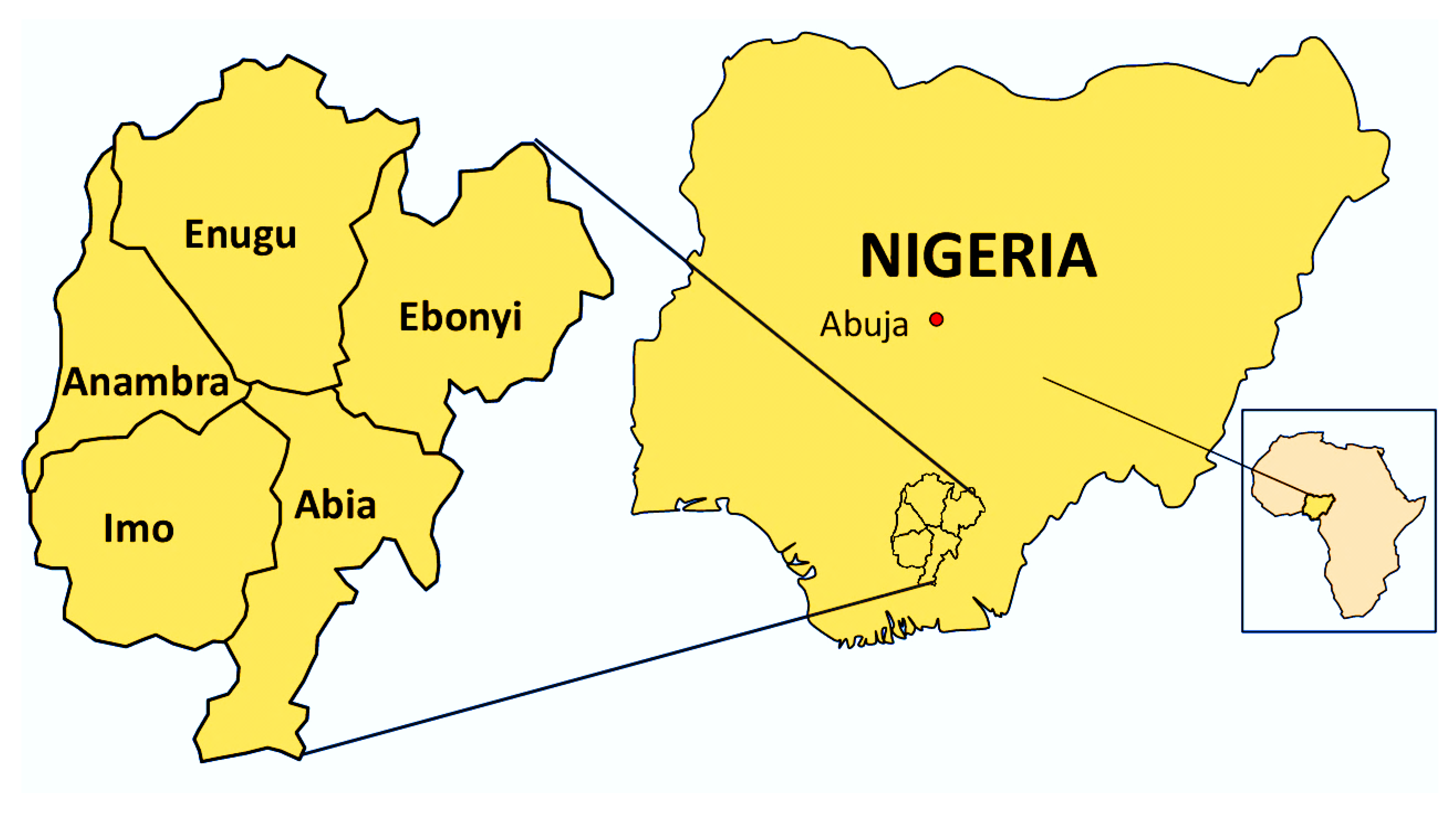
Ever since the trial of Nigerian pro-Biafran political activist Mazi Nnamdi Kanu began, there was an order given to people in southeast Nigeria to observe every Monday as a sit-at-home. This act was done to stand in solidarity with the Biafran leader. Although it was done with positive intentions, there were frequent lamentations from a lot of people residing in the South East especially the Ndigbo. Senator representing Abia-South in the district of Abia, Senator Enyinnaya Abaribe also lent his voice strongly criticizing the effects of the sit-at-home on the Southeastern region.

According to him, he stated that the sit-at-home is killing the economy of the southeast as most businessmen are moving out of the region. He said he was perplexed to discover that the sit-at-home order was never given by the Biafran leader  Mazi Nnamdi Kanu, after having a conversation with him. He claimed that it was time for the sit-at-home mess to stop so that the crumbling economy can be built back. He urged the stakeholders to emulate the people of Bavaria in Germany and Catalonia in Spain for jettisoning everything about ruling the countries but concentrated on making their regions an economic hub of their countries.

In my opinion, declaring Monday a sit-at-home in the South East was a very wrong move. Mondays are usually the start of the week, and it is a known fact that Igbo people being business inclined do not joke with Mondays because it is the first business day of the week. It is believed that what happens on the first day of the business would go a long way to determine the shape of things that week. Usually, most Igbo traders always look forward to doing good business on Mondays because there is usually an influx of traders from other parts of the country to transact businesses in cities such as Onitsha, Aba, Owerri, Umuahia, etc.

Aba is known for bringing and opening containers of imported goods on Mondays. So with the enforcement of the sit-at-home people were forced to go to other regions, like Calabar, Port Harcourt, you, etc, to open containers leaving the southeast. One of the shortcomings the sit-at-home had was that it never discussed with its citizens to agree upon Monday as the set day, but rather it was imposed on them, of which many had issues with it, but had no choice than to obey.  The sit-at-home indeed had a toll on the economy of the southeast and also crippled economic activities thereby incurring so many losses.

Some people depend on daily work to feed their families but were left hopeless with the sit-at-home order, which wasn’t fair on their part. This act might push some into crime or other vices in society. The sit-at-home motive was not a good strategy at all because it caused more harm than good. According to ipob, one day hunger would not kill anybody. This statement reeks of incompetence because a day hunger can force one to carry out dastardly acts.

Ipob ought to have avoided anything that would inflict economic pains on Ndigbo. A few groups compared the frequent and economically strangulating sit-at-home as akin to drinking poison and hoping that your enemy would die. The sit at home had no trigger effect to the release of the Biafran leader, but rather it impoverished and made life difficult for its people. Asking people not to go about their business is a wrong strategy to get Nnamdi Kanu out of detention. If schools, markets, banks, etc, are closed down, it doesn’t in any way affect the presidency. From whichever angle the issue is analyzed, the southeast was on the losing end.

After much deliberation and intervention from some Igbo influential bodies, the sit-at-home decision was later rescinded which ordered the people in southeast to only sit at home when the Biafran leader appears in court. In my own opinion, the Monday sit at home was a miscalculated action. Many losses were incurred during that period. Taking any action that affects your people to me is counterproductive.

CBN Debits Zenith Bank, 12 Others N356.1bn Over Failure to Meet CRR

0

The Central Bank of Nigeria (CBN) has debited Zenith Bank, First City Monument Bank (FCMB) Limited and 11 other banks N356.1 billion for failing to meet its 27.5% Cash Reserve Requirement (CRR) obligation.

CRR is the minimum amount banks and merchant banks are expected to retain with the CBN from customer deposits.

Data made available by the CBN shows that Zenith Bank and Providus were debited N170 billion, N40 billion respectively, while FCMB was debited N39 billion, First Bank of Nigeria Limited N27 billion, Guaranty Trust Bank Plc N20 billion and Citibank N12 billion.

The details showed that Stanbic IBTC bank, Union Bank of Nigeria Plc and Polaris Banks were debited N10 billion each, Keystone Bank was debited N6 billion, Ecobank Nigeria N5 billion, Sterling Bank Plc, N3.6 billion, Fidelity Bank N2 billion and Nova merchant bank N 1.5 billion. Zenith Bank and Providus Bank were the most hit while Fidelity Bank Plc was the least debited bank by the CBN.

The CBN’s decision has not gone down well with stakeholders who lamented that it will affect their gain, especially as the CRR is at 27.5%.

The policy which was introduced in 2019, has seen yearly uptick. In early 2020, the apex bank’s Monetary Policy Committee (MPC) increased CRR by five per cent from 22.5 per cent to 27.5 per cent over its intention to address monetary-induced inflation whilst retaining the benefits of its 65 per cent Loan Deposit Ratio (LDR) policy.

The CBN governor Godwin Emefiele said at the end of January 2020, MPC, that the CRR initiative will help Nigeria to stem the high tide of inflation and keep low interest rates.

“The committee is confident that increasing the CRR at this time is fortuitous as it will help address monetary-induced inflation whilst retaining the benefits from the Bank’s LDR policy, which has been successful in significantly increasing credit to the private sector as well as pushing market interest rates downwards,” he said.

Analysts quoted by ThisDay, believe cash reserves are historically between 5% and 10% of LCY deposits. But the CBN is using the CRR as an instrument to keep inflation in check and to keep the exchange market stable, therefore it is expected to keep rising.

Analysts at Agusto & Co. In a report titled, “Economic outlook for 2022. Our storyline”, explained that: “At the end of 2021, mandatory CRR of banks stood at about 35% of LCY deposits.

“Historically, cash reserves were between five per cent and 10% of LCY deposits. In Ghana and Kenya, there are currently eight per cent and 4.25% of LCY deposits respectively.

“In addition to these mandatory CRR, Nigerian banks hold “special bills”, issued by the CBN, that bear interest at 0.5% per annum. These “special bills” are not easily convertible into cash and are, in substance, interest bearing cash reserves.

“We estimate that cash reserves (including interest bearing cash reserves) were about 50% of LCY deposits at the end of 2021. We do not believe that the CBN will reduce this ratio significantly in 2022, as it continues to see this as a major instrument for maintain “stable” exchange rates.”

Another analyst who weighed in on the matter, the Vice President, Highcap Securities Limited, David Adnori said the introduction of CRR is a drastic monetary policy to control money supply in the banking system.

“If CBN fails to maintain its CRR policy, so much money will flow into the market and further deprecates the naira. Generally, the policy has not favoured banks because the fund is not yielding any interest and of no benefit to the productive sector.

“These are funds banks lend to the real sector to drive business activities, finance working capital of the productive sector and boost GDP but the CBN is holding it down. It is not a good development for the nation’s economy in general.

“However, CBN has its reasons and releasing these funds might result in hyperinflation which can damage the nation’s economy. It is like a double edge situation- if you don’t do it, the economy is damaged and if you do it, the economy also struggles,” he said, adding that the only way CBN can cut CRR is when inflation dropped to a single-digit rate.

However, there is concern that the impact of the policy is not encouraging as the economy continues to wobble. Bank shareholders are worried that in the long term, the CRR will continue to affect their profit while doing a little to minimize inflation.

The National Coordinator Emeritus, Independent Shareholders Association of Nigeria (ISAN), Sunny Nwosu had stated that the 27.5% CRR has not also yielded the desired economic results after the first phase of Covid-19. He explained that the continuous debit of banks under CRR by CBN is putting the banking sector under serious threat and a compelling impotency toward sustainable intervention in the real sector.

“We urge CBN to seriously have a rethink on CRR and among other things to enhance the performance of the financial sector of the economy. The challenge character of Nigerian economy makes it imperative for CBN to pay interest on restricted deposits.

“Banks restricted deposits with CBN are idle funds. We argue that if these funds are with banks, certainly it will enhance their earnings, loans to real sector and returns for shareholders.

“If CBN can pay at least three per cent interest on the mandatory CRR deposits, it will go a long way in driving the real sector and the payment of robust dividends to shareholders,” ISAN said.

Transtura Acquires WazoMoney, Unveils Plan for Paytech, Marketplace for Transport Sector

0

On behalf of Tekedia Capital, I want to congratulate Transtura for the complete  acquisition of Wàzó Money to accelerate the launch of the payment and marketplace in the broad transportation sector. I also welcome Stephen Ilori and his Wazo team to Transtura. To CEO Transtura, Vincent Adeoba, well done. The frictions are huge, building this operating system will be catalytic in the industry.

— Full press release

Transtura Acquires WazoMoney; Set to Launch Payment and Marketplace Solutions for the Mobility Sector. 

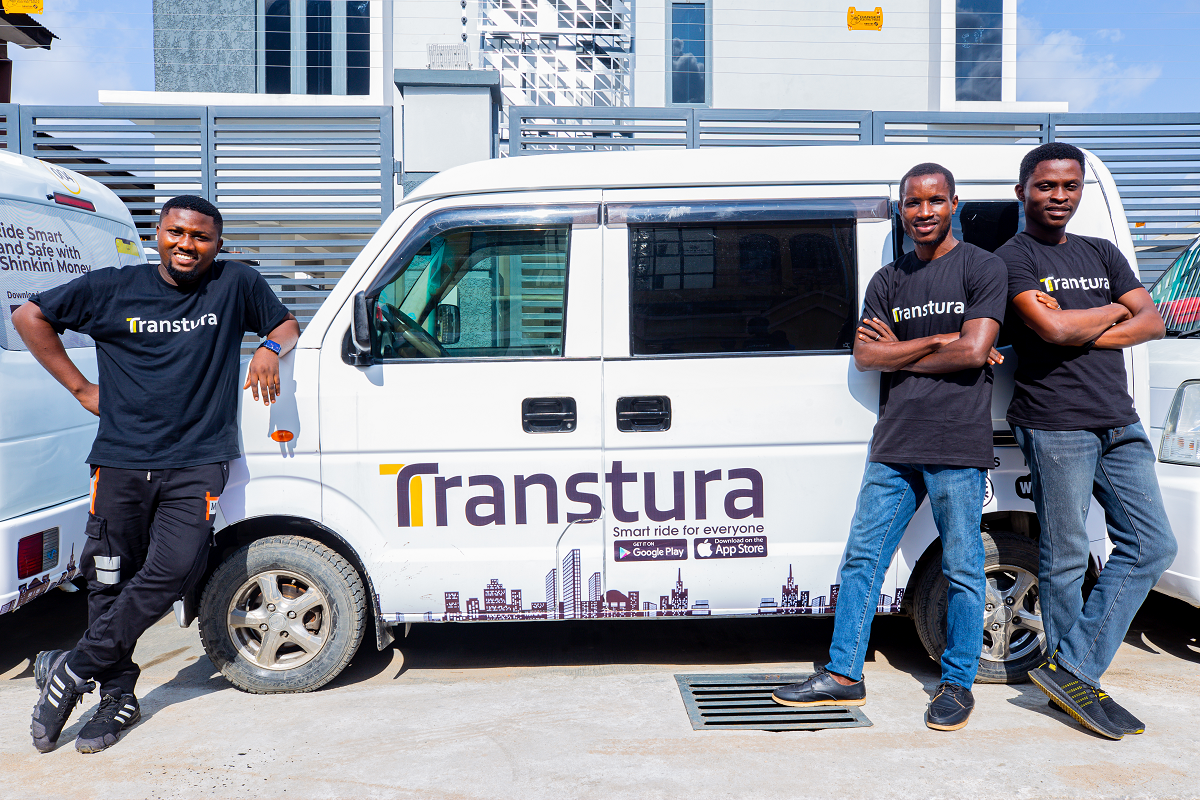
Nigeria ride-hailing and shared mobility startup, Transtura has completed the acquisition of WazoMoney, a fintech startup which provides simplified payment solutions as it sets to launch its payment and marketplace solutions for the mobility sector. The company believe this will help unlock the enormous opportunities in the transportation value chain in Nigeria and other Africa countries.

Transtura commenced full-scale operations in October 2021, launching its shared mobility service in Lagos. The company has continued to record massive traction since launching, with thousands of riders queuing in its three major routes to use its shared ride service.

The startup is now expanding services across its platforms to include payments and a marketplace solution which is a one-stop shop for vehicles and mobility needs.

According to Vincent Adeoba, Transtura CEO, “our vision as a customer-centric company is to become Africa’s everyday mobility super app by providing shared mobility, payment service, and marketplace solutions for the over 1 billion people on the continent. We are on a mission to improve the way people commute and travel around the continent and how payments are made in the transportation value chain.

“We are leveraging on technology and automation to facilitate and improve the way people ride, travel and pay for service while also supporting companies in the mobility sector with spend management solutions.”

In the coming months, Transtura users will be able to leverage their payments solution to pay for transactions on the Transtura marketplace — a one-stop for vehicle registration, documents renewal, auto insurance, vehicle parts and accessories purchase, auto repairs, car care and other related vehicles and mobility needs — pay for intracity rides and interstate travel, automate bills payment, and manage expenses. The technology and solutions are expected to help remove some of the bottlenecks stiffening the growth of the transportation sector.

Transtura CTO, Philips Olajide said in a press release, “Africa is a home of enormous opportunities, with several local and innovative solutions. This is evident in the ways startups on the continent have continued to play important roles in solving problems across different sectors.

“For us at Transtura, we want to continue to innovate local solutions to the challenges facing the transportation sector. We are not afraid to make mistakes and learn from them as we continue to solve important problems in the mobility space.

“We believe only Africans can develop Africa, and we want to play an important role in building the Africa we want by unlocking and creating opportunities for people in the transportation sector.”

Transtura is on an exciting journey to redefine the way people commute, travel, pay, and manage expenses in the transportation space. The payment service and marketplace will help to deepen and improve financial inclusion across the continent.

GTBank’s parent, GTCO, Begins Habari 3.0 With Acquisitions of One Funds, One Pension

1

GTBank’s parent company (GTCo) lost its medal and badly wants to reclaim it. That medal was the most valued publicly traded financial institution in Nigeria. To make that happen, GTCO has to unleash new playbooks in the  market. Call it Habari 3.0.

The first Habari was a massive success; GTBank was the bank for the professionals. It turned most of its customers into fans as using GTBank bank account was seen as a symbol of “being there”. But there were many own-goals which the bank scored against itself.

Habari 2.0 did not really deliver. That unification of commerce was disintermediated by an amalgam of digital startups which went ahead and executed the gameplan which GTBank has been plotting for years. Today, GTBank’s app is not likely the place you will book your next ticket to London or where to find the logistics carrier to move your yam from Kano to Lagos.

But Habari 3.0 is here: “GTCO Plc … today notified the Nigerian Exchange Group (NGX) and the investing public that GTCO Plc has concluded the acquisition of the 100% equity stake in Investment One Pension Managers Limited (IOPM) and Investment One Funds Management Limited (IOFM) (together, the Companies) held by Investment One Financial Services Limited (IOFS or the Seller).” That is the start of the game.

As GTCO moves deeper into the game, it is what happens at the injury time that will decide how this will end. Pension gives you fees but paytech startups give you “taxes”. Interestingly, most people like those taxes on transactions. GTBank will likely acquire a major fintech startup to juice its playbook.

But it is not just GTBank; everyone needs a way to get into those “taxes” because when you receive money with Paystack and Flutterwave, you expect them to deduct some money. But your bank cannot do that since it is expected that they have your money and can lend it and make money via it.

Unfortunately, what if your Flutterwave is your store of value? In other words, that fintech wallet is where you keep money with no plans to send it to the traditional bank? If that redesign stays, GTCO will add a fintech in that holding empire for a chance to win that medal which Zenith Bank Plc holds.

The battle in the next decade will be massive in Nigerian banking: Access Bank provides a real threat even as UBA unifies the continent through its presence in more than 20 countries in Africa. The insurgent First Bank is there even as Zenith Bank holds the zenith spot of the sector. A digital native solution remains a promise.

But not only GTBank but most banks because the disrupters are coming….. Who moves money from his/her fintech wallet to a bank? You just spend from there! That is disintermediation.

——–Press Release

Guaranty Trust Holding Company Plc (GTCO Plc or the Group) (GTCOplc.com), a diversified financial services provider, today notified the Nigerian Exchange Group (NGX) and the investing public that GTCO Plc has concluded the acquisition of the 100% equity stake in Investment One Pension Managers Limited (IOPM) and Investment One Funds Management Limited (IOFM) (together, the Companies) held by Investment One Financial Services Limited (IOFS or the Seller).

IOPM is licensed by the Nigerian Pensions Commission (PenCom) to operate as a Pension Fund Administrator in Nigeria. On the other hand, IOFM is licensed by the Securities and Exchange Commission (SEC) to undertake fund management and investment services on behalf of clients and manage collective investments schemes as a corporate investment adviser. The Seller is regulated by the SEC and offers a wide range of services including Investment Management, Trust Services, Financial Advisory Services, Security Brokerage and Pension Funds Management. Forthwith, the Companies cease to be subsidiaries of the Seller and have become wholly owned subsidiaries of GTCO Plc.

In line with GTCO Plc’s aspirations to operate across the financial services sector value chain in Africa, these acquisitions would expand the product and service offerings of the Group into the Assets and Funds management segments whilst positioning GTCO Plc as a dominant player for all critical financial services.

Commenting on the completion of the Corporate Reorganization, Mr Segun Agbaje, the Group Chief Executive Officer of Guaranty Trust Holding Company Plc, said: “We are very excited to get started on the next phase of our incredible journey to driving Africa’s growth by making end-to-end financial services easily accessible to every African and African Businesses by leveraging Technology and Strategic Partnerships. As a bank, we were always looking to meet every customer need; with our corporate reorganization, we will be able to do more to help our customers thrive in this new world of digital technologies and unprecedented possibilities”.

He further stated that, “Whilst we are evolving as an organization, we remain committed to our founding values which have endeared our brand to millions of people across Africa and beyond, and which continue to drive our financial success. As a Proudly African and Truly International brand, we will continue to live by these values — of excellence, hard work and integrity, even as we create faster, cheaper, safer and products for people and businesses through every stage of life.”

The acquisitions were facilitated by Exotix Advisory Limited and Vetiva Capital Management Limited as Financial Advisers, Aluko & Oyebode as Legal Adviser and Deloitte & Touche (Nigeria) as Financial Due Diligence Adviser.