DD
MM
YYYY

PAGES

DD
MM
YYYY

spot_img

PAGES

Home Blog Page 5331

Nvidia Calls Off Arm’s Acquisition Deal

1

SoftBank and Nvidia have announced their decision to call off efforts to acquire UK-based computing technology company Arm. The deal came to an unfruitful end following lingering scrutiny that has followed the deal since it was conceived.

Arm said it is now exploring a public offering in lieu of the acquisition, pushing for an IPO to happen in the next 12 months.

In December, the Federal Trade Commission (FTC), filed a lawsuit to halt the acquisition following a barrage of petitions from players in the industry. The argument has been that the deal will hurt market competition.

“The proposed vertical deal would give one of the largest chip companies control over the computing technology and designs that rival firms rely on to develop their own competing chips,” the FTC had said in an announcement.

After calling it quits, Arm’s CEO Simon Segars announced that he is resigning his position effective Monday, with Rene Haas, the president of Arm’s IP group taking over his role.

In the third quarter of 2020, SoftBank reached a $40 billion agreement with Nvidia for Arm’s acquisition, but that triggered a wave of protests by Arm’s customers, including Apple, Samsung, Qualcomm, Advanced Micro Devices and Intel. The companies were worried that the deal would limit their access to Arm’s instruction set among others, because the acquisition would give Nvidia control over a critical supplier that gives licenses of essential chip technology to industry players, including China’s Huawei and Amazon.

In a petition early last year, Qualcomm and others told the FTC, the European Commission, the UK’s competition and Markets Authority and China’s State Administration for Market Regulation that the deal will impact their businesses.

Arm has earned the name ‘Switzerland of the industry’ because it is not a competitor in the semiconductor industry, rather it licenses chip designs and related software code to all comers. The concern is that if Nvidia, a player in the chip industry, acquires Arm, it could limit its rivals’ access to these technologies or raise the cost of products.

Haas acknowledged that the deal finally collapsed on Monday, but explained that it has nothing to do with the leadership change which he said started earlier.

“While we are disappointed that the acquisition didn’t go through, we are, at the same time, very excited about our prospects going forward and can’t wait to get this next chapter started,” he said. What exactly that’ll look like, Haas wouldn’t say just yet, but he noted that the company will continue its efforts to push into the CPU and GPU market, as well as continue its efforts in the AI space. “Continuing what we’ve been doing and executing on that is going to be really important, because we’ve demonstrated a recipe on how to grow the business and we definitely want to continue that,” he said.

Nvidia dominated the GPU and AI accelerator market and also owned the IP, the chips that power virtually every smartphone and IoT device. Acquiring Arm would have created a monopolistic market that may heighten Nvidia’s dominion and also increase cost.

For the deal to be approved in the future, Invidia and Arm may need to review it. Nvidia CEO Jensen Huang hinted on a possibility of a deal in the future.

“Arm has a bright future, and we’ll continue to support them as a proud licensee for decades to come. Arm is at the center of the important dynamics in computing. Though we won’t be one company, we will partner closely with Arm. The significant investments that Masa has made have positioned Arm to expand the reach of the Arm CPU beyond client computing to supercomputing, cloud, AI and robotics. I expect Arm to be the most important CPU architecture of the next decade,” he said in a statement.
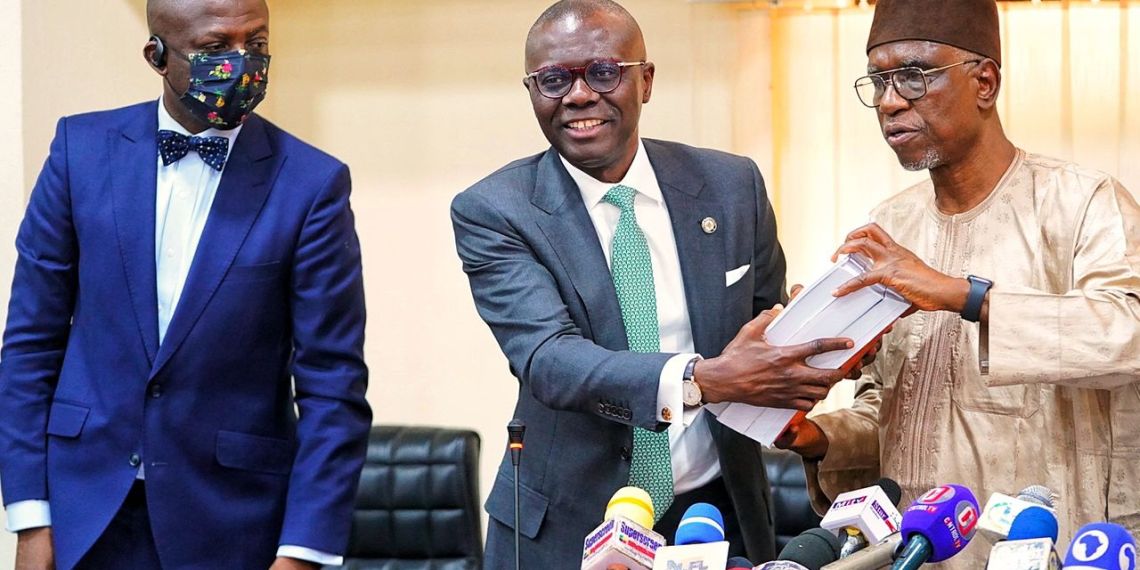
Governor Sanwo-Olu’s Bold Playbook on Phasing Out Polytechnics, Colleges of Education

1

The National Universities Commission (NUC) has informed necessary government agencies that two new universities have been created in Lagos state. The schools are Lagos State University of Science and Technology (LASUST) Ikorodu, and Lagos State University of Education (LASUED) Ijanikin.

LASUST came from Lagos State Polytechnic (LASPOTECH) while  LASUED was a concatenation of Adeniran Ogunsanya College of Education (AOCOED) Ijanikin, and Michael Otedola College of Primary Education (MOCPED) Epe.

Did you notice something? Lagos State has weaned itself off colleges of education and polytechnics,  thereby fixing the national paralysis where polytechnic graduates are treated unfairly. This is a very bold call by Governor Sanwo-Olu and one I support 100%.

If Nigeria cannot fix this HND-BSc  dichotomy, the best option is to phase out polytechnics and colleges of education. Lagos State has drawn the first blood, I expect other states to follow. Just like that, we will be out of HND-awarding polytechnics even though the OND levels remain fair.

Simply, there is no need preparing young people only to frustrate their careers because of papers their nation gave them. If HND cannot equal BSc, close all polytechnics or better, convert them to universities! The Americans have translated Nigeria HND qualifications as full degree equivalents even when the nation which awards them does not offer the same blessing.

So, with the Lagos state government phasing out the whole distraction, it is either the National Assembly fixes it or everyone follows the same path. Yes, more universities, no matter the quality. But it is all good as everyone comes with the same paper and can compete from the same starting point.

I experienced this unfairness as a young banker in Lagos. I was put to manage more than 53 people, merely HND and OND graduates. Some of the people I was to supervise had been in the bank before I wrote JAMB. Yet, I was the boss, even though they were teaching me the job! I earned multiples more than them. And I felt that it was simply not fair. Nigeria has to change that and Governor Sanwo-Olu is leading therein.

Mr Sanwo-Olu said converting LASPOTECH to University of Science and Technology will bring about innovative engineering, science invention and other innovations that are critical to the development of the country and the state.

He said the two additional universities will assist in meeting the demands and needs of teeming youths.

“It is about the future of our citizens. It is about the future of our youths, who truly believe in us to do the right thing. It is about our commitment to taking tertiary education to a level that all of us would be proud of. It is all around ensuring that we give hope and opportunity to our teeming youths that believe in us to do the right thing.

“We are giving a commitment that what we have done in LASU, we will also replicate it in the two universities. We will ensure that the two great children that we are giving birth to today are not left alone. All of the various development infrastructure; human and materials that are required to make the universities one of the best in the country, Lagos State would make those resources available for them.

“We say this with every sense of responsibility, knowing fully-well what we are doing in LASU, the level of infrastructure we are putting into erstwhile polytechnic and colleges of education, we would double up those efforts at ensuring that they can turn into great citadels of higher learning and universities that would be reference points in the years ahead.”

Samuel Ajiboyede is a Professional

1

If there is one thing you can easily pick out from all the #iamaprofessional posts on LinkedIn in the past week, it is that professionalism differs from one industry to another. As an entrepreneur who has started and run businesses across different industries, I can attest that what is professional in one industry, might not be for the next one.

The first business I ever ran was in the tech space, and as we can attest, there are no strict rules to professional looks in tech. What we see these days is that the ‘techie’ is more associated with jeans and T-shirts. As an engineer, Jeans had always been a part of my dressing as it is what we use in site visits. With this background, I did not have any problems with my dressing.

However, when I moved on to the second business (which was in the finance space), I encountered a different orientation. This was an industry that was big on dressing, precisely black suits, white shirts, ties, and the likes. The first presentation I made to clients was a washout, not because I was not adequately prepared, but because the clients took one look at my dressing and tagged me ‘unserious’. I had put in all the time to prepare a power pitch, did all the research for my proposal but ended up walking into a room where I was the only person who failed to put on a suit.

Much as I am not a ‘suit kind of person, I had to make the changes when I saw that it was costing us money. And this is what professionalism comes to. To break into an industry sometimes, you may have to make changes into what they perceive as professional. If you are in the industry where the black suits are a way of life, by all means, get in with the flow. If it is an industry that is cool with the tattoo and nose rings, you would probably look off in your black suits. If it is an industry where jeans and boots are a way of life, get into them.

Professionalism is fair, not just to you, but to others in the space, and their perception. If a certain way of dressing would make people uncomfortable doing business with you, you may have to make some adjustments. That is what professionalism is to me, and I think when I realized that professionalism was going to differ from one industry to another, that was the point I became a professional entrepreneur.

Thanks to LinkedIn, I can simply go find out what the standard is from the best people in any industry. From the contents they post to the way they engage, I can access all of that on LinkedIn. A professional entrepreneur will blend into any sector he gets into, and become a professional.

I am a professional, but not one who is so stuck in one way that I cannot blend into another. I am an engineer by profession, but I can be a professional banker today if I have to go into that space.

Reliance Health raises $40 million to accelerate affordable health delivery in Nigeria

1

They said that software will “eat” the world but I will add that before that can happen, hardware will “cook” the world. The news that Nigeria’s Reliance has raised $40 million could come as a surprise to many, but for those in the health tech domain, it is expected.

Here is the deal: the health sector offers many promises in Africa. But capturing that value cannot just happen by delivering new digital technologies. In other words, digital tech has severe limitations if they do not have platforms to operate in the health sector.

Those platforms are many and the most important among them is health insurance. The fact is this: it is very hard to make money from someone who does not have money. The reason why healthtech is doing well in the advanced economies is because insurance makes it possible to pay the innovators pioneering new domains. Africa, unfortunately, has not been lucky in that space.

So, if you want to win this market with technology, you need to think how you can make it easier for people to afford whatever you bring. Reliance is addressing these two concerns with new technologies and a novel insurance model. Combining both, it reduces costs via technology-anchored productivity, while making it easier for people to afford whatever it is offering via health insurance plans.

Having raised $40 million, I think that it should be one of the most valued health insurance ecosystem players in Nigeria since you will expect the valuation to be north of $100 million and few insurance companies in Nigeria are in that league.

Reliance Health operates business-to-business and business-to-customers models. Reliance HMO is the company’s health insurance plan for both sets of customers where individuals can select monthly, quarterly or yearly health plans ranging from ?3,500 (~$7.00) to ?148,500 (~$297.00). On the other hand, businesses can make subscriptions on behalf of their employees, which Kuti said are slightly cheaper than plans used by retail customers.

Over 200,000 individuals in total from both models use Reliance Health. But the platform has seen the most stickiness with its business customers. The platform serves 600 of them, including Biersdorf Nivea, Jumia and PwC, while maintaining an attributable intention rate of 99%, said Kuti.

This is a pure double play strategy and the company has captured value by powering its digital solutions with affordable health insurance plans: “Double play posits that firms mix market positioning of products to maximize strategic competitiveness: A company could be delivering service in one sector while capturing value in another. And most times, what is helping the firm to thrive goes beyond what many people associate with it.”

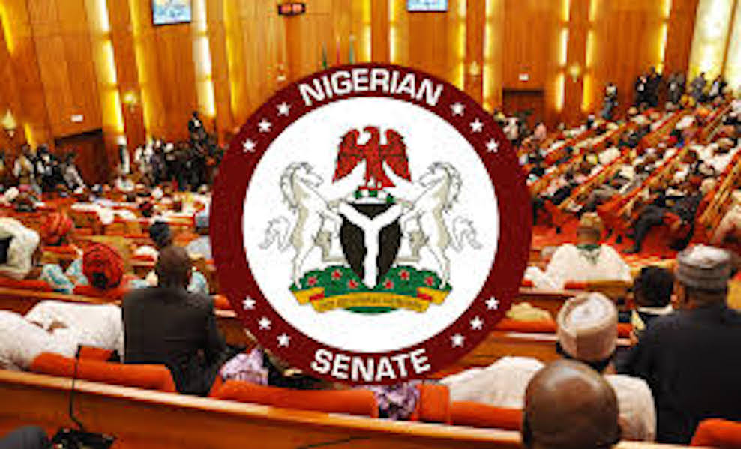
  Nigerian Senate As Retirement Hub For Governors

0

As a growing child, I strongly nurtured the concept that if I eventually joined politics in future, I would like to serve in the Senate whereby I would be involved in making national laws and would be able to be addressed as Senator.

But it seems currently, I’m gradually losing that dream, which I once nurtured with great passion and vigour. The loss of interest might not be unconnected with the ongoing trend across the federation I’ve taken time to observe.

With all due respect, the continued melodrama being displayed by serving governors in Nigeria has ostensibly made the revered Red Chamber of the National Assembly (NASS) to inadvertently lose its honour by the day. My choice of words ought to be considered apt if you make a bit effort to be in my humble shoes.

I wouldn’t be informing us if I say these various serving governors have made the Senate to be seen as their retirement hub. Virtually all wanted to land in the NASS’ upper chamber having been handed over as the Executive Governor of his State. This glaring situation is pathetically fast becoming a norm.

It has amusingly continued unabated that any governor who’s serving his second term and almost completing the tenure wouldn’t hesitate to start dreaming how he would be addressed as a senator the moment he left office.

They continually think in this direction as if it has become statutory for them to vacate the Government House for the Senate upon the expiration of their tenures.

The question remains: how did we get here or who actually initiated this? Aside from ascertaining the brain behind the initiative, there’s equally need to realize the reason the electorate are yet to question – in its entirety – this practice, which has succeeded in truncating the chances of ‘virgin’ Nigerians securing a senatorial seat.

As the purported political tradition lingers, most concerned analysts are engulfed in uncertainties as they ceaselessly argue that there’s no good side of the unending practice.

According to this set of thinkers, the system is unwittingly throwing normalcy to the dust by allowing a few gladiators to hijack what belongs to all. I concur wholly with this school of thought, hence deeply perturbed about the existence of the uncalled act.

As I keenly observe the intrigues and intricacies surrounding the perverted political system, I can’t help but remain sober. The unfriendly ripples emanating from the anomaly is enough reason to worry over the future of our nascent democracy. This, therefore, calls for an alarm from any well-meaning onlooker.

It becomes more worrisome when realized that any of the said politicians who intends to retire to his country home, or outside the Senate, after serving as a governor is strongly ‘scolded’ by his teeming followers for nurturing such interest let alone disclosing it.

This implies the followers are partly, if not mainly, the reason the leaders have apparently chosen to remain the bidders while the former continue to clap with their teeth widely open.

It’s so sad, to assert the least, that no Nigerian politician – on the average – wishes to retire having served ‘successfully’ in a certain position of authority; rather, he would want to taste virtually every other political post as he leaves office. This has abruptly become a recurring decimal among these politicos. One could boldly opine that this is an aberration.

Retirement is a good thing that every right thinking person should yearn for. It is a time when an individual is required to take a resounding rest having meritoriously served in a particular position within a given duration. Such a period in one’s life deserves to be celebrated by all and sundry. But it’s absurd that in this part of the world, people fear to go for such rest.

On the part of the civil servants, particularly the state employees, their fear is understandable. They are invariably afraid to embrace retirement owing to the fact that receiving their pensions, and even gratuities, would be far-fetched. So, in this case, we are moved to sympathize with this class of persons.

But in the case of the politicians who may have acquired ‘all’ while in office, such fear of the unknown is laughable, thus not in any way acceptable. Funnily enough, these past governors would gladly collect pensions while serving as senators. How do we reconcile this?

My prime worry and furry is that the country’s revered Senate is fast becoming a retirement ground for its various politicians. Lawmaking, which is a very critical and sensitive activity, hence supposed to be reserved strictly for only ‘fresh bloods’, is now seen as a duty meant for retirees. This ugly development is mischievously implying that our young ones cannot handle the said portfolio as expected. What a nation!

We cannot continue to mortgage our collective future for a mere pot of porridge yam. It’s conspicuously high time the youth rose up from this slumber that has already unequivocally consumed their fortune. This arrant apathy, or perhaps ignorance, that smacks of cowardice, ought to be wholly terminated headlong.

As I weep on this rostrum, I don’t seek for one that could wipe the tears but someone who would truly and fully comprehend the real essence of the sobriety.