DD
MM
YYYY

PAGES

DD
MM
YYYY

spot_img

PAGES

Home Blog Page 5333

Intensifying Awareness On Cancer Scourge Amidst World Cancer Day

0

February 4 annually, the world commemorates World Cancer Day. This signifies that today, the global community is marking the 2022 edition of the laudable commemoration.

Each year, the World Health Organization (WHO) in collaboration with the International Agency for Research on Cancer (IARC) supports the Union for International Cancer Control (UICC) to promote ways to ease the global burden of cancer.

The annual World Cancer Day was formally adopted in Geneva, Switzerland by the United Nations (UN) General Assembly in the year 1933 through the remarkable efforts of the UICC and other world’s prominent cancer societies, in order to support the goals of the World Cancer Declaration.

The primary aim of the day is to significantly reduce illnesses and deaths caused by cancer via raising awareness on cancer and encouraging its prevention, detection, and treatment.

Cancer, also known as malignant tumor or malignant neoplasm, is a group of diseases involving abnormal cell growth with the tendency of invading or spreading to other parts of the body.

Possible signs and symptoms of cancer include a new lump, prolonged cough, abnormal bleeding, unexplained weight loss, and a change in bowel movements, among others. While these symptoms may indicate the occurrence of cancer, it’s equally worth noting that they may occur due to other medical issues.

Cancer, which can occur in over one hundred different ways in the human body, is mainly caused by either uncalled practices or dietary risks, such as tobacco smoking, incessant intake of alcoholic drinks, obesity, low fruit and vegetable consumptions, lack of physical activities, as well as certain infections like hepatitis B, hepatitis C, Sexually Transmitted Diseases, and human papillomavirus. Some cases of cancer could also be as a result of genetic defects one inherited from his/her parents.

Cancer can be detected by certain signs and symptoms or by screening tests. It is typically further investigated by medical imaging and confirmed by biopsy. Early detection through screening is useful for cervical and colorectal cancer.

Cancer, though a preventable disease, is indeed a human frightening and deadly medical condition that can occur in any essential organ in the body including stomach, lung, breast, kidney, liver, heart, eye, nose, skin, cervical, bone, and brain, just to mention but a few.

Many cancerous growths can be prevented by not indulging in smoking, maintaining a healthy weight, not drinking too much alcohol, eating plenty of vegetables, fruits, and whole grains, being vaccinated against certain infectious diseases, not eating too much red meat, coupled with avoidance of regular exposure to sunlight and urban air pollution.

Cancer is usually treated with chemotherapy, radiation therapy, surgery, or targeted therapy; or sometimes, a combination of all. In a typical cancer treatment, pain and symptom management are an important and basic part of care. Palliative care is particularly recommended for patients suffering from advanced cancer conditions.

The chance of survival solely depends on the type of cancer and the extent of the disease as at the time the treatment commenced. In children under the age of fifteen, at diagnosis, the ‘five-year survival rate’ in the developed world is on the average eighty percent (80%).

In 2012, about 14.1 million new cases of cancer occurred globally, not including skin cancer. Statistics show that the outbreak caused about 8.2 million deaths or 14.6% of all human deaths in the aforementioned year. This implies that, in the near future if adequate care is not taken, cancer cases might be responsible for over twenty per cent (20%) of the death rate in the world.

The most common kinds of cancer in males include lung cancer, prostate cancer, colorectal cancer, and stomach cancer; whilst in females, breast, colorectal, lung, and cervical cancers are mostly common.

Diagnosing a new cancer in pregnant women is difficult, because any symptom is commonly assumed to be a normal discomfort associated with pregnancy. In children, acute lymphoblastic leukemia and brain tumors are mainly common except in Africa where non-Hodgkin lymphoma occurs more often.

The risk of cancer increases significantly in regard to the age of the potential sufferer, and several cancers occur more often in developed countries. Unequivocally, cancer rate increases on a daily basis as more people live to an old age and as lifestyle changes are regularly witnessed in the developing world.

As World Cancer Day is being observed globally, there is an urgent need for every one of us to detest any form of uncalled or unhealthy lifestyle such as tobacco smoking, intake of hard drugs like cocaine, regular consumption of alcoholic drinks and what have you, that could jeopardize our precious lives.

In the same vein, there’s a need for us to be extremely mindful of whatever we eat or drink at all times. We should also not forget that adequate and instant treatment of any illness or infection we notice in our body remains one of the major avenues of embracing a cancer-free society.

Those suffering from the disease ought to continually and strictly adhere to their treatment procedures and should endeavour to consult their physicians when necessary. They should as well ensure that they are placed on a proper diet like regular consumption of vegetables and fruits.

In addition, we are expected to comprehend the fact that early detection of cancer enables adequate eradication of the disease from the body of the sufferer. Thus, there is a need for us, irrespective of age, to go for constant cancer testing or screening.

On this note, I call on all health practitioners and stakeholders to, at all cost, strengthen their crusade targeted to educate the entire public on the dangers and possible causes of cancer, so that we shall all live to celebrate a cancer-free world as it is widely anticipated by the global society.

Don’t forget, prevention is no doubt far better than cure. 
The Booming StartUps Scene In Africa

0

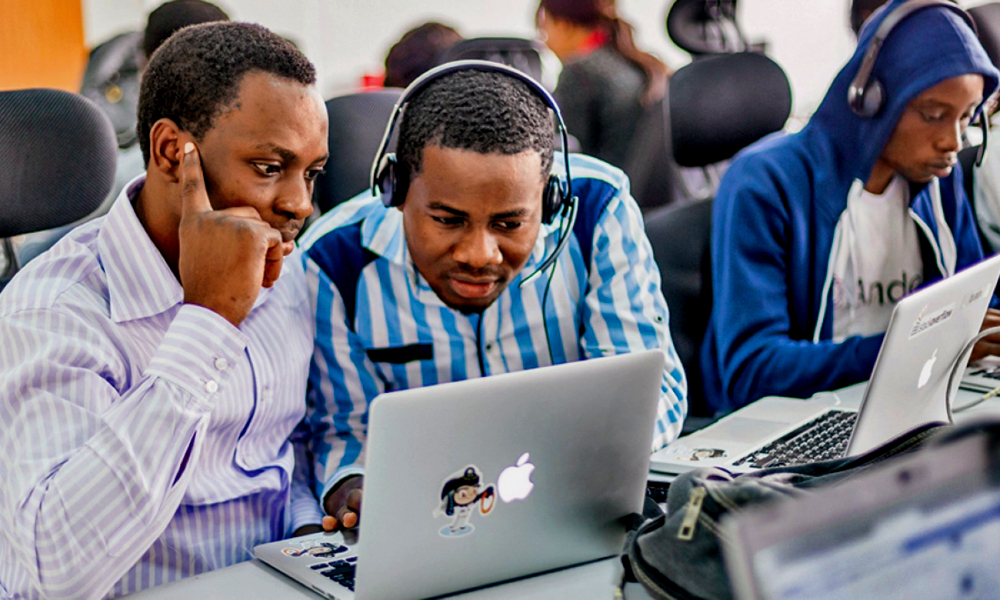
Indeed the recent boom in start-ups especially in tech and innovative finance in Africa has attracted a lot of investors from all over the world. Investments have continued to flow into Africa’s tech ecosystem which has risen dramatically over the past few years. Is this going to be the case of the rejected stone becoming the chief cornerstone, only time will tell.

Just recently tennis star Serena Williams and NBK capital partners have joined a growing number of investors in African startups seeking to take advantage of the tech and innovative -finance boom on the continent. Williams Serena ventures, A&T capital, distributed global, and others participated in raising $6.5 million for Nigerian crypto products developer Nestcoin.

This is not the first time the tennis star is investing in Africa. She has previously invested in Andela, an organization that cultivates IT talent in Africa, which also provides leading global technology companies with access to a high-skilled resource pool.

This is indeed a great time for a start-up in Africa. According to statistics, in the first half of 2021, African startups raised a whopping sum of $1.19 billion and it keeps getting better, surpassing the amount raised in the previous years. During my research, I discovered the major reason for the drastic growth of startups in Africa. One of the reasons is that some organizations have helped support entrepreneurs. Such organizations like Boost Africa, Y Combinator, the future Africa find, etc, are all providing investment, technical support to African entrepreneurs.

This is a very commendable act because at the end of the day it’s a win-win affair. According to statistics Fintech seems to be leading. As in 2018 fintech start-ups received the most investment in Africa. Across the 93 deals that took place, fintech accounted for 40% of total funding raised and also accounted for five of the top 10 largest deals. In Africa, Nigeria, South Africa, and Kenya, obviously the continent’s most advanced and valuable tech ecosystems, continue to dominate as the continent’s leading investment destinations.

The development of startups in Africa has positively improved the economy with investors pumping in money here and there. Like its global counterparts, Africa has put in place multiple innovative companies to bolster urbanization and create strong growth in the economy.

African startups have realized that startups are the world’s engine of change. With more startups rising in Africa, there will be more jobs available to job seekers and it will help in improving the future of technology development and growth of the global economy.

Beyond Competition in African Startup Ecosystem

0

Competition is not your main enemy as you build that startup. Your main enemies are the internal elements in your company which could affect flawless execution. Do not fret morning and night about competition because ideally for a Nigerian startup, you do not have many competitors!

NB: Startup in this content means going to create something of value with transformational impacts in the market. It is different from small business which could be “barbing salon” [Nigerian slang for barbershop], selling corn along the roads, etc that rarely scales. While a barbing salon [small business] could have competitors on a street, a barbing entrepreneur who runs many salons across Nigeria, will not collapse because of many salons, at the moment.

Rather, the entrepreneur will likely go down because of poor execution. Nigeria has not attained parity on the number of barbing salons it needs at the moment; we have more rooms to grow nationwide, but that has to be done optimally and profitably. The competitive elements remain low.

Comment on LinkedIn Feed

Comment 1: Interestingly, I was still saying this today in a self-analysis I was doing on some very common words used in the business world.

COMPETITION was the word that came to mind. I believe this word should be redefined or possibly eliminated. If not for the sake of ” to have something to say or a vague word used to push the lazy or visionless business to work ” – how I see it.

There is a lot more for a business to compete with internally, than the competition ( outside ). In fact, at the end of the day, the syndrome of over studying your competitor is either you copy their style and become a pseudo player or you forget the important things of your very business – your uniqueness ( USP )

In my honest opinion, I will encourage a startup to learn from an athlete and how he prepares. He prepares alone to beat his ( past ) record and then go for a match, then focus on the end goal, not the competitor or co-runners or whatever we can call them. The same is applicable in business. And even this opens a way for more to do.

I like to see this sir.

Thanks for sharing.

Comment 2: 100 Percent accurate Ndubuisi.

Mid last year, I watched a documentary on Amazon. I learnt how aggressive the company in it earlier days focused on servicing the customers- fixing the inconvenience friction- as opposed to competing. Pioneer firms hardly compete with anyone, just as Amazon never had anyone to compete with in for a long time.

I recall we once had a discussion here on the nation’s opportunity size, and we concluded that since the GDP has a *6 multiplier chances business have a similar chance. Currently at $500 billion with $3Trillion potentials.

The Nigerian market is large and too young to create an inexistent mental framework. Business ghost. You would only waste precious energy over ashes.

As you have rightly said, what most startup need to focus on is internal affairs- such as the managerial skills to handle the Growth. Without over looking technical competencies, how many CEO have the diplomacy to handle Government officials when they come knocking. Sorry to say, I have spoken with a couple of these CEO, they are good but you can sense a lag in comportment. It matters.

Actually, if you do it right you would never bother about competition because you know your stuff.

Founders, Competition is Not Your Problem; Execution Is.


The Vetifly Air Freight – Experience Fast And Reliable Logistics in Africa

0

Vetifly opens to the public its air freight unit, making it possible for clients to use a modern, fast and  reliable logistics service in Africa. We operate in a couple of countries on the  continent now. With combinations of helicopters and Boeing aircrafts, we’re redefining logistics.

We have also built capabilities in the last miles, bringing end-to-end logistical orchestration. As you move in style with the helicopters, we also help move your goods to the desired destinations.

We do the following:

  • -Priority shipping;
  • -Heavy and oversized Freight;
  • -Valuable Freight and High-value Goods;
  • -Hazardous and Dangerous Freight;
  • -Perishables and live animals.

Over the last few months, we’ve been powering commerce in Africa, helping mining companies, oil & gas firms, banks, etc move precious assets. I invite you to experience Vetifly quality on air freight. Reach our team here  air.freight@vetifly.com

  • Ndubuisi Ekekwe
  • Member of Board

2W and H Knowledge for African Entrepreneurs

0

Having an interest in entrepreneurship or becoming an entrepreneur is not enough, according to experience. There is always a need to seek for tacit and explicit knowledge, especially if the country is to achieve its goal of transitioning to a knowledge-based economy rather than a resource-based one. Many Nigerians have begun enterprises on the wrong foot, and existing businesses have failed to gain the necessary information – know-why, know-what, know-who, and know-how.

As a current or aspiring business owner, gaining this knowledge is critical to running a successful business and understanding the necessity to construct and operate a company. The resource-based entrepreneurship (RBE) era has come to an end. Knowledge-based entrepreneurship (KBE) is the current concept, which has yet to be fully adopted in Nigeria due to personal and societal concerns. KBE promotes economic growth, development, and innovation.

Nigeria and other developing countries have consistently placed poorly on the World Bank’s Knowledge Economy Index throughout the years. Nigeria was rated 118th in 2012 with a score of 2.20, while Ghana was ranked 112th with a score of 2.72. The bank investigates the major pillars of economic incentive and institutional regime, education, innovation, and information and communications technology every year. The 3W and H concepts of knowledge acquisition in the direction of a knowledge-based economy fall under the last three factors, which many entrepreneurs and would-be entrepreneurs overlook.

Your thinking and attitude toward information acquisition should be adjusted if you want to be a successful entrepreneur and understand why you should start a firm. Knowledge as the primary factor of production has transitioned from the fundamentals of doing business and comprehending the nitty-gritty of becoming a business owner linked with the Industrial Revolution of 12, 000 years ago. Companies are now mining data for riches, rather than gold seams, according to one expert. Instead of apples, they gather smartphone apps. Information is usually regarded as the wellspring of future wealth.

You should constantly seek know-why and know-who information as an experienced entrepreneur, whereas your staff are better positioned to seek know-how knowledge. With know-why knowledge, you’ll be able to use scientific concepts or procedures to gain access to organized information in specialized organizations like colleges and laboratories in order to better understand technical advancements, product and process advancements. You’ll need to form a strategic partnership with these organizations or hire qualitative and quantitative researchers as part of your team.

Furthermore, knowing why is important when it comes to understanding customers’ requirements and challenges. Bill Gates spent the majority of his time learning to code. This is a typical example of know-why knowledge seeking on the part of aspiring entrepreneurs. Ali Dangote, Africa’s richest man, created a powerful distribution network that allowed his goods to reach every family in the country faster than those of his competitors.

Whether you’re a seasoned entrepreneur or a budding one, you’ll need information about people, their personal and professional backgrounds. As an established entrepreneur, you can’t avoid meeting new people and forming strong social bonds. This kind of knowledge always pay off while seeking new prospects and clients. Managers must have a strong understanding of who is who in order to react faster to changing trends in their industry. Dangote has a knack for putting this information to good use. His propensity to network has led to him being connected with a number of political officeholders and professionals who have substantially aided him in his business expansion throughout the West African sub-region and Africa in general. When he obtained the right to import cement, he made a breakthrough.

Aspiring entrepreneurs should focus their social networking efforts on finding qualified consultants, advisors, or mentors who have prior experience and understand the fundamentals of the company concepts they wish to pursue. The term “know-what” refers to a person’s knowledge of facts and proximity to information. This information is essential for both existing and prospective entrepreneurs. Future entrepreneurs, on the other hand, should make it a top priority because it is critical in understanding the risks connected with various company prospects. Aside from that, while considering becoming an entrepreneur, there is always the need to deal with a lot of data.

Employee experience, product ideas and processes, digitally stored or paper-based document files, and future plans are the distinctive expertise that existing entrepreneurs must harness. When these are exploited, according to Canadian Business Network, there will be an increase in the quality of your goods or services, increased customer satisfaction, increased supplier quality, improved staff productivity, increased business efficiency, better recruitment and staffing policies, and the ability to sell or license your knowledge to businesses. If you truly want to be a Knowledge-Based Entrepreneur, you must invest in the acquisition of know-what, know-why, know-who, and know-how knowledge, regardless of whether you have just established your company or are still refining your concept.