DD
MM
YYYY

PAGES

DD
MM
YYYY

spot_img

PAGES

Home Blog Page 535

World Liberty Financial Is Voting to Allocate 100% Fees From POL to Buy Back WLFI Tokens

0

World Liberty Financial (WLFI) is a decentralized finance (DeFi) project with ties to the Trump family, launched in early September 2025. It aims to build infrastructure for stablecoins, payments, and decentralized exchanges on blockchains like Ethereum, BNB Chain, and Solana.

The project’s native token, $WLFI, has a total supply of 100 billion, with an initial circulating supply of around 27.3 billion after a significant unlock of 24.6 billion tokens shortly after launch. This unlock led to a 30% price drop from its all-time high of approximately $0.32, raising concerns about supply dilution and investor confidence.

On September 1, 2025, the WLFI community and governance team proposed a mechanism to allocate 100% of fees from protocol-owned liquidity (POL)—also referred to as LP (liquidity provider) fees—to buy back $WLFI tokens on the open market and permanently burn them.

This is not a full protocol-wide fee allocation; it specifically targets fees generated by WLFI-controlled liquidity pools, excluding those from community or third-party providers. The goal is to create a deflationary pressure on the token supply, rewarding long-term holders by reducing circulation over time.

Applies only to fees earned by WLFI’s treasury-managed liquidity positions across multiple chains. For example, trading fees from WLFI’s own liquidity pools on DEXs like Uniswap or PancakeSwap would fund the buybacks.

Process

Collect fees from POL trades. Use 100% of those fees to purchase $WLFI tokens from the market (targeting short-term sellers to remove “weak hands”). Send the bought tokens to a burn address for permanent destruction, verified on-chain for transparency.

Manual operations with community-reported proofs on the blockchain, ensuring accountability. If approved, this serves as the foundation for a broader buyback-and-burn strategy that could incorporate other protocol revenues (e.g., from stablecoin issuance or lending) in the future.

With more protocol usage (trades, swaps), fees increase, leading to more buybacks and burns. This ties token value to platform growth. Aims to counter the post-launch sell-off by shrinking supply and boosting scarcity, potentially stabilizing or increasing $WLFI’s price.

Excludes third-party fees to avoid disrupting external liquidity providers, while prioritizing long-term holders. The proposal went live for voting on September 1, 2025, via WLFI’s governance platform built on a snapshot-style system. Voting is set to conclude on September 18, 2025.

Approximately 99.44% of votes around 1.2 billion tokens in favor, 0.13% against, and 0.43% abstaining. Official endorsement from WLFI’s team, who highlighted it as a way to “reduce circulating supply & reward long-term holders.”

On X (formerly Twitter), the proposal has generated significant buzz, with posts from influencers and media outlets like Cointelegraph and CoinDesk amplifying the news. For instance, WLFI’s official account posted: “Every trade = fewer tokens in circulation,” garnering over 7,000 likes.

If passed, which seems likely, implementation could begin immediately, with the first buybacks potentially using accumulated fees from the project’s early trading volume currently around $450 million in 24-hour.

$WLFI debuted with a $7 billion market cap but dipped post-launch due to the token unlock. The proposal announcement helped partial recovery, with the token trading around $0.22–$0.25 as of September 12.

The fully diluted valuation (FDV) stands at about 175,000 BTC. Supporters see it as a “deflationary engine” similar to successful DeFi projects like Raydium or Hyperliquid, which have burned billions in tokens. It aligns with WLFI’s pro-crypto, anti-inflation narrative, potentially attracting mainstream adoption.

Only POL fees are included, which may generate modest initial funds compared to total protocol revenue. Critics argue it won’t offset the massive supply if trading volume doesn’t surge. Relies on high usage; low activity could mean minimal burns, slowing treasury growth.

Accusations from figures like Justin Sun (Tron founder) claim WLFI froze 2.9 billion tokens, adding controversy. Some view the buyback as a targeted move against short-term holders like Sun. As a politically linked project, it faces scrutiny over centralization risks and whether the burn truly benefits retail investors versus insiders.

This proposal fits into a larger trend in DeFi where projects use revenue for tokenomics improvements to combat dumps and build loyalty. WLFI’s next steps include launching a USD stablecoin (USD1) and expanding governance.


PayPal Backs Paxos’ USDH Proposal for Hyperliquid

0

Stablecoin issuer Paxos updated its proposal (Version 2) to issue USDH, the native stablecoin for the decentralized exchange (DEX) Hyperliquid. This update prominently features public support from PayPal, marking a significant endorsement that integrates USDH into PayPal’s ecosystem.

PayPal, with over 400 million users and 35 million merchants, has committed to listing Hyperliquid’s native HYPE token on its platform and Venmo, providing free on/off-ramps for USDH, and enabling its use in PayPal Checkout. Additionally, PayPal pledged $20 million in incentives to boost the Hyperliquid ecosystem, including integrations with Venmo, Xoom (for remittances), Braintree, and Hyperwallet.

This partnership positions USDH as a compliant, globally scalable stablecoin, backed by tokenized Treasuries and PayPal’s own PYUSD as a reserve asset. Paxos emphasized its regulatory compliance under the GENIUS Act and EU standards, allowing USDH to operate across jurisdictions.

PayPal’s stablecoin strategy centers on PYUSD, a USD-pegged cryptocurrency launched in 2023 and issued by Paxos. Fully backed by U.S. dollar deposits, short-term Treasuries, and cash equivalents, PYUSD enables seamless integration of fiat and digital currencies within PayPal and Venmo ecosystems.

The company aims to transform payments by facilitating fast, low-cost transfers, remittances, and Web3 transactions, while bridging traditional finance and blockchain.

Key expansions include a 3.7% yield on holdings to boost adoption, launches on Ethereum and Stellar blockchains for cross-border efficiency, and enabling merchants to accept over 100 cryptocurrencies converted to PYUSD.

The Hyperliquid  revenue model is community-aligned: Paxos takes no fees until USDH reaches $1 billion in total value locked (TVL), then caps its share at 5% beyond $5 billion, with all early revenue reinvested into Hyperliquid’s growth and Assistance Fund.

The announcement has sparked excitement in the crypto community, with discussions highlighting it as a bridge between traditional fintech and DeFi. Hyperliquid, already processing over $330 billion in monthly volume, could see massive adoption through this integration.

Native Markets Extends Lead to 93% Odds on Polymarket

In the competitive race to issue USDH—Hyperliquid’s validators will ultimately decide via governance vote—prediction market Polymarket shows Native Markets as the overwhelming favorite.

Traders are betting on a 93% probability that Native Markets will win the bid, up from 91% earlier in the week. The market has seen over $1 million in trading volume, reflecting strong sentiment.

Native Markets, co-founded by an early Hyperliquid backer, proposes innovations like synthetic dollar instruments (e.g., hUSDe), USDe-linked savings, card spending solutions, reward-bearing collateral, and modular prime broking.

These features aim to hedge flows on Hyperliquid and enhance its HIP-3 market designs. The project’s “native” focus on Hyperliquid has resonated, especially after Ethena Labs withdrew its bid on September 12, citing community feedback that it wasn’t sufficiently tied to the ecosystem.

Other contenders include Paxos (now bolstered by PayPal), Frax Finance (proposing zero take rate and backing with frxUSD via BlackRock’s BUIDL Fund), Agora, Rain, MoonPay, Sky, and LayerZero. Despite Paxos’ high-profile update, Polymarket odds favor Native Markets, suggesting traders prioritize ecosystem nativity over external partnerships.

The vote outcome could reshape Hyperliquid’s growth, with USDH intended to replace USDT and USDC as the platform’s default stablecoin for spot and perpetual trading. This dual development underscores the high stakes in Hyperliquid’s stablecoin launch, blending mainstream finance with DeFi innovation. The final validator vote will determine USDH’s issuer, potentially influencing billions in trading volume.

Meanwhile. Gemini has gone public:

Gemini Space Station shares increased as much as 64% Friday after the crypto exchange founded by brothers Tyler and Cameron Winklevoss in 2014 raised $425 million in an initial public offering amid a busy week for IPOs. In an unusual move, the company decided to limit pricing ahead of its market debut, after first targeting $433.3 million. Investor demand for crypto-linked companies has surged, as seen in recent listings by digital lender Figure and crypto firm Circle.

Appeals Court Revives $600,000 Copyright Verdict Against Disney Over “Beauty and the Beast” Technology

0

The 9th U.S. Circuit Court of Appeals on Thursday reinstated a $600,000 damages award won by motion-capture technology firm Rearden LLC, which had accused Disney of misusing its proprietary software in the 2017 live-action remake of Beauty and the Beast.

The three-judge panel overturned a ruling by U.S. District Judge Jon Tigar, who had previously set aside the jury’s verdict in favor of Disney. In its decision, the appeals court found that there was sufficient evidence to support the jury’s conclusion that Disney could have acted to prevent or limit the misconduct of its contractor, Digital Domain 3.0, which allegedly used stolen technology belonging to Rearden.

Rearden, founded by former Apple scientist Steve Perlman, first sued Disney in 2017, alleging that a former employee had stolen its Mova Contour facial-capture technology and taken it to Digital Domain. The company claimed Disney then worked with Digital Domain on Beauty and the Beast, thereby infringing on its copyrights.

While Rearden had sought monetary damages, including a share of profits from the Disney blockbuster — which grossed more than $1.25 billion worldwide — the appeals court on Thursday affirmed that Rearden was not entitled to any portion of the film’s revenues.

A California jury in 2023 had originally sided with Rearden, awarding the company nearly $600,000 in damages. Judge Tigar, however, overturned that verdict last year, reasoning that Disney was not directly involved in the animation process that relied on Rearden’s technology and therefore could not have recognized or policed any infringement by its contractor.

The appeals court disagreed, reviving the jury’s award. “There was sufficient evidence to support the jury’s finding that Disney could have stopped or limited Digital Domain’s misconduct,” the panel wrote.

The case, Rearden LLC v. Walt Disney Pictures, is docketed as No. 24-3970 in the 9th U.S. Circuit Court of Appeals. Rearden is represented by Mark Carlson of Hagens Berman Sobol Shapiro, while Disney is represented by Kelly Klaus of Munger, Tolles & Olson.

What the ruling could mean for Hollywood

The revived verdict, though modest in dollar value compared to the film’s billion-dollar gross, carries significant weight for the entertainment industry. The appeals court has reinforced the principle that studios may bear responsibility for monitoring how their contractors source and use third-party technologies by siding with Rearden. Legal analysts say this could set a precedent that forces major film companies to conduct deeper due diligence in outsourcing deals.

For Hollywood, where reliance on external VFX houses and tech startups has become routine, the ruling could mean stricter vetting of software licenses, audits of contractor practices, and potentially higher production costs. Some intellectual property attorneys believe it’s a wake-up call for studios, warning that future disputes could trigger damages far beyond $600,000.

Rearden’s partial victory also highlights the growing value of proprietary visual effects technologies, which underpin much of the industry’s push into photorealistic animation and live-action remakes. As competition intensifies in the era of generative AI and advanced graphics, ownership battles over such tools are likely to become more frequent.

Against this backdrop, some believe that if the decision prompts studios to become more conservative in their contracting, smaller VFX firms may face tighter compliance requirements and higher legal risks. Some could struggle with the added burden, consolidating the market in favor of larger, well-capitalized players.

For Disney, the ruling is unlikely to dent its financial position given the relatively small damages, but it may expose the company to reputational scrutiny as it continues to lean heavily on remakes and visual effects-heavy projects. A prolonged legal fight could also embolden other tech firms to pursue claims if they believe their tools have been misused by contractors tied to big studios.

In a broader sense, the case underscores the fragility of Hollywood’s reliance on outside innovation, raising questions about whether studios will begin bringing more VFX development in-house to mitigate liability risks. Should that happen, the balance of power between tech startups and the film giants could shift dramatically.

VanEck Eyes Hype ETF Filing, Amid Forward Industries Solana’s $1.65B Treasury

0

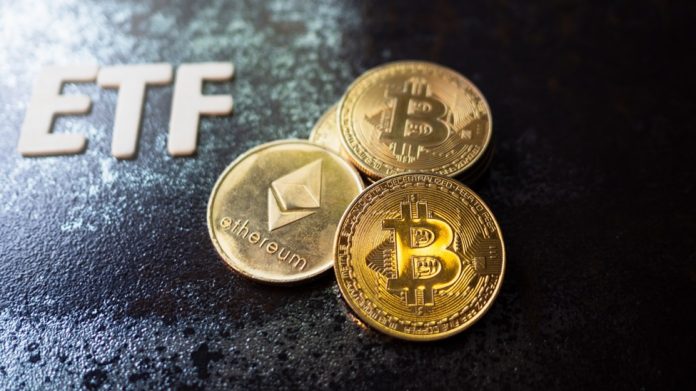
Asset manager VanEck, known for pioneering crypto ETFs like Bitcoin and Ethereum spot products, is preparing to file with the U.S. SEC for a spot-staking ETF tied to HYPE, the native token of the Hyperliquid decentralized exchange.

This would mark HYPE as the youngest token to receive such a filing, following VanEck’s pattern of being first-to-file for Solana and Ethereum ETFs. The proposed ETF would offer U.S. investors exposure to HYPE’s price appreciation plus staking yields, handled internally by the fund to simplify access for traditional investors. VanEck is also planning a parallel physically backed exchange-traded product (ETP) in Europe, where approvals are faster—21Shares already launched a Hyperliquid ETP there in August.

Executives like Kyle Dacruz and Matt Maximo highlighted strong demand and Hyperliquid’s focus in their liquid fund strategy, with the platform topping DeFi revenue charts for four weeks straight. The firm is even considering using ETF profits for HYPE buybacks or ecosystem support, similar to their Bitcoin and Ethereum commitments.

Approval odds are uncertain amid SEC backlogs on XRP, SOL, and DOGE ETFs, but VanEck sees this accelerating a potential Coinbase listing for HYPE. The news propelled HYPE up 22% to a new all-time high of $55.34, reflecting broader DeFi momentum.

Forward Industries’ $1.65B Solana Treasury Close

Nasdaq-listed Forward Industries (FORD), a 60-year-old design firm pivoting from medical/tech products to digital assets, has closed a record $1.65 billion private investment in public equity (PIPE) to launch the world’s largest corporate Solana treasury.

The funding, in cash and stablecoins like USDC/USDT, was led by Galaxy Digital, Jump Crypto, and Multicoin Capital (committing over $300M combined), with participation from existing shareholder C/M Capital Partners and others. Proceeds will primarily buy SOL tokens for active deployment in staking, lending, and DeFi on Solana, aiming to generate on-chain yields and boost SOL per share beyond passive holding.

Galaxy will manage treasury operations (trading, staking, infrastructure), Jump provides engineering via Firedancer (a high-performance Solana client), and Multicoin’s Kyle Samani joins as board chairman for strategic guidance. Cantor Fitzgerald led placement, with Galaxy as co-agent.

The move positions Forward as the top publicly traded Solana player, outpacing Upexi (2M+ SOL) and Sharps Technology ($400M raise). FORD shares surged 128% pre-market on the initial announcement, while SOL rose 2.3%, underscoring institutional conviction in Solana’s $1.2B Q2 economic value and 7,500+ developers.

CEO Michael Pruitt emphasized long-term shareholder value through ecosystem participation. A HYPE ETF would bring decentralized finance (DeFi) exposure to traditional investors, legitimizing Hyperliquid’s platform and potentially driving broader retail and institutional interest in DeFi tokens.

It could set a precedent for other DeFi-focused ETFs, accelerating crypto’s integration into conventional portfolios. The 22% surge in HYPE’s price to $55.34 reflects market enthusiasm, but ETF approval could further boost demand, liquidity, and price stability.

Staking yields within the ETF could attract yield-seeking investors, potentially increasing HYPE’s market cap and trading volume. A successful filing could pressure the SEC to clarify its stance on newer tokens like HYPE, SOL, XRP, and DOGE.

However, approval delays or rejections due to regulatory uncertainty could dampen market sentiment and slow DeFi ETF momentum. VanEck’s first-mover advantage may spur competitors (e.g., Grayscale, BlackRock) to explore DeFi ETFs, intensifying competition.

In Europe, the parallel ETP filing could capitalize on faster approvals, potentially drawing global capital away from U.S. markets if the SEC lags. VanEck’s potential use of ETF profits for HYPE buybacks or ecosystem support could strengthen Hyperliquid’s development, attracting more developers and projects.

Implications of Forward Industries’ $1.65B Solana Treasury

Forward’s massive Solana treasury sets a benchmark for public companies diversifying into digital assets, potentially inspiring other firms to allocate to crypto. This could drive institutional demand for SOL and validate blockchain treasuries as a corporate strategy.

The $1.65B infusion, used for staking, lending, and DeFi, will increase Solana’s on-chain activity, TVL (total value locked), and network security. Partnerships with Galaxy, Jump, and Multicoin signal robust infrastructure support, potentially accelerating Solana’s scalability and adoption.

FORD’s 128% share surge and SOL’s 2.3% rise reflect bullish sentiment. The treasury’s active SOL deployment could sustain upward pressure on SOL’s price, especially if yields outperform traditional assets. However, large-scale SOL purchases could cause short-term volatility.

Forward’s pivot to a Solana-focused treasury aims to boost SOL per share, offering shareholders indirect crypto exposure. Success could redefine Forward as a hybrid tech-crypto firm, but failure to manage treasury risks (e.g., crypto volatility, DeFi hacks) could harm investor confidence.

The involvement of heavyweights like Galaxy, Jump, and Multicoin underscores Solana’s institutional appeal, potentially attracting more VC funding and developer talent. It also positions Forward as a competitor to Upexi and Sharps, intensifying the race for corporate crypto dominance.

Both moves signal growing institutional confidence in DeFi and Solana, potentially fueling a broader crypto rally, especially for layer-1 and DeFi tokens. Large-scale crypto investments and ETF filings may invite stricter oversight, particularly if the SEC perceives risks to retail investors or market stability.

Forward’s pivot and VanEck’s ETF highlight the blurring lines between traditional finance/industry and crypto, which could reshape investment strategies and corporate balance sheets. These developments could catalyze significant capital inflows into DeFi and Solana, but their success hinges on regulatory clarity, market conditions, and execution.

Why Nations Are Poor And How Nations Become Rich

0

Poverty is often discussed in terms of resources, or the lack thereof. We are told that nations are poor because they do not have oil, arable land, or access to the sea. But in the age of the knowledge economy, this is a flawed premise. The true physics of national poverty is not a lack of physical assets, but a deficit of ideas and a failure to transform them into value. History shows us that great civilizations were inventive—they created geometry and algebra—but they remained poor until they engineered those inventions into innovations that scaled productivity. This is why a nation of brilliant minds can still be a nation of poor people! I explain in this video.

To become rich, a nation must move beyond invention to embrace a culture of innovation. This requires more than just smart people; it demands a system that democratizes knowledge and enables entrepreneurial pragmatism. Wealth creation is not about simply having natural resources; it’s about the ability to process those resources, or even more importantly, to create value from the intangible.

As the Igbo proverb says, “aka aja aja n’ebute onu mmanu mmanu,” which means “the hand that has known much toiling will eventually know much feasting.” This speaks to the necessary link between hard work, and the ultimate reward of prosperity.

The trajectory from poverty to wealth is built on this foundation. It is a societal process where technology is not an end in itself but a catalyst for productivity gains. When we build systems that empower our citizens to commercialize their knowledge, we create a virtuous cycle. The wealth of a nation, therefore, is not found in the ground, but in the collective capacity of its people to innovate. This is the simple construct that separates the rich from the poor—a nation’s wealth is a reflection of its ingenuity and its ability to turn the sweat of its people into tangible products and services for the world.

Nigeria must do all to move from our current invention society era to an innovation society era and subsequently to the accelerated society era.