
DD
MM
YYYY

PAGES

DD
MM
YYYY

spot_img

PAGES

Home Blog Page 5364

Yearly staff retreats, why they are necessary, and what you should be discussing

0

The year 2021 has bowed out to usher in 2022, so it’s a happy new year for businesses and individuals. As a part of work culture, quite a number of organizations have an annual staffs retreat. Some had theirs in December, some in January, and some others during the course of the year. It could be a general staff retreat and/or a senior management retreat.

Why is it necessary? After all the work, work, and more work, it is okay to take a day or two to just relax, play and discuss. It does not have to be done in January or in December. You can do it at the end of your business year if your business does not operate with the conventional January to December calendar. There are a few businesses that run an April to March calendar for instance.

The retreat also does not have to impinge on operations at all, and if it is necessary, a little work could still be done during the retreat. But majorly, your staff retreat should be fun and have open discussions to review the just-ended year.

Now, here are some possible things you could be discussing during the retreat.

How did the business perform in the last year?

You want to discuss with your staff how the business performed in the last year, in relation to the year before it, the expectations and targets you set, and the economic realities. You have the books to tell you this, but there are insights to this discussion that can only come from your staff.

What was your staff turnover rate and why?

High staff turnover is a challenge that many businesses contend with, and it does slow down growth especially when you keep replacing staff in key operation roles or management positions. If over the course of a business year, you had staff resigning, it could be indicative of a structural problem that you need to fix.

The best people to tell you the real reason why your staff is leaving are the staffs themselves, especially if it is an open discussion where they are allowed to speak freely. Office politics is another factor that causes businesses to lose good talents. Poor remuneration, poor welfare policies, unreasonable targets are other factors too.

How effective is your business structure and how can you improve it?

A business structure can and should have occasional reviews and adjustments until you have something that works perfectly. If there is a part of it not working well or things are not going as planned, then make the necessary changes.

What month had the highest sales and why?

Your records will show you what month or period had the most sales, but you can also find out from the staff why they think sales were higher during that period. If done right, it can reveal one or two things you need to fix in your sales funnel. Of course, there are peak periods in every business or sector, but there could also be other periods in the year where you recorded high sales. It would help you to know why that happened.

Of all the campaigns you ran, which had the most result and why?

Advertising campaigns, marketing campaigns, social media campaigns, and other promotions should not be done just for their own sake. They should be targeted at specific results and if there was a particular campaign that yielded the most result, you should find out why so that you can better structure your campaigns in the coming year.

Rewards

It is a great idea to reward top-performing staff over the course of the year. For better results, you should have your staff vote on the categories, or probably have the team leaders vote on them. It is up to you.

Retreats like this can improve productivity and boost team morale. There is no restriction on the number of retreats you could choose to have over the course of the year, but you should have at least one.
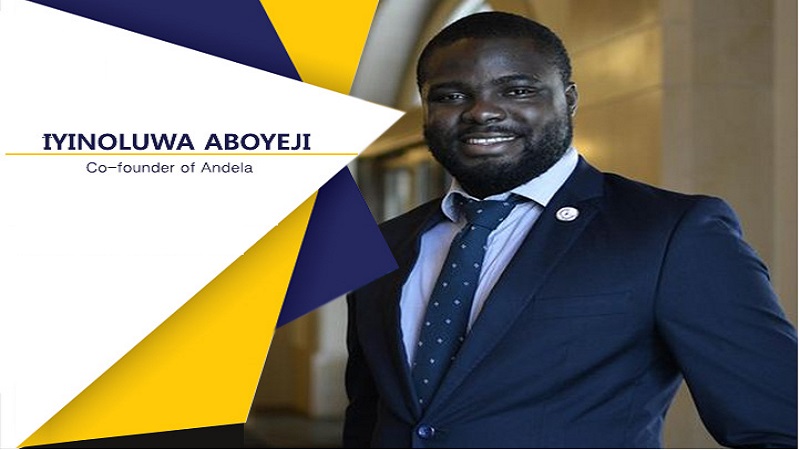
The Lessons from Unreplied Iyinoluwa Aboyeji Emails – and Missing Opportunities

4

This man, one of his continent’s best, wrote to me many times in 2013. He sent a pitch deck and he even followed up, offering me an advisor role in his company. In all those emails, I did not respond. Think about it, I could have been given a small piece in Andela, now a unicorn.

I was stuck with teaching engineering at Carnegie Mellon University.  That was the life there and it was to teach, research and run the day. But when a MASSIVE opportunity was knocking at the door, I did not pay attention. I failed the test of observation and awareness because my mind was conditioned on the straight road I was then.

This was the last Iyin’s email to me: “Also I wanted to ask if you are fine with me putting you on as an advisor for our project Let me know”. I did not respond to that email. He followed up via LinkedIn on my CMU classnotes and how I could assist him (I deleted my old Linkedin profile before I returned in 2016 or so).

I have shared the experience many times with him; he simply laughed! In an Alibaba Board meeting program we both attended last year, I found a way to get into that also.

I am using that experience to mentor people: sometimes, the goal we desire to achieve can come via many ways. That I was a professor teaching engineering and a group of young people with a huge vision wanted me to serve as an advisor would not have been a distraction.

The Lesson: do not ignore the Iyinoluwa Aboyejis in your network as they email you. Most times, what they want is nothing; small guidance. Of course, I do hope Iyin, now that he is a big king, will not ignore emails. All of us who are now privileged should return emails to our young people.

Tekedia Institute and Nnamdi Azikiwe University Sign Massive Strategic Partnership

1

It is a very big one: Tekedia Institute has signed a mammoth partnership with Nnamdi Azikiwe University (NAU), Nigeria,  on many domains of our program. To behold the executed agreement with the seal of the university and signatures of the Vice Chancellor and Registrar, was a moment for our Institute.

The long-term plan of Tekedia Institute is to project entrepreneurial capitalism from the lens of Africa to the world. That is the reason we have passed all foreign university partnerships which continue to reach out to us to integrate their courses. We do believe that there are many amazing business cases out of Africa, and Tekedia Institute will remain core to that nativity. We invite the world to come and learn from those cases. 

We have attracted thousands of professionals from 39 countries who continue to find value in our program. We run glocal cases: Africa, India, China, America, Europe and more. Groups of students from more than 19 universities are attending our Tekedia CollegeBoost, and those schools include the largest African schools like University of Ibadan, UNN, UNILAG, and University of Nairobi.

More updates will be coming on this agreement: the knowledge of a nation is the wealth of a nation. And no nation can advance faster than its ability to develop or acquire new knowledge. Tekedia Institute expects to be part of building that knowledge capability.

The Tekedia Community welcomes our Official University Partner, NAU Awka. In the next coming weeks, we will roll out the massive playbooks with the university. We invite you to visit Tekedia programs and pick the right one for you here.

Russia Plans to Ban Cryptocurrency

0

In the latest government’s threat to the crypto market that suggestively contributed to its current plunge that has put the market capitalization at below 40%, the lowest since July, Russia is wielding the amour.

Russia’s central bank on Thursday proposed banning the use and mining of cryptocurrencies on Russian territory, citing threats to financial stability, citizens’ wellbeing and its monetary policy sovereignty. The report was first made by Reuters.

The move is the latest in a global cryptocurrency crackdown as governments from Asia to the United States worry that privately operated and highly volatile digital currencies could undermine their control of financial and monetary systems.

Russia has argued for years against cryptocurrencies, saying they could be used in money laundering or to finance terrorism. It eventually gave them legal status in 2020 but banned their use as a means of payment.

In a report published on Thursday, the central bank said speculative demand primarily determined cryptocurrencies’ rapid growth and that they carried characteristics of a financial pyramid, warning of potential bubbles in the market, threatening financial stability and citizens.

The bank proposed preventing financial institutions from carrying out any operations with cryptocurrencies and said mechanisms should be developed to block transactions aimed at buying or selling cryptocurrencies for fiat currencies.

The proposed ban includes crypto exchanges. Cryptocurrency exchange Binance told Reuters it was committed to working with regulators and hoped the report’s release would spawn dialogue with the central bank on protecting the interests of Russian crypto users.

Restrictions on owning cryptocurrency are not envisaged, said Elizaveta Danilova, head of the central bank’s financial stability department.

Active cryptocurrency users, Russians have an annual transaction volume of about $5 billion, the bank said.

Shadowing China?

The central bank said it would work with regulators in countries where crypto exchanges are registered to collect information about the operations of Russian clients. It pointed to steps taken in other countries, such as China, to curb cryptocurrency activity.

In September, China intensified its crackdown on cryptocurrencies with a blanket ban on all crypto transactions and mining, hitting bitcoin and other major coins and pressuring crypto and blockchain-related stocks.

“For now there are no plans to ban cryptocurrencies similar to the experience of China,” Danilova said. “The approach we have proposed will suffice.”

Joseph Edwards, head of financial strategy at crypto firm Solrise Group, played down the report’s significance, saying no one outside Russia would be losing sleep over it.

“Moscow, like Beijing, is always rattling its saber over ‘crypto bans’, but Russia has never been a pillar of any facet of the industry in the same way as China has been at times,” he said.

Crypto mining

Russia is the world’s third-largest player in bitcoin mining, behind the United States and Kazakhstan, though the latter may see a miner exodus over fears of tightening regulation following unrest earlier this month.

The Bank of Russia said crypto mining created problems for energy consumption. Bitcoin and other cryptocurrencies are “mined” by powerful computers that compete against others hooked up to a global network to solve complex mathematical puzzles. The process guzzles electricity and is often powered by fossil fuels.

“The best solution is to introduce a ban on cryptocurrency mining in Russia,” the bank said.

In August, Russia accounted for 11.2% of the global “hashrate” – crypto jargon for the amount of computing power being used by computers connected to the bitcoin network.

Moscow-based BitRiver, which operates data centers in Siberia hosting bitcoin miners, said it did not consider a complete crypto ban likely, expecting a balanced position to develop once different ministries have discussed the proposals.

The central bank, which is planning to issue its own digital rouble, said crypto assets becoming widespread would limit the sovereignty of monetary policy, with higher interest rates needed to contain inflation.

Bitcoin fell to $36,000 on Friday, wiping off billions of dollars in investors’ funds, and heightening concern over volatility that has been a major obstacle for cryptocurrency adoption. Russia’s proposed ban, if approved, will mean further harm to the already troubled crypto industry.

The Lessons from IBM Watson Health and Intel

0

IBM Watson Health is dead – the unit will move to the hands of Francisco Partners, a private equity company. In Tekedia Mini-MBA, I had used IBM as a case study on how NOT to build a modern technology company. Sure, who is this village boy complaining over one of America’s finest companies? Fair question!

:”IBM’s Watson Health is being sold for parts. The technology giant has agreed to sell the division’s data and analytics assets to private equity firm Francisco Partners. Terms weren’t disclosed, although Bloomberg values the deal at more than $1 billion. Launched in 2015, Watson Health’s goal was to revolutionize medicine through AI. After years of pricey expansion — it spent more than $4 billion on acquisitions, per Axios — and reports of ineffectiveness, the unit scaled back its ambitions under CEO Arvind Krishna.”

About 15 years ago, IBM, Microsoft and Apple could be seen as peers. The story was always IBM filing most patents. But as I noted in my courseware, IBM was losing the most important driver in modern markets: the right business model which any technology could cushion. Largely, having the technical quality was not enough, deploying the right business model was supreme.

The former CEO of IBM, Rometty, was grossly deficient on that business model redesign. The company lost a decade and will really work hard to thrive. Today, as Apple hits close to $3 trillion, IBM is stock in a market cap of $120 billion. 

But there is hope: the new CEO is transforming the company, to align its model on what the digital age demands. I will explain these deeper in the updated courseware for the next edition of Tekedia Mini-MBA.

As IBM goes through its metamorphosis, Intel is also undergoing its own. I had written how TSMC disintermediated Intel’s business model: “Apple had taken its Mac chips from Intel, and would design and fabricate with possibly TSMC or Samsung since other players like GlobalFoundries remain weak. Other companies will do just that. As that happens, the largely closed system of Intel will begin to make way for the ARM business model. Provided there is TSMC to make the chips after circuit designs, most companies will go all the way to designing internally and sending to TMSC to fab.This was not possible in the past as TSMC was weak, but over the last few years, TSMC has evolved to be as good as Intel, if not better.” 

In other words, TSMC’s business model was better than Intel’s. Interestingly, Intel has since opened its factories even to competitors under a new business model framework called “contract manufacturing”. With the new Ohio investment, it is going all the way to battle with TSMC and Samsung Electronics..

Intel will spend $20 billion to build two new chip factories outside Columbus, Ohio, boosting the company’s status as a maker of cutting-edge semiconductors along with the nation’s production capacity. Demand for chips has grown with the pandemic, exacerbating a supply shortage that began with the shift of manufacturing to lower cost markets in Asia. Intel, overtaken by South Korea’s Samsung Electronics as the biggest chip maker, has already invested almost $100 billion in European manufacturing and plans other U.S. facilities in the Southwest.

— press release

IBM (NYSE: IBM) and Francisco Partners, a leading global investment firm that specializes in partnering with technology businesses, today announced that the companies have signed a definitive agreement under which Francisco Partners will acquire healthcare data and analytics assets from IBM that are currently part of the Watson Health business. The assets acquired by Francisco Partners include extensive and diverse data sets and products, including Health Insights, MarketScan, Clinical Development, Social Program Management, Micromedex, and imaging software offerings.

The transaction is expected to close in the second quarter of this year and is subject to customary regulatory clearances. Financial terms of the transaction were not disclosed.

“Today’s agreement with Francisco Partners is a clear next step as IBM becomes even more focused on our platform-based hybrid cloud and AI strategy,” said Tom Rosamilia, Senior Vice President, IBM Software. “IBM remains committed to Watson, our broader AI business, and to the clients and partners we support in healthcare IT. Through this transaction, Francisco Partners acquires data and analytics assets that will benefit from the enhanced investment and expertise of a healthcare industry focused portfolio.”

Since its launch over 20 years ago, Francisco Partners has invested in over 400 technology companies, making it one of the most active and longstanding investors in the technology industry. Francisco Partners has extensive experience in healthcare technology and its healthcare investments have focused on companies that are leveraging technology to provide innovative products and solutions to the healthcare ecosystem including patients, providers, payers, pharma, life sciences and governments. Select current and past investments in the sector include Availity, eSolutions, Capsule, GoodRx, Landmark, QGenda, Trellis, and Zocdoc.

“We have followed IBM’s journey in healthcare data and analytics for a number of years and have a deep appreciation for its portfolio of innovative healthcare products,” said Ezra Perlman, Co-President at Francisco Partners. “IBM built a market leading team and provides its customers with mission critical products and outstanding service.”

Justin Chen, Principal at Francisco Partners, added, “Partnering with corporations to execute divisional carve-outs has been a core focus of Francisco Partners. We look forward to supporting the talented employees and management team, helping the standalone company focus on growth opportunities to realize its full potential, and delivering enhanced value to customers and partners.”

Under the terms of the agreement, the current management team will continue in similar roles in the new standalone company, serving existing clients in life sciences, provider, imaging, payer and employer, and government health and human services sectors.