DD
MM
YYYY

PAGES

DD
MM
YYYY

spot_img

PAGES

Home Blog Page 537

BlockDAG’s Presale Nears Record $405M: 3M Active Miners & 19.8K Miners Shipped Signal Dominance

0

BlockDAG is making headlines with numbers that speak for themselves. More than 3 million people are already mining through the X1 app, showing real activity instead of empty promises. Alongside this, over 19,800 miners have been shipped to users worldwide, demonstrating that the network is built on a working infrastructure.

Adding to these achievements, BlockDAG (BDAG) has raised nearly $405 million in its presale, a figure that reflects growing confidence in its progress. Unlike many projects that rely on roadmaps and delays, it is converting plans into results that can be measured today. With clear adoption, proven delivery, and strong funding, BlockDAG is stepping into 2025 as one of the most exciting names in crypto.

3 Million Mobile Miners and Almost $405M Raised

The X1 Mobile Miner app has already gained over 3 million users worldwide. These are active participants who mine daily, not waiting for promises, but already earning and learning within the BlockDAG ecosystem.

By turning smartphones into working mining devices, BlockDAG lowered entry barriers and built one of the most widespread mining communities in crypto history. Unlike other projects that chase adoption after launch, BlockDAG secured its base before deployment.

A near $405 million raise adds even more weight. This massive funding came directly from the public presale, without private equity, seed rounds, or special deals. Every coin sold has gone directly to people worldwide, ensuring transparency and fairness.

That money is already fueling real progress, from app development and hardware production to R&D and infrastructure building. With the $600 million hard cap still ahead, the project shows no slowdown. Each figure reinforces BlockDAG’s commitment to equality, clarity, and delivery at scale.

19,800 X-Series Miners Shipped Worldwide

BlockDAG is proving its capability with physical products, not just digital promises. Already, more than 19,800 X-series miners, including X10, X30, and X100, are in the hands of users across 130+ countries. This milestone demonstrates that BlockDAG is not just a theory, but a live, functioning ecosystem.

Owners are sharing unboxing clips and #BlockDAGX10 reviews online, showcasing their machines in action and displaying their actual earnings. Shipments are rolling out at nearly 2,000 units every week, strengthening the network’s reach and efficiency.

This marks a significant turning point for the crypto industry. It marks the first presale coin to deliver hardware before any exchange listing. Wallet adoption proves the spread: over 312,000 wallets now hold BlockDAG (BDAG) coins, with more than 1,000 new wallets added daily.

Unlike projects concentrated in the hands of a few, this distribution stretches across Asia, Africa, Europe, and Latin America. The widespread adoption makes it resilient and demonstrates that global adoption is occurring in real-time.

Global Reach, Singapore Event, and $0.0013 Celebration Price
Community power fuels BlockDAG, and with over 325,000 members on Telegram, Discord, X, and YouTube, activity is nonstop. This global conversation is building momentum ahead of the Deployment event in Singapore on October 1, organized in partnership with Coinstore. This event will mark the official transition from presale to worldwide rollout, backed not just by promises but by shipped products, working miners, and a live network.

The presale has already attracted massive whale activity, including purchases of $4.4 million and $3.6 million in one go. These are strong signals that the biggest players in the market see long-term potential in BlockDAG’s hybrid infrastructure, EVM compatibility, and DAG-powered scaling. At the same time, the door remains open for the public.

Right now, BlockDAG is offering a flat $0.0013 price per coin. This limited-time deal replaces the old tier system and keeps things simple and fair. This celebration pricing will run until presale closes, just before the Singapore event.

After that, BlockDAG is set to prepare for listings on more than 20 major exchanges, including MEXC, LBank, BitMart, and Coinstore. It’s a final window to grab coins before deployment changes everything.

Wrap Up

Skepticism runs high in crypto, but BlockDAG’s numbers erase doubt. Nearly $405 million raised, 26.2 billion coins sold, 3 million X1 mobile miners, 312,000 wallets, 19,800 miners sold, and a 325,000-strong community in 130+ countries.

These are not projections or guesses; they are facts unfolding live. With the Singapore Deployment event on October 1 and the $0.0013 coin price still available, BlockDAG is turning preparation into execution at scale. Its mix of global users, fair pricing, proven hardware, and transparent growth makes it one of the most exciting projects of 2025. The window is closing, and the story is clear: BlockDAG (BDAG) is already delivering, and the momentum is only climbing higher.

Presale: https://purchase.blockdag.network

Website: https://blockdag.network

Telegram: https://t.me/blockDAGnetworkOfficial

Discord: https://discord.gg/Q7BxghMVyu

World Liberty Financial Unveils “Project Wings” Partnering with BONK.fun and Raydium

0

World Liberty Financial (WLFI), the Trump family-backed DeFi platform, unveiled Project Wings, a trader-focused initiative to accelerate USD1 stablecoin adoption on Solana. This collaboration with Raydium and BONK.fun enables USD1 trading pairs for token launches and trades, complete with promotional rewards for participants.

USD1, WLFI’s USD-pegged stablecoin (now the world’s fifth-largest at ~$2.66B market cap), is live on BONK.fun and Raydium’s Launchlab. Token creators can pair new launches with USD1 for added stability, while traders access pairs via platform UIs or third-party bots.

Eligible users earn promotional rewards for:

Trading USD1 pairs on BONK.fun.

Launching tokens paired with USD1.

Providing liquidity or bonding curve volume on Raydium.

Upcoming activity via the WLFI wallet app (launch imminent).

Traders see it as a liquidity boon for BONK ecosystem tokens, while critics note potential short opportunities amid hype. Earlier integrations (e.g., USD1’s September 1 Solana debut with $30M Raydium pool) set the stage for this expansion.

Integrating USD1 into BONK.fun’s memecoin launchpad and Raydium’s AMM pools makes it a go-to stablecoin for Solana-based token launches and trading, challenging dominant players like USDT and USDC.

With USD1 already at a ~$2.66B market cap (fifth-largest stablecoin), this partnership could accelerate its adoption, especially among retail traders and memecoin enthusiasts, potentially reshaping stablecoin market dynamics.

The Trump family’s backing of WLFI may attract non-crypto-native users, bridging TradFi and DeFi by offering a familiar, USD-pegged asset with DeFi rewards. USD1 pairs and rewards incentivize liquidity provision and trading on Raydium, one of Solana’s largest DEXs, potentially increasing total value locked (TVL) and trading volume.

BONK.fun’s role as the official USD1 launchpad merges memecoin hype with stablecoin stability, drawing in speculative traders and fostering new token launches on Solana.

Increased transactions from USD1 trading and launches could drive Solana’s transaction volume, reinforcing its position as a high-throughput blockchain for DeFi. Promotional rewards for trading, launching tokens, or providing liquidity lower barriers for users, encouraging engagement from both retail traders and project developers.

Integration with user-friendly platforms (BONK.fun, Raydium) and third-party bots makes USD1 pairs accessible, potentially onboarding new users to Solana DeFi. Token creators gain a stable, USD-pegged option for launches, reducing volatility risks and attracting more serious projects to BONK.fun.

The memecoin focus via BONK.fun could drive speculative capital into Solana, amplifying both upside potential and volatility for USD1-paired tokens. As with any DeFi initiative, risks like smart contract vulnerabilities, regulatory scrutiny and market manipulation could impact participants.

WLFI’s push for “capital markets at internet speed” signals an ambition to integrate traditional finance with DeFi, potentially attracting institutional interest but also regulatory attention, especially given USD1’s rapid rise.

If successful, Project Wings could inspire similar partnerships across other blockchains, blending stablecoin utility with memecoin-driven user acquisition. This partnership strengthens WLFI’s role as a DeFi innovator, leveraging Solana’s infrastructure and memecoin culture to scale USD1’s ecosystem, potentially paving the way for further integrations.

By channeling memecoin energy into stablecoin-driven DeFi, Solana could solidify its edge over competitors like Ethereum or Binance Smart Chain in the retail-driven DeFi space. Project Wings positions USD1 as a cornerstone of Solana’s DeFi ecosystem, blending memecoin speculation with stablecoin stability to drive liquidity, user adoption, and token launches.

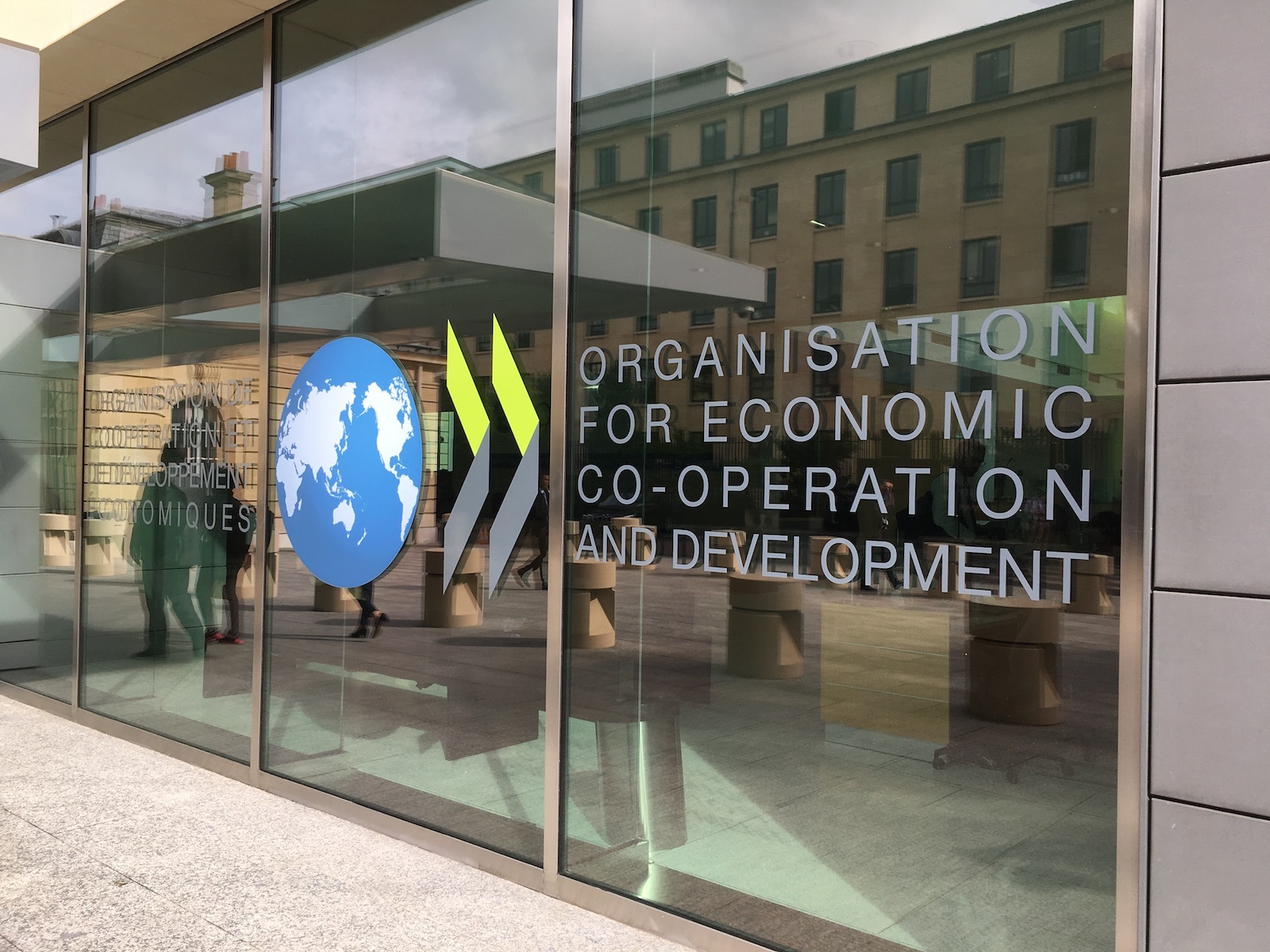
Paul Atkins’ Push For OECD Coordination Could Harmonize Rules, Reducing Compliance Costs for Cross-Border Projects

0

During a keynote address at the OECD’s inaugural Roundtable on Global Financial Markets in Paris, SEC Chairman Paul Atkins explicitly called for enabling entrepreneurs and investors to raise capital on-chain without endless legal uncertainty or unnecessary scrutiny.

This aligns with his broader vision under “Project Crypto,” a Trump administration-backed initiative launched in July 2025 to modernize securities rules, integrate decentralized finance (DeFi), and position the U.S. as the “crypto capital of the world.”

Atkins framed the moment as “crypto’s time has come,” criticizing past SEC approaches (under the prior administration) for driving innovation offshore through overzealous enforcement and vague guidelines.

He emphasized balancing investor protection with fostering growth, while reiterating that most crypto tokens are not securities—a direct rebuke to earlier broad classifications that treated many as such.

Shift from “regulation by enforcement” to clear, predictable rules. Entrepreneurs should raise funds on-chain without “constant legal battles” or excessive red tape. Reducing barriers for tokenized offerings, RWAs (real-world assets), and DeFi protocols; no more forcing firms to litigate instead of innovate.

Support for unified “super apps” (e.g., platforms like Coinbase’s recent launch) offering trading, staking, lending, and traditional securities under one license. Enables seamless on-chain ecosystems, boosting efficiency and user choice while avoiding fragmented oversight from multiple regulators.

Most tokens fall outside SEC jurisdiction; focus on “commonsense guardrails” for those that qualify as securities. Frees up non-security tokens for global, low-scrutiny fundraising; aligns with CFTC collaboration on derivatives like perpetuals.

This isn’t just rhetoric—Atkins directed the SEC’s Crypto Task Force (led by Commissioner Hester Peirce) to implement recommendations from the President’s Working Group on Digital Asset Markets, including deregulatory proposals to simplify private offerings and investor access.

Early actions include staff guidance on crypto disclosures and rescinding outdated rules like SAB 121 (on crypto custody). Past uncertainty pushed $100B+ in crypto activity abroad; Atkins aims to repatriate it, creating U.S. jobs and liquidity. Stablecoin supply on Ethereum just hit $150B—a sign of momentum.

Bitcoin and Ethereum surged post-speech, with Solana eyeing tokenized securities frameworks. X (formerly Twitter) lit up with bullish takes, from DeFi builders to TradFi watchers. Atkins urged international coordination to avoid a patchwork of rules, while tying it to Trump’s “nation of builders” ethos.

Some Democrats like Commissioner Caroline Crenshaw worry this could weaken protections, but Atkins insists the SEC’s core mission—investor safety, fair markets, capital formation—remains intact. Expect roundtables soon on tokenization, staking, and ETFs, potentially greenlighting more on-chain pilots.

Clearer rules and reduced legal hurdles for issuing tokenized assets mean startups can raise capital on-chain with lower costs and less fear of SEC enforcement actions. Project Crypto’s proposed exemptions could allow smaller firms to access global liquidity pools without navigating complex securities filings.

Support for blockchain-AI hybrids and “super apps” enables new business models, like decentralized platforms combining trading, lending, and staking, fostering entrepreneurial experimentation.

For Investors

Simplified regulations could democratize access to on-chain investments, previously restricted by accreditation rules or high entry barriers. Potential approval of new ETFs, tokenized securities, and stablecoin-based products expands investment options.

For DeFi and Crypto Ecosystems

Platforms like Aave, Uniswap, or newer Solana-based protocols could see increased adoption as regulatory clarity attracts institutional capital and retail users to on-chain lending, trading, and staking. Tokenized real-world assets (RWAs), already at $12B globally per recent data, could explode as Atkins’ framework supports their integration into mainstream finance.

With $100B+ in crypto activity previously driven offshore, clear rules could bring projects and liquidity back to the U.S., strengthening domestic markets. Banks and brokerages may need to adopt blockchain tech faster to compete with “super apps” offering integrated crypto-TradFi services under single licenses.

AI-blockchain hybrids could cut settlement times and costs (e.g., T+1 or instant trades), forcing legacy firms to innovate or lose market share. Atkins’ call for CFTC-SEC coordination on derivatives (e.g., crypto perps) could streamline TradFi-crypto integrations.

Atkins’ vision signals a pro-innovation pivot, likely accelerating on-chain capital formation by reducing legal and compliance burdens. Entrepreneurs can build with confidence, investors gain access, and DeFi could go mainstream. However, balancing growth with oversight will be key to avoiding bubbles or scams.

Why BlockDAG’s DAG-PoW System Is the Real Ethereum Rival with Nearly $405M Raised in Presale

0

The search for a network that can outperform Ethereum has been ongoing for years. Platforms like Solana attempted to address the speed issue, while Avalanche focused on lower fees. Yet, each has faced trade-offs in security, scalability, or stability. BlockDAG is now capturing strong attention by combining two trusted approaches: Directed Acyclic Graphs (DAGs) for scaling and Proof-of-Work (PoW) for security.

This combination delivers both speed and safety, removing the weaknesses of earlier models. The results prove its strength, with nearly $405 million raised and over 3 million miners worldwide. Priced at $0.0013 in Batch 30, the coin is also being highlighted during the mega Deployment event in Singapore on October 1.

Ethereum’s Limitations and the Struggles of Other Networks

Ethereum’s transition to Proof-of-Stake improved energy efficiency, but congestion and costs remain unsolved. The network manages only 15 to 45 transactions per second, often leading to high gas fees. These issues make it challenging for Ethereum to support large-scale decentralized applications without relying on Layer 2 networks, such as Polygon or Arbitrum. However, those solutions only cover up the deeper scalability problem. Its block-by-block structure also creates natural bottlenecks, slowing confirmation times.

Solana was once hailed for its reported capacity to handle 65,000 transactions per second, but reality has revealed a different picture. The system has experienced over a dozen outages and network slowdowns, resulting in financial losses and reliability concerns.

Avalanche, though faster at around 4,500 TPS, depends on heavy validator requirements and compromises on decentralization. Both Solana and Avalanche highlight the same problem: they have struggled to balance speed, decentralization, and security, often referred to as the blockchain trilemma.

BlockDAG’s Hybrid DAG + Proof-of-Work Approach

BlockDAG stands out because of its technical structure. Instead of using a single blockchain, it applies Directed Acyclic Graphs (DAGs), allowing multiple blocks to be processed at the same time. This parallel system avoids bottlenecks and supports up to 15,000 transactions per second while maintaining data order and security.

Unlike other DAG-based projects that often lose security or decentralization, BlockDAG (BDAG) combines DAG with Proof-of-Work. This is not the energy-draining version used by Bitcoin. Instead, it is a refined model that rewards miners efficiently while reducing waste. It guards the network against spam attacks, maintains trustless validation, and enhances decentralization.

This mix yields a unique Layer 1 network that strikes a balance among all three key factors: speed, decentralization, and security. It solves the blockchain trilemma that others have failed to do. By blending proven security with high performance, BlockDAG establishes a reliable and scalable foundation that is already operational globally.

Hardware, Global Reach, and Real Numbers

What makes BlockDAG different is that it is not just theory; it has already delivered real products to real people. The project has shipped over 19,800 mining units, including X10, X30, and X100 models, across more than 130 countries. Shipping now scales to nearly 2,000 units per week. On mobile, the X1 miner app has been downloaded by over 3 million users, forming a large and growing validation network.

This ecosystem provides BlockDAG with a practical advantage over others that rely solely on cloud systems or staking. A hardware-backed system strengthens trust and creates a working base before the coin lists on exchanges.

The project’s numbers reinforce its success: nearly $405 million raised, 312,000 unique coin holders, and about 25,000 new members joining daily. Importantly, BlockDAG chose not to accept venture capital funding. Growth has been organic, built through presales rather than big backers.

Currently, the coin is priced at $0.0013, fixed for Batch 30. This is being celebrated through the mega Deployment event in Singapore on October 1. With over 26.2 billion coins sold and a 2900% surge from its starting price of $0.001, BlockDAG is preparing for a strong global rollout.

Closing Thought

BlockDAG has earned its reputation as the real Ethereum rival. By combining DAG scalability with Proof-of-Work security, it has solved the issues that slowed Ethereum, Solana, and Avalanche. The system is live, supported by global miners, and backed by millions of active users. With nearly $405 million raised and hardware already in circulation, it has proven credibility.

The limited-time price of $0.0013 adds to the excitement, especially as the mega Deployment event in Singapore approaches on October 1. Unlike many projects still in planning, BlockDAG (BDAG) is already active, scalable, and expanding quickly. Its strength lies not only in its technology but also in its community, making it a serious coin in the Layer 1 space.

Presale: https://purchase.blockdag.network

Website: https://blockdag.network

Telegram: https://t.me/blockDAGnetworkOfficial

Discord: https://discord.gg/Q7BxghMVyu
The Role of Identity in Keeping Businesses Secure

0

Cybersecurity is often thought of as firewalls, antivirus tools, and network monitoring. While these are important, the real starting point for security is people.

Every employee, contractor, and partner who connects to your system is a potential door. Managing who has access and how they use it is one of the biggest challenges businesses face. This is where identity security comes into play.

If access is not controlled, risks increase quickly. A single weak password or an old account that was never shut down can be the entry point for a hacker.

For companies handling financial data, medical records, or customer information, the stakes are high. A strong approach to managing digital identities is now essential.

Why identity security is important

Every company has different roles. A finance team member needs access to payroll systems. A customer support representative needs access to client accounts.

A developer needs access to software tools. None of them should have free access to everything. This is where identity systems add protection. They make sure that access is granted only to those who need it, and only when it is necessary.

Without these controls, businesses can face both internal and external threats. Insider risks can include employees misusing access or taking data when they leave the company.

Outsider risks include hackers stealing passwords or pretending to be legitimate users. In both cases, the damage can be huge. Protecting access is not just about technology. It is about building trust, both inside and outside the company.

Key parts of identity protection

When people think about digital security, they often focus on technical tools. But identity protection is a process made up of several connected parts.

The first is authentication. This is the way a system checks if a person is really who they claim to be. It may be as simple as a password, or as advanced as fingerprints or face scans. Multi-factor authentication, which uses two or more checks, adds another layer of safety.

The second part is authorization. Once someone is verified, the system needs to decide what they are allowed to do.

A manager may be able to approve expenses, but a regular employee may only be able to submit them. Good authorization stops people from going beyond their role.

The third part is monitoring. Even if access is given correctly, unusual activity must be detected. For example, if a user logs in from two different countries within minutes, the system should flag it. Continuous monitoring keeps watch for suspicious behavior.

Understanding what is identity and access management

So, what connects all these pieces together? The answer is identity and access management, often called IAM. But before going further, it helps to answer a basic question: what is identity and access management? It is a framework of policies and technologies that ensure the right people get the right access at the right time.

IAM covers everything from creating accounts when employees join, to adjusting permissions when they change roles, to shutting down accounts when they leave.

It also includes enforcing strong login methods, setting password rules, and adding security checks like one-time codes. In short, it is the system that manages digital identities across the entire business.

The value of IAM goes beyond security. It also makes work smoother. Employees no longer need to remember dozens of passwords, since single sign-on can connect multiple apps.

IT teams save time by automating account creation and removal. And compliance is easier, since IAM tools can generate reports showing who has access to what.

Challenges in applying identity systems

Even though IAM brings many benefits, putting it in place can be complex. Companies often use many different tools, apps, and platforms.

Making sure they all connect to a central identity system takes planning. Small mistakes can leave gaps. Too many restrictions can also frustrate employees and slow down their work.

Another challenge is scale. As companies grow, so do the number of accounts and access levels. Without automation, keeping track of permissions becomes impossible. That is why many businesses turn to modern IAM platforms that handle these tasks in the background.

Finally, there is the human side. Technology can only do so much if people do not follow safe practices. Training employees to use strong passwords, avoid phishing, and report unusual activity is still critical. IAM is strongest when it is combined with awareness and responsibility across the company.

The future of identity security

The way we think about digital identity is changing. Passwords alone are slowly being replaced by biometrics, tokens, and passwordless login systems.

Artificial intelligence is starting to detect unusual behavior before it becomes a problem. Cloud-based IAM solutions are making it easier for companies of all sizes to get started without heavy infrastructure.

Looking ahead, identity will continue to be the core of cybersecurity. Networks, applications, and data are all important, but none of them matter if the wrong person can walk right through the front door. Strong identity systems build the foundation for secure and efficient business operations.