DD
MM
YYYY

PAGES

DD
MM
YYYY

spot_img

PAGES

Home Blog Page 5373

When you see an open glass that is half-empty, remember that it is refillable!

0

Every glass that is full was once empty or half-full. I believe that if I keep #pushing, I can get my own glass full (of abundance and opportunities). No matter your state, the fact you can read this, being literate, means your glass is not empty. I ask you to keep filling it!

In our careers, we’re constantly looking for “full” opportunities. We want to work in multinationals, oil companies, telecoms and banking because the glass is already full. They validate our career ascensions. Great if you can get them.

Interestingly, in an increasingly challenging labour market, develop ways to discover half-empty glasses which are refillable.  Yes, the job may not be great but as you pour more energy into it, it can lead to something amazing.

When you see an open glass that is half-empty, remember that it is refillable. Not every one of us can begin with a full glass. But with the half-empty glass, we can keep filling it with water – and can get it full.

Celebrate where you are today because you’re actually doing well, filling the glass, one day at a time.

Checking Nigeria’s Economic Status With Tech Measures

0
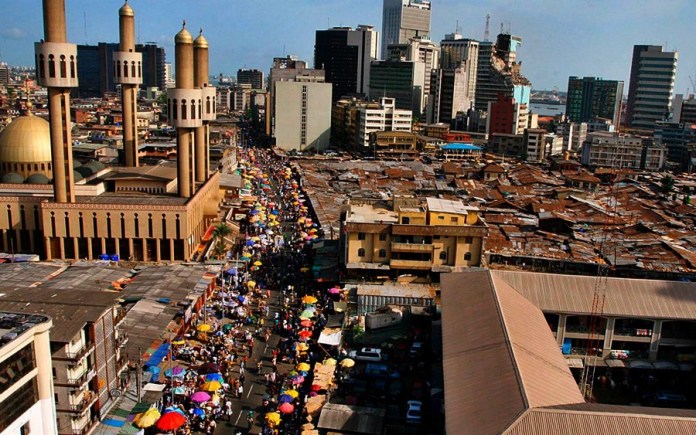
Lagos Island (source: Guardian)

The last time I checked, Nigeria didn’t require a soothsayer to mention that the country is deeply in need of a rethink towards revamping the current pathetic look of her economy in its entirety.

The present Nigeria’s economy – likewise that of other apparently growing African nations – is arguably dwindling, thus requires a serious and candid measure if the governments at all levels are genuinely prepared to deploy the needed political will towards salvaging it.

However, it’s pertinent to acknowledge that the recommended measure cannot be successfully applied if we fail to employ a tech-driven approach. This implies that technology remains inevitable towards salvaging the country’s economic posture that currently bears a pathetic look.

Development at any phase is always linked to technology and the latter takes place when there’s advancement in science. In other words, science, technology and development are all proportional to each other.

It’s imperative to acknowledge that development is required in every individual as well as nation, in all aspects. And for such effect to occur, science and technology must go hand-in-hand. Science is known as the study of knowledge, which is made into a system, and depends on analyzing and comprehending facts. Technology is the application of this scientific knowledge.

For any successful economy, particularly in present times, science and technology are the rudimentary requisites. If any nation fails to utilize these, then the chances of getting itself developed becomes minimal.

Technology is associated in all means with modernity, and it’s an essential tool for rapid development. Hence, any country that’s not able to prosper in this regard would never be able to sustain the lives within its jurisdiction and may have to solely depend on other countries for survival.

It was estimated by the World Bank that seven of the ten largest economies of the world by 2020 would be in Asia, including Japan, China, India, Indonesia, South-Korea, Thailand, and Taiwan. The economic prophecy eventually came to pass. This is because the countries in question were able to leverage the impact of technology on societal growth.

Just a few decades ago, most of these countries were known to have poor policies, low discipline and no advancement. But with an effective introduction of technology, they have succeeded in making waves all over the world.

Nigeria obviously needs to emulate them. Rather than begging them to come over and help us develop the country, let’s ascertain how they made it to the top, so we can apply the same techniques without seeking their assistance since we have all it takes to perform independently.

The truth is that, the required manpower and resources abound in Nigeria. What the government needs to do is to recognize the needed labour-force and the available endowments, then consequently endeavour to do the needful.

They must be prepared to devote reasonable commitment, which is a product of time. This is where political will comes in. You must be willing to sacrifice your time and energy to a cause you believe in, if you really want it to become an absolute success.

Nigeria is ostensibly being taken aback by her leaders. If not, this country would have gone several steps ahead of where it is today. If the government must do the right thing as expected, it has to revive all moribund technical colleges across the country, resuscitate the ongoing Students Industrial Work Experience Scheme (SIWES), and adequately equip all the science-oriented departments in institutions of higher learning.

Furthermore, teachers’ wages must invariably be taken very seriously. These are the fundamental ways the country’s education sector can be strengthened. Similarly, the health sector, which is awash with outdated facilities, must equally be liberated by providing befitting structures and equipment that can stand the test of time. The country is already blessed with countless health experts, but they lack the needed environment to showcase their expertise.

Moreover, Nigeria lacks an industry where science and technology can thrive, thus she needs to create one by setting up an enabling environment that can accommodate every professional irrespective of their field or area of specialization.

Owing to the lack of such an anticipated environment, the country loses hundreds of talents and patents on a daily basis via brain drain. The government must be willing to assist anyone who has an idea, and not to abandon him or her to rot. A reliable agency that can listen to people’s ideas and channel them to apt quarters ought to be set up by the governments at all levels.

For urgency’s sake, we must embrace the agric sector through implementation of mechanized farming instead of the ongoing crude pattern. As regards the mining sector, the concerned authority must extend the hand of fellowship to the cognoscenti who must be indigenous, towards acquiring efficient output.

The power sector cannot be addressed if we fail to supplement the existing hydro pattern with other such available generation sources as solar, wind, biomass, and coal. The Tourism industry can equally be made more viable by inculcating tech measures in the system.

Security, on its part, cannot be left out while discussing technology. If the needed resources – both human and material – are eventually made available but aren’t well safeguarded, it would be an effort in futility in the long run.

Among all, tax evasion can only be properly tackled if we employ adequate forensic techniques. It’s not anymore news that countless establishments domiciled within the shores of the country have unabated dodged payment of taxes, yet nothing is being done about it, perhaps because the required mechanism to tackle the menace isn’t made available.

There’s no way we can solve Nigeria’s numerous economic crises without engaging technology. Even corruption, which remains the bane of the country’s democratic system, can’t be duly fought if we overlook tech techniques.

Someone who is still skeptical that tech measures are the only way out is apparently asleep, hence needs to wake from slumber.

Must we chose from two evils?

0

“When the citizens of a nation deem their most accomplished thieves as the most electable then they lose the right to complain when theft becomes their national creed” ~ Modibo Keita (Former Prime Minister of Mali).

It is ridiculous that amongst all the persons who have indicated their interests for the presidential bid and those who are rumored to have indirectly indicated that they have eyes on the presidential seat, the most popular and most rooted for candidates are the ones who have a lot skeletons in their cupboard. Those that have been fingered for unspeakable and undeniable corruption cases and forgery of documents.

Nigerians are always placing themselves in between the devil and the deep blue sea; in a position where they can only choose from two evils thereby choosing the lesser evil and rejoicing that the made a great choice. It must not always be the case. We can start choosing from two good, forcing us to pick a better or best candidate from the good.

We are in the election period again where the citizens who have a lot unanswered question mark to their names are again fielded and aggressively campaigned for forcing a lot of citizens to question the sanity of the campaigners.

The Lagos landlord is again thrown around Nigeria while his supporters are doing all they can to wash him clean to become as white as snow before the electorate but history cannot be cleansed. This is a man who right from his name, his parentage to his education and source of wealth is questionable, but yeah, let him who have no sin be the first to cast a stone. This man is the same man who forged his way into every office he has occupied, it is an open secret, so why are his supporters forming blinds eyes to the mysteries that shroud this candidate.

This is however not a campaign for or against any of the political candidates but it’s a national call of duty for Nigerians to know that if we must get it right this time, we have look in-depth and see that there are far more qualified candidates with untainted record and with solid track record too, who have been asking Nigerians to give them a chance to effect positive changes. Why don’t we give them a chance instead of always rigmarolling around same set of individuals.

Some people have cried out that if by any mistake president Buhari hands over power to one of the candidates who happens to be the most popular at the time being; it will be jumping from fry pan to fire. This comparison is definitely not far from the truth and we can’t afford to wait to see if this comparison is right.

Advance Your Career and Business At Tekedia Institute

0

At Tekedia Institute, we educate and reveal the mechanics of business. If you master the mechanics, you can drive and fix business systems. Look at your company today, and do the best thing for it: give it a great business model. We believe that business models are hugely catalytic to the success of firms. Yes, as you pursue the frictions of markets, we want you to deploy the right models.

Our courseware will inspire you, open your mind to new markets and opportunities – and how to unlock them. By the time you are done, you will see the unbounded future.

200+ global faculty from the best companies you admire; they will be in class to help you get to the next level. Register for Tekedia Mini-MBA (check the early bird deadline), Tekedia Startup Masterclass or any of our programs – and advance your mission.

Begin here  and register for a course.

Adding More Coal Power Plants by 2037: Is Nigeria Serious About Reducing CO2 Emissions from Coal?

1

Due to Nigeria’s chronic power supply crisis, businesses and people alike believe that giving stable power will help them enhance their economic and social prospects. This has been a form of submission over the years. Nigeria has the capacity to generate 53,900 megawatts of electricity by 2030, according to multiple sources.

However, it has been difficult to maintain existing power generation from various power plants and distribution across the country over the last three decades. Every month, figures from numerous government organisations reveal uneven growth in the power sector. Experts and important stakeholders in the sector have come out with several narratives and counter-narratives in response to the varied progress.

When Nigeria possesses around one billion metric tonnes of coal reserves, which could be used for electricity generation, a number of public affairs analysts and energy specialists see no reason why it should be one of the countries experiencing chronic electricity shortages. Coal could generate 9.9%, 13.8 percent, 15.3 percent, and 15.6 percent of Nigeria’s electricity in 2015, 2020, 2025, and 2030, according to an expert. By 2015, 2020, 2025, and 2030, coal may generate 1,200MW, 4,400MW, 15,400MW, and 53,900MW of power, respectively.

With these figures, it is apparent that Nigeria has the capacity to generate more megawatts of power for domestic and industrial usage. Experts and public analysts aren’t the only ones who have expressed their opinions on the level of coal-fired electricity generation. According to our checks, industry executives and members of the national legislature have questioned why coal power projects in some states have stopped in recent years.

When one considers what businesses and individuals have lost in terms of productive time and revenue as the electricity crisis continues to affect all sectors and industries, their arguments make sense. What is astonishing, however, is that the government and proponents of coal appropriation for electricity generation are making national commitments to various climate change mitigation accords appear unattainable. The Nigerian government has been demonstrating its commitment to global efforts to tackle climate change since 2015.

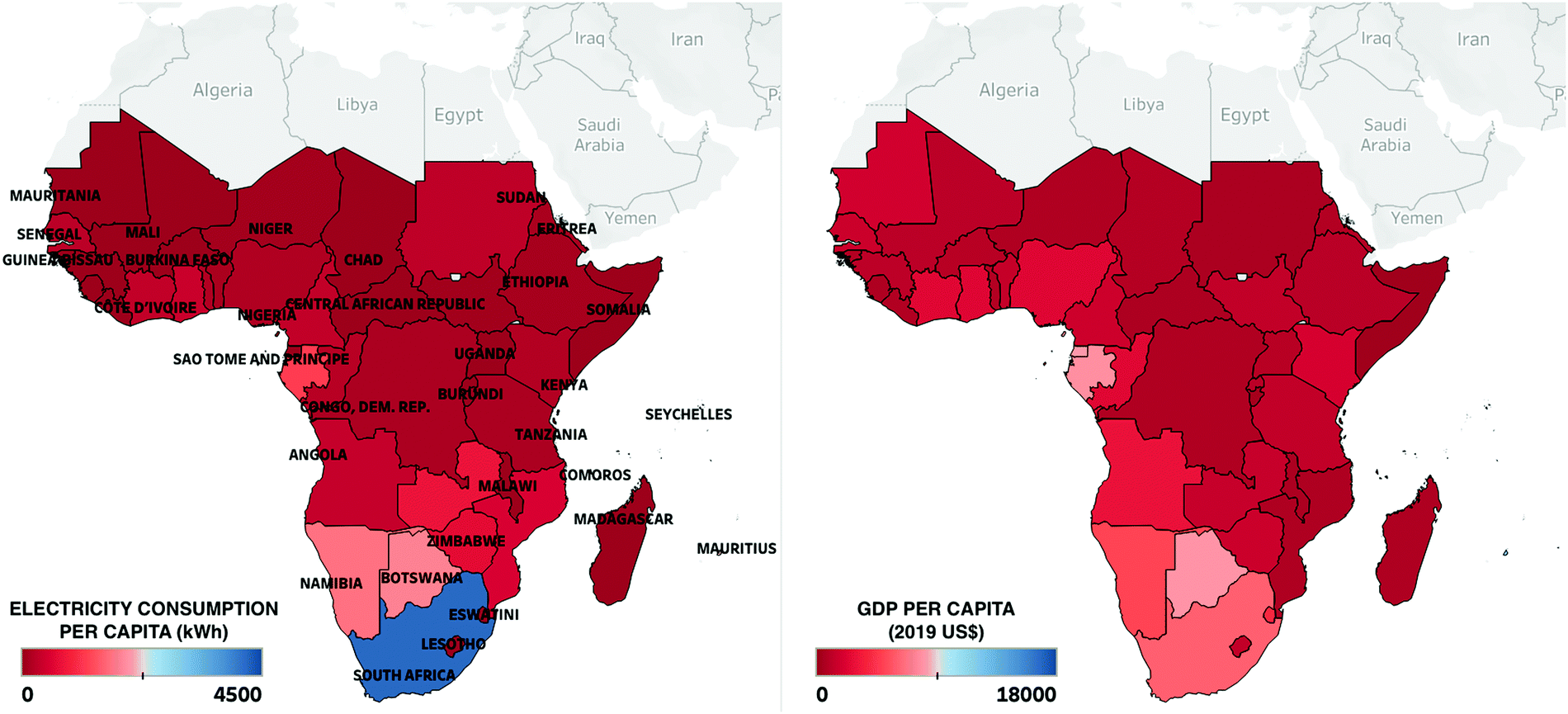
Exhibit 1: Per capita electricity consumption and gross domestic product (GDP) of sub-Saharan African countries

Source: Daggash & Dowell (2021)

Antithetical Behaviour and Carbon Emission Reduction Commitment

Following an examination of several experts’ and public affairs’ positions, as well as the government’s coal power plant projects in some states, our analyst concludes that the government’s and other stakeholders’ actions are incompatible with the country’s commitment to mitigating climate change effects. It also goes against a number of policy measures, goals, and objectives outlined in various strategic policy instruments or plans, such as the National Climate Change Plan and National Climate Change Adaptation Communication Plan recently submitted to important global climate change bodies.

Nigeria pledges in its Intended Nationally Determined Contributions to the Paris Agreement to devote resources to renewable energy in order to achieve an unconditional reduction of 20% of economy-wide GHG emissions compared to the baseline scenario, and a conditional reduction of 45 percent if sufficient international support is provided.

Ending gas flaring by 2030; generating off-grid solar PV of 13 GW (13,000 MW); increasing energy efficiency by 2% annually, resulting in 30% efficiency by 2030; increasing the use of public transportation such as buses, trains, and light rail; increasing the capacity and efficiency of the electricity grid; and promoting the use of climate-smart technologies are among the key measures for achieving Nigeria’s emission reduction commitment. As a result, the NDCs target important carbon-intensive economic sectors like oil and gas, energy, transportation, agriculture, and land use and transportation. The estimated cost of implementing the NDC’s mitigation and adaptation actions is $142 billion, with a projected national benefit of $142 billion, while the estimated national benefit for implementing these measures is roughly $304 billion.

It is, however, surprising that by 2037, the federal government wants to add six new coal-fired power facilities to the 23 now in operation. It also wants to add nine gas plants, bringing the total number of power plants on line to 15 by 2037. Though, our analysis of the project registry of the country’s NDCs reveals that 61.7% of 695 projects were planned and being implemented and would also be executed with the intent of creating access to solar electricity. Over 13% of the projects were also found to be on creating access to water through solar electricity, while 8.6% and 1.7% focus on enabling accessing to electricity through hydropower plant and gas to energy respectively.

Though our analyst does not directly examine the link between coal plant operation and carbon emissions generated between 2016 and 2020, a direct examination of the country’s urbanisation growth rate over that time period shows a 29.8% increase in carbon emissions generated. The urbanisation growth rate was responsible for over 75% of carbon emissions from gas, 62.2 percent from flaring, 84.9 percent from oil, and 2.1 percent from cement.

What is Better for Mitigating Carbon Emissions from Nigeria’s Energy Sector?

According to the emerging insights, the Nigerian government must concentrate on creating a stable and supportive policy environment, as well as a balanced commitment to the implementation of acceptable initiatives.  In light of various studies and expert opinions, which indicate that hydropower, renewable energy, and solar power plants have a greater potential to reduce GHG emissions than coal power plants, our analyst recommends that concerned stakeholders should explore available resources that could assist in generating electricity for current users without jeopardising their health or the ability of future generations to use the same electricity.

Concerned stakeholders really need to listen to the voice of the International Hydropower Associations (IHA), which reveals that “more than 4 billion metric tonnes [estimates] of additional greenhouse gases would be emitted annually, and global emissions from fossil fuels and industry would be at least 10 per cent higher.”