DD
MM
YYYY

PAGES

DD
MM
YYYY

spot_img

PAGES

Home Blog Page 5374

Attend AjoMoney Webinar On “Easy Access to Fund and Flexible Repayment at zero interest in 2022”

0

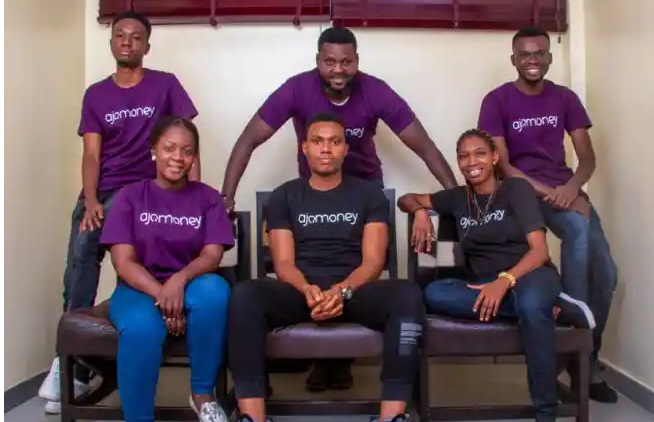
You are invited to this webinar organized by AjoMoney, a portfolio company. The Theme is “Easy Access to Fund and Flexible Repayment at zero interest in 2022”. Ajo Money has digitized the ancient African tradition of pooling funds together, and rotating payouts.

Yes, a group of trusted individuals agree to contribute a fixed amount into a fund at regular intervals with members receiving the fund in phases. This process continues until all members receive the sum of the money that has been deposited into the fund in turn.

Topic: Easy Access to Fund and Flexible Repayment at zero interest in 2022.

Date: Saturday, Jan 15 2022

Time: 12 noon WAT

Free registration for event link:

Bolt Raises $709mln At $8.4bln Valuation to Expand Services to New Markets

0

Ride-hailing startup, Bolt, has raised €628 million ($709 million), at a valuation of €7.4 billion ($8.4 billion) that will give it competitive edge and help it to expand to new markets.

The new investment round was co-led by Sequoia Capital, Fidelity Management and Research Company LLC, with Whale Rock, Owl Rock (a division of Blue Owl), D1, G Squared, Tekne, Ghisallo and other unnamed backers also participating.

In nearly a decade since it was founded, the Estonia-based company has onboarded many services such as shared cars and scooters, restaurant and grocery delivery, and Bolt Market – its 15-minute grocery delivery feature. The company has created a ‘super app’ that is holding its increasing businesses together.

“All of our business units are growing,” founder and CEO Markus Villig said in an interview this week. He explained that even its most mature business, ride hailing, is seeing double digit growth, while the newer businesses, being smaller, are expanding even faster. “The new trend of last year is that private cars are a bad thing and increasingly people want to use other forms of mobility,” he said, adding that Bolt is working on partnering with more city governments to build out its services as part of their updated transportation strategies.

In August last year, Bolt raised €600 million at a valuation of over €4 billion in a Series E also led by Sequoia. At that time, the company has a customer-base of 75 million people. In just four months after the previous round, the company has seen its customer-base adding 25 million more users from 45 countries and more than 400 cities.

But as the company grows, the need to provide top-rated services for its customers grows also. Bolt said it has made attracting and keeping drivers a major focus by paying out better commissions than its rivals.

“There is a massive lack of supply on these platforms, so we have focused on taking the most partner-friendly lowest commission,” Villig said. That has paid off well for Bolt, which has now seen monthly revenues more than double compared to sales pre-COVID, he added.

Bolt is planning to shift from its original target markets, where it has focused for years, to new markets in the West. Founded Taxify eight years ago, in Tallinn, Estonia, Bolt’s mission was to bring ride hailing to emerging markets and countries where other ride-hailing companies like Uber had yet to gain a strong foothold.

The strategy helped it to grow its market share in Africa and Eastern Europe. Now Bolt has learned that there is little difference between emerging markets and developed countries.

“We started off in Eastern Europe and Africa because those markets had a bigger need. They had lower car ownership, higher unemployment [making for a market with many freelance drivers]; it made sense,” said Villig. “But now we’ve learned that this model works everywhere, and it’s actually easier to grow in Western Europe because they are developed markets. We found if you can make this model work in really cheap, frugal markets, then once you go to London or Stockholm, it’s materially easier. And the unit economics are definitely better because the prices are higher.” It’s not a perfect system, though. Working in developed markets, he said, the trade-off is “more regulations,” and the limits that come with those.

In each market, one scaling strategy Bolt plans to use is diversification, offering multiple services within its super app.

“Offering multiple services within a single app not only helps Bolt bring in new customers and cross sell to them, but it does so with essentially zero marketing costs by putting all of the options and cross-promotions within a single app,” said Villig.

“Two elements that set us apart and are turning in our favor are the synergies and the shared costs between these verticals. Most of Bolt’s competitors are generally focused on one thing in each app, and we are not, so it’s easier and less expensive for Bolt to build more services off the back of each other. Now we are passing on those savings for customers,” he added.

With the shift in its scaling strategy and the newly raised fund, Bolt is expected to give Uber, Lyft and Doordash a run for their money as it expands to new markets.

Speaking on the round, Andrew Reed, a partner at Sequoia, told TechCrunch in a statement: “We’re excited to deepen our partnership with Markus and Bolt to further their mission to make urban travel affordable, sustainable and safe. At Sequoia, we believe in the global potential for technology and entrepreneurship and have been inspired by Bolt’s growth from Tallinn, Estonia to over 400 cities and 100 million customers across Europe and Africa. We’re eager to help them expand their footprint, increase their product offering and improve the quality of life in cities for the long term.”

Remaking Digital Conglomerates by US Federal Trade Commission

1

A US Court has approved for the Federal Trade Commission (FTC) to continue its high-voltage push to get Meta (yes, Facebook) to sell Instagram and WhatsApp. As a private citizen, I do not like what FTC is doing and these are my points:

  1. Without Meta’s investments in the then-fledgling Instagram and -WhatsApp, they would not have been where they are today. Meta’s resources made it possible for WhatsApp to scale when it eliminated the $1 subscription fee. Reversing the acquisitions will be evidently unfair to Meta. 
  2. Finding people who can buy WhatsApp may not be very easy since this product has one major challenge: monetizing it directly will be hard even though you can double play it with other products. Even on that, making good money from WhatsApp will kill the best value it offers!
  3. You cannot accuse Facebook of sharing people’s data and at the same time saying it is anti-competitive by not giving access to Vine and some companies.
  4. TikTok is the new king in town; you must look broadly to see where this is going when it comes to user engagements. This fight may not be necessary in years if Meta does not find a solution to TikTok.

As always, I still believe that you can only regulate companies like Meta because breaking them will not solve any long-term issue on competition: winner-take-all through network effect where the best becomes the dominant player because it has a positive feedback loop of more users, more data and better product. 

If you decide to break Facebook apart, one part will grow and dominate others. This is possible because of the positive continuum of network effect where the biggest keeps getting bigger and also better. I explained that in a recent piece in the Harvard Business Review. You can regulate Facebook but another company will come to take over its position because in this sector, it is winner-takes-all. Yes, the best wins.  Why? The scalable advantage improves with lower marginal cost.

So, if U.S. breaks Facebook, one of those pieces can emerge to fill that void. Or another product from say China or India can emerge and become the world’s leader. It is a web business running on the aggregation construct. They are not structured to have 20 banks in Lagos. You expect to have one popular social media in Lagos for a specific sector. That one leader is what matters. If you break, the one that is best will grow (and win) because network effect will make it easier to attract users to it.

This is my take: U.S. will not regulate Facebook or its web companies at the level many are expecting [I expect nothing to change except cosmetics reporting of violations] because it knows that Chinese competitors which are also well-funded will go after Facebook users across the globe. And even if U.S. regulates Facebook by breaking it, the best surviving part will grow to dominate over time because of network effect where the best gets better and bigger. We just have to agree that Facebook is an ICT utilities and I was very happy when my editors in Harvard allowed me to use that against the company. You negotiate with your utilities [ electricity, water] because you have no alternatives. That is where we are with Facebook.

Of course, the playbook of the FTC seems thus:  I do not want digital conglomerates where a holding company like Meta can control many winners in different categories like social connections (Facebook),  photo sharing (Instagram), and messaging (WhatsApp). If that follows, Google Android, Google Search, Gmail, etc will be visited soon. 

That could be a different look into the US anti-competition regulations. Yes, if they go on trial and Facebook opens how much it loses on WhatsApp, we can understand how giving a free product to billions makes it anti-competitive and a monopolistic empire.

But on pure competition ordinance, I do not think WhatsApp is anticompetitive  or monopolistic when the product is largely FREE.

Comment on LinkedIn Feed

Comment 1: The free market doesn’t breed negative monopolies, only government intervention does. If not, IBM would have crushed Apple during the 80s, Nokia would still retain its dominant position of the mobile phone market.

In a free market, the best product wins. It doesn’t matter if you have 100% share of the market. Once there’s a loophole, someone rushes in to fill that position and ends up taking some share off you. If you are not careful, they might end up taking all (ask Kodak).

The only thing governments that wants to foster innovation and competition should do is to remove all restraints they themselves imposes on new entrants. Even if the incumbents play the market once a new entrant surfaces, it should be left to consumers to decide whom they will trust.

Only consumers have the power to bestow monopoly privilege on companies. Anything else is from rent seekers and their bureaucrat facilitators.

Comment #2: Brilliant dissection as always Prof Ndubuisi Ekekwe . However I think the issue may be more than market dynamics. Yes it is ok from a pure play that companies can gain monopoly because they have worked hard to get there. But that raises the question of putting power into the hands of too few a people, whose motive may not be so clear. The larger issue that seems to be keeping governments awake (except of course the Nigerian government) relates to Power, Ethics & Politics. The Cambridge Analytics still comes to mind. How can we determine which humans we can entrust to have incredible technological power over large populations of people? Who holds them accountable and by what mechanism do we ensure that they “will do no evil”?

Why is the flow of capital directed towards acquiring more capital with technological innovation? The top 28 richest people in the world today can eradicate poverty for the entire human race in a single generation. But they chose to build trillion dollar valuation companies that can go the moon and Mars.
There doesn’t seem to be easy answers here, at least I don’t have any….yet. However I do think the global tech companies should devote more resources to addressing some of the existential problems of humanity.

My Response: Great point. But you have not made a point why breaking Meta will address the issues you noted. Facebook was fined for sharing data which brought “Cambridge Analytics” and was also fined for not sharing data with Vines. Since the GDPR was put in place and FB locked its garden, many companies which used to depend on FB had collapsed. With no access to those data systems, their business models became a guesswork. Magically, FB could keep its data alone and make all the money.

Sure, I am not in support of everything FB/Meta does but reversing a sales done years ago is not fair. I do not want to have a world like that because people would be afraid of succeeding in future to avoid antagonizing government!

Time To Walk The Talk In Nigeria’s Power Sector

0

Penultimate week, precisely on 6th January 2022, in a televised interview when asked about the government’s plan for the dwindling Nigeria’s power sector, President Muhammadu Buhari said his administration was ready to invest in solar panels towards boosting electricity generation in the country.

Aside from this avowal, it’s noteworthy that so many other announcements and moves had been made by the government towards revamping Nigeria’s power sector, yet the maltreated baby still cries woefully in the backyard.

Nigeria’s power sector has over time been obviously politicized by the country’s leaders at various quarters, many have wondered if the anomaly is being enjoyed by those meant to solve it.

Just recently, the President sacked the Power Minister and instantly replaced him with another. This perhaps was born out of his intent to see a better Nigeria as regards electricity generation cum consumption.

Last year, the 9th House of Reps led by Mr. Femi Gbajabiamila, recently, announced its deep determination to commence investigations into the power sector, perhaps with a view to ascertaining why the huge spending so far was unable to address the country’s electricity conundrum.

But unfortunately, till date, nothing tangible has been heard from the Green Chamber concerning the awaited investigations as was announced by its leadership. It sounds ridiculous, but is real and true.

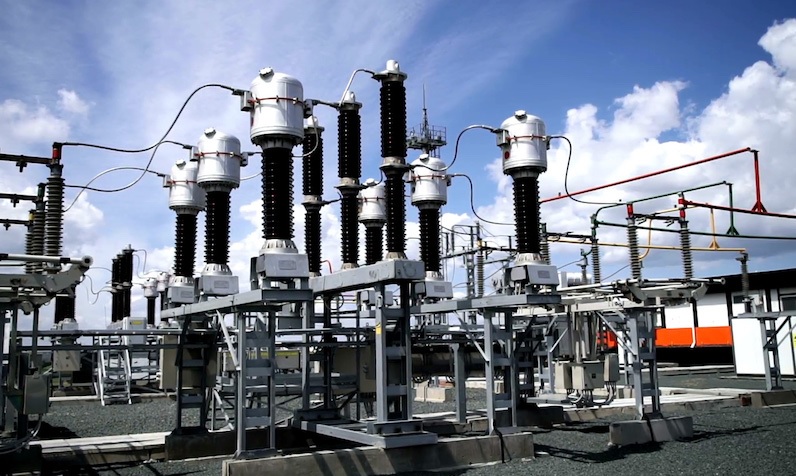
The country’s generation sub-sector comprises about 23 grid-connected generating plants. These plants are in operation around the country with a total installed capacity of 10,396MW, with available capacity of 6,056MW.

The thermal-based generation has an installed capacity of 8,457.6MW, with available capacity of 4,996MW. The hydro-based generation possesses a total installed capacity of barely 1,938.4MW, with available capacity of 1,060MW.

It’s noteworthy that the thermal segment has been sold to the private sector, except the Sapele Power Plc – generating about 414MW – that is 51% sold. Similarly, the hydro segment is under long-term concession.

In its effort to increase the level of power generation in the country, the Federal Government (FG) in 2004 under the leadership of Chief Olusegun Obasanjo, incorporated the Niger-Delta Power Holding Company (NDPHC) as a public sector funded emergency intervention scheme.

The NDPHC was imbued with the mandate to manage the National Integrated Power Projects (NIPP), which essentially involved the construction of identified critical infrastructure in the generation, transmission, and distribution as well as the natural gas supply sub-sectors of the electric power value chain.

In total, the NIPP power stations were targeted to add about 4,774MW of electricity to the national grid network. Some of these stations have been privatized while plans are underway to sell the remaining ones to interested investors towards increasing private-sector participation in the power sector, thereby improving the ongoing reform programme of the FG.

In furtherance of the reform policy direction, the Nigerian Electricity Regulatory Commission (NERC) has in the past licensed many private Independent Power Producers (IPPs). Some of the IPPs are reportedly at various stages of project development.

This analysis implies that the generation sub-sector is currently operating under the Public-Private Partnership (PPP), with almost 97% participation of the private investors. But the transmission segment is completely managed by the FG, whilst the distribution sub-sector is being operated and managed by private investors.

It’s imperative to acknowledge that, even if all these generating plants are in good form, or functioning as expected, their total installed capacity will still not generate the needed Megawatts (MW) of electricity across the federation.

Recently, by implementing reforms, Nigeria targeted 40,000MW generating capacity by 2020. Going by the estimate, she needed to expend approximately $10bn per annum on the power sector, to achieve the motive.

Taking a painstaking cognizance of the abridged survey or review, as presented above, we would understand that the country’s lingering power crisis ought to be blamed on the epileptic policies guiding the sector, not the ability of the minister as being perceived.

The fact is that, even if the best brain and most active technocrat is in charge of the Power Ministry, the sector will continue to wail and bleed. This shows that the country’s power anomaly needs to be addressed from the background.

The FG needs to, as a matter of urgency, decentralize the transmission grid, thereby giving room for each region or zone to manage their respective grids. This measure would help to eliminate the unending burden occasioned by theft, criminality, and corruption being experienced by the national grid. Hence, the private sector ought to be allowed to invest in the power transmission. There’s a need for candid legislation in this regard.

In the same vein, healthy policies should also be created to encourage generation of electricity from renewable energy sources such as solar. This wouldn’t need to be connected to the national grid, hence the various states can see to its operations and management on a daily basis.

The policy should equally create an enabling environment to enable our trained technologists or engineers to manufacture the needed devices for the generation. We as a country can currently boast of the needed manpower; what is then required is just a sincerity of purpose to trigger the needed change.

So, as the President is apparently in a move to invest in renewable energy such as Solar, he ought to engage the cognoscenti to educate him on the nitty-gritty in respect of the tech-driven measure.

More so, formidable policies must be formulated by the FG to discourage the endless rampant importation of conventional household/industrial power generating devices whose operations depend solely on fuel, diesel, or gas, as the case may be. The importers of the equipment won’t live to see a functional power sector in Nigeria, hence the need for a policy or legislation to tame their unwholesome activities in the country.

The political will must be worn like clothing to actualize the people’s aim. We must therefore look inwards towards solving our collective problem, rather than being myopic or shying away from the truth.

It’s imperative for the government to acknowledge that Nigeria’s power conundrum cannot only be tackled practically, but politically. It’s therefore time to walk the talk.

US Court Rules FTC Will Proceed with Suit Seeking to Force Meta to Sell WhatsApp and Instagram

0

Meta’s push to halt the Federal Trade Commission (FTC)’s attempt to force it to sell Instagram and WhatsApp has suffered setback, after a District judge ruled that the watchdog’s lawsuit will proceed.

The social media company had asked for the case to be thrown out, but Judge James Boasberg ruled on Tuesday that the FTC case deserves to be heard.

Though Judge Boasberg had in June thrown out the antitrust complaint, saying the FTC prosecutors had not provided enough evidence to prove that Facebook held a monopoly in social networking, he left the door open for the antitrust agency to resubmit its complaint when it has enough proof.

Meta’s move to quash the case was based on the pedigree of the current FTC’s chairperson, Lina Khan, who was a fierce critic of the Big Tech. Meta said her ability to base her judgment on facts is under question.

In August, the FTC refiled its case. Boasberg said on Tuesday it had supplied much more evidence and allowed the suit to proceed. The New York Times reported Boasberg said the facts provided by the FTC this time round were “far more robust and detailed than before, particularly in regard to the contours of defendant’s alleged monopoly.”

The Big Tech has been fighting to ward off attempts to break it up, which have been intensified since Khan was appointed to head the FTC last year. Meta has been at the forefront of the struggle due to its acquisition of rival platforms that is believed to be anticompetitive. But Amazon, Google, Apple and Microsoft have all had antitrust cases to answer.

The FTC had argued in an August press release that Facebook’s acquisition of Instagram and WhatsApp was illegal and monopolistic. The Commission said the social media company went on “anticompetitive shopping spree” to “maintain its monopoly.”

However, on Tuesday, Boasberg rejected one of the antitrust agency’s central claims, that Facebook had anticompetitively controlled how third parties could access the company’s data. The Judge said the alleged abuses happened too long ago for the FTC to bring a claim now, and the agency does not allege that any similar harms are about to occur.

Responding to the Tuesday’s ruling, Meta told Insider in a statement that Boasberg’s ruling had dismissed one specific claim around Facebook cutting off rivals including Vine from data and features on its platform.

“Today’s decision narrows the scope of the FTC’s case by rejecting claims about our platform policies,” a Meta spokesperson told Insider.

“We’re confident the evidence will reveal the fundamental weakness of the claims. Our investments in Instagram and WhatsApp transformed them into what they are today. They have been good for competition, and good for the people and businesses that choose to use our products,” the spokesperson added.

While it’s going to be a long legal battle, the Tuesday’s ruling sets Meta up for a potential breakup that will see the social media behemoth selling off its two most crucial subsidiaries.