DD
MM
YYYY

PAGES

DD
MM
YYYY

spot_img

PAGES

Home Blog Page 5388

Revisiting The Nigeria-China Currency Swap Deal

0

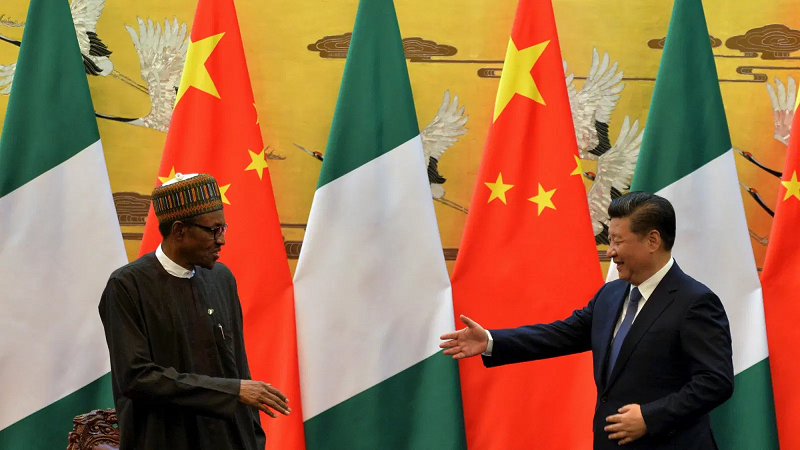
It could vividly be recalled that a few years ago, Nigeria and China under the watch of President Muhammadu Buhari graciously entered into a 2.5 billion dollar worth currency swap deal.

It’s noteworthy that a currency swap deal allows two institutions to easily exchange payments in one local currency for equivalent amounts in order to facilitate bilateral settlements and provide liquidity support to financial markets.

Recently, the Godwin Emefiele-led Central Bank of Nigeria (CBN) and the Yi Gang-led People’s Bank of China (PBC) commenced the execution of the $2.5bn currency swap deal. The bilateral pact was meant to allow both sides to swap a total of 15 billion Renminbi (RMB) for 720 billion naira, or vice-versa, in the next three years.

The business relation, whose duration could be extended by mutual consent, made Nigeria to become about the fourth country on the African continent to have such a deal with China, following Ghana, South Africa and Zimbabwe.

It’s worthy of note that the transaction was primarily aimed at providing adequate local currency liquidity for Nigeria and Chinese industrialists and other businesses towards reducing their hurdles in the search for a third currency such as the US dollar, Euro or Pounds sterling, as the case might be.

The then CBN’s Acting Director on Corporate Communications, Mr. Isaac Okorafor explained that, henceforth, the Chinese businesses would get naira liquidity and the Nigerian businesses would, in reciprocation, acquire RMB liquidity under the agreement.

According to him, the deal would improve the speed, convenience and volume of transactions between both countries. It would equally assist them in their foreign exchange reserves management, enhance financial stability and promote broader economic cooperation among them.

Mr. Okorafor further highlighted that the bilateral pact “will make it easier for Nigerian small and medium enterprises and cottage industries to import raw materials, spare-parts and machines. To facilitate their imports, they can get RMB facility from Nigerian banks without being exposed to the difficulties of seeking other scarce foreign currencies”.

It was imperative to acknowledge that an economic deal of this kind is usually accompanied with numerous merits. The swap pact as it stood had the potential of boosting Nigeria’s foreign reserve, thus assuring the stability of the country’s foreign exchange market.

Similarly, the deal was liable to elevate the outlook of the country’s currency, Naira, in the international sphere. It would in the process hold the naira in high repute in the global market, because the currency would be made available in the Chinese apex bank and other financial institutions domiciled therein.

Hence, it was meant to make the businessmen resident in China, not just Chinese nationals, to assess the naira with ease while transacting with their Nigerian counterparts.

As at then, I however stated that Nigeria needn’t sweep the likely demerits of the deal under the carpet. The bilateral policy might in the long run instigate Nigeria to demand more from China. This foreseen negative effect, which will consequently intensify importation, was supposed to be a factor of great worry to any concerned Nigerian considering what the implications would entail.

Just like my candid analysis on the recent move by the United Kingdom (UK). It’s not anymore news that recently the UK’s Export Finance Agency disclosed its intent to add naira to its list of pre-approved currencies, allowing it to provide financing for transactions with Nigerian businesses dominated in the local currency. The policy was summarily targeted to accept Naira as a legal tender in the British market.

Policies of such, though have the tendency of boosting the Naira in the international sphere, can pose more harm as the journey progresses. It was obvious that Nigeria had little, or perhaps nothing, to offer to China as regards exportation.

On the other hand, acknowledging that China was already as at then one of the leading global economies in the area of technology, it wasn’t sceptical that the Asian country had absolutely a lot to offer to Nigeria while discussing importation.

The above assertion was the reason I unequivocally made it clear that the citizens shouldn’t jubilate in haste regarding the bilateral relation. Although the CBN assured Nigerians that the 2015 ban on 41 commodities in regard to foreign exchange remains sacrosanct hence the swap deal wouldn’t make Nigeria emerge a dumping ground for the Chinese products, it was pertinent to notify the apex bank that if apt measure wasn’t taken, the assurance would hold no water in the nearest future.

We weren’t unaware that the parallel market otherwise known as black market, which is apparently harboured in Nigeria’s foreign exchange sector, was on a daily basis gaining momentum in the country. In view of this, the importers domiciled in the country could still have their way via the assistance of the unscrupulous currency speculators.

Since it’s not equally false that Nigeria’s various borders were still porous as at the time of this deal, it was an indication that if the RMB is eventually assessed by the importers through any available channel within their reach, the goods and services from the Chinese markets could easily be smuggled into the country.

I therein stated that as Nigerians celebrate over the seeming milestone, it was crucial to enjoin the Buhari-led government to concentrate more on diversifying the country’s economy, so China would have more to request from Nigeria rather than the reverse. The proposed measure was necessary, so that the bilateral deal wouldn’t lead to imbalanced transactions cum benefits.

Many years after the deal was struck, no good effects had reportedly been recorded in that regard, signifying that all the concerns raised by me and my likes weren’t out of place. 
Sugar Tax: Nigeria Introduces N10/Liter Tax on Non-alcoholic Beverages

0

Amidst growing outcry over multiple taxation in Nigeria, the federal government has introduced an excise duty of N10 per liter on all non-alcoholic, carbonated and sweetened beverages.

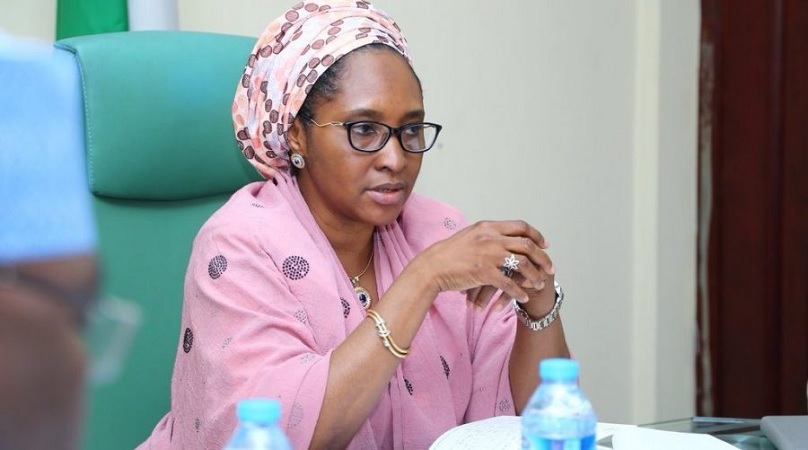
Disclosing this during the public presentation of the 2022 Appropriation Act yesterday in Abuja, Minister of Finance, Budget and National Planning, Zainab Ahmed, said the move is part of the government’s plan to generate revenue and  tackle the growing obesity and diabetes menace in Nigeria.

Excise duty is a form of tax imposed on locally manufactured goods.

The policy, known as ‘Sugar Tax’, had been advocated since last year by a coalition of non-governmental organizations called National Action on Sugar Reduction (NASR), who believe it is needed if the Nigerian government is to tackle diabetes and obesity. The Sugar Tax thus becomes part of the new Finance Act signed into law by President Muhammadu Buhari on December 31, 2021, which as it unpacks, reveals a pack of new tax laws that touch many sectors of the economy.

Ahmed said the 2021 Finance Act also raised excise duties and revenues for the health sector, and it introduces new digital taxes.

The Minister said the excise duty on soft drinks would discourage excessive consumption of sugar beverages which contributes to diabetes, obesity among others.

“There’s now an excise duty of N10/per liter imposed on all non-alcoholic and sweetened beverages; and this is to discourage excessive consumption of sugar in beverages which contributes to a number of health conditions including diabetes and obesity.

“But it is also used to revenues for health-related and other critical expenditures. This is in line with the 2022 budget priorities,” she said.

Tax has been an integral part of Buhari’s administration policy review. New tax policies which include upward review of VAT and Stamp Duty charges, were introduced last year. The federal government has continued to seek ways to generate more revenues through taxation, part of the reasons the Finance Act has to be reviewed.

However, every move by the federal government to impose additional tax on Nigerians, has come at the cost of more economic pains owing to Nigeria’s meagre disposable income. With more than 40 percent of Nigerians living below the poverty line, each of the new tax policies has been considered ‘insensitive.’

As expected, the ‘Sugar Tax’ was condemned.

Apart from consumers, manufacturers and distributors in the food and drinks sector are impacted by the Sugar Tax. Many started early enough to condemn the government’s move to introduce N10 tax on non-alcoholic beverages.

On December 14, 2021, the Organized Private Sector, OPS, made it known that it stands against the excise duty.

“It is instructive to note that Nigerian manufacturers have been contending with the dislocations caused by the pandemic and the recession that followed; they are also facing serious crisis resulting from liquidity challenges in the foreign exchange market, which is impacting adversely on the cost of production; in addition, they are faced with intense pressure arising from numerous structural bottlenecks that are creating sustainability challenges for investors, especially those in the SME segment.

“Also of concern is significant spike in the cost of raw materials, cost of fund, high import duty, elevated energy cost, prohibitive cost of transportation and high cost of logistics/shipping.

“We therefore, urge Government to jettison the idea of reintroducing the Excise Duty on carbonated drinks but continue to support and promote the industry to attain full recovery after the onslaught of the pandemic and position it to further accommodate the teeming unemployed Nigerian, particularly the youths,” Mr Taiwo Adeniyi, the OPS Chairman stated.

In addition to the high cost of goods and services, another angle to the pains of this Excise Duty was pointed out by the president of the National Union of Food, Beverage and Tobacco Employees, NUFBTE , Union, Mr. Lateef Oyelekan. He said: “Should this excise duty be imposed these companies would have no choice than to lay off workers.

“Some may have to reduce production line instead of expansion, while some may even close down permanently. It has happened in the past. At the end, Nigerians are the ones that will suffer.

“These companies are already looking outside Nigeria for alternate production of their products and would rather move to a more favourable business climate in the West Africa region.”

Oyelekan’s postulation was corroborated by the Fiscal Policy Partner and Africa Tax Leader at PwC, Mr Taiwo Oyedele.

“I will be more concerned about sectors like manufacturing because their cost is rising and they are not able to increase their selling prices because the purchasing power is low.

“If you impose a tax, because they want to survive, they have to cut down on employment and find a way to survive. In terms of inflation, when you impose maybe an excise tax, if the sector is able to pass it on to customers, it would be higher selling prices, leading to inflation.

“But if the products are very elastic, and you are afraid of losing the market, then you bear the costs and your margins will be low. If your margin is low, it means what you pay in company income tax will be less, and your shareholders will get less in dividends, affecting their own purchasing power as well. So, taxes, sometimes, have unintended consequences, which policymakers must always consider,” he said.

The Manufacturers Association of Nigeria (MAN), expressing its concern about the excise duty on soft drinks, warned in a report that it would be counterproductive.

According to the report titled; ‘key considerations against excise on non-alcoholic beverages’, the government might collect projected N81bn revenue from excise duty on carbonated drinks between 2022 and 2025, but lose N197bn within the same period from other taxes, such as Value Added Tax and Company Income Tax from the manufacturers of soft drinks.

The report also said that introducing excise duty would cause the beverage sub-sector of the food and beverage industry to lose up to N1.9tn in sales revenue between 2022 -2025, due to the imposition of the new taxes with simultaneous adverse effects on jobs and supply chain businesses.

Fuel Your Business Growth Via Corporate Partnerships

0

The next edition of Tekedia Mini-MBA is going to focus heavily on Growth within our theme of Innovation, Growth and Digital Execution.

As part of deepening that Growth playbook, we’re adding in the courseware an amazing thought-leadership by our Faculty, Oluwole Ogunlade, on how companies can use corporate partnerships to fuel growth. This is what he does daily as the Director of Corporate Partnerships in Kryptova Hong Kong.

Get ready to learn from the best, from Feb 7 ; register here.

Elwin Group Begins FDA Certification of Its Agro-products in Nigeria

0

Last year, I wrote that the Elwin Group has successfully completed the non-oil export of one of its agro products (Turmeric) to the EU. Today, I am happy to share that the Nigerian Government is funding a full scale United States FDA certification for Elwin Group’s products which are produced for exports.

At Tekedia Institute, I am so proud of what Mmaduabuchi Anoro and his team have done from Anambra state. He came to our Institute and over the last 2 years, he has mastered the intricacies of agro-business and export; he has attended all the 6 editions we have run in Tekedia Mini-MBA. We know his strategy: he prepares questions on his business for live sections and asks questions.

I thank our Faculty members: Bank of Industry’s Victoria Madedor (link to initial grant),  Trust Banc’s Azeez Lawal (exposure to financing) and Parthian Partners’ Ola Oladele, CFA ( explaining the nuances of global market systems).

We have also welcomed this company to Tekedia Capital. New York, Beijing, Toronto, etc, hello…..Elwin Group is on the way. Nations rise when great entrepreneurs emerge; well done Elwin Group https://lnkd.in/eZqPGtvA


Tekedia Course Update: First-Scaler Advantage and Growth Marketing

0

Good People, I have updated our growth course at Tekedia Institute with new sections. This has become necessary after speaking with founders and entrepreneurs in the Tekedia Startup Masterclass. Most of the questions have focused on “How can I grow this business?”.

The new addition focuses on thinking not just the  first-mover advantages but also first-scaler advantages and then providing a growth marketing thesis to actualize those. I provided many cases covering Indomie noodles/Dangote noodles, Facebook/Myspace, Nairaland/others, iPhone/Blackberry, Heinz ketchup/others, Coca Cola/others, etc.

For Tekedia Startup Masterclass members, you will find it in Week 4. For the next edition of Tekedia Mini-MBA which begins on Feb 7, it has been programmed for Week 1.

Besides innovation and digital operational execution, we’re updating our growth sections because everyone wants to growth that business. Take a look at our courses and register.